Taranto Italy
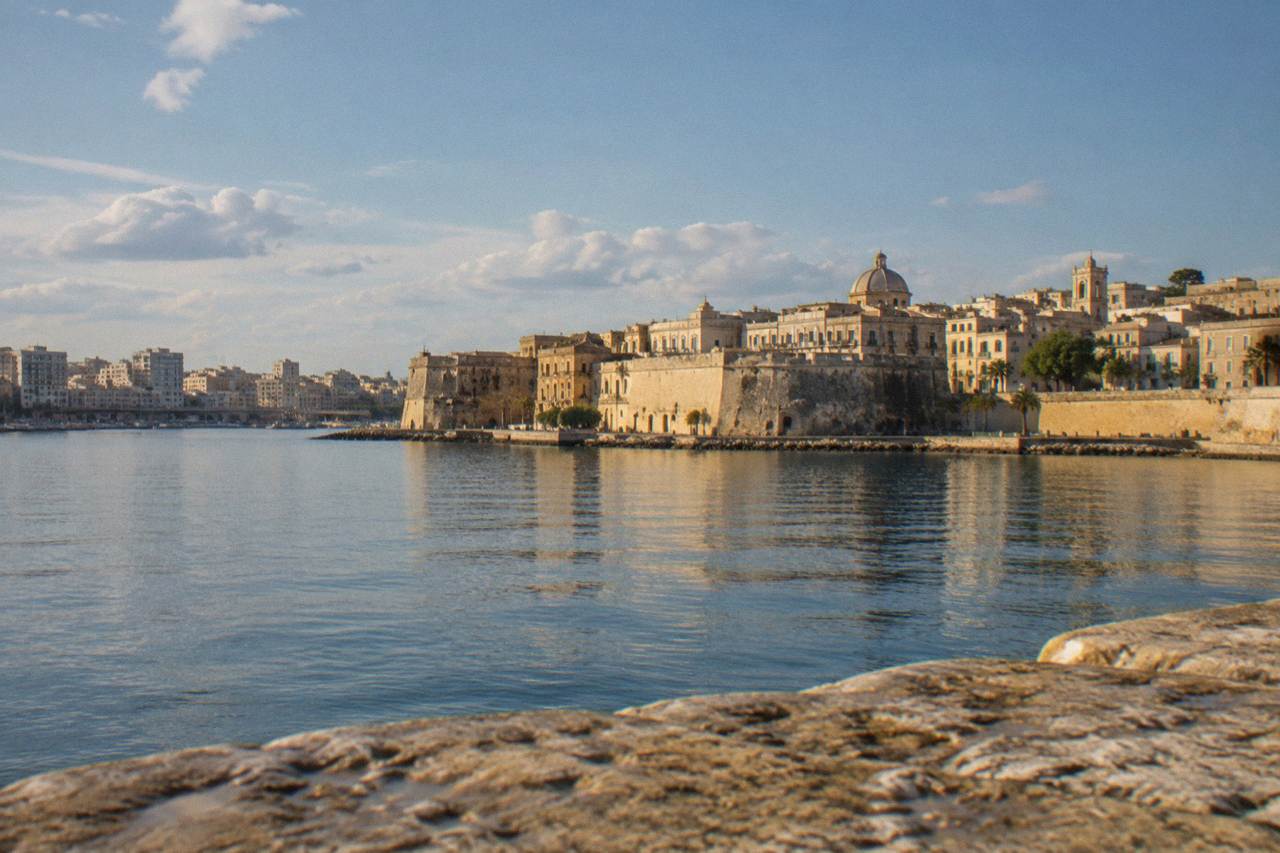
Taranto sits 52 km south east of Matera, across the regional border in Puglia, where the old town occupies a small island between the Mar Grande and the Mar Piccolo. This guide sets out the drive, the sights, the food and the practicalities of a one-day trip from Matera.
Short answer
Taranto is 52 km from Matera by road, about 1 h 08 of free-flow driving from Matera Centrale. It is a coastal city in Puglia on the Ionian Sea, unlike inland Matera in Basilicata, and it makes a workable day trip by car for anyone who wants to see the sea, the swing bridge and the old town lanes.
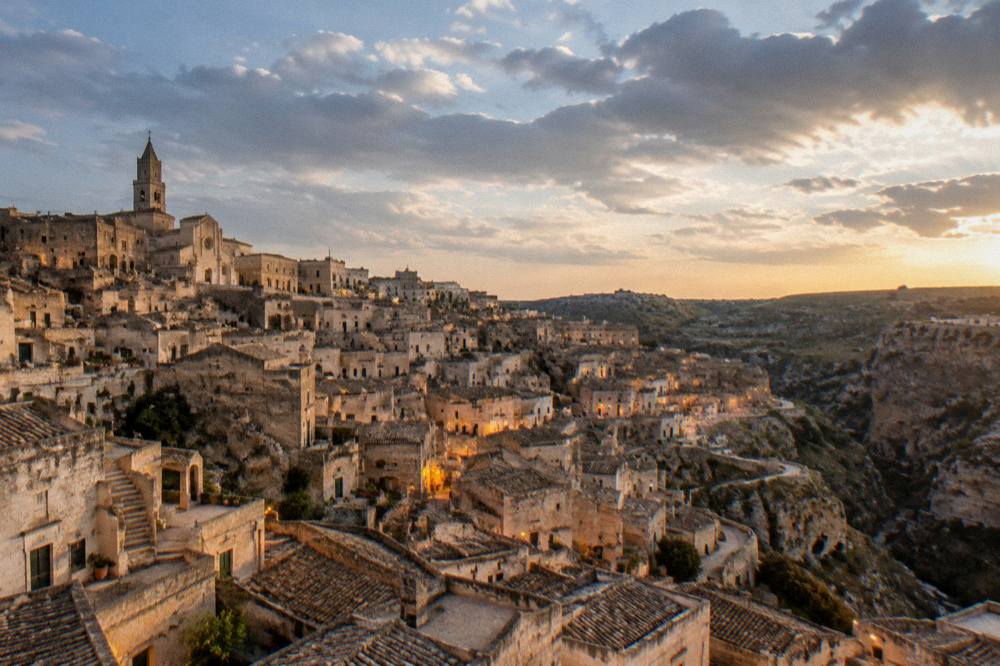
Taranto is the sea day trip that Matera itself cannot offer. Matera, in Basilicata, southern Italy, is an inland city at about 400 m above sea level on the edge of the Gravina canyon, and there is no coast in it or anywhere near it. Taranto, 52 km away across the border in Puglia, is built on water: the old town is a small island caught between the Mar Grande, the open Ionian Sea, and the Mar Piccolo, an almost enclosed inner basin. That contrast is the whole reason to go. You leave a city of pale tufa, cave dwellings and rock churches cut into a canyon wall, and about an hour later you are walking a seafront where fishing boats tie up below baroque facades.
Where Is Taranto In Relation To Matera?
Taranto is 52 km from Matera Centrale by road, about 1 h 08 of driving in free-flow conditions, heading south east out of Basilicata and into Puglia. It is the closest sizeable coastal city to Matera on the Ionian side, and it lies in a different region from Matera: Basilicata ends and Puglia begins on the way there. The city is famous in Italy as the city of two seas, because its old town island sits between the Mar Grande and the Mar Piccolo.
The distance figures on this site come from routing computed over OpenStreetMap with the OSRM engine, car profile, from Matera Centrale station, and they describe free-flow driving with no traffic and no stops. Real journeys take longer, especially in summer and around the Taranto ring road at commuter hours. Round the numbers up when you plan: "about an hour and a quarter" is a safer mental budget than the raw figure.
Direction matters more than distance here. Taranto is on the Ionian, the same stretch of coast as Metaponto, which is 47 km from Matera and about 52 minutes by the same free-flow measure. If your idea of a day at the sea is a beach and Greek ruins, Metaponto is the nearer option and it stays inside Basilicata. If you want a working port city with a museum, a castle and a proper old town, Taranto is the one. Some travellers chain the two in a single day, since they sit on the same coastal corridor, but that turns the trip into a driving day rather than a walking one.
A last point of geography, because guides get it wrong: Taranto is in Puglia, not in Basilicata. Matera is the Basilicatan side of the pair. The regional border crossing is unremarkable, a sign on a road, but it means your Basilicatan tourist information ends at it, and any local transport, parking rules and opening hours you look up for Taranto come under Puglian authorities. Confirm hours and tickets locally before you set out; this site has not verified any Taranto opening time or admission price, and it prints none.
How Do You Get From Matera To Taranto?
Driving is the practical way to reach Taranto from Matera: 52 km, about 1 h 08 free-flow from Matera Centrale, on a route that leaves the Matera area heading south east and joins the coastal plain towards the Ionian. There is no rail option this site can verify, and no public-transport timetable for this journey appears in the verified facts, so the car is the only mode this guide can recommend with figures behind it.
The verified numbers are road numbers only. What the routing engine gives is the free-flow drive time from Matera Centrale; add margin for parking in Taranto, which this site has not verified either, and for the walk from wherever you leave the car to the old town island. Parking rules and tariffs in Italian cities change by zone and by season, and Taranto's are not in the verified pack, so plan to check the signs on arrival rather than any figure printed here.
If you are staying in Matera without a car, the honest answer is that a self-drive day trip to Taranto is awkward and a guided day trip may serve you better. The tour roster on this site includes day trips out of Matera and Bari that pair towns, and the most established pairing from Matera is towards Alberobello and the Itria valley rather than the Ionian coast. One option worth weighing is the Alberobello walk with a local, which covers the trulli town with a resident guide, a different flavour of Puglia day out from the seaside one. For the sea specifically, the guided trips that include coastal stops are listed with the day-trip category.
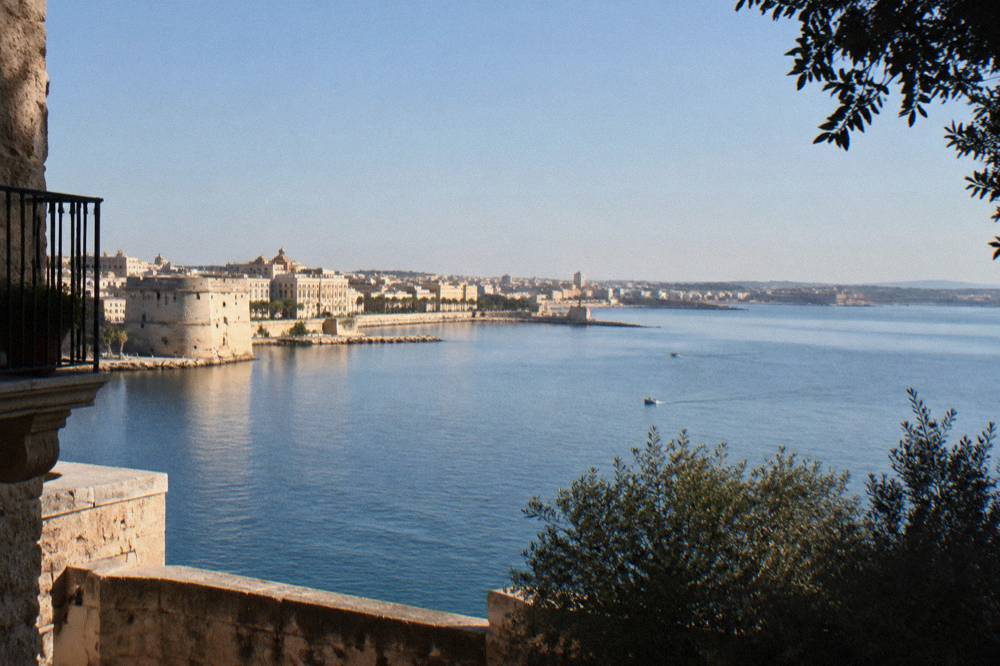
Between the two cities the landscape changes fast. Matera sits on the Murgia plateau at about 400 m; the road drops towards the Bradano valley and the coastal plain, and the last stretch runs through flat, intensively farmed country towards the water. Olive groves give way to port industry on the approach, because Taranto is a major naval base and commercial harbour as well as a tourist old town. The industrial outskirts are part of the city's reality, and they make the first sight of the Mar Grande, the wide open bay, more of a contrast than you expect.
One planning note that belongs to the Matera end of the trip: if you rent a car in Matera, read the Matera ZTL rules before you drive back in. The Sassi limited traffic zones run on camera enforcement, with gates active from 10:00 to 20:30 for the main part of the year and longer hours in summer, and the pedestrian areas around Piazza Vittorio Veneto are closed to vehicles all day. The details are in the site's parking and ZTL guides, and the fines arrive later, after you have gone home.
What Should You See In Taranto On A Day Trip?
The core of a Taranto day trip is the old town island, the Ponte Girevole swing bridge that links it to the new city, the seafront on the Mar Grande, and the Aragonese castle at the channel mouth. The old town, the Città Vecchia, is small enough to walk in a morning, and the castle and sea views fill the afternoon. Opening hours and admission prices for these sights should be confirmed on arrival or at booking.
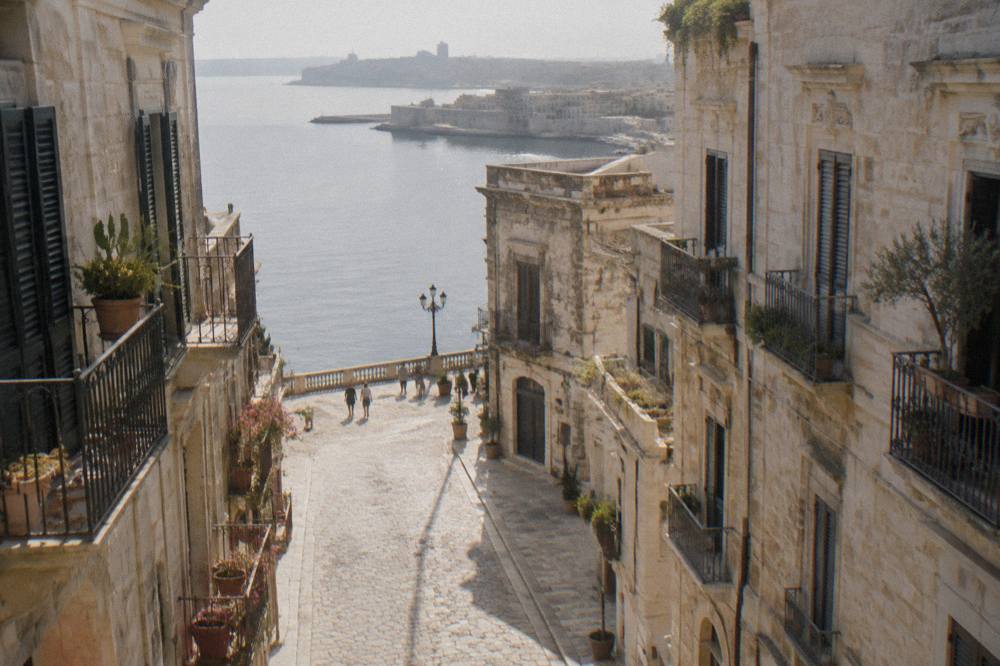
Start on the island. The Città Vecchia is a dense grid of narrow streets, some restored and some still rough at the edges, enclosed by seawalls on every side. It is the part of the city that most rewards slow walking: balconies over alleys, worn doorways, sudden openings onto water. The atmosphere is quieter than Matera's Sassi, because Taranto's tourist traffic is thinner, and the island still mixes visitor businesses with ordinary residential life. Fishing remains a real activity here, and mussels from the Mar Piccolo are the local product the city is known for across Italy.
The Ponte Girevole, the swing bridge, is the hinge of the whole layout. It spans the navigable channel that lets ships pass from one sea to the other, and when it opens, the deck rotates to let vessels through. Do not build your day around seeing it open; openings depend on shipping movements, and this site holds no verified schedule for them. What you can count on is the walk across it, with the channel below and the castle to one side.
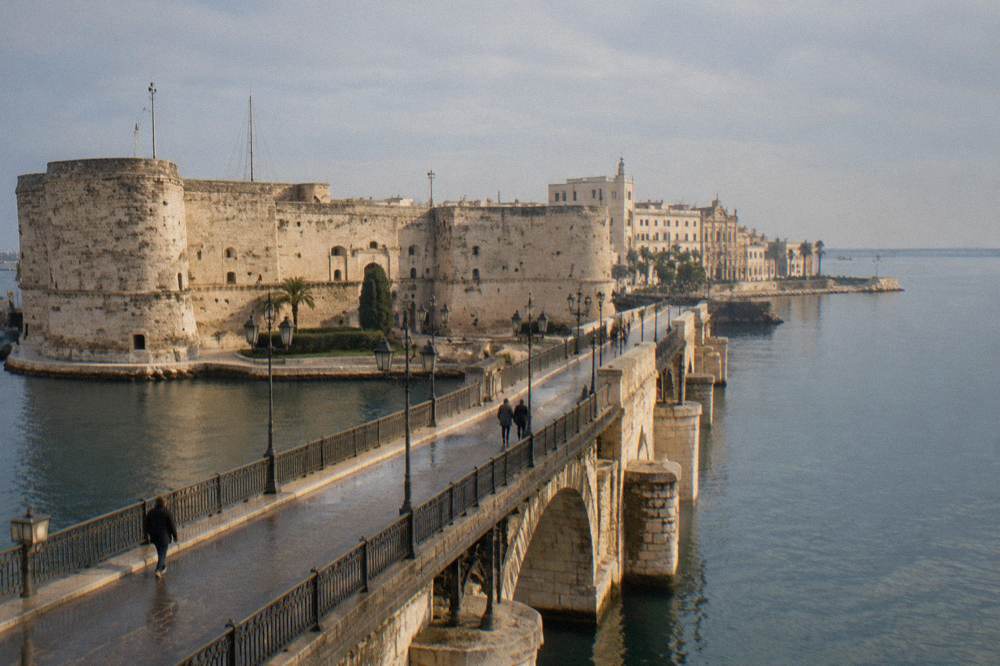
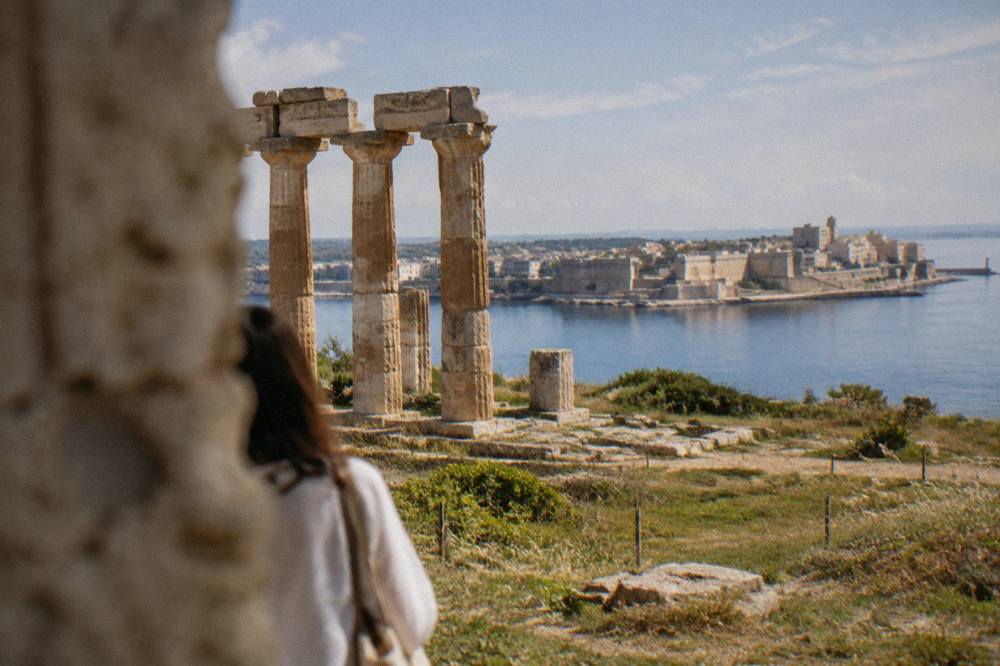
The Aragonese castle stands at the channel mouth. It is a fortress with a long military history, and it remains connected to the Italian navy, which shapes how visits work; check locally what is open on the day you go, because access can be restricted. Beyond the castle, the seafront promenade along the Mar Grande gives the classic wide view of the bay, and the lungomare is where the evening passeggiata happens. For museum visitors, Taranto's archaeological museum holds one of the most important collections of ancient Greek goldwork in Italy, a legacy of the city's founding as a Greek colony; confirm its current hours and ticketing before you rely on it, as this site has not verified them.
A reasonable day shape looks like this: leave Matera after breakfast, arrive mid morning, walk the old town island and the bridge before lunch, eat seafood near the water, spend the afternoon on the promenade or in the museum, and drive back in the early evening. In summer the light on the Mar Grande in late afternoon is the best of the day, and the drive back to Matera lands you in the Sassi at dusk, which is when the cave city is at its most theatrical. The site's guide to Matera at night picks up exactly where a day trip like this drops you off.
What Does Taranto's Two-Sea Geography Actually Mean?
Taranto's old town occupies an island that lies between two bodies of water: the Mar Grande, the open bay that connects to the Ionian Sea, and the Mar Piccolo, a nearly landlocked inner basin to the north. The two are joined by a narrow navigable channel, which is why the city has a swing bridge and a castle at that exact point. This layout is the single fact that explains the city's history, its navy, its mussels and its street plan.
The Mar Grande side is the public face: wide, open, backed by the long promenade of the new city. The Mar Piccolo side is the working one: shallow, sheltered, fed by freshwater springs that rise on the seabed, which is what makes it suited to mussel farming. The mussel beds of the Mar Piccolo supply restaurants across the region, and Taranto's mussels are a protected local product with their own festival culture. If you see "cozze tarantine" on a menu anywhere in Puglia or Basilicata, the claim traces back to this basin. Everything else covered here is indexed on Matera Travel Guide.
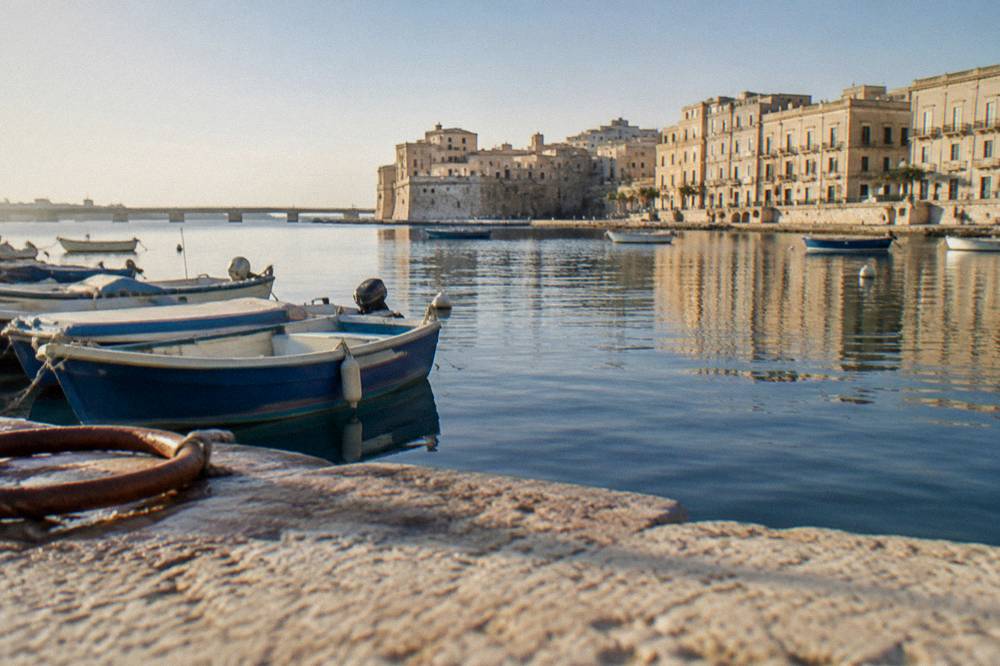
For a visitor from Matera the contrast is the point. Matera's water is invisible and underground: the Palombaro Lungo, the giant cistern under Piazza Vittorio Veneto, is the city's monument to water, a rainwater reservoir carved in the rock. Taranto's water is everywhere and impossible to ignore. Visiting both in one trip gives you the two ends of how southern Italians have lived with water for millennia, one storing it under a dry plateau, the other building a city in the middle of it. The site's guide to the Palombaro Lungo covers the Matera end of that pair.
The table below sets the two cities side by side on the figures this site has verified. Every cell traces back to the routing engine, the ERA5 reanalysis or the UNESCO record; nothing in it is a guess, and the Taranto rows carry only what the verified pack supports.
| Comparison | Matera | Taranto |
|---|---|---|
| Region | Basilicata | Puglia |
| Position relative to the sea | Inland, about 400 m above sea level | Coastal, on the Ionian Sea |
| Road distance between them | 52 km from Matera Centrale | 52 km, about 1 h 08 free-flow |
| Signature water feature | Palombaro Lungo cistern under Piazza Vittorio Veneto | Mar Grande and Mar Piccolo around the old town island |
| Old quarter character | Sassi cave dwellings cut into tufa | Città Vecchia island between two seas |
| UNESCO status | Sassi and rupestrian churches inscribed 1993 | None on this site's verified list |
Where Can You Eat In Taranto On A Day Trip?
Seafood is the reason to eat in Taranto, above all the mussels farmed in the Mar Piccolo, and the old town and the seafront are where the seafood restaurants cluster. Taranto's cooking is Puglian and Ionian, which sets it apart from Matera's inland Basilicatan table of bread, pasta and vegetables. Prices for individual restaurants are not part of this site's verified facts, so treat any figure you read elsewhere as unconfirmed and check the menu before you sit down.
The classic order is simple: mussels, raw or marinated, then a pasta with seafood, then grilled fish. Taranto's version of the Puglian kitchen leans harder on the sea than any town in the interior. Matera's own food identity runs the other way, built on pane di Matera bread, crude doughs and meat sauces; the site's guide to what to eat in Matera gives the inland half of the comparison. Doing both tables in one trip is one of the quiet pleasures of basing yourself in Matera.
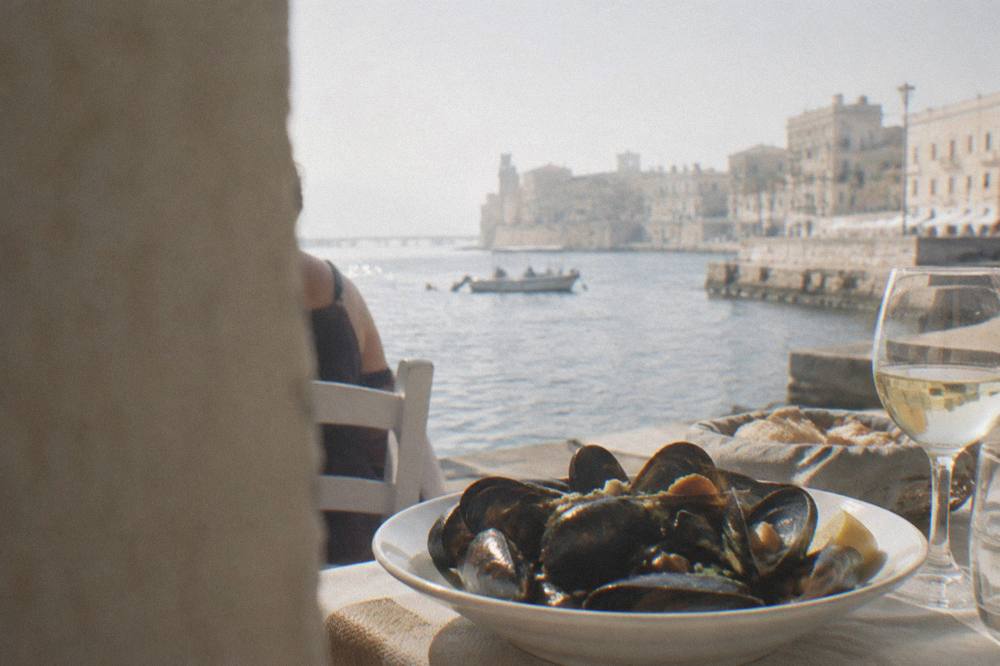
Two practical notes. First, lunch hours in southern Italy run later than many northern visitors expect, with kitchens often opening around 12:30 or 13:00 and closing mid afternoon; a day trip that arrives at 11:00 and wants lunch at 11:30 will find shutters. Second, the day trip timing cuts both ways: if you plan to eat a full seafood lunch in Taranto and then dinner back in Matera, you are signing up for two big meals in one day. The site's guide to Matera's restaurants is the one to read for the evening meal.
How Does Taranto Compare With Matera's Other Day Trips?
Taranto is one of the shorter day trips on Matera's list: 52 km and about 1 h 08 free-flow, closer than Alberobello, Bari, Polignano a Mare and Lecce, and only slightly farther than Metaponto. It is the only one of the nearby options that delivers a large, historic coastal city rather than a small town or a beach site. The trade-off is that it is a city visit, with city parking and city logistics, rather than the compact single-sight trips the coast towns offer.
The table below sets out the verified road distances and free-flow drive times from Matera Centrale to the day-trip destinations this site covers. The figures are computed over OpenStreetMap and describe no-traffic driving; round them up in practice.
| Destination | Region | Road km | Free-flow drive |
|---|---|---|---|
| Montescaglioso | Basilicata | 19 | 26 min |
| Altamura | Puglia | 20 | 20 min |
| Miglionico | Basilicata | 21 | 26 min |
| Gravina in Puglia | Puglia | 30 | 31 min |
| Metaponto | Basilicata | 47 | 52 min |
| Taranto | Puglia | 52 | 1 h 08 |
| Craco | Basilicata | 57 | 58 min |
| Bari | Puglia | 68 | 1 h 02 |
| Alberobello | Puglia | 68 | 1 h 23 |
| Polignano a Mare | Puglia | 100 | 1 h 29 |
| Ostuni | Puglia | 102 | 2 h 00 |
| Lecce | Puglia | 204 | 3 h 08 |
Read the table with the trip type in mind, not just the minutes. Metaponto, 47 km, is the beach-and-ruins half day. Taranto, five kilometres and about fifteen minutes farther, is the full city day. Alberobello and the Itria valley towns are the picture-postcard circuit, and the site's Alberobello guide covers it in depth. Craco and Castelmezzano are the inland drama circuit, ghost town and mountain gorge. Taranto competes with none of them on cuteness and beats all of them on sea.
When Is The Best Time Of Year For A Taranto Day Trip?
Late spring, early summer and early autumn are the best windows for a Taranto day trip from Matera, because the coast is warm enough to enjoy without the peak inland heat on the drive. By the ERA5 reanalysis for Matera, 1991-2020, July and August average a mean high of about 31 C, while May averages about 23 C and September about 26 C. September is also Matera's busiest month for arrivals, 61,630 in 2025 against 15,239 in February.
The climate figures this site uses are ERA5 reanalysis values, 1991-2020, for the Matera grid cell, and they describe the inland city, not the coast. Taranto, at sea level and on water, runs its own temperatures, which this site has not verified and does not print. What the Matera figures do tell you is the drive: crossing the Bradano plain in a Matera July, with a mean high of about 31 C and very little rain, is a hot drive in a car without good air conditioning.
| Month | Matera mean high C | Matera rain mm | Matera arrivals 2025 |
|---|---|---|---|
| Jan | 10.3 | 51.4 | 18,402 |
| Feb | 11.1 | 54.9 | 15,239 |
| Mar | 14.1 | 59.2 | 23,629 |
| Apr | 17.4 | 56.5 | 45,195 |
| May | 22.7 | 41.7 | 54,101 |
| Jun | 28.2 | 35.1 | 50,186 |
| Jul | 31.2 | 21.2 | 43,966 |
| Aug | 31.3 | 21.7 | 60,257 |
| Sep | 25.7 | 44.8 | 61,630 |
| Oct | 20.8 | 51.7 | 52,538 |
| Nov | 15.5 | 67.1 | 23,555 |
| Dec | 11.2 | 57.2 | 30,385 |
Two rows deserve a second look. July draws fewer arrivals to Matera than April, May, June, August, September or October, 43,966 against September's 61,630, even though July is as hot as August by the reanalysis. And September, the peak, is also the month when the heat has broken: a mean high of about 26 C, the sea still warm, and three quarters of that month's arrivals, 74.5%, from abroad. A September trip that pairs the Sassi with a Taranto coast day is the combination the numbers point at. The full breakdown is in the site's guide to the best time to visit Matera.
Should You Combine Taranto With Another Stop?
Combining Taranto with Metaponto is the one pairing the geography supports comfortably: the two lie on the same south-east corridor, Metaponto at 47 km from Matera and Taranto at 52 km, so a single day can take in the Greek ruins and the beach at Metaponto and still reach Taranto for a late seafood lunch. Any wider combination, adding Alberobello or the coast towns north of Bari, turns the day into more driving than sightseeing and is not recommended.
The arithmetic is plain. Metaponto to Taranto is a short hop along the Ionian coast, and both sit within about an hour of Matera. Alberobello sits in the opposite direction, north towards the Itria valley, and the Alberobello and Matera pairing works far better as its own day. If you are determined to see the trulli and the sea in one trip from Matera, the honest advice is to give each its own day, or to take a guided two-town day trip and let someone else absorb the logistics.
For travellers who would rather not drive at all, the guided options from Matera concentrate on the walking and panoramic experiences in the city itself and on the established day-trip circuits. The sunset trip to the Murgia Timone belvedere, across the Gravina from the Sassi, is the one that pairs naturally with a coast day in the opposite direction: sea in the morning, canyon at dusk.
Back in the city, the compact guided walks cover the Sassi, the cave houses and the rock churches, and they suit the day-tripper's evening hours after a coast morning. The open-bus panoramic ride is the low-effort version, and the tasting walk adds the local table to the route.
Whichever shape you choose, book the coast day and the Sassi evening as separate blocks with a rest between them. The drive each way is short, but the two cities ask for different kinds of walking: flat seafront in Taranto, steep stepped lanes in the Sassi, where no route can honestly be called step-free. The site's guide to getting around Matera covers the ground conditions in the old quarters.
What Should You Know Before You Drive Back To Matera?
Before driving back from Taranto, plan your arrival into Matera around the ZTL camera hours: the Sassi gates run 10:00 to 20:30 from 16 September to 30 June and 10:00 to 24:00 from 1 July to 15 September, on weekdays and holidays alike, and the central ZTL zones run 24 hours a day. Park outside the restricted zones and walk in. The emergency number throughout the Matera district, and across Italy, is 112.
The ZTL rules are the single most expensive trap for day trippers with a car. The cameras are automatic, the fine follows the plate, and the rental company passes it on with an admin fee. The full hours, zones and declaration procedure are in the site's Matera parking and ZTL coverage, and the short version is this: never drive into the Sassi streets, park in one of the peripheral areas and descend on foot. The same discipline applies in reverse in Taranto, whose own restricted zones this site has not verified; read the signs there and assume enforcement is real.
Two smaller points close the practical list. Matera charges a tourist tax collected by your accommodation, and the amount is confirmed at booking, not on this site. And if the coast day leaves you wanting more of the water, the site's coverage of the beaches near Matera extends the Ionian thread with Metaponto and the Adriatic alternatives, Polignano a Mare and Monopoli, both in Puglia and both farther north.
Common Questions About A Taranto Day Trip From Matera
How far is Taranto from Matera?
Taranto is 52 km from Matera Centrale by road, about 1 h 08 of free-flow driving computed over OpenStreetMap. Allow extra time for traffic on the approach to the city and for parking.
Is Taranto in Puglia or Basilicata?
Taranto is in Puglia. Matera is in Basilicata. The regional border sits between the two cities, so local transport, parking and tourist information for Taranto come under Puglian authorities.
Can you visit Taranto from Matera without a car?
Driving is the only method this site can recommend. No public-transport timetable for the Matera to Taranto journey appears in the verified facts, so check current options locally or consider a guided day trip instead.
What is Taranto famous for?
Taranto is known as the city of two seas, because its old town island sits between the Mar Grande and the Mar Piccolo. It is also known for its swing bridge, its Aragonese castle, its Greek colonial history and the mussels farmed in the Mar Piccolo.
Is Taranto worth a day trip compared with the coast towns?
Taranto is the only large historic coastal city within about an hour of Matera, which makes it a different kind of day from Metaponto, Polignano a Mare or Monopoli. If you want a city with a museum, a castle and a working port, Taranto is the choice; if you want a beach day, Metaponto is nearer.
What is the best month for a Taranto day trip from Matera?
May, June and September pair the warmest usable coast weather with manageable conditions on the drive. By the ERA5 reanalysis for Matera, 1991-2020, July and August average a mean high of about 31 C inland, while September averages about 26 C and is also Matera's busiest month, with 61,630 arrivals in 2025.
The pairing that defines the whole trip is a simple one: a city of stone without a coastline, and a city of water without a canyon. Fifty-two kilometres and about an hour of driving separate them, and each one makes the other easier to understand.