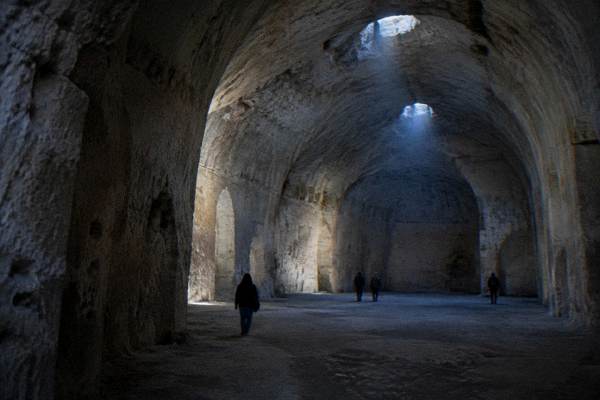
Palombaro Lungo
Beneath Piazza Vittorio Veneto in Matera lies the Palombaro Lungo, a vast underground water cistern carved into the tufa, the largest piece of a water system that kept the Sassi alive for centuries.
Short answer
The Palombaro Lungo is Matera's great underground cistern, cut into the limestone beneath Piazza Vittorio Veneto and reachable from the square in the modern centre. No verified ticket price or opening hours exist on an operator page, so visitors should confirm visit arrangements locally or through a guided tour before going.
Beneath the main square of Matera, in Basilicata, southern Italy, sits a reservoir the size of a church. The Palombaro Lungo, the long cistern, is the largest of the water stores carved into the pale tufa limestone under the city, and it sits directly below Piazza Vittorio Veneto, the square where the modern town meets the Sassi. Matera is an inland city at about 400 m above sea level on the edge of the Gravina canyon, with no river through the old quarters and no spring inside the Sassi themselves, so for centuries every drop of water the materani drank, cooked with and watered animals with had to be caught, channelled and stored in rock. The Palombaro Lungo is the monumental answer to that problem, and this page from the Matera Travel Guide editorial desk sets out what it is, how a visit works, and what to combine it with.
What Is The Palombaro Lungo In Matera?
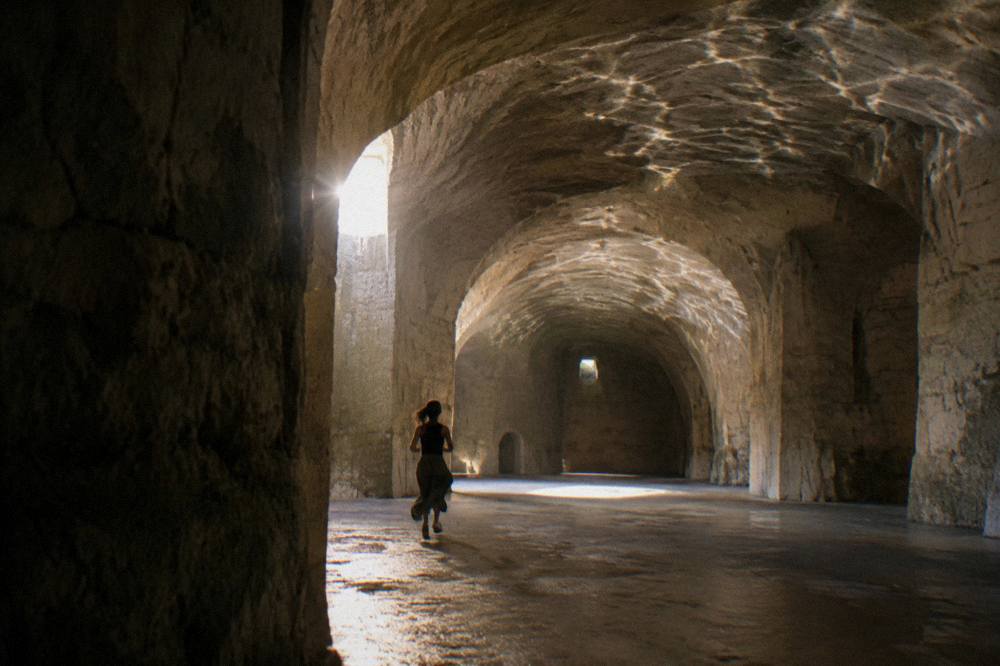
The Palombaro Lungo is a huge underground rainwater cistern excavated in the tufa beneath Piazza Vittorio Veneto in Matera, collecting water from the square above and the surrounding roofs and streets. It is the largest known cistern in the city, a pillared hall of dressed stone rather than a rough cave, and it formed part of the communal water system the Sassi depended on before the modern aqueduct. The name comes from palombaro, the diver who descended into the full cistern to clean it.
Matera's old water system worked on gravity and geology. Rain falling on the plateau and the rooftops of the Piano, the flat modern quarter, was gathered by canals and by the sloping paved surfaces and funnelled down into bell-shaped and corridor-shaped cisterns cut into the limestone. The tufa is soft enough to dig and stable enough to hold a vault, and it filters the water stored in it, which is why cisterns rather than wells dominate the old city. Near the Sasso Barisano side, cisterns sit stacked at different depths, some feeding houses, some serving whole neighbourhoods, and the network is dense enough that new ones still turn up during restoration work.
The Palombaro Lungo belongs to the late, monumental phase of that system. It was built under what is now the edge of the Piano, where the water of the square and the streets running into it could be concentrated in one place, and its interior is architectural rather than rustic: regular pillars, arches and a staircase for access, closer in feel to a crypt than to a tank. Walking routes through the Sassi, including the self-guided walking route of Matera, usually pass several smaller cistern mouths, and the contrast between those modest household tanks and this communal reservoir is the whole point of a visit.
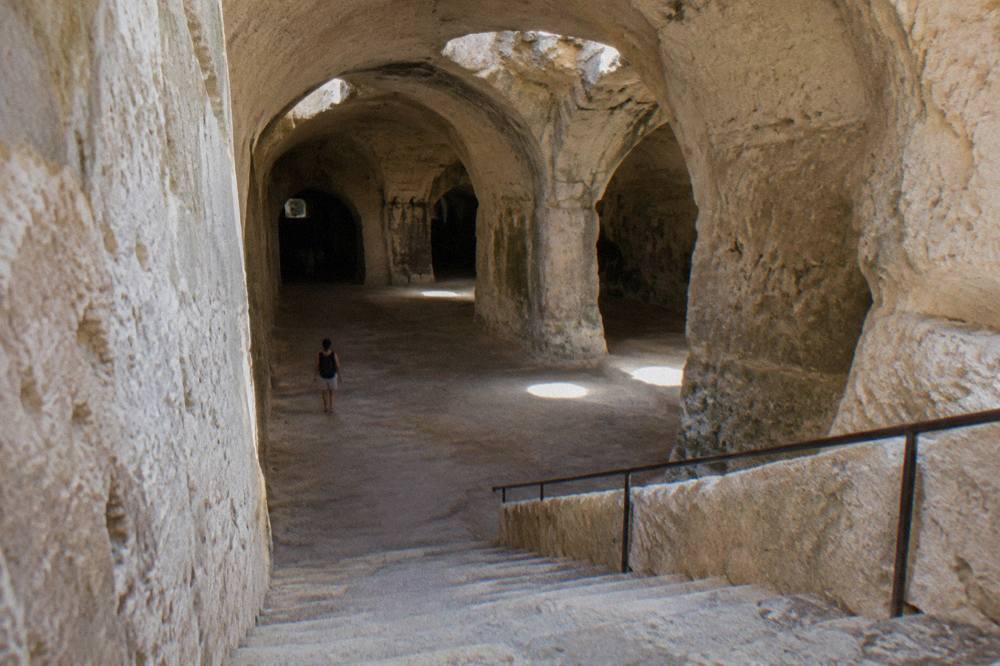
Where Is The Palombaro Lungo And How Do You Reach It From Central Matera?
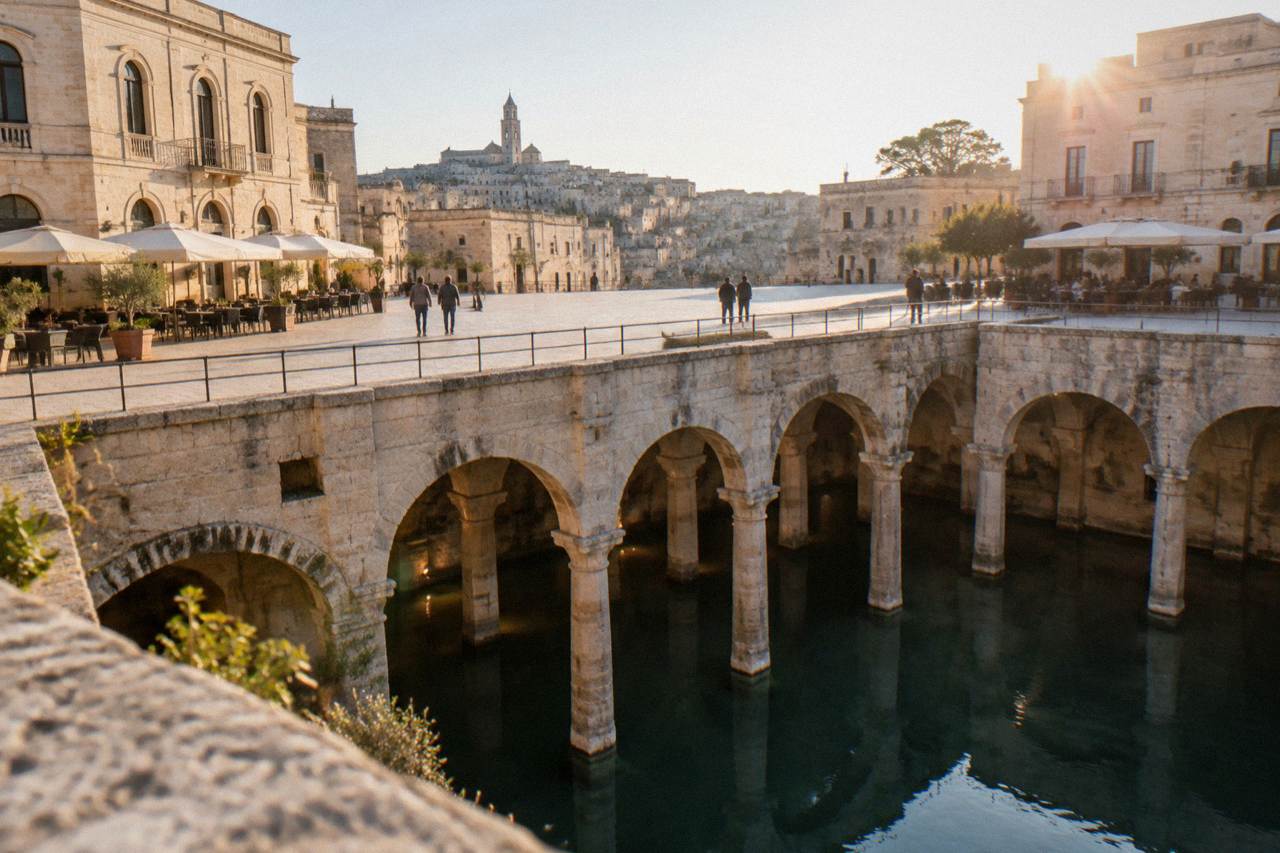
The Palombaro Lungo lies directly beneath Piazza Vittorio Veneto, the main square of central Matera, where the modern Piano quarter meets the edge of the Sassi districts. The entrance is reached from the square itself, on foot in a few minutes from anywhere in the historic centre. The square is a closed pedestrian area all day, with bollards opening only 04:00 to 08:00 on weekdays for deliveries, so no vehicle is needed or useful for the final approach.
Piazza Vittorio Veneto is the natural hinge of any visit to Matera. On one side stand the cafés and palazzi of the Piano, on the other the square drops into the Sasso Barisano, and underneath it the cistern network extends into the rock. The square's own paving conceals much of this: grilles, canal mouths and inspection hatches mark where the old water system breathes. The Piazza Vittorio Veneto guide covers the square above in detail, including the viewpoints over the Sassi from its western edge.
Reaching the square from elsewhere in the city is simple on foot because Matera's historic core is compact and steep. From the Cathedral it is a short downhill walk through the Piano; from the Sasso Caveoso it is a climb of stepped lanes. There is no verified public car park tariff or urban bus fare in the site's research, so visitors arriving by car should treat parking as something to confirm locally, and the ZTL rules matter: the ZTL Centro around Via del Corso and Piazza Sedile is active 24 hours a day, every day, and the ZTL Sassi cameras run 10:00 to 20:30 from 16 September to 30 June. The practical pattern is to park outside the restricted zones and walk in.
Walking the Sassi with a guide is the way most of this water story gets explained on the ground, and a good option is the Sassi History and Culture Walk, whose live listing shows times and availability: Check availability.
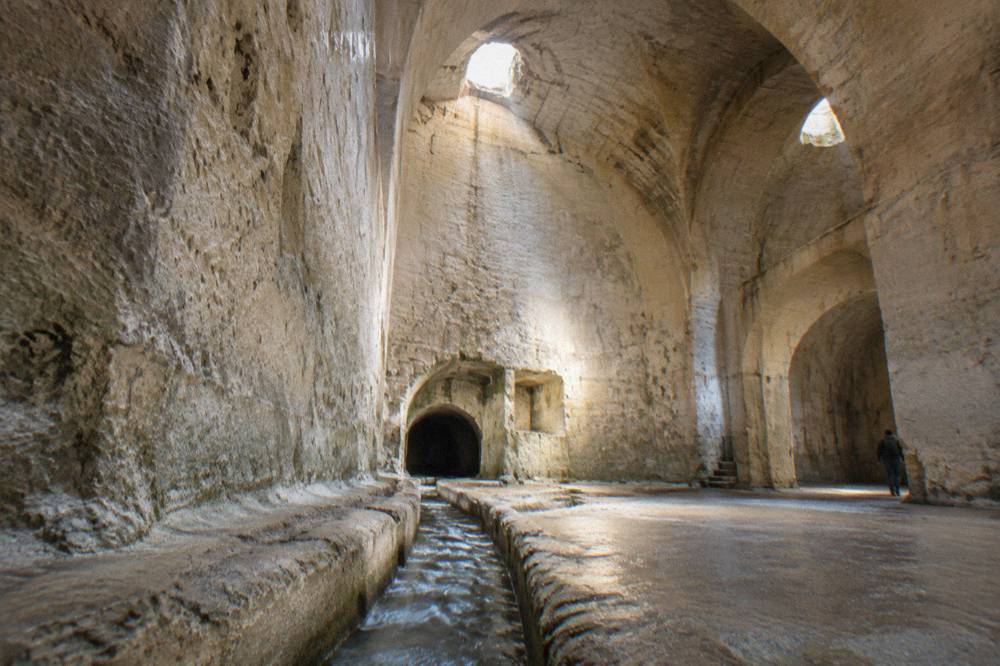
Can You Visit The Palombaro Lungo Without A Guide In Matera?
No operator page for the Palombaro Lungo carries a verified ticket price or published opening hours, so this site states none. The cistern's own official site exists and states that booking by phone is not possible, which points visitors to online or on-the-spot booking arrangements. The safe planning assumption is that access is managed rather than free-flowing, and that visitors should confirm the current price, hours and booking method locally or through a guided tour that includes the cistern.
This is a page that will not invent the missing numbers. The research behind this site found the Palombaro Lungo's official presence but no readable price list or timetable, and third-party figures circulating online do not meet the verification bar. The same caution applies to several other Matera cave sites: Casa Cava, the Madonna delle Virtù and San Nicola dei Greci complex, MOOM and Casa di Ortega all lack a verified operator page with prices or hours, and whether the interior of Castello Tramontano is open is likewise unconfirmed. For all of these, check locally or book a guided visit.
What can be said is how a cistern visit feels as an experience in the itinerary. The interior is dark, cool and resonant, with water at the base and vaults above, and visits move in small groups along walkways. Temperature underground is steady year-round regardless of the weather above, which makes the cistern one of the few Matera sights whose comfort does not depend on the season, a point worth remembering when planning around the Matera rainy day options.
Guided Sassi walks are the most reliable route in, because a licensed guide holds the access arrangements and folds the cistern into a circuit that also covers cave houses and rock churches. Tip-based walks also run locally in Matera, and where one of those mentions cistern access, confirm the details with the guide directly before booking.
How Does The Palombaro Lungo Fit The Water Story Of The Sassi Di Matera?
The Palombaro Lungo is the communal endpoint of a water system that began at the level of the single household: every cave dwelling group had its own small cistern, neighbourhoods shared larger bell-shaped tanks, and canals carried surplus rain toward bigger stores under the Piano. UNESCO's 1993 inscription of the Sassi and the Park of the Rupestrian Churches of Matera cites continuity over more than two millennia, and the water system is central to that continuity, since the settlement could not exist at this elevation without stored rainwater.
The household scale is easiest to see in the Casa Grotta di Vico Solitario, a reconstructed cave dwelling where the family cistern sits a few steps from the hearth and the mule stall. The ticket there, 8.00 EUR full, 5.00 EUR reduced, 3.00 EUR for ages 11 to 18, covers the cave house, the Neviera ice store, a natural cave and the rock church of Sant'Agostino al Casalnuovo. That single household complex shows the full chain: catch, store, keep cool, reuse.
The communal scale is the Palombaro Lungo. Between the two sat the neighbourhood tanks and the canal network, with maintenance handled by the palombari, who worked in the cold water at depth. The table below stacks the layers of the system.
| Layer of the water system | Where to see it in Matera | What it shows |
|---|---|---|
| Household cistern | Casa Grotta di Vico Solitario, Sasso Caveoso | A family tank beside the dwelling, fed from the roof and courtyard |
| Neighbourhood cisterns and canal mouths | Stepped lanes throughout the Sassi, grilles and carved channels | Shared storage and the gravity canals linking roof to tank |
| The great communal cistern | Palombaro Lungo, beneath Piazza Vittorio Veneto | Engineered, vaulted storage for a whole quarter of the Piano |
| Rock-cut drainage and ravine | The Gravina canyon edge, visible from the Sassi | Where surplus and wastewater ultimately ran off |
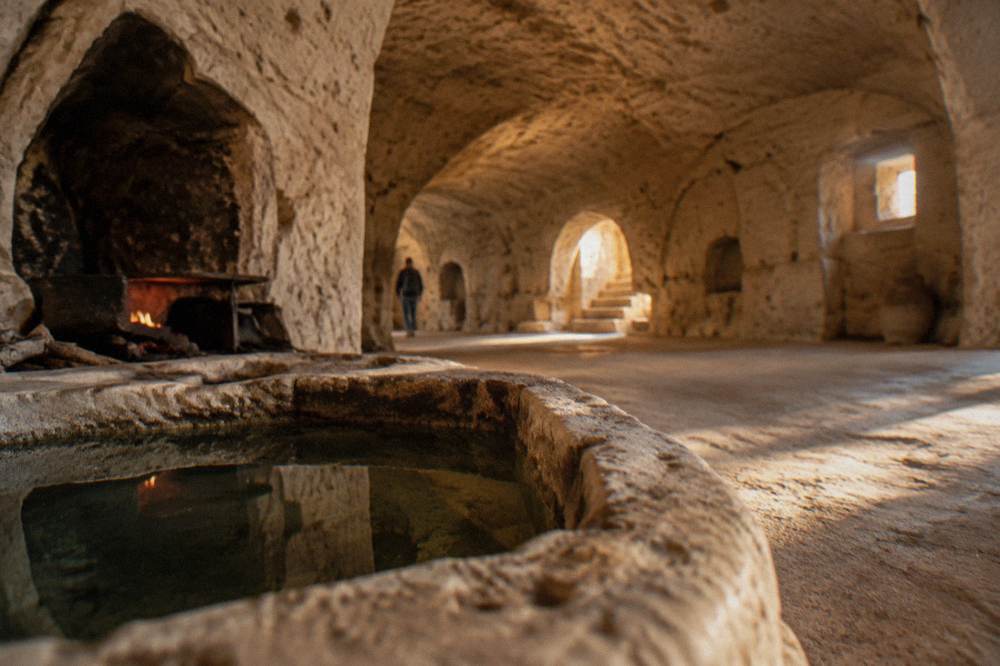
The system's decline came with the evacuation of the Sassi between 1952 and the 1970s, when residents were moved out of the cave districts and modern plumbing arrived. The 1986 law that opened the way to restoration brought investment back into the rock, and sites like the cistern were cleaned, lit and opened as heritage spaces rather than returned to service. That is why Matera today can show both a working water machine of the pre-aqueduct era and the dwellings it supplied, within ten minutes' walk of each other.
How Does A Cistern Visit Compare With Other Paid Sights In Matera?
Verified ticket prices in Matera cluster between 2.00 and 25.00 EUR, from the 2.00 EUR Casa Grotta di Via Fiorentini to the 25.00 EUR Oltre l'Arte all-inclusive ticket covering eight sites, while the national museums charge 10.00 EUR per site with a 15.00 EUR cumulative ticket valid two days and under 18s free. The Palombaro Lungo sits outside this table because its price is unverified, but the table below gives the honest planning range for everything around it.
| Sight in Matera | Verified full ticket | Notes from the operator page |
|---|---|---|
| Oltre l'Arte rupestrian churches | 4.50 EUR one church, 10.00 EUR three | Santa Lucia alle Malve, Madonna de Idris, San Pietro Barisano |
| Oltre l'Arte all-inclusive | 25.00 EUR, reduced 16.00 EUR | 8 sites including MATA and the Museo del Pane |
| Casa Grotta di Vico Solitario | 8.00 EUR | Free to age 10, tariff from 4 April 2026 |
| Casa Noha (FAI) | 6.50 EUR | Closed 5 to 22 October 2026 for renovation |
| MUSMA sculpture museum | 10.00 EUR | Reduced 5.00 and 7.00 EUR, free to age 6 |
| Museo Nazionale di Matera, Palazzo Lanfranchi | 10.00 EUR | 15.00 EUR cumulative ticket, 2 days, under 18 free |
Two practical notes go with that table. First, Oltre l'Arte closes all its sites on 25 December and 2 July, the day of the Festa della Bruna, so a Christmas or feast-day plan should not lean on those churches. Second, the Museo Ridola archaeological museum has been closed since 7 April 2025 for energy works and a new display, with no reopening date published, so it should not appear in any current itinerary. Casa Noha, the FAI interpretation centre that tells the Sassi story on film, is closed only for the October 2026 renovation window and is otherwise a strong companion to the cistern, as the Casa Noha guide explains.
The rupestrian churches run by Oltre l'Arte are the other half of the underground story. Where the cistern shows water engineering, Santa Lucia alle Malve and the rupestrian churches of Matera show worship carved into the same rock, often within sight of cistern mouths. A plan that pairs one church ticket with a guided cistern visit covers both halves of what the tufa was used for.
What Should You Combine With The Palombaro Lungo On One Morning In Matera?
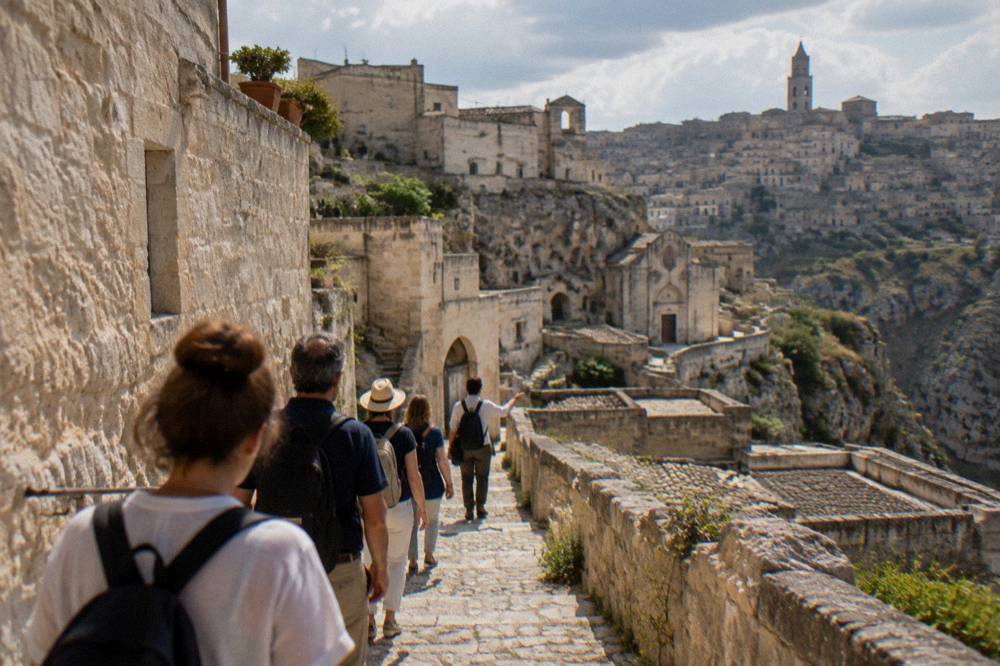
A realistic morning runs from Piazza Vittorio Veneto down into the Sasso Barisano and across to the Sasso Caveoso, taking in the cistern access point, one cave-house museum and one viewpoint over the Gravina, all inside a walk of roughly one to two kilometres with steady descents and stair climbs. The Sassi are steep, stepped and uneven underfoot, so no route through them, including the approach to any cistern entrance, should be treated as step-free, and comfortable shoes matter more than timing.
The table below lists the neighbours, using verified road distances from Matera Centrale station where the research gives them. Inside the historic core the distances are walking scale, measured in minutes rather than kilometres.
| Neighbouring sight | Distance from central Matera | Why it pairs with the cistern |
|---|---|---|
| Piazza Vittorio Veneto, the cistern's square | In the centre, walkable | The starting point itself, with viewpoints over the Sassi |
| Sasso Barisano | Immediate, below the square | Restored cave workshops and façades closest to the cistern |
| Sasso Caveoso | About 15 to 20 minutes on foot | The rawer, rockier district with the cave-house museums |
| San Pietro Caveoso | About 20 minutes on foot | Church terrace above the Gravina canyon |
| Belvedere Murgia Timone | Across the Gravina, reached by road or trails | The classic panorama of both Sassi from the plateau side |
The order matters less than the footwear. A morning that starts at the square, descends Barisano, crosses to Caveoso and finishes at the canyon edge repeats, in one walk, the whole geography of water: catchment on the Piano, storage in the rock, run-off into the Gravina. Visitors with more time can extend across the canyon into the Parco della Murgia, where the Jazzo Gattini visitor centre has operated as the park's info point and ticket office since 6 February 2026, and where Sentiero 406 with its suspension bridge now has a staffed, ticketed access point announced in March 2026.
For travellers building a wider day, the panoramic rides are a low-effort way to see the geometry of the city, the canyon and the plateau from above:
When Is The Best Time Of Year To Visit Matera For The Cistern And The Sassi?
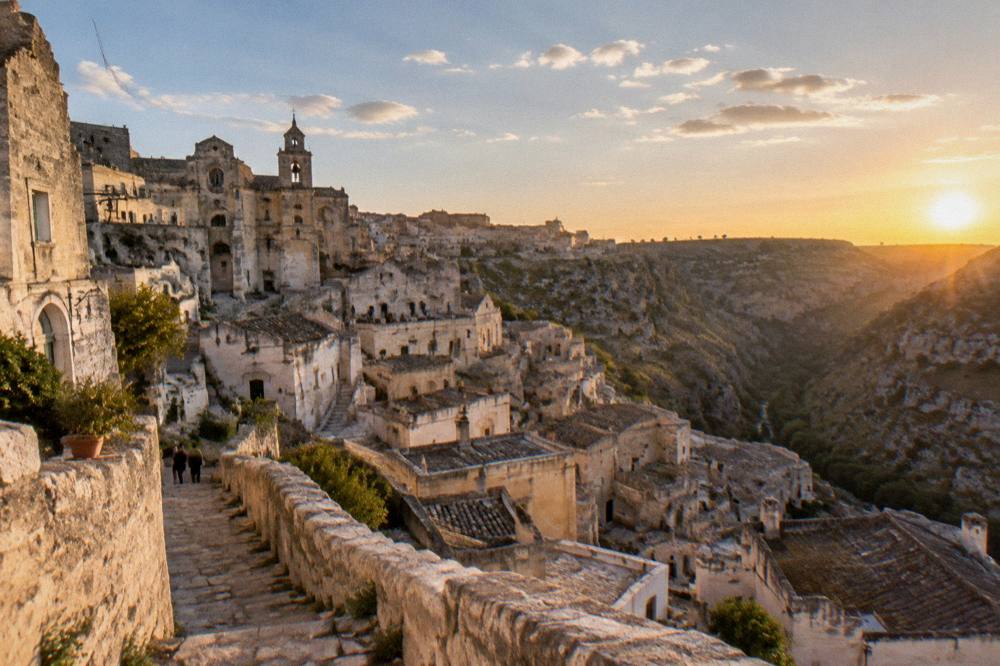
September is the busiest month in Matera by the APT Basilicata accommodation count, with 61,630 arrivals in 2025 against 60,257 in August, and the same dataset shows February as the quietest at 15,239. The ERA5 reanalysis 1991-2020 gives July and August mean highs of 31.2 and 31.3 C, falling to a September mean high of 25.7 C, which makes late September and October the strongest pairing of mild weather and manageable crowds, while the underground cistern itself stays cool in any month.
The monthly picture, from the same two verified datasets:
| Month | Mean high C, ERA5 1991-2020 | Rain mm | Arrivals 2025, APT Basilicata |
|---|---|---|---|
| January | 10.3 | 51.4 | 18,402 |
| February | 11.1 | 54.9 | 15,239 |
| March | 14.1 | 59.2 | 23,629 |
| April | 17.4 | 56.5 | 45,195 |
| May | 22.7 | 41.7 | 54,101 |
| June | 28.2 | 35.1 | 50,186 |
| July | 31.2 | 21.2 | 43,966 |
| August | 31.3 | 21.7 | 60,257 |
| September | 25.7 | 44.8 | 61,630 |
| October | 20.8 | 51.7 | 52,538 |
| November | 15.5 | 67.1 | 23,555 |
| December | 11.2 | 57.2 | 30,385 |
Two readings of that table are useful. One is the July paradox: July is as hot as August on the ERA5 means yet drew fewer arrivals in 2025 than April, May, June, August, September or October, so a July visit is hot but not the busiest. The other is the September peak: the APT data shows 74.5 per cent of September 2025 arrivals came from abroad, and across the whole of 2025, 57.4 per cent of the 479,083 arrivals were from outside Italy, with an average stay of 1.56 nights. That short average stay is why the central sights, the cistern among them, feel compressed into late mornings.
Winter has its own case. November is the wettest month at 67.1 mm on the ERA5 means and frost days cluster from December to March, but arrivals in February are the year's lowest, and the underground spaces hold a steady temperature whatever happens above. December also brings the Presepe Vivente nei Sassi, whose sixteenth edition runs public days across four December weekends and 2-3 January 2027, with tickets at 12.00 EUR full and 9.00 EUR for ages 10 to 18, free under 10.
What Practical Facts Should You Know Before Visiting Matera?
Matera uses the euro, is in Italy and the Schengen area, and charges a tourist tax collected by the accommodation, with the amount confirmed at booking rather than published on this site. The single emergency number is 112, live in the Matera district since 2 December 2025.
The nearest airport is Bari, about 64 km and one hour's drive away, and the rail operator is FAL, with no Trenitalia service, a change at Altamura from Bari, about 1 h 45 to 2 h, and no trains on Sundays and public holidays.
The transport detail matters for anyone scheduling a cistern visit into a day trip. FAL's posted weekday timetable shows the Bari to Matera journey changing at Altamura, and the operator's own notices have modified the rail programme on the Matera Sud to Altamura stretch from 12 October 2026, so current times should always be read on FAL's timetable page rather than trusted from a guide. Sunday travellers use FAL's replacement buses, eight arrivals and eight departures at Matera Centrale on the festive sheet.
The essentials in one place:
| Practical item | Current, verified state |
|---|---|
| Currency | Euro (EUR) |
| Emergency number | 112, single European number, live in the Matera district since 2 December 2025 |
| Tourist tax | Charged by the accommodation, amount confirmed at booking |
| Rail from Bari | FAL only, change at Altamura, about 1 h 45 to 2 h, no trains Sundays and holidays |
| Nearest airport | Bari, about 64 km, about one hour by road |
| ZTL Sassi cameras | 10:00 to 20:30 from 16 September to 30 June, 10:00 to 24:00 from 1 July to 15 September |
Is The Palombaro Lungo Worth Including In A Matera Itinerary?
Yes, for any visitor whose interest in Matera goes past the viewpoints, because the cistern is the one site that explains how a city could exist at this elevation without a river, and it sits directly beneath the square every visitor crosses anyway. The honest caveat is access: with no verified price or published hours on an operator page, the visit depends on confirming arrangements locally or joining a guided walk, so it rewards planning rather than spontaneity.
The travellers who rate the Sassi highest tend to be those who understand them as a working machine, not a backdrop. The cave house shows the dwelling, the rupestrian churches show the faith, and the cistern shows the engineering that held the whole settlement together. Without the third piece, the first two float free of the reason they exist in rock at all: water had to be caught where it fell and kept where it landed, and the materani built a reservoir of cathedral scale to do it.
Time budgeting follows from the average stay. With 1.56 nights per guest in 2025 by the APT count, the typical visit is short, and a cistern visit slots most easily into the first morning, anchored at Piazza Vittorio Veneto before the descent into the Sassi. Visitors with two or three days can spread the underground sites across mornings and keep afternoons for the plateau side, the canyon trails or a day trip to Alberobello, about 68 km and an hour and a half by road.
Common Questions About The Palombaro Lungo In Matera
What is the Palombaro Lungo in Matera?
It is Matera's largest underground rainwater cistern, a vaulted hall excavated in the tufa beneath Piazza Vittorio Veneto, built to store water gathered from the square and surrounding streets. The name refers to the palombari, the divers who maintained cisterns at depth.
How much does it cost to visit the Palombaro Lungo?
No verified ticket price has been found on an operator page, so this site prints none. Confirm the current price and booking method locally in Matera or through a guided tour that includes the cistern.
What are the opening hours of the Palombaro Lungo?
No published hours from the operator are verified. The cistern's official site states that booking by phone is not possible, so check current access arrangements before planning a visit.
Where exactly is the Palombaro Lungo located?
Directly beneath Piazza Vittorio Veneto, the main square of central Matera where the modern Piano quarter meets the Sassi. The square is a pedestrian area closed to vehicles all day.
Is the Palombaro Lungo accessible for visitors with mobility needs?
The Sassi districts around it are steep, stepped and uneven, and this site describes no route as step-free. Access to an underground cistern involves stairs by nature, so visitors with mobility needs should confirm arrangements in advance.
Can you visit the Palombaro Lungo on a guided tour of Matera?
Guided walks of the Sassi are the most reliable way in, since licensed guides hold the access arrangements. The listing for the Sassi History and Culture Walk shows live times and availability.
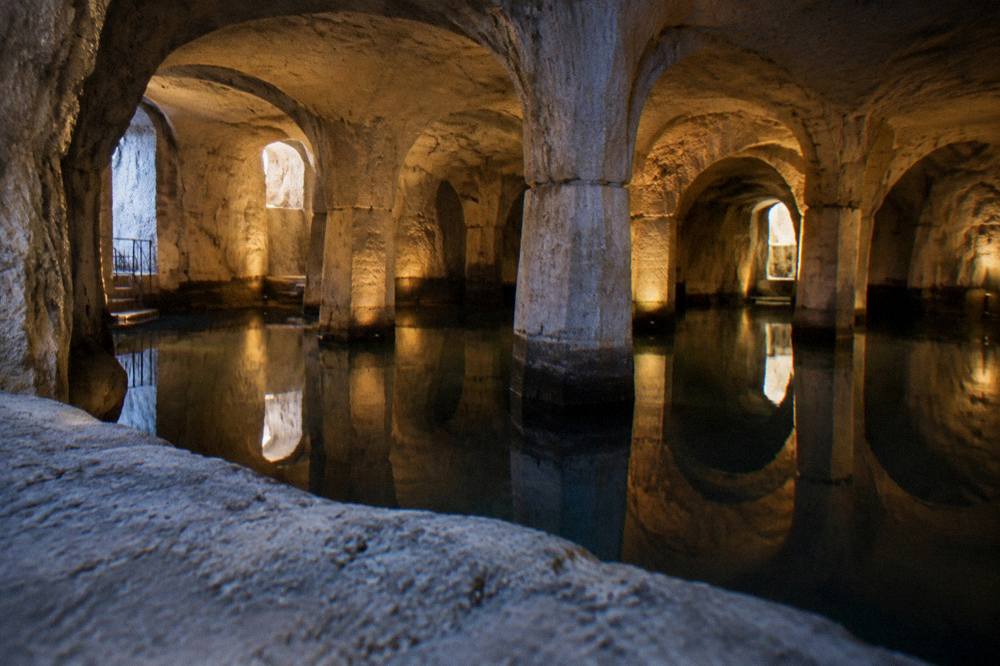
The Palombaro Lungo is the quiet keystone of Matera's story: book the access, stand under the vaults, and the whole city above the water line starts to make sense.