Can I Drink Tap Water In Matera?
Tap water in Matera, Basilicata: what the sources say about drinking it, the limestone terrain behind its taste, refilling bottles in the Sassi, and when to order bottled.
Matera, the inland city of Basilicata in southern Italy, sits at about 400 m above sea level on the edge of the Gravina canyon, and its tap water comes from the same municipal supply network that serves the rest of the country's towns and cities. Under Italian law, water from the public network is drinking water, subject to the same national quality rules that apply from the Alps to Sicily. That is the short answer for anyone filling a glass in a Matera hotel or cave guesthouse. The longer answer touches the pale tufa limestone the whole city is carved from, the taste that limestone leaves in the glass, and the practical question of where to refill a bottle while walking the steep lanes of the Sassi.
Can I Drink Tap Water In Matera?
Yes, tap water in Matera is drinking water. Italy treats water from the public municipal network as potable everywhere in the country, and Matera, in Basilicata, is no exception: the same national quality standards that govern Rome's or Bari's taps govern Matera's. The water is supplied by the local municipal network, tested under those national rules, and served in homes, hotels and restaurants across the city, including the cave accommodations of the Sassi.
That is the legal position, and it is the position every Italian authority states plainly: tap water from the public network is drinking water, full stop. There is no advisory telling visitors to boil it, filter it or avoid it, and no exception carved out for the south. If a Matera bar sets a bottle of water on your table unasked, that is hospitality and a chargeable item, not a warning. If you would rather not pay for it, ask for tap water by name, "acqua del rubinetto", and the staff will bring it or fill your own bottle.
Two honest caveats belong here. First, this site's editorial desk reports what the sources say, and the sources that matter for a specific glass of water are local: your accommodation's host knows the building's plumbing, and the municipal water utility knows the network. If a tap is marked "non potabile", not drinking water, that marking means what it says, and it is the one signal in Italy that always overrides the general rule. Second, old buildings have old pipes. Matera's Sassi are restored cave dwellings, some with centuries of masonry around their plumbing, and a host who says "run the tap a moment first" is giving ordinary building advice, not a verdict on the water.
Where Does Matera's Tap Water Come From?
Matera's water arrives through the municipal supply network of a city built on and into pale tufa limestone, the same soft rock that holds the Sassi's cave dwellings and rock-hewn churches. The terrain explains the water's character: rain falls on the Murgia plateau and the surrounding limestone country, filters through that mineral-rich rock, and the landscape around the city is dry karst rather than river plain. The city has no sea nearby, sitting inland at about 400 m elevation, with the coast a day trip away.
The geology is the part worth understanding, because it shapes both the water and the city. Matera stands on the edge of the Gravina canyon, a ravine cut through limestone, with the Murgia plateau rising opposite. Limestone country is porous: water moves through it, picks up dissolved minerals on the way, and surfaces where the rock allows. The same rock that made cave dwellings practical, easy to cut and naturally dry, also gives the region its water and gives that water a mineral signature.
| Month | Mean High °C | Rain mm | Rain Days (1 mm or more) |
|---|---|---|---|
| Jan | 10.3 | 51.4 | 8.1 |
| Feb | 11.1 | 54.9 | 8.8 |
| Mar | 14.1 | 59.2 | 9.4 |
| Apr | 17.4 | 56.5 | 9.7 |
| May | 22.7 | 41.7 | 7.9 |
| Jun | 28.2 | 35.1 | 6.4 |
| Jul | 31.2 | 21.2 | 4.4 |
| Aug | 31.3 | 21.7 | 4.7 |
| Sep | 25.7 | 44.8 | 7.0 |
| Oct | 20.8 | 51.7 | 7.5 |
| Nov | 15.5 | 67.1 | 8.3 |
| Dec | 11.2 | 57.2 | 8.5 |
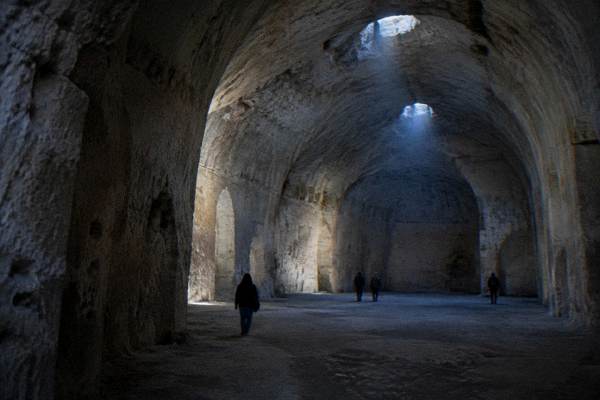
Those figures are ERA5 reanalysis values for the Matera grid cell, 1991-2020, modelled normals rather than a station record, and they show the pattern that matters for water: modest, unevenly spread rain through the year, a dry peak in July at 21.2 mm, and the wettest month in November at 67.1 mm. A limestone landscape with that rainfall profile stores its water in the rock rather than in rivers, which is one reason the region's towns grew where springs and cisterns allowed. Matera's history as a city of cisterns and water conservation is part of the same story, and the guide to what is special about Matera covers how deep it runs.
Is The Water Hard, And Will It Taste Different?
Limestone terrain like Matera's typically produces mineral-rich water, and visitors often notice a taste difference compared with softer water at home, but no published hardness figure for Matera's supply appears in this site's verified sources, so none is printed here. The honest position: expect tap water that carries the dissolved minerals of a karst landscape, and judge the glass on its own merits. If the taste is not to your liking, filtering or letting it chill changes it without any safety concern.
Taste is the honest frontier of this question. Water that has moved through limestone arrives carrying calcium and other dissolved minerals, which can register as a taste, sometimes chalky, sometimes simply different from home. None of that is a purity question. It is the same chemistry that gives mineral water its character, and Italy is a country whose bottled mineral water industry is built on precisely this kind of dissolved-mineral profile, marketed at a premium.
The practical guidance is short. Chill the water and the mineral taste recedes. A simple jug filter softens it further if a guest is staying long. And the comparison worth remembering is that the still or sparkling bottle on a Matera restaurant table is not a different category of liquid from the kitchen tap, it is the same national drinking-water rules plus marketing, sold at restaurant prices. Ordering it is a choice about bubbles and habit, not a safety decision.
Should You Still Order Bottled Water In Matera Restaurants?
No safety reason requires bottled water in Matera; the tap water is drinking water, and ordering "acqua del rubinetto" is normal and accepted. Bottled still or sparkling water remains a habit and a preference, and many restaurants will bring it unless told otherwise, sometimes as a chargeable cover item. The decision is about taste and bubbles, not health. Asking for tap water by its Italian name, or for your own bottle to be filled, is understood everywhere in the city.
The restaurant habit is the one place where visitors routinely spend money they did not need to spend. In much of Italy a sealed bottle appears at the table unless you decline it, and the charge sits on the bill. The Italian phrase is worth learning because it removes all awkwardness: "acqua del rubinetto, per favore". Staff in a tourist city like Matera, which logged 479,083 arrivals in registered accommodation in 2025 per the APT Basilicata data, hear every version of the request and none of it is unusual.
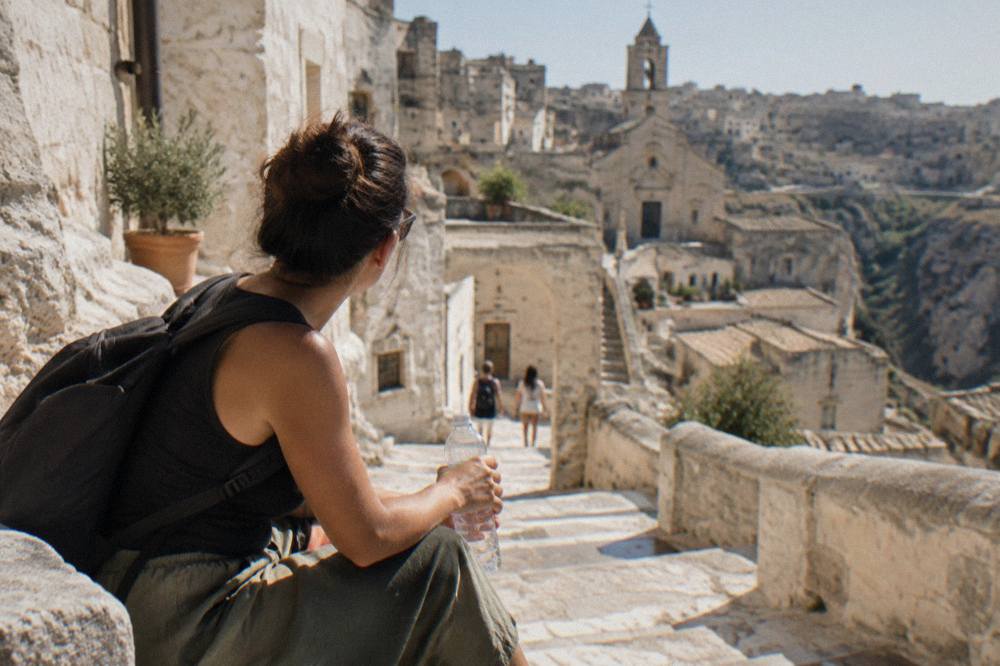
There is one setting where bottled water earns its place, and it is not the dinner table. Anyone heading out across the Murgia plateau or down toward the Gravina in July, when the ERA5 mean high sits at 31.2 °C, should carry more water than they think they need, and a sealed bottle bought in advance is simply logistics. The Sassi are steep, stepped and uneven, and a hot afternoon on those stairways costs more water than a casual walk. The packing advice in what clothes to pack for Matera pairs well with this: good shoes, a hat, and a filled bottle are the three items that earn their space in the bag.
Can You Refill A Bottle Around The Sassi?
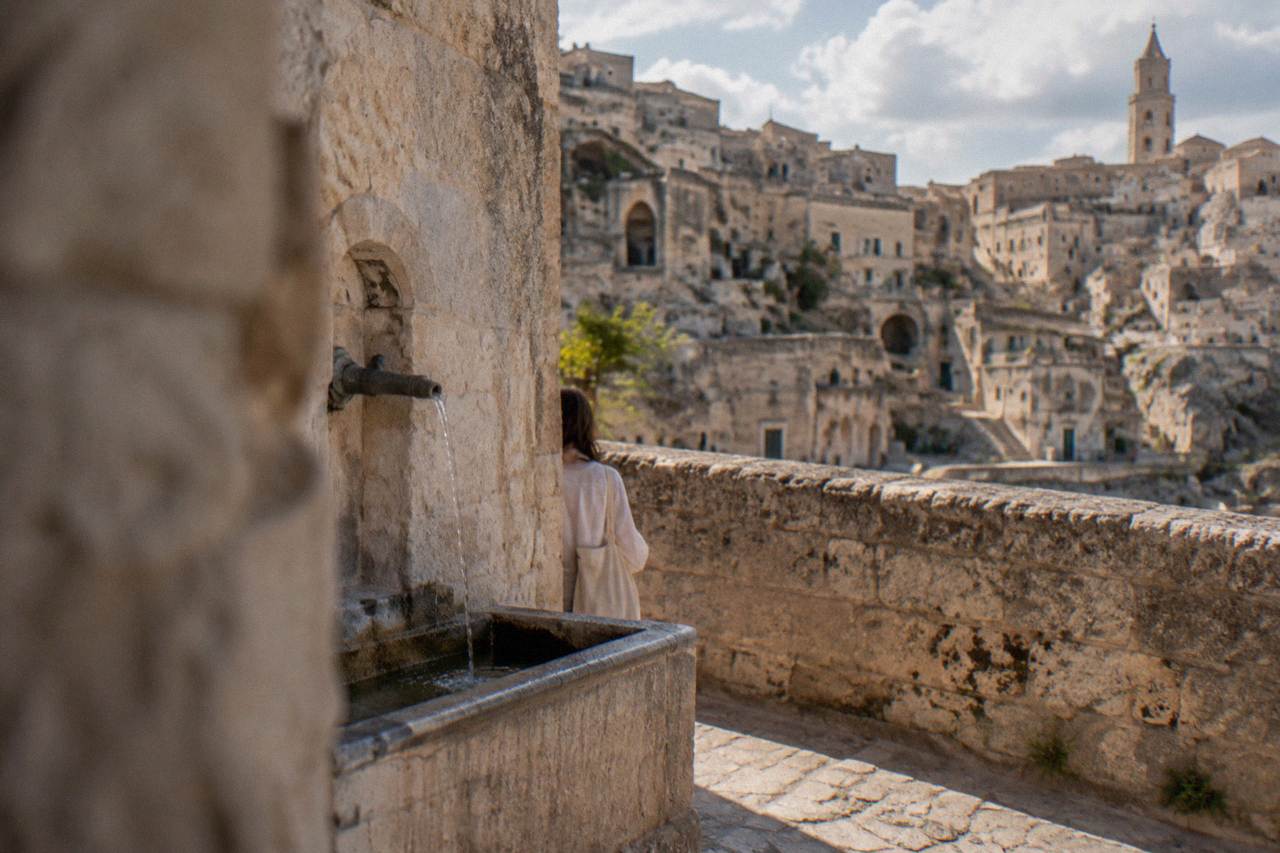
Carrying your own bottle and refilling it is the sensible plan in Matera, and the tap water in bars, cafes and accommodations is drinking water, so refills are a matter of courtesy rather than chemistry. No official map of public drinking fountains in the Sassi appears in this site's verified sources, so none is listed here. The reliable refill points are the places you are already stopping: your accommodation before you set out, and any cafe where you buy a coffee or a snack.
The geography explains the caution. The Sassi are a UNESCO World Heritage district of stepped lanes and cave facades, inscribed in 1993, and a walk through Sasso Caveoso or Sasso Barisano involves continuous climbs and descents on stone. Water matters more here than in a flat city, and the refill question matters with it. The honest answer from this desk is that the dependable strategy is to fill up at your base and to treat cafe stops as refill stops, asking staff to top up the bottle when you order something. That is normal practice in Italy, and in a city whose living depends on visitors walking its lanes, it is met without surprise.
A note on the tap markings themselves: any Italian tap marked "acqua non potabile" is telling the truth, and such markings appear across the country on public fountains, utility sinks and washroom taps that draw from non-drinking sources. The rule of thumb costs nothing to follow. Unmarked domestic taps supply drinking water. Marked taps do not. If you are unsure about a particular fountain or a particular building, ask, and if you need help for any reason while in the city, the single European emergency number 112 has covered the Matera district since 2 December 2025.
For anyone turning a water stop into a wider plan, the answer to how many nights to stay in Matera shapes how much walking, and therefore how much water, the visit involves.
Common Questions About Tap Water In Matera
Can I drink tap water in Matera?
Yes. Water from the public network in Matera, as everywhere in Italy, is drinking water under national quality rules. The only exception is a tap explicitly marked non potabile, which should be avoided as marked.
Does Matera's tap water taste different from water at home?
It may. The city sits on limestone, and water that filters through mineral-rich rock carries dissolved minerals that many visitors notice in the taste. Chilling the water or using a simple filter softens it; it is a taste matter, not a safety one.
Is it rude to ask a Matera restaurant for tap water?
No. Asking for "acqua del rubinetto" is normal and accepted. Bottled still or sparkling water is often brought unasked and charged, so if you do not want it, say so when ordering.
Can I fill my bottle at public fountains in the Sassi?
This site's verified sources include no official map of public drinking fountains in the Sassi, so no list is given here. The dependable refill points are your accommodation and any cafe where you stop, and any tap marked non potabile is not for drinking.
Should I buy bottled water for hiking around Matera?
Yes, as logistics rather than safety. Summer walks on the Murgia plateau or down toward the Gravina happen in real heat, with an ERA5 mean high of 31.2 °C in July, and the Sassi's stepped lanes add effort. Carry more water than you expect to need, whatever its source.
Matera's tap water, in the end, is the same category of thing as the city itself: shaped by limestone, unglamorous in the telling, and better than its reputation. Fill the bottle, mind the marked taps, and spend the saved euros on something the city does better than anywhere else, an evening on a terrace above the Sassi. For the wider picture of the city's water-carved history and cave dwellings, the Matera Travel Guide homepage is the place to start.