What Is So Special About Matera, Italy?
Matera, in Basilicata, southern Italy, is a city of cave dwellings and rock-hewn churches on the edge of the Gravina canyon, a UNESCO World Heritage site since 1993 and a working film location. Here is what makes it unusual.
Matera, in the region of Basilicata in southern Italy, is an inland city of about 400 m above sea level, built on the edge of the Gravina canyon with the Murgia plateau rising opposite. Its old quarters, the Sassi, are districts of cave dwellings, stone houses and rock-hewn churches cut directly into pale tufa limestone, a settlement form UNESCO describes as showing "continuity over more than two millennia". The city had 59,368 residents on 1 January 2026, and its accommodation logged 479,083 arrivals in 2025. What follows is what the primary sources say sets the place apart. This page sits alongside the site's fuller things to do in Matera guide and the rest of the Matera Travel Guide coverage.
What Is So Special About Matera, Italy?
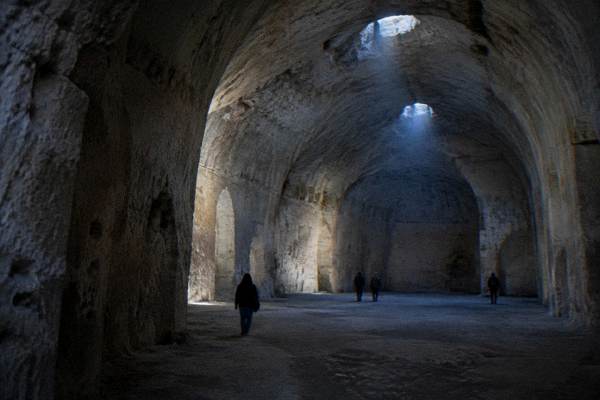
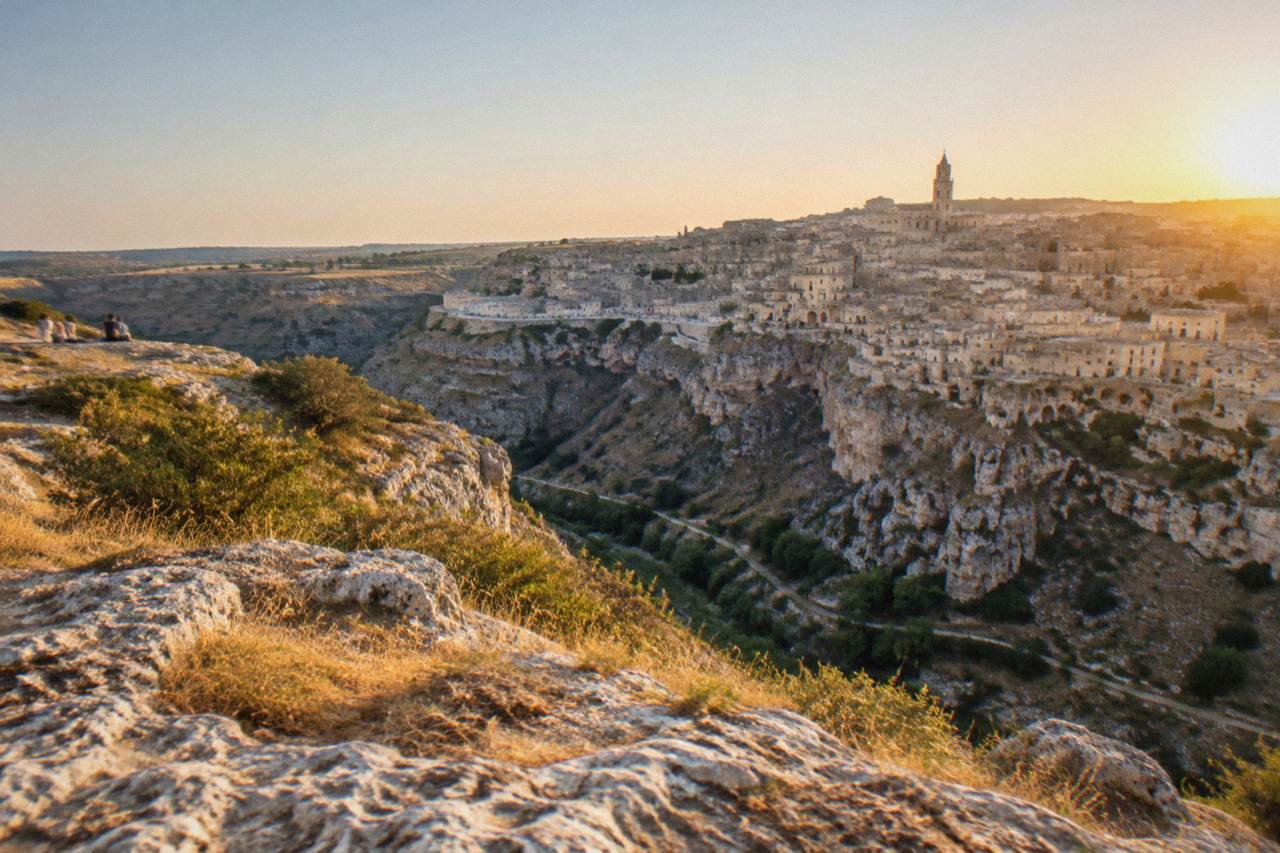
Matera is the only Italian city whose historic centre is largely made of caves: two entire quarters, Sasso Caveoso and Sasso Barisano, where houses, churches, cisterns and stables were cut into tufa limestone rather than built on top of it, facing each other across the Gravina canyon. UNESCO inscribed the Sassi and the Park of the Rupestrian Churches in 1993, and the same landscape has served as a biblical and Bond film set for six decades. The city is in Basilicata, not Puglia, an inland hill town whose coast, on the Ionian and Adriatic seas, is a day trip away rather than on the doorstep.
That combination is the short answer. No other city in Italy carries a UNESCO citation whose first stated criterion is an "outstanding example of a rock-cut settlement, adapted perfectly to its geomorphological setting and ecosystem and exhibiting continuity over more than two millennia", and no other European city of comparable size has served as the visible stand-in for ancient Jerusalem in films from Pasolini's 1964 The Gospel According to St. Matthew to Gibson's The Passion of the Christ. Residents are called materani, and the patron feast, the Festa della Bruna, has been fixed to 2 July since 1389 by the organisers' own history.
The story has a hard middle chapter. Residents were moved out of the Sassi between 1952 and the 1970s as the cave quarters became a national symbol of rural poverty, and a 1986 law opened the way to restoration. The Sassi the visitor sees today, hotels, museums and homes inside restored caves, are the product of that recovery. The site's companion page, why Matera is called the shame of Italy, covers that history in detail.
The Sassi: Two Cave Quarters Facing Each Other Across A Canyon
The Sassi are two districts, Sasso Caveoso and Sasso Barisano, flanking the fortified Civita ridge, in which dwellings, courtyards, wine cellars, cisterns and churches were excavated into the soft tufa face above the Gravina stream. UNESCO's 1993 inscription covers 1,016 hectares and describes "more than a thousand dwellings and a large number of shops and workshops". The plateau opposite, the Murgia, holds the protected park of rupestrian churches. A Sasso is the singular, the Sassi the plural.
What makes the landscape legible rather than merely picturesque is that the excavation is structured. A typical cave house opens onto a walled courtyard shared with neighbours, with a cistern beneath it to catch rainwater filtered through the limestone; the practice earned the Sassi a reputation for sophisticated water management before the modern network arrived. Some of the excavated spaces are churches, and their frescoes, rather than facades, are what mark them from the street.
A visit usually pairs the two banks of the canyon. From inside the Sassi, the Murgia cliff with its cave church openings reads as a skyline; from the Belvedere Murgia Timone side, the Sassi themselves are the skyline. Crossing between them, on foot through the historic centre or along the park's paths, is what gives the city its unusual geometry: you are always looking at the place from the place.
Several paid visits explain the cave interior: the Casa Grotta di Vico Solitario, a furnished cave house, and the rupestrian churches run by Oltre l'Arte, whose ticket page lists one church at 4.50 EUR, two at 8.00 EUR and three at 10.00 EUR. For a first orientation without long descents, panoramic rides by vintage three-wheeler cover the viewpoints above and inside the Sassi.
A UNESCO World Heritage Site Since 1993, With The Numbers Behind It
UNESCO inscribed "The Sassi and the Park of the Rupestrian Churches of Matera", site 670, in 1993 at its 17th session, under criteria iii, iv and v, citing a rock-cut settlement in continuity over more than two millennia and first occupied during the Palaeolithic. The inscribed property covers 1,016 hectares, and the surrounding park was created by regional Law 11/1990, covering about 8,000 hectares by the park's own count. UNESCO's own text gives a smaller protected figure of some 6,500 hectares for the law, which is why this site prints both framings rather than one exact number.
The park's own site lists 923 plant species, about a sixth of the national flora, on its karst plateau, which is an unusual statistic for a city-edge protected area and part of why the inscription covers a park as well as a town. The number of rupestrian churches in that park is often quoted as about 150; that figure is reported but not confirmed on a page this desk could read, so treat it as an approximation.
| UNESCO and city figures | Value | Source basis |
|---|---|---|
| Inscription year | 1993, 17th session | UNESCO site 670 |
| Criteria | (iii), (iv), (v) | UNESCO listing |
| Inscribed property | 1,016 ha | UNESCO listing |
| Regional park | About 8,000 ha by the park's count; some 6,500 ha per UNESCO's reading of Law 11/1990 | Park site and UNESCO |
| Park flora | 923 plant species | Park site |
| Residents, 1 January 2026 | 59,368 (ISTAT) | tuttitalia.it quoting ISTAT |
| Elevation | About 400 m above sea level (sources give 401 and 406 m) | tuttitalia.it and Wikipedia |
No official source opened by this desk says that. UNESCO's wording is "continuity over more than two millennia" with first occupation in the Palaeolithic, and that is the phrasing this site uses. The companion page on whether Matera is the oldest city in the world unpacks the claim.
A Film Location From Pasolini To James Bond
Matera has stood in for the ancient Levant in films since 1964, when Pasolini shot The Gospel According to St. Matthew there; the official regional tourism pages list King David (1985), The Passion of the Christ (2004), The Nativity Story and The Omen (both 2006), Wonder Woman (2017) and No Time to Die (2021) among productions that used the city. The same landscape plays itself in the TV series Imma Tataranni, set and filmed in the city. The Basilicata tourism board maintains a dedicated film-locations page, which is the source for the list above.
The film history matters to a visitor in a practical way: it is the reason the Sassi look familiar before you have arrived, and it has produced a small local industry of location walks, including a guided James Bond tour among the options on this site's roster. The Bond production used the Sassi streetscapes for the film's early sequences, and where Daniel Craig stayed in Matera has become a question in its own right.
| Film or series | Year | Named on |
|---|---|---|
| The Gospel According to St. Matthew (Pasolini) | 1964 | Basilicata tourism and Italy for Movies |
| King David (Beresford) | 1985 | Basilicata tourism |
| The Night Sun (Taviani brothers) | 1990 | Basilicata tourism |
| The Passion of the Christ (Gibson) | 2004 | Both official pages |
| The Nativity Story (Hardwicke) | 2006 | Basilicata tourism |
| The Omen (Moore) | 2006 | Basilicata tourism |
| Wonder Woman (Jenkins) | 2017 | Both official pages |
| No Time to Die (Fukunaga) | 2021 | Italy for Movies |
| Imma Tataranni (TV series) | From 2019 | Italy for Movies |
Not every title circulates accurately. Some pages credit Mary Magdalene (2018) and La lupa (1953) to Matera; no reliable confirmation of either has been found, so this site does not list them. The full film answer page carries the verified list with sources.
What The Arrival Numbers Say About The City Today
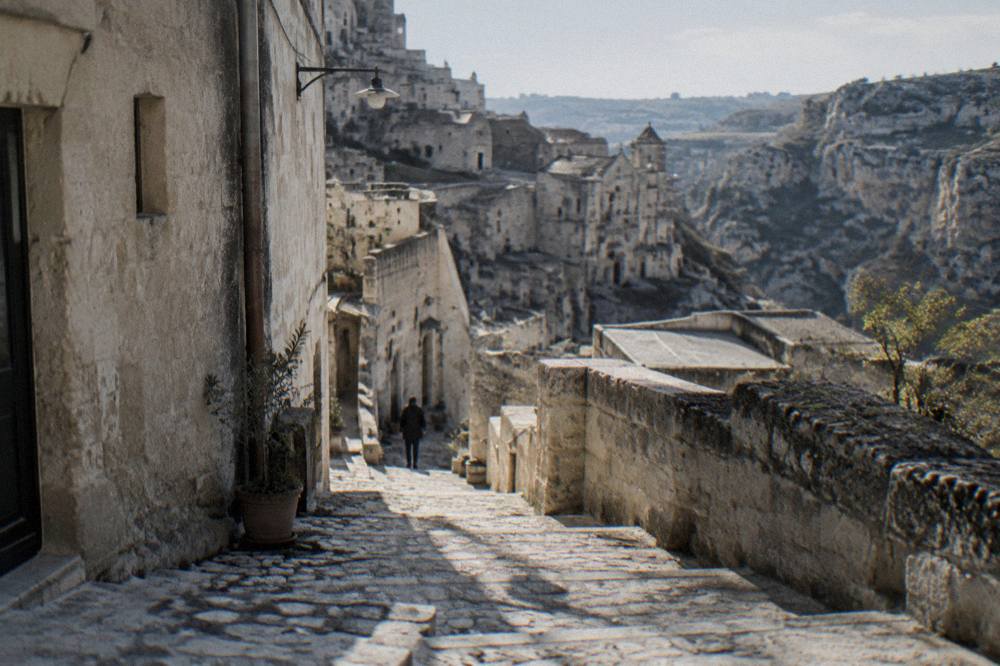
Matera's registered accommodation logged 479,083 arrivals and 748,812 overnight stays in 2025, an average of 1.56 nights per guest, and 57.4 per cent of those arrivals came from abroad, according to the APT Basilicata accommodation data. September, not August, was the busiest month, with 61,630 arrivals, and 74.5 per cent of September's arrivals were foreign guests. These are accommodation counts, not total visitors, and the site never presents them as a visitor census.
The 2025 figures beat the 2019 European Capital of Culture year, which logged 388,158 arrivals. That programme year matters to the city's recent identity: the foundation that ran Matera 2019 still operates, coordinating the Matera 2026 Mediterranean Capital of Culture and Dialogue programme. The climate side of the calendar, from the ERA5 reanalysis 1991-2020, gives a mean high of 31.2 C in July against 31.3 C in August, and yet July 2025 drew fewer arrivals than April, May, June, August, September or October. The crowd peaks when the heat eases.
The pattern has a practical read for a visitor planning dates. Late spring and early autumn combine mild temperatures with the fullest accommodation demand, while February, with 15,239 arrivals in 2025, is the quiet month and November the wettest at 67.1 mm of rain in the reanalysis normals. Deciding how many nights to stay in Matera is easier against that rhythm.
Do People Still Live In The Sassi?
Yes, people live in the Sassi again, though the quarters are a mix of homes, hotels, museums, restaurants and unrenovated caves rather than the densely packed residential districts they were before the evacuations, which ran from 1952 into the 1970s. UNESCO's inscription text records more than a thousand dwellings, and the restoration that followed the 1986 law returned a substantial resident and business population to both Sasso Caveoso and Sasso Barisano. The fuller answer, with the evacuation and return timeline, sits on the site's dedicated page.
The honest framing is that the Sassi are neither abandoned nor a museum. The question do people still live in the Sassi is one of the most common searches about the city, and the answer has changed twice in a century: full occupation, then state evacuation, then gradual repopulation under restoration law.
Common Questions About Matera
What is so special about Matera, Italy?
Matera is an inland city in Basilicata whose historic quarters, the Sassi, are cave dwellings and rock-hewn churches cut into tufa limestone above the Gravina canyon, inscribed by UNESCO in 1993 and used as a film location since 1964. No other Italian city has an inhabited centre of this form.
Is Matera in Puglia?
No. Matera is in the region of Basilicata, the region to Puglia's south-west. The confusion is common because the border is close: Bari, Alberobello and Polignano a Mare are all in Puglia and are popular day trips from Matera.
Is there a beach at Matera?
No. Matera is an inland city at about 400 m above sea level on the edge of the Gravina canyon. The nearest coasts are day trips: Metaponto on the Ionian sea and Polignano a Mare, Monopoli and Bari on the Adriatic.
What does Sassi mean?
Sassi is the Italian plural for stones or rocks, and it is the collective name of the two cave quarters, Sasso Caveoso and Sasso Barisano. One quarter is a Sasso, both together are the Sassi.
When is the busiest time to visit?
By the APT Basilicata accommodation data, September is the busiest month, with 61,630 arrivals in 2025 against 60,257 in August. February was the quietest month, with 15,239 arrivals.
What is the emergency number in Matera?
112, the single European emergency number, free with automatic location and multilingual support. Matera's phone district joined 112 on 2 December 2025.