Altamura Italy: The Bread City Day Trip From Matera
Altamura sits 20 km from Matera, across the regional border in Puglia, and it is the closest day trip of them all. Here is how the drive, the FAL rail link and the city itself fit together.
Short answer
Altamura is 20 km and about 20 minutes by road from Matera Centrale, in the neighbouring region of Puglia. It is the city where FAL trains change on the Bari to Matera route, and it is known across Italy for its bread.
Altamura is the nearest sizeable city to Matera in any direction: 20 km of road, about 20 minutes of free-flow driving from Matera Centrale, across the border that separates Basilicata from Puglia. Matera, for orientation, is an inland city in Basilicata, southern Italy, at about 400 m above sea level on the edge of the Gravina canyon, and Altamura is its Puglian neighbour on the other side of the Murge plateau. This guide sets out what is verified about the journey, the rail link, and how the city fits into a day trip plan alongside the other destinations within reach of the Sassi.
Where Is Altamura In Relation To Matera?
Altamura lies 20 km from Matera Centrale by road, about 20 minutes of free-flow driving, in the neighbouring region of Puglia. Matera is in Basilicata, so the trip crosses a regional border even though it is the shortest drive on this site's day-trip list. The figures come from routing computed over OpenStreetMap with the car profile, with no traffic, no stops and no parking time, so real journeys run longer.
That short distance is the whole argument for the trip. Every other day trip from Matera costs an hour or more on the road: Gravina in Puglia at 30 km and 31 minutes, Bari at 68 km and about 1 h 02, Alberobello at 68 km and about 1 h 23. Altamura is the only neighbour close enough that a half day works, which also makes it the natural stop to pair with a second destination.
The two cities share the same limestone world. Matera's Sassi are cut into tufa on the edge of the Gravina canyon; Altamura stands on the Murge, the same pale plateau, and its old town is built of the same honey-coloured stone. The Matera Travel Guide treats it as the first rung on the day-trip ladder: if you have seen the Sassi and want one more town without a long drive, this is the one.
| Day trip from Matera Centrale | Road km | Free-flow drive |
|---|---|---|
| Altamura | 20 | about 20 min |
| Montescaglioso | 19 | about 26 min |
| Miglionico | 21 | about 26 min |
| Gravina in Puglia | 30 | about 31 min |
| Metaponto | 47 | about 52 min |
| Bari | 68 | about 1 h 02 |
| Alberobello | 68 | about 1 h 23 |
| Polignano a Mare | 100 | about 1 h 29 |
How Do You Get From Matera To Altamura?
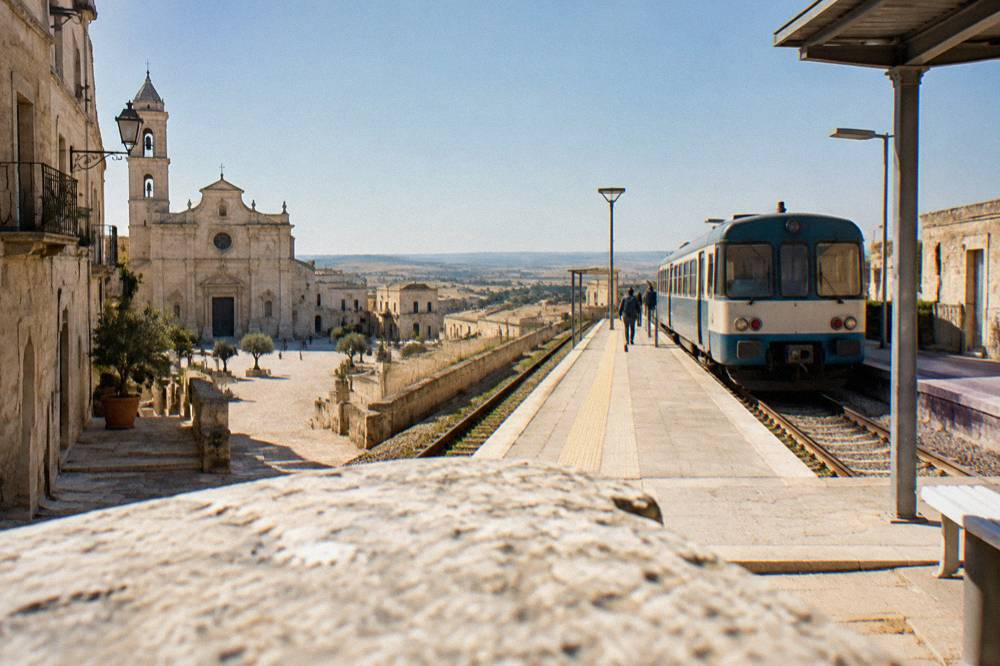
The practical options are the car, the FAL train with a change at Altamura, or a booked excursion. By road it is 20 km and about 20 minutes. FAL's posted weekday timetable from Bari has passengers change at Altamura for Matera, and the same junction serves the reverse trip; there are no trains on Sundays and public holidays, when FAL runs replacement buses. Current times sit on FAL's own timetable pages.
The rail detail matters more than most guides admit. There is no Trenitalia station in Matera; the operator is FAL, Ferrovie Appulo Lucane, and its line from Bari passes through Altamura before dropping into Matera. The posted weekday sheet shows 21 departures from Bari Centrale and 18 arrivals at Matera Centrale, with a change at Altamura and a journey of about 1 h 45 to 2 h end to end. Anyone coming the other way, Matera to Altamura, rides the same line for one leg of it. From 12 October 2026 FAL changed the rail programme between Matera Sud and Altamura, replacing two named trains with buses, so the live sheet is the only reliable source for a departure time.
Sundays need a flag. On Sundays and public holidays no FAL trains run at all; the operator runs replacement buses, eight arrivals at and eight departures from Matera Stazione Centrale in the festive sheet. A Sunday rail day trip to Altamura therefore means a bus, and the times are on FAL's holiday sheet.
Driving is simpler but ends at a parking question this site cannot answer. Public car park names and tariffs in Matera are not verified anywhere in this site's research, and the same applies to Altamura; the advice is to check tariffs on the ground. What is verified is the ZTL picture on the Matera side: the Sassi limited traffic zone has cameras active 10:00 to 20:30 from 16 September to 30 June, and 10:00 to 24:00 from 1 July to 15 September, while ZTL Centro runs 24 hours a day. The Bari day trip guide covers the same rail line in the other direction.
If self-organising the day sounds like work, guided excursions from Matera exist that put a tour leader on the bus and fold several towns into one itinerary. The Alberobello and Matera circuit is the one this site features, and it suits travellers who want the transport, the commentary and the timing handled rather than a solo rail adventure.
What Is Altamura Known For?
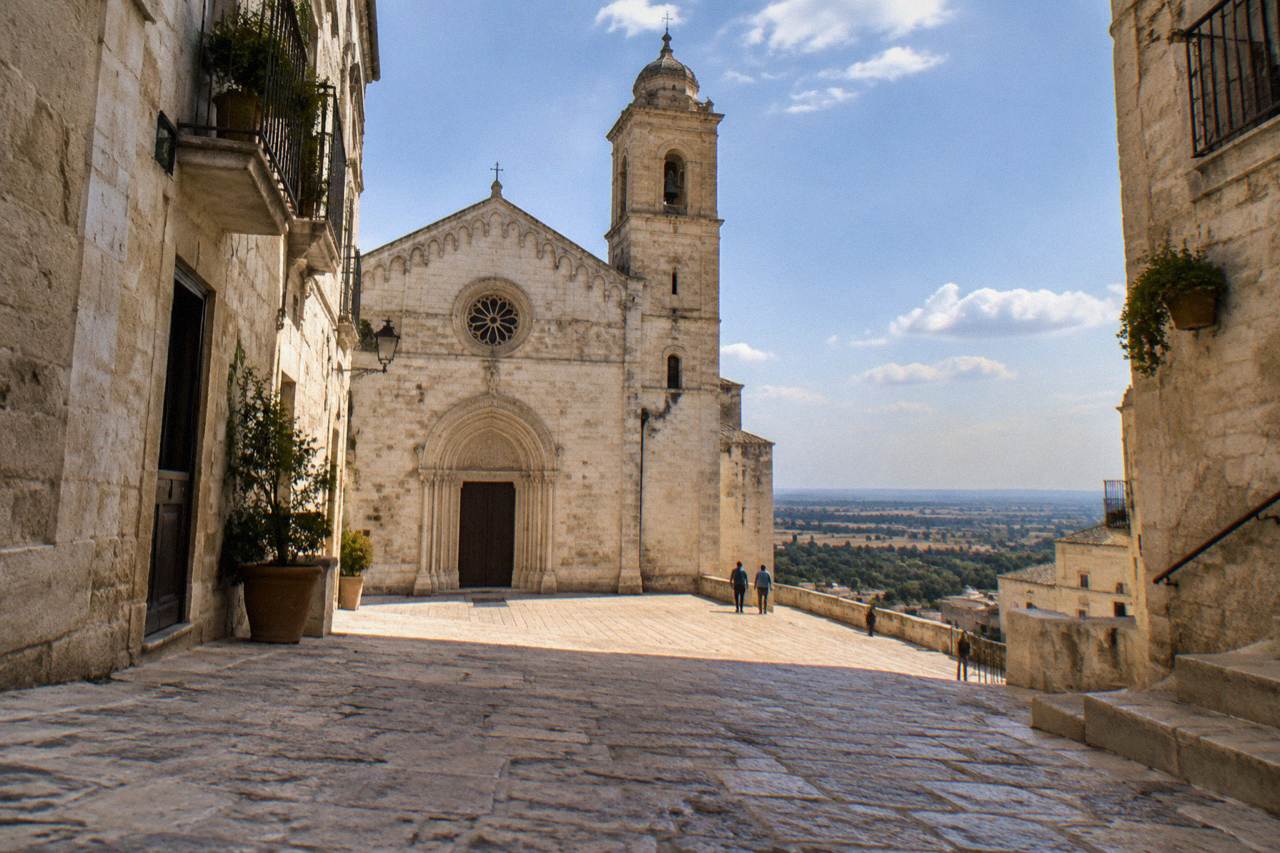
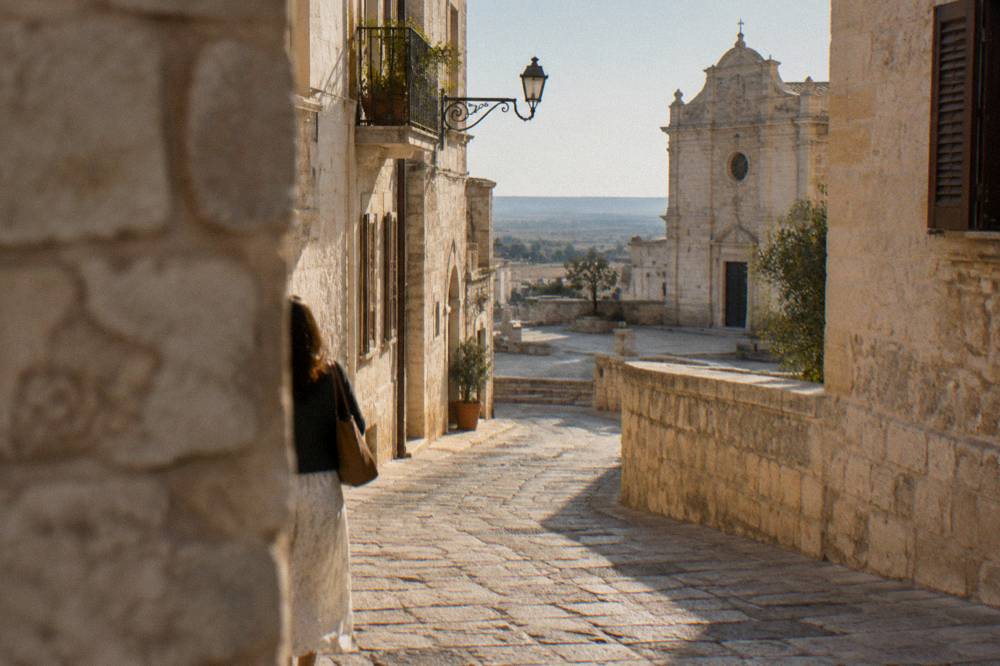
Altamura is known across Italy for its bread, and for a walled old town of pale limestone on the Murge plateau. The city sits in Puglia, the region neighbouring Matera's Basilicata, on the same karst landscape that produced the Sassi. Its bread, baked in wood ovens from local durum wheat, is the city's signature product, and the old town's walls and lanes are what a day visitor actually walks through.
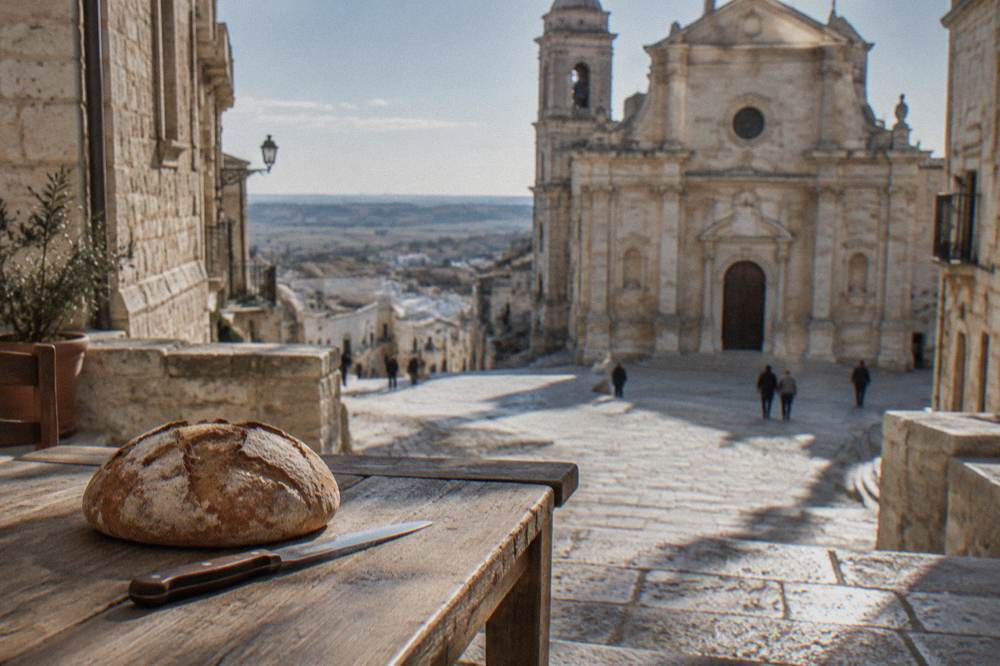
The bread is the honest headline. Altamura's loaves have a protected designation under European rules, and bakeries across the old town bake them daily from local durum wheat in wood-fired ovens. No price, no oven count and no bakery recommendation on this page is verified, so the working advice is to buy a loaf where the smell is strongest and confirm opening days locally. Food shops close on their own schedules, and nothing in this site's research pins them.
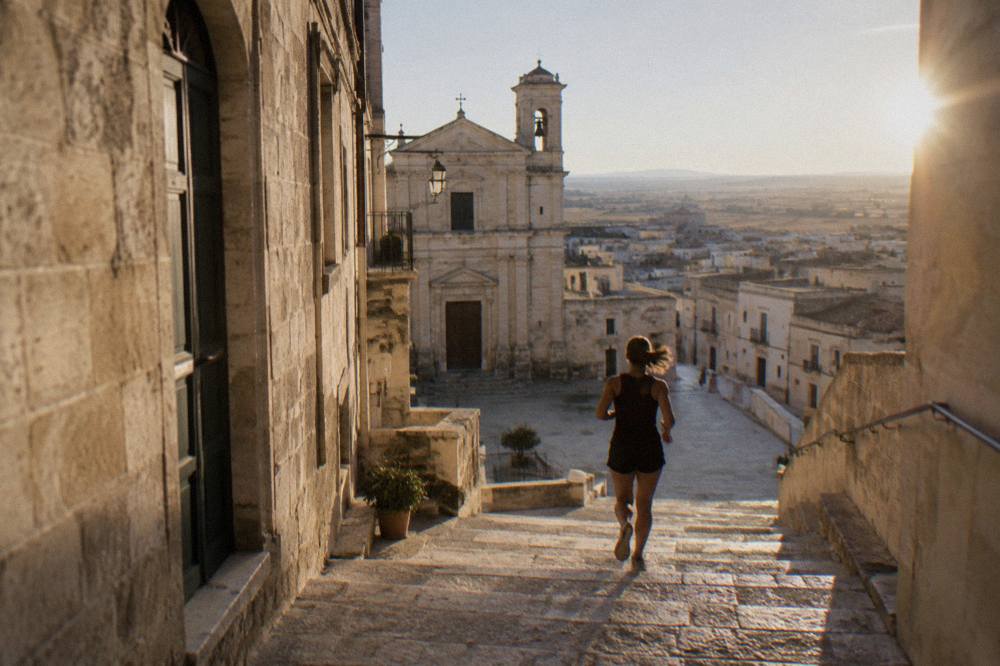
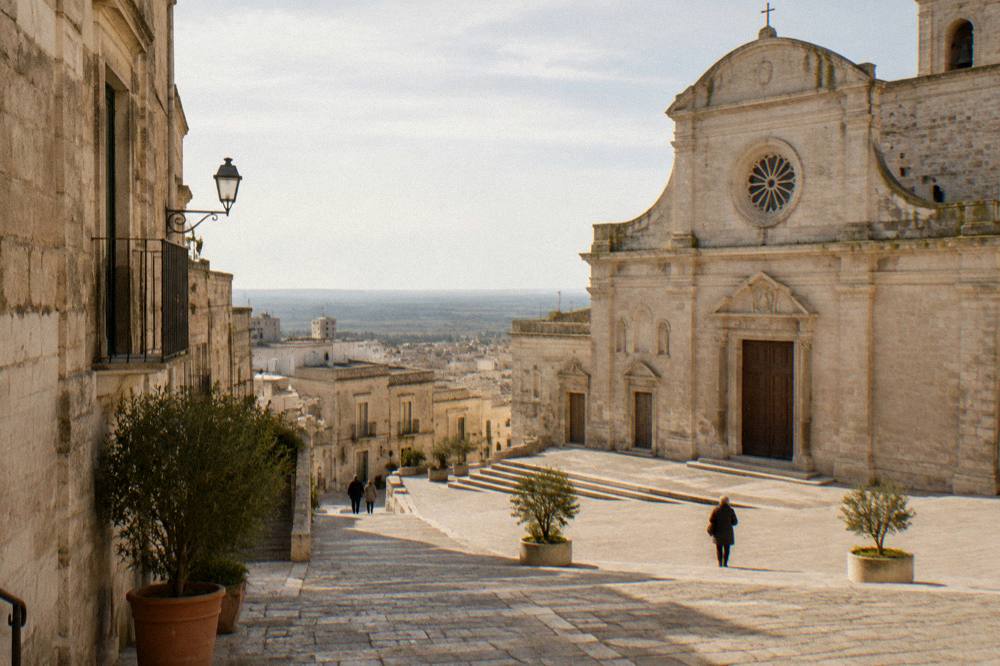
The old town is the second reason to go. Altamura keeps its medieval walls, a cathedral at the centre of the grid, and the claustrophobic lanes typical of the Murge towns. As with every town on this plateau, the streets are stone, stepped in places and uneven; nothing here is step-free, and the same warning this site gives for the Sassi applies across the border.
There is also the prehistory. The area around Altamura has yielded major Palaeolithic finds in limestone caves, and the territory is dotted with karst features like the nearby Pulo di Altamura doline. Opening hours, ticket prices and visit arrangements for any specific site should be confirmed at the source before planning a visit around one.
For context, Matera's own UNESCO inscription, "The Sassi and the Park of the Rupestrian Churches of Matera", dates from 1993 and covers 1,016 ha on the Basilicata side. Altamura is not part of that inscription; it is a separate Puglian city with its own story, which is exactly why the pairing works. The Sassi di Matera remain the anchor of any stay, and Altamura is the garnish.
| What draws visitors to Altamura | What is verified | What to confirm locally |
|---|---|---|
| The bread with protected status | The designation and the city's reputation | Bakery hours, oven days, loaf prices |
| The walled old town | Walls, cathedral and lanes exist on the Murge | Opening hours of specific buildings |
| The Palaeolithic cave finds | Finds come from the area's limestone caves | Access, tickets, guided visit rules |
| The FAL rail junction | The Bari to Matera line changes at Altamura | Current departure times on FAL's sheets |
How Much Time Do You Need In Altamura?
A half day is enough for Altamura's old town on a first visit: the drive is about 20 minutes each way, the walled centre is compact, and the main activities are walking, eating and looking at stone. A full day only pays if you add a second destination, because Gravina in Puglia is 30 km from Matera and sits between Altamura and the coast road. The APT Basilicata data shows guests average 1.56 nights in Matera, so day trips are how short-stay visitors see the region.
The arithmetic is simple. Matera's own old quarters, the Sassi, the Civita and the Piano, fill a day on their own; the Matera walking tour pages on this site lay that out. Altamura adds a different texture, a working Puglian city rather than a museum quarter, and it rewards a slow lunch more than a checklist.
The pairing logic matters. Altamura alone is a half day. Altamura plus Gravina in Puglia, whose gorge and rock-cut church district are 30 km out, is a full day with one drive in the middle. Altamura plus Alberobello, at 68 km and about 1 h 23 from Matera, is a long day best done with an early start or an organised excursion. The Gravina in Puglia guide covers that leg in detail.
One timing note belongs here. September, not August, is Matera's busiest month: the APT Basilicata data logs 61,630 arrivals in September 2025 against 60,257 in August, and 74.5% of September arrivals came from abroad. Day-trip towns feel that spillover, so a shoulder-month visit buys quieter lanes in both cities.
Can You Combine Altamura With Alberobello Or The Coast?
Yes, and the road numbers make the combinations plain. Altamura is 20 km from Matera, Alberobello is 68 km and about 1 h 23, Gravina in Puglia is 30 km, and the coast starts further out: Polignano a Mare at 100 km and about 1 h 29, Monopoli at 110 km. Matera itself is inland, in Basilicata, so any beach day is a separate trip; combining Altamura with the coast in one day is possible but tight.
The classic combination is the two-region day: Altamura for bread and walls in the morning, Gravina in Puglia for the gorge in the afternoon, back to Matera for dinner. Both drives are short, both towns sit on the same plateau, and the whole loop stays under two hours of total driving.
The Alberobello combination is the one the organised tours solve. Alberobello's trulli district is a UNESCO site in its own right, and the drive from Matera is long enough that timing, parking and the walk between districts become a project. An excursion with a tour leader on board handles the sequencing; the listing for the Matera and Alberobello tour with tour leader on board carries the current price, rating and itinerary. The Alberobello guide covers the town itself.
The coast is a different animal. Polignano a Mare, Monopoli and Bari are all in Puglia on the Adriatic, and Metaponto is the Ionian option at 47 km and about 52 minutes. There is no sea at Matera, and no beach at Altamura either; both are plateau towns. If the aim is swimming, pick one coastal destination and give it the whole day, as the Polignano a Mare guide suggests.
| Combination day from Matera | Road legs, verified one-way figures | Feasible in one day? |
|---|---|---|
| Altamura only | 20 km each way | Yes, a half day |
| Altamura + Gravina in Puglia | 20 km, then 30 km | Yes, a full day |
| Altamura + Alberobello | 20 km, then 68 km to Alberobello | Yes, a long day or a tour |
| Gravina + coast (Polignano) | 30 km, then 100 km to Polignano | Tight, pick one coast town |
| Metaponto (Ionian coast) | 47 km each way | Yes, a full day |
When Is The Best Time Of Year For An Altamura Day Trip From Matera?
The shoulder months win on the numbers. The ERA5 reanalysis for Matera, 1991 to 2020, puts the July and August mean high at 31.2 and 31.3 C, while May sits at 22.7 C and October at 20.8 C. The APT Basilicata data shows September is the peak month for arrivals, 61,630 in 2025, so April, May, October and the winter low season combine bearable plateau temperatures with thinner crowds.
The plateau is not the coast. Matera sits at about 400 m above sea level, and Altamura stands on the Murge at a similar elevation, so summer afternoons are hot on exposed stone and winters bring frost: the reanalysis counts about 20 frost days a year, almost all December to March. Rain peaks in November at 67.1 mm and bottoms in July at 21.2 mm. A winter day trip is perfectly workable with layers; a July one wants an early start and a long lunch indoors.
| Month | Mean high C (ERA5, 1991-2020) | Rain mm | Matera arrivals 2025 (APT) |
|---|---|---|---|
| Jan | 10.3 | 51.4 | 18,402 |
| Mar | 14.1 | 59.2 | 23,629 |
| Apr | 17.4 | 56.5 | 45,195 |
| May | 22.7 | 41.7 | 54,101 |
| Jul | 31.2 | 21.2 | 43,966 |
| Aug | 31.3 | 21.7 | 60,257 |
| Sep | 25.7 | 44.8 | 61,630 |
| Oct | 20.8 | 51.7 | 52,538 |
| Nov | 15.5 | 67.1 | 23,555 |
The table carries a quiet lesson. July is as hot as August yet drew fewer arrivals in 2025 than April, May, June, August, September or October, which makes it a sleeper month for anyone who can take heat. February, at 15,239 arrivals, is the quietest of all, with the November to March window trading warmth for empty lanes. The main things to do page carries season-by-season detail for the city itself.
What Should You Know Before You Go?
Three practical rules cover the trip. First, the emergency number across the Matera district is 112, live since 2 December 2025, not the older local numbers. Second, Matera charges a tourist tax collected by the accommodation, and its amount is confirmed at booking, not on this site. Third, confirm opening hours and ticket prices for Altamura's specific sights at the source before building a day around it.
The transport caveats repeat because they trip people up. FAL's rail programme between Matera Sud and Altamura changed from 12 October 2026, with two named trains replaced by buses, and no trains run on Sundays and public holidays at all. The fare for Bari to Matera Centrale sits in fare band 70 of FAL's 2026 matrix, but the euro figure did not verify, so this site prints none. Anyone quoting an exact rail time or fare for this route is guessing.
On the Matera side, the ZTL hours in the Sassi and Centro zones are camera-enforced, and the pedestrian bollards on Piazza Vittorio Veneto and Via Ridola open only for early-morning deliveries. A day tripper leaving a car inside those zones needs the parking question answered before departure, and this site's parking research found no verified municipal tariff to print. The Casa Grotta di Vico Solitario and the other Sassi sights will still be there in the evening, so an early start is not compulsory.
Should You Book A Guided Tour Instead Of Self-Driving To Altamura?
A guided day trip suits anyone who would rather not handle FAL timetables, ZTL cameras and Puglian parking on the same day. The excursions this site lists run with a tour leader on board and cover multi-town itineraries such as Matera with Alberobello; prices, ratings and durations render from each listing rather than from this page. Self-driving stays the flexible option, and the 20 km distance means it is also the cheap one, once parking is confirmed on arrival.
The trade-off is control against convenience. Self-driving to Altamura costs a car's running expenses and whatever parking charges apply, and it lets a traveller bolt on Gravina or a bakery stop on impulse. A booked excursion costs a per-person price shown on the booking page, and it removes the timing decisions, the route decisions and the Sunday rail problem in one stroke. Neither is the right answer for everyone.
For travellers whose base is Matera and whose appetite is landscape rather than towns, the Murgia side deserves a look before committing to another city. A sunset walk on the Murgia Timone belvedere, with transfer included, looks back at the Sassi from across the Gravina, and a longer route takes in the Sassi, the Murgia and the Tibetan bridge over the canyon. Both are listed below with their current prices and ratings.
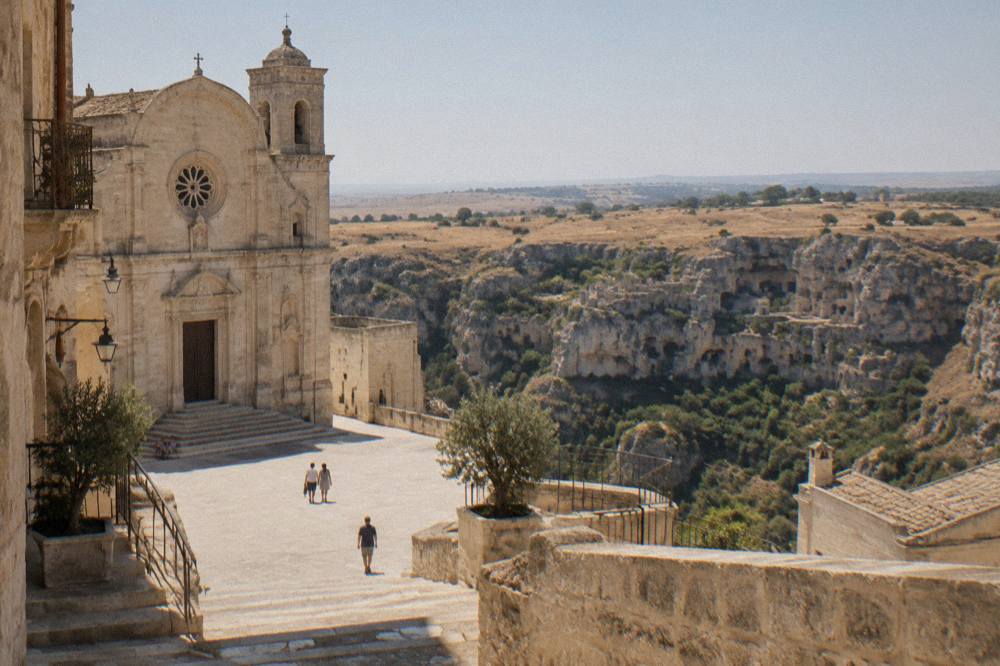
The canyon option, for the more energetic, is the full journey of the Sassi, the Murgia and the Tibetan bridge, a guided outdoor route across the Gravina that this site lists alongside the other adventure products. The access path, Sentiero 406, has had a staffed point and an online access ticket since March 2026, so even the independent version now needs a ticket bought in advance on the park's site; the price is not settled across sources, so this site prints none.
And for the town-pairing version of the day, the tour leader circuit remains the featured option: one organised day, two regions, transport handled.
Common Questions About Altamura Italy
How far is Altamura from Matera?
Altamura is 20 km from Matera Centrale by road, about 20 minutes of free-flow driving, computed over OpenStreetMap with the car profile. Real journeys run longer once traffic, stops and parking are added. It is the closest day trip on this site's list after Montescaglioso at 19 km.
Is Altamura in Puglia or Basilicata?
Altamura is in Puglia. Matera is in Basilicata, so the trip crosses a regional border even though the two cities sit on the same Murge limestone plateau about 20 km apart. Puglia and Basilicata are separate regions of Italy.
Can you take a train from Matera to Altamura?
Yes, on the FAL line, the same railway that connects Bari to Matera with a change at Altamura. There is no Trenitalia service in Matera. No FAL trains run on Sundays and public holidays, when replacement buses operate, and FAL changed part of the rail programme from 12 October 2026, so current times must be read on FAL's own timetable pages.
What is Altamura famous for?
Altamura is famous for its bread, baked from local durum wheat in wood-fired ovens and sold across the old town, and for its walled medieval centre of pale limestone. The surrounding area has also yielded major Palaeolithic finds in limestone caves. Details such as opening hours and prices can change, so confirm locally before visiting.
Is Altamura worth a day trip from Matera?
As a half day, yes: the drive is about 20 minutes each way and the walled centre is compact. As a full day it works better combined with Gravina in Puglia, 30 km from Matera, or with Alberobello on an organised excursion. The APT Basilicata data shows guests average 1.56 nights in Matera, so day trips are how short-stay visitors see the surrounding region.
Does it snow in Altamura in winter?
Both Matera and Altamura sit at elevation on the Murge plateau, and the ERA5 reanalysis for Matera, 1991 to 2020, counts about 20 frost days a year, almost all between December and March. Snow is possible in cold snaps but is not a fixture of the winter; check the forecast before a winter drive.
Altamura is the day trip you can decide on over breakfast: 20 km, about 20 minutes, a walled Puglian town on the same stone as the Sassi, and a rail line that runs straight back to Matera Centrale whenever the loaf is bought and the light goes.