Matera Walking Tour
Matera, an inland city in Basilicata, southern Italy, is built for walking: two cave districts, a canyon rim and a plateau of rock churches, all within roughly an hour on foot. This guide lays out what a guided walk covers, what the entry tickets cost, and how to plan the routes.
Short answer
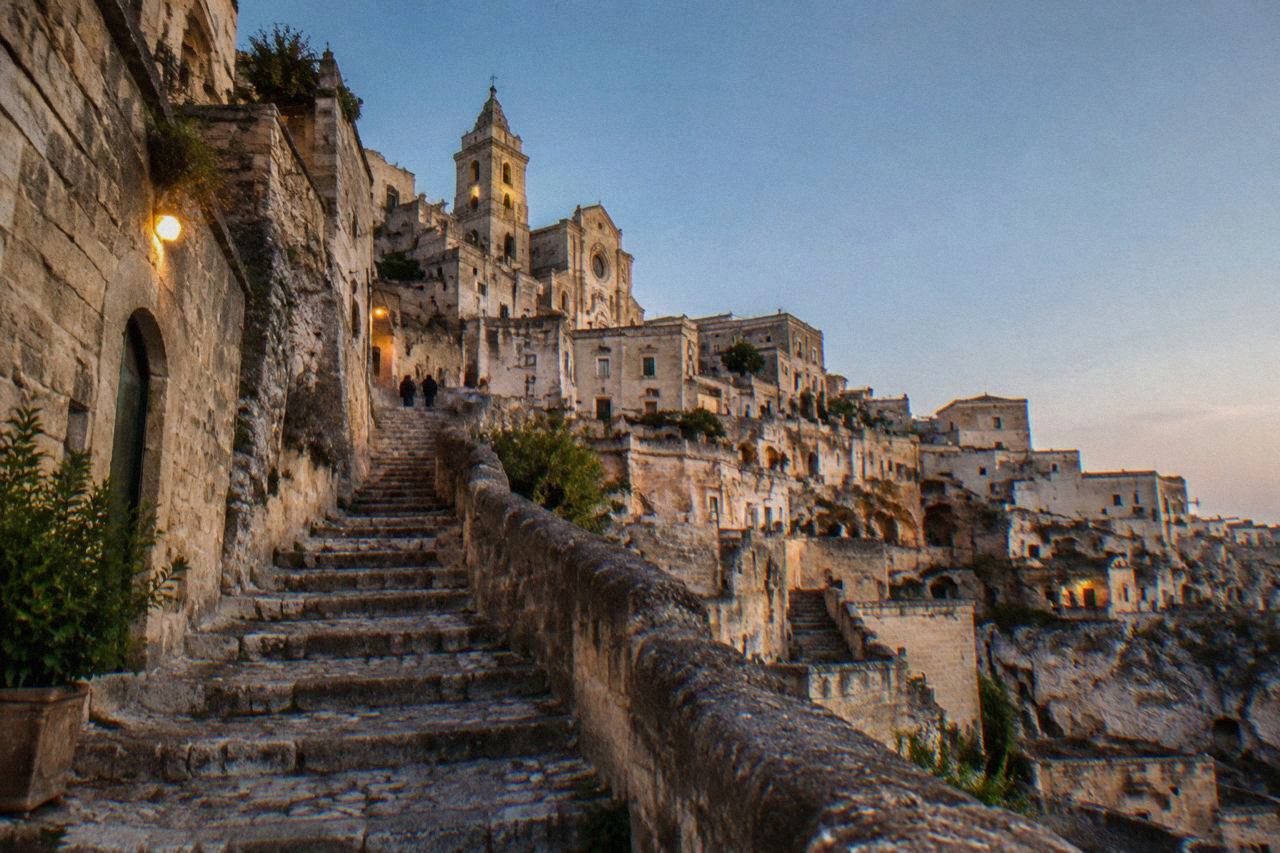
A guided walking tour in Matera covers the Sassi districts, Sasso Caveoso and Sasso Barisano, usually with entry to a cave house and one or more rock-hewn churches. Group walks are bookable year-round, the terrain is steep and stepped, and the strongest months for walking are April, May, June and October, when the APT Basilicata data shows high guest numbers and the ERA5 mean highs sit below the July and August figures.
Matera, in the region of Basilicata in southern Italy, is a city you experience on foot. The historic core is a pair of cave districts, the Sassi, cut into pale tufa limestone on the edge of the Gravina canyon, with the Murgia plateau and its rock-hewn churches on the opposite rim. There is no sea here: the city sits at about 400 m above sea level, and the coast, Metaponto on the Ionian or Polignano a Mare and Bari on the Adriatic, is a day trip away. Everything that makes Matera worth visiting, the cave houses, the rupestrian churches, the viewpoints over the canyon, sits within a walkable band a kilometre or so across, which is why the walking tour is the single most booked kind of guided experience in the city. This page, from the Matera Travel Guide editorial desk, sets out what a Matera walking tour covers, what the individual entry tickets cost, which routes work in which order, and how hard the ground underfoot really is.
What Is A Matera Walking Tour, And What Does One Cover?
A Matera walking tour is a guided on-foot circuit of the city's historic core, typically covering the Civita, the ancient ridge between the two Sassi districts, then descending into Sasso Caveoso and Sasso Barisano, with stops at a furnished cave house and one or more rock-cut churches. The format exists because the Sassi are a vertical maze of stairways and stone lanes that rewards explanation, and because several key interiors, such as the rupestrian churches, have their own entry tickets that some walks bundle in.
The standard walk starts on the modern plateau, the Piano, usually near Piazza Vittorio Veneto, and works down through the Civita towards the Cathedral before dropping into the cave districts. Guides explain the geology, the tufa limestone that could be cut with hand tools, and the social history: residents were moved out of the Sassi between 1952 and the 1970s, and a 1986 law opened the way to restoration. UNESCO inscribed the Sassi and the Park of the Rupestrian Churches in 1993, citing "continuity over more than two millennia" and a settlement "adapted perfectly to its geomorphological setting".
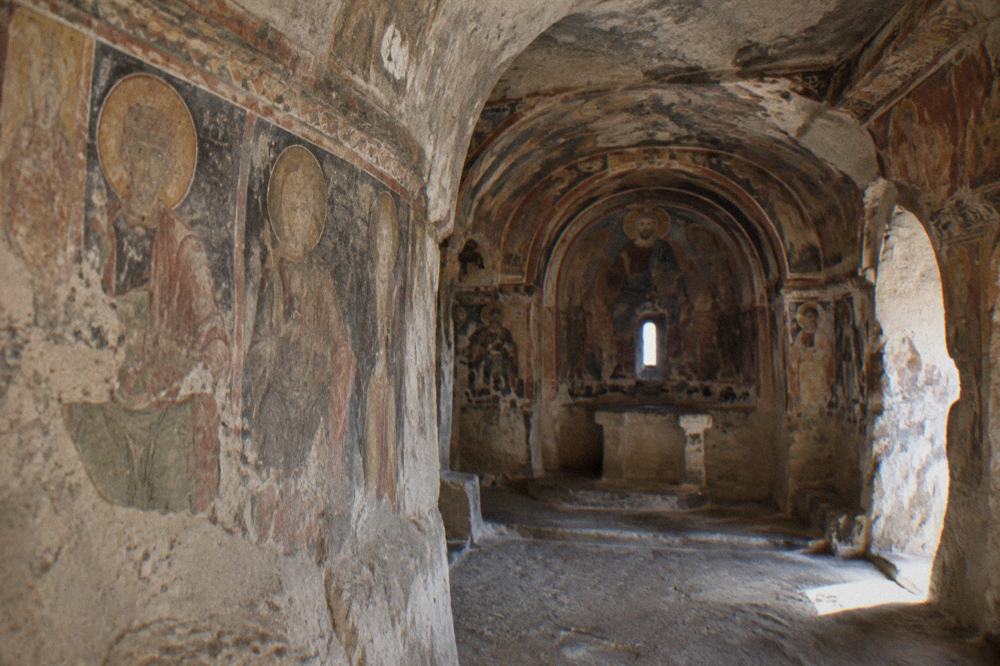
What separates one walk from another is what lies behind the doors. Some tours include a cave house visit, most often the Storica Casa Grotta di Vico Solitario, whose ticket covers four sites: the cave house itself, the Neviera, a natural cave and the rock church of Sant'Agostino al Casalnuovo. Others include one of the rupestrian churches managed by Oltre l'Arte, such as Santa Lucia alle Malve, Madonna de Idris with San Giovanni in Monterrone, or San Pietro Barisano. A walk that skips all interiors is cheaper but leaves you looking at closed doors for much of the route, which is worth knowing before you book. The Sassi districts themselves reward a first visit with a guide and a second, unhurried pass alone.
Which Walking Routes In Matera Should You Follow?
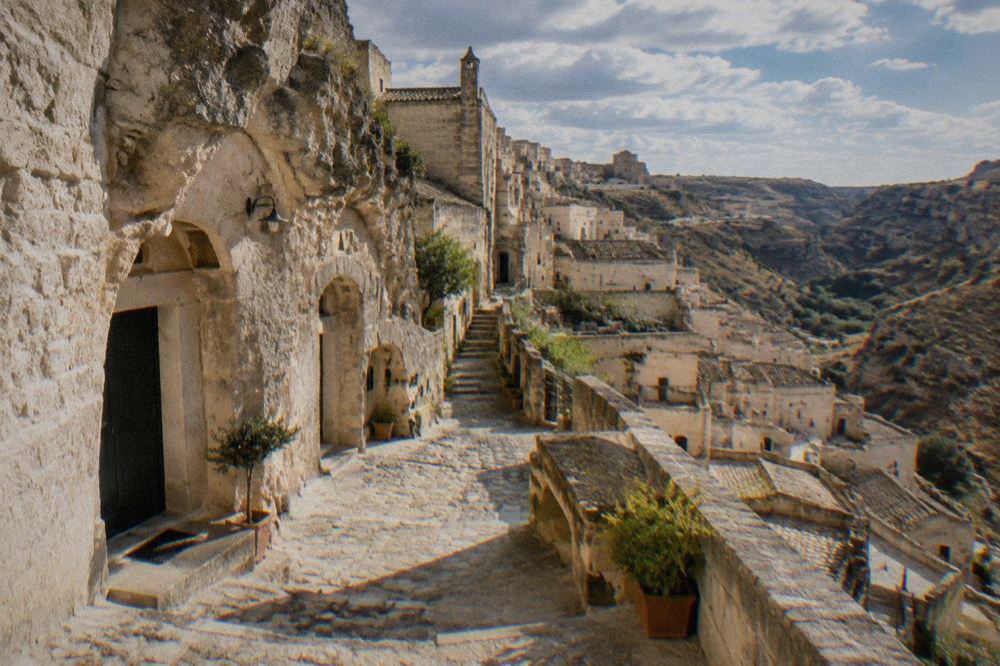
The core walking route in Matera runs from Piazza Vittorio Veneto across the Civita to the Cathedral, then descends into Sasso Barisano on one side and Sasso Caveoso on the other, finishing at Piazza San Pietro Caveoso below the Madonna de Idris church, with an optional extension across the canyon to the Belvedere Murgia Timone viewpoint. Walked end to end at sightseeing pace, the city circuit takes a morning or an afternoon, and every segment can be done independently.
The route breaks into four blocks, and the order matters because the descents are easier than the climbs back out. Piazza Vittorio Veneto sits on the Piano, the flat modern top of the city, and doubles onto a huge underground cistern, the Palombaro Lungo, which you can read about in the Palombaro Lungo guide. From there the Civita, the oldest ridge, runs to the Cathedral. Sasso Barisano, the northwestern district, is the more restored and residential face of the Sassi, described in detail in the Sasso Barisano area guide. Sasso Caveoso, to the southeast, is rougher and more atmospheric, with houses that still face open rock, covered in the Sasso Caveoso area guide. The classic finish is Piazza San Pietro Caveoso, with the Madonna de Idris and the rupestrian churches above and the canyon wall behind.
| Route segment | Start point | End point | What you pass |
|---|---|---|---|
| Piano and Civita | Piazza Vittorio Veneto | Cathedral | Palombaro Lungo entrance, Palazzo Lanfranchi, medieval ridge |
| Sasso Barisano loop | Via Fiorentini side | Back to the Piano | Restored cave facades, Casa Grotta di Via Fiorentini, San Pietro Barisano |
| Sasso Caveoso descent | Below the Cathedral | Piazza San Pietro Caveoso | Santa Lucia alle Malve, Vico Solitario, open rock face |
| Canyon viewpoint | Piazza San Pietro Caveoso | Belvedere Murgia Timone | Gravina canyon, rupestrian churches on the far rim |
For walkers who want the route written out turn by turn without a guide, the site's self-guided walking route covers the same ground with timings and stop descriptions. If you have only a single day, the one day in Matera itinerary sequences these segments into a workable plan, and the two days in Matera itinerary adds the Murgia side properly instead of rushing it.
Guided walks make the most sense on a first visit, and the strongest options in the city cover the ground with a licensed guide and, in several cases, cave house or church entry included.
The Sassi walk with cave house and rupestrian church is the closest match to the classic circuit described above, and the operator's live listing carries the current price and departure times. The Alberobello walk with a local is a different animal: it belongs to the trulli town in Puglia, about 1 h 23 by road from Matera, and suits travellers pairing the two UNESCO sites on one trip. The Alberobello and Matera private-bus tour from Bari is aimed at visitors based in Bari who want both towns without a rental car.
What Do The Sassi Entry Tickets Cost On A Matera Walk?
The key interiors on a Matera walking route cost from 4.50 EUR for a single rupestrian church up to 25.00 EUR for Oltre l'Arte's eight-site all-inclusive ticket, with the Storica Casa Grotta di Vico Solitario at 8.00 EUR full and MUSMA at 10 EUR, on the tariffs the operators themselves publish.
A walking tour that bundles one or more of these interiors therefore saves both money and queueing, and the all-inclusive ticket is the better arithmetic once you plan to see more than three sites.
Oltre l'Arte's ticket page lists its rupestrian churches at 4.50 EUR for one, 8.00 EUR for two and 10.00 EUR for three, with reduced rates of 3.50, 5.50 and 7.50 EUR and free entry for children up to 10 with a parent. The Cathedral and MATA diocesan museum route is 4.00 EUR. The eight-site all-inclusive ticket, 25.00 EUR full and 16.00 EUR reduced, adds Vicinato a Pozzo, the Antica Casa Grotta in Via Fiorentini, the Chiesa del Purgatorio exhibition and the Museo del Pane. All Oltre l'Arte sites close on 25 December and 2 July, the day of the Festa della Bruna, which matters if your walk falls on either date.
| Site on the walking route | Full ticket | Reduced | Source of the tariff |
|---|---|---|---|
| One rupestrian church (Oltre l'Arte) | 4.50 EUR | 3.50 EUR | Oltre l'Arte ticket page |
| Two rupestrian churches | 8.00 EUR | 5.50 EUR | Oltre l'Arte ticket page |
| Three rupestrian churches | 10.00 EUR | 7.50 EUR | Oltre l'Arte ticket page |
| Cathedral and MATA | 4.00 EUR | listed on the ticket page | Oltre l'Arte ticket page |
| Eight-site all-inclusive | 25.00 EUR | 16.00 EUR | Oltre l'Arte ticket page |
| Storica Casa Grotta di Vico Solitario | 8.00 EUR | 5.00 EUR, 3.00 ages 11 to 18 | Casa Grotta tariff page, in force from 4 April 2026 |
| MUSMA | 10 EUR | 5 or 7 EUR | MUSMA contacts page |
| Casa Noha (FAI) | 6.50 EUR | 3 EUR children | FAI property page |
Two cautions travel with this table. The Casa Grotta di Vico Solitario tariff is a 2026 one, in force from 4 April 2026, and older guides still print 3 to 5 EUR, so treat any price you read elsewhere with suspicion. And Casa Noha, the FAI interpretation house that many walks use as an orientation stop, is closed 5 to 22 October 2026 for renovation ahead of a relaunch with new displays, per the FAI's own property page. The Casa Noha guide has the normal hours and prices for the rest of the year.
A walk that includes the Murgia side has a second ticket to know about. Sentiero 406, the path with the suspension bridge over the Gravina, has had a staffed access point and an online access ticket since March 2026, run by the Parco della Murgia through its own ticketing page. The park's ticket page shows seasonal prices for a free visit and half price for under-25s, with free access for residents of Matera and Montescaglioso, under-6s and disabled visitors with a companion, but press reports have quoted different figures, so confirm the current price on the park's own ticketing page rather than anywhere else. The Parco della Murgia guide and the Tibetan bridge guide cover the access rules in detail, and the park's Jazzo Gattini visitor centre, active since 6 February 2026, is the info point and ticket office for the Murgia Timone side.
For travellers deciding between a group walk and a private one, the choice below covers the same core route with a licensed guide and the cave house entry included.
The operator's live listing shows the current from-price, rating and departure slots, and the walk pairs naturally with a morning spent on the Murgia side of the canyon.
When Is The Best Time Of Day To Walk In Matera?
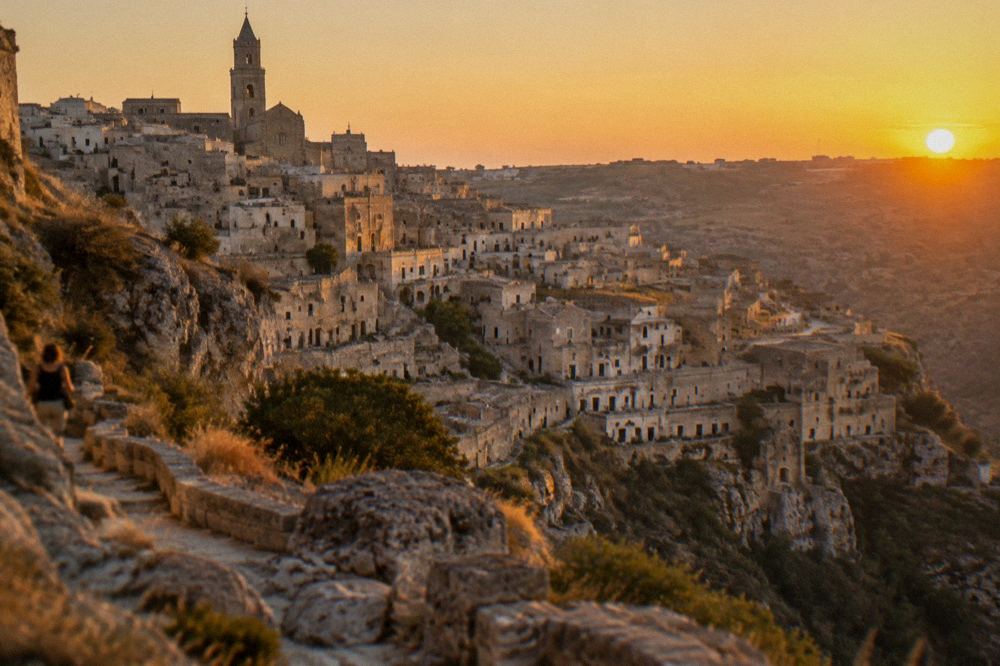
The best time of day to walk in Matera is the late afternoon into sunset, when the low sun strikes the pale tufa of the Sassi from across the canyon and the day's heat has dropped, though the morning has the practical advantage of cooler ground for the climbs and shorter queues at the cave house and churches. Midday in July and August, when the ERA5 reanalysis for Matera shows a mean high of 31.2 and 31.3 C, is the one slot to avoid for the uncovered descents.
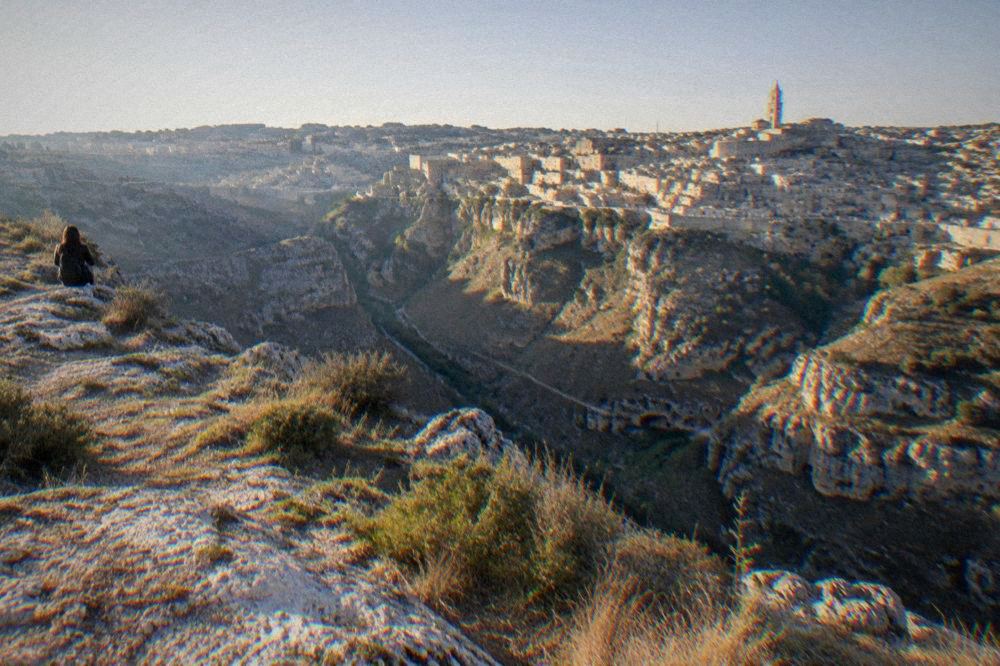
The light is the reason photographers plan around the evening. The Sassi face roughly southeast, and the canyon viewpoint from the Murgia side, reachable on the Belvedere Murgia Timone walk, looks back at the whole rock face. The site's photography spots guide lists the exact viewpoints and the angles each one gives. For a walking tour specifically, an afternoon departure has a second advantage: several operators run sunset-timed walks that end at a viewpoint, and the Murgia Timone sunset walk with transfer included is the clearest example, since it removes the need to re-climb into the city after dark.
| Month | Mean high C (ERA5 1991-2020) | Rain mm | Arrivals 2025 (APT Basilicata) |
|---|---|---|---|
| April | 17.4 | 56.5 | 45,195 |
| May | 22.7 | 41.7 | 54,101 |
| June | 28.2 | 35.1 | 50,186 |
| July | 31.2 | 21.2 | 43,966 |
| August | 31.3 | 21.7 | 60,257 |
| September | 25.7 | 44.8 | 61,630 |
| October | 20.8 | 51.7 | 52,538 |
Read the table against the calendar and two things stand out. September, not August, is the busiest month in Matera's accommodation data: 61,630 arrivals against 60,257 in August, and 74.5% of those September guests came from abroad. And July, as warm as August by the ERA5 mean high, drew fewer arrivals than April, May, June, August, September or October, which makes it a quieter month for the viewpoints even if it is a hot one for the climbs. The best time to visit Matera guide and the Matera weather guide unpack the full year, and the Matera in summer guide has the hot-month tactics.
How Hard Is Walking In Matera, Really?
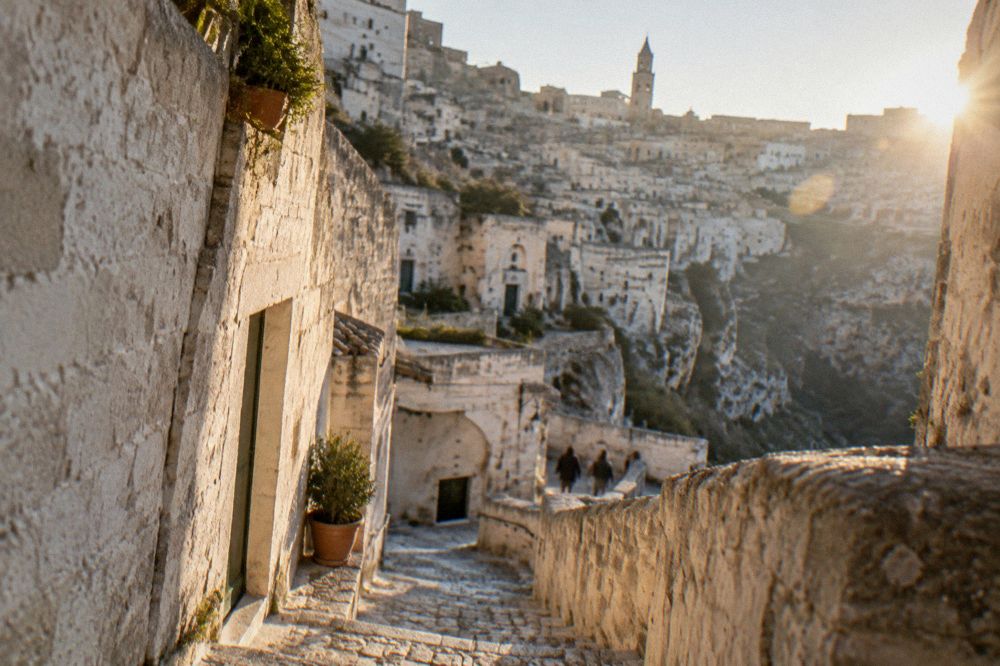
Walking in Matera is short in distance but hard in gradient: the Sassi are steep, stepped and uneven, with stone stairways worn smooth by centuries of use, and the descent from the Piano to Piazza San Pietro Caveoso drops the equivalent of several storeys, so every route that goes down must come back up. No named route through the Sassi can be described as flat or step-free, and the surface underfoot, polished tufa and cobbles, demands proper shoes rather than sandals.
The honest framing is that the city is compact but vertical. The horizontal distances are small, and the whole core circuit fits inside a couple of kilometres. What costs effort is the elevation change between the Piano and the cave districts, and the fact that the lanes themselves are staircases. Anyone with mobility limits should read the Matera accessibility guide before planning, and should treat the Murgia side, an unpaved plateau path, as a separate and harder proposition from the city streets. The hiking in Matera guide covers the canyon and plateau trails for walkers who want proper paths rather than city lanes.
Footwear is the one piece of equipment that matters. The stone is worn slick in places, and rain makes it slicker: the ERA5 reanalysis shows November as the wettest month at 67.1 mm, with 8.3 rain days, and December close behind at 57.2 mm. The what clothes to pack for Matera answer and the packing advice on this site both point to closed shoes with grip as the default, in every season. A water bottle matters from June to September, when the mean highs run from 28.2 to 31.3 C and there is little shade on the exposed canyon rim.
Can You Walk Matera Without A Guide?
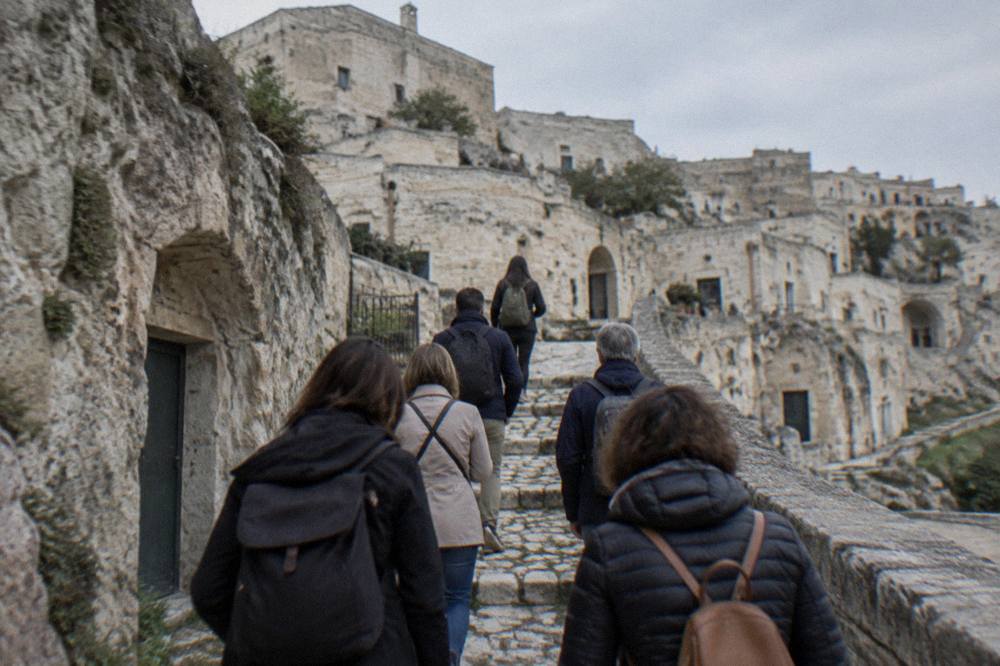
Yes, Matera can be walked without a guide, and a self-guided circuit of the Piano, Civita and both Sassi districts is entirely practical because the core is small and the main lanes are signed, but the interiors are where a guide earns the fee: the rupestrian churches and cave houses have separate tickets and hours, and without a guide you are reading panels rather than getting the social history of the evacuation between 1952 and the 1970s and the 1986 restoration law that brought residents back.
The case for going alone is real. The free things to do in Matera guide lists what costs nothing, and the lanes, viewpoints and canyon rim are all open public space. The free walking tour question is answered the same way this desk answers it everywhere: tip-based walks do run locally, and the arrangement, the meeting point and the expected tip should be confirmed directly with the guide, since this site carries no verified listing for one. A licensed guide, by contrast, is a defined product with a published price and inclusions, and several of the interiors on the route are working museums with staff and tariffs of their own.
The middle path is the one many travellers land on: one guided walk on the first day to load the context, then independent walking afterwards. The English-language group city walk below is the standard version of that first-day walk.
Its live listing carries the current price, rating and schedule. For the second, independent day, the Matera at night guide and the Matera viewpoints guide give the after-dark and panorama options, and the three days in Matera itinerary stretches the plan across a longer stay.
Which Walks From Matera Reach Beyond The City?
The walks that reach beyond Matera itself are the Murgia plateau trails directly across the Gravina canyon, the Crypt of the Original Sin about 15 minutes away by car, and, further out, the hill towns of Basilicata and Puglia, of which Alberobello, 68 km and about 1 h 23 by road, is the one most often paired with a Matera walking trip, because its trulli district is another UNESCO-inscribed walking core.
The near options first. The Parco della Murgia, about 8,000 hectares by the park's own count, sits directly opposite the Sassi, and its paths, including the ticketed Sentiero 406 with the suspension bridge, make a half-day walk with the best views back at the cave city. The Crypt of the Original Sin, a frescoed rock church in the countryside towards Pisticci, is about 15 minutes by car from Matera on the operator's own directions, and booking is mandatory by e-ticket at least 90 minutes before the slot, with capacity of 20 people per slot and no shuttle included in the ticket. Its price is not published outside the booking engine, so confirm it there.
| Walking destination from Matera | Road distance | Drive time (free flow) |
|---|---|---|
| Altamura | 20 km | about 20 min |
| Gravina in Puglia | 30 km | about 31 min |
| Craco | 57 km | about 58 min |
| Alberobello | 68 km | about 1 h 23 |
| Polignano a Mare | 100 km | about 1 h 29 |
| Castelmezzano | 82 km | about 1 h 23 |
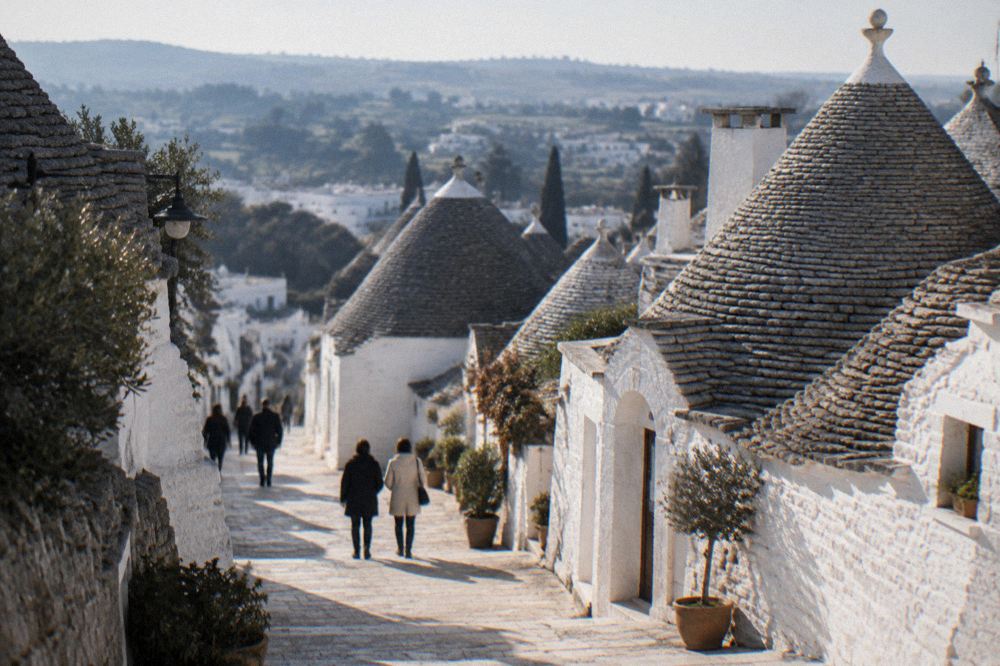
Alberobello deserves its own paragraph because it is the most common second walking stop on a Matera trip. Its trulli quarter is a compact pedestrian core, and a local-led walk there covers the two districts, Rione Monti and Rione Aia Piccola, with the history of the dry-stone cone buildings. The Alberobello day-trip guide covers the town itself, the Matera and Alberobello in one day itinerary sequences both, and the Matera versus Alberobello comparison helps if you can only spare time for one. The walk below is the trulli-town counterpart to the Sassi walks listed earlier on this page.
The live listing shows the current price, rating and meeting point. For travellers arriving from the coast rather than heading to it, the Matera day trip from Bari itinerary and the Bari day-trip guide cover the approach, and the Polignano a Mare guide is the coastal pairing, since Matera itself, inland on the canyon, has no beach of its own.
How Do You Choose Between The Guided Walk Options In Matera?
Choose a Matera guided walk by what it includes rather than by price alone: the walks that bundle a cave house and a rupestrian church cover the interiors that otherwise cost 4.50 to 8.00 EUR each on the operators' own tariffs, while the walks that skip interiors suit travellers who plan to buy the Oltre l'Arte all-inclusive ticket anyway, and private walks suit anyone who wants the route adjusted for pace, photography stops or children.
The group walk is the default and the best fit for a first visit. It covers the standard circuit, it runs on a fixed schedule, and the licensed guide handles the history that turns closed rock faces into something legible. The premium-guided versions of the Sassi walk cover the same ground with smaller groups, per their listings. The private tours, priced per group rather than per person on their listings, suit families and anyone who wants the Murgia viewpoint or a specific church worked into the route. The food-and-drink walks add tastings, and the site's Matera food tour page is the companion piece if eating your way through the Sassi matters more to you than the geology.
| Walk type in Matera | What it typically covers | Who it suits |
|---|---|---|
| Group Sassi walk | Civita, both Sassi districts, viewpoints | First-time visitors on a schedule |
| Walk with cave house entry | The standard circuit plus a furnished cave interior | Travellers who want interiors included |
| Walk with rock church entry | The circuit plus one or more rupestrian churches | Visitors focused on the UNESCO inscription |
| Private Sassi tour | The route adjusted to the group, per group pricing | Families, photographers, slow walkers |
| Food and tasting walk | The circuit plus local tastings | Travellers prioritising the food side |
| Murgia sunset walk | The canyon viewpoint at golden hour, transfer included | Photographers and evening walkers |
Timing the booking matters as much as the choice. September is the peak month in the APT Basilicata accommodation data, 61,630 arrivals in 2025, and October runs high too at 52,538. The Matera events guide flags the dates that compress the city further, above all 2 July, the Festa della Bruna, a fixed date since 1389 by the organisers' own history, on which Oltre l'Arte closes all its sites and the Sassi fill with a procession instead of a walking circuit. The Matera travel costs guide helps with the wider budget, and the tourist tax that accommodation collects is confirmed at booking, since no official tariff is published.
Common Questions About Matera Walking Tours
How long does a walking tour in Matera last?
Group Sassi walks in Matera typically cover the core circuit in a single block, and the exact duration of each listed product is shown on the operator's live listing rather than typed here. The full self-guided circuit, walked at sightseeing pace with the interiors included, fills a morning or an afternoon.
Is a walking tour in Matera worth it, or can I walk alone?
Both work. The lanes, viewpoints and canyon rim are public space and free to walk, but the cave houses and rupestrian churches have their own tickets, from 4.50 EUR for a single church to 25.00 EUR for the Oltre l'Arte all-inclusive ticket, and a guide adds the social history that the panels do not carry. A common pattern is one guided walk on the first day and independent walking afterwards.
Are the Sassi in Matera difficult to walk?
Yes, in the sense that they are steep, stepped and uneven, with polished stone underfoot. The distances are short but the gradient between the Piano and the cave districts is real, and no named route through the Sassi is flat or step-free. Closed shoes with grip are the standard advice in every season.
Do Matera walking tours include the cave churches?
Some do and some do not, and the inclusions are stated on each live listing. Where a walk includes a rupestrian church, it is one of the Oltre l'Arte sites, Santa Lucia alle Malve, Madonna de Idris with San Giovanni in Monterrone, or San Pietro Barisano, whose standalone tickets run 4.50 to 10.00 EUR on the operator's own tariff page.
What should I wear on a walking tour in Matera?
Closed shoes with good grip, a hat for the exposed stretches, and layers outside of summer. The ERA5 reanalysis for Matera shows mean highs of 31.2 and 31.3 C in July and August but 10.3 C mean highs in January, so the range across the year is wide and the stone stays cool in the cave interiors whatever the month.
Can I do a free or tip-based walking tour in Matera?
Tip-based walks do run locally, and this site carries no verified listing for one. Confirm the meeting point, the route and the expected tip directly with the guide before you set out, and treat a licensed guided walk, with its published price and inclusions, as the defined alternative.
The short version: book one guided walk that includes an interior, keep an afternoon free for the Murgia viewpoint at sunset, wear shoes that grip the stone, and let the second day be your own. That is the whole walking plan for Matera, and it fits inside two days without rushing.