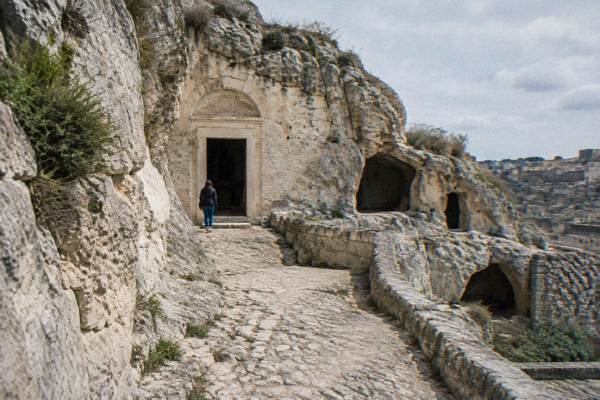
Casa Grotta Matera
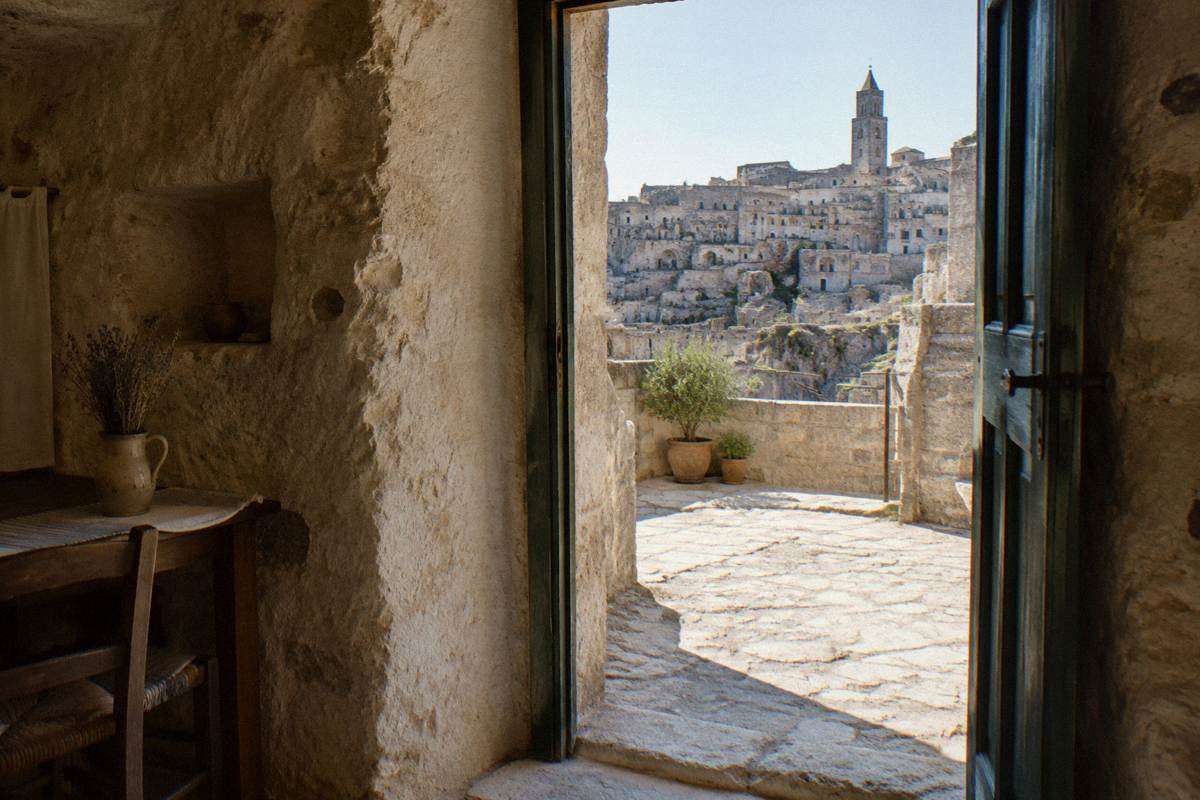
The Storica Casa Grotta di Vico Solitario is the best-known cave house museum in Matera, Basilicata, and one of the few places where a Sasso dwelling can be seen furnished as families lived in it.
Short answer
Entry costs 8.00 EUR full, 5.00 EUR reduced, 3.00 EUR for ages 11 to 18 and nothing up to age 10, on the tariff in force from 4 April 2026. The ticket covers four sites: the cave house, the Neviera, the natural cave and the rock church of Sant'Agostino al Casalnuovo.
The Storica Casa Grotta di Vico Solitario is a museum cave house in the Sasso Caveoso quarter of Matera, an inland city in Basilicata, southern Italy, standing about 400 m above sea level on the edge of the Gravina canyon. The house preserves a rock-cut dwelling furnished as materani families lived in it until the evacuation between 1952 and the 1970s, and its ticket also covers three further carved spaces on the same lane. The operator's own tariff page lists the prices and hours in force from 4 April 2026, and this guide reports what that page and the other verified sources say.
What Is The Casa Grotta Di Vico Solitario In Matera?
The Casa Grotta di Vico Solitario is a restored cave dwelling on a steep lane in the Sasso Caveoso, the southern of Matera's two Sassi quarters, opened to the public as a house museum showing how families lived in rock-cut homes until residents were moved out between 1952 and the 1970s. A 1986 law then opened the way to restoration, and dwellings like this one became visitable. UNESCO inscribed the Sassi and the Park of the Rupestrian Churches of Matera on the World Heritage List in 1993, describing a rock-cut settlement adapted to its setting with continuity over more than two millennia. The house is one of the few places where that domestic life is shown room by room rather than described.
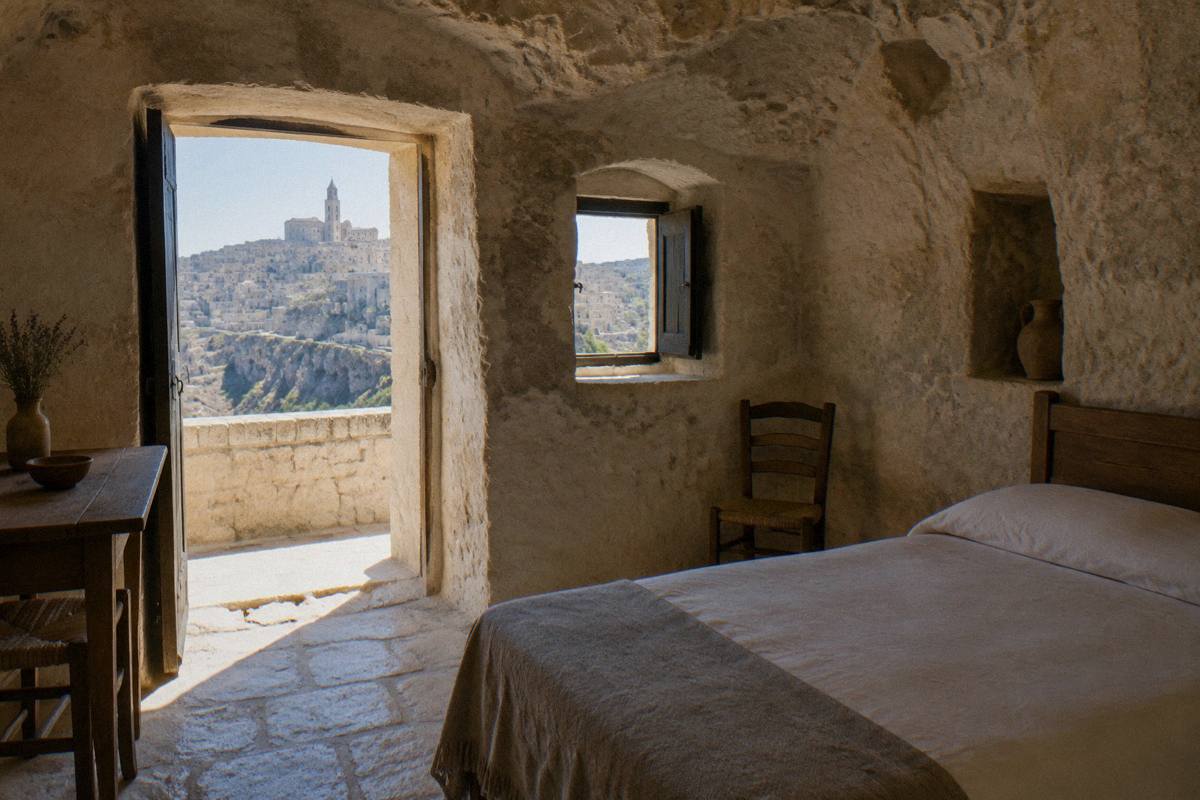
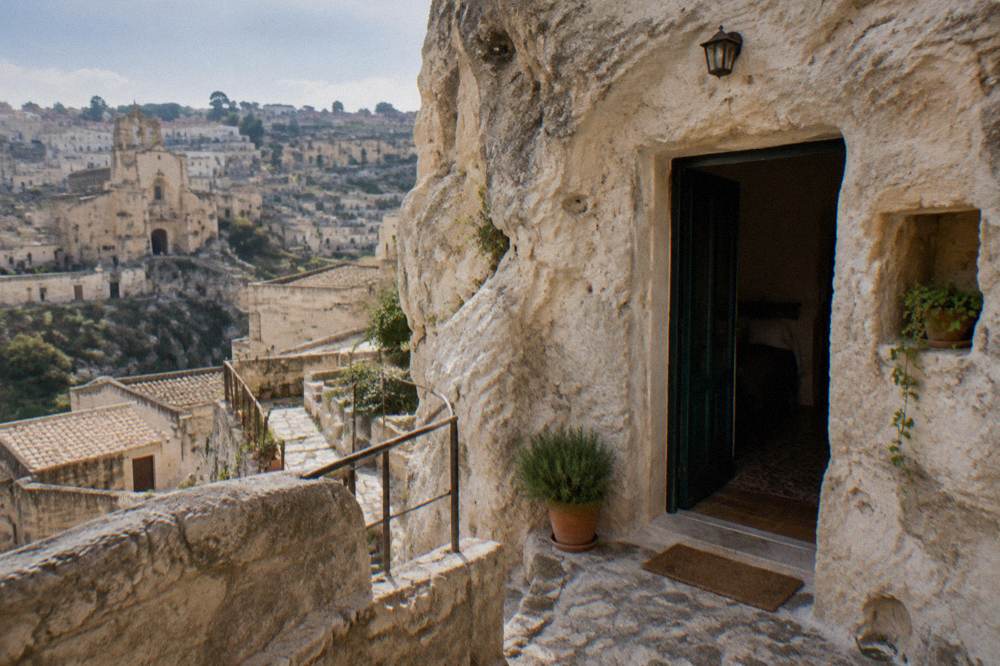
The Sassi are the old quarters of the city: Sasso Caveoso to the south, Sasso Barisano to the north, and the Civita ridge between them. Dwellings were cut directly into the pale tufa limestone, and the Casa Grotta is exactly that: a single excavated volume, subdivided by low partitions, with the mule stall, the sleeping alcoves and the hearth all in one space. Light comes from the door and a small opening cut in the roof, the same arrangement repeated across thousands of dwellings in the quarter.
Vico Solitario, the lane that gives the house its name, runs below Piazza San Pietro Caveoso. The lane keeps its historic neighbour layout, which is why the museum sits here rather than in the modern city above. Nearby stand the rock churches of Santa Lucia alle Malve, Santa Maria de Idris and San Pietro Barisano, all run by Oltre l'Arte, so a visit to the cave house fits naturally into a walk of the quarter described in the Sassi di Matera guide.
The house is a stop on most guided walks of the Sassi. The tour this site features, Casa Grotta and Rock Church Entry, covers the Sassi together with entry to a cave house and rock-cut churches; details and live pricing are on the operator's listing, and Check availability shows current dates.
To see the house and the churches in one guided loop, book a Sassi walking tour here.
How Much Does The Casa Grotta Matera Cost?
A full ticket to the Storica Casa Grotta di Vico Solitario costs 8.00 EUR, the reduced ticket 5.00 EUR, and ages 11 to 18 pay 3.00 EUR, with free entry to age 10, on the tariff the operator's page lists as in force from 4 April 2026. Reduced tickets cover guided groups, FAI and CTG members, visitors over 65 and university students. Matera residents and disabled visitors enter free. The operator's tariff page, casagrotta.it, is the source for all of these figures, and it is where any change would appear first.
Older guides still print 3 to 5 EUR for this house. That figure is out of date: the current tariff dates from April 2026, and any page quoting less should be treated with caution. The ticket is bought at the entrance on Vico Solitario itself; the operator gives no online booking channel for the house on its tariff page, so entry is arranged on the day.
| Ticket type | Price | Notes |
|---|---|---|
| Full | 8.00 EUR | All four sites on the ticket |
| Reduced | 5.00 EUR | Guided groups, FAI and CTG members, over 65, university students |
| Ages 11 to 18 | 3.00 EUR | Also school groups |
| Up to age 10 | Free | With a parent |
| Matera residents | Free | On presentation of ID |
| Disabled visitors | Free | Carer enters with them |
For comparison, the other Oltre l'Arte cave-house sites cost less on their own: Casa Grotta di Via Fiorentini is 2.00 EUR and Vicinato a Pozzo 8.00 EUR, both on Oltre l'Arte's ticket page. The three rupestrian churches run by the same organisation cost 4.50 EUR for one, 8.00 EUR for two and 10.00 EUR for three, and an all-inclusive 8-site ticket exists at 25.00 EUR, reduced 16.00. The Matera church tickets and passes guide sets out how these combine.
What Does The Ticket Cover Inside Matera's Casa Grotta?
One ticket covers four carved sites: the cave house itself, the Neviera (a subterranean snow cellar), a natural cave further along, and the rock church of Sant'Agostino al Casalnuovo, all reached from the same entrance on Vico Solitario in the Sasso Caveoso. The operator's tariff page states the coverage in those terms. That makes the 8.00 EUR ticket better value than it first looks, because the Neviera and the rock church are separate carved spaces, not rooms of one house.
The Neviera is the least expected of the four. Snow was collected from the Murgia plateau in winter, packed into the insulated pit and sold through the summer as ice, a trade that supported Sassi families long before refrigeration. The natural cave shows the raw geology of the quarter: the tufa is soft enough to cut with hand tools, which is the whole reason the Sassi exist. Sant'Agostino al Casalnuovo is a rock-hewn church, one of many carved into the canyon walls, and it closes the visit with the sacred side of the same rock.
| Site on the ticket | What it is | What to look for |
|---|---|---|
| Casa Grotta | Furnished cave dwelling | The single-room layout, hearth, mule stall and sleeping alcoves |
| Neviera | Subterranean snow cellar | The insulated pit where winter snow was stored as ice |
| Natural cave | Unfinished rock cavity | The raw tufa and tool marks on the walls |
| Sant'Agostino al Casalnuovo | Rock-hewn church | Carved apse and the rupestrian architecture of the canyon |
A guided walk is the way to see these spaces with their context, since the house has no fixed guiding service of its own beyond the ticket. The walks below cover the Sassi and include stops at cave dwellings and rock churches:
Each listing states its own price, meeting point and inclusions, and every one covers the Sasso Caveoso ground this house stands on. The premium-guided walk and the private excursion both go deeper into the quarter's lanes than a short stop allows.
When Is The Casa Grotta In Matera Open?
The house opens 09:30 to 18:00 Monday to Friday and to 19:00 at weekends from January to March, 09:30 to 19:00 weekdays and to 20:00 at weekends from April to June and in September, 09:00 to 20:30 daily in July and August, and 09:30 to 18:00 Monday to Friday from October to December, with last entry 20 minutes before closing. These are the hours on the operator's tariff page, which also carries the seasonal splits. Weekend hours are longer than weekday hours in every season except high summer, when every day runs to the same late hour.
The seasonal pattern follows the city's visitor rhythm. The APT Basilicata accommodation data shows September 2025 logged 61,630 arrivals in the city's registered accommodation, the busiest month of the year, ahead of August at 60,257, while February was the quietest at 15,239. That makes the shoulder months crowded at the cave house too, even though the summer hours are longer.
| Season | Monday to Friday | Saturday and Sunday | Last entry |
|---|---|---|---|
| January to March | 09:30 to 18:00 | 09:30 to 19:00 | 20 minutes before closing |
| April to June | 09:30 to 19:00 | 09:30 to 20:00 | 20 minutes before closing |
| July and August | 09:00 to 20:30 | 09:00 to 20:30 | 20 minutes before closing |
| September | 09:30 to 19:00 | 09:30 to 20:00 | 20 minutes before closing |
| October to December | 09:30 to 18:00 | 09:30 to 18:00 | 20 minutes before closing |
One closure matters to the wider visit, though not to this house: Casa Noha, the FAI interpretation centre at Recinto Cavone 9, is closed 5 to 22 October 2026 for renovation. Oltre l'Arte's sites, including the rupestrian churches, close on 25 December and on 2 July for the Festa della Bruna. The cave house's own page lists no fixed closing day, so confirm at the entrance on the day.
What Will You See Inside The Cave House?
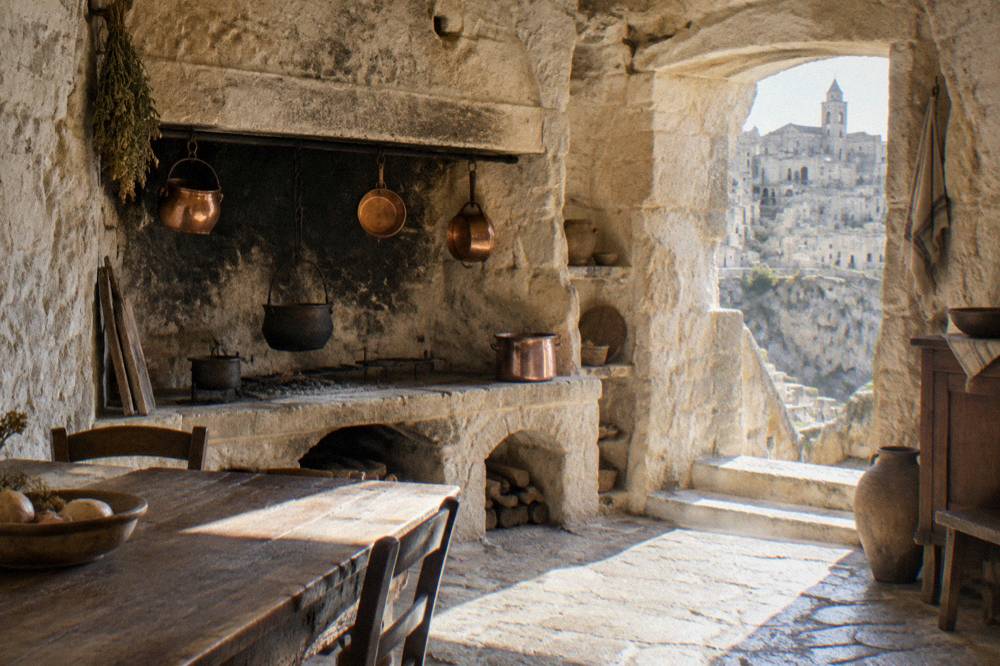
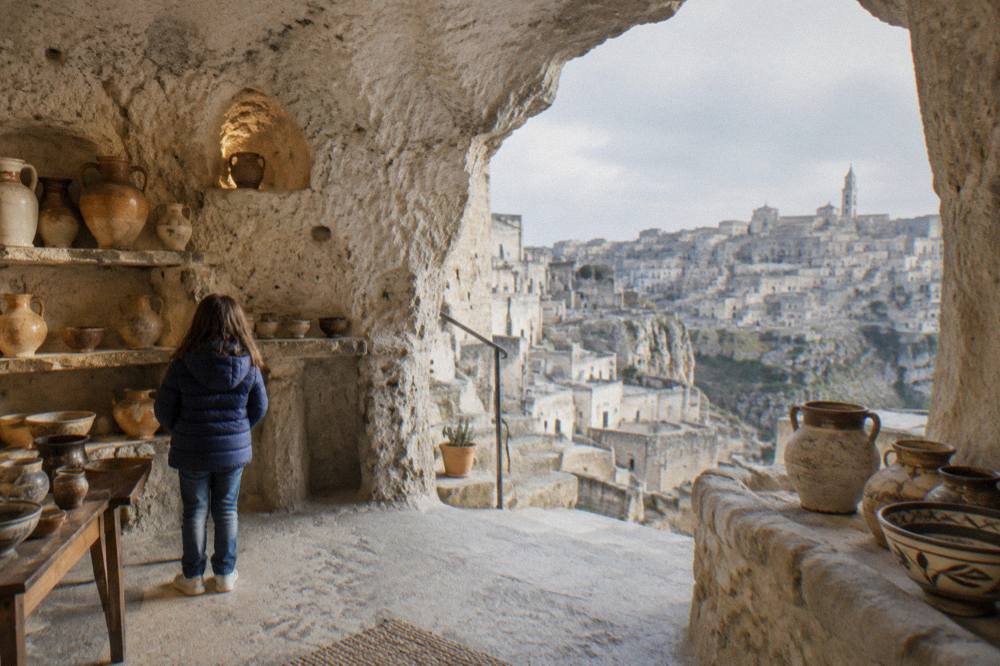
The interior is a single excavated room, furnished as a working family home: a hearth for cooking, a mule stall behind the door, raised sleeping alcoves, hand-thrown pottery, woven baskets and simple wooden furniture, all lit from the doorway and a roof opening. The furnishing follows documented Sassi domestic practice rather than a stage set, and the operator presents it as the dwelling's state before the evacuation. The floor is the living rock, levelled by hand, and the ceiling shows the pick marks of the excavation.
The mule stall is the detail visitors ask about most. Animals lived inside with the family, both for warmth and because the mule was the household's working capital. The sleeping alcoves sit high off the floor, away from the damp, and the hearth stood near the door for the draught. Water was collected at neighbourhood cisterns, of which the Palombaro Lungo, the giant water cellar under Piazza Vittorio Veneto, is the surviving monument; the Palombaro Lungo guide covers it.
Bread was baked in communal wood ovens, and pane di Matera, the city's PGI-registered bread, descends from that economy. The pane di Matera guide explains the loaf and its status. The house museum stops at the domestic interior, but the surrounding lanes hold the ovens, cisterns and wine cellars that completed the Sassi system, and a walk with a licensed guide connects them.
How Does The Casa Grotta Compare With Matera's Other Cave Houses?
The Casa Grotta di Vico Solitario is the largest and best-known furnished cave house open to the public, while Casa Grotta di Via Fiorentini offers a smaller interior for 2.00 EUR and Vicinato a Pozzo shows a whole neighbourhood courtyard group for 8.00 EUR, all listed on Oltre l'Arte's ticket page. Each shows a different slice of the same domestic world: one dwelling, one modest home, one cluster of families around a shared cistern.
The comparison is worth making because the Sassi were not a collection of isolated caves but neighbourhoods, and the three sites demonstrate that at three scales. The Vico Solitario house is the most complete single dwelling; Via Fiorentini is the budget entry; Vicinato a Pozzo, in the Sasso Barisano, shows the communal arrangement of dwellings around a cistern that defined Sassi social life.
| Cave house site | Quarter | Price | What it shows |
|---|---|---|---|
| Storica Casa Grotta di Vico Solitario | Sasso Caveoso | 8.00 EUR full | A furnished family dwelling plus Neviera, natural cave and rock church |
| Casa Grotta di Via Fiorentini | Sasso Caveoso | 2.00 EUR | A modest cave interior, daily 09:00 to 19:00 |
| Vicinato a Pozzo | Sasso Barisano | 8.00 EUR | A neighbourhood group around a shared cistern, daily 09:30 to 19:00 |
| Casa Noha | Recinto Cavone 9 | 6.50 EUR adults | FAI interpretation centre on the Sassi story, closed Wednesdays |
Casa Noha deserves its row even though it is not a cave house: the FAI property tells the story of the Sassi with a short film and displays, and it is the usual first stop for orientation. It is closed 5 to 22 October 2026 for renovation, and the Casa Noha guide carries the details. Casa Cava, a cave turned auditorium, is a different use of the same geology; its guide page covers it, though no verified price or hours exist for it, so confirm locally.
Where Is The Casa Grotta And How Do You Reach It?
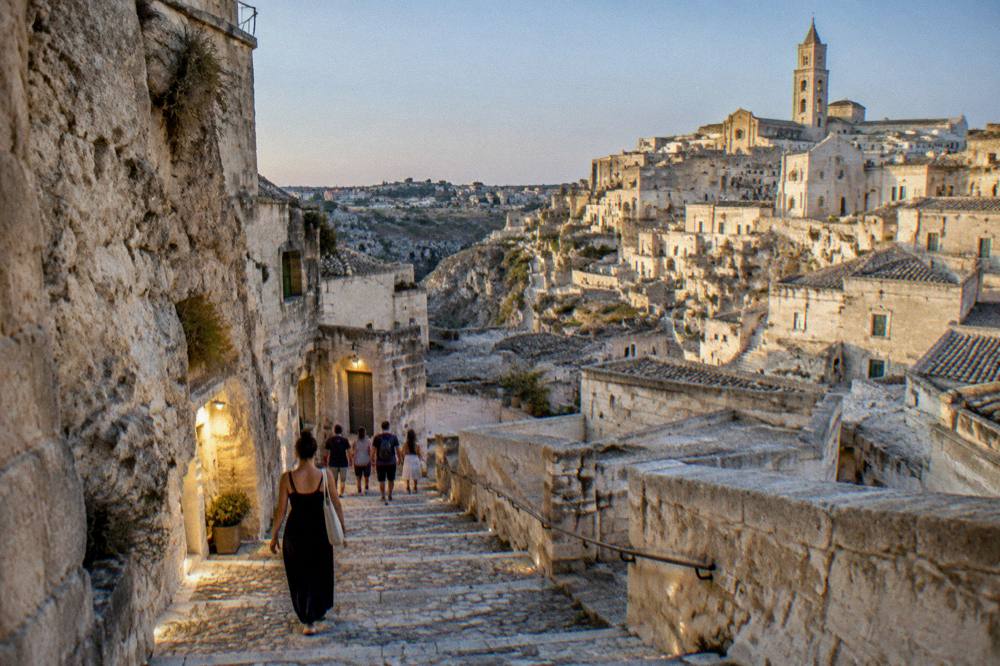
The house stands on Vico Solitario, a stepped lane below Piazza San Pietro Caveoso in the Sasso Caveoso, reached on foot from Piazza Vittorio Veneto in the modern city in about ten minutes of downhill walking, with the climb back up steep and stepped. No figure for that walk exists in the verified pack as a timed route, but the Sassi are steep, stepped and uneven throughout, and no route in the quarter is step-free or wheelchair accessible.
Drivers should not aim at the lane at all. The ZTL Sassi cameras, on Via Buozzi, Via Madonna delle Virtù and Via D'Addozio, are active 10:00 to 20:30 from 16 September to 30 June and 10:00 to 24:00 from 1 July to 15 September, weekdays and holidays alike, under the comune's ordinances 147 and 148/2025. The Matera ZTL guide and the Matera parking guide cover where to leave the car; no official car-park tariff page exists, so parking prices are confirmed on the day.
Arriving by train, the operator is FAL, not Trenitalia: there is no Trenitalia station in Matera. From Bari the posted weekday timetable changes at Altamura and takes about 1 h 45 to 2 h, and on Sundays and public holidays no trains run, only replacement buses. The Bari to Matera guide and the how to get to Matera guide give the full picture, and FAL's timetable page is the source for current times.
Why Did Families Stop Living In The Sassi Cave Houses?
Residents were moved out of the Sassi between 1952 and the 1970s, after overcrowding and disease in the cave quarters became a national scandal, and a 1986 law then opened the way to restoration and the eventual return of habitation. The evacuation emptied dwellings like the one on Vico Solitario, which then stood vacant until the restoration movement began. The history of Matera guide and the site's article on why Matera was called the shame of Italy carry the full story.
The house museum exists precisely because of that rupture. A dwelling kept in continuous use would have been modernised past recognition; an evacuated one could be refurnished from documentary evidence. What the ticket buys, in part, is the before-and-after of that story, and the answer to the question of whether people still live in the Sassi, which the site covers separately, is that they do, in restored homes, but not in the conditions the museum shows.
What Is The Best Time Of Day To Visit The Casa Grotta Matera?
Late afternoon is the calm window: the operator's hours run to 18:00 or later in every season, the APT data shows the day-trip crowds thin after the Bari excursion buses leave, and the September peak of 61,630 arrivals means midday queues are longest in that month and in August. The house takes small groups through a single entrance, so a queue at the door is a queue in the sun on an unshaded lane. Morning opening at 09:30 is the other quiet slot.
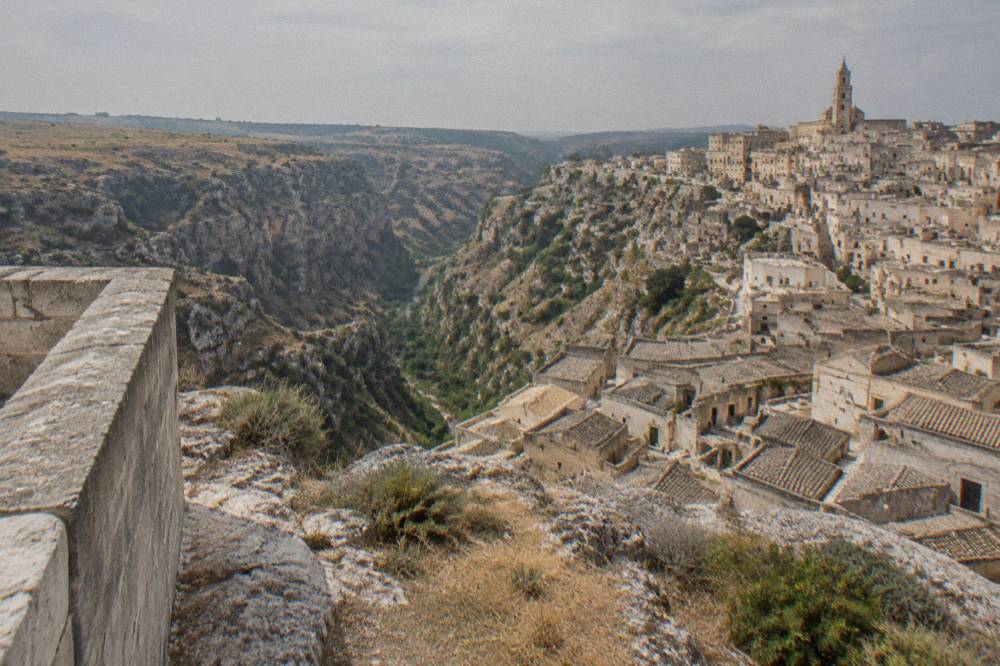
Climate matters on the lane. The ERA5 reanalysis for Matera, 1991-2020, gives mean highs of 31.2 C in July and 31.3 C in August against 25.7 C in September and 20.8 C in October, with November the wettest month at 67.1 mm and July the driest at 21.2 mm. The cave interior stays cool in any season, but the walk down and back is exposed.
| Month | Mean high C (ERA5 1991-2020) | Rain mm | Arrivals 2025 (APT) |
|---|---|---|---|
| May | 22.7 | 41.7 | 54,101 |
| July | 31.2 | 21.2 | 43,966 |
| August | 31.3 | 21.7 | 60,257 |
| September | 25.7 | 44.8 | 61,630 |
| October | 20.8 | 51.7 | 52,538 |
| November | 15.5 | 67.1 | 23,555 |
The best time to visit Matera guide works through the whole year month by month. For this house specifically, any month works, but the combination of thinner crowds and comfortable walking temperatures favours the shoulder season, and the Matera in winter guide covers the short-hours season if that is when the trip falls.
Can You Visit The Casa Grotta With Children?
Children up to age 10 enter free and ages 11 to 18 pay 3.00 EUR, on the tariff from 4 April 2026, and the single-room interior, the mule stall and the snow cellar hold a child's attention well, but the lane is stepped and uneven and infants will need carrying on the descent. The operator's tariff page carries the age bands. The Neviera is the favourite stop with families, since the idea of storing snow as ice needs no translation.
The practical cautions are the Sassi themselves, not the house. Pushchairs are close to useless on Vico Solitario's steps; a carrier is the workable option. The interior has low ceilings and low light, and the Matera with kids guide places the cave house inside a full family day, including flatter stretches of the modern city and the viewpoints above the canyon.
What Else Should You See Around The Casa Grotta?
Within five minutes' walk of the entrance stand the rock churches of Santa Lucia alle Malve, Santa Maria de Idris and San Pietro Barisano, the piazza of San Pietro Caveoso, and the descent toward the Belvedere Murgia Timone viewpoint across the canyon, so the cave house is the natural hinge of a Sasso Caveoso circuit. The Oltre l'Arte ticket prices for the churches, 4.50 EUR for one up to 10.00 EUR for three, are on the rupestrian churches of Matera guide.
The circuit works in one direction. Start at Piazza Vittorio Veneto, descend into the Sasso Caveoso, take the cave house and the churches, come out at Piazza San Pietro Caveoso, and finish looking back at the Sassi from across the Gravina, either from the Belvedere Murgia Timone or, for those with a ticket, from the Tibetan bridge path, which since March 2026 has a staffed access point and an online access ticket sold on the park's site; its price is not settled, so confirm at the park's ticket page.
The one day in Matera itinerary sequences all of this for a single visit, and the self-guided walking route does the same without a guide. A guided walk remains the deepest version of the same ground, and these are the walks this site compares:
Each listing states its own inclusions, price and meeting point. The private excursion suits families and small groups who want the lanes to themselves, and the premium-guided walks keep group sizes small.
For a solo comparison, the featured walk pairs the cave house with the rock churches on one ticket:
And for readers deciding between a short walk and a full private tour, the premium and private options are listed here:
Common Questions About The Casa Grotta Matera
How much does the Casa Grotta Matera cost?
A full ticket costs 8.00 EUR, reduced 5.00 EUR, ages 11 to 18 pay 3.00 EUR and entry is free up to age 10, on the tariff in force from 4 April 2026. Matera residents and disabled visitors enter free. The operator's tariff page at casagrotta.it is the source for the current figures.
What does the Casa Grotta ticket cover?
The ticket covers four carved sites: the furnished cave house, the Neviera snow cellar, a natural cave and the rock church of Sant'Agostino al Casalnuovo, all reached from the entrance on Vico Solitario.
Is the Casa Grotta di Vico Solitario accessible?
No route in the Sassi is step-free or wheelchair accessible, and Vico Solitario is a steep stepped lane. The interior has low ceilings and uneven rock floors. Visitors with limited mobility should confirm at the entrance what can be seen from the doorway.
How long does a visit to the Casa Grotta take?
The operator's page gives no stated visit length, and the pack gives none for it either. Allow time for the four sites on the ticket plus the descent to and climb back from the lane, and confirm on the day how the sites are being shown.
Is the Casa Grotta the same as the Casa Noha?
No. The Casa Grotta is a furnished cave dwelling museum on Vico Solitario. Casa Noha is the FAI interpretation centre at Recinto Cavone 9, which tells the story of the Sassi with film and displays; it is closed 5 to 22 October 2026 for renovation.
Do people still live in the Sassi?
Yes, in restored dwellings, though not in the overcrowded conditions the museum shows. Residents were moved out between 1952 and the 1970s, and a 1986 law opened the way to restoration and renewed habitation.
The cave house is the single best short answer to the question of what the Sassi of Matera actually were, and the Matera Travel Guide covers the rest of the quarter, the churches and the viewpoints around it.