Sassi Di Matera
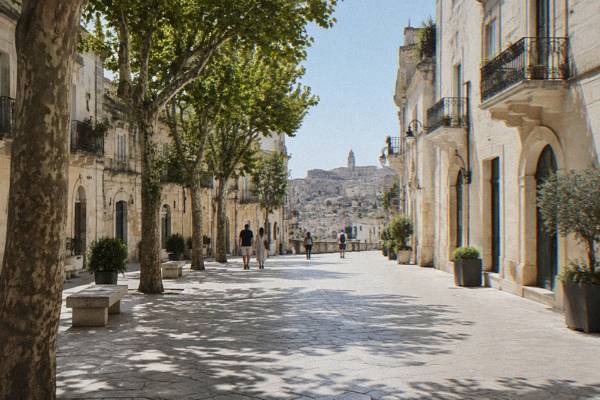
The Sassi di Matera are the two cave-quarter districts of Matera, a city in Basilicata, southern Italy, inscribed by UNESCO in 1993 together with the park of rock-cut churches across the Gravina canyon.
Short answer
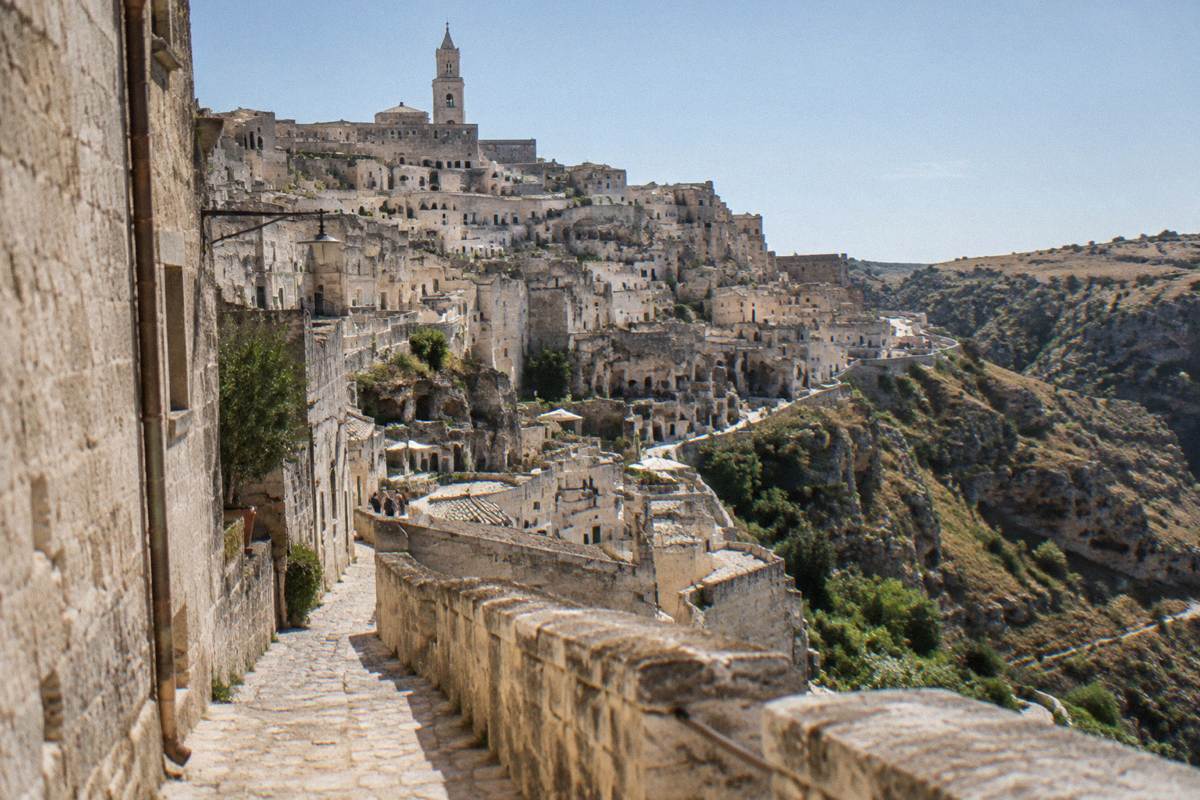
The Sassi di Matera are two historic districts, Sasso Caveoso and Sasso Barisano, cut into tufa limestone below the modern city, part of a UNESCO World Heritage site inscribed in 1993. Plan on a full day: one side on foot, the viewpoints opposite, and at least one cave house and one rupestrian church inside.
The Sassi di Matera are the two old cave districts of Matera, a city of 59,368 residents in the region of Basilicata, southern Italy, standing about 400 m above sea level on the edge of the Gravina canyon. Matera is an inland city: there is no sea here, and the coast, from Metaponto on the Ionian to Polignano a Mare on the Adriatic, is a day trip away. What Matera has instead is unique in Italy, two whole quarters of cave dwellings, stone houses and rock-hewn churches stacked along the canyon walls, hollowed from pale tufa limestone and lived in, in some form, for more than two millennia by UNESCO's own wording. This guide from the Matera Travel Guide editorial desk covers what the Sassi are, what the separate sites inside them cost, how to walk them, and how long to give them.
What Are The Sassi Di Matera?
The Sassi di Matera are two districts, Sasso Caveoso and Sasso Barisano, cut into and built onto the southern slope of the tufa canyon below Matera's modern centre, forming the core of a UNESCO World Heritage property named "The Sassi and the Park of the Rupestrian Churches of Matera", inscribed in 1993 under criteria (iii), (iv) and (v). UNESCO cites continuity over more than two millennia and first occupation in the Palaeolithic, with a property area of 1,016 ha.
"Sassi" is simply the Italian word for stones, and the name has stuck to the quarters as a whole, with "Sasso" as the singular for each district. The recent past is part of what makes the place what it is: residents were moved out of the cave houses between 1952 and the 1970s as the quarters became a national emblem of rural poverty, and a 1986 law opened the way to restoration, per the history recorded in the site's research pack. Since then the Sassi have been progressively reclaimed as homes, hotels, museums and churches, a reversal described in more detail in why Matera was abandoned. Some people still live in the Sassi today, a question with its own answer page.
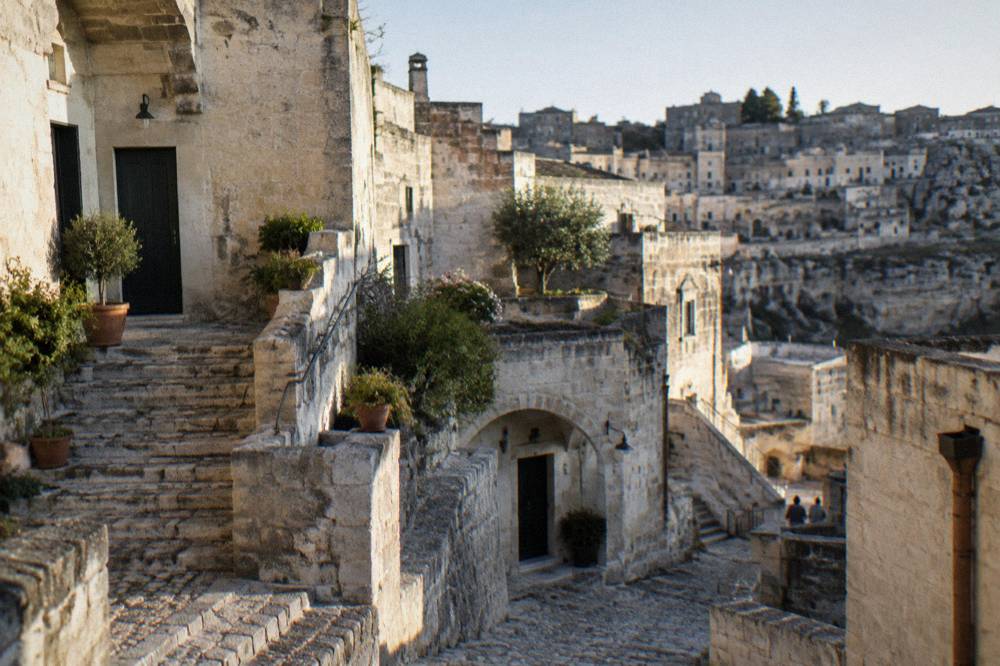
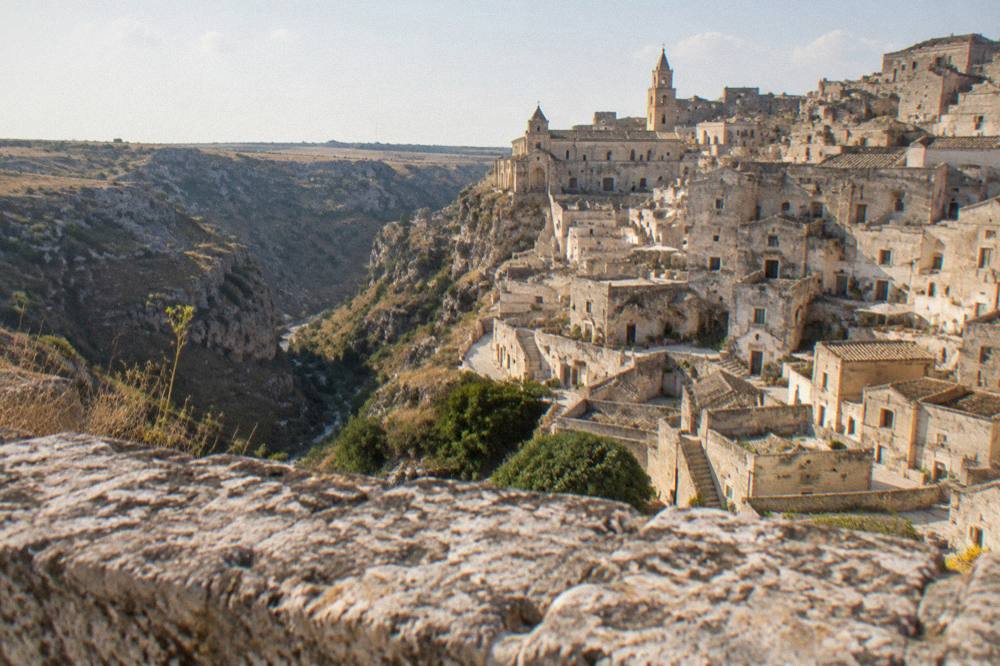
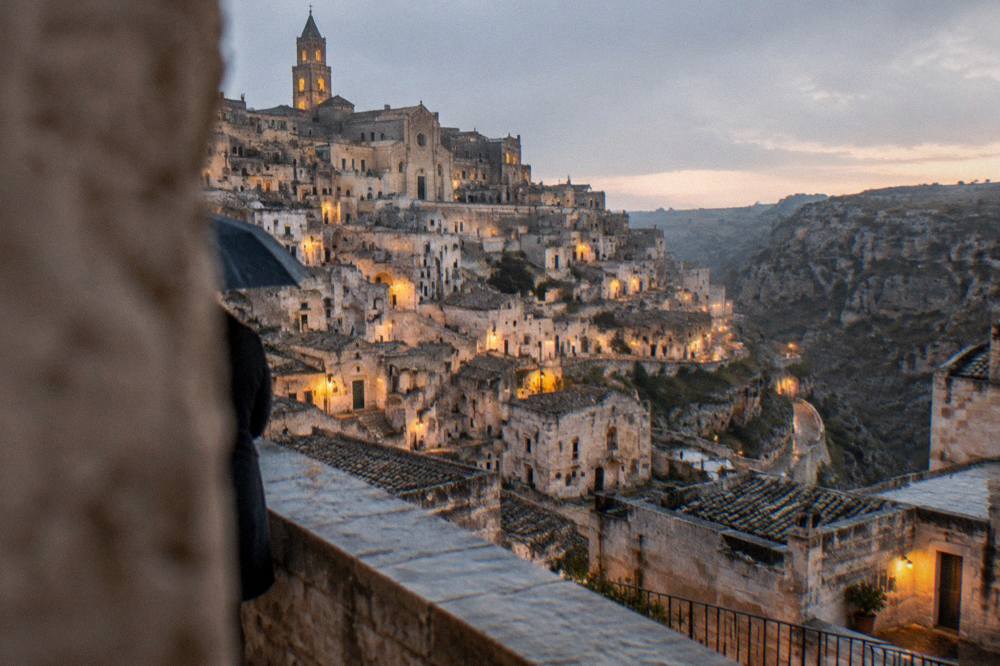
What you see now is a dense vertical landscape: lanes and stairways, house fronts built against cave mouths, balconies that serve as the roof of the dwelling below, and churches carved straight into the rock face. Opposite, across the Gravina, the Murgia plateau carries the park of rupestrian churches that shares the UNESCO inscription. The geology is the reason for all of it: tufa is soft enough to dig and hard enough to hold a room.
Sasso Barisano Or Sasso Caveoso: Which Side Of The Sassi Di Matera Should You See?
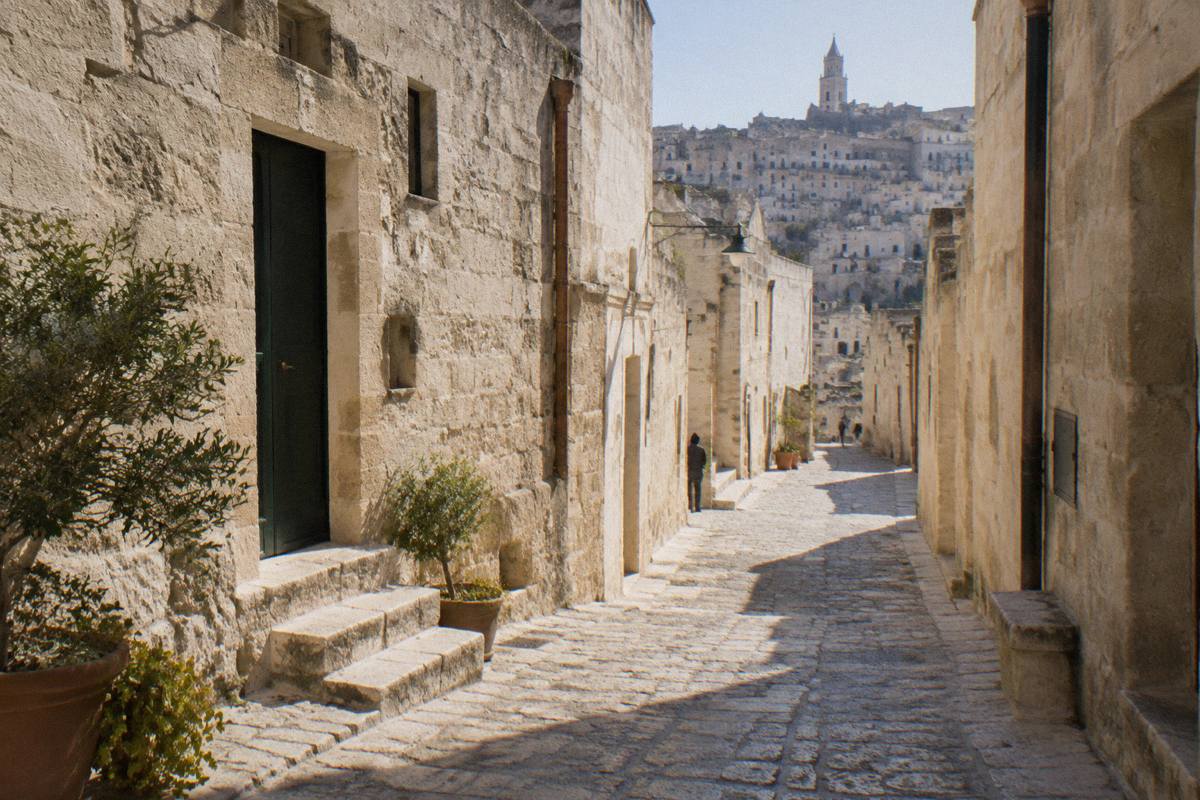
Sasso Barisano, the northwestern district, is the restored, rebuilt face of the Sassi, with frescoed facades, hotels and workshops, while Sasso Caveoso, to the southeast, is the rawer, more cave-like side, where dwellings were dug directly into the rock and the rupestrian churches of Santa Lucia alle Malve, Madonna de Idris and San Pietro Barisano sit. The two districts meet below the Civita, the old town core around the Cathedral.
Barisano faces the afternoon light and holds the gentler gradient of the two; Caveoso climbs harder toward Piazza San Pietro Caveoso and the canyon edge. Both are worth walking, and the natural loop is to descend into one, cross below the Civita, and climb out through the other. Between them sits the Cathedral of Matera on the high ground of the Civita, the orientation point for the whole descent.
The distinction between the city and its Sassi confuses plenty of first-time visitors, and there is a dedicated explanation of the difference between Matera and Sassi di Matera. In short: Matera is the city, the Sassi are its two oldest districts, and the modern town above them, the Piano, is where the ordinary shops and offices are.
A first overview helps before you commit to the stairs. A group walk such as the Sassi walk with the churches carved into the rock covers the historic centre and the rock-cut churches with a guide, while the related panoramic option on this page, an Ape Calessino ride, loops the districts without the climbing. For travelers pairing the Sassi with the trulli of Alberobello, the two-town day tour with a tour leader covers both UNESCO sites in one day.
Prefer to see the districts from above instead? Book an open bus tour ticket here.
The table below sets the two districts against each other. Both change street by street, so treat it as a planning frame rather than a rule.
| Aspect | Sasso Barisano | Sasso Caveoso |
|---|---|---|
| Character | Restored facades, workshops, cave hotels | Raw cave dwellings, rupestrian church cluster |
| Signature churches | San Giovanni Battista on the edge | Santa Lucia alle Malve, Madonna de Idris, San Pietro Barisano |
| Key squares | Piazza del Sedile side, Via Fiorentini | Piazza San Pietro Caveoso |
| Gradient | Steady descent | Steeper, stepped lanes |
| Access to canyon rim | Via Madonna delle Virtù side | Direct, at San Pietro Caveoso |
What Do Tickets To The Sassi Di Matera Sites Cost?
There is no single entry fee for the Sassi districts themselves: the lanes are public and free to walk. What you pay for is going inside the sites, and Oltre l'Arte's ticket page lists 4.50 EUR for one rupestrian church, 8.00 EUR for two and 10.00 EUR for three, while the Casa Grotta di Vico Solitario charges 8.00 EUR, MUSMA 10.00 EUR, each national museum site 10.00 EUR, and the all-inclusive Oltre l'Arte ticket covering eight sites costs 25.00 EUR.
Oltre l'Arte's ticket ladder, read on its own ticketing page, is the one that matters for the churches. Reduced rates apply for disabled visitors, groups of 20 or more and FAI members, and children up to 10 enter free with a parent. Its sites close on 25 December and 2 July, the day of the Festa della Bruna. The Casa Grotta tariff in force from 4 April 2026 charges 8.00 EUR full, 5.00 EUR reduced and 3.00 EUR for ages 11 to 18, free to age 10, and covers four spaces: the cave house, the Neviera ice store, a natural cave and the rock church of Sant'Agostino al Casalnuovo, as detailed on the Casa Grotta di Vico Solitario page.
| Site | Full price | Notes |
|---|---|---|
| Rupestrian church (Oltre l'Arte, each) | 4.50 EUR | 2 churches 8.00, 3 churches 10.00 |
| Oltre l'Arte all-inclusive, 8 sites | 25.00 EUR | Reduced 16.00 |
| Cathedral and MATA | 4.00 EUR | Daily 09:00 to 19:00 |
| Storica Casa Grotta di Vico Solitario | 8.00 EUR | Covers 4 spaces, tariff from 4 April 2026 |
| MUSMA sculpture museum | 10.00 EUR | Reduced 5.00 or 7.00 EUR |
| Museo Nazionale di Matera, per site | 10.00 EUR | Cumulative 15.00 EUR for all sites, 2 days, under 18 free |
| Casa Noha (FAI) | 6.50 EUR | Closed 5 to 22 October 2026 |
One closure to know about: the Museo Archeologico Nazionale Domenico Ridola has been closed since 7 April 2025 for energy works and a new display, with no reopening date published, so do not plan around it. Casa Noha, the FAI orientation house in the Sassi, is closed only 5 to 22 October 2026 for renovation ahead of a relaunch. If a price for a site is not in the table above, such as the Palombaro Lungo or the Crypt of the Original Sin outside town, this site does not print it: confirm at booking or on the door.
Can You Walk The Sassi Di Matera Without A Guide?
Yes, the Sassi are public streets and you can walk both districts alone for nothing, but a guide unlocks the interiors that are otherwise closed: several rupestrian churches and cave houses open only with an accompanying ticket or a licensed guide, and Oltre l'Arte itself charges less per church when entry is with a guide, 2.50 EUR for one church against 4.50 EUR unaccompanied. A guided walk also solves the orientation problem, which is real on a first visit.
Tip-based walks also run locally; if you take one, confirm the terms directly with the guide, as this site does not list operators for them. For a self-guided route, the site has a full self-guided walking route of Matera that strings the Sassi together with the viewpoints. The honest trade-off is this: alone, you see the architecture and the canyon; with a guide, you get inside the churches, the cisterns and the cave dwellings, plus the context of the evacuation that began in 1952 and ran to the 1970s, which no street sign explains.
For the church interiors specifically, the rupestrian churches of Matera overview lists the three ticketed ones and their opening hours from 28 March 2026, which run to 19:30 for two of them in the summer season, late enough that a church visit can follow dinner reservations rather than precede them.
What Can You See Inside The Sassi Di Matera?
Inside the Sassi districts the visitable sites fall into five groups: the rupestrian churches run by Oltre l'Arte, the furnished cave houses, the museums carved into palaces and cisterns, the diocesan route at the Cathedral, and the water systems underneath the quarters, principally the Palombaro Lungo, the vast cistern beneath Piazza Vittorio Veneto whose price and hours are not published on an official page and must be confirmed locally.
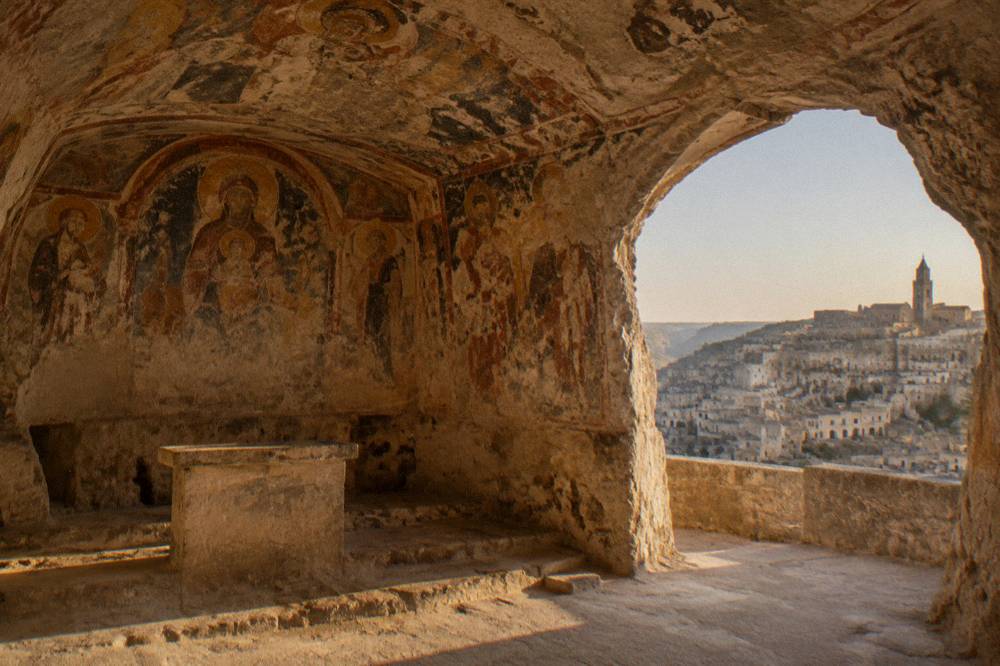
The churches are the reason for the UNESCO inscription. Santa Lucia alle Malve, the first female monastic settlement in the Sassi, Santa Maria de Idris with the connected San Giovanni in Monterrone, and San Pietro Barisano, the largest rock church in the city, are all inside Sasso Caveoso and all on the Oltre l'Arte ladder ticket. In Barisano, Madonna delle Virtù and San Nicola dei Greci sit on the canyon terrace, though this site holds no verified price or hours for them.
The museums add depth fast. MUSMA, the contemporary sculpture museum in the Sasso Caveoso, spreads through cave rooms and a palace. Palazzo Lanfranchi houses the national museum, open Monday to Sunday 09:00 to 20:00, and is one of four venues of the exhibition "The Sea Is Closer Than You See", running to 8 December 2026, an apt title for a city 47 road kilometres from the Ionian. Casa Noha shows a short orientation film on the Sassi, and Casa Cava occupies a recovered cave cistern.
| Site group | Examples | What you get |
|---|---|---|
| Rupestrian churches | Santa Lucia alle Malve, Madonna de Idris, San Pietro Barisano | Frescoed rock interiors, ladder ticket |
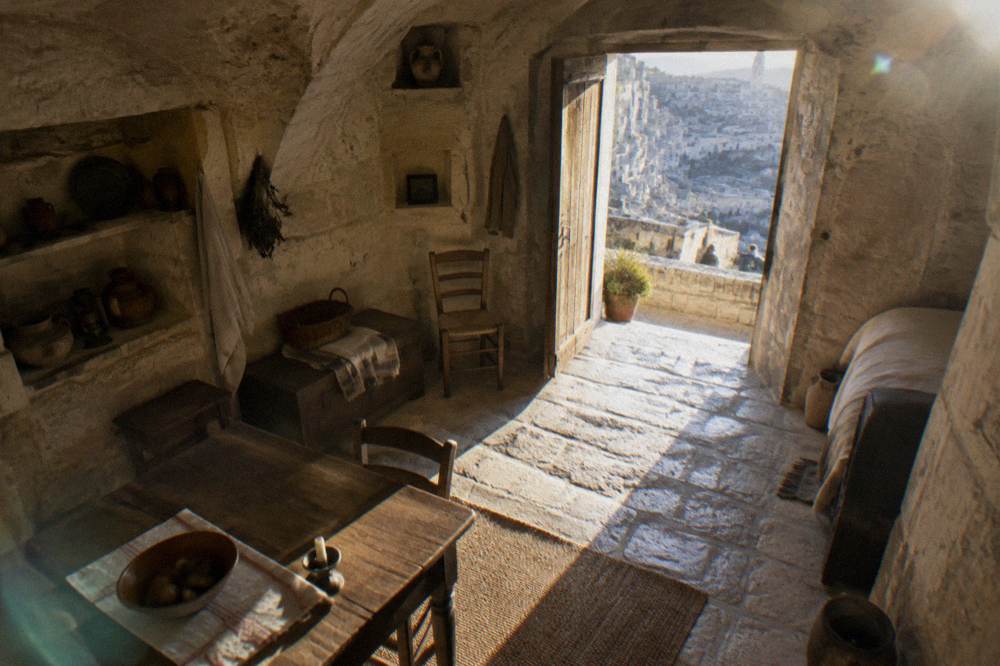
| Cave houses | Casa Grotta di Vico Solitario, Antica Casa Grotta Via Fiorentini | Furnished domestic interiors, farm tools |
| Museums | MUSMA, Palazzo Lanfranchi | Contemporary sculpture, medieval and modern art |
| Diocesan route | Cathedral and MATA | Romanesque cathedral, museum of sacred art |
| Water systems | Palombaro Lungo, Convicinio di Sant'Antonio | Cisterns and hypogea under the quarters |
The Convicinio di Sant'Antonio, a cluster of four cave chapels around a cistern yard in the Caveoso, and the Palombaro Lungo both belong to the water story: the Sassi functioned for centuries on rainwater captured, filtered and stored in rock cisterns beneath the houses. Bread was the other constant of that economy, and the Pane di Matera IGP loaf, registered in 2008 and still baked in the city, descends directly from it.
Where Are The Best Viewpoints Over The Sassi Di Matera?
The classic view of the Sassi is from the opposite side of the Gravina canyon at Belvedere Murgia Timone, inside the Parco della Murgia Materana, reached on foot across the canyon or by road; inside the city, the terraces of Piazza San Pietro Caveoso, the balcony of Santa Maria de Idris and the edge at Madonna delle Virtù each give a different angle, and the rooftop view from the Piano above, at Piazza Vittorio Veneto, frames both districts at once.
Murgia Timone is the postcard shot: the whole canyon amphitheatre with the Sassi stacked on the far wall. Since 6 February 2026 a staffed visitor centre at Jazzo Gattini has served as the park's info point and ticket office for access toward Murgia Timone, so the crossing is now managed rather than free-roaming. The park, about 8,000 hectares by its own count, holds the rupestrian churches that complete the UNESCO property; the Parco della Murgia Materana page has the detail. A sunset walk to the belvedere with transfer included is one of the site's listed tours, and the photography angle is covered on the Matera viewpoints page.
Closer in, the Tibetan bridge over the Gravina has had a staffed, ticketed access point since March 2026, sold online through the park's ticket site. The exact price is not settled on an official page, with the ticket text and press reports giving different figures, so this site does not print one; half price applies under 25, and entry is free for residents of Matera and Montescaglioso, under-6s and disabled visitors with a companion.
How Hard Is Walking In The Sassi Di Matera?
The Sassi are steep, stepped and uneven, and no route through either district can be called step-free or wheelchair accessible: lanes are cobbled or cut stone, stairways are frequent and unrailed in places, and the descent from the Piano to the canyon floor drops the height of a multi-storey building. Footwear with grip matters more than fitness, and the climb back out is the part to plan around, especially in summer heat.
The ERA5 reanalysis, 1991-2020, puts the mean July high in Matera at 31.2 C and August at 31.3 C, with 20.9 August days reaching 30 C. Walking the districts in the middle of a July afternoon is a different proposition from the same walk in October, at a 20.8 C mean high. Water, shade stops and an early start are the standard advice for the warm months; frost days cluster from December to March, when the stones themselves can be slick.
The site's Matera accessibility guide covers what is realistic with limited mobility, and the honest summary is that the districts above, the Piano, the Cathedral and Piazza Vittorio Veneto, are manageable, while the Sassi lanes below are not, in any reliable way. An open-top or Ape Calessino panoramic ride is the practical alternative for seeing the districts without the stairways.
Where To Stay And Eat In The Sassi Di Matera?
Sleeping inside the Sassi means a cave hotel, a room carved from or built into the tufa, concentrated in Sasso Barisano and the upper Caveoso; the site's guides to Sassi di Matera hotels and cave hotels cover the verified options, and eating ranges from cave restaurants serving Lucanian dishes to bread, cruschi peppers and the local DOC wine, all covered on the dedicated food pages.
The cave-hotel experience is the reason many travelers stay the night rather than day-trip: the Sassi after dark, lamplit and emptied of day traffic, is a different place, and the Matera at night page covers it. Where to base yourself, inside the Sassi, up on the Piano or outside the ZTL ring with a car, is a real decision with trade-offs, and the where to stay in Matera and where to stay with a car guides take it in turn. Note that the whole Sassi sits inside a limited traffic zone with camera gates, active 10:00 to 20:30 from 16 September to 30 June and later in summer; the Matera ZTL and Matera parking pages carry the verified hours.
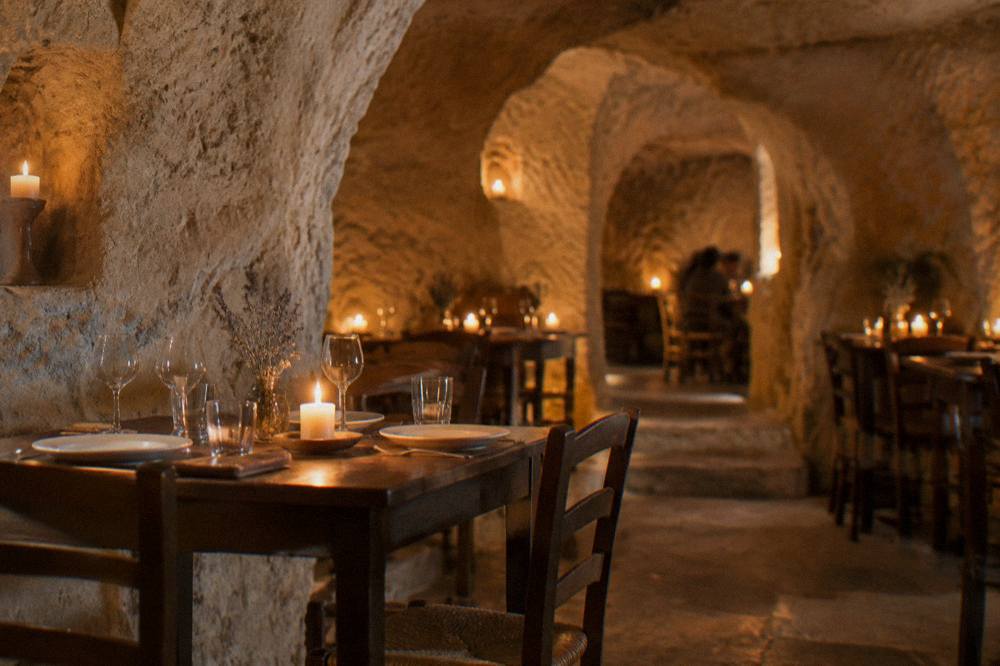
For food, start with what the quarters ate for centuries: bread, legumes, wild greens and peperoni cruschi, the sweet crisp peppers of the region. The what to eat in Matera and Matera cave restaurants pages list where those dishes are served in cave rooms and on canyon terraces.
How Much Time Do The Sassi Di Matera Need?
One full day walks both districts, takes in a cave house and one or two rupestrian churches, and reaches a viewpoint before sunset; two days add the Murgia side of the canyon, a museum or two and a meal inside the Sassi at leisure. APT Basilicata's accommodation data shows visitors average 1.56 nights per stay in Matera, which in practice splits into one heavy sightseeing day and one lighter one.
The crowd data supports the slow option. September is Matera's busiest month, 61,630 arrivals in 2025 against 60,257 in August, and 74.5 percent of those September guests came from abroad; May and October also run far ahead of midwinter, when February logged 15,239. The best time to visit Matera page carries the full table. Whenever you come, the structure of a good day is the same: viewpoints first for the layout, one district on foot in the cooler hours, interiors after, and the canyon rim at sunset.
| Month (2025) | Arrivals | Mean high C (ERA5 1991-2020) |
|---|---|---|
| February | 15,239 | 11.1 |
| May | 54,101 | 22.7 |
| July | 43,966 | 31.2 |
| September | 61,630 | 25.7 |
| October | 52,538 | 20.8 |
Day-trippers compress the visit into a few hours and miss the interiors and the Murgia side entirely. If your time is short, the priorities are, in order: a viewpoint across the canyon, one furnished cave house, one rupestrian church, and the lane network between Piazza San Pietro Caveoso and the Cathedral. If you have longer, the one day in Matera, two days in Matera and three days in Matera itineraries sequence all of it, and the Crypt of the Original Sin, a frescoed rock crypt 13 road kilometres out at Contrada Petrapenta, rewards a half-day of its own with booking mandatory by e-ticket at least 90 minutes ahead.
For the pairing that many travelers make, the Matera and Alberobello in one day guide covers combining the two UNESCO sites, with the trulli town 68 road kilometres and about 1 h 23 by car from Matera.
Common Questions About The Sassi Di Matera
What does Sassi mean in Italian?
"Sassi" is the Italian word for stones, and it has become the collective name for Matera's two cave districts; "Sasso" is the singular, as in Sasso Caveoso and Sasso Barisano. The meaning of the word Sassi is covered on its own page.
Do people still live in the Sassi di Matera?
Yes. After the evacuation that ran from 1952 to the 1970s and the restoration that followed the 1986 law, dwellings in both districts are again lived in, alongside hotels, museums and workshops. The question has its own dedicated answer page.
Is there an entry fee for the Sassi di Matera?
No. The districts are public streets, free to walk at any hour. You pay only to enter specific sites: the rupestrian churches from 4.50 EUR, the Casa Grotta di Vico Solitario at 8.00 EUR, and the museums from 4.00 EUR, all prices verified on the operators' own pages in 2026.
Which is better, Sasso Caveoso or Sasso Barisano?
Neither is simply better. Caveoso holds the rupestrian churches and the rawer cave architecture; Barisano is the restored face with workshops and cave hotels, on a gentler gradient. A loop through both, crossing below the Civita, is the standard walk.
How many rupestrian churches are there in Matera?
The UNESCO property includes a park of rock-cut churches across the Gravina, with a figure of about 150 churches often cited for the park; that count is not confirmed on an official page this site has read, so treat it as approximate. Three of them, Santa Lucia alle Malve, Madonna de Idris and San Pietro Barisano, are ticketed and open on the Oltre l'Arte ladder.
Can you see the Sassi di Matera in half a day?
You can walk the lanes and reach a viewpoint in half a day, but the interiors, the Murgia side and the canyon rim at sunset need a full day. APT Basilicata's data shows an average stay of 1.56 nights in 2025, and most of what makes the Sassi distinctive happens inside the caves, not on the street.