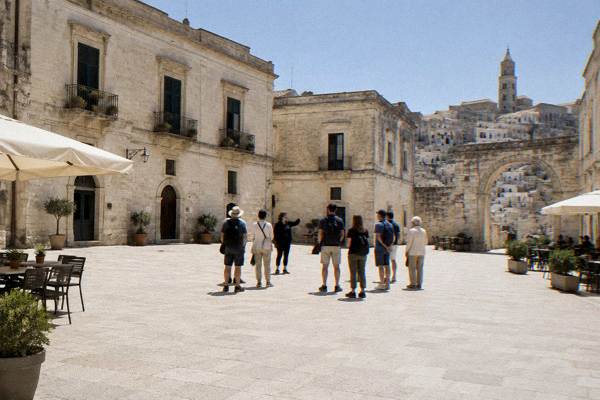
Does It Snow In Matera, Italy?
Snow in Matera is occasional and rarely settles for long. The ERA5 climate normals show cold, frosty winters at 400 m above sea level, with mean lows around 2 C in January and February.
Matera, the cave city of Basilicata in southern Italy, sits about 400 m above sea level on the edge of the Gravina canyon, well away from the moderating influence of either coast. That elevation shapes its winters. The city gets cold, damp weather from December through February, with frost on roughly twenty mornings a year, but the question of snow has a more nuanced answer than the latitude suggests. The ERA5 reanalysis for Matera, covering 1991 to 2020, shows winter mean lows hovering just above freezing, which means the city sits in the narrow band where snow can fall but rarely accumulates for long.
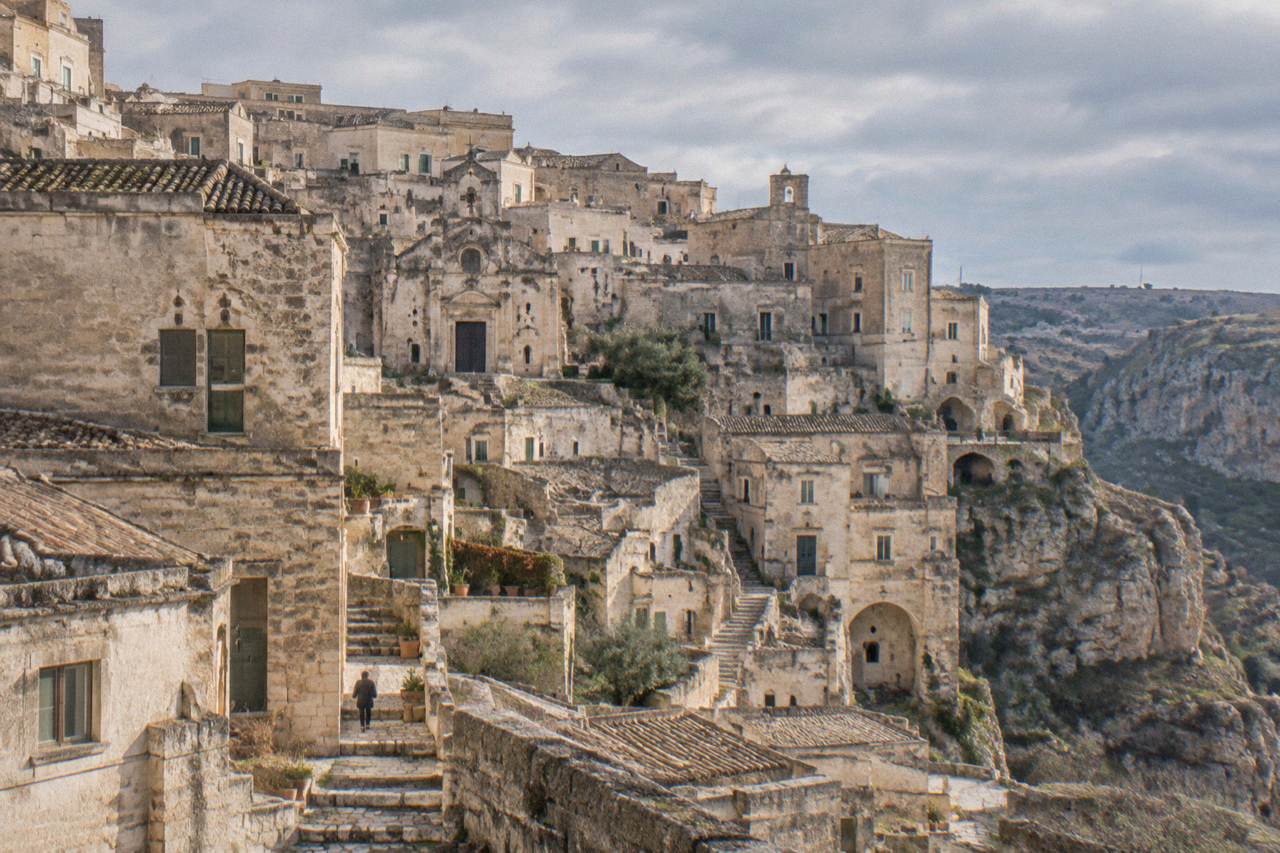
Does It Snow In Matera, Italy?
Yes, it can snow in Matera, but snowfall is occasional and it rarely settles for more than a few hours. The ERA5 reanalysis, 1991-2020, shows mean lows of 2.2 C in both January and February, right at the freezing threshold, with about 20 frost days a year, almost all between December and March. Cold rain is far more common than snow: January averages 51.4 mm of precipitation over 8.1 rain days.
The honest framing is that Matera occupies a climatic middle ground. It is high enough, at about 400 m above sea level on the Murgia plateau's edge, to catch cold air masses that sweep down from the Balkans across the Adriatic in winter. It is far enough south that those masses usually arrive modified, bringing frost and rain rather than sustained snow. When snow does fall, the pale tufa of the Sassi, dusted white against the canyon, is a striking sight, and local photographers treat it as an event precisely because it is uncommon.
What the verified climate data does not include is a snow-day count. The ERA5 reanalysis for the Matera grid cell gives mean temperature, precipitation, rain days and daylight hours, not snowfall statistics, so this page will not invent one. Any guide quoting a precise number of snow days per year for Matera is filling a gap the underlying data does not cover.
How Cold Does Matera Get In Winter?
The ERA5 reanalysis, 1991-2020, puts Matera's coldest month at a mean of 5.9 C in January, with a mean high of 10.3 C and a mean low of 2.2 C. February is nearly identical, with a mean low of 2.2 C and 54.9 mm of rain over 8.8 rain days. Frost touches the city about 20 mornings a year, almost all from December to March.
Those numbers describe a genuinely cold winter, not a mild Mediterranean one. Matera is an inland city, and the same continental-leaning pattern that produces hot, dry summers with mean highs of about 31 C in July and August produces damp, chilly winters. The Sassi district compounds the effect at street level: the cave-cut lanes and stairways sit in the canyon hollow, where cold air settles and the stone holds the chill. A January morning on Vico Solitario feels several degrees colder than the terrace of Piazza Vittorio Veneto above it.
The wettest month of the whole year is November, at 67.1 mm, and December follows at 57.2 mm. Winter visitors should plan for rain and frost rather than snow. The full picture, month by month, is in the table below.
| Month | Mean high C | Mean low C | Rain mm | Rain days |
|---|---|---|---|---|
| November | 15.5 | 7.5 | 67.1 | 8.3 |
| December | 11.2 | 3.7 | 57.2 | 8.5 |
| January | 10.3 | 2.2 | 51.4 | 8.1 |
| February | 11.1 | 2.2 | 54.9 | 8.8 |
| March | 14.1 | 4.4 | 59.2 | 9.4 |
Figures are ERA5 reanalysis, 1991-2020, for the Matera grid cell, a modelled dataset rather than a weather-station record. For a deeper treatment of the cold months, see the companion page on how cold Matera gets in winter.
Winter is also Matera's quiet season. The APT Basilicata accommodation data shows 15,239 arrivals in February 2025 against 61,630 in September, roughly a fourfold difference between the low and the peak. The trade-off is real: fewer crowds and lower demand, against shorter days, cold evenings and a chance of rain on any given morning. The question of whether Matera is worth visiting has a different answer in January than in May, and the winter case rests on atmosphere rather than weather.
When the lanes are wet and the wind comes up the Gravina, a covered vehicle beats walking. Two options that suit a cold day:
When Is Snow Most Likely In Matera?
Snow in Matera is most plausible in January and February, the two months when the ERA5 mean low sits at 2.2 C, close enough to freezing that a cold snap can push precipitation below the snow line. December and early March are the next most likely windows. Outside November through March, snow is effectively off the table: the reanalysis shows mean lows of 7.5 C in November and 11.5 C in May.
The mechanism matters more than the calendar. Matera's rare snow events come when a cold Balkan current crosses the Adriatic without warming, a pattern that typically announces itself a day or two ahead on any weather forecast. The city's elevation, about 400 m, gives it a slight edge over the coastal towns of Puglia in catching that cold air. Even then, the same ERA5 data shows precipitation in the deep winter months falling overwhelmingly as rain, 51.4 mm in January and 54.9 mm in February, because the mean temperature of those months sits above freezing at 5.9 and 6.3 C respectively.
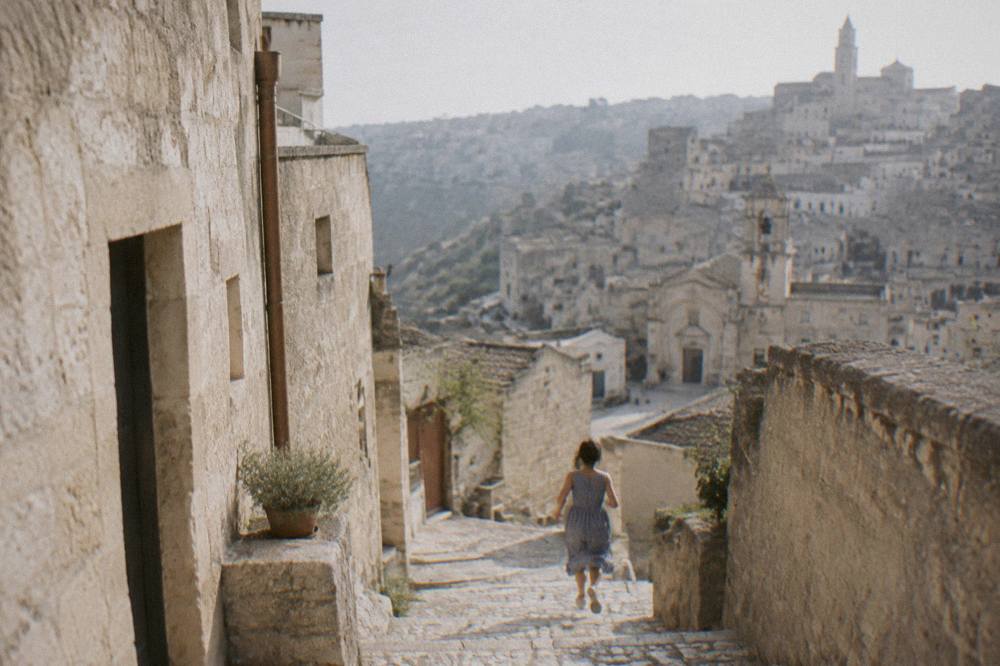
When snow does stick, it usually melts within a day or two as daytime highs climb back above freezing. The Sassi's stepped lanes, wet stone and uneven paving are demanding enough in dry conditions, and the site's own terrain, steep, stepped and cut into the canyon wall, means no route down into the Sassi should be treated as easy footing in ice or snow. Sturdy shoes with grip are the standing advice for Matera in any season, and in winter they are non-negotiable. The packing question is covered in detail on what clothes to pack for Matera.
Does Winter Weather Disrupt Travel To Matera?
Serious snow disruption is rare in Matera, but winter travellers should build in flexibility around two things: the FAL rail connection from Bari, which requires a change at Altamura and takes about 1 h 45 to 2 h, and the steep lanes of the Sassi, which become slippery in rain and frost. The emergency and travel basics are unaffected by season: Italy is a Schengen member, the currency is the euro, and the single emergency number is 112.
The rail link deserves attention. Matera has no Trenitalia service; the operator is FAL, Ferrovie Appulo Lucane, and its posted weekday timetable routes Bari to Matera with a change at Altamura. On Sundays and public holidays no trains run at all, and FAL operates replacement buses instead, eight arrivals at and eight departures from Matera Stazione Centrale on the festive sheet. FAL publishes service notices whenever the programme changes, and winter weather or engineering works can alter specific departures, so the operator's own timetable page is the place to check the day before travel. This site does not quote a minute-exact journey time because the posted sheets change.
Driving is the other consideration. Matera is about 64 km from Bari Airport by road, roughly an hour in free-flow conditions, on inland roads that can see frost on winter mornings. The city's ZTL zones, camera-enforced limited traffic areas covering the Sassi gates and the historic centre, operate year-round regardless of weather, and the hours PDF on the comune's site is the authority on when the barriers are active. Parking outside the restricted zones and walking in remains the standard winter plan, exactly as in summer.
For getting around the city itself on a raw day, the covered Ape Calessino ride is the practical choice, and the operator's live listing carries current times and availability: Check availability.
Things To Do In Matera In Winter, Snow Or No Snow
Matera's winter programme leans on its indoor cave sites: the MUSMA sculpture museum at 10 EUR full, the Storica Casa Grotta di Vico Solitario at 8.00 EUR, and the Oltre l'Arte rupestrian churches at 4.50 EUR for one church, 8.00 EUR for two or 10.00 EUR for all three, on the tariff in force since 28 March 2026. The city also runs winter events, including the Presepe Vivente living nativity across the December holidays.
The cave interiors hold a stable temperature year-round, which makes them the natural refuge when the weather turns. Oltre l'Arte's ticket page lists its three rock-cut churches, Santa Lucia alle Malve, Madonna de Idris with San Giovanni in Monteronne, and San Pietro Barisano, with daily winter hours and free entry for children up to 10 with a parent. The all-inclusive 25.00 EUR ticket adds five more sites, including the Museo del Pane and the Antica Casa Grotta in Via Fiorentini. One closure to plan around: all Oltre l'Arte sites shut on 25 December and on 2 July for the Festa della Bruna.
The Presepe Vivente is the standout winter event, a sixteenth edition titled "Vera Fratellanza" that routes 20 costumed scenes through the Sasso Caveoso, from Piazza San Pietro Caveoso down through Vico Solitario, Rione Malve and Casalnuovo. Its public days cluster on the December weekends and the first January weekend, and its own site is the source for tickets. Beyond the nativity, the winter calendar includes the Matera Film Festival in November and the Gezziamoci jazz festival running to late December, both of which give the cold months a cultural spine that coastal resort towns simply do not have in low season.
For travellers weighing the season against the experience, the winter case for Matera is atmospheric rather than meteorological: low crowds, moody light over the Gravina, and interiors that do not care about the weather outside. The question of how many nights to stay in Matera applies in every season, and the answer does not shrink in January.
If a cold-weather visit is on the cards, these covered and panoramic options all run through the winter months:
Common Questions About Snow In Matera
Does it snow in Matera, Italy?
Yes, occasionally, between December and March, but snow rarely settles for long. The ERA5 reanalysis, 1991-2020, shows January and February mean lows of 2.2 C, close to freezing but above it, so cold rain is far more common than snow.
How cold does Matera get in winter?
January, the coldest month, averages 5.9 C overall, with a mean high of 10.3 C and a mean low of 2.2 C, per the ERA5 reanalysis, 1991-2020. Frost occurs on about 20 mornings a year, almost all between December and March.
What is the wettest month in Matera?
November, at 67.1 mm of precipitation in the ERA5 reanalysis, 1991-2020, followed by December at 57.2 mm. Winter visitors should plan for rain more than snow.
Does snow disrupt trains from Bari to Matera?
Serious disruption is uncommon, but the FAL rail link from Bari requires a change at Altamura and takes about 1 h 45 to 2 h, and no trains run on Sundays and public holidays, when FAL substitutes buses. Check FAL's own timetable page before travelling in winter.
Is Matera worth visiting in winter?
Yes, for travellers who accept cold, damp weather in exchange for thin crowds. APT Basilicata data shows 15,239 accommodation arrivals in February 2025 against 61,630 in September, and the winter calendar includes the Presepe Vivente living nativity and the Matera Film Festival.
Are the Sassi lanes safe in snow or ice?
The Sassi are steep, stepped and uneven in dry conditions, and no route down into the district should be treated as easy footing in ice. Sturdy, gripped footwear is the standing advice for Matera in every season and doubly so in winter.
The short version: pack for cold rain and frost, keep an eye on the forecast for a rare dusting on the Sassi, and treat any snow that does arrive as a bonus rather than a plan. More seasonal detail sits on the Matera Travel Guide main page, including the full climate breakdown and the winter events calendar.