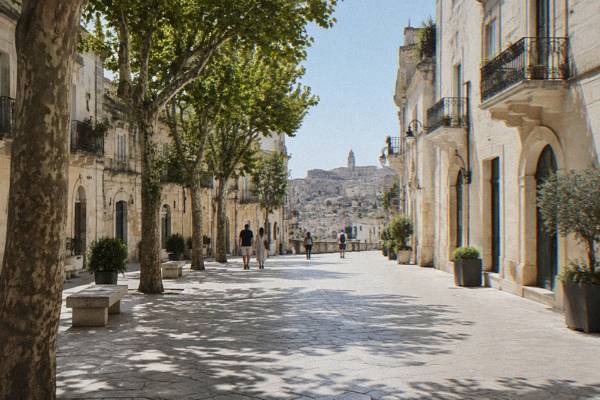
How Cold Does It Get In Matera, Italy?
Winter temperatures in Matera, Basilicata: ERA5 climate normals, frost days, what the cold feels like in the Sassi, and how to plan around it.
Matera, in the region of Basilicata in southern Italy, is an inland city at about 400 m above sea level, and that elevation does something unexpected in the Italian south: it makes winter genuinely cold. The ERA5 reanalysis, 1991-2020, a modelled grid cell rather than a weather-station record, puts the January mean low at 2.2 C and counts about 20 frost days a year, almost all between December and March. The same data shows November as the wettest month, at 67.1 mm of rain. Cold here means damp cold, sharp mornings and early darkness settling over the Sassi, not the mild seaside winter of the coast, which is a day trip away, not on the doorstep.
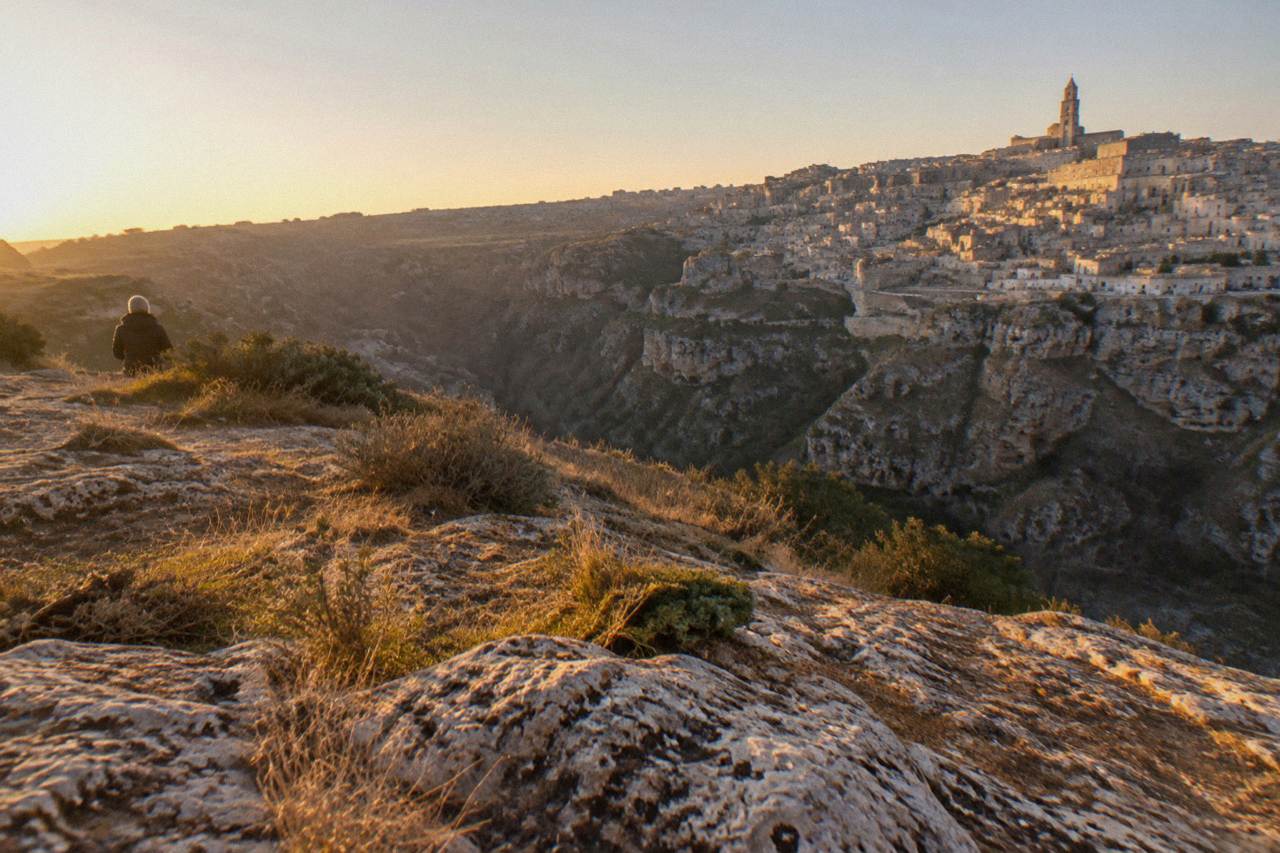
How Cold Does It Get In Matera, Italy?
In the coldest months, Matera's mean low drops to 2.2 C in January and February, with a mean high of 10.3 C in January, according to the ERA5 reanalysis, 1991-2020. December averages a low of 3.7 C and November a low of 7.5 C. About 20 frost days a year occur, almost all from December to March, so freezing nights are a normal part of a Matera winter rather than an exception.
Those figures deserve a caveat. The ERA5 reanalysis is a modelled grid cell at about 398 m, not a weather station in the city, so treat the numbers as climate normals rather than a forecast for any given week. What the normals do show is the shape of the year: a long, hot summer and a winter that is cold and damp rather than snowy or extreme. The Sassi district, cut into the tufa on the side of the Gravina canyon, funnels wind up from the ravine in the late afternoon, and the stone holds the day's chill long after sunset. Anyone standing at a viewpoint after dark in January will feel colder than the printed number suggests.
It is also worth knowing what the cold is not. Matera is not alpine. The mean high in the coldest month still reaches double digits, and rain, not snow, is the dominant winter weather. The question of snowfall has its own treatment on the site, in does it snow in Matera, which covers what the winter precipitation actually looks like.
What Are Matera's Winter Temperatures, Month By Month?
From November to March, the ERA5 reanalysis, 1991-2020, gives Matera mean highs of 15.5, 11.2, 10.3, 11.1 and 14.1 C, and mean lows of 7.5, 3.7, 2.2, 2.2 and 4.4 C respectively. November is the wettest month at 67.1 mm of rain, followed by December at 57.2 mm and March at 59.2 mm, with 8 to 9 rain days in each of those months.
The month-by-month picture matters because winter in Matera is a slope, not a cliff. November still feels like late autumn on many days, with afternoons in the mid-teens, but the light shortens to under ten hours a day and the rain becomes frequent. By January the mean high sits at 10.3 C and the mean low at 2.2 C, which is the bottom of the curve. February is barely warmer. March is the turnaround month: the mean high climbs back to 14.1 C and the days stretch toward twelve hours of daylight.
| Month | Mean high C | Mean low C | Rain mm | Rain days |
|---|---|---|---|---|
| November | 15.5 | 7.5 | 67.1 | 8.3 |
| December | 11.2 | 3.7 | 57.2 | 8.5 |
| January | 10.3 | 2.2 | 51.4 | 8.1 |
| February | 11.1 | 2.2 | 54.9 | 8.8 |
| March | 14.1 | 4.4 | 59.2 | 9.4 |
Figures: ERA5 reanalysis, 1991-2020, modelled grid cell, not a weather-station record.
One practical reading of that table: the wettest stretch of the Matera year is November through March, when every month carries more than 50 mm of rain. The rain often arrives as long, grey spells rather than brief showers, and the stepped stone lanes of the Sassi run with water when it falls. Waterproof shoes with grip matter more here than heavy insulation, because the cold is damp and the surfaces are uneven.
For visitors weighing a winter trip against the peak, the APT Basilicata accommodation data gives the other half of the picture: February logged 15,239 arrivals in 2025 against 61,630 in September, so the cold months are also the quiet months, and the city's hotels and restaurants operate at winter rhythm.
Does It Freeze In Matera, And How Often?
Yes, Matera freezes, on a modest but regular schedule: the ERA5 reanalysis, 1991-2020, counts about 20 frost days a year, almost all falling between December and March, with January and February mean lows of 2.2 C. Frost settles on the Sassi rooftops and the Murgia plateau on clear nights, then typically burns off by mid-morning as the mean high climbs past 10 C.
The mechanics of a Matera frost are elevation and clear skies. The city sits at about 400 m on the rim of the Gravina canyon, and on calm winter nights the temperature drops away from the day's high by a wide margin. The Murgia plateau opposite, a protected park of about 8,000 hectares by the park's own count, holds the cold even longer than the built-up streets. Anyone heading out for sunrise photographs of the Sassi from the Belvedere Murgia Timone side should expect frozen puddles and a wind that feels several degrees sharper than the valley floor.
Inside the Sassi the cold behaves differently again. The cave dwellings cut into the tufa hold a stable temperature year round, which is precisely why people lived in them for so long, a story told in more depth in why did people live in caves in Matera. The modern cave hotels and restaurants inherit that thermal mass: a rock-cut dining room in January is warmer than the street outside, while the reverse is true in July.
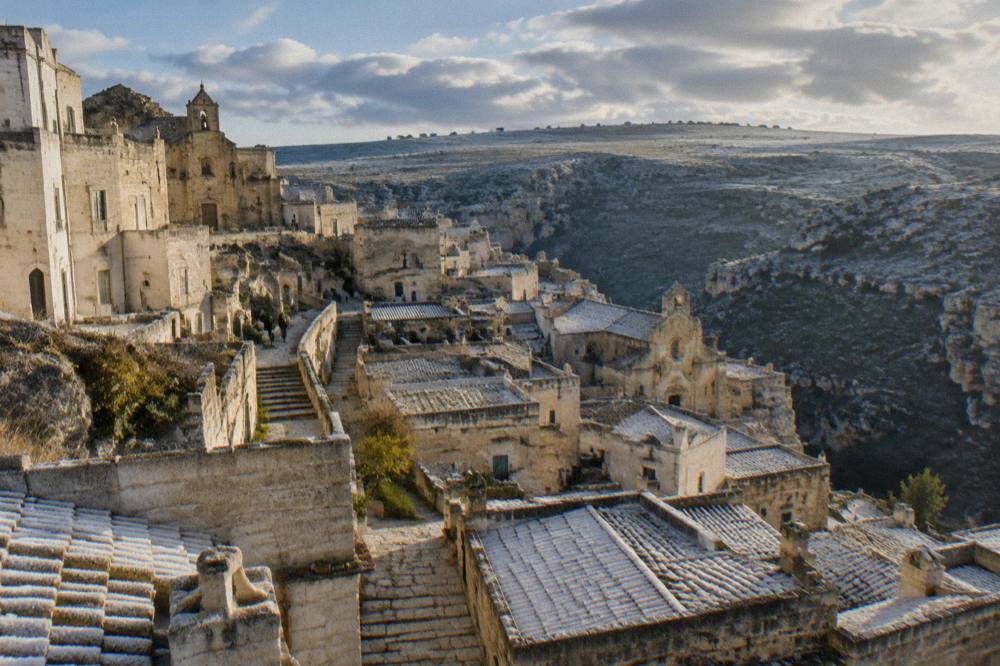
Winter sightseeing still runs at full schedule. The Oltre l'Arte ticket page lists its rupestrian churches open daily into the evening, and the Storica Casa Grotta di Vico Solitario's tariff page shows shorter winter hours, Monday to Friday 09:30 to 18:00 with weekend evenings extended. The cave churches are, conveniently, warmer than the streets. One closure to plan around: Casa Noha was closed 5 to 22 October 2026 for renovation ahead of a relaunch, and the Museo Archeologico Nazionale Domenico Ridola has been closed since 7 April 2025 for energy works, with no reopening date published.
What Should You Pack For Matera In Winter?
Pack for damp cold around 2 to 15 C: layered clothing you can shed by midday, a real waterproof jacket rather than a rain umbrella, and shoes with grip for wet stone steps, because the ERA5 reanalysis, 1991-2020, shows 8 to 9 rain days a month from November to March and frost on about 20 mornings a year. Warm layers for the evening matter more than extreme-cold gear.
The logic is the temperature swing. A January day can start at 2 C, reach 10 C under the afternoon sun, and fall back below 5 C within an hour of sunset. Three thin layers beat one thick coat, because the Sassi involve constant climbs and staircases that warm the body fast. The Matera Travel Guide packing detail, including the full clothing list, sits in what clothes should you pack for Matera, which breaks the wardrobe down by season.
Footwear deserves its own sentence. The Sassi lanes are stepped, uneven and worn smooth in places, and wet limestone is slippery. A boot with a lug sole changes a winter visit more than any other single item of kit. Gloves and a hat earn their place for the viewpoints at dusk, where the canyon wind is at its most insistent.
For travellers who would rather not climb the Sassi stairways in the cold at all, a covered Ape Calessino panoramic ride is the winter-friendly alternative: the operator's live listing shows what the route covers, and Check availability gives the current dates and price. It is also worth reading how long does it take to walk around Matera before deciding how much of the city to attempt on foot in January.
Is Winter Actually A Good Time To Visit Matera?
Winter is the quietest time to visit Matera: the APT Basilicata data logs 15,239 accommodation arrivals in February 2025 against 61,630 in September, so the cold months carry roughly a quarter of the peak crowds, and the ERA5 reanalysis, 1991-2020, still shows January mean highs of 10.3 C, cold but workable for sightseeing with layers.
The trade is straightforward. Against the cold and the rain, a winter visitor gets the Sassi without the peak-season crush, easier tables at restaurants, and the low winter light that photographers travel for. The December calendar also brings the Presepe Vivente nei Sassi, whose own site lists tickets at 12.00 EUR full and 9.00 EUR for ages 10 to 18, with public days on the December weekends and 2 to 3 January 2027.
Cold-weather visitors should also budget for shorter days. December daylight averages 9.3 hours, which pushes dinner earlier and makes the evening passeggiata a brisk affair. The question of how long to stay has its own page, how many nights should I stay in Matera, and the answer shifts slightly in winter, when indoor time in museums and cave restaurants takes a larger share of the day.
Common Questions About Cold Weather In Matera
How cold does it get in Matera, Italy?
The ERA5 reanalysis, 1991-2020, puts the January and February mean low at 2.2 C, with January mean highs of 10.3 C. About 20 frost days a year occur, almost all between December and March. Matera is an inland city at about 400 m elevation, so its winters are colder and damper than coastal southern Italy's.
Does it snow in Matera?
Snow is not the dominant winter weather in Matera. Rain is: November is the wettest month at 67.1 mm in the ERA5 reanalysis, 1991-2020, and every month from November to March carries more than 50 mm. The dedicated page on snowfall in Matera covers the details.
Is Matera colder than the coast of Puglia?
Generally yes in winter. Matera sits at about 400 m above sea level on the edge of the Gravina canyon, inland in Basilicata, while the Adriatic and Ionian coasts moderate their own temperatures. The ERA5 reanalysis, 1991-2020, shows Matera mean lows of 2.2 C in January, with frost on about 20 mornings a year.
Are the Sassi cold to walk around in winter?
The stepped lanes of the Sassi feel colder than the printed temperature, because the canyon funnels wind and the stone holds the day's chill after sunset. The cave interiors are different: rock-cut spaces hold a stable temperature, so churches and cave houses are often warmer than the street.
Matera's cold is real but manageable: pack layers and waterproof shoes, plan indoor stops in the cave churches and museums, and the quietest months of the year become some of its most rewarding.