Is Matera The Oldest City In The World?
No, and the sources never say so. What UNESCO actually states about Matera's age and where the oldest-city claim comes from.
The claim is repeated so often that it has hardened into a kind of received fact. This page does what this site does in every answer: it goes back to the primary sources, in this case the UNESCO World Heritage inscription and the official record for the Sassi and the Parco della Murgia, and reports what they actually say. The short version is that the sources support a remarkable claim about continuity, but not the one the internet keeps printing.
Is Matera The Oldest City In The World?
No, and no official source says so. UNESCO, the only international body that has formally assessed Matera, never calls it the oldest city in the world and never attaches an age in years. Its inscription text for the Sassi and the Park of the Rupestrian Churches, site 670, states that the area was first occupied during the Palaeolithic and praises a rock-cut settlement exhibiting continuity over more than two millennia. Two millennia is roughly two thousand years of documented continuity, a very different claim from nine thousand.
That distinction matters more than it might seem. "First occupied during the Palaeolithic" means people were present on the Murgia plateau in the Stone Age, which is true of enormous stretches of the Mediterranean basin. "Continuity over more than two millennia" is the specific, checkable quality UNESCO rewarded when it inscribed Matera in 1993: an unbroken chain of settlement in the same cave-and-tufa urban form, from antiquity through to the present. One is a statement about prehistoric presence. The other is a statement about a living city. Guides and listicles blur the two into a single age number, and the number they print is not in any source this site could open.
The claim also fails on simple comparison grounds. Damascus, Jericho, Byblos and several other Mediterranean and Middle Eastern cities are habitually cited as older than anything in Italy, and this guide does not verify claims about those places. What can be said with confidence is that Matera's own documentation, the UNESCO dossier, the park's founding law and the archaeological record summarised in the inscription, supports "more than two millennia" and stops there. Anything beyond that is marketing.
Where Does The "Oldest City" Claim Come From?
The claim traces to loose readings of two UNESCO phrases and to promotional repetition, not to any official document. The inscription text says the area was "first occupied during the Palaeolithic" and praises "continuity over more than two millennia", and the 1993 inscription was given for the rock-cut settlement and its adaptation to the geomorphological setting, not for age as such. No UNESCO page this site could open contains the words "oldest city", a year count like 9,000, or a ranking against other cities.
The mechanism is easy to reconstruct. A guide writer reads "first occupied during the Palaeolithic", knows the Palaeolithic is very old, and converts that into a city age. Another reads "continuity over more than two millennia", rounds up generously, and the two halves fuse into a headline. Each decoration is a step further from the source, and none of it returns to check what UNESCO actually wrote.
What the official record does contain is still remarkable, and it is worth setting out plainly, because the real facts are strong enough that they do not need inflating.
| Source | What it actually says | What it does not say |
|---|---|---|
| UNESCO inscription, 1993 | First occupied during the Palaeolithic; continuity over more than two millennia; criteria (iii), (iv), (v) | Any age in years, any "oldest" ranking |
| UNESCO property record | 1,016 ha property, more than a thousand dwellings and a large number of shops and workshops | A founding date for the city |
| Regional Law 11/1990 | Creates the park of the rupestrian churches, about 8,000 hectares by the park's own count | Anything about relative age |
| Verified municipal record | 59,368 residents at 1 January 2026; elevation about 400 m above sea level | Population figures for antiquity |
The pattern across every official row is the same: strong, specific, verifiable claims about continuity and form, and silence on age rankings. Silence in a source is not a gap a writer may fill with a plausible number.
What Does Two Millennia Of Continuity Look Like On The Ground?
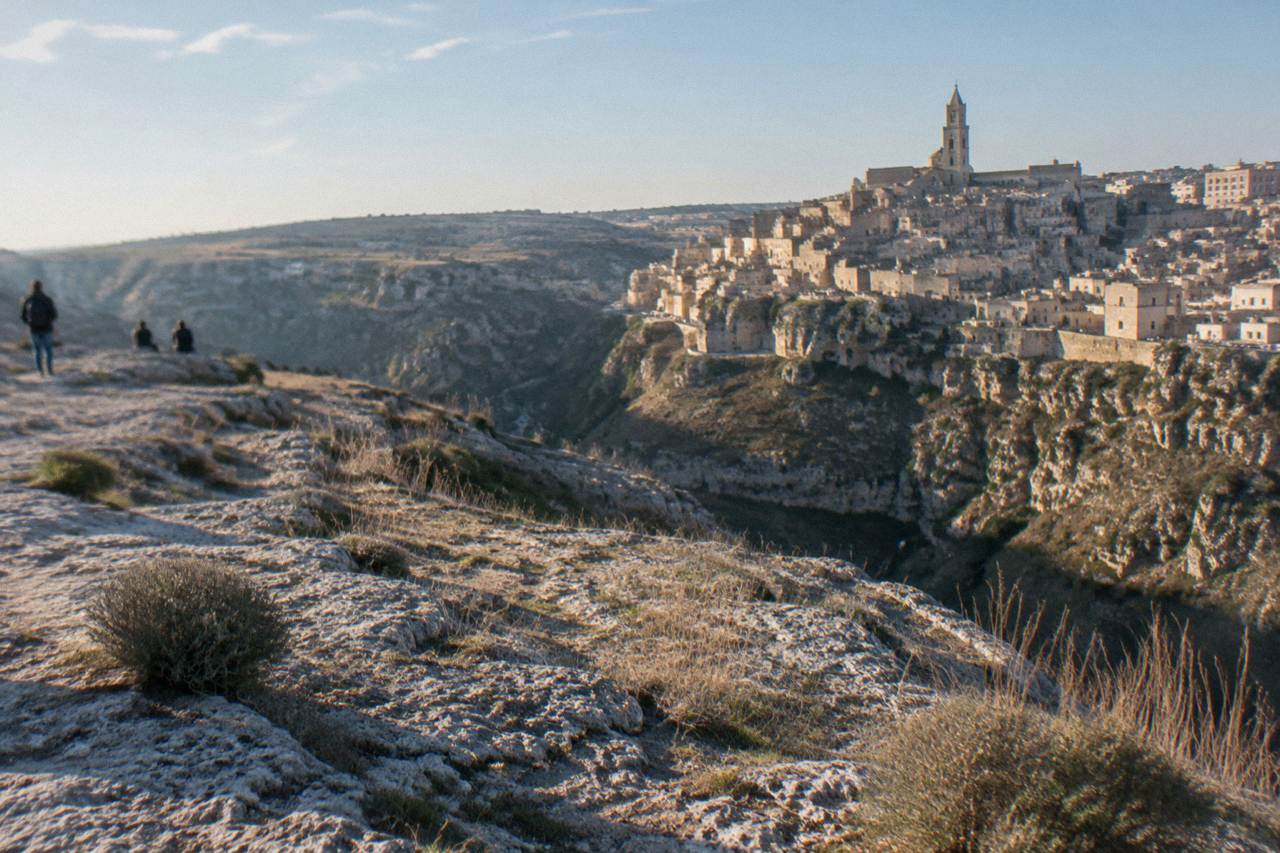
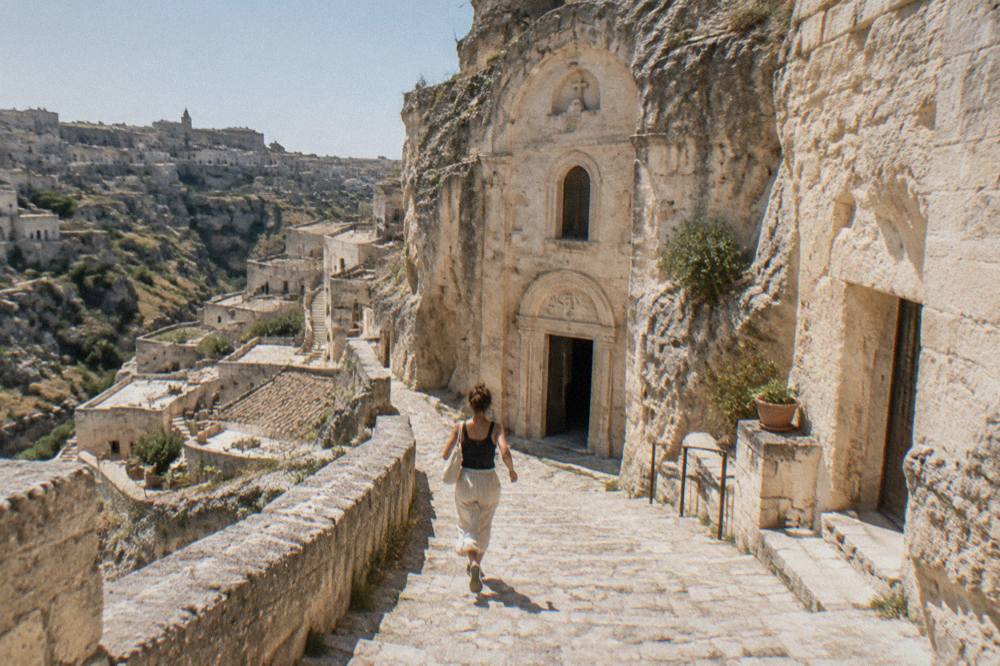
It looks like a city whose houses, churches, cisterns and stables are cut into the same tufa limestone that shelters them, in a canyon-edge setting where the built fabric and the rock are not always separable. The Sassi, Sasso Caveoso and Sasso Barisano, together with the Civita ridge between them, form a settlement where excavation and construction are the same act, and where the same cavities have been re-roofed, re-cut and re-used across many centuries, which is precisely the "continuity" UNESCO cites.
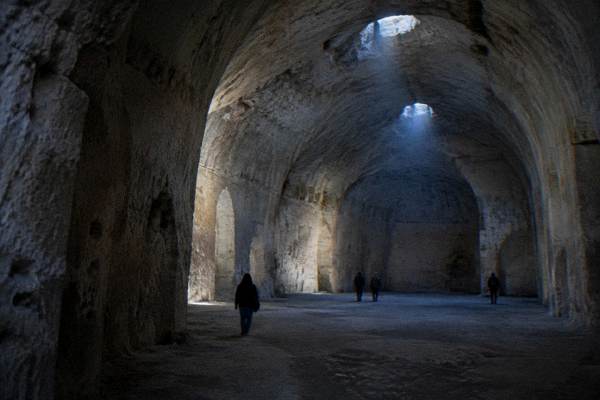
That re-use is the substance behind the phrase. A cave house of the kind preserved at the Storica Casa Grotta di Vico Solitario is not a ruin frozen at one date. It is a dwelling type that carried on being lived in, adapted and extended generation after generation, with rock churches hollowed out of the same canyon walls and rainwater cisterns carved beneath the floors. The Palombaro Lungo, the vast water cistern beneath Piazza Vittorio Veneto, belongs to that same tradition of carving infrastructure out of the rock. When UNESCO praised adaptation to the geomorphological setting, this is the setting: a limestone gorge, the Gravina, with the Murgia plateau opposite and about 8,000 hectares of protected parkland around the rupestrian churches. The rest of the planning pages sit on Matera Travel Guide.
The best way to grasp the scale of that continuity is not from street level but from the canyon rim, where the whole cave city reads as a single carved object. A small-group balloon flight over the Sassi and the Gravina, the experience featured on this page, gives the widest single view of the settlement that exists, and the park-side sunset walks from Murgia Timone show the same fabric from the opposite plateau. Both are bookable through the operator's live listing, and both are worth checking availability for in advance, since flight slots in particular depend on weather and season.
The depth of the place also explains why the age question is the wrong question. A city that has been continuously reworked for more than two thousand years does not have a birthday. It has layers, and the layers are visible: the rock churches, the baroque facades grafted onto medieval fabric, later additions from the last two hundred years, the mid-century abandonment and the late-century restoration. Asking how old Matera is, in years, is like asking how old a river is. The honest answer describes the layers, not a number.
How Did Matera Go From Ancient Cave City To Abandoned Quarter And Back?
Residents were moved out of the Sassi between 1952 and the 1970s, when the cave districts had become overcrowded and unsanitary housing, and a 1986 Italian law opened the way to restoration, after which the same quarters that had been emptied were gradually repopulated as the city's core attraction. Matera was named a UNESCO World Heritage Site in 1993 and European Capital of Culture in 2019, and the Fondazione Matera-Basilicata 2019 still operates today, running the Matera 2026 Mediterranean Capital of Culture and Dialogue programme.
That arc, from continuous habitation to state-organised evacuation and back to acclaim, is the part of the story no age number can carry. The Sassi were not abandoned in some remote antiquity and later rediscovered. People were living in the cave houses within living memory, were relocated in a decades-long process that began in 1952, and watched their old quarter sit damaged and partly empty until the 1986 law made restoration possible. The renaissance that followed is recent history: UNESCO recognition in 1993, the Capital of Culture year in 2019, and a 2025 that the APT Basilicata accommodation data shows was the city's record year, 479,083 arrivals against 388,158 in 2019.
This is why the question of whether people still live in the Sassi, covered in the answer on who lives in the Sassi today, is inseparable from the age question. Continuity was broken within living memory and rebuilt in the decades after the 1986 law. The city that UNESCO praised for two millennia of unbroken urban life is also the city whose old quarters were emptied out within living memory, a story told in full in why Matera's Sassi were abandoned. Both things are true, and the tension between them is more interesting than any ranking.
| Period | Verified milestone | Source basis |
|---|---|---|
| Palaeolithic | First occupation of the area | UNESCO inscription text |
| More than two millennia | Documented continuity of the rock-cut settlement | UNESCO criterion (iii) |
| From 1952 to the 1970s | Residents moved out of the Sassi | Dated historical record |
| 1986 | Italian law opens the way to restoration | Dated historical record |
| 1993 | UNESCO World Heritage inscription, site 670 | UNESCO documents |
| 2019 | European Capital of Culture | Verified, foundation record |
| 2026 | Mediterranean Capital of Culture and Dialogue programme | Verified, matera-basilicata2019.it |
How Should You Judge Matera If Not By Age?
Judge it by what the sources verify: a rock-cut settlement of more than a thousand dwellings inscribed by UNESCO in 1993 for its continuity and its adaptation to the canyon landscape, a protected park of about 8,000 hectares holding rupestrian churches, and a modern record that includes a Capital of Culture title and a 2025 arrival count of 479,083 guests in registered accommodation. Every one of those figures is checkable.
The "oldest city in the world" claim is not, and a city this extraordinary does not need a title nobody can prove.
The practical takeaway for a traveller is simple. When the same sources tell you the Sassi are a UNESCO site carved into living rock, that the park across the canyon protects a landscape of rock churches, or that the cave houses were family homes within living memory, they are reporting something you can stand in front of and see. The distinction is the difference between a place worth visiting for a headline and one worth visiting for itself, a case made in detail in what is so special about Matera.
For those planning a visit around the substance rather than the slogan, the surrounding answers on this site cover the practical ground: whether Matera is worth visiting, how long to stay, and what the city's most surprising facts actually are. The Sassi reward exactly the kind of slow, source-checked attention this page has given the age claim, because the quarter itself is layered the same way: every lane contains several eras at once, and the honest description is always the interesting one.
Common Questions About Matera's Age
Is Matera the oldest city in the world?
No official source says so. UNESCO's inscription states the area was first occupied during the Palaeolithic and praises continuity over more than two millennia, with no age in years and no ranking against other cities. The "oldest city" phrasing is a promotional embellishment, not a documented fact.
How old is Matera according to UNESCO?
UNESCO gives no age in years. Its text cites first occupation during the Palaeolithic and more than two millennia of continuity in the rock-cut settlement, awarded under criteria (iii), (iv) and (v) when the site was inscribed in 1993.
Was Matera abandoned?
The Sassi quarters were emptied of residents between 1952 and the 1970s as overcrowded housing, and a 1986 law opened the way to restoration. The city itself was never abandoned, and the old quarters were repopulated after the restoration began.
Do people still live in the Sassi of Matera?
Yes. After the evacuation and the restoration that followed the 1986 law, the Sassi are lived-in districts again, mixing homes, hotels, restaurants and museums carved into the same rock fabric. The full answer is on this site's page about who lives in the Sassi today.
What is the oldest part of Matera?
The cave dwellings and rock churches of Sasso Caveoso, Sasso Barisano and the surrounding canyon represent the earliest continuous fabric, and the whole property, 1,016 hectares with more than a thousand dwellings, is what UNESCO inscribed. No single founding date exists in the official record.
The honest answer to the age question is the one UNESCO already wrote: a settlement with continuity over more than two millennia, carved into the edge of a canyon, still lived in, still changing. That is a claim no other city needs to be older than.