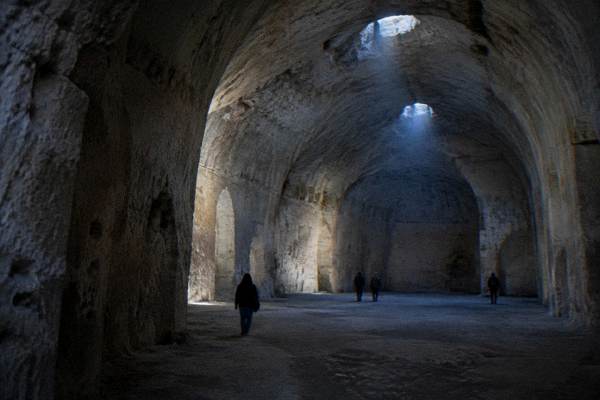
Do People Still Live In Sassi Di Matera?
Do people still live in Sassi di Matera? The answer is yes, in restored cave houses, and this guide explains who lives there, why the quarters were emptied, and how to visit respectfully.
Yes, people still live in Sassi di Matera, the two cave quarters of Matera in Basilicata, southern Italy. The Sassi, Sasso Caveoso and Sasso Barisano, were emptied by a state resettlement programme between 1952 and the 1970s, but a 1986 law opened the way to restoration, and today the quarters mix private homes, cave hotels, museums, churches and bars. The comune counted 59,368 residents at 1 January 2026, and part of that population lives inside the old districts themselves. The full story of who lives there, and why the question is asked at all, is below.
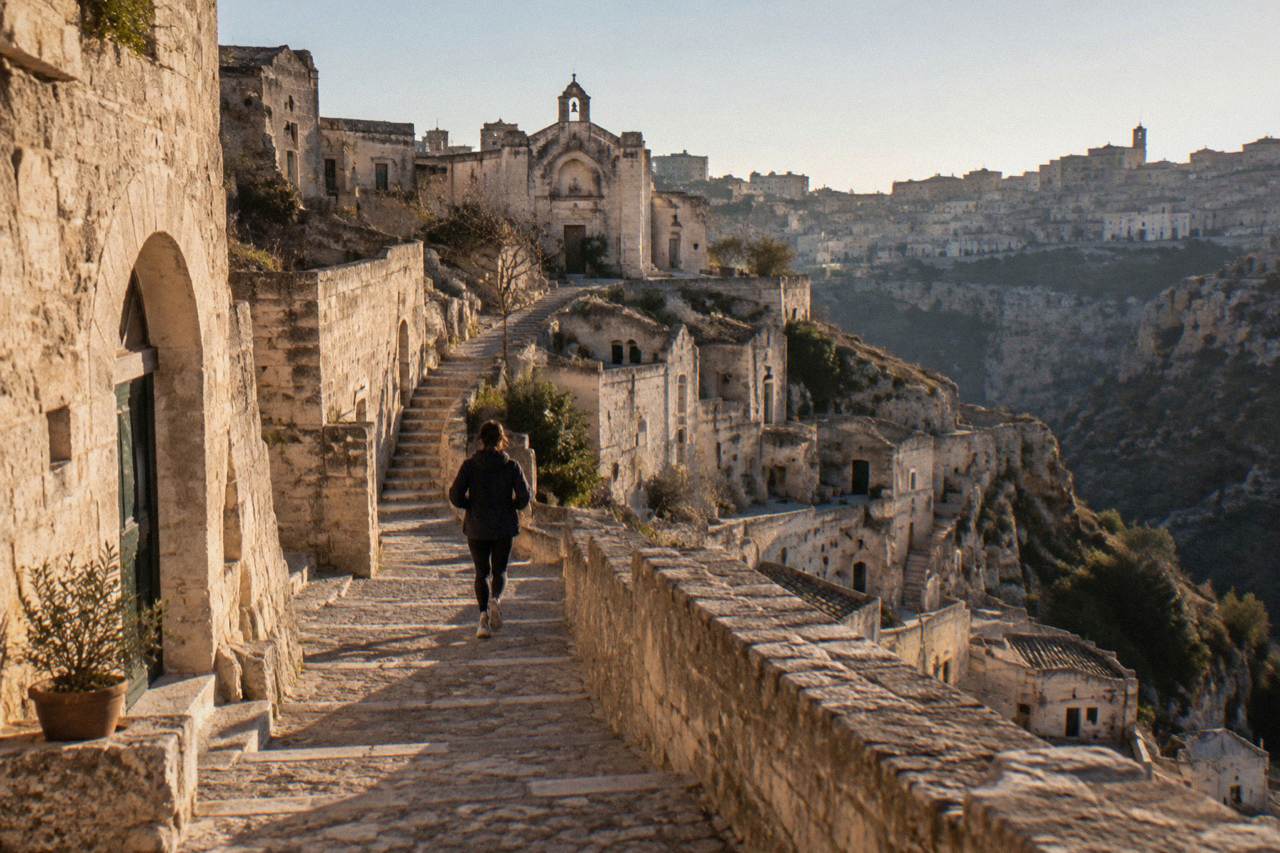
Do People Still Live In Sassi Di Matera?
Yes, people still live in the Sassi of Matera, though the quarters are no longer purely residential. After the mass resettlement between 1952 and the 1970s emptied the cave districts, a 1986 national law funded restoration, and families, artisans and hoteliers moved back into the recovered cave houses. Today the Sassi hold private homes side by side with cave hotels, museums, restaurants and rupestrian churches, so a visitor walks through a lived-in neighbourhood, not an open-air museum.
The word Sassi means "stones" in Italian, and it names the two old quarters, Sasso Caveoso and Sasso Barisano, cut into the tufa limestone on the slope below the modern city. For centuries these were ordinary working neighbourhoods, crowded and poor, where families lived in cave dwellings shared with animals. UNESCO inscribed "The Sassi and the Park of the Rupestrian Churches of Matera" on the World Heritage List in 1993, describing a rock-cut settlement with continuity over more than two millennia.
What the inscription does not capture is that the districts were nearly abandoned within living memory. Residents were moved out between 1952 and the 1970s into new public housing on the plateau, and the Sassi slid into dereliction. The return came slowly, driven by the 1986 restoration law, the UNESCO listing and the 2019 European Capital of Culture year. The APT Basilicata accommodation data shows the reversal in numbers: 479,083 arrivals in registered accommodation in the city in 2025, against 388,158 in 2019, and much of that demand is housed in cave buildings that were ruins a generation ago.
If the distinction between the city and its cave quarters is new, the page on what the difference is between Matera and Sassi di Matera breaks it down, and the wider story of why people lived in caves in Matera explains how the cave dwellings worked.
Why The Materani Left The Sassi
The materani left the Sassi because post-war Italy judged the cave districts uninhabitable: overcrowding, shared caves with livestock, and disease prompted a state resettlement law in 1952 that moved families into new housing schemes on the plateau, a process that continued into the 1970s. The emptied quarters then deteriorated for two decades before a 1986 law funded their recovery, and repopulation followed restoration rather than preceding it.
The evacuation was not voluntary in spirit. Families who had lived in the cave houses for generations were assigned new flats in districts like Spine Bianche, and the Sassi were left to crumble. The conditions that drove the policy are documented elsewhere on this site, in the article on why Matera was called the shame of Italy, which quotes the mid-century reporting that shocked the national government into acting.
The turnaround law of 1986 provided the legal and financial machinery to restore the cave houses, and private owners, cooperatives and hoteliers took up the work. Restoration continues today: the FAI heritage trust closed Casa Noha, its visitor centre in the Sassi, from 5 to 22 October 2026 for renovation ahead of a relaunch with new displays, a small sign that the quarters are still being upgraded building by building.
What Living In The Sassi Looks Like Today
Living in the Sassi today means occupying a restored cave house, often with a facade of tufa stone opening into excavated rooms, in a neighbourhood where homes sit beside cave hotels, bread museums, sculpture museums and ticketed rupestrian churches. The quarters are steep, stepped and uneven, homes are entered from narrow vicoli, and daily life carries on around a steady flow of visitors, with the heaviest accommodation demand in September rather than August.
A restored cave house is not a rustic relic. Owners have fitted kitchens, bathrooms and heating into rooms the rock keeps naturally cool in summer, and the same conversion logic produced the cave hotels described in the guide to Sassi di Matera hotels. The Storica Casa Grotta di Vico Solitario, ticket 8.00 EUR full under the tariff in force from 4 April 2026, shows the before-and-after: it is preserved as a museum of the old domestic layout, with the cave house, the Neviera, the natural cave and the rock church of Sant'Agostino al Casalnuovo on one ticket.
The visitor economy and the residential one share the same stairways. Oltre l'Arte's ticket page lists its rupestrian churches, Santa Lucia alle Malve, Madonna de Idris with San Giovanni in Monterrone, and San Pietro Barisano, at 4.50 EUR for one church, 8.00 EUR for two and 10.00 EUR for three, and those churches stand in the middle of streets where people hang washing. MUSMA, the sculpture museum in the Sasso Caveoso, charges 10 EUR full. None of this is behind a gate: the Sassi remain public neighbourhoods, which is why a guided walk is the practical way to read them. The wider set of guides lives on Matera Travel Guide.
The picks above cover the two angles that matter here: a panoramic ride that shows the inhabited cave face from outside, and a walking route that goes through it. For a fuller picture of the quarters themselves, the attraction guide to Sassi di Matera maps the districts, and the root page on things to do in Matera lists what else the city offers beyond the cave quarter.
Which Parts Of The Sassi Are Homes And Which Are Museums
The Sassi have no fixed boundary between homes and attractions: restored private cave houses sit next to ticketed museums, hotel entrances and open churches, and several buildings hold both at once, with a family living upstairs and a museum cave below. The practical rule for a visitor is simple: the streets and stairways are public, the cave interiors behind doors are private or ticketed, and the museums publish their own prices, which this table lists from the operators' own pages.
| Site in the Sassi | What it is | Ticket (operator's page) |
|---|---|---|
| Storica Casa Grotta di Vico Solitario | Museum cave house with Neviera and rock church | 8.00 EUR full, 5.00 EUR reduced, free to age 10 |
| Oltre l'Arte rupestrian churches (3) | Santa Lucia alle Malve, Madonna de Idris, San Pietro Barisano | 10.00 EUR for all three, 4.50 EUR for one |
| MUSMA | Contemporary sculpture museum, Sasso Caveoso | 10 EUR full, 5 EUR reduced |
| Casa Noha (FAI) | Visitor centre on the Sassi's history | 6.50 EUR adults, 3 EUR children |
| Oltre l'Arte all-inclusive | 8 sites including MATA and Museo del Pane | 25.00 EUR, reduced 16.00 EUR |
Two caveats from the sources. Casa Noha is closed 5 to 22 October 2026 for renovation, so its ticket is irrelevant until it reopens. And Oltre l'Arte closes all of its sites on 25 December and 2 July, the day of the Festa della Bruna, the city's patronal feast fixed on 2 July since 1389 by the organisers' own history.
The Ape Calessino standard panoramic tour is the related pick for this page because it covers the inhabited face of the Sassi from the outside, the view that makes the residential scale legible, and its live listing carries the current price and times: Check availability.
Can You Stay Overnight In The Sassi Of Matera?
Yes, and staying overnight is now one of the main ways the Sassi stay inhabited: dozens of cave hotels and rented cave apartments operate inside the two quarters, so a large share of the buildings that were abandoned after the post-war evacuation now house paying guests every night of the year. The APT Basilicata data recorded 748,812 overnight stays in Matera accommodation in 2025, an average of 1.56 nights per guest, and the cave quarters absorb much of that demand.
The hotel conversion is the quiet half of the repopulation story. A cave interior that would once have held a family and its animals now holds a double bed and a breakfast table, and the guide to Sassi di Matera hotels lists what to expect: stepped access, natural cool in summer, and the uneven ground that the site's accessibility notes never describe as step-free. The question of how long to stay has its own answer page, on how many nights to stay in Matera, and the honest short version is that one night is enough to see the Sassi but not to feel the neighbourhood rhythm.
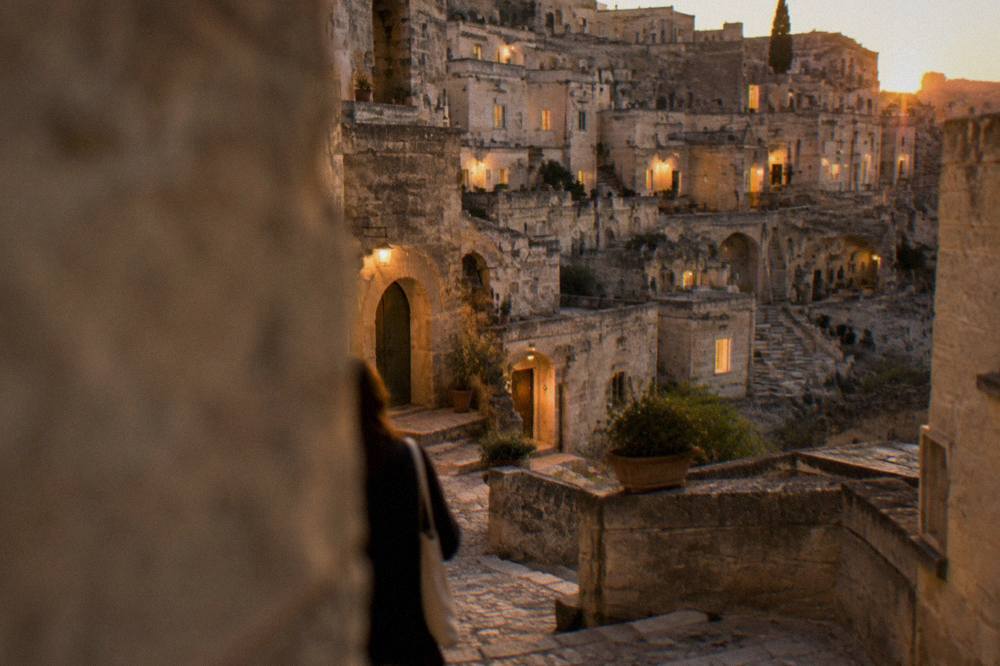
That rhythm is what distinguishes the Sassi from a themed attraction. In the evening, when the day crowds thin, the quarter belongs to the people who live and work in it: the bread shops selling pane di Matera, the bars in the restored cisterns, the churchgoers at San Pietro Caveoso. The Matera Travel Guide desk reports this from what the sources say, not from a visit, and the sources are consistent: a UNESCO property of 1,016 hectares, more than a thousand dwellings, shops and workshops named in the inscription, and a comune that still counts its residents inside the district.
Common Questions About Living In The Sassi
Do people still live in Sassi di Matera?
Yes. After the evacuation between 1952 and the 1970s and the 1986 restoration law, families, artisans and hoteliers moved back, and today private homes sit alongside cave hotels, museums and churches inside Sasso Caveoso and Sasso Barisano.
When did people stop living in the Sassi?
Residents were moved out between 1952 and the 1970s under the state resettlement programme, and the quarters were largely emptied by the end of that period. Repopulation began after the 1986 restoration law and accelerated after the 1993 UNESCO inscription.
Is it safe to walk through the Sassi at night?
The Sassi are a lived-in urban neighbourhood and the general safety question is covered in the dedicated page on whether Matera is a safe city to visit. The streets are steep, stepped and uneven, so lighting and footwear matter more than crime.
Can you go inside a real cave house?
Yes, through the ticketed museum houses. The Storica Casa Grotta di Vico Solitario charges 8.00 EUR full under the tariff in force from 4 April 2026 and covers the cave house, the Neviera, the natural cave and the rock church of Sant'Agostino al Casalnuovo.
Are the Sassi a UNESCO site because people live there?
No. UNESCO inscribed the Sassi and the Park of the Rupestrian Churches in 1993 under criteria (iii), (iv) and (v), for the rock-cut settlement's adaptation to its setting and its continuity over more than two millennia, not for its current population.
The short answer to the page's question stands: the Sassi of Matera are inhabited, imperfectly and genuinely, by materani and by the visitors who sleep in their recovered caves, and the best way to understand the difference is to walk the vicoli after the day trips have gone home.