Why Was Matera Abandoned?
Why was Matera abandoned? The verified history of the Sassi evacuation between 1952 and the 1970s, the overcrowding and disease behind it, and how the city came back.
Matera, the cave city of Basilicata in southern Italy, was never abandoned in one dramatic moment. What happened instead was a state-organised evacuation: between 1952 and the 1970s, the Italian government moved the residents of the Sassi, the cave-house districts cut into the tufa of the Gravina canyon, into new housing estates on the plateau above. The Sassi then stood largely empty for decades before a 1986 law opened the way to restoration and the UNESCO inscription of 1993 changed the city's trajectory. The full story involves overcrowding, disease, political shame and one of the slowest urban recoveries in Europe.
Why Was Matera Abandoned?
Matera was abandoned because the Sassi, its cave-house districts, had become overcrowded to the point of a national health emergency: families shared cave rooms with animals, water was scarce, and disease spread easily in the packed rock dwellings. Between 1952 and the 1970s the Italian state relocated residents into new districts on the plateau, and the Sassi were left empty and sealed off for decades.
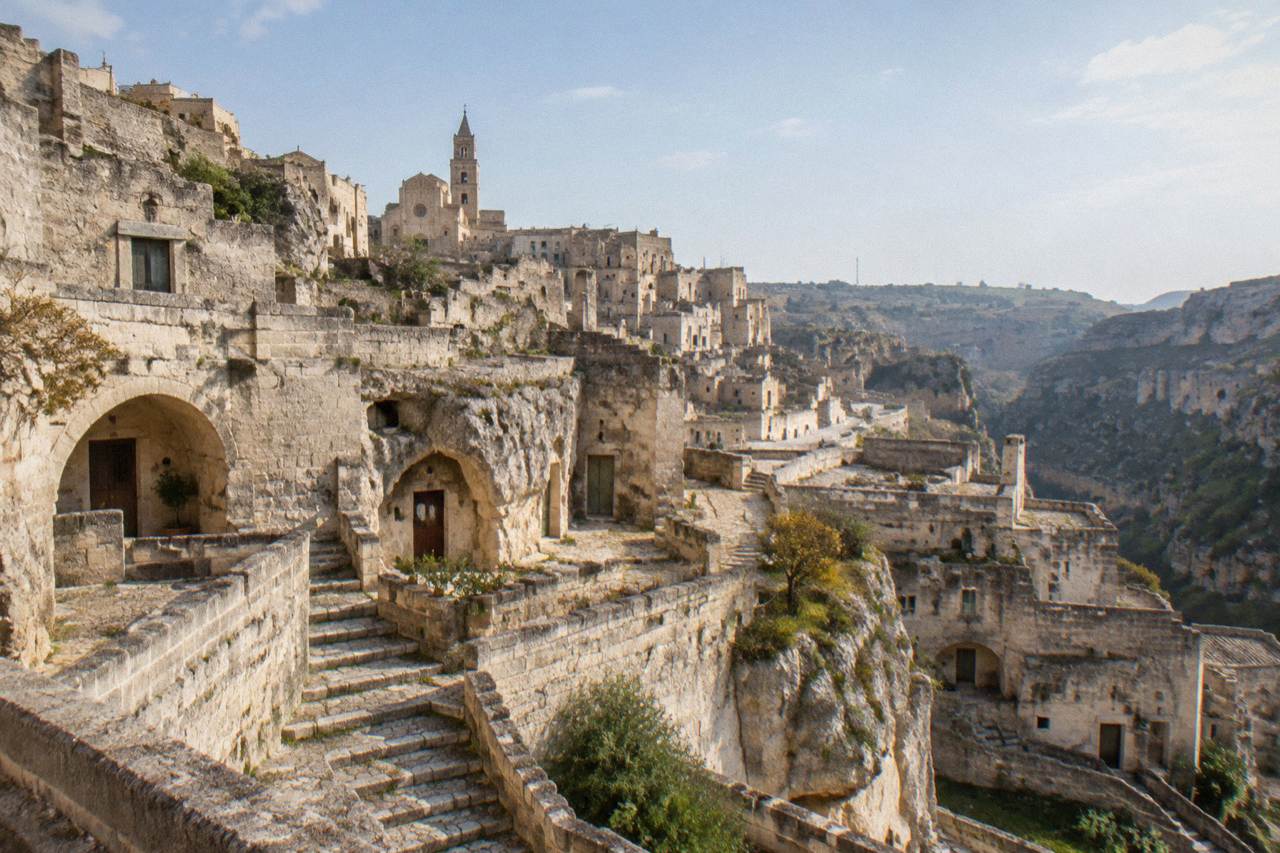
The word "abandoned" needs care. The city of Matera itself never emptied: the civic centre on the plateau, the Piano, kept its population, its cathedral and its administration throughout. What was abandoned was the Sassi, the two districts of Sasso Caveoso and Sasso Barisano that spill down the wall of the Gravina canyon, plus the scattered cave settlements around them. UNESCO's own inscription text, written when the site was added to the World Heritage List in 1993, describes "more than a thousand dwellings" in the inscribed area, and the evacuation emptied the great majority of them.
The sequence matters for anyone reading older accounts. The relocations began from 1952, driven by a special law for the "risanamento", the sanitary rehabilitation, of the Sassi. After the last removals the state effectively wrote the district off: cave houses were closed, some were demolished, and the Sassi became a byword for poverty in Italy. For the fuller story of that national reputation, see the companion article on why Matera is called the shame of Italy.
What Were Living Conditions Like In The Sassi Before The Evacuation?
Before the evacuation, the Sassi of Matera held a population packed far beyond what the cave housing could safely support: whole families lived in single rock-cut rooms, often shared with a mule or a goat, water came from shared cisterns and rain-fed collection, and the districts had almost no proper drainage or ventilation. Contagious disease, including malaria in the surrounding lowlands, made the housing question a medical one, and by the end of the Second World War the conditions were a national scandal.
The cave dwelling itself was not the root problem. A casa grotta, a cave house cut into the pale tufa, is dry, insulated and perfectly livable, and the Sassi had supported a working community for centuries, with rock churches, bakeries and wine cellars dug into the same soft stone. The crisis came from density. Overcrowding, not architecture, produced the squalor that journalists and politicians described after the Second World War.
The health dimension is covered in detail in the site's article on the disease in Matera: malaria was endemic in the neighbouring lowlands, and the crowded, under-serviced cave quarters gave epidemics room to run. Infant mortality in the Sassi was reported in the press of the period at levels that shocked the country. It was that combination, poverty plus contagion plus a postwar state that had promised housing for all, that turned the Sassi from a poor quarter into an official emergency.
A guided walk is the practical way to read this history on the ground, because the surviving cave houses explain it better than any photograph. The tour options above include group walks of the Sassi with a licensed guide and a longer private option, and each covers the cave-dwelling interior that shows how a family actually lived in the rock.
To walk through this history where it happened, book a Sassi tour with cave house here.
When Did The Evacuation Happen, And Where Did The Residents Go?
The evacuation of Matera's Sassi ran from 1952 to the 1970s, under Italy's special law for the rehabilitation of the cave districts. Residents were moved into purpose-built public housing on the plateau, above all the rioni of Spine Bianche, Lanera and Agna, modern apartment blocks with running water and electricity that the cave houses lacked. The relocation was compulsory in practice, and the Sassi were sealed and left to decay once the families had gone.
The programme moved slowly at first, then gathered pace as the new districts rose on the flat ground north of the old city. For families leaving a single cave room without water for an apartment with a bathroom, the move was in many ways a liberation, and that side of the story is often lost in the romanticised accounts of the Sassi. The materani who grew up in the new rioni are part of the reason the city survived at all.
What followed the relocations, though, was neglect. The emptied Sassi were fenced off in places, used for storage or left open to the weather, and the rock-cut churches and palazzi along the canyon edge decayed alongside the humble dwellings. A 1986 law, the Italian state's first serious commitment to recovering the district, opened the way to restoration, and that law is the hinge between abandonment and rebirth. The dates below compress the whole arc.
| Year | Event in Matera's evacuation and recovery |
|---|---|
| 1952 | Special law for the risanamento of the Sassi; the first relocations begin |
| 1952 to the 1970s | Residents moved in waves into the new rioni on the plateau |
| 1986 | National law commits funds and rules for restoring the Sassi |
| 1993 | UNESCO inscribes "The Sassi and the Park of the Rupestrian Churches of Matera" |
| 2019 | Matera is a European Capital of Culture |
| 2025 | APT Basilicata records 479,083 arrivals in the city's registered accommodation, a record above 2019 |
The 2025 figure deserves a note: it counts guests in registered accommodation, not day trippers, and it exceeds the Capital of Culture year itself. The APT data shows arrivals up 23.4% on 2019.
Why Did The Abandonment Become A National Scandal?
The abandonment of Matera's Sassi became a national scandal because writers and politicians used it as the symbol of postwar Italy's failure in its own poor south: the cave quarters were presented to the world as proof that a modern European country still contained medieval living conditions, and the shame attached less to the residents than to the state that had let the district reach that point. The evacuation was as much an image-saving exercise as a health programme.
The scandal had two phases. In the first, before the evacuation, the Sassi were the subject of reportage that shocked the new Italian republic: journalists described children and animals sharing cave rooms, and the district became shorthand for the "questione meridionale", the southern question of underdevelopment. In the second phase, after the relocations, the shame changed shape: Italy now had an abandoned World Heritage-scale district on its hands, visible from the plateau, and the country's inability to decide what to do with the emptied Sassi kept the embarrassment alive for another generation.
The recovery of the narrative took decades and was driven by the restoration works the 1986 law made possible. Once hotels, museums and homes reoccupied the cave houses, the story flipped from shame to pride, and the same architecture that had been condemned became the city's main asset. That reversal is the reason the question "why was Matera abandoned?" is asked at all today: visitors see a polished UNESCO site and cannot picture the sealed, decaying district the relocations left behind. For whether the modern city rewards the trip, the site's assessment of whether Matera is worth visiting covers the practical side.
How Did Matera Come Back From Abandonment?
Matera came back through a restoration economy built on its abandoned architecture: the 1986 law unlocked funding, private concessions and hotel conversions in the Sassi, the 1993 UNESCO inscription put the district on the international map, and the 2019 European Capital of Culture year consolidated the tourism base. By 2025 the city's registered accommodation was logging more arrivals than in the Capital of Culture year itself, with 57.4% of the year's arrivals from abroad.
The mechanics of the recovery were unusual. Rather than demolishing the Sassi, the restoration programme kept the cave structure and retrofitted it: cave houses became boutique hotels, rock churches became visitable monuments, cisterns became museum spaces. The Matera Travel Guide covers the individual sites in depth, from the rupestrian churches to the restored cave-house museums, but the pattern is consistent: nearly every visitable interior in the Sassi today is a reclaimed piece of the abandoned district.
The day tour above pairs Matera with Alberobello, the trulli town in neighbouring Puglia, with a tour leader on board, and it suits travellers basing themselves in Bari who want both UNESCO sites in one move. For those staying in Matera itself, the site's rundown of how many nights to stay in Matera is the more useful planning tool.
Not every abandoned place in Basilicata got Matera's second chance. Craco, the hill town abandoned after landslides, stands empty on its ridge with no restoration programme and no residents to return, and the contrast between the two sites shows how much deliberate policy, rather than luck, was involved in Matera's recovery. The site's article on why Craco in Italy is abandoned tells that other story.
Can You See The Abandoned Sassi Today?
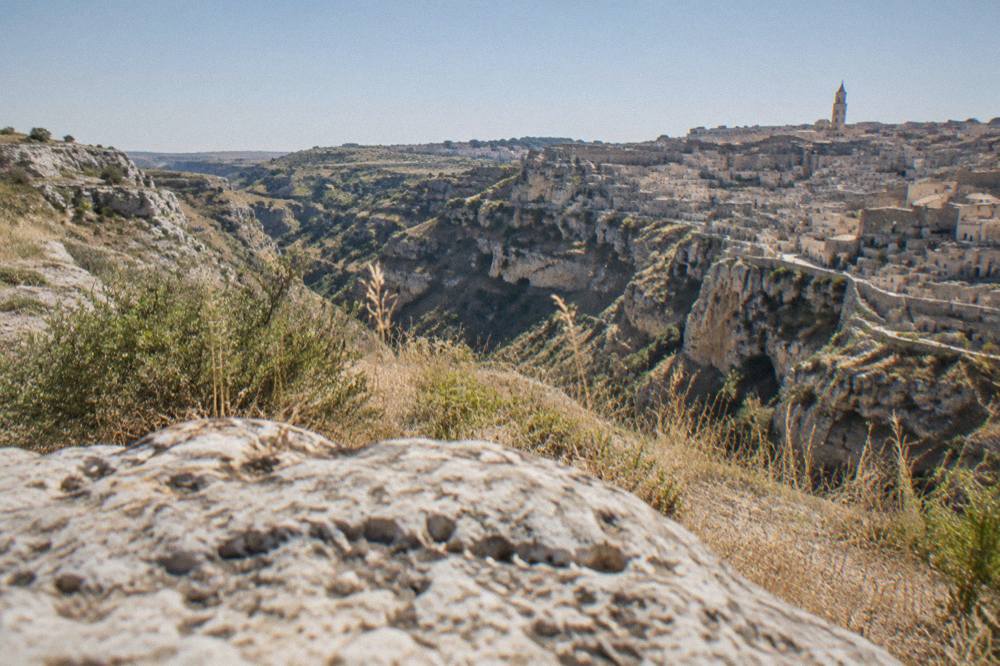
You can see the abandoned Sassi of Matera today in two ways: as restored interiors, the cave-house museums and hotels that show how the dwellings looked when occupied, and as genuine ruins, the sealed cave mouths and collapsed vicoli on the canyon slopes that were never reclaimed. The Storica Casa Grotta di Vico Solitario, at 8.00 EUR full under the tariff in force from 4 April 2026, is the most complete furnished cave house, while the Murgia slope opposite still carries the empty rock churches of the park.
The restored side is the visible one. The Storica Casa Grotta di Vico Solitario preserves a furnished cave dwelling, its neviera ice house and a rock church on a single ticket, and the Oltre l'Arte network opens the rupestrian churches of Santa Lucia alle Malve, Madonna de Idris and San Pietro Barisano at 4.50 EUR for one church up to 10.00 EUR for all three. Casa Noha, the FAI property that tells the city's modern story in its own rooms, is the single best introduction to the abandonment itself, though it is worth checking current opening before travelling, as it has had renovation closures in 2026.
| Where to read the abandonment story in Matera | What it shows |
|---|---|
| Storica Casa Grotta di Vico Solitario | A furnished cave dwelling with kitchen, sleeping space and stable, as it was lived in |
| Casa Noha (FAI) | The city's modern history, from overcrowding to evacuation, told in a cave house |
| Sasso Caveoso slopes | Unrestored cave mouths and terraces, close to the state they were left in |
| Parco della Murgia, opposite bank | The abandoned rock churches and the canyon landscape the Sassi face |
| Palazzo Lanfranchi | The national museum, with the city's art history and the recovery era |
The empty side is just as present, if you know where to look. Walk down through Sasso Caveoso towards Piazza San Pietro Caveoso and the sealed cave entrances and half-collapsed terraces on the lower slopes have changed little since the evacuation. Across the canyon, the Parco della Murgia keeps dozens of rock churches in various states of abandonment, reachable on foot from the Belvedere Murgia Timone viewpoint. The Sassi are steep, stepped and uneven everywhere: no route down into the district is step-free, and sturdy shoes matter more than in almost any other Italian city.
Common Questions About Matera's Abandonment
Why was Matera abandoned?
The Sassi districts of Matera were emptied between 1952 and the 1970s by a state relocation programme, after overcrowded cave housing, scarce water and disease turned the quarter into a national health emergency. Residents were moved to new housing estates on the plateau, and the emptied Sassi stood sealed and decaying for decades.
Do people still live in the Sassi of Matera?
Yes. After the 1986 restoration law and the 1993 UNESCO inscription, the Sassi were gradually reoccupied by residents, hotels, restaurants and museums. The site's article on whether people still live in the Sassi covers the current situation in detail.
When did people stop living in the Sassi?
The relocations ran in waves from 1952 into the 1970s, when the last families were moved into the public housing districts on the plateau. The Sassi then stood largely empty until restoration works began under the 1986 law.
Is Matera still abandoned today?
No. Matera is a living city of about 59,368 residents, and the Sassi themselves are partly reoccupied, with hotels, museums and homes inside the restored cave houses. In 2025 the city's registered accommodation logged 479,083 arrivals, more than in its 2019 Capital of Culture year.
Why is the abandonment called the shame of Italy?
Because the Sassi were presented in postwar reportage as proof that a modern European country still contained cave-level poverty in its south, and the state's handling of both the overcrowding and the emptied district kept the embarrassment alive. The shame attached to the state's failure, not to the residents.
Can you visit the abandoned cave houses of Matera?
Yes, through restored cave-house museums such as the Storica Casa Grotta di Vico Solitario and the Oltre l'Arte rupestrian churches, and by walking the unrestored slopes of Sasso Caveoso and the Murgia park opposite, where sealed cave mouths and abandoned rock churches survive.
The short version of the whole story: Matera was abandoned by policy, not by choice, and it was revived by policy too.