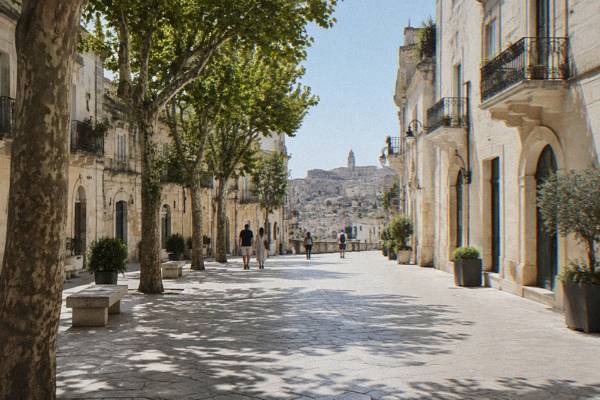
Museo Ridola Matera
The Museo Archeologico Nazionale Domenico Ridola has been closed since 7 April 2025 for energy works and a new display, and no reopening date has been published. This guide reports what the museum's own communications say, what the closure means for a Matera itinerary, and which museums in the city are open right now.
Short answer
The Museo Ridola in Matera is closed. The Museo Archeologico Nazionale Domenico Ridola has been shut since 7 April 2025 for energy works and a new display, with no reopening date published. The Museo Nazionale di Matera at Palazzo Lanfranchi remains open, as does MUSMA and Casa Noha outside its short October 2026 closure.
The Museo Archeologico Nazionale Domenico Ridola in Matera, Basilicata, has been closed since 7 April 2025. The museum's own site states the reason: energy works and a new display under the PNRR programme, Italy's national recovery and resilience plan. No reopening date has been published, and the museum's visit page still reads "Temporaneamente chiuso", temporarily closed. Any guide that tells you opening hours, ticket desks or gallery highlights for this museum today is describing a building you cannot enter. This page reports what the official communications actually say, what the Ridola closure removes from a Matera trip, and which open museums in the city fill the gap in the meantime.
Is The Museo Ridola In Matera Open Right Now?
No. The Museo Archeologico Nazionale Domenico Ridola has been closed since 7 April 2025, and the museum's own communications give no reopening date. The closure notice on the museum's site names PNRR energy works and the preparation of a new display as the reason, and the plan-your-visit page still carries the words "Temporaneamente chiuso". Nothing in any official source suggests a date, a season or even a year for the reopening.
That single fact reshapes this whole page. The Museo Ridola is one of the sites of the Museo Nazionale di Matera, the national museum network whose main seat sits at Palazzo Lanfranchi in the Piano, the newer part of the city above the Sassi. The tariff sheet still lists the Ridola at 10.00 EUR per site, and the 15.00 EUR cumulative ticket still covers "every site" in the network, but a ticket cannot buy entry to a building that is shut. The museum's online ticket page sells admission for the sites that are open, and the closure notice is the operative document for the Ridola itself.
The practical reading is simple. Do not build a day around this museum. Do not buy a cumulative ticket expecting it to include the Ridola. If archaeology is the reason you are in Matera, the open part of the national museum at Palazzo Lanfranchi carries the city's displayed collections, and this guide covers it in detail further down. If a reopening date appears on the museum's own channels before you travel, that source, not this page or any other guide, is the one to trust.
A second closure sits inside the same window. Casa Noha, the FAI interpretation centre in the Recinto Cavone, is shut from 5 to 22 October 2026 for renovation ahead of a relaunch with new spaces and displays. The two closures are unrelated, run by different bodies, but a visitor arriving in October 2026 meets both. The Casa Noha page carries its verified prices and hours for the periods when it is open.
What Is The Museo Ridola And Who Was Domenico Ridola?
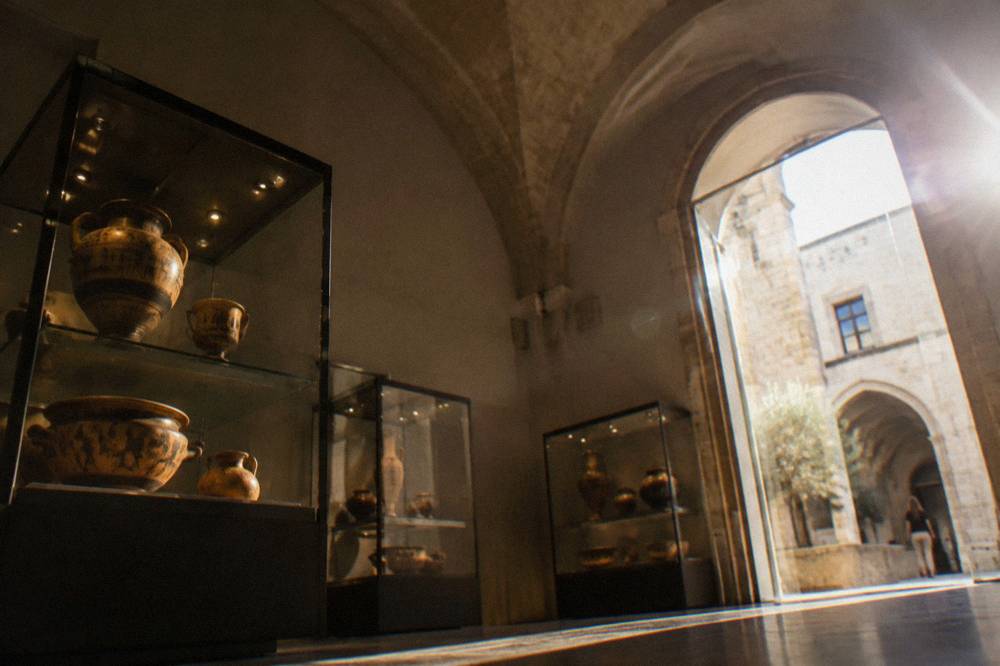
The Museo Ridola is Matera's national archaeology museum, named for Domenico Ridola, the local figure whose collecting and excavation around the city formed its core holdings, and it is administered today as one site of the Museo Nazionale di Matera alongside Palazzo Lanfranchi. Its galleries have held the archaeological record of the Matera area, from prehistoric finds to the material of the surrounding countryside. Since 7 April 2025 the building itself has been closed for works.
The museum's full official name, the Museo Archeologico Nazionale Domenico Ridola, appears on every page of the museum network's own site, and that is where the available information starts and, for now, ends. The site's communications describe the current closure as energy works and the installation of a new display under the PNRR programme. Nothing further about the new display, its contents or its layout has been published in a form this site could verify, so nothing further appears here.
What a visitor can verify is the structure around it. The Museo Nazionale di Matera is a network, not a single building. Its main open seat is at Palazzo Lanfranchi, on the edge of the Piano overlooking the Sasso Caveoso, and its tariff sheet lists individual site admission at 10.00 EUR, a 15.00 EUR cumulative ticket valid two days across all sites, a 25.00 EUR annual pass, 3.00 EUR for the Ex Ospedale San Rocco, and free entry for anyone under 18. The Ridola building is part of that network on paper, and closed in practice.
Matera's museum landscape is unusually concentrated. Within a few hundred metres of the closed Ridola sit three open institutions, each with a published tariff this site has read on the operator's own page: the national museum at Palazzo Lanfranchi, the sculpture museum MUSMA in the Sasso Caveoso, and the FAI-run Casa Noha, plus the Oltre l'Arte circuit of cave churches and museum houses in the Sassi themselves. The closure of one archaeology museum does not leave the city culturally empty; it redirects a few hours of an itinerary, and the sections below set out exactly where those hours go best.
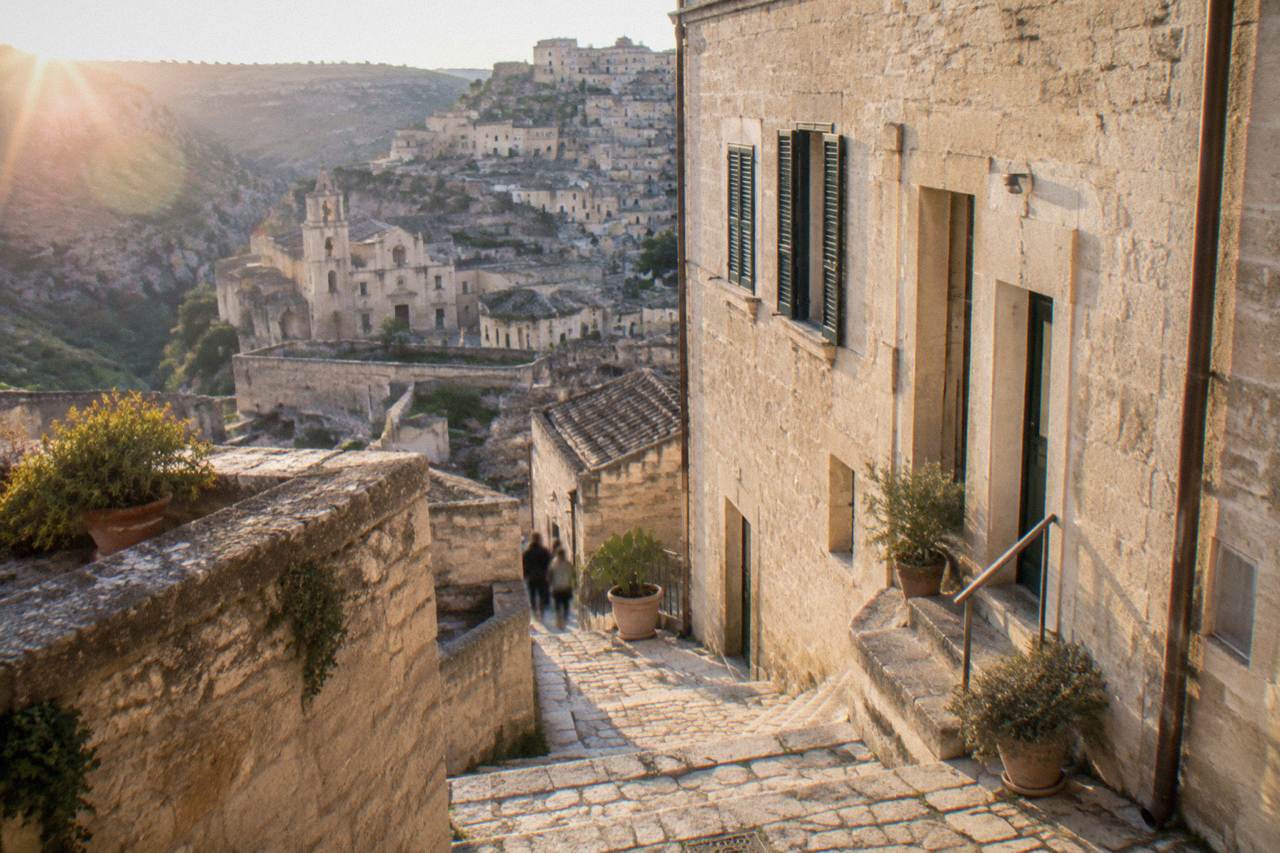
The city's wider context matters too. Matera's Sassi and the park of the rupestrian churches were inscribed on the UNESCO World Heritage list in 1993 as site 670, with criteria citing a rock-cut settlement exhibiting continuity over more than two millennia. Archaeology in Matera is not a cabinet curiosity; it is the reason the landscape looks the way it does. The Sassi di Matera and the rupestrian churches of Matera pages carry the detail.
What Can You See In Matera Instead Of The Museo Ridola?
The strongest substitutes for the closed Museo Ridola are the open part of the same national museum at Palazzo Lanfranchi, the sculpture collection at MUSMA in the Sasso Caveoso, and the Oltre l'Arte cave churches, whose combined 25.00 EUR all-inclusive ticket covers eight sites across the Sassi. Casa Noha adds a short orientation film about the city when it is open. Each has a verified tariff and published hours.
Palazzo Lanfranchi is the natural first substitute, because it is the same institution. The building sits at the top of the Sasso Caveoso, and the museum's site lists its hours as Monday to Sunday, 09:00 to 20:00, with admission at 10.00 EUR and the 15.00 EUR cumulative ticket available across the network's open sites. The museum site also carries a works page, "Cantiere Lanfranchi", while the palace itself stays open, so scaffolding or works in part of the complex is possible without a closure. The Palazzo Lanfranchi page carries what the sources say about the collections.
MUSMA, the Museo della Scultura Contemporanea Matera, is the second substitute, and in some ways the more distinctive one. Its own contacts page lists full admission at 10 EUR, reduced at 5 EUR for ages 7 to 18, students and groups of 15 or more, 7 EUR for FAI and partner members, free to age 6, and hours of 10:00 to 20:00 from April to September and 10:00 to 18:00 from October to March, open Monday to Sunday with last entry an hour before closing. It stands in Via San Giacomo in the Sasso Caveoso, in a building carved into the rock, so the setting does half the work. The MUSMA page has the detail.
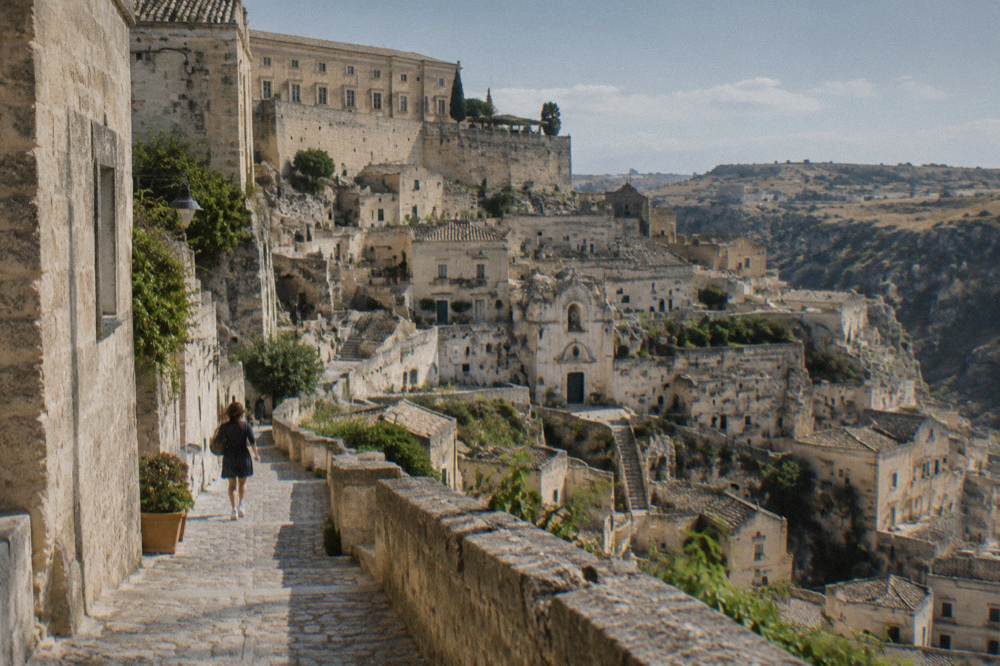
The Oltre l'Arte circuit is the third. Its ticket page lists the rupestrian churches of Santa Lucia alle Malve, Madonna de Idris with San Giovanni in Monterrone, and San Pietro Barisano at 4.50 EUR for one church, 8.00 EUR for two and 10.00 EUR for three, with an all-inclusive 25.00 EUR ticket covering eight sites, reduced to 16.00 EUR, spanning the three churches, Vicinato a Pozzo, the Antica Casa Grotta in Via Fiorentini, the MATA diocesan museum, the Chiesa del Purgatorio exhibition and the Museo del Pane. The circuit's sites close on 25 December and on 2 July for the Festa della Bruna. Individual pages cover Santa Maria de Idris, Santa Lucia alle Malve and San Pietro Barisano.
For orientation rather than collections, Casa Noha charges 6.50 EUR for adults and 3 EUR for children, open daily except Wednesday, with seasonal hours published by FAI, and closed entirely from 5 to 22 October 2026. And for the cave-dwelling experience the Ridola cannot offer, the Casa Grotta di Vico Solitario charges 8.00 EUR full under the tariff in force from 4 April 2026, covering the cave house, the Neviera, the natural cave and the rock church of Sant'Agostino al Casalnuovo.
A different way to absorb the closed museum's subject matter is to walk it. The archaeology of Matera is in the ground, the canyon and the plateau: the Gravina, the Murgia park of about 8,000 hectares by the park's own count, and the rock-cut settlement the UNESCO citation describes. A panoramic loop ties those viewpoints together without a single ticket queue, and the tuk-tuk panoramic tour is the site's featured pick for exactly that. Its listing is live at the operator's page, and the same ride appears with full details on the tuk-tuk panoramic tour page.
How Much Do Matera's Museums Cost Compared With The Museo Ridola?
The Museo Ridola's own tariff line reads 10.00 EUR, the same as every site of the Museo Nazionale di Matera, but the building is closed so no ticket is sold for it. The open alternatives cluster tightly: 10.00 EUR at Palazzo Lanfranchi, 10 EUR at MUSMA, 6.50 EUR at Casa Noha, 8.00 EUR at the Casa Grotta di Vico Solitario, and 4.50 to 25.00 EUR across the Oltre l'Arte circuit depending on how many sites you take.
Every figure in that answer comes from an operator page this site has read, not from a third-party guide. The table below puts the open options side by side with the closed Ridola, so the cost of redirecting a museum morning is visible at a glance.
| Site | Full ticket | Reduced | Status |
|---|---|---|---|
| Museo Ridola | 10.00 EUR (tariff sheet) | Under 18 free | Closed since 7 April 2025 |
| Museo Nazionale di Matera, Palazzo Lanfranchi | 10.00 EUR | 15.00 EUR cumulative, 2 days; under 18 free | Open, 09:00 to 20:00 daily |
| MUSMA | 10 EUR | 5 EUR (7 to 18, students, groups); 7 EUR FAI | Open daily, seasonal hours |
| Casa Noha (FAI) | 6.50 EUR | 3 EUR children | Open except Wednesdays; closed 5 to 22 Oct 2026 |
| Casa Grotta di Vico Solitario | 8.00 EUR | 5.00 EUR; 3.00 EUR ages 11 to 18 | Open daily, seasonal hours |
| Oltre l'Arte, 1 rupestrian church | 4.50 EUR | 3.50 EUR | Open daily from 28 March 2026 hours |
| Oltre l'Arte, 3 churches | 10.00 EUR | 7.50 EUR | Open daily |
| Oltre l'Arte, 8-site all-inclusive | 25.00 EUR | 16.00 EUR | Open daily |
Two patterns are worth noticing. First, the national museum's cumulative ticket only pays off if you will visit more than one open site of the network within two days; with the Ridola closed, check at the ticket desk what the cumulative price actually covers today. Second, the Oltre l'Arte all-inclusive ticket at 25.00 EUR is the only multi-site pass in the city that spans both cave churches and museum houses, and it undercuts buying its eight sites individually.
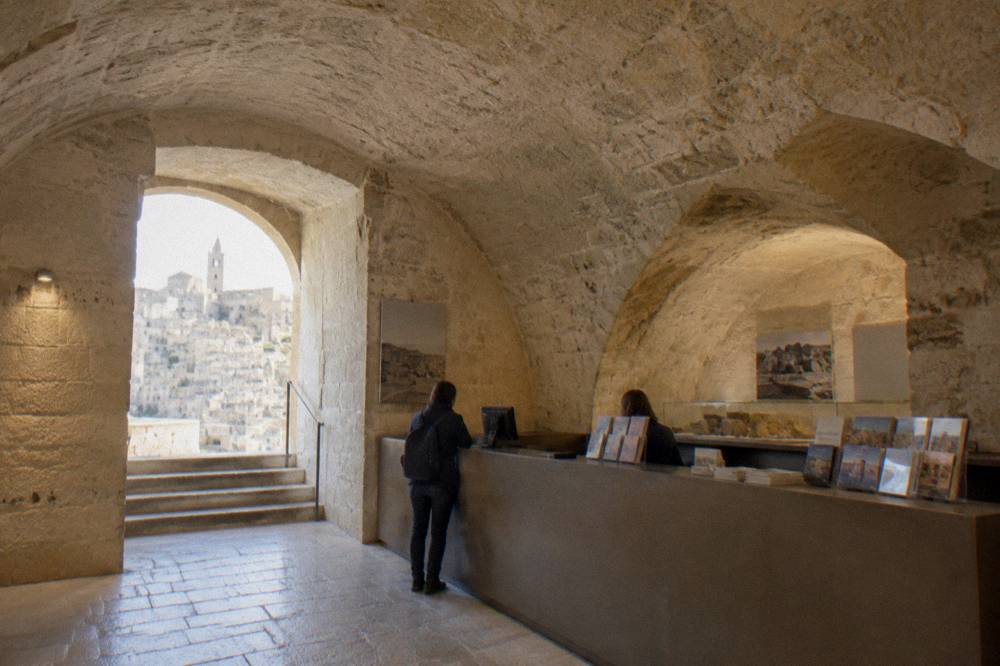
For families the arithmetic is friendlier still. Under 18s enter the national museum free, children to age 6 enter MUSMA free, children to age 10 enter the Casa Grotta free, and children to age 10 with a parent enter the Oltre l'Arte churches free. A family of four can tour three sites for the price of two adult tickets at a single northern European museum.
Where Is The Museo Ridola And How Do You Reach It?
The Museo Ridola stands in Matera itself, in the city around the Piano and the streets off Piazza Vittorio Veneto, within the 75100 postcode of the comune, and Matera is an inland city in Basilicata at about 400 m above sea level, reached by rail from Bari in about 1 h 45 to 2 h with a change at Altamura on FAL, the regional operator. There is no Trenitalia station in Matera, and no trains at all on Sundays and public holidays.
That transport picture comes from FAL's own posted documents. The weekday timetable shows departures from Bari Centrale with a change at Altamura and arrivals at Matera Centrale, worked examples running about 1 h 44 to 1 h 59 end to end. From 12 October 2026, FAL's service notice of 9 October 2026 changes the programme on the Matera Sud to Altamura stretch, replacing two named trains with buses, so the live sheet on FAL's timetable page is the only source worth quoting for a specific departure. On Sundays and public holidays FAL runs replacement buses only, eight arrivals and eight departures at Matera Stazione Centrale in the festive sheet updated 2 November 2025.
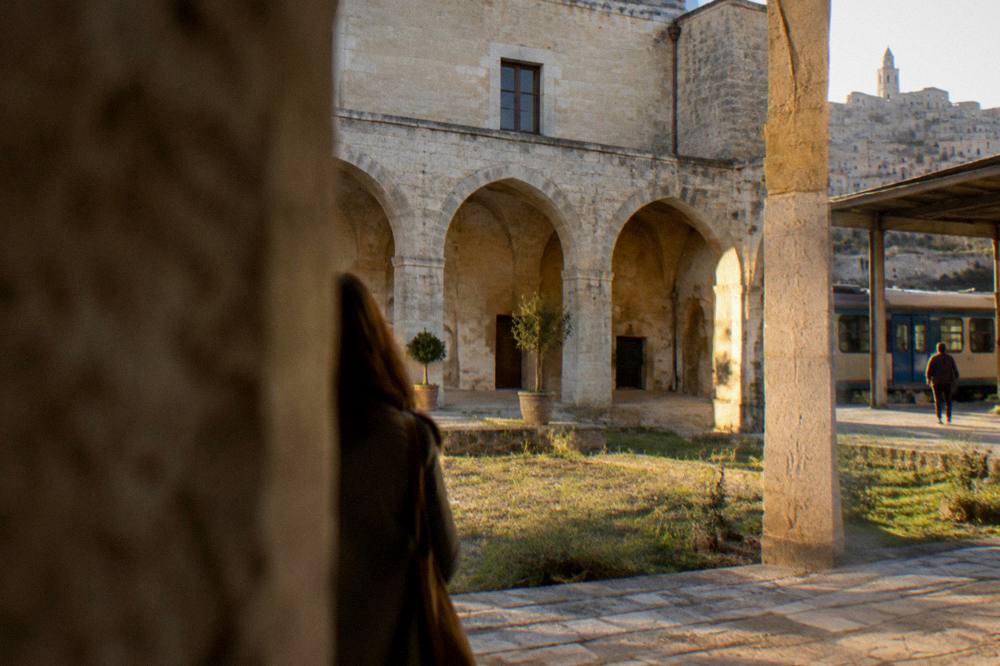
Drivers face a different set of facts, and the comune publishes them. The ZTL Sassi, with camera gates on Via Buozzi, Via Madonna delle Virtù and Via D'Addozio, is active 10:00 to 20:30 from 16 September to 30 June and 10:00 to 24:00 from 1 July to 15 September, weekdays and holidays alike. The ZTL Centro around Via del Corso, Via Duomo and Piazza Sedile is active 24 hours a day. Piazza Vittorio Veneto and Via Ridola are pedestrian areas closed to vehicles all day, with bollards opening 04:00 to 08:00 on weekdays for deliveries. Public car park names and tariffs are not published on any official page this site could verify, so confirm parking arrangements with your accommodation. The Matera parking and Matera ZTL guides carry the full verified rules.
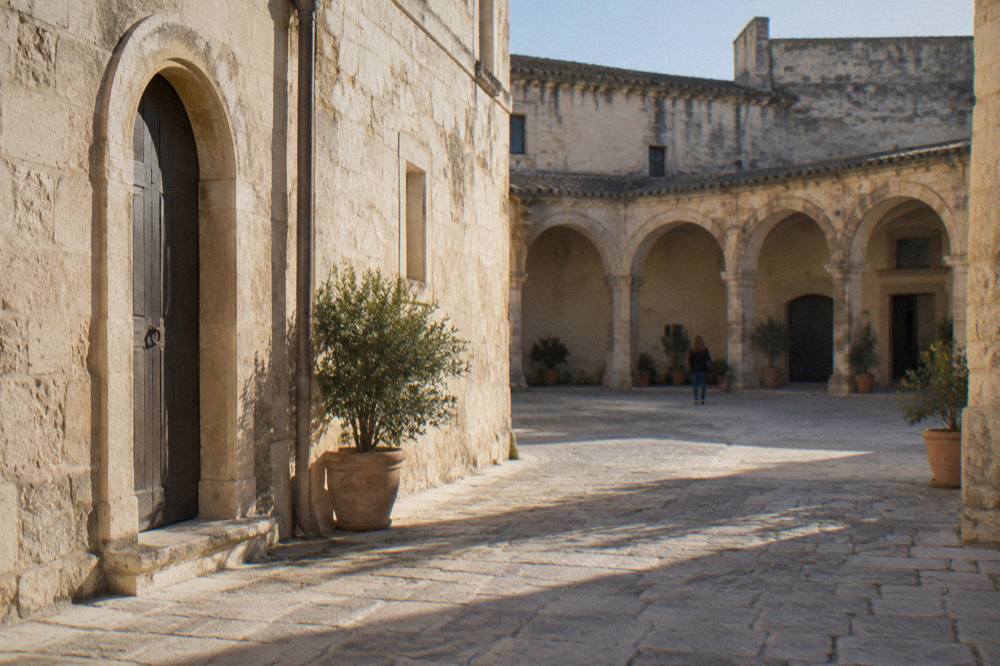
Once in the centre, distances are short. The closed Ridola, Palazzo Lanfranchi, the Cathedral, Piazza Vittorio Veneto and the head of the Sassi all sit within a walk of a few minutes of one another, though the Sassi themselves are steep, stepped and uneven, and no named route down into them can be called step-free. The getting around Matera guide covers the rest.
What Is The Palazzo Lanfranchi Museum Like With The Ridola Closed?
Palazzo Lanfranchi is the open seat of the same national museum network the Ridola belongs to, standing above the Sasso Caveoso with hours of 09:00 to 20:00 every day and a 10.00 EUR ticket, and its site currently carries a "Cantiere Lanfranchi" works page while the palace stays open to visitors. It is the place where the national collections of Matera can actually be seen while the archaeology museum is shut.
The building itself is part of the draw. A palace on the edge of the Piano, it looks straight down into the Sasso Caveoso, and the museum's site states its hours plainly: Monday to Sunday, 09:00 to 20:00. The works page on the same site is the honest signal: renovation activity is under way in the complex, and the museum has chosen to stay open through it. A visitor should expect a working building, not a finished one, and treat any gallery-level detail in older guides with caution.
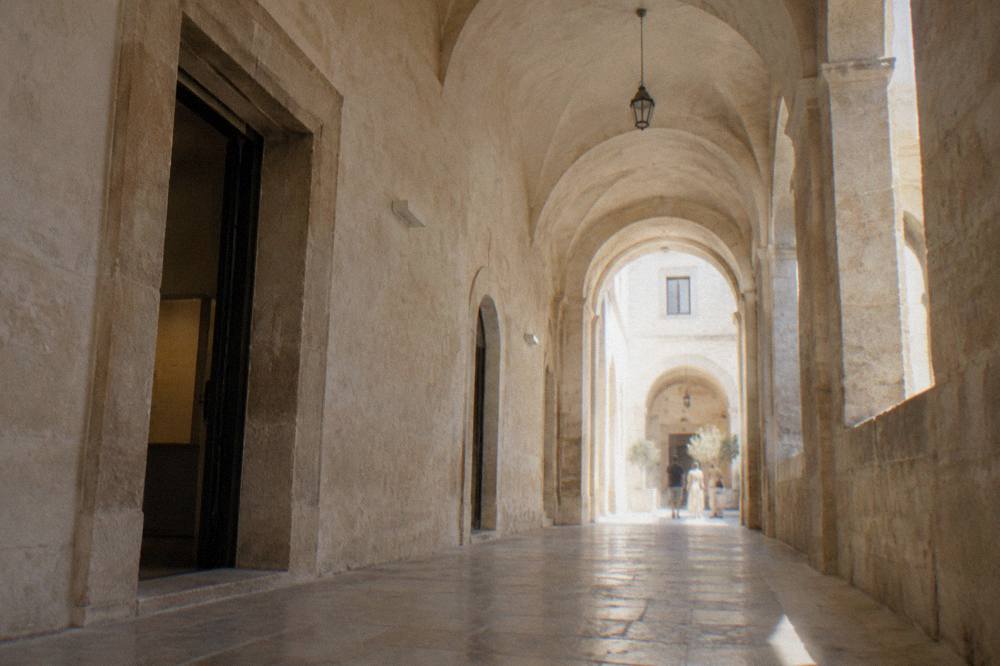
What Palazzo Lanfranchi does not replace is the Ridola's specific archaeological display, because the closed museum's new display has not been described in any official publication this site could read. What it does offer is the national museum's presented material in the city, plus a changing exhibition programme. One current example runs in the neighbourhood rather than inside the palace alone: "The Sea Is Closer Than You See", an exhibition on contemporary art, AI and Mediterranean culture reported in local news, runs to 8 December 2026 across Palazzo Lanfranchi, TAM, MUSMA and the APT's Basilicata Open Space. The exhibition is reported by local press rather than confirmed on the museum's own site, so check the museum's channels before travelling for it.
The palace also sits at the start of the best museum-to-viewpoint walk in the city. Out of its doors, the terrace gives the classic view over the Sasso Caveoso toward the Murgia plateau; from there the route drops toward the Cathedral, whose diocesan museum route is 4.00 EUR on the Oltre l'Arte tariff, and onward into the Sassi. A morning of Palazzo Lanfranchi plus the Cathedral route plus one rupestrian church costs less than 20 EUR per adult on current tariffs and covers palace, church and cave in one walk.
When Is The Best Time To Visit Matera's Open Museums?
September is Matera's busiest month by the APT Basilicata accommodation count, 61,630 arrivals in 2025 against 60,257 in August, and 74.5% of those September arrivals came from abroad, so museum queues and Sassi crowds peak after the summer heat rather than in it. The quietest month was February with 15,239 arrivals. The ERA5 reanalysis for Matera, 1991 to 2020, puts the July and August mean high at 31.2 and 31.3 C.
The pairing of those two datasets is the useful insight. Conventional Mediterranean advice says avoid August; Matera's data says the crowd peak has already moved to September, when the mean high has fallen to 25.7 C and three in four arrivals are foreign guests. July draws fewer arrivals than April, May, June, August, September or October, 43,966 in 2025, despite heat equal to August's. A museum-focused trip, which is mostly indoors, inverts the usual logic: the closed Ridola excepted, Matera's museums are climate-controlled escapes, so a hot July day is better for Palazzo Lanfranchi and MUSMA than for the unshaded viewpoints.
| Month | Mean high C (ERA5 1991-2020) | Rain mm | Arrivals 2025 (APT) |
|---|---|---|---|
| Jan | 10.3 | 51.4 | 18,402 |
| Feb | 11.1 | 54.9 | 15,239 |
| Mar | 14.1 | 59.2 | 23,629 |
| Apr | 17.4 | 56.5 | 45,195 |
| May | 22.7 | 41.7 | 54,101 |
| Jun | 28.2 | 35.1 | 50,186 |
| Jul | 31.2 | 21.2 | 43,966 |
| Aug | 31.3 | 21.7 | 60,257 |
| Sep | 25.7 | 44.8 | 61,630 |
| Oct | 20.8 | 51.7 | 52,538 |
| Nov | 15.5 | 67.1 | 23,555 |
| Dec | 11.2 | 57.2 | 30,385 |
November is the wettest month at 67.1 mm in the reanalysis and July the driest at 21.2 mm, and the year totals 562.5 mm of rain. Frost days run to about 20 a year, almost all between December and March, which matters for the walk down into the Sassi more than for the museums. The full picture, with the caveats on modelled data, is on the Matera weather and best time to visit Matera pages.
Seasonal hours shift too, and they are published per operator. MUSMA extends to 20:00 from April to September and closes at 18:00 from October to March. Casa Noha runs 09:15 to 19:00 from June to September and 10:00 to 17:00 from November to 6 January. The Oltre l'Arte churches run their from-28-March-2026 hours daily into the evening. A winter visit trades long light for short queues and the Presepe Vivente, the living nativity whose sixteenth edition opens 4 December 2026, with public days across four December weekends and the first weekend of January and tickets at 12.00 EUR full, 9.00 EUR for ages 10 to 18, free under 10.
How Does The Museo Ridola Closure Change A Matera Itinerary?
The closure costs a half-day museum block at most, and the fix is to move that block to Palazzo Lanfranchi and MUSMA, both open daily with evening hours in the tourist season, and to spend the recovered time in the Sassi or on the Murgia side of the Gravina, where the archaeology the Ridola displayed is still in the ground. A one-day plan built around the open sites loses nothing structural.
The reason is that the Ridola was never the load-bearing element of a Matera day. The city's inscription on the World Heritage list is for the Sassi and the park of the rupestrian churches, not for any gallery, and the park remains open under its own management, with the Jazzo Gattini visitor centre active since 6 February 2026 as an info point and ticket office toward Murgia Timone, and a staffed, ticketed access point on Sentiero 406, the path with the suspension bridge over the Gravina, since March 2026. The access ticket for Sentiero 406 is sold online through the park's ticketing page, and its price is not settled in any source this site can verify, so confirm at the point of purchase. The Parco della Murgia Materana, Belvedere Murgia Timone and Tibetan bridge pages carry the verified detail.
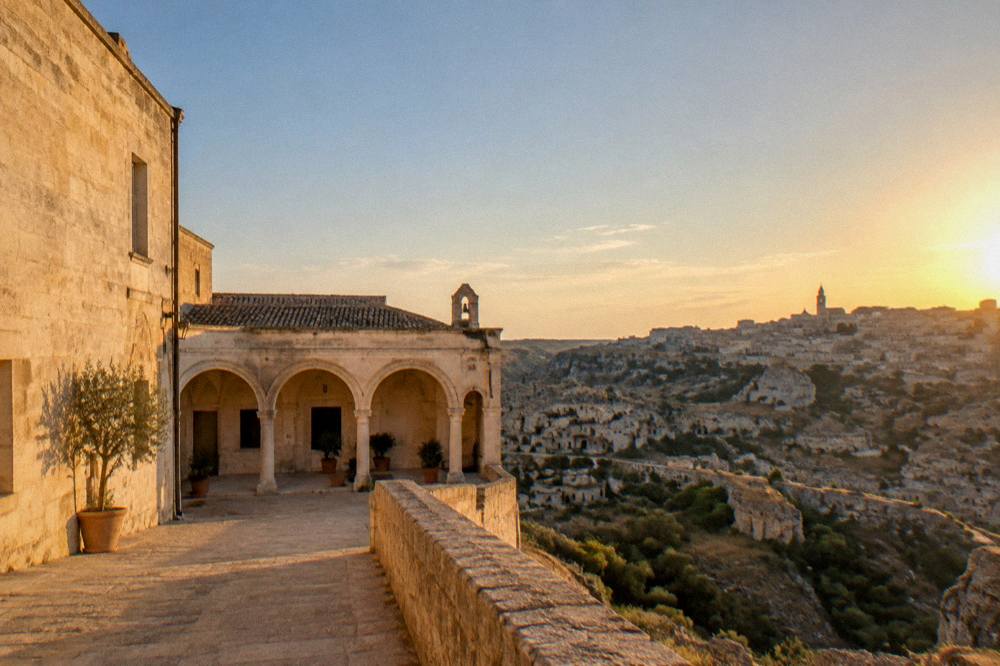
A reshaped day looks like this: Palazzo Lanfranchi in the morning while legs are fresh and the terrace light is low, the Cathedral route at 4.00 EUR next door, then down into the Sasso Caveoso for MUSMA and one rupestrian church, with the afternoon either on a panoramic loop or across the Gravina to the Murgia viewpoint. The one day in Matera and two days in Matera itineraries carry full versions, and the things to do in Matera roundup orders every open option.
Travellers coming from Bari on a compressed schedule should weigh the guided day-trip format, since it removes the transport friction entirely. The Alberobello and Matera tour with a tour leader on board is the site's pick for that pattern, and the Alberobello tour with tour leader page describes what it covers.
For a second or third day, the surrounding region answers the archaeology question more directly than any gallery. The Crypt of the Original Sin, a painted rock church in the countryside toward the Bradano valley, is open by mandatory pre-booked e-ticket, with guided slots through the day in season and a ticket office at Azienda Agricola F.lli Dragone; its price is not published outside the booking engine. The Crypt of the Original Sin page has the slot times. The Craco and Metaponto guides carry those day trips.
| Day trip from Matera | Road distance | Free-flow drive time |
|---|---|---|
| Altamura | 20 km | about 20 min |
| Metaponto | 47 km | about 52 min |
| Craco | 57 km | about 58 min |
| Bari | 68 km | about 1 h 02 |
| Alberobello | 68 km | about 1 h 23 |
| Polignano a Mare | 100 km | about 1 h 29 |
Distances and times are free-flow routing figures computed over OpenStreetMap, with no traffic and no stops, so treat them as floors, not plans.
Is The Museo Ridola Worth Waiting For?
No reopening date has been published, so no itinerary should wait for it. The museum's own notice names PNRR energy works and a new display as the reason for the closure, and its visit page still reads "Temporaneamente chiuso"; that is the entire official record. If a reopening is announced while your trip is still months away, the museum's own site and ticket page will say so first, and a 10.00 EUR site ticket or the 15.00 EUR cumulative option would then apply.
There is a reasonable case for quiet optimism and no case for planning around it. A new display funded through the PNRR programme is a substantial renovation, and the museum network around it, Palazzo Lanfranchi above all, is clearly being invested in, with the "Cantiere Lanfranchi" works page running while that palace stays open. But "substantial" also means slow, and a closure that has already run from April 2025 into late 2026 with no date attached gives a traveller nothing to book against.
The practical rule for anyone reading older guides: check the museum's own channels in the week before travel, not months ahead. If the Ridola has reopened by then, its 10.00 EUR tariff and the cumulative ticket apply, and a half day of archaeology returns to the itinerary. If it has not, nothing on this page changes: Palazzo Lanfranchi, MUSMA, the Oltre l'Arte circuit and the park across the Gravina carry a full programme without it.
Common Questions About The Museo Ridola Matera
Is the Museo Ridola in Matera open?
No. The Museo Archeologico Nazionale Domenico Ridola has been closed since 7 April 2025 for PNRR energy works and a new display, and no reopening date has been published. The museum's visit page still reads "Temporaneamente chiuso".
How much does the Museo Ridola cost?
The tariff sheet lists 10.00 EUR per site for the Museo Nazionale di Matera network, and a 15.00 EUR cumulative ticket valid two days across all sites, with under 18s free. No ticket is currently sold for the Ridola itself because the building is closed.
What can I see instead of the Museo Ridola?
The open seat of the same national museum at Palazzo Lanfranchi, the sculpture museum MUSMA in the Sasso Caveoso, the Oltre l'Arte rupestrian churches, and Casa Noha when it is open. All have verified tariffs and published hours.
When will the Museo Ridola reopen?
No date has been published by the museum. The closure notice names energy works and a new display under the PNRR programme. The museum's own site is the only source to trust for a reopening announcement.
Is Casa Noha also closed?
Casa Noha is closed only from 5 to 22 October 2026 for renovation ahead of a relaunch with new displays. Outside that window it is open every day except Wednesday, at 6.50 EUR for adults and 3 EUR for children.
Are Matera's other museums affected by works?
Palazzo Lanfranchi stays open while its site carries a "Cantiere Lanfranchi" works page, so works are possible inside without a closure. MUSMA and the Oltre l'Arte circuit have no closure notices on their own pages. Confirm on each operator's channels close to travel.
The Museo Ridola's closure is a fact of visiting Matera in 2026 and beyond, not a reason to skip the city. The museum network's open seat at Palazzo Lanfranchi, the carved galleries of MUSMA, the cave churches of the Sassi and the park across the Gravina together cover palace art, contemporary sculpture, living archaeology and open landscape, all within a walkable city that this Matera Travel Guide exists to document. Check the museum's own site before you go, and plan the half day you would have spent at the Ridola on the canyon side of the city instead.