Matera Cave Churches
The cave churches of Matera, in Basilicata, southern Italy, are chapels and full church interiors cut straight into the tufa limestone of the Sassi and the Murgia plateau. This guide covers which ones you can enter, what the tickets cost, and how to plan a visit.
Short answer
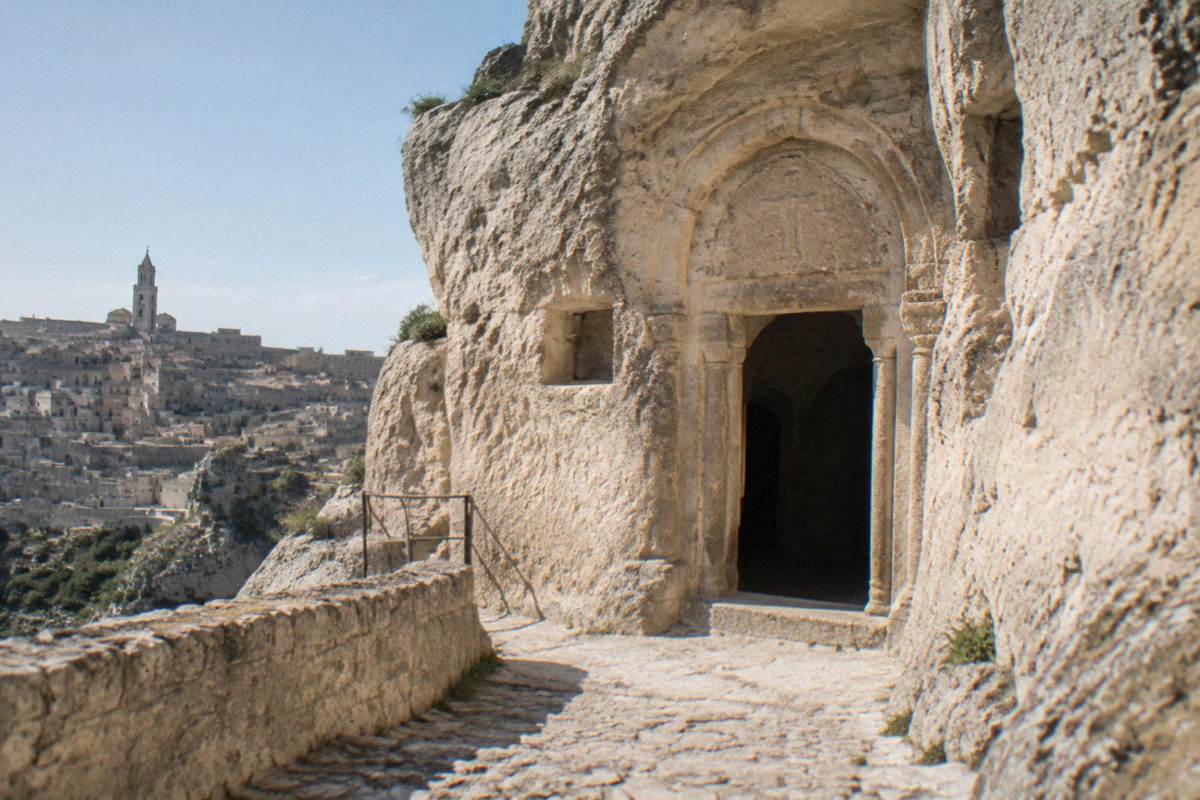
Three rupestrian churches in the Sassi (Santa Lucia alle Malve, Madonna de Idris with San Giovanni in Monterrone, and San Pietro Barisano) are open daily on Oltre l'Arte tickets: 4.50 EUR for one church, 8.00 EUR for two, 10.00 EUR for three, hours from 09:30 daily. Beyond the Sassi, dozens more rock churches stand in Parco della Murgia across the Gravina.
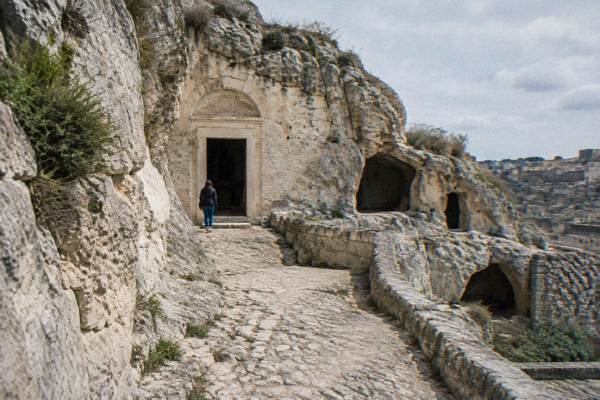
The rupestrian churches of Matera are church interiors cut directly into the pale tufa limestone of the Sassi districts and the Murgia plateau opposite, and they are the reason UNESCO inscribed the city on the World Heritage List in 1993 under the name "The Sassi and the Park of the Rupestrian Churches of Matera". Matera sits inland in Basilicata, southern Italy, at about 400 m above sea level on the edge of the Gravina canyon. There is no sea here. What there is, carved into the rock on both sides of the gorge, is one of the densest concentrations of rock-cut ecclesiastical architecture anywhere in the Mediterranean, from tiny chapels with frescoes still on their walls to full three-naved churches hollowed out of the cliff face.
This page from the Matera Travel Guide editorial desk sets out which cave churches you can actually walk into on a visit, what the operator's own tariff says they cost, which ones stand further out in the park, and how to fit them into a day. The Sassi districts themselves, Sasso Caveoso and Sasso Barisano, are covered in the separate Sassi di Matera attraction guide.
What Are The Rupestrian Churches Of Matera?
The rupestrian churches are places of worship excavated directly into the limestone rather than built on top of it, and in Matera they exist on both sides of the Gravina: inside the two Sassi districts and out across the Murgia plateau, where the park created by regional Law 11/1990 protects the wider rock-cut landscape. UNESCO inscribed the combined site in 1993, describing an outstanding example of a rock-cut settlement adapted to its geomorphological setting, with continuity over more than two millennia and occupation going back to the Palaeolithic. The protected property covers 1,016 ha and UNESCO's listing text speaks of more than a thousand dwellings alongside a large number of shops and workshops. The churches are the sacred layer of that same carved city.
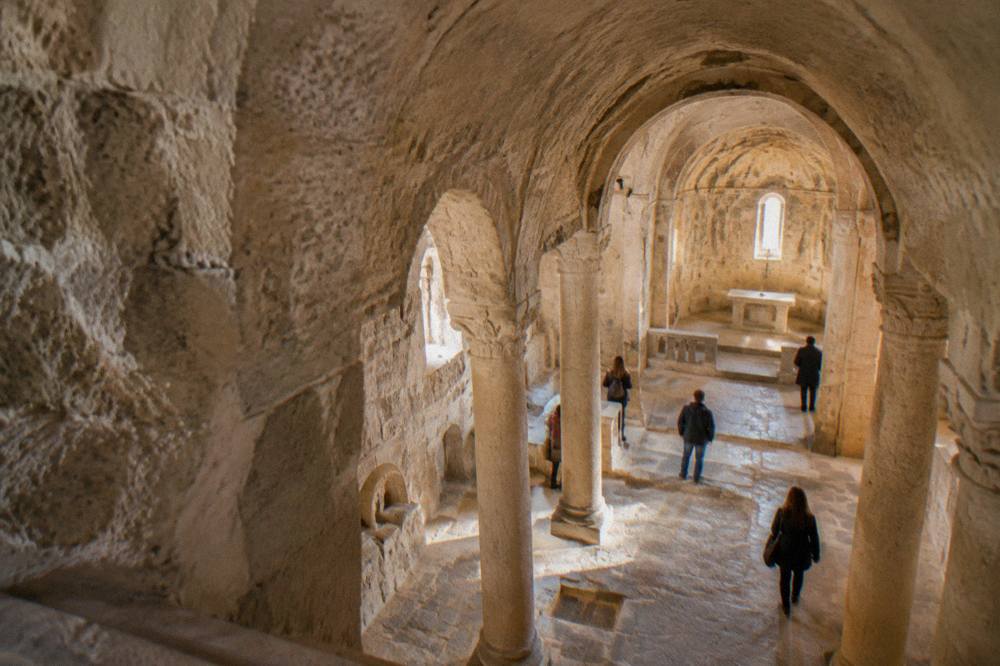
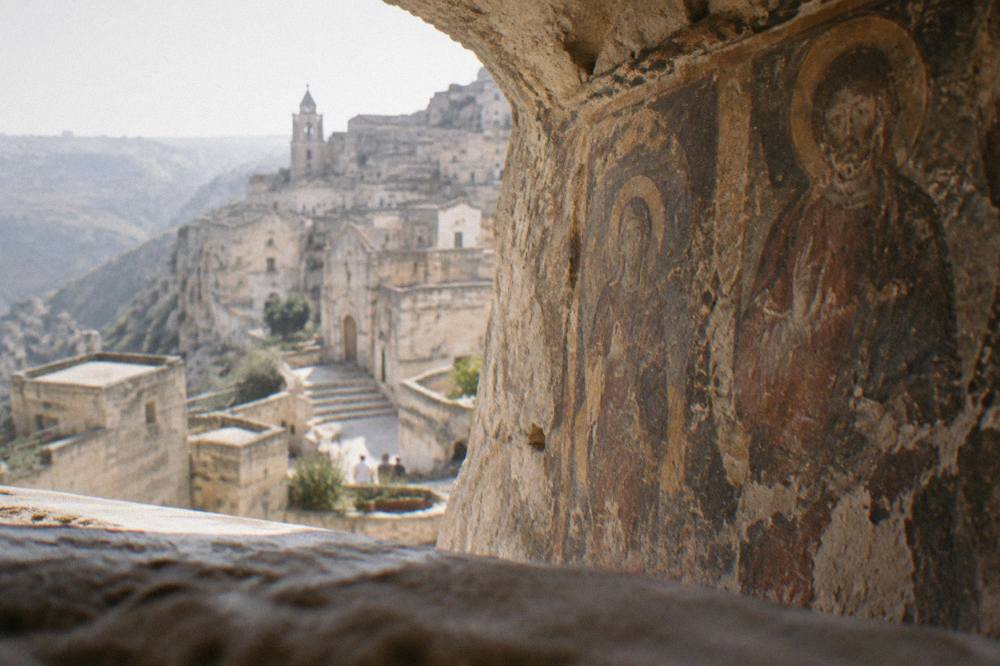
The technique was subtractive. A community with iron tools, time and soft stone did not assemble walls and a roof: it removed rock until a nave, an apse, a bell niche and a burial chamber existed inside the cliff. Because the churches were cut rather than built, their architecture follows the habits of excavation. Columns are left standing by carving away what surrounds them. Naves are low where the stratum was thin. Frescoes were painted straight onto the living rock, and many survive, darkened but legible, in the churches of the Sasso Caveoso.
How many exist depends on who counts and how a "church" is distinguished from a chapel, a crypt or a hermit's cell. The park's material speaks of roughly 150 rupestrian churches across its territory, though the editorial desk has only seen that figure in a secondary citation rather than in the park's own readable text, so treat it as an order of magnitude rather than a census. A handful are open on a ticket inside the Sassi, several more can be visited in the park, and the rest are visible from paths and viewpoints as dark openings in the canyon walls.
Which Matera Cave Churches Can You Visit, And What Do The Tickets Cost?
Three cave churches inside the Sassi are open to the public on one ticketing system run by Oltre l'Arte: Santa Lucia alle Malve, Madonna de Idris with the connected San Giovanni in Monterrone, and San Pietro Barisano. Tickets cost 4.50 EUR for one church, 8.00 EUR for two and 10.00 EUR for all three, with reduced rates of 3.50, 5.50 and 7.50 EUR. The operator's tariff page lists one church at 4.50 EUR, two churches at 8.00 EUR and all three at 10.00 EUR, with reduced rates of 3.50, 5.50 and 7.50 EUR, free entry for children up to 10 accompanied by a parent, and a lower guide rate for visitors arriving with a licensed guide. From 28 March 2026, Santa Lucia alle Malve and Madonna de Idris open daily 09:30 to 19:30 and San Pietro Barisano daily 10:00 to 19:00.
The same operator runs a wider circuit, and its all-inclusive ticket at 25.00 EUR, reduced 16.00 EUR, bundles eight sites: the three rupestrian churches, the Vicinato a Pozzo courtyard, the Antica Casa Grotta in Via Fiorentini, the MATA diocesan museum, the exhibition in the Chiesa del Purgatorio and the Museo del Pane. Whether the bundle pays off depends on how many of the eight you will genuinely walk to; the full-price break-even sits between the three-church ticket plus two or three standalone sites. Every site in the circuit closes on 25 December and on 2 July, the day of the Festa della Bruna, when the whole city is given over to the festival.
| Ticket | Price (full) | Price (reduced) | What it covers |
|---|---|---|---|
| 1 church | 4.50 EUR | 3.50 EUR | One of: Santa Lucia alle Malve, Madonna de Idris with San Giovanni in Monterrone, San Pietro Barisano |
| 2 churches | 8.00 EUR | 5.50 EUR | Any two of the three open rupestrian churches |
| 3 churches | 10.00 EUR | 7.50 EUR | All three open rupestrian churches |
| With licensed guide | 2.50 / 4.00 / 5.00 EUR | per church count | The same entries at the guide rate |
| Cathedral and MATA | 4.00 EUR | listed on tariff | Cathedral and diocesan museum, daily 09:00 to 19:00 |
| All-inclusive, 8 sites | 25.00 EUR | 16.00 EUR | Three churches, Vicinato a Pozzo, Casa Grotta Via Fiorentini, MATA, Purgatorio exhibition, Museo del Pane |
If a guided walk is how you want to see them, the listings below include a city-center walk that enters cave churches and cave houses, an open-top bus that gives the panoramic view of the carved cliffline, and a sunset walk to the Belvedere Murgia Timone viewpoint, from which the Sassi churches show as a whole.
Where Do The Rock Churches Stand: Inside The Sassi Or Across The Gravina?
The open, ticketed churches all stand inside the Sassi districts of the city, but the larger population of rock churches sits on the far side of the Gravina canyon inside Parco della Murgia Materana, a protected area of about 8,000 hectares by the park's own count, reached on foot across the canyon or by road around it. The two banks are two halves of one carved landscape: habitation and worship on the city side, hermitages, monasteries and scattered chapels on the wilderness side. The park's own site states the protected area and its flora, 923 plant species, and it operates visitor infrastructure including the Jazzo Gattini centre, an info point and ticket office active since 6 February 2026 under a new concession, which also controls access towards the Murgia Timone belvedere.
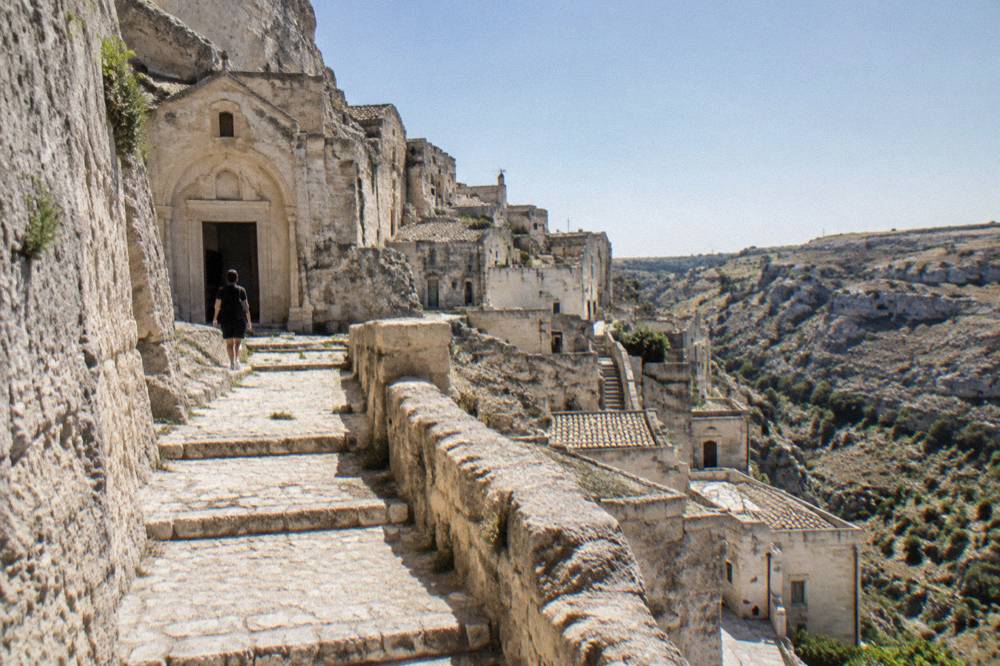
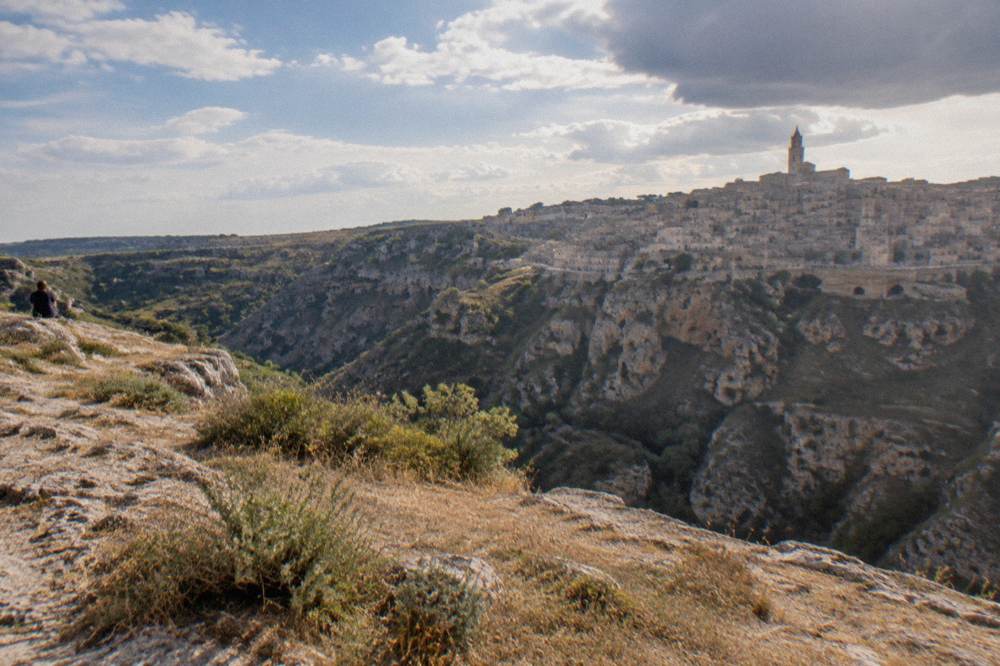
Looking across from a Murgia viewpoint is the single most useful orientation for the cave churches, because the canyon wall of the Sassi reads like a section diagram: terraced cave dwellings, and among them the facades and bell openings of the rock churches. The Belvedere Murgia Timone is the classic vantage point, and the Belvedere Murgia Timone guide covers how the managed access works. Down in the canyon, the Tibetan bridge at Matera is now crossed via a staffed access point with an online access ticket introduced by the park, whose price the desk has seen reported two different ways, so confirm the current figure when you buy.
A sunset tour that transfers you to the Murgia side pairs the interior visits of the morning with the exterior panorama of the evening, and the listing below covers the transfer and the guided walk on the plateau.
What Do You See Inside Santa Lucia Alle Malve, Madonna De Idris And San Pietro Barisano?
Santa Lucia alle Malve is the deepest of the three interiors, a former Benedictine nunnery complex of connected caves with frescoes spanning centuries; Madonna de Idris sits at the top of a stepped spur in the Sasso Caveoso with a rock bell niche over its facade and the small San Giovanni in Monterrone attached inside; San Pietro Barisano is the largest rupestrian church in the city, a full church volume with side niches and a lower level of burial chambers. All three are entered on the Oltre l'Arte ticket described above, and each is a short walk from the other two along the lanes of the Sasso Caveoso and the edge of the Civita.
The frescoes are the reason to go inside rather than only look at facades. Painted onto the cut rock, they include Byzantine-influenced depictions of saints and madonnas, later overpainting, and, in places, bare stone where the plaster has gone. Santa Lucia alle Malve has the richest set, and its sequence of connected spaces shows how a rock church grew: one chamber, then another, then a burial level. The dedicated Santa Lucia alle Malve page, the Santa Maria de Idris page and the San Pietro Barisano page each go into the interiors in detail.
San Pietro Barisano rewards the descent. The church is large enough that its carved columns and arcades read as architecture rather than cave, and the space below the floor, opened for visits, is a rock-cut ossuary and sepulchre complex of a kind that recurs across Matera, since burial inside the rock was as natural to this city as living inside it. The Matera Cathedral guide covers the built counterpart at the top of the Civita ridge, built rather than carved, and the diocesan MATA museum that shares its ticket.
| Church | District | Character | Hours (from 28 March 2026) |
|---|---|---|---|
| Santa Lucia alle Malve | Sasso Caveoso | Former nunnery complex, connected caves, richest frescoes | Daily 09:30 to 19:30 |
| Madonna de Idris with San Giovanni in Monterrone | Sasso Caveoso, atop a rock spur | Small church with attached rupestrian baptistery, canyon views | Daily 09:30 to 19:30 |
| San Pietro Barisano | Sasso Barisano edge | Largest rupestrian church, carved arcades, burial level below | Daily 10:00 to 19:00 |
What Other Rock Sites Lie Beyond The Oltre L'Arte Circuit?
Beyond the three ticketed churches, the city and the park hold rock-cut sites of several other kinds: the Convicinio di Sant'Antonio, a group of four cave churches around a shared courtyard; the churches of the Murgia slopes, such as Santa Maria de Virtù and San Nicola dei Greci, whose price and hours the desk has not verified; the Crypt of the Original Sin, a frescoed crypt outside the city requiring a booked e-ticket; and rock churches visible from the canyon paths but not open. Each follows its own booking or access rule, so none of them works like the others.
The Crypt of the Original Sin is the outstanding outlier. It sits about 15 minutes by car from Matera at Contrada Petrapenta, its ticket office at the Dragone farm on the SS7 Appia, and visits are guided only, with e-tickets booked at least 90 minutes ahead and arrival 30 minutes before the slot, capacity 20 people per slot. Its price sits inside the booking engine and is not printed here. The dedicated Crypt of the Original Sin guide covers the frescoes, which are among the oldest painted decoration in the region.
Closer in, the shared-courtyard Convicinio and the rupestrian complex of Madonna delle Virtù and San Nicola dei Greci sit within the Sassi fabric itself, and the Parco della Murgia Materana guide covers the plateau churches reached on foot from the Jazzo Gattini side. For the painted interiors in the Sasso Caveoso, a guided walk with a licensed guide also unlocks the discounted Oltre l'Arte guide rate on entry, and the listing below pairs the walk with the cave houses of the same district.
| Site | Where | Access | Booking rule |
|---|---|---|---|
| Convicinio di Sant'Antonio | Sasso Caveoso | Cave church group around a courtyard | Confirm opening locally |
| Santa Maria de Virtù and San Nicola dei Greci | Sasso Barisano edge | Rock church complex, terrace setting | Price and hours not verified, confirm on site |
| Crypt of the Original Sin | Contrada Petrapenta, about 15 min by car | Guided visits only, e-ticket | Book at least 90 min ahead, arrive 30 min early, 20 people per slot |
| Rock churches of the Murgia slopes | Parco della Murgia, across the Gravina | Paths from Jazzo Gattini visitor centre | Check park info point |
| San Pietro Caveoso | Sasso Caveoso, Piazza San Pietro Caveoso | Church facade and square | See the dedicated page |
| Crypt of Sant'Agostino al Casalnuovo | Casalnuovo, on the Casa Grotta ticket | Included with the Casa Grotta di Vico Solitario ticket | Via the Casa Grotta ticket |
One caveat on the counting. The number of rock churches in the park is often quoted as a precise figure; the only count the desk can trace to park material says about 150, and even that should be read as "many", not as a catalogue. Do not be surprised to find dark arches in the canyon wall that appear on no map you are carrying.
Should You See The Cave Churches With A Guide Or On Your Own?
The three Oltre l'Arte churches can be visited on your own with a ticket bought at the door, but a licensed guide changes two things: the entry price drops to the guide rate (2.50 to 5.00 EUR per church on the operator's tariff), and the frescoes and carved spaces get read rather than merely seen, which matters because almost nothing inside is labelled. The tariff structure itself tells you the operator expects guides: a dedicated price line exists for visitors arriving with one. For the Crypt of the Original Sin a guide is not optional, since every visit there is a guided slot.
The case against going alone is not difficulty, it is silence. The churches are small, unstaffed except for ticket control, and their wall paintings carry no interpretive panels. A guide who can point out an overpainted layer, a mason's chisel mark or the burial niche under the floor converts ten minutes of looking into the same ten minutes of understanding. The trade-off is pace and cost, and both are visible in the listings rather than in prose: durations and prices render on each listing page, not in this article.
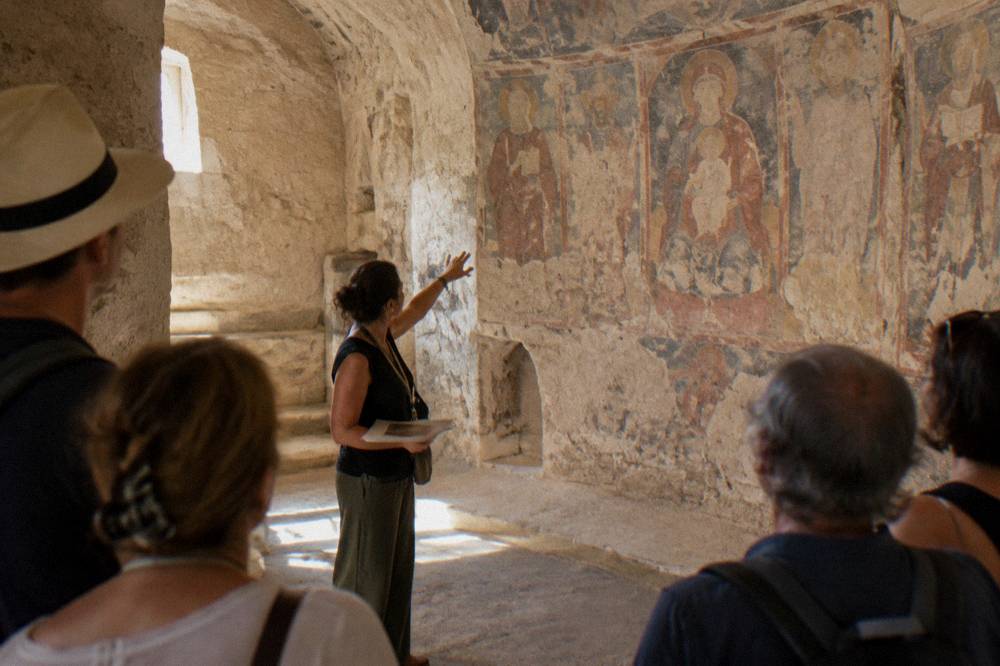
The desk's practical suggestion is a hybrid. Do one guided walk through the Sassi that enters at least one cave church, then use the three-church ticket on your own afterwards for the interiors you want to linger in. The guided city-center tour with cave churches and houses is the listing that fits that first half, covering the historic center, the cave dwellings and the carved churches in one walk.
Tip-based walks also run locally in Matera; if you take one, confirm with the guide directly what it covers and what entry costs are included, since entry tickets are separate from any tip.
When Are The Matera Cave Churches Open, And When Are They Closed?
From 28 March 2026 the operator's tariff page lists Santa Lucia alle Malve and Madonna de Idris daily 09:30 to 19:30 with last entry at 19:20, San Pietro Barisano daily 10:00 to 19:00 with last entry at 18:50, and the Cathedral and MATA daily 09:00 to 19:00 with last entry 18:45, pausing for worship on Sundays and solemnities from 10:00 to 12:30. Every Oltre l'Arte site closes completely on 25 December and on 2 July for the Festa della Bruna, the city's patronal festival, whose procession fills the streets from morning to the burning of the float at night.
Two more closures matter for a 2026 or 2027 plan. Casa Noha, the FAI visitor orientation site in the Sassi that many itineraries use as a first stop, is closed 5 to 22 October 2026 for renovation ahead of a relaunch with new displays. The Museo Ridola, the archaeological museum at Palazzo Lanfranchi, has been closed since 7 April 2025 for energy works and a new display, with no reopening date published, so do not build it into a museum morning. The Casa Noha and Museo Ridola pages carry the details.
Season and weather matter less for these churches than for anything in the park, since they are interiors, but the two are usually combined. Midday in July and August, when the ERA5 reanalysis for Matera, 1991 to 2020, puts the mean high at 31.2 and 31.3 C, is better spent inside a rock church than on an unshaded canyon path, and the rock interiors hold a coolness the plateau does not.
| Site | Days | Hours | Last entry | Closed |
|---|---|---|---|---|
| Santa Lucia alle Malve | Daily | 09:30 to 19:30 | 19:20 | 25 Dec, 2 Jul |
| Madonna de Idris with San Giovanni in Monterrone | Daily | 09:30 to 19:30 | 19:20 | 25 Dec, 2 Jul |
| San Pietro Barisano | Daily | 10:00 to 19:00 | 18:50 | 25 Dec, 2 Jul |
| Cathedral and MATA | Daily | 09:00 to 19:00 | 18:45 | Sun and solemnities 10:00 to 12:30; 25 Dec, 2 Jul |
| Chiesa del Purgatorio exhibition | Daily | 09:30 to 19:00 | on site | 25 Dec, 2 Jul |
| Chiesa di Mater Domini | Daily | 09:30 to 16:30 | on site | 25 Dec, 2 Jul |
How Do You Plan A Day Around The Matera Cave Churches?
A workable day opens with the Sasso Caveoso churches in the morning (Santa Lucia alle Malve and Madonna de Idris from 09:30, San Pietro Barisano from 10:00), spends the middle of the day on the cave houses and museums of the same district, and finishes on the Murgia side of the Gravina in the late afternoon, when the low sun turns the carved facades of the Sassi, churches included, into the view the plateau is famous for. The three churches sit within a few minutes' walk of one another, so the ticket, not the distance, is the only planning variable.
Start at the top of the Sasso Caveoso and work downhill. Madonna de Idris first, while the steps up the spur are quiet, then the descent to Santa Lucia alle Malve, then the lane to San Pietro Barisano and its burial level. Midday belongs to interiors: the Casa Grotta di Vico Solitario, whose 2026 tariff is 8.00 EUR full and whose ticket also covers the natural cave and the rock church of Sant'Agostino al Casalnuovo, or MUSMA, the sculpture museum in the Sasso Caveoso, full ticket 10 EUR. The morning's visits take the first half of the day at an unhurried pace, with a stop for bread and local dishes in between.
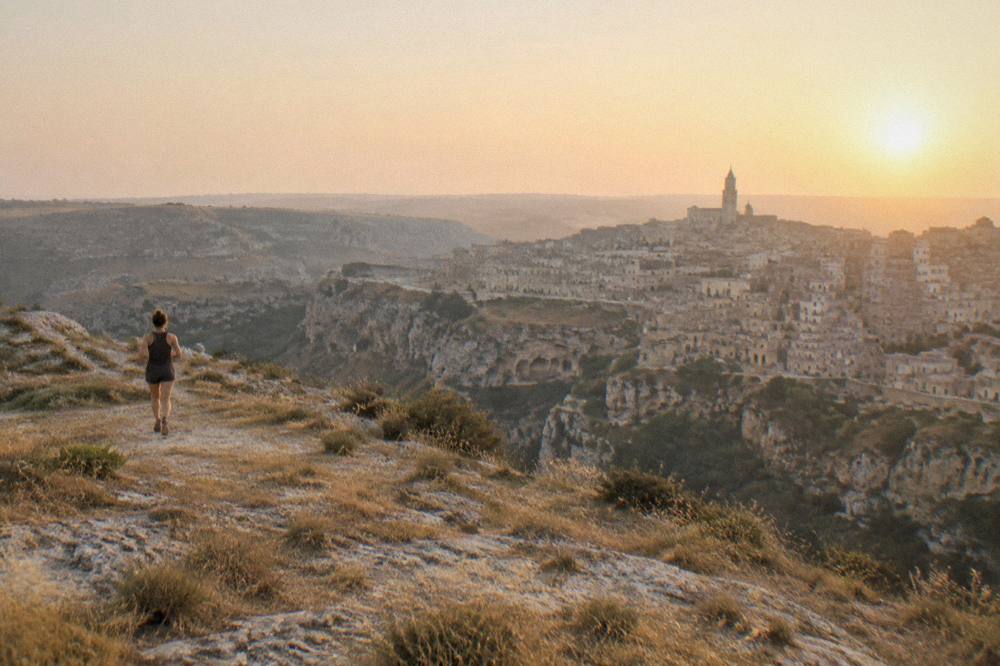
The afternoon crossing needs a little more thought. Reach the Murgia side on foot via the canyon paths or by road to the Jazzo Gattini visitor centre, where the park's info point now handles access towards Murgia Timone. Timing the sunset from the Belvedere Murgia Timone, with the whole carved cliffline of the Sassi opposite, is the standard finish and the one the panorama tours are built around. The listings below cover the three ways to do this day with support: the guided cave-church walk, the open-top panoramic bus, and the sunset transfer to the belvedere.
| Time | Where | What |
|---|---|---|
| 09:30 | Madonna de Idris, Sasso Caveoso | First opening, climb the spur while it is quiet |
| 10:30 | Santa Lucia alle Malve | Frescoed nunnery complex, connected caves |
| 11:30 | San Pietro Barisano | Largest rupestrian church, burial level |
| 12:30 | Sasso Caveoso lanes | Cave house visit or museum, long lunch |
| 15:00 | Casa Grotta or MUSMA | Interior hour in the heat of the day |
| 17:30 | Jazzo Gattini, Murgia side | Park info point, walk towards Murgia Timone |
| Sunset | Belvedere Murgia Timone | The Sassi and their church facades across the Gravina |
What Should You Know Before Visiting The Rock Churches Of Matera?
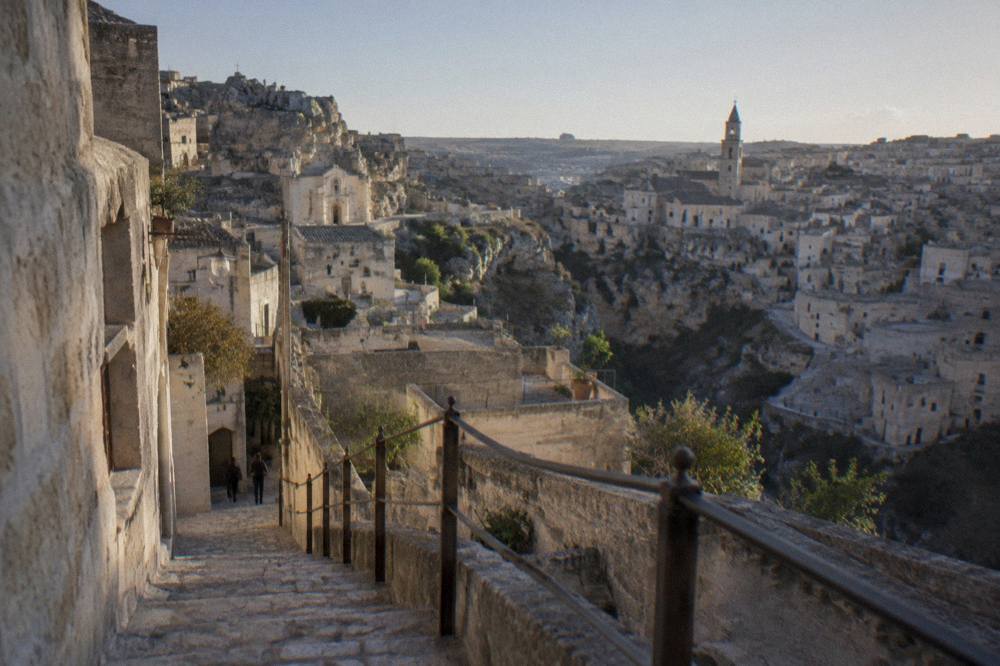
The cave churches are reached on stepped, uneven stone lanes and stairs, entry is by the Oltre l'Arte ticket at the door, photography without flash is generally acceptable but check at each door, and two fixed closures, 25 December and 2 July, shut the whole circuit, so build the date around them rather than the weather. Comfortable shoes with grip matter more here than in almost any other Italian church circuit, because the Sassi lanes are worn stone and the churches sit at the bottom or top of flights of steps cut into the slope.
Dress follows normal church practice in Italy: covered shoulders and knees for the Cathedral in particular, which is a working place of worship with Sunday pauses. Inside the rock churches, space is tight and ceilings low in places, so a small group or an early start is the difference between standing in front of a fresco and standing behind someone photographing it. The churches are unheated and uncooled, and the rock keeps its own temperature, cool in summer and genuinely cold in a Basilicata winter when the ERA5 reanalysis, 1991 to 2020, puts January's mean low at 2.2 C.
For everything else in the carved city, from the underground water cistern at Palombaro Lungo to the wider cave churches and tickets overview, the desk's dedicated pages carry each site's own verified detail.
Common Questions About Matera Cave Churches
How many rupestrian churches are there in Matera?
Park material is widely cited as counting about 150 rock churches across the Parco della Murgia, though the desk has only seen that figure in secondary citations. UNESCO's listing protects the Sassi and the park together as one inscribed site of 1,016 ha. Three churches inside the Sassi are open on a ticket, several more are visitable in the park, and the rest stand closed in the canyon walls.
Which Matera cave churches can you go inside?
Inside the Sassi: Santa Lucia alle Malve, Madonna de Idris with San Giovanni in Monterrone, and San Pietro Barisano, all on Oltre l'Arte tickets. Outside the city: the Crypt of the Original Sin, on a booked guided slot. Several other rock complexes, such as the Convicinio di Sant'Antonio and Santa Maria de Virtù with San Nicola dei Greci, need local confirmation of current access, since no verified operator page lists their hours.
How much do the Matera cave church tickets cost?
The operator's tariff lists 4.50 EUR for one church, 8.00 EUR for two and 10.00 EUR for three, with reductions and a lower guide rate for visitors with a licensed guide. The eight-site all-inclusive ticket is 25.00 EUR, reduced 16.00 EUR. Children up to 10 with a parent enter the churches free.
Do you need a guided tour of the Matera cave churches?
No, the three Sassi churches can be visited on a walk-up ticket, and the interiors are unlabelled rather than locked. A licensed guide brings the frescoes and carved spaces to life and reduces entry to the guide rate on the operator's tariff. At the Crypt of the Original Sin every visit is guided by rule.
Are the Matera cave churches open every day?
From 28 March 2026 the tariff page lists daily opening: 09:30 to 19:30 for Santa Lucia alle Malve and Madonna de Idris, 10:00 to 19:00 for San Pietro Barisano. The whole circuit closes on 25 December and on 2 July, the day of the Festa della Bruna.
Are the rock churches in Matera accessible for walkers with limited mobility?
The Sassi are steep, stepped and uneven, and the rock churches sit up or down stone stairways, so no named route can be described as step-free. The panoramic viewpoint churches of the canyon, seen from across the Gravina at Belvedere Murgia Timone, are one alternative for seeing the carved facade landscape without the descents.