Is It Worth Staying One Night In Matera?
Whether one night in Matera is enough: what the APT Basilicata arrival data shows, what changes in the Sassi after dark, and how to plan a single overnight in the cave city.
Matera, in Basilicata, southern Italy, is an inland city of cave dwellings and rock-hewn churches cut into pale tufa limestone on the edge of the Gravina canyon, and the question of whether a single night there is worthwhile has a short answer: yes, if the night is planned around what the Sassi do after dark. The APT Basilicata accommodation data shows the city logged 479,083 arrivals in 2025 and that the average guest stayed just 1.56 nights, so the one-night visit is not a compromise unique to rushed travellers, it is close to the statistical norm. What follows is what the verified data says a single overnight covers, what it cannot cover, and how to decide.
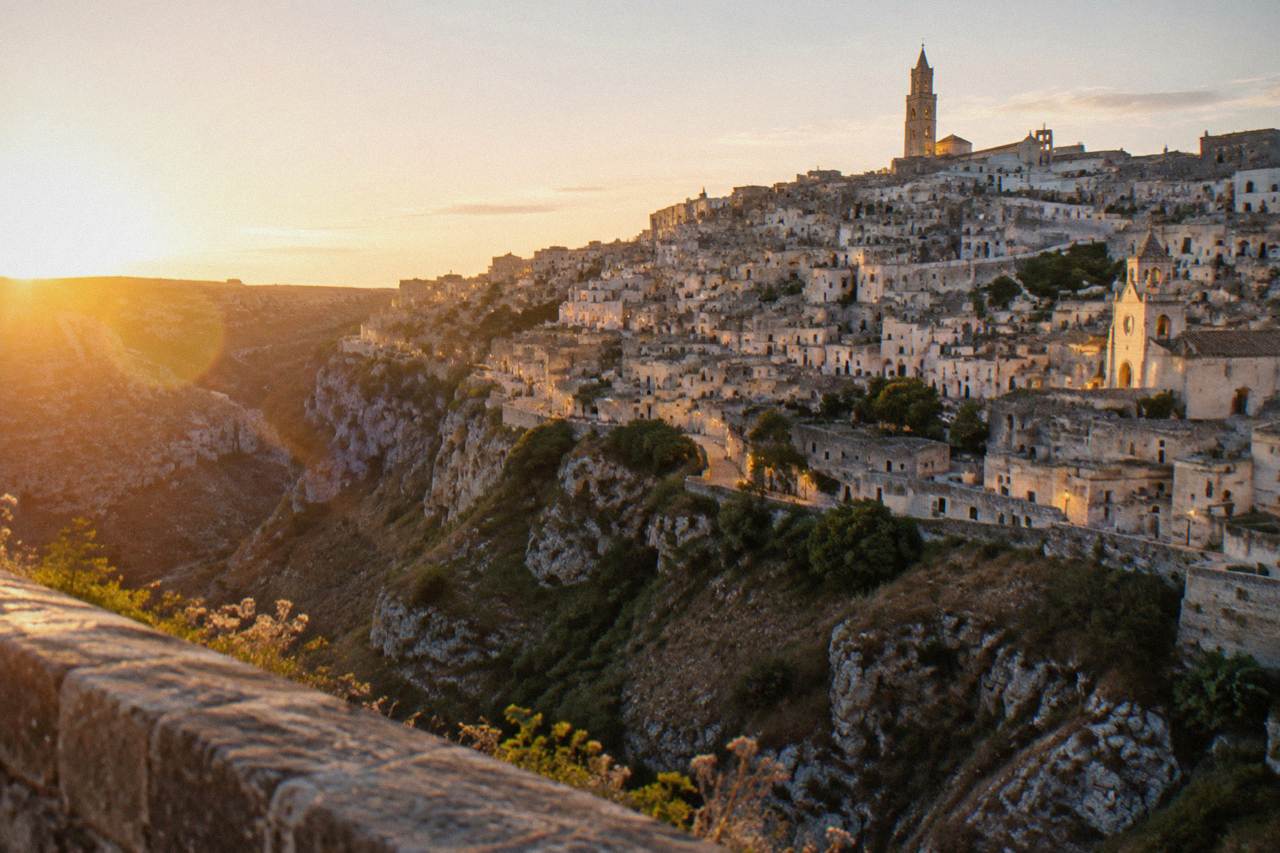
Is It Worth Staying One Night In Matera?
Yes, one night in Matera is worth it, and the city's own arrival data shows short stays are the norm rather than a rushed exception: APT Basilicata recorded 479,083 arrivals in 2025 against 748,812 overnight stays, an average of 1.56 nights per guest. A single overnight is enough to see the Sassi in daylight, watch the canyon lights from a viewpoint after dark, and sleep inside a cave room, which is the experience a day trip cannot deliver.
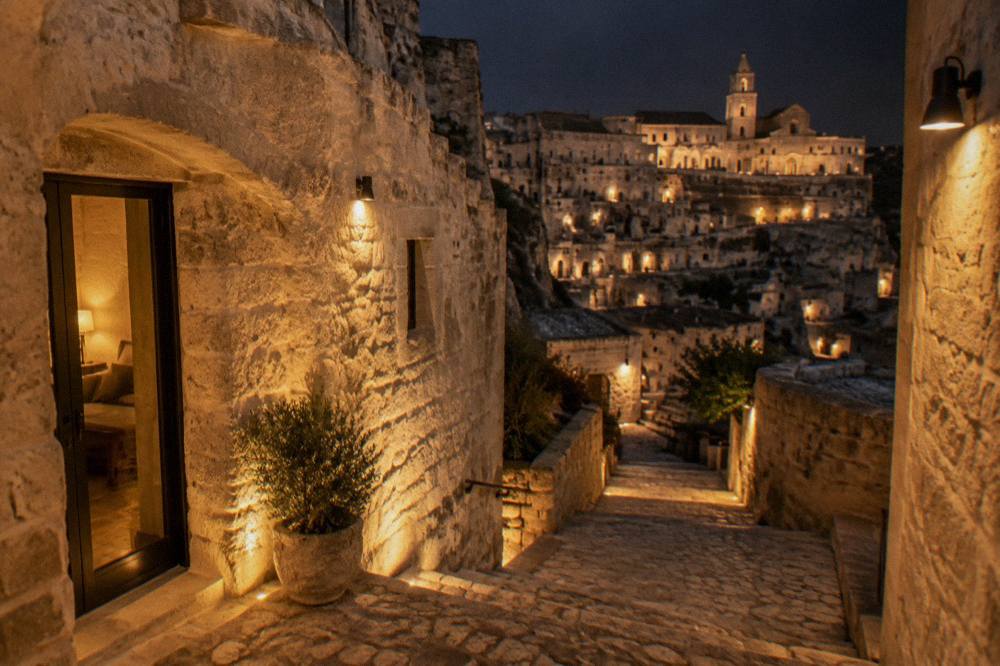
The case for the overnight is not about quantity of sights. It is about the two states of the city. In daytime the Sassi are steep, stepped lanes, cave houses and rupestrian churches; after dark the canyon face becomes a wall of scattered lights, and the viewpoints across the Gravina on the Murgia side are where the postcard photographs are taken. A visitor who leaves on the last afternoon bus sees one state only.
There is a practical argument too. Matera's transport links reward staying over: FAL, the rail operator, runs no trains on Sundays and public holidays, only replacement buses, and the journey from Bari involves a change at Altamura. Building a day trip around a fixed return departure eats the evening, which is the part worth staying for. The Matera Travel Guide desk's reading of the numbers points one way: with 1.56 nights the average stay, a well-planned single night puts a visitor in line with how the city is actually consumed.
What Changes In Matera After The Day Trippers Leave
After the last day-trip coaches depart, Matera's Sassi quieten into a different city: the lanes between Sasso Caveoso and Sasso Barisano empty out, the viewpoints over the Gravina become star-photography spots rather than crowd stops, and the cave restaurants and bars along the ridges take over the evening. The APT data hints at why the night matters, since September 2025 drew 61,630 arrivals, the year's peak, while February drew only 15,239, and the evening experience is the same city at a fraction of the footfall.
The evening is also when the city's identity as a film set reads most clearly. Matera stood in for ancient Jerusalem in Pasolini's The Gospel According to St. Matthew in 1964 and for Bethlehem in The Nativity Story in 2006, and the same stone fabric that carried those productions photographs differently once the sun drops behind the Murgia plateau. The James Bond locations question covers the No Time to Die sites for anyone planning an evening walk around them.
What one night does not deliver is the full museum circuit at a relaxed pace. The Oltre l'Arte ticket structure alone spans eight sites at 25.00 EUR for the all-inclusive option, and the verified single-site tariffs, 4.50 EUR for one rupestrian church, 8.00 EUR for the Storica Casa Grotta di Vico Solitario, 10.00 EUR for MUSMA, stack up faster than a single afternoon allows. The church tickets and passes breakdown is not the right page for that, but the one day itinerary is, and it is built around exactly this constraint.
| Sight or experience | Day trip sees it | One night sees it | Notes from the operators' pages |
|---|---|---|---|
| Sassi lanes and viewpoints | Yes | Yes | The Sassi are steep, stepped and uneven: no route is step-free |
| Canyon lights after dark | No | Yes | The evening view across the Gravina is the signature scene |
| Oltre l'Arte rupestrian churches | Partially | Yes | 1 church 4.50 EUR, 2 churches 8.00 EUR, 3 churches 10.00 EUR |
| Storica Casa Grotta di Vico Solitario | Yes, if rushed | Yes | 8.00 EUR full, tariff in force from 4 April 2026 |
| MUSMA sculpture museum | Often missed | Yes | 10 EUR full, open to 20:00 April to September |
| Evening aperitivo on the ridge | No | Yes | The bars face the canyon from the Sasso Barisano edge |
A guided walk on the first afternoon is the most efficient use of a short stay, because the Sassi are genuinely confusing on arrival: the two districts fold into each other, the signposted churches have separate ticket desks, and a guide compresses the orientation problem into a single outing. The trio above covers the three most-booked formats, from a group walk with cave house and rock church entry to the combined Alberobello and Matera day tour for visitors basing themselves in Bari.
A guided walk makes a short stay simpler. Book an overnight stay with Sassi tour here.
How Many Nights Do Visitors Actually Stay In Matera?
The APT Basilicata accommodation data gives 1.56 nights as the average stay in 2025, computed from 479,083 arrivals and 748,812 overnight stays in the city's registered hotels and rentals, so the typical visit is already a one-to-two-night stop. September was the peak month with 61,630 arrivals, ahead of August at 60,257, and 74.5 percent of September's arrivals came from abroad. The data measures accommodation guests only, not day trippers.
That 1.56 figure is the single most useful number for anyone weighing one night against two, and it deserves a caveat: it is an average, not a recommendation. It says the city is predominantly consumed in short stays, which means the restaurants, viewpoints and ticket desks are built around evening-and-morning rhythms rather than week-long residencies. It also means the answer to the separate question of how many nights to stay in Matera depends on what a visitor wants beyond the Sassi core.
The seasonal shape matters for timing a single night. The ERA5 reanalysis for Matera, 1991 to 2020, puts the July mean high at 31.2 C and the January mean low at 2.2 C, with November the wettest month at 67.1 mm of rain. A one-night visit in July or August trades heat for the full evening programme; a February visit trades quiet, 15,239 arrivals that month in 2025, for short daylight and cold stone lanes. Neither is disqualifying, but the packing advice differs, and the what to pack for Matera page handles the details.
| Month | Arrivals 2025 | Mean high C (ERA5 1991-2020) | Rain mm | One-night verdict |
|---|---|---|---|---|
| February | 15,239 | 11.1 | 54.9 | Quietest, cold evenings |
| April | 45,195 | 17.4 | 56.5 | Mild, busy |
| July | 43,966 | 31.2 | 21.2 | Hot, lighter crowds than June |
| August | 60,257 | 31.3 | 21.7 | Peak Italian holiday month |
| September | 61,630 | 25.7 | 44.8 | Year's peak, 74.5% from abroad |
| November | 23,555 | 15.5 | 67.1 | Wettest month, low arrivals |
The counterintuitive row is September: the busiest month is not August but September, and three quarters of those September guests came from abroad. A visitor planning a one-night stop in early autumn should book the room early, and the same logic applies to 2 July, when the Festa della Bruna fills the city for the patronal celebration the organisers date back to 1389.
Where To Sleep For One Night: Cave Room Or Modern City
For a single night, a cave room inside the Sassi is the choice that matches the reason for coming: Matera's hotels and rentals include converted cave dwellings in Sasso Caveoso and Sasso Barisano, and sleeping in one is the part of the visit a day trip cannot replicate. The trade-offs are real, since the Sassi are steep, stepped and uneven, luggage drags uphill, and driving into the district means the ZTL camera gates, active from 10:00 to 20:30 for most of the year.
The driving restriction is the detail that decides the room. The ZTL Sassi gates on Via Buozzi, Via Madonna delle Virtù and Via D'Addozio run cameras from 10:00 to 20:30 between 16 September and 30 June, and from 10:00 to 24:00 from 1 July to 15 September, on the comune's own ordinance schedule. A visitor arriving by car should plan to park outside the restricted streets and walk down, and the parking and ZTL guidance is the right companion for that decision.
Budget-wise, two honest caveats apply. Matera charges a tourist tax collected by the accommodation, and the rate is confirmed at booking, not on this page. Room rates are not quoted here either, because nightly prices move with the September peak and the calendar. What the verified data does show is the demand curve, and anyone booking a single night in September should expect the tightest availability of the year.
What One Night Realistically Fits In Matera
One well-planned night in Matera fits an afternoon guided walk through one Sasso district, one or two paid cave interiors such as the Casa Grotta di Vico Solitario at 8.00 EUR or a rupestrian church at 4.50 EUR, sunset at a canyon viewpoint, dinner in a cave restaurant, and a morning visit to one museum before checkout, with the Cathedral and MATA route at 4.00 EUR as the easiest add-on.
It does not fit the Crypt of the Original Sin, which sits about 15 minutes away by car and requires a booked slot.
The sequencing matters more than the list. The Sassi are vertical: arriving with luggage in the early afternoon, dropping bags, and walking downhill through Sasso Caveoso toward Piazza San Pietro Caveoso puts the viewpoint at the natural end of the day rather than a detour. The self-guided route question covers walking times for anyone pacing the afternoon.
What one night sacrifices is the Murgia side. The park across the Gravina, about 8,000 hectares by the park's own count, holds the Belvedere Murgia Timone viewpoint and the Sentiero 406 suspension bridge, and the latter has had a staffed, ticketed access point since March 2026. Reaching the far side, walking the path and returning comfortably wants a second morning, which is the honest argument for the two-night version of this trip. The is Matera worth visiting question covers the broader case.
For visitors whose one night is embedded in a Puglia-based itinerary, the combined Alberobello and Matera tour is the pragmatic bridge: it delivers both UNESCO-listed towns in a single booked day, which converts the "one night in Matera" question into a "one night plus a booked excursion" question and keeps the evening free for the canyon lights.
Common Questions About Staying One Night In Matera
Is it worth staying one night in Matera?
Yes. The APT Basilicata data shows the average stay in 2025 was 1.56 nights, so one night matches how the city is typically visited, and the evening view of the lit Sassi across the Gravina is the scene a day trip misses entirely.
Is one night enough to see the Sassi?
One night covers a guided walk through one district, one or two paid cave interiors, sunset at a viewpoint and one museum the next morning. It does not comfortably cover the Murgia park across the canyon or the Crypt of the Original Sin, which needs a booked slot and a short drive.
Do I need a car for one night in Matera?
No. FAL trains reach Matera Centrale from Bari with a change at Altamura, taking about 1 h 45 to 2 h, though no trains run on Sundays and public holidays. A car is only needed for the outlying sites, and the Sassi district itself sits behind ZTL camera gates for most of the day.
When is the worst month for a one-night visit?
By the data, February is the quietest month, 15,239 arrivals in 2025, with a January mean low of 2.2 C in the ERA5 reanalysis. November is the wettest at 67.1 mm. September is the opposite: the year's peak at 61,630 arrivals, so book the room well ahead.
Does the tourist tax change the one-night maths?
Matera charges a tourist tax collected by the accommodation, and the amount is confirmed at booking. Short stays pay fewer nights of it by definition, but no verified rate is published on this site, so check with the property when reserving.
The honest summary: one night in Matera is worth it because the evening is the city's strongest hour, the average stay is already under two nights, and a single well-sequenced overnight delivers the cave room, the lit canyon and one district on foot, with the Murgia park and the far sites as the reason, if you want one, to stay a second.