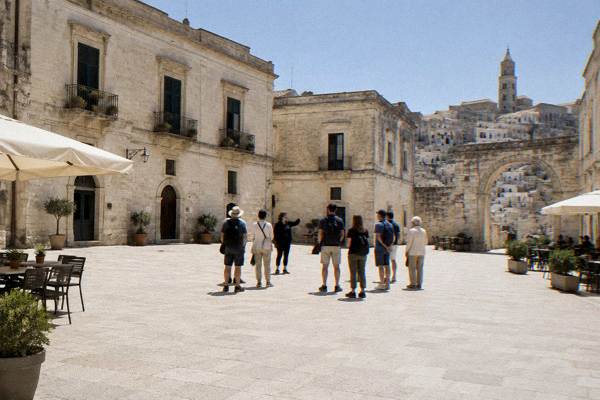
Festa Della Bruna
Every 2 July the city of Matera, in Basilicata, southern Italy, stops for its patronal feast: the Festa della Bruna, a celebration the organisers trace back to 1389, ending with the burning of a triumphal float.
Short answer
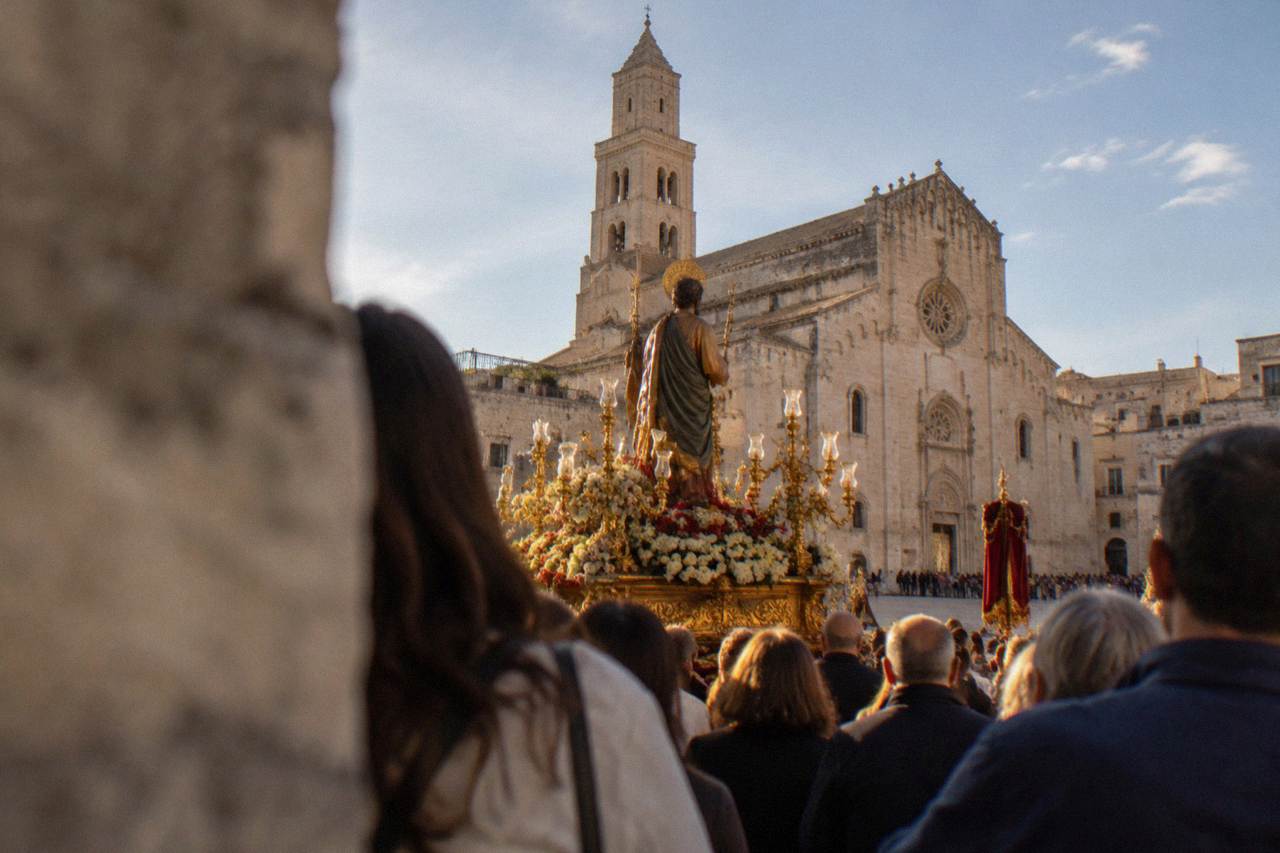
The Festa della Bruna is held every year on 2 July in Matera. The feast honours the Madonna della Bruna, the city's patron, and closes with the evening procession and the burning of the triumphal float in Piazza Vittorio Veneto.
Every 2 July, the inland city of Matera, in the Basilicata region of southern Italy, gives itself over to its patronal feast: the Festa della Bruna, the celebration of the Madonna della Bruna, protector of the city and of the materani. The feast is the one day of the year when the city's own rhythm stops and a fixed liturgy of processions, horsemen and a great painted float takes over the streets. The organisers' own history dates the celebration to 1389, when Pope Urban VI, who had been archbishop of Matera and Acerenza, tied the feast to the Visitation and fixed its date on 2 July. By the organisers' count, 2027 will be the 638th edition.
This guide covers what the feast is, what the day traditionally involves, how the city changes around it, and the practical questions that come with visiting Matera on the busiest single day of its year: transport, the limited traffic zone, where to watch, and where to sleep. The site's editorial desk reports what the official sources say, and where a detail is not confirmed on an official page, it says so.
What Is The Festa Della Bruna In Matera?
The Festa della Bruna is Matera's patronal feast, held every year on 2 July in honour of the Madonna della Bruna, the city's patron saint. The organisers' official history dates the celebration to 1389, when Pope Urban VI tied the feast to the Visitation of Mary and fixed the date, and the 2025 edition was the 636th by their count. The feast's defining acts are the procession of the Madonna's image through the city and the evening destruction by fire of the triumphal float.
The Madonna della Bruna is the patron of Matera, and her feast day doubles as the city's civic celebration. The organisers' history page traces the structured feast to 1389, when Pope Urban VI, who had served as archbishop of Matera and Acerenza, associated the local celebration with the Visitation and set it permanently on 2 July. That date has not moved since, and the organisers count the editions from that year: the 2025 edition was the 636th, and 2027 will be the 638th.
The feast sits inside a city that was inscribed on the UNESCO World Heritage list in 1993 as "The Sassi and the Park of the Rupestrian Churches of Matera", a cave-dwelling landscape of more than a thousand dwellings and rock-hewn churches cut into pale tufa limestone on the edge of the Gravina canyon. For more on that background, the site's history of Matera guide covers the Sassi story from the evacuation between 1952 and the 1970s to the restoration that followed the 1986 law.
One practical consequence of the date deserves attention before anything else: the feast is a citywide event, and the main cultural operator in the Sassi closes for it. Oltre l'Arte, which runs the rupestrian churches of Santa Lucia alle Malve, Madonna de Idris and San Pietro Barisano together with the Cathedral route and several museums, lists 2 July alongside 25 December as the two days when all of its sites close. If the feast is the reason for the trip, plan the church visits for another day.
When Is The Festa Della Bruna Held, And Is The Date Always 2 July?
The Festa della Bruna is always held on 2 July, every year, in Matera. The date was fixed in 1389 and has never moved; the organisers' history page states that Pope Urban VI tied the feast to the Visitation and set the permanent date. The next editions therefore fall on 2 July 2027 and 2 July 2028, with 2027 counted by the organisers as the 638th edition.
The fixed date is the single most useful planning fact about this feast. There is no floating weekend arrangement and no move to the nearest Sunday: the procession and the float happen on 2 July itself, whatever day of the week that is. The organisers' official history page states that the date was fixed in 1389 and that the celebrations have been counted from that year. The call for building the 2027 triumphal float has already been published by the organisers, which confirms the 2027 edition is in preparation, but no programme detail for 2027 beyond the date is confirmed, and this site will not print any.
| Fact | Detail |
|---|---|
| Date | 2 July, every year, fixed since 1389 |
| 2027 edition | 2 July 2027, the 638th by the organisers' count |
| Honoured figure | Madonna della Bruna, patron of Matera |
| 2025 edition | The 636th by the organisers' count |
| Oltre l'Arte sites on 2 July | All closed, as on 25 December |
| Emergency number in Matera | 112, live in the 0835 district since 2 December 2025 |
Early July sits at the start of Matera's high season. The ERA5 reanalysis for Matera, 1991-2020, gives July a mean high of 31.2 C and a mean low of 18.6 C, with 21.2 mm of rain across the month, the driest figure of the year. Yet the APT Basilicata accommodation data shows July 2025 drew 43,966 arrivals, fewer than April, May, June, August, September or October, so the feast day itself, not the month around it, is what fills the city. The site's best time to visit Matera guide breaks the whole year down month by month.
Visitors combining the feast with a wider tour of the region have options that cover both Matera and the Puglian town of Alberobello in a single organised day, with a tour leader handling the travel. The UNESCO Matera and Alberobello day tour with tour leader is one such product; Check availability on the operator's live listing if that structure suits your dates.
What Happens During The Festa Della Bruna Day In Matera?
The feast day traditionally unfolds in stages: a morning procession carries the image of the Madonna della Bruna from the church through the city, the decorated triumphal float is drawn through the streets by horsemen in the afternoon and evening, and the day ends with the float's destruction, the burning of the cart in the main square, followed by fireworks over the Sassi. The organisers describe this sequence as the feast's fixed traditional structure.
The organisers' history describes a day built around the Madonna's image and the carro trionfale, the triumphal float. The float is rebuilt for every edition: the organisers publish a public call for its construction, and the call for the 2027 float is already published on their site. The float is not a permanent object that is rolled out each year; it is constructed, used once, and burned, which is why every edition's float is a new work and why the organisers run a fresh call each time.
The most famous moment of the day is the float's destruction. In the traditional sequence the float is assaulted and torn apart, the "strappata", and then set alight, and the burning cart in the square with the fireworks that follow is the image the feast is known by. This site does not publish a minute-by-minute schedule for the day, because no official source confirms one in advance for a given edition, and the sequence can shift from year to year. Visitors should treat the morning procession, the float's passage and the evening burning as the fixed traditional anchors and confirm the day's running order locally.
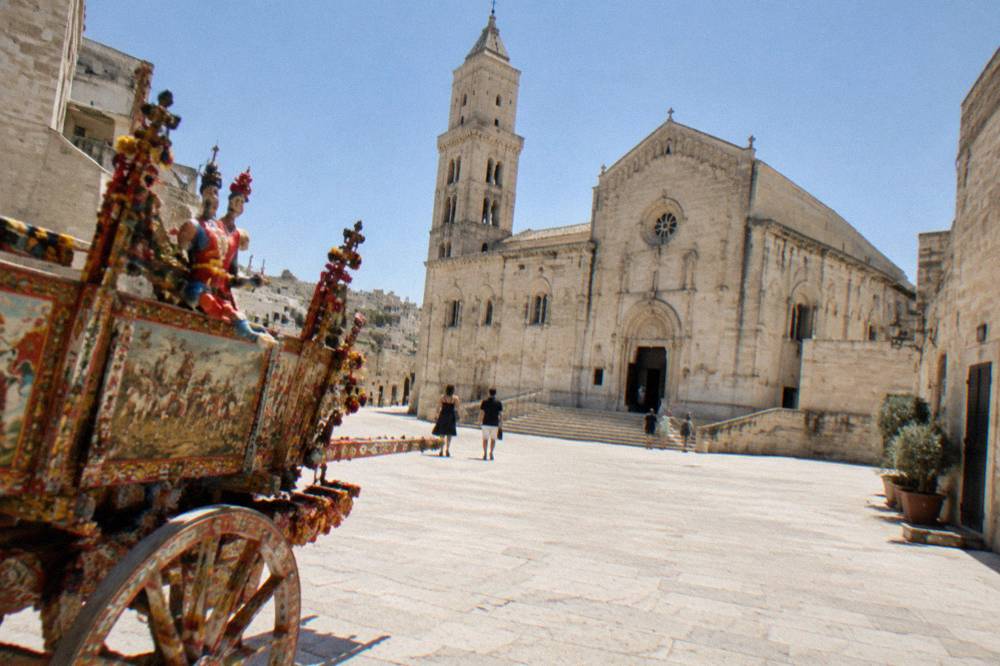
The feast is a civic event, not a ticketed performance. There is no entry fee for the city and no ticket for the procession: the event happens in the streets and squares, and the practical planning questions are about position, timing and transport rather than admission. The one dated ticket fact in the verified pack concerns a different winter event, the Presepe Vivente nei Sassi, whose sixteenth edition charges 12.00 EUR full and 9.00 EUR for ages 10 to 18, with under 10s free; the Bruna has no equivalent published ticket.
A note on scale: the feast draws a very large crowd into a city of 59,368 residents, on streets that are steep, stepped and uneven. The Sassi are not step-free, and the site's accessibility guidance applies doubly on feast day, when the density of people adds to the physical demands. Comfortable closed shoes, water, and a plan for meeting points if a group separates are the standard advice for a day of standing and walking in July heat.
Where To Watch The Procession And The Fireworks In Matera?
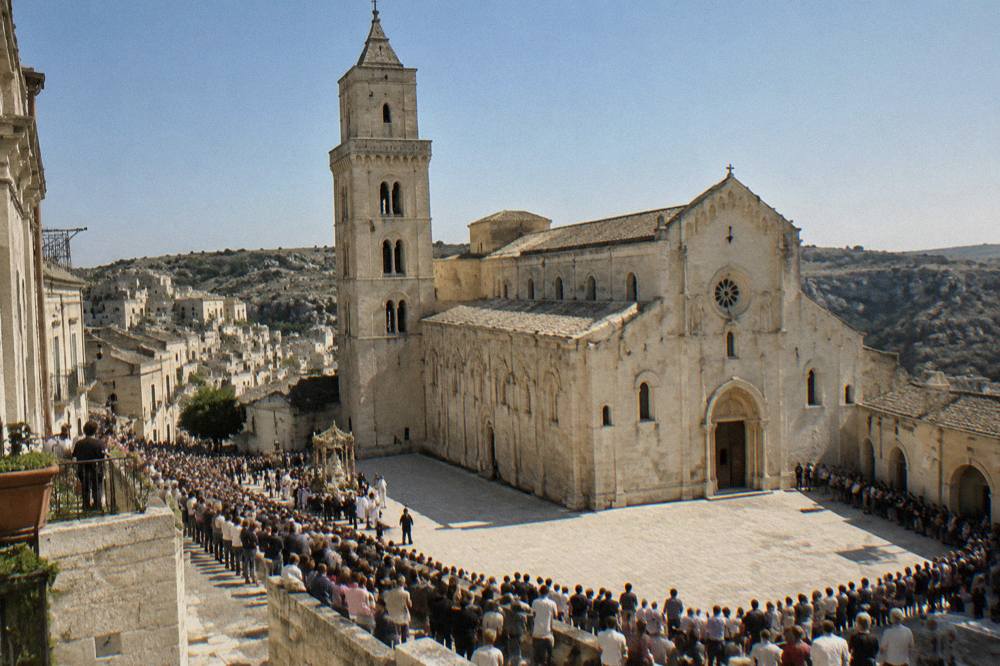
The procession and the float traditionally pass through Matera's historic centre and finish in Piazza Vittorio Veneto, the large square on the Piano that serves as the feast's main stage, and the burning of the float and the fireworks are watched from there and from the viewpoints over the Sassi. The square is closed to vehicles all day under the city's pedestrian-area rules, and the surrounding streets fill early on 2 July.
Piazza Vittorio Veneto is the natural anchor for the day. It is the city's main square on the Piano, the plateau level above the Sassi, and it is where the traditional climax of the feast happens. The comune's traffic rules list both Piazza Vittorio Veneto and Via Ridola as pedestrian areas, closed to vehicles all day, with retractable bollards opening only 04:00 to 08:00 on weekdays for deliveries. On 2 July the square is the densest point of the day, and arriving early is the ordinary advice. Other pages covering the same trip are gathered on Matera Travel Guide.
The alternative is height. Matera's viewpoints over the Gravina canyon and the Sassi, including the Belvedere Murgia Timone on the opposite plateau, give a panorama rather than a close view. The park side of the canyon is managed: the Jazzo Gattini visitor centre has been the park's info point and ticket office since 6 February 2026, and it controls access towards Murgia Timone. The site's Parco della Murgia Materana attraction guide covers the park, and the Matera viewpoints guide is not in this page's link set, so use the park guide and the photography advice below.
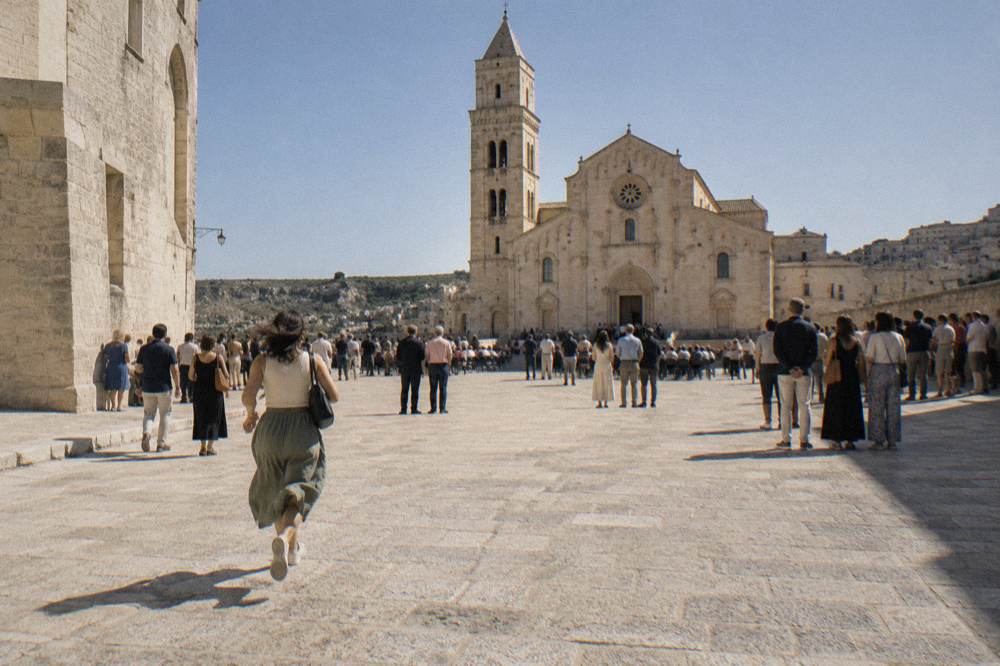
For photographers, the feast is one of the two or three best days of the Matera year, alongside the everyday sunset shots described in the site's Matera at night guide. The burning float in the square and the fireworks over the cave quarters are the two signature frames. The practical warnings are the same as for any dense night crowd: keep the camera gear minimal, and do not count on moving quickly through the Sassi lanes once the crowd has formed.
A quieter way to see the canyon side of the city on the days around the feast is the sunset walk to the Belvedere Murgia Timone with transfer included, a guided outdoor option that covers the panorama without the logistics of reaching the plateau alone.
How Do You Get To Matera For The Festa Della Bruna?
Matera has no Trenitalia station: the rail operator is FAL, and from Bari the posted weekday timetable involves a change at Altamura with a journey of about 1 h 45 to 2 h, while on Sundays and public holidays no trains run at all and FAL operates replacement buses only. From Bari Airport the drive is 64 km, about 1 hour free-flow, and the city applies a limited traffic zone that is strictly enforced on feast days.
The rail facts matter more than usual on 2 July. FAL's posted weekday timetable shows departures from Bari Centrale with a change at Altamura and a journey of about 1 h 45 to 2 h to Matera Centrale; the site's Bari to Matera guide gives the detail, and FAL's timetable page is the live source for current times. On Sundays and public holidays there are no trains: FAL runs replacement buses, with the festive sheet showing 8 arrivals at and 8 departures from Matera Stazione Centrale FAL. FAL also publishes service notices when the programme changes, and the site's how to get to Matera guide pulls the routes together.
| Route | Verified detail |
|---|---|
| Bari Centrale to Matera Centrale, weekdays | FAL rail, change at Altamura, about 1 h 45 to 2 h |
| Sundays and public holidays | No trains; FAL replacement buses, 8 arrivals and 8 departures at Matera Centrale |
| FAL fare, Bari to Matera | Fare band 70 in the 2026 matrix; euro price not printed on this site |
| Bari Airport to Matera by road | 64 km, about 1 hour free-flow driving |
| Bari Airport shuttle | Not verified on an official page; confirm before relying on it |
| National rail link | Ferrandina to Matera La Martella line under construction, activation planned for 2028 |
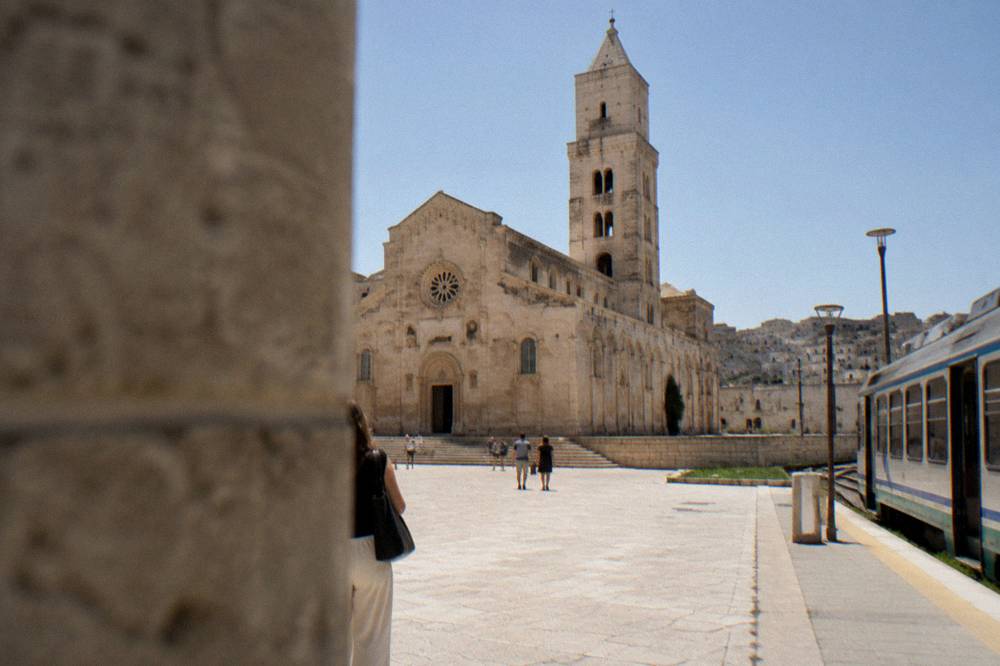
Driving has a specific warning attached. Matera's limited traffic zones are camera-enforced, and the hours are published by the comune: the ZTL Sassi cameras run 10:00 to 20:30 from 16 September to 30 June, and 10:00 to 24:00 from 1 July to 15 September, which means the feast day sits inside the stricter summer window. The ZTL Centro around Via Duomo and Piazza Sedile is active 24 hours a day, every day. The site's Matera ZTL guide and Matera parking guide cover the zones and the practical parking questions, and the advice for 2 July is simple: park outside the restricted perimeter and walk in, because the feast crowds and the enforcement cameras are both guaranteed.
The airport questions have their own pages: Bari Airport to Matera for the nearest major airport, Rome to Matera and Naples to Matera for the long-haul arrivals, and Matera airport for the city's own small airfield. On the feast day itself, whatever the arrival route, the last kilometres are on foot.
Where Should You Stay In Matera During The Festa Della Bruna?
Book early and expect high occupancy: 2 July falls at the start of the peak season, and the APT Basilicata data shows the city's registered accommodation logged 479,083 arrivals across 2025 with an average stay of 1.56 nights, so rooms in the Sassi and on the Piano fill far in advance of the feast. Staying inside the Sassi puts you inside the feast's streets; staying on the Piano or outside the ZTL makes arrival and departure simpler.
The stay decision on feast night is a genuine trade-off. A cave hotel inside the Sassi means the processions and the crowd are outside the door, and the walk back after the fireworks is a climb up stepped lanes through the densest hour of the year. A hotel on the Piano level, around Piazza Vittorio Veneto and Via Ridola, keeps the evening flat and short. The site's where to stay in Matera guide maps the quarters, and the Matera cave hotels guide and Sassi di Matera hotels guide cover the two signature accommodation styles.
| Stay option | What the verified facts say |
|---|---|
| Cave hotel in the Sassi | Inside the feast's streets; steep stepped access, not step-free |
| Hotel on the Piano | Flat walking to Piazza Vittorio Veneto, the feast's main square |
| Accommodation with a car | Park outside the ZTL perimeter; cameras run 10:00 to 24:00 in the summer window |
| Tourist tax | Charged by the accommodation; the amount is confirmed at booking |
| Average stay in Matera, 2025 | 1.56 nights per guest, APT Basilicata data |
Two practical cautions complete the picture. First, the tourist tax exists and is collected by the accommodation, but its rate is not published on this site because no official tariff page could be verified; confirm the amount at booking. Second, the feast is a single night, and the APT data shows the city's guests average 1.56 nights per stay, so the accommodation around 2 July turns over quickly. Anyone wanting both the feast and a proper look at the Sassi should add a second night, which the site's two days in Matera itinerary is built for.
What Is Open And Closed In Matera On 2 July?
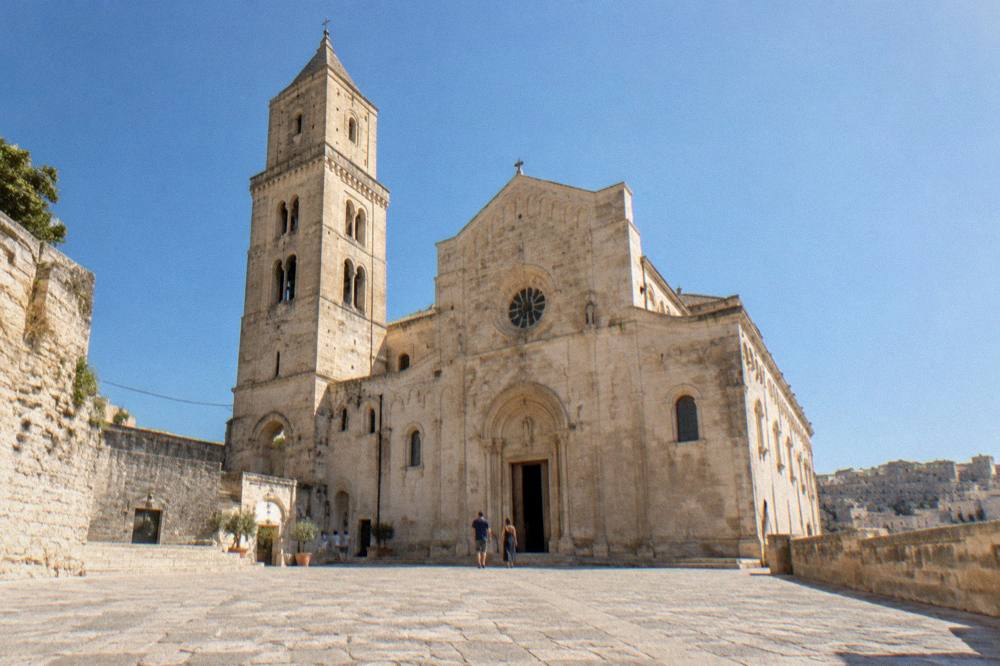
All of Oltre l'Arte's sites close on 2 July, the operator's own ticket page confirms, including the three rupestrian churches of Santa Lucia alle Malve, Madonna de Idris and San Pietro Barisano, the Cathedral route with the MATA museum, the Antica Casa Grotta in Via Fiorentini, Vicinato a Pozzo, the Museo del Pane and the Chiesa del Purgatorio exhibition. The feast itself, in the streets, has no ticket and no entry fee.
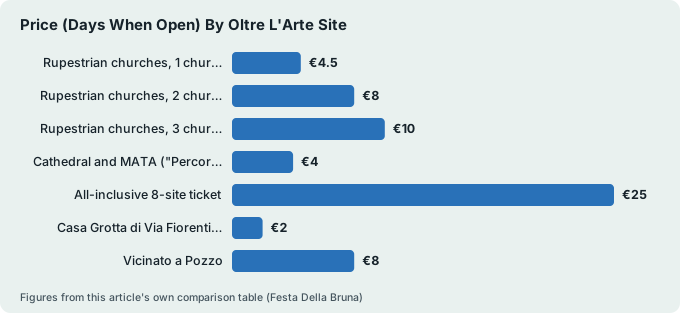
The closure list is worth planning around, because the closed sites are the ones many visitors come to see. The operator's ticket page lists the two closing days for all its sites as 25 December and 2 July, and the rupestrian churches otherwise run daily from 28 March 2026, with Santa Lucia alle Malve and Madonna de Idris open 09:30 to 19:30 and San Pietro Barisano 10:00 to 19:00. The ticket prices for the other 363 days are in the table below.
| Oltre l'Arte site | Price (days when open) | Hours |
|---|---|---|
| Rupestrian churches, 1 church | 4.50 EUR | Daily, from 28 March 2026 |
| Rupestrian churches, 2 churches | 8.00 EUR | Daily |
| Rupestrian churches, 3 churches | 10.00 EUR | Daily |
| Cathedral and MATA ("Percorso Culturale") | 4.00 EUR | Daily 09:00 to 19:00 |
| All-inclusive 8-site ticket | 25.00 EUR (reduced 16.00 EUR) | All eight sites |
| Casa Grotta di Via Fiorentini | 2.00 EUR | Daily 09:00 to 19:00 |
| Vicinato a Pozzo | 8.00 EUR | Daily 09:30 to 19:00 |
The rest of the city's sightseeing continues around the feast. The Storica Casa Grotta di Vico Solitario, the reconstructed cave house in the Sasso Caveoso, charges 8.00 EUR full under the tariff in force from 4 April 2026, and its summer hours run daily 09:00 to 20:30 in July and August. MUSMA, the sculpture museum in the Sasso Caveoso, charges 10 EUR full and opens 10:00 to 20:00 from April to September. The full sightseeing picture, with the cave houses, churches and museums, is laid out in the site's things to do in Matera collection, and the Sassi di Matera guide covers the two cave quarters street by street.
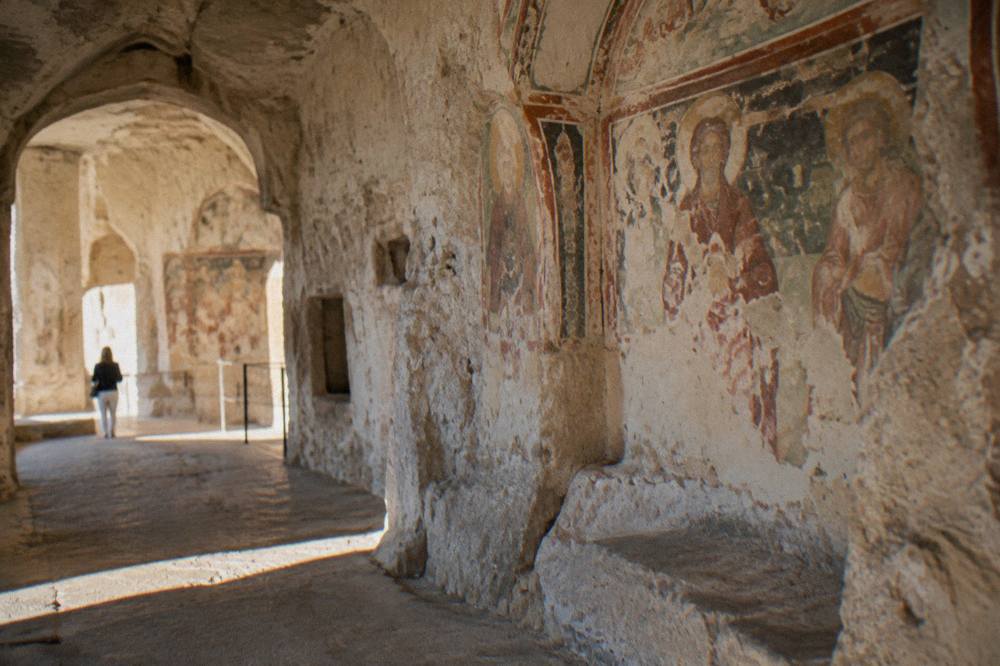
For visitors using the feast as the anchor of a longer stay, the surrounding days fill easily. The Matera Film Festival runs 7 to 15 November 2026 in its seventh edition for anyone travelling later in the year, and the Presepe Vivente nei Sassi, the living nativity in the cave quarter, has public days across December 2026 and 2 to 3 January 2027. Neither belongs to July, but both show the same pattern as the Bruna: a city that stages itself.
What Should You Know Before Going To Matera For The Feast?
Bring closed comfortable shoes and sun protection: the ERA5 reanalysis for Matera, 1991-2020, gives July a mean high of 31.2 C with a mean low of 18.6 C and only 21.2 mm of rain, the driest month of the year, and the feast is spent standing and walking on steep, stepped, uneven stone. The emergency number in Matera is 112, and the feast crowd means the Sassi lanes should be treated as slow-moving after dark.
The climate figures deserve their label: they are ERA5 reanalysis values, 1991-2020, a modelled grid cell for Matera, not a weather-station record. July's mean high of 31.2 C is the same as August's 31.3 C, and the reanalysis counts about 19.4 days reaching 30 C in July. The feast day is a full day outdoors, so the packing advice in the site's Matera weather guide applies: light clothing for the afternoon, something for the evening, and water.
| July in Matera | ERA5 reanalysis, 1991-2020 |
|---|---|
| Mean high | 31.2 C |
| Mean low | 18.6 C |
| Rain | 21.2 mm, the driest month of the year |
| Rain days (1 mm or more) | 4.4 |
| Arrivals, July 2025 | 43,966 guests in registered accommodation |
Safety is the ordinary city-scale advice. Matera is a small city of 59,368 residents, and the feast crowd is dense but local. The emergency number is 112, the single European number, live in the Matera 0835 district since 2 December 2025, free, with automatic location and multilingual support. Pickpocket-scale precautions for a dense crowd are the standard ones anywhere; the site's safety coverage sits in the blog answers, and no feast-specific incident pattern is confirmed on any official page, so none is claimed here.
Eating on feast day needs a plan, because the restaurants around the procession route are the busiest in the city on that date. The site's best restaurants in Matera guide and what to eat in Matera guide cover the table options, and the pane di Matera guide covers the city's PGI-registered bread, registered in 2008. A feast-day tip that costs nothing: eat early or eat late, because the middle of the day belongs to the procession.
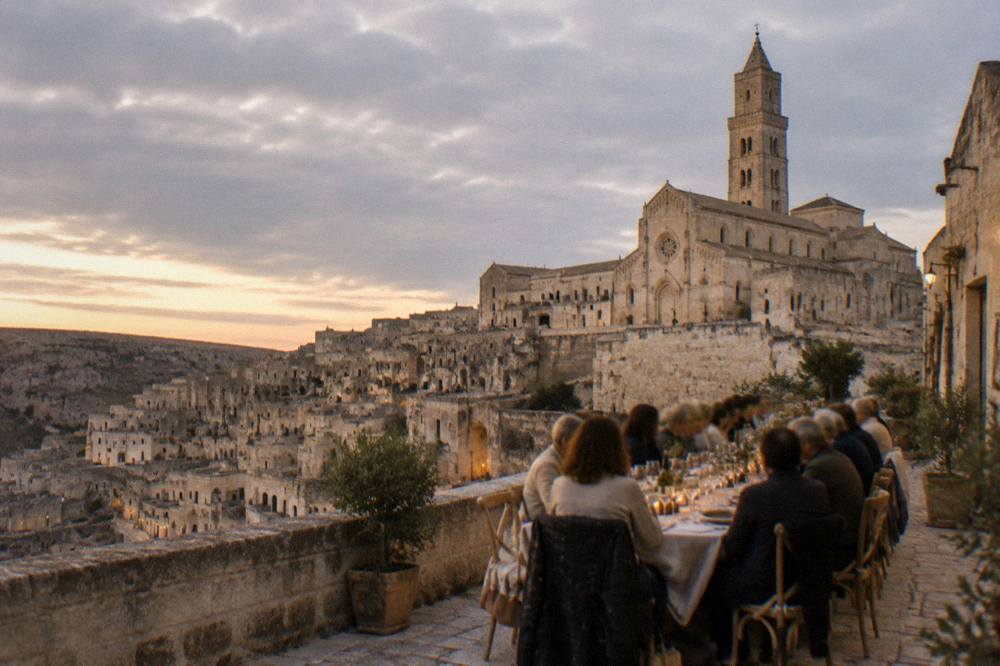
For travellers who want the region around the feast rather than only the city, the organised day trips from the roster pair Matera with Alberobello, the trulli town 68 km away in Puglia, or take the route further with e-bikes and tastings. The three options below are the ones this page's planning is built around.
Common Questions About The Festa Della Bruna
When is the Festa della Bruna in Matera?
Every year on 2 July, without exception. The organisers' history states the date was fixed in 1389 by Pope Urban VI, and the 2027 edition falls on 2 July 2027, the 638th by their count.
Is there a ticket for the Festa della Bruna?
No. The feast takes place in the streets and squares of Matera and has no entry fee or ticket. The city's museums and churches have their own admissions on other days, and Oltre l'Arte closes all of its sites on 2 July.
What is the burning of the float at the Festa della Bruna?
The triumphal float, the carro trionfale, is built fresh for each edition and, in the feast's traditional climax, is torn apart and burned in the evening, followed by fireworks. The organisers publish a call for the construction of each year's float, including the 2027 one.
Is Matera crowded on 2 July?
Yes. The feast is the city's biggest day, and July 2025 logged 43,966 arrivals in registered accommodation per the APT Basilicata data, with the feast crowd filling the historic centre on the day itself. Arrive early for a good position in Piazza Vittorio Veneto.
Do trains run to Matera on the feast day?
On weekdays, FAL runs from Bari Centrale with a change at Altamura, about 1 h 45 to 2 h. On Sundays and public holidays no trains run and FAL operates replacement buses only. Check FAL's timetable page for the live times on your travel date.
Can you drive into Matera on 2 July?
The limited traffic zones are camera-enforced, and the ZTL Sassi cameras run 10:00 to 24:00 in the summer window from 1 July to 15 September. Park outside the restricted perimeter and walk in; the site's Matera ZTL and parking guides cover the detail.
The Festa della Bruna is the one day when Matera's calendar, its streets and its patron all converge on a single evening in Piazza Vittorio Veneto, and the 2 July date means every trip can be planned years ahead: the feast will be there, on the same day, for the 638th time in 2027.