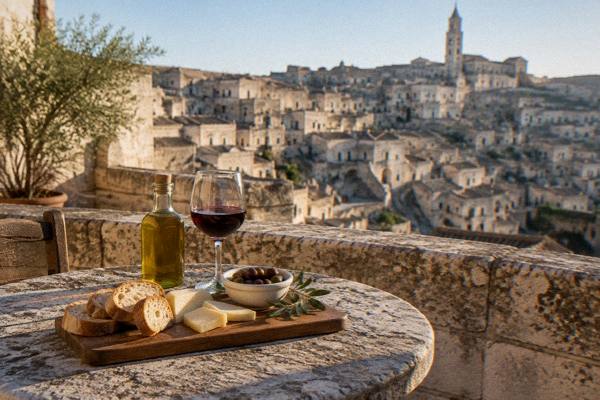
Matera In One Day
One day is enough to walk both Sassi districts, enter a cave house, visit a rock church and watch the canyon light up at dusk. This itinerary sets the order.
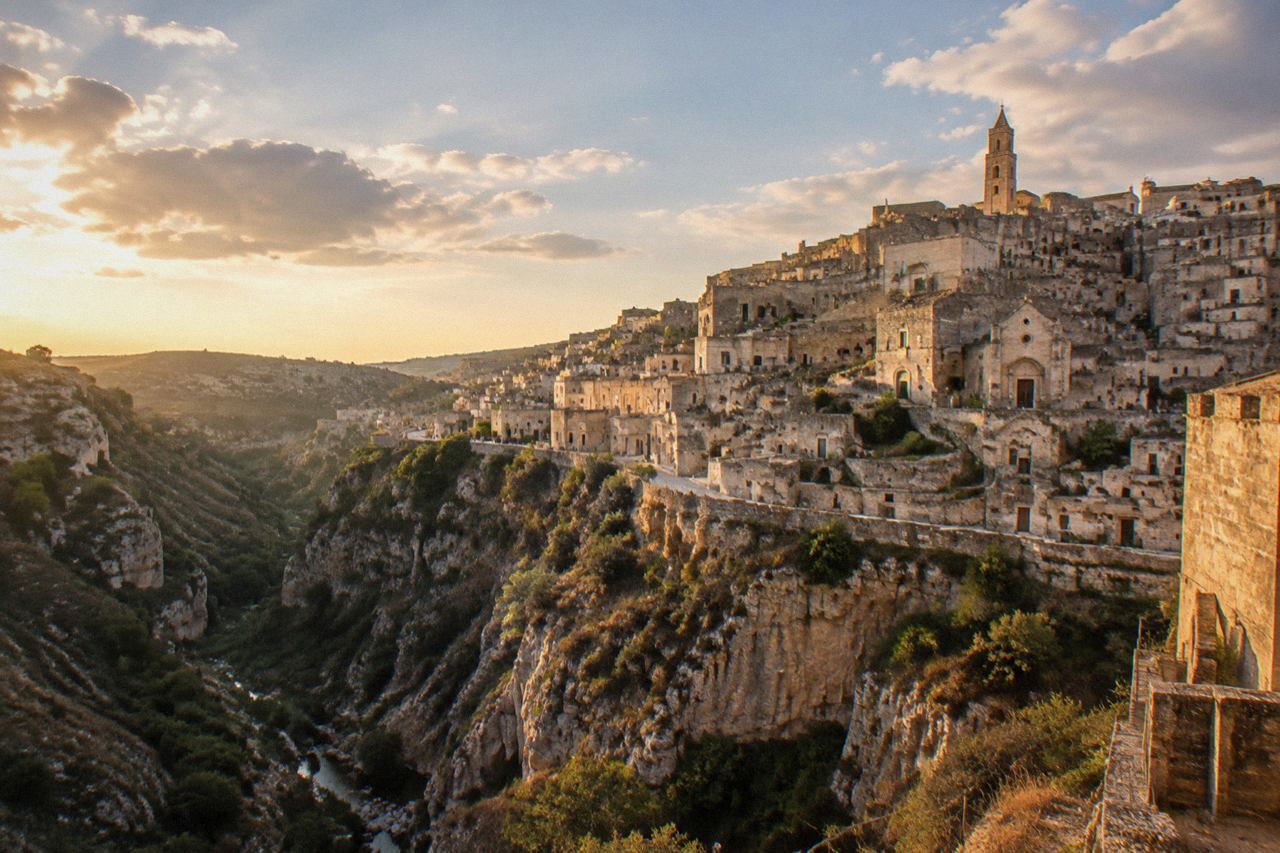
Short answer
Start at Piazza Vittorio Veneto, walk down into Sasso Caveoso in the morning, enter the Casa Grotta di Vico Solitario and one rupestrian church, cross into Sasso Barisano after lunch, and end on the Murgia side or a belvedere for sunset. The Sassi are steep, so plan three or four hours of walking and wear solid shoes.
Matera, in Basilicata in southern Italy, is an inland city of about 400 m above sea level on the edge of the Gravina canyon, and one well-planned day covers its core: the two cave districts of Sasso Caveoso and Sasso Barisano, a rock-hewn church, a furnished cave house and at least one panorama across the ravine. The city logged 479,083 guest arrivals in registered accommodation in 2025, an APT Basilicata count, and the average stay works out at 1.56 nights, so a single day is the norm rather than the exception. The catch is terrain: the Sassi are steep, stepped and uneven, and the distance between the highest and lowest points of a sensible route is measured in staircases, not flat metres.
This itinerary sets an order that puts the hardest climbing in the morning and the viewpoints at the end, when the pale tufa stone catches the low sun. Every price below comes from an operator's own posted tariff; anything the site could not verify is flagged as confirm-at-booking rather than guessed. For the wider list of sights, see things to do in Matera.
What Does One Day In Matera Look Like, Hour By Hour?
A realistic single day runs from about 09:00 to 20:00 in summer and 09:00 to 17:30 in winter, with the morning in Sasso Caveoso, lunch on the plateau, the early afternoon in Sasso Barisano and the last hour at a viewpoint. The fixed anchors are the Casa Grotta di Vico Solitario, one or more rupestrian churches, the Cathedral ridge and a belvedere facing the Sassi. Everything sits within walking distance of Piazza Vittorio Veneto, the flat hub where buses and taxis arrive.
The reason to start in Caveoso rather than Barisano is simple: Caveoso holds the deepest cave architecture and the two churches most often open, and descending into it early means the climb back up happens before the midday heat. Oltre l'Arte's ticket page lists Madonna de Idris and Santa Lucia alle Malve open daily 09:30 to 19:30 from 28 March 2026, with San Pietro Barisano from 10:00 to 19:00, so a 09:30 start at the first church fits the posted hours exactly.
The hour-by-hour frame below assumes a summer day. In winter, shift everything one hour earlier and finish before dark.
| Time | Where | What happens |
|---|---|---|
| 09:00 | Piazza Vittorio Veneto | Coffee on the flat plateau, orientation over the Sassi edge |
| 09:30 | Sasso Caveoso | Madonna de Idris or Santa Lucia alle Malve, then the lanes |
| 11:00 | Vico Solitario | Casa Grotta di Vico Solitario cave house visit |
| 12:30 | Piazza San Pietro Caveoso | Lunch or picnic with a view down the Gravina |
| 14:00 | Civita and Cathedral | Cathedral exterior, ridge walk, Palazzo Lanfranchi area |
| 15:30 | Sasso Barisano | Barisano lanes, San Pietro Barisano church if not yet seen |
| 17:00 | Belvedere or Murgia side | Panorama hour as the light drops |
| 19:30 | Dinner | Cave restaurant or plateau trattoria |
Two warnings shape the whole day. First, the ZTL: the Sassi gates run cameras from 10:00 to 20:30 between 16 September and 30 June, and from 10:00 to 24:00 from 1 July to 15 September, so a car is a liability in the middle of the day. Second, the Museo Ridola has been closed since 7 April 2025 and has no published reopening date, so it stays off the itinerary no matter what an older guide says.
Where Should The Morning In Matera Start?
The morning belongs to Sasso Caveoso, entered from Piazza Vittorio Veneto down towards Piazza San Pietro Caveoso, with the first stop at a rupestrian church and the second at the Casa Grotta di Vico Solitario. Oltre l'Arte's ticket page lists one church at 4.50 EUR, two at 8.00 EUR and three at 10.00 EUR, while the cave house posts 8.00 EUR full on its tariff in force from 4 April 2026. Doing both costs under 20 EUR per person at posted rates.
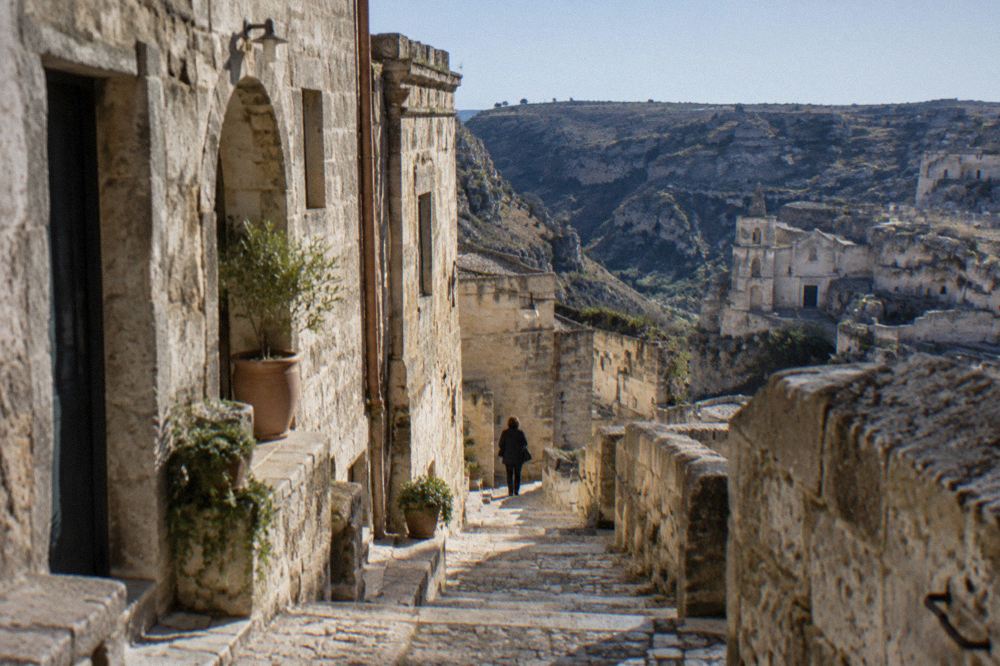
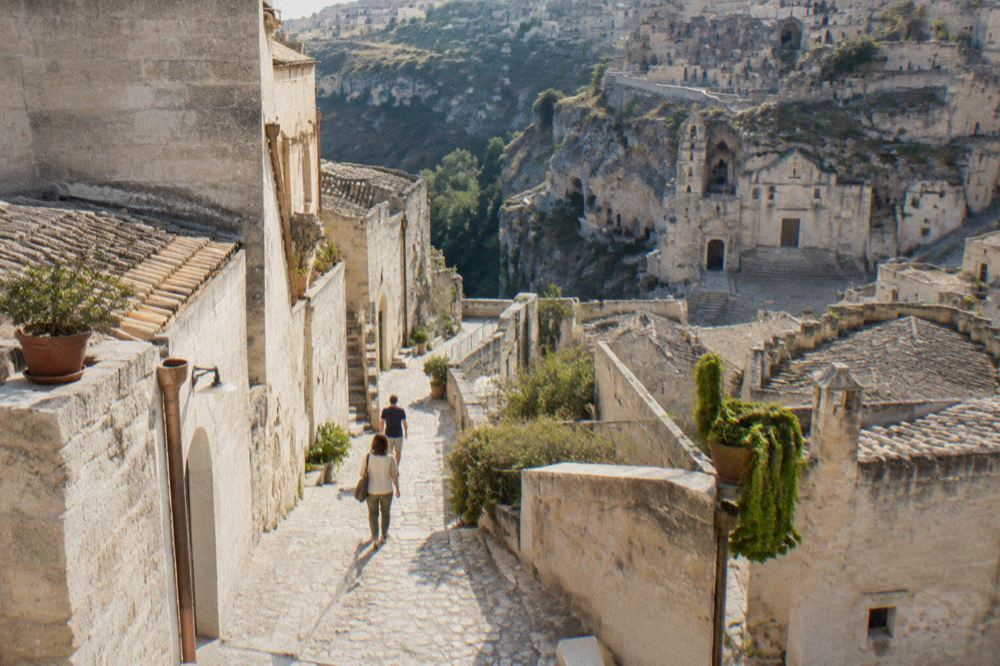
The descent into Caveoso is the single most photogenic walk in the city, and it takes under half an hour without stops. The lanes drop past stone facades that are houses in front and caves behind, a building logic the Sassi di Matera district page explains in detail. Madonna de Idris, cut into the rock above the Monterrone hill, and Santa Lucia alle Malve, a former female monastic complex, are the two churches most often open, and both keep daily hours from 09:30 in the posted summer season.
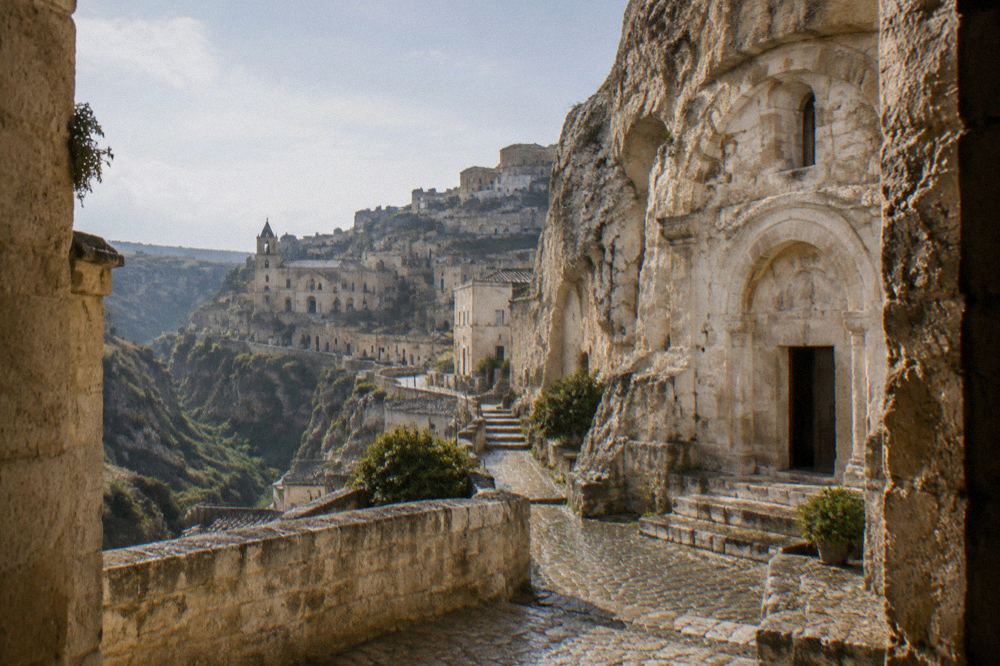
The Casa Grotta di Vico Solitario, a furnished cave dwelling preserved as it was lived in, is the stop that explains everything else. Its ticket covers four spaces: the cave house itself, the Neviera ice store, a natural cave and the rock church of Sant'Agostino al Casalnuovo. The casa grotta's own page carries the full tariff and seasonal hours, and the posted last entry is 20 minutes before closing.
A guided walk compresses this whole morning into a single booking, and the related tour on this site, Casa Grotta and Rock Church Entry, covers entry to a cave house and rock-cut churches with a guide. Check availability if the morning hours matter, since guided slots set their own meeting times.
Anyone with a spare half hour before lunch should walk out to the terrace at Piazza San Pietro Caveoso and look across the Gravina at the Murgia plateau. The park opposite counts about 8,000 hectares by its own measure and holds the rock churches that gave the UNESCO site, inscribed in 1993, its full name: the Sassi and the Park of the Rupestrian Churches of Matera.
Where Should Lunch And The Early Afternoon In Matera Go?
Lunch works best on the plateau around Piazza Vittorio Veneto or in a cave restaurant in the Sassi, and the early afternoon belongs to the Civita ridge and the Cathedral, followed by Sasso Barisano. The Cathedral and the MATA diocesan museum share a 4.00 EUR ticket on Oltre l'Arte's posted tariff, open daily 09:00 to 19:00 with a pause for worship on Sunday mornings. Barisano needs two unhurried hours for its lanes and its church.
The Civita, the oldest part of the built city, sits on the ridge between the two Sassi districts, and the Cathedral of Santa Maria della Bruna stands at its high point. Its Romanesque facade faces the Murgia, and the view from the apse side looks straight down into Caveoso. The cathedral page covers the interior and the diocesan museum route.
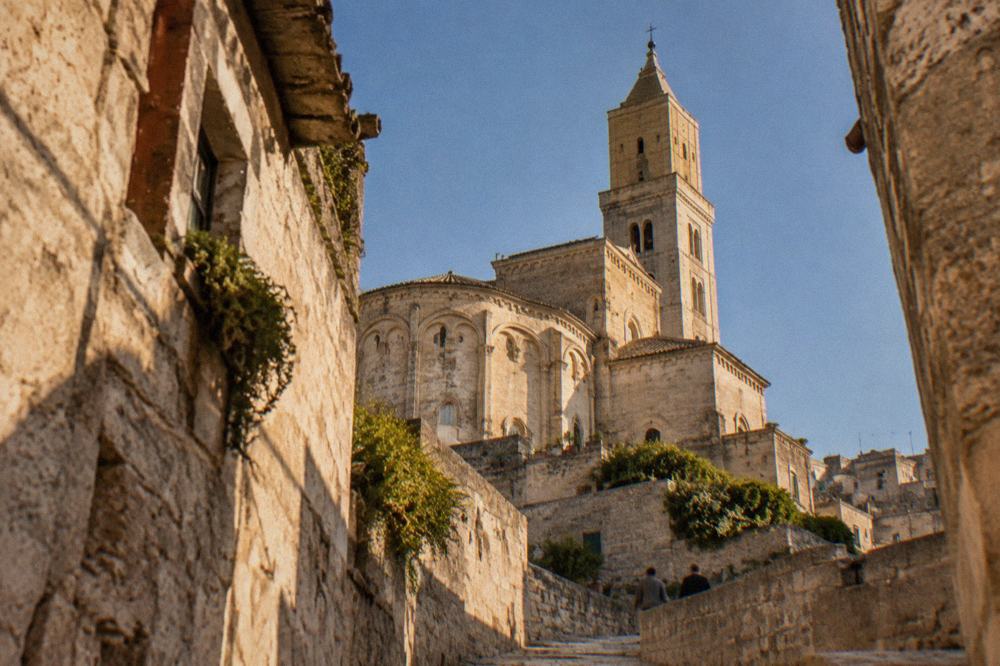
Sasso Barisano, north of the Civita, is the gentler of the two districts: more restored facades, fewer raw cave mouths, and the restored San Pietro Barisano, the largest rupestrian church in the city. The Sasso Barisano area page maps the lanes. If the morning already covered two churches, the third at the posted 10.00 EUR combined rate fits the afternoon budget.
A short detour on the plateau is the Palazzo Lanfranchi, home of the Museo Nazionale di Matera, open Monday to Sunday 09:00 to 20:00 at 10.00 EUR per site, or 15.00 EUR cumulative across all its sites over two days, with under 18s free. The museum's own site carries a works notice for the palace while it stays open. Casa Noha, the FAI interpretation centre in Recinto Cavone, is a useful orientation stop, though it is closed 5 to 22 October 2026 for renovation, and its posted tariff is 6.50 EUR for adults when open. The rest of the planning pages sit on Matera Travel Guide.
Where Are The Best Views Over The Sassi At Sunset?
The classic panorama is from the Murgia side of the Gravina, reached on foot via the path network from Jazzo Gattini, or from a city-side belvedere if the crossing is too much for one day. The park opened a staffed visitor centre at Jazzo Gattini on 6 February 2026 with an info point and ticket office, and the Belvedere Murgia Timone trail starts there. From the city side, the terrace near Santa Lucia alle Malve and the edge of Piazza Vittorio Veneto both frame the Sassi against the ravine.
The Murgia crossing is the one excursion in this itinerary that involves unpaved ground, and it is the payoff shot: the whole Sassi face in one frame, with the canyon below. The Parco della Murgia Materana page covers the trails. Note that the suspension bridge over the Gravina, on Sentiero 406, has had a staffed access point and an online access ticket since March 2026; the park's ticket page shows seasonal rates but the price is not settled, so confirm at the park's own site rather than trusting a figure printed elsewhere.
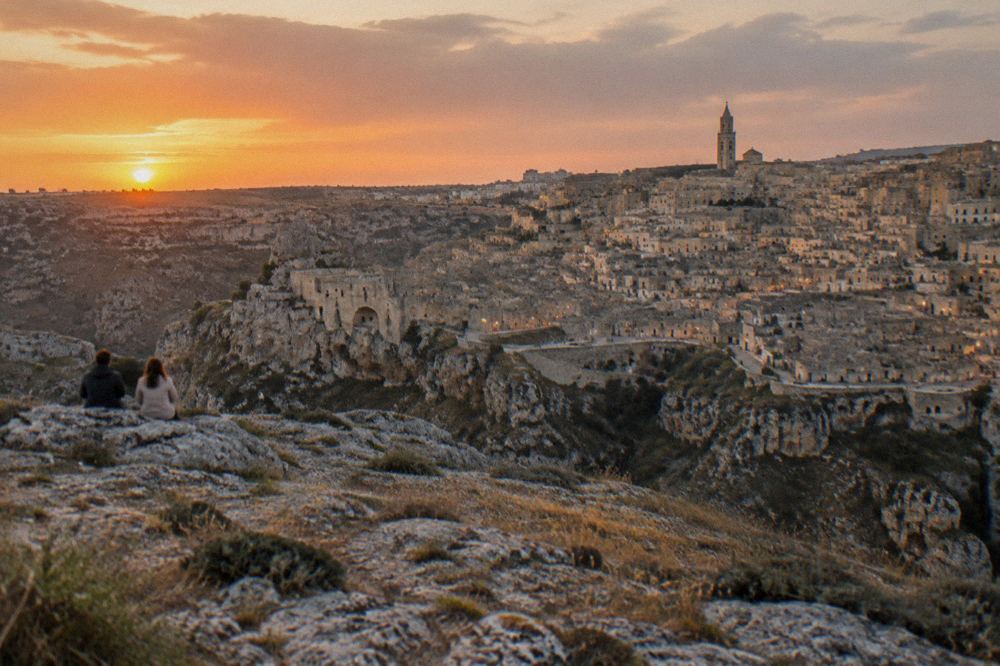
For a lighter evening, a guided sunset walk handles the transfer and the timing. Check availability on the sunset option, or read the Murgia Park sunset walk tour page first.
Back in the city, dinner in a cave restaurant is the natural close. The best restaurants in Matera guide lists where to eat, and the cave restaurants page covers the restaurants set inside former grottoes. Book ahead in September: the APT data shows 61,630 arrivals that month in 2025, the year's peak, ahead of August's 60,257.
What Does One Day In Matera Cost?
A one-day visit on posted tariffs costs about 20 to 30 EUR per person in attraction tickets, plus meals, plus the tourist tax if staying a night, an amount confirmed only at booking. The posted prices are 8.00 EUR for the Casa Grotta di Vico Solitario, 4.50 to 10.00 EUR for one to three rupestrian churches, 4.00 EUR for the Cathedral route, 10.00 EUR for MUSMA and 10.00 EUR for the Museo Nazionale per site.
A guided walk adds a per-person fee that renders on the booking page, not on this page.
The table below lists the posted 2026 tariffs a one-day visitor is most likely to touch. Anything without a verified price, such as the Palombaro Lungo, the Crypt of the Original Sin or the Sentiero 406 access ticket, is left out rather than estimated.
| Sight | Posted price | Source detail |
|---|---|---|
| Casa Grotta di Vico Solitario | 8.00 EUR full, 5.00 reduced, 3.00 ages 11 to 18 | Tariff in force from 4 April 2026 |
| Rupestrian churches (Oltre l'Arte) | 4.50 / 8.00 / 10.00 EUR for 1 / 2 / 3 churches | Posted 2026 ticket page |
| Cathedral and MATA | 4.00 EUR | Daily 09:00 to 19:00 |
| Oltre l'Arte 8-site all-inclusive | 25.00 EUR, reduced 16.00 EUR | Covers churches, cave houses, MATA, bread museum |
| MUSMA | 10 EUR full, 5 or 7 EUR reduced | Sculpture museum in Sasso Caveoso |
| Museo Nazionale di Matera | 10.00 EUR per site, 15.00 EUR cumulative 2 days | Under 18 free |
| Casa Noha | 6.50 EUR adults, 3 EUR children | Closed Wednesdays, and 5 to 22 October 2026 |
Two structural savings matter. The Oltre l'Arte all-inclusive at 25.00 EUR beats buying its eight sites separately, but one day rarely fits eight sites, so count honestly before buying. The Museo Nazionale cumulative at 15.00 EUR only pays off with two sites over two days, which is a two-day itinerary decision, not a one-day one.
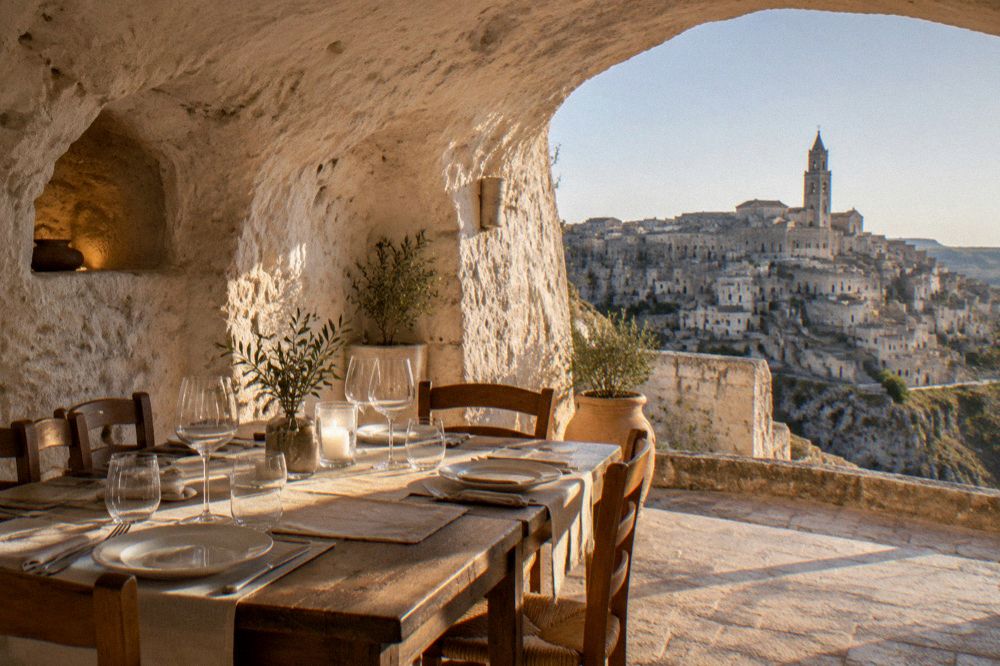
Meals are the open variable. The travel costs guide breaks down a day's spending, and the what to eat in Matera page lists the dishes worth ordering, starting with the PGI-registered pane di Matera bread.
Can You Do Matera In One Day Without A Car?
Yes, and a car is a hindrance for most of the day: the Sassi gates run ZTL cameras from 10:00 to 20:30 between 16 September and 30 June and from 10:00 to 24:00 in the summer window, Piazza Vittorio Veneto and Via Ridola are pedestrianised all day, and every stop on this itinerary is walkable. A car only earns its keep for the Crypt of the Original Sin, 13 km away by road, or a coastal day trip. The city centre needs legs, not wheels.
The ZTL rules come from the comune's own camera-hours notice, and the Matera parking guide and ZTL guide explain where to leave a car legally. No official car park tariff could be verified, so the site prints none: expect to pay, and check the meter.
Arriving without a car, the rail route from Bari runs on FAL, not Trenitalia, with a change at Altamura and about 1 h 45 to 2 h of journey time; there are no trains on Sundays and public holidays, when FAL runs replacement buses. The Bari to Matera and how to get to Matera pages carry the detail, and FAL's own timetable page is the only source for live times.
For anyone who wants the day's walking compressed, a panoramic vehicle tour covers the viewpoints without the staircases. Check availability on the tuk-tuk panorama option.
If the staircases feel like too much for one day, book an Ape Calessino panoramic tour here.
What If It Rains, Or The Day Runs Short?
Rain changes the balance, not the plan: the rupestrian churches and cave houses are indoors by nature, MUSMA and the Museo Nazionale at Palazzo Lanfranchi are covered, and the Matera rainy day itinerary swaps viewpoints for interiors. The Sassi lanes drain poorly and the steps get slippery, so wet days call for slower walking and a later start. November is the wettest month in the ERA5 1991-2020 reanalysis at 67.1 mm, against July's 21.2 mm.
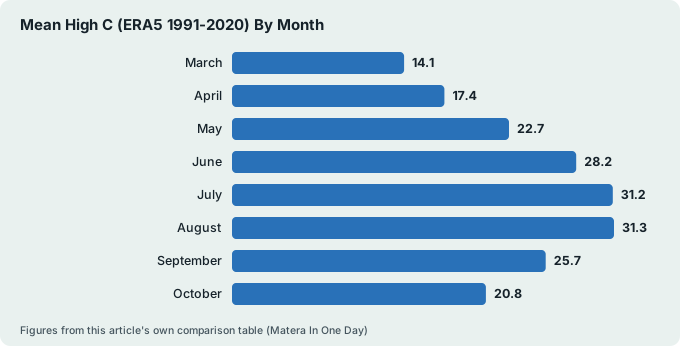
The climate table shows why the shoulder months suit a one-day push: April, May and October combine moderate mean highs of 17.4, 22.7 and 20.8 C with the months either side of the September arrival peak.
| Month | Mean high C (ERA5 1991-2020) | Rain mm | Arrivals 2025 (APT) |
|---|---|---|---|
| March | 14.1 | 59.2 | 23,629 |
| April | 17.4 | 56.5 | 45,195 |
| May | 22.7 | 41.7 | 54,101 |
| June | 28.2 | 35.1 | 50,186 |
| July | 31.2 | 21.2 | 43,966 |
| August | 31.3 | 21.7 | 60,257 |
| September | 25.7 | 44.8 | 61,630 |
| October | 20.8 | 51.7 | 52,538 |
July is the instructive row: a mean high of 31.2 C, essentially August's 31.3 C, yet only 43,966 arrivals against September's 61,630. The crowd comes when the heat drops. A one-day visit in July should invert this itinerary, doing viewpoints before 10:00 and churches in the heat of the afternoon.
If the day runs short, cut Barisano before Caveoso, and cut the Murgia crossing before anything inside the Sassi. A food-and-walk combination can also rescue a compressed afternoon: Check availability on the full Sassi tour with tasting.
Common Questions About One Day In Matera
Is one day enough for Matera?
One day covers both Sassi districts, one or two rupestrian churches, a cave house, the Cathedral ridge and a sunset viewpoint. It does not cover the Murgia trails in depth, the Crypt of the Original Sin or more than one museum. The APT data shows the average stay in 2025 was 1.56 nights, so most guests are effectively on a one-day plan already.
What is the best month for a one-day visit to Matera?
April, May, early June and October, on the ERA5 1991-2020 reanalysis: mean highs between 17.4 and 28.2 C and rain below 57 mm a month. September is the busiest month by arrivals, 61,630 in 2025, so book ahead then.
Can you walk everywhere in Matera in one day?
Yes, the whole core is walkable from Piazza Vittorio Veneto, but the Sassi are steep, stepped and uneven, and no named route is step-free. Solid shoes matter more than in almost any other Italian city.
Do you need a guide for one day in Matera?
Not strictly: posted tariffs and clear signage make a self-guided day work, and the self-guided walking route on this site maps it. A guided walk adds context to the cave architecture and bundles church and cave-house entry, which suits anyone short on planning time.
What should you skip if you only have one day in Matera?
Skip the Museo Ridola, closed since 7 April 2025 with no reopening date, and skip Casa Noha if visiting between 5 and 22 October 2026, when it is closed for renovation. Skip the Crypt of the Original Sin, 13 km out by road with mandatory booking, unless the day starts very early.
Is Matera worth a stop on a longer Puglia trip?
Yes, and it pairs naturally with Alberobello, which is 68 km and about 1 h 23 by road. The Matera and Alberobello in one day itinerary covers the pairing, and the Puglia and Matera itinerary builds the wider route.
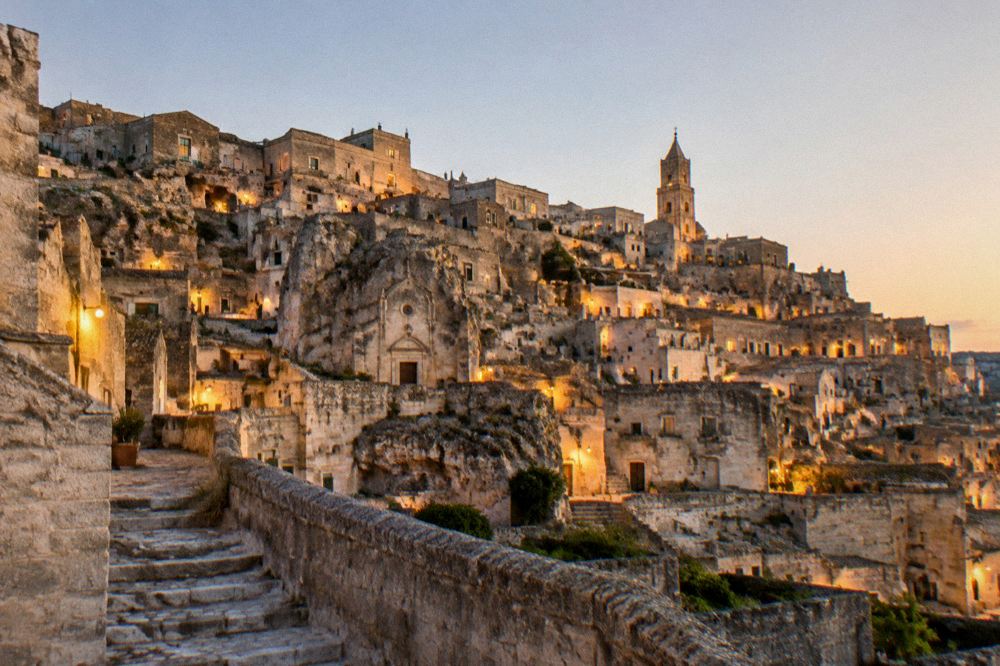
One day in Matera is a walk with three climbs, four posted tariffs and one sunset, and the order above is what makes it fit. Start in Caveoso while the legs are fresh, spend the flat hours of the afternoon on the ridge and in Barisano, and finish looking at the Sassi rather than walking inside them. Anyone with a second morning should read is it worth staying one night in Matera before booking a hotel, since the night view of the Sassi is the argument the one-day plan cannot answer.