What Is The Name Of The Cave Town In Italy?
The cave town in Italy is Matera, in Basilicata, southern Italy. This guide explains the Sassi districts, the rupestrian churches, tickets, and how to visit.
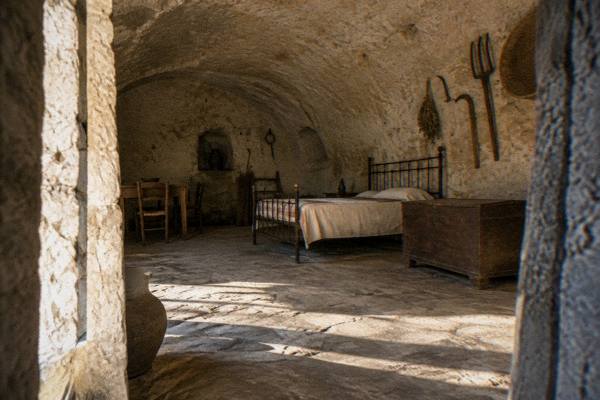
The cave town in Italy is Matera, a city of 59,368 residents in the region of Basilicata, southern Italy, about 400 m above sea level on the edge of the Gravina canyon, with the Murgia plateau rising on the opposite side. It is an inland city: there is no sea at Matera, and the coast, Metaponto on the Ionian and Polignano a Mare and Bari on the Adriatic, is a day trip away. What makes Matera the cave town is its old quarters, the Sassi, Sasso Caveoso and Sasso Barisano, where dwellings, storerooms and churches were cut directly into pale tufa limestone over many centuries. UNESCO inscribed "The Sassi and the Park of the Rupestrian Churches of Matera" on the World Heritage List in 1993.
What Is The Name Of The Cave Town In Italy?
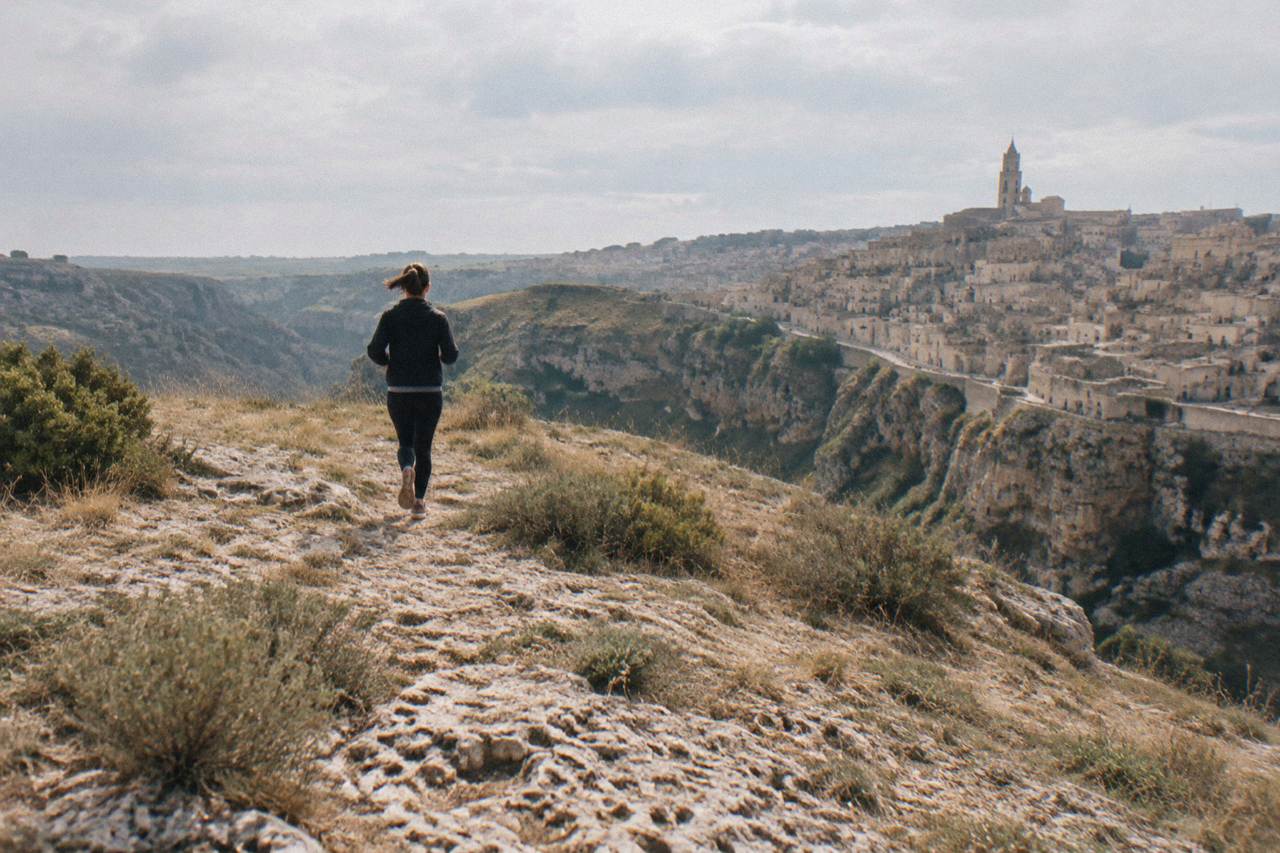
The name of the cave town in Italy is Matera, in the region of Basilicata, southern Italy. Its cave quarters are called the Sassi, from Sasso Caveoso in the south to Sasso Barisano in the north, and together with the Park of the Rupestrian Churches they form a UNESCO World Heritage Site inscribed in 1993. Matera is an inland city of 59,368 residents, about 400 m above sea level on the edge of the Gravina canyon, and its dwellings and churches are cut directly into pale tufa limestone.
The Sassi are the plural form: one district is a Sasso, and the name in Italian simply means stones. If a search result, a film or a friend's photo shows a town of stacked cave houses in Italy, it is almost always this one. The Basilicata region sits between Puglia, Campania and Calabria, and Matera is its best known city by a wide margin: APT Basilicata's accommodation data records 479,083 arrivals in the city in 2025, more than in the Capital of Culture year of 2019.
The naming question comes up often because the town has been filmed so widely. The Basilicata tourism board and the Italy for Movies database list The Passion of the Christ (2004), The Nativity Story (2006), Wonder Woman (2017) and No Time to Die (2021) among the productions shot here, so Matera appears on screens as Jerusalem, Bethlehem and a Bond location without its own name ever being said. More on that in what movie is filmed in Matera Italy.
Where Is Matera And Why Is It Called A Cave Town?
Matera is called a cave town because its oldest quarters, the Sassi, are largely rock-cut: houses, cellars, cisterns and churches were hewn into the tufa limestone of the Gravina canyon rather than built on top of it. UNESCO's citation describes "an outstanding example of a rock-cut settlement, adapted perfectly to its geomorphological setting and ecosystem and exhibiting continuity over more than two millennia", and the inscribed property covers 1,016 ha with more than a thousand dwellings.
The setting explains the caves. The Gravina, a deep ravine, cuts through the Murgia plateau, and its soft pale limestone can be carved with hand tools. The rock holds a steady temperature, cool in summer and mild in winter, and the karst geology provided natural cisterns for rainwater. Across the ravine, the Parco della Murgia Materana, created by regional law in 1990, protects the plateau side, about 8,000 hectares by the park's own count, with its scattered rupestrian churches. The park's own site lists 923 plant species, about a sixth of the national flora.
The cave dwellings were lived in continuously until the last century. Residents were moved out of the Sassi between 1952 and the 1970s, when the quarters were declared unfit for habitation, and a 1986 law opened the way to restoration. That painful chapter gave Matera a nickname it has never fully shed, covered in why is Matera called the shame of Italy, and the return of residents and businesses to the restored caves is covered in do people still live in Sassi di Matera.
A guided walk is the quickest way to make sense of the rock-cut fabric, because the Sassi are steep, stepped and uneven, and a guide can open cave houses and rupestrian churches that are otherwise closed. The trio above covers the main options: a combined Matera and Alberobello day tour with a tour leader on board, a full Sassi walk with church entry and a tasting, and an overnight package that bundles a stay, a meal and a tour. The Matera Travel Guide walking tour pages list them with live prices and availability.
Curious what lies inside the cave houses and rupestrian churches? Book a guided Sassi tour here.
What Can You See Inside The Sassi Of Matera Today?
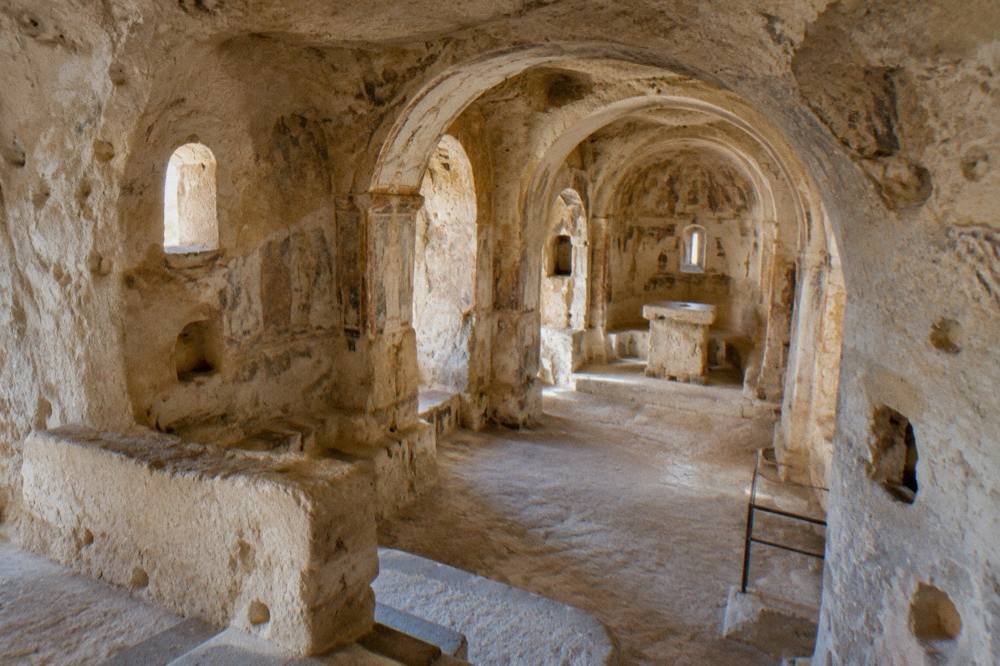
Inside the Sassi you can visit furnished cave houses, rock-hewn churches with frescoes, a huge underground cistern and museums carved into the rock. The three rupestrian churches run by Oltre l'Arte cost 4.50 EUR for one, 8.00 EUR for two and 10.00 EUR for three, the Storica Casa Grotta di Vico Solitario costs 8.00 EUR full under the tariff in force from 4 April 2026, and MUSMA, the sculpture museum in the Sasso Caveoso, costs 10 EUR full.
The rupestrian churches are the heart of it. Oltre l'Arte's ticket page lists Santa Lucia alle Malve, Madonna de Idris with San Giovanni in Monterrone and San Pietro Barisano, all open daily from 28 March 2026, with hours running to 19:30 or 19:00 depending on the church. Its all-inclusive ticket covers eight sites for 25.00 EUR, reduced 16.00 EUR, and all its sites close on 25 December and 2 July, the day of the Festa della Bruna. More detail is in the guide to the rupestrian churches of Matera and in Matera church tickets and passes.
| Site | Full price | Notes |
|---|---|---|
| Rupestrian church (Oltre l'Arte, 1 church) | 4.50 EUR | Reduced 3.50 EUR, with a licensed guide 2.50 EUR |
| Rupestrian churches (Oltre l'Arte, 2 or 3) | 8.00 / 10.00 EUR | Santa Lucia alle Malve, Madonna de Idris, San Pietro Barisano |
| Oltre l'Arte 8-site all-inclusive | 25.00 EUR | Reduced 16.00 EUR, includes MATA and the Museo del Pane |
| Storica Casa Grotta di Vico Solitario | 8.00 EUR | Reduced 5.00 EUR, ages 11 to 18 pay 3.00 EUR, free to age 10 |
| MUSMA | 10 EUR | Reduced 5 EUR ages 7 to 18, free to age 6 |
| Casa Noha (FAI) | 6.50 EUR | Children 3 EUR, closed on Wednesdays |
Casa Noha, the FAI visitor centre that explains the Sassi story in its own multimedia display, is closed 5 to 22 October 2026 for renovation ahead of a relaunch with new spaces. The Museo Archeologico Nazionale Domenico Ridola has been closed since 7 April 2025 for energy works and a new display, with no reopening date published. The national museum's cumulative ticket, 15.00 EUR, is valid two days for all its sites, and under-18s enter free.
Across the canyon, the Parco della Murgia has changed how its trails work. Sentiero 406, the path with the suspension bridge over the Gravina, has had a staffed access point and an online access ticket since March 2026, and the Jazzo Gattini visitor centre has served as the park's info point and ticket office since 6 February 2026. The access price is not settled on a single official figure, so confirm it on the park's ticket page before you go.
Which Other Places Are Sometimes Called Cave Towns In Italy?
Matera is the cave town that the name usually means, but it is not the only rock-cut settlement in the country. The same tufa and limestone geology produced cave dwellings across the Murgia plateau and the surrounding regions: the Sasso Barisano and Sasso Caveoso quarters of Matera itself, the rupestrian churches scattered across the Parco della Murgia, and rock-cut settlements at nearby towns such as Gravina in Puglia and Montescaglioso, whose abbey and cave complex sit about 19 km from Matera by road.
None of those rivals Matera in scale or recognition. The inscribed UNESCO property alone covers more than a thousand dwellings, and the city's cave hotels and cave restaurants, covered in Matera cave hotels and Matera cave restaurants, let visitors sleep and eat inside the rock itself. That combination, a living city inside a World Heritage cave district, is what people are usually searching for when they ask about the cave town.
One confusion worth clearing up: Alberobello, the trulli town in Puglia, is sometimes mixed up with Matera, but its cone-roofed stone huts are built, not carved. The two are often visited together, and the drive between them is about 68 km. Alberobello is in Puglia, while Matera is in Basilicata, a point untangled in is Matera part of Puglia.
How Do You Visit The Italian Cave Town On A Day Trip?
Matera can be visited on a day trip from Bari, about 68 km away by road, or as a stop on a combined tour with Alberobello. There is no Trenitalia station in Matera: the rail operator is FAL, whose posted weekday timetable has you change at Altamura, about 1 h 45 to 2 h from Bari Centrale, and no trains run on Sundays and public holidays, when FAL operates replacement buses instead. Check FAL's timetable page for current times before travelling.
The practical warnings are few but firm. The Sassi are steep, stepped and uneven, so no route down into the districts can be called step-free. If you drive, the ZTL camera gates around the Sassi are active from 10:00 to 20:30 between 16 September and 30 June, and until 24:00 in summer, and the central ZTL runs 24 hours a day; the details are in the site's parking and ZTL guides. The single European emergency number, 112, has served the Matera district since 2 December 2025.
For a one-day visit that pairs the cave town with the trulli town, the combined Matera and Alberobello tour with a tour leader on board is the site's featured pick for this page. It covers both towns with a tour leader travelling with the group, and the booking page shows the current price, rating and availability. Check availability if the pairing fits your route.
How long to give the city is its own question, answered in how many nights should I stay in Matera and is it worth staying one night in Matera. The APT data shows an average stay of 1.56 nights in 2025, and September, not August, was the busiest month, with 61,630 arrivals, 74.5% of them from abroad.
Common Questions About The Cave Town In Italy
What is the name of the cave town in Italy?
The cave town in Italy is Matera, in the region of Basilicata, southern Italy. Its cave quarters are the Sassi, Sasso Caveoso and Sasso Barisano, and UNESCO inscribed them, with the Park of the Rupestrian Churches, in 1993.
Is Matera the oldest city in the world?
No official source opened by this site says so. UNESCO's own wording credits the Sassi with "continuity over more than two millennia" and notes the area was first occupied during the Palaeolithic. The age-superlative claims circulating online are not supported by the sources this site could verify, as covered in is Matera the oldest city in the world.
Do people still live in the Sassi of Matera?
Yes. Residents were moved out between 1952 and the 1970s, but a 1986 law opened the way to restoration, and the Sassi today hold homes, hotels, restaurants and museums. The city as a whole counted 59,368 residents on 1 January 2026.
Is the cave town near the sea?
No. Matera is an inland city at about 400 m above sea level on the edge of the Gravina canyon. The nearest coast is a day trip: Metaponto on the Ionian, and Polignano a Mare, Monopoli and Bari on the Adriatic.
What does Sassi mean in Italian?
Sassi is the plural of sasso, meaning stones. One district is a Sasso: Sasso Caveoso and Sasso Barisano are the two cave quarters, and the higher ground between them is the Civita, the old town core.
Matera rewards the walk: the cave town in Italy is a living city carved into rock, and its churches, cave houses and viewpoints are close enough together to see in a long day, with the Murgia plateau and its trail network waiting across the ravine.