Matera Cave Hotel
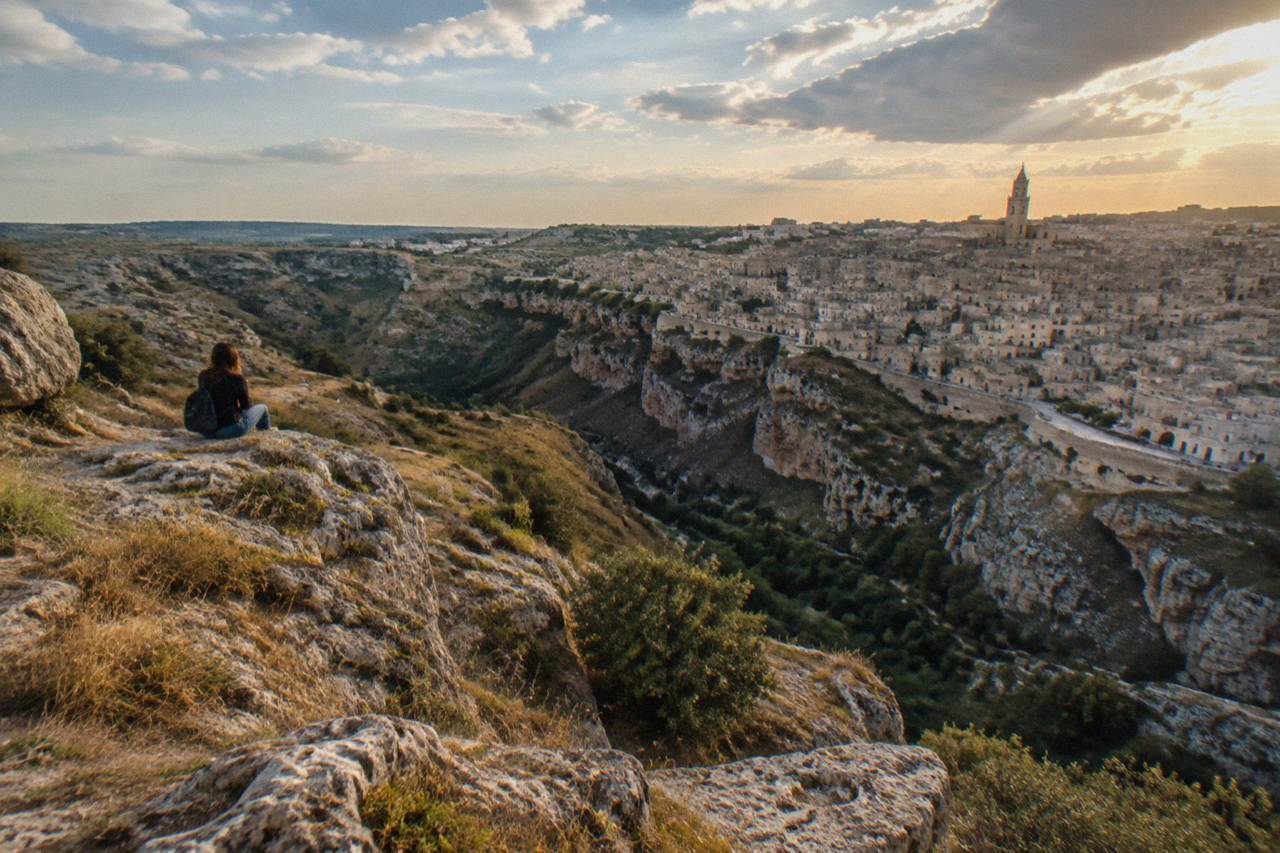
A cave hotel in Matera means sleeping inside the pale tufa limestone of the Sassi, the cave-dwelling quarters UNESCO inscribed in 1993. This guide sets out the districts, the seasons, the practical costs and the questions worth asking before booking.
Short answer
Cave hotels in Matera are converted cave dwellings and stone houses in the Sasso Caveoso and Sasso Barisano quarters, on the edge of the Gravina canyon in Basilicata, southern Italy. They range from simple rooms carved into the rock to full cave suites with vaulted ceilings, and booking early matters most in September, the city's busiest month for arrivals.
Sleeping in a cave hotel in Matera means sleeping inside the same pale tufa limestone that the city was carved from. Matera is an inland city in Basilicata, southern Italy, at about 400 m above sea level on the edge of the Gravina canyon, and its old quarters, the Sassi, hold cave dwellings that residents lived in until the evacuations that ran from 1952 through the 1970s. A 1986 law opened the way to restoration, and many of those dwellings are now guest accommodation. The Matera Travel Guide desk has assembled what the verified sources say about choosing one, from which district to sleep in to what a stay costs beyond the room rate.
What Is A Matera Cave Hotel?
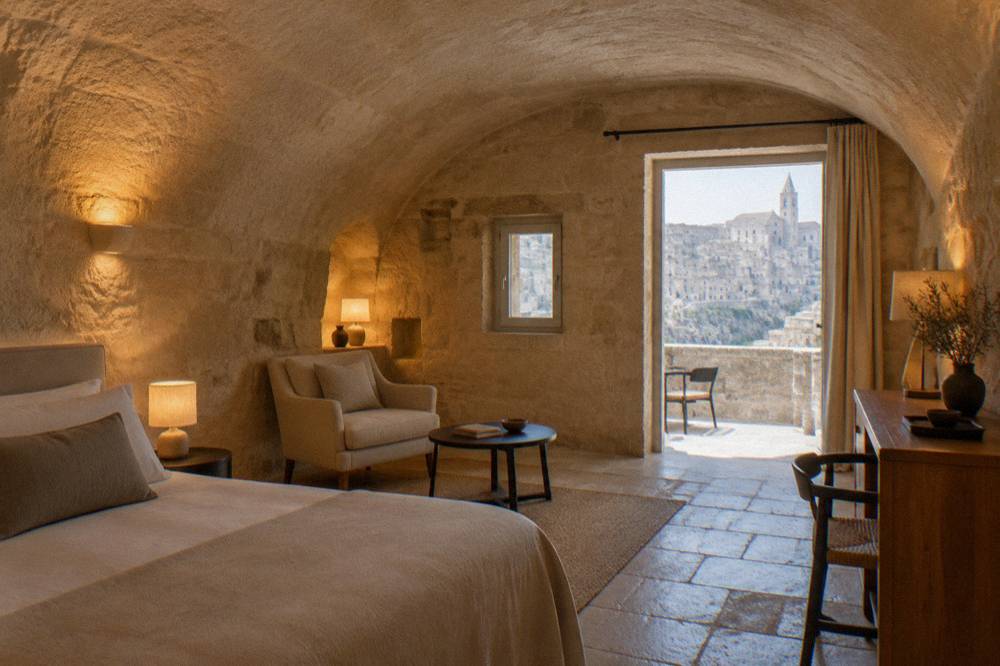
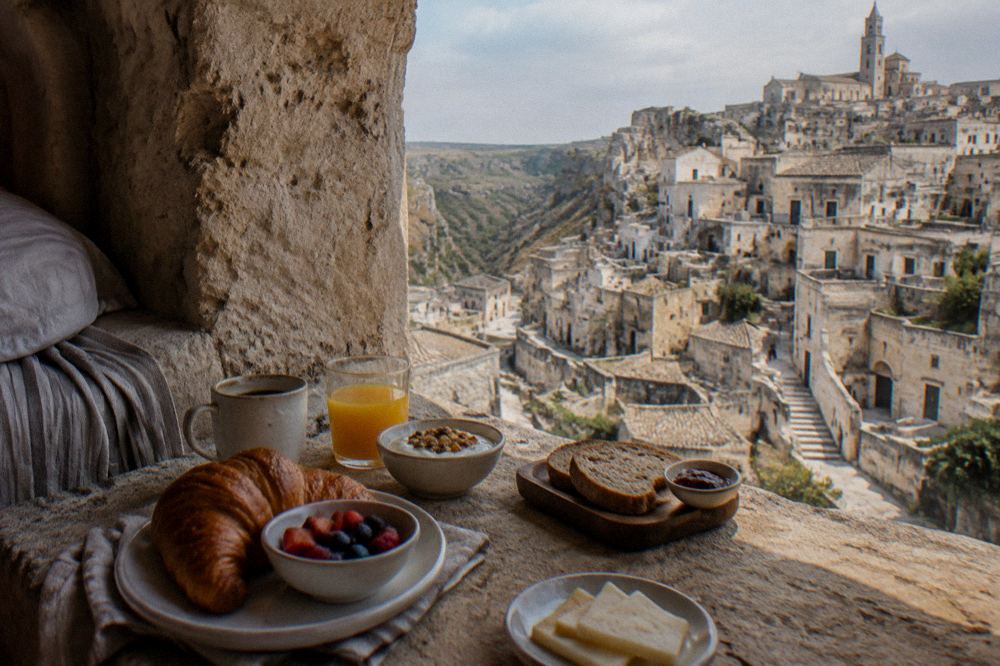
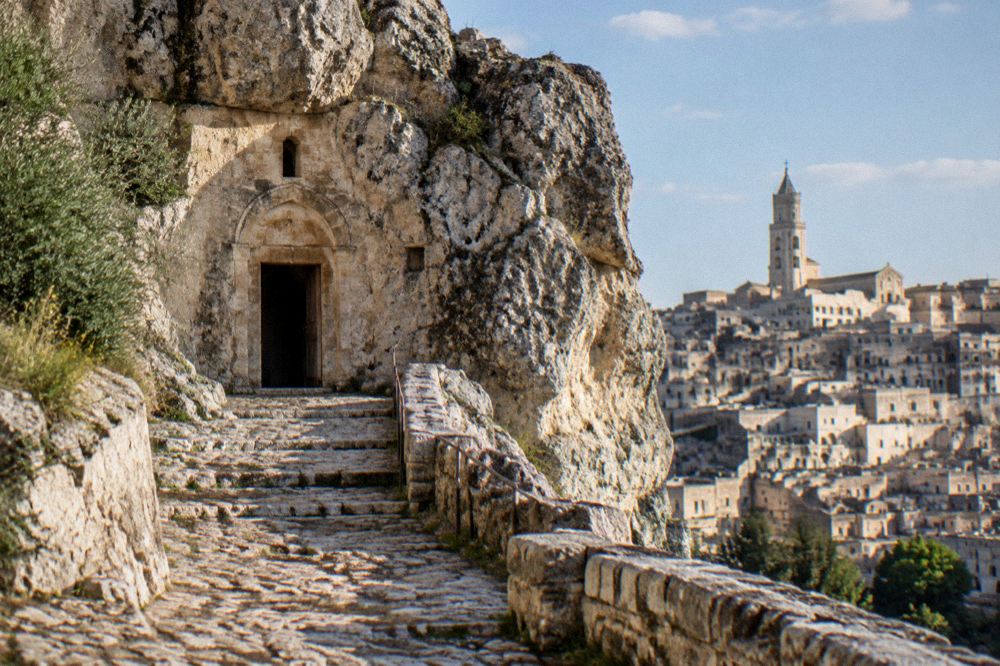
A Matera cave hotel is guest accommodation carved directly into the tufa limestone of the Sassi, the two old quarters, Sasso Caveoso and Sasso Barisano, that UNESCO inscribed as a World Heritage Site in 1993. The rooms are former cave dwellings, often with vaulted or rock-cut ceilings, thick stone walls and small windows, and they range from basic chambers to full suites inside restored palazzi above the canyon. There is no sea nearby: Matera is inland, and the coast is a day trip away.
The Sassi are the reason this kind of hotel exists at all. UNESCO's citation for site 670 describes "an outstanding example of a rock-cut settlement, adapted perfectly to its geomorphological setting and ecosystem and exhibiting continuity over more than two millennia", and the property covers 1,016 ha with more than a thousand dwellings. Those dwellings were family homes, stables and cisterns until the state moved residents out between 1952 and the 1970s. Restoration followed the 1986 law, and today a large share of the buildings visitors sleep in are those same caves, replumbed and relit but still carved from the rock.
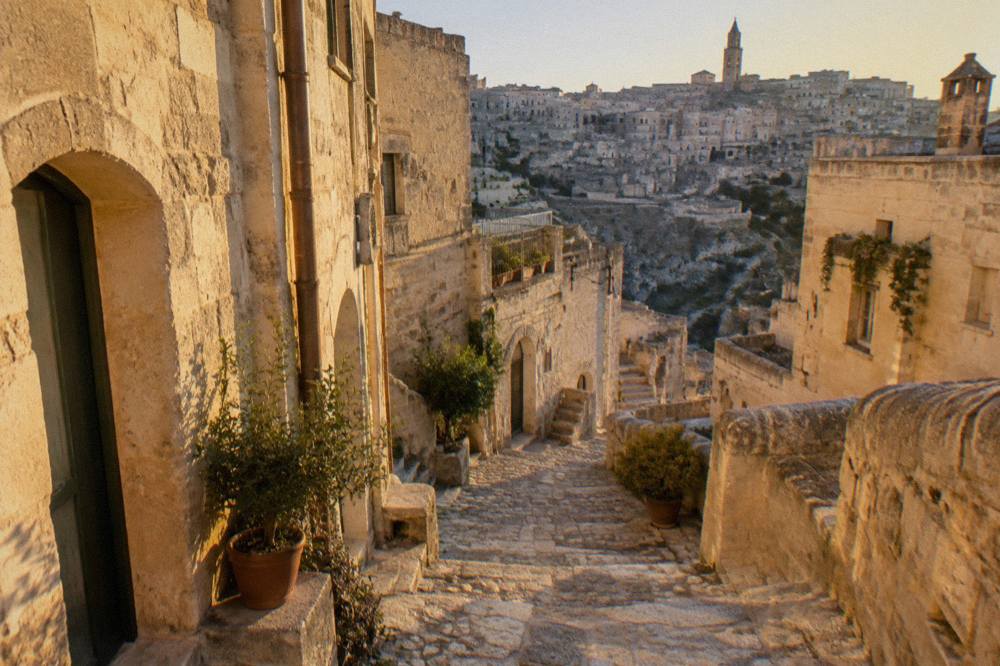
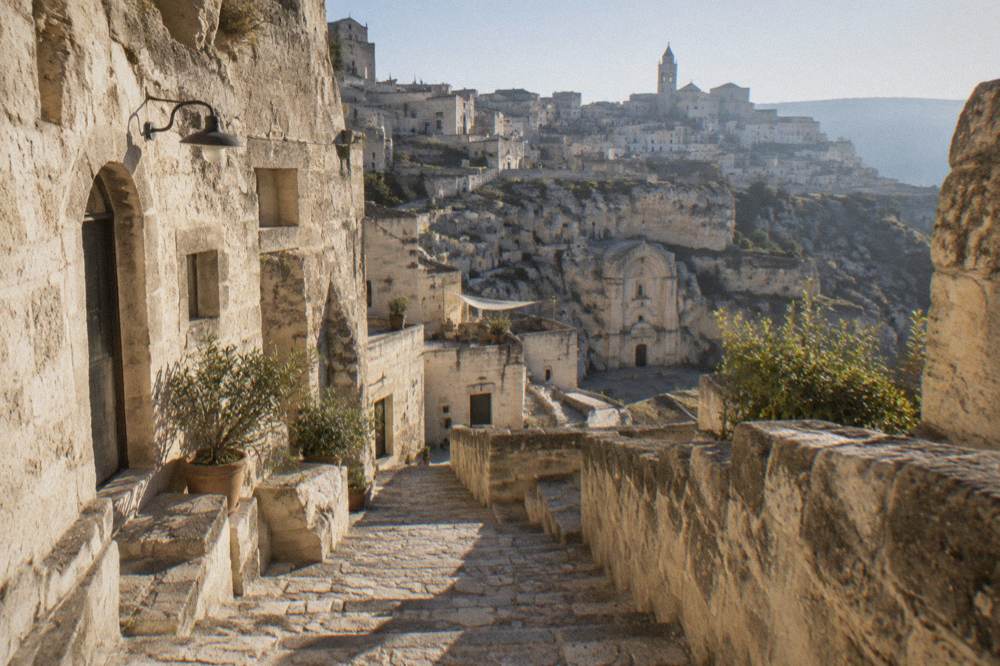
The practical consequence for a guest is that no two rooms are alike. A cave room in Sasso Caveoso may be a single chamber opening off a stepped lane, while a hotel in Sasso Barisano may be a restored stone house with several carved rooms at different levels. Stairs are the norm, not the exception, and the terrain is steep, stepped and uneven. The cave restaurants of Matera share the same architecture, so a dinner in a rock-cut dining room gives a fair preview of what the bedroom ceiling will look like.
Which Quarter Should Your Matera Cave Hotel Be In?
Sasso Caveoso, in the south of the old city, is the rawer, quieter quarter, with cave houses facing the open canyon and the rupestrian churches of Santa Lucia alle Malve and Madonna de Idris; Sasso Barisano, to the north-west, is denser and closer to the modern centre, with more restored hotels, bars and restaurants. The Civita, the ridge between them, holds the Cathedral and has the flattest access. The choice is between atmosphere and convenience, not between good and bad.
Both quarters carry the same World Heritage inscription, but they read differently on the ground. Caveoso descends towards Piazza San Pietro Caveoso and the canyon path network, with the MUSMA sculpture museum in Via San Giacomo and the rupestrian churches run by Oltre l'Arte within a few minutes' walk. Barisano sits under the Civita and Piazza Vittorio Veneto, so the walk up to the modern city, its shops and its parking is shorter. The Sassi di Matera overview page covers the geography in more depth.
| Quarter | Character | What Is Close | Best For |
|---|---|---|---|
| Sasso Caveoso | Caves facing open canyon, quieter lanes | MUSMA, Santa Lucia alle Malve, Madonna de Idris, Piazza San Pietro Caveoso | Photographers, walkers, longer stays |
| Sasso Barisano | Denser, more restored facades | Piazza Vittorio Veneto, bars, the modern centre | First visits, short stays, evening life |
| Civita | The ridge between the two Sassi | The Cathedral, the MATA museum | Guests who want the fewest stairs |
One planning point matters more than the quarter choice: the ZTL rules. The Sassi's limited traffic zone is camera-controlled, and the gates on Via Buozzi, Via Madonna delle Virtù and Via D'Addozio are active from 10:00 to 20:30 between 16 September and 30 June, and from 10:00 to 24:00 from 1 July to 15 September, on weekdays and holidays alike. A guest driving in must confirm with the hotel, before arrival, which gate to use and whether the hotel can register the plate. The parking guide covers where to leave the car.
If the hotel is in the Sassi but the day starts in Bari, the excursion by bus is the simplest way to arrive without a car. The listing for the Bari bus day trip covers the route, and Check availability shows current dates.
How Do You Judge A Cave Hotel Before Booking?
Judge a Matera cave hotel on four things the listing can tell you: how many stairs stand between the nearest road and the door, whether the room has natural light and real ventilation, how luggage is handled, and what the cancellation terms are. The rock keeps rooms cool in summer and cool in winter, so heating matters more than air conditioning. Confirm the tourist tax amount at booking, since the accommodation collects it and this site does not publish a rate.
The stair question is the one that surprises guests. The Sassi are built down a canyon wall, so a hotel entrance can be several flights below the street, and a "5 minute walk from the square" can involve a descent of tens of metres. The same applies to luggage: some hotels use trolleys or porters, others do not, and the listing or the host will say if asked directly. The where to stay in Matera guide covers the district trade-offs in more detail.
Ventilation is the second question. A deep cave room with one small window can feel damp in November, the wettest month of the year at 67.1 mm of rain in the ERA5 reanalysis, 1991-2020. Modern conversions install dehumidifiers and mechanical ventilation, but the depth of the room determines how much they must work. A room described as a "cave room with window" behaves differently from a "cave room, internal". Both exist, both are genuine cave rooms, and the difference is worth the price only if the guest knows it exists.
What Is It Like To Sleep In A Cave Room Through The Year?
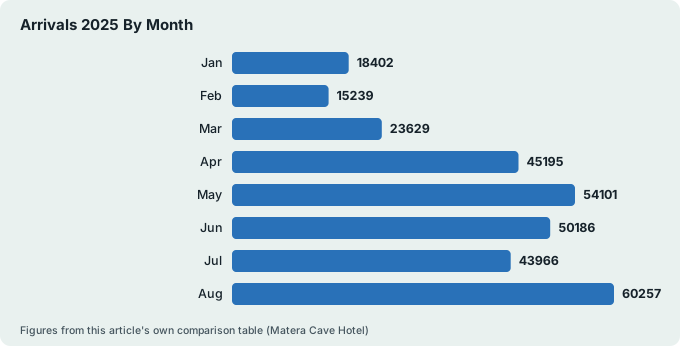
Cave rooms in Matera stay cooler than the outside air in summer and cooler than it in winter: the stone moderates both extremes, so July and August nights indoors are milder than the 31 C daytime means suggest, while from December to March a heated room is necessary, since the ERA5 reanalysis, 1991-2020, counts about 20 frost days a year. The busiest sleeping month is September, not August: 61,630 arrivals against 60,257, with 74.5% of September's guests from abroad.
The climate table below is the planning backbone. These are modelled normals for the grid cell at about 398 m, not a weather-station record, and they describe the whole city rather than any single room, but they set expectations for what waits outside the cave door.
| Month | Mean high C | Mean low C | Rain mm | Arrivals 2025 |
|---|---|---|---|---|
| Jan | 10.3 | 2.2 | 51.4 | 18,402 |
| Feb | 11.1 | 2.2 | 54.9 | 15,239 |
| Mar | 14.1 | 4.4 | 59.2 | 23,629 |
| Apr | 17.4 | 7.1 | 56.5 | 45,195 |
| May | 22.7 | 11.5 | 41.7 | 54,101 |
| Jun | 28.2 | 16.0 | 35.1 | 50,186 |
| Jul | 31.2 | 18.6 | 21.2 | 43,966 |
| Aug | 31.3 | 18.9 | 21.7 | 60,257 |
| Sep | 25.7 | 15.2 | 44.8 | 61,630 |
| Oct | 20.8 | 11.6 | 51.7 | 52,538 |
| Nov | 15.5 | 7.5 | 67.1 | 23,555 |
| Dec | 11.2 | 3.7 | 57.2 | 30,385 |
Two readings of that table matter for a hotel search. First, February is the quietest month, with 15,239 arrivals against September's 61,630, roughly four times fewer guests competing for the same cave rooms, at the cost of cold, damp weather and shorter days. Second, July draws fewer arrivals than April, May, June, August, September or October despite heat equal to August, so a guest who wants warm evenings without the thickest crowds should compare June and July rather than defaulting to August. The best time to visit Matera page works through the same numbers for the city as a whole.
Winter guests should also plan around two seasonal anchors. The weather in Matera page details the frost and rain pattern, and the Christmas guide covers the Presepe Vivente, the living nativity whose sixteenth edition runs on the December weekends and 2-3 January 2027, with tickets at 12.00 EUR full and 9.00 EUR for ages 10 to 18, free under 10. A cave hotel in Sasso Caveoso sits directly on its route.
What Does A Cave Hotel Stay Cost Beyond The Room Rate?
Beyond the room rate, plan for the tourist tax, which Matera charges and the accommodation collects, with the amount confirmed at booking; for church and museum tickets, which run from 2.00 EUR for a single small site to 25.00 EUR for the eight-site all-inclusive Oltre l'Arte pass; and for arrival logistics, since no verified public price exists for airport shuttle, urban bus or car park tariffs on this site.
The APT Basilicata data shows guests averaged 1.56 nights in 2025, so a short stay concentrates the spending.
The ticket side is fully published and worth planning before arrival, because the cave churches most hotels sit beside are the same ones the passes cover. Oltre l'Arte's tariff page lists 4.50 EUR for one rupestrian church, 8.00 EUR for two, 10.00 EUR for three, and 25.00 EUR for the eight-site all-inclusive pass with a 16.00 EUR reduced rate. The church tickets and passes guide maps them all.
| Item | Price | Notes |
|---|---|---|
| Oltre l'Arte, 1 rupestrian church | 4.50 EUR | Santa Lucia alle Malve, Madonna de Idris or San Pietro Barisano |
| Oltre l'Arte, 3 churches | 10.00 EUR | All three rock churches |
| Oltre l'Arte, 8-site pass | 25.00 EUR | Reduced 16.00 EUR; includes MATA and Museo del Pane |
| Storica Casa Grotta di Vico Solitario | 8.00 EUR | Full rate from 4 April 2026; free to age 10 |
| Casa Noha (FAI) | 6.50 EUR | Adults; closed 5 to 22 October 2026 |
| MUSMA | 10 EUR | Reduced 5 or 7 EUR; free to age 6 |
| Museo Nazionale cumulative | 15.00 EUR | All sites, valid 2 days; under 18 free |
| Presepe Vivente (December) | 12.00 EUR | Ages 10 to 18 pay 9.00 EUR; under 10 free |
The Casa Grotta di Vico Solitario deserves a special note for hotel guests: it is a furnished cave house museum, and its 2026 tariff of 8.00 EUR full, in force from 4 April 2026, replaced the older 3 to 5 EUR figures still printed in many guides. Walking through it before or after a night in a cave hotel is the clearest way to see how the original dwellings looked before restoration. The Casa Grotta page has the full tariff and hours.
Food costs sit outside this site's verified price set for restaurants, but the what to eat in Matera and pane di Matera guides describe the local staples, including the PGI-registered bread. Tasting fees and menu prices change often enough that checking at the door is the only reliable method.
How Do You Arrive At A Cave Hotel Without A Car?
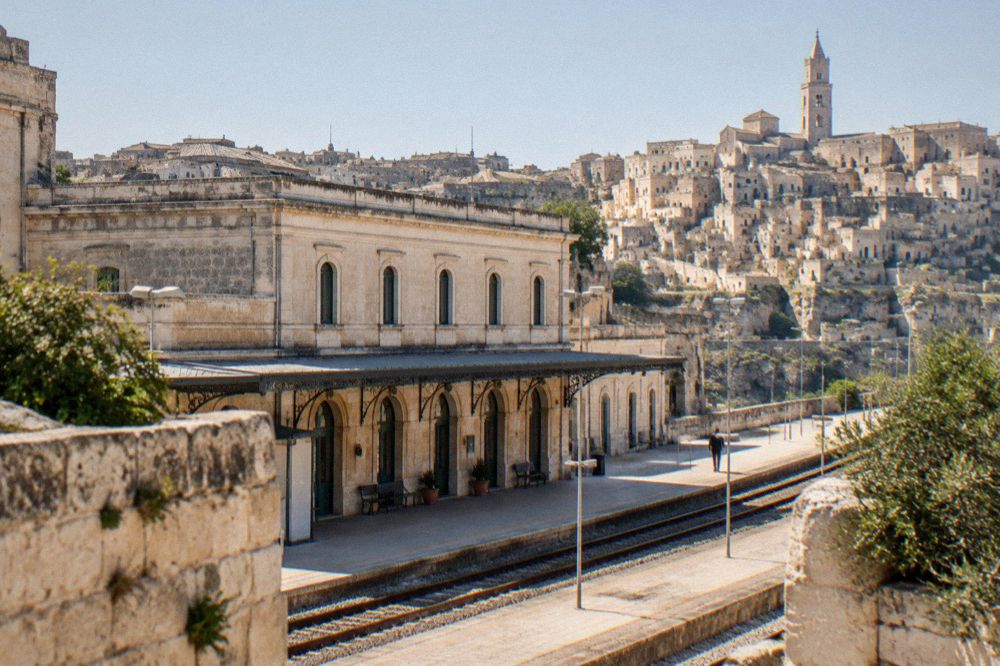
Arrive by train to Matera Centrale on the FAL line from Bari, changing at Altamura, a journey of about 1 h 45 to 2 h, then walk or take a taxi the short descent into the Sassi; or arrive by car from Bari Airport, 64 km and about one hour of free-flow driving. On Sundays and public holidays no trains run, and FAL operates replacement buses instead. There is no Trenitalia station in Matera.
The rail facts come from FAL's own posted sheets. The operator is Ferrovie Appulo Lucane, the Matera stops are Venusio, Matera Serra Rifusa, Matera Villa Longo, Matera Centrale and Matera Sud, and the single fare from Bari sits in fare band 70 of the 2026 matrix, with the euro price to be read on FAL's timetable page rather than guessed here. FAL's notice of 9 October 2026 also changes the programme between Matera Sud and Altamura from 12 October 2026, replacing two trains with buses, so the live sheet is the only trustworthy source on the day of travel. The Bari to Matera and how to get to Matera guides carry the full detail.
| Route | Distance or time | Source basis |
|---|---|---|
| Bari Airport to Matera Centrale by road | 64 km, about 1 hour free-flow | OSRM routing over OpenStreetMap |
| Bari Centrale to Matera by FAL train | About 1 h 45 to 2 h, change at Altamura | FAL posted timetable, worked examples |
| Matera Centrale to the Sassi | A short walk or taxi ride down into the quarters | On foot via the city centre |
| Altamura to Matera by road | 20 km, about 20 minutes | OSRM routing over OpenStreetMap |
Guests flying in should read the Bari Airport to Matera page before assuming a shuttle exists: no official airport shuttle timetable or fare could be verified for that route, so the honest options are the FAL train from Bari Centrale, a private transfer, or a hire car. The airport transfer category is one of this site's affiliate categories, and the operator's live listing is the place where current prices appear.
Once in the city, walking is the main mode. The getting around Matera reality is that the urban bus operator and ticket price are not verified on any official page, so a hotel guest should treat the Sassi as a pedestrian district and plan shoes accordingly: the lanes are stepped, cobbled and uneven, and the descent from Piazza Vittorio Veneto to Piazza San Pietro Caveoso is a genuine walk, not a stroll.
Which Cave Hotel Mistakes Can You Avoid?
The avoidable mistakes are booking a deep internal cave room in the damp months without asking about ventilation, arriving by car without confirming the ZTL gate registration with the hotel, expecting a lift or level access in quarters that are steep and stepped, and assuming August is the peak: September is, with 61,630 arrivals in 2025 and 74.5% of them from abroad, so September rooms sell first. The Museo Ridola, closed since 7 April 2025, should not be on any itinerary.
The museum point is worth its own sentence because older guides still list it. The Museo Archeologico Nazionale Domenico Ridola has been closed since 7 April 2025 for energy works and a new display, with no reopening date published, so a hotel guest planning a museum morning should look instead at Palazzo Lanfranchi, open Monday to Sunday 09:00 to 20:00 at 10.00 EUR, or the cumulative 15.00 EUR ticket covering all national museum sites over two days. Casa Noha, the FAI visitor centre that explains the Sassi's story, is closed only 5 to 22 October 2026, and otherwise opens every day except Wednesday.
The ZTL mistake has a direct cost consequence, since the cameras are active and enforcement is automatic. The loading windows, 07:00 to 10:30 and 15:00 to 17:00, do not apply to hotel guests unless the hotel arranges access, and the transit declaration system runs through the comune's own portal. Every hotel in the Sassi handles this regularly, but the guest has to send the plate number in advance.
The seasonal mistake is subtler. A guest who books August expecting the city's peak crowds and prices will find September was the busier month in 2025, and that the foreign-guest share peaks then too. Conversely, a guest who books February for the quiet gets exactly that, 15,239 arrivals across the whole city that month, but should pack for mean lows of 2.2 C and expect some rain, 54.9 mm in the ERA5 reanalysis, 1991-2020.
What Should You Do From A Cave Hotel Base?
From a cave hotel in the Sassi, the core sights are all walkable: the rupestrian churches of Santa Lucia alle Malve, Madonna de Idris and San Pietro Barisano, the Casa Grotta museum, the Cathedral and MATA, and the viewpoints over the Gravina canyon towards the Murgia plateau. Beyond the city, Alberobello is 68 km and about 1 h 23 by road, Altamura 20 km and about 20 minutes, and the Ionian coast at Metaponto 47 km and about 52 minutes.
A two-night stay, the APT data suggests, is the norm: 479,083 arrivals produced 748,812 overnight stays in 2025, an average of 1.56 nights per guest. That is enough for one full day in the Sassi and one day trip. The one day in Matera and two days in Matera itineraries lay out the walking order, and the rupestrian churches page covers the three rock churches whose tickets are bundled at 10.00 EUR.
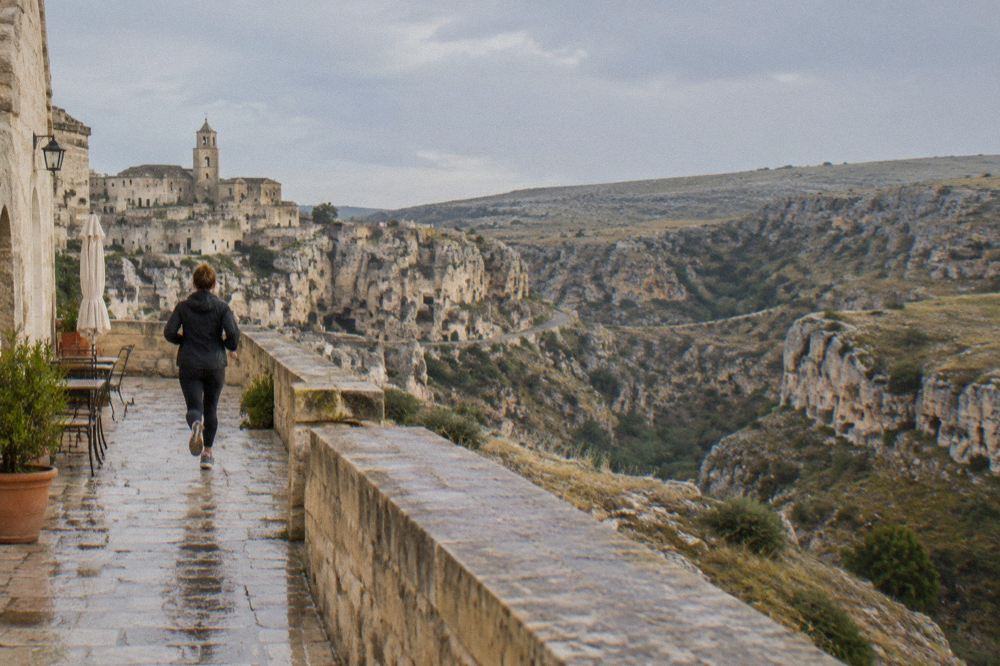
For the canyon side, the Parco della Murgia covers the park opposite the Sassi, about 8,000 ha by the park's own count, with its viewpoints and the suspension bridge path. The Belvedere Murgia Timone viewpoint is the classic photograph of the cave hotel skyline at dawn or dusk, and a guided sunset walk with transfer included is one way to reach it without a car.
Day trips by tour are the practical answer for guests without a vehicle. The Alberobello and Matera combination tours run with a tour leader on board, and the Alberobello guide explains what the trulli town adds. For guests based in Matera who want the coast, Metaponto on the Ionian and Polignano a Mare on the Adriatic are the two nearest seaside options, both genuine day trips from an inland city.
A private guide changes the pace for families and small groups, and the premium small-group walks cover the same lanes with a fixed schedule. Check availability for the small-group option, and Check availability for the private version.
Common Questions About Matera Cave Hotels
Is A Cave Hotel In Matera Comfortable In Summer?
The rock moderates summer heat: while the ERA5 reanalysis, 1991-2020, puts July and August mean highs at 31.2 and 31.3 C, cave rooms stay cooler than the outside air because the stone is slow to warm. Guests sensitive to humidity should still ask the hotel about ventilation, since a deep room with one small window behaves differently from one with a terrace.
Do People Still Live In The Sassi Around The Hotels?
Yes. After the evacuations that ran from 1952 through the 1970s and the 1986 restoration law, the Sassi are again a lived-in quarter, mixing hotels, restaurants, museums and ordinary homes. The UNESCO property holds more than a thousand dwellings, and many are private residences.
Can You Drive To A Cave Hotel In The Sassi?
Only within the ZTL rules. The Sassi gates on Via Buozzi, Via Madonna delle Virtù and Via D'Addozio run cameras from 10:00 to 20:30 between 16 September and 30 June, and from 10:00 to 24:00 from 1 July to 15 September. Arrange access with the hotel in advance and send the plate number for registration.
Are Cave Hotels In Matera Suitable For Guests With Limited Mobility?
The Sassi are steep, stepped and uneven, and no route into the quarters can be described as step-free. Some hotels occupy the upper levels near Piazza Vittorio Veneto with fewer stairs than those at the canyon bottom, but each property differs, so the question has to be asked of the hotel directly, staircase by staircase.
How Far In Advance Should You Book A Matera Cave Hotel?
September is the busiest month for arrivals, 61,630 in 2025 against 60,257 in August, and 74.5% of September guests came from abroad, so September rooms in the best-located cave hotels go first. Book several months ahead for September, May and October, and expect the widest choice in February, the quietest month at 15,239 arrivals.
Is There A Tourist Tax At Cave Hotels In Matera?
Matera charges a tourist tax collected by the accommodation. The rate, the night cap and the exemptions are not published on an official page this site could verify, so the amount is confirmed at booking, and the hotel adds it to the bill or collects it at check-in.