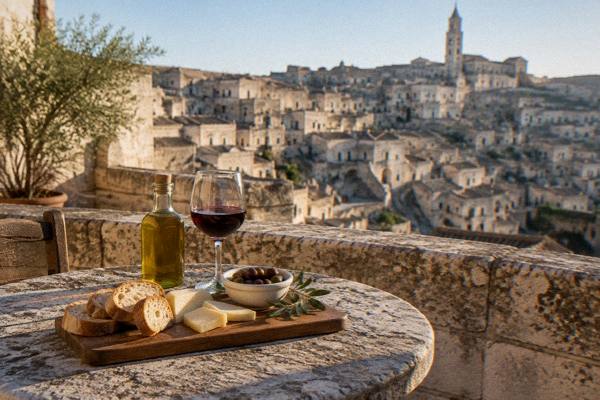
Matera Cave Restaurant
In Matera, in Basilicata in southern Italy, dinner can be served inside a room cut into tufa limestone. This guide explains what a cave restaurant in the Sassi actually is, what the cooking of the region tastes like, and how to plan the evening.
Short answer
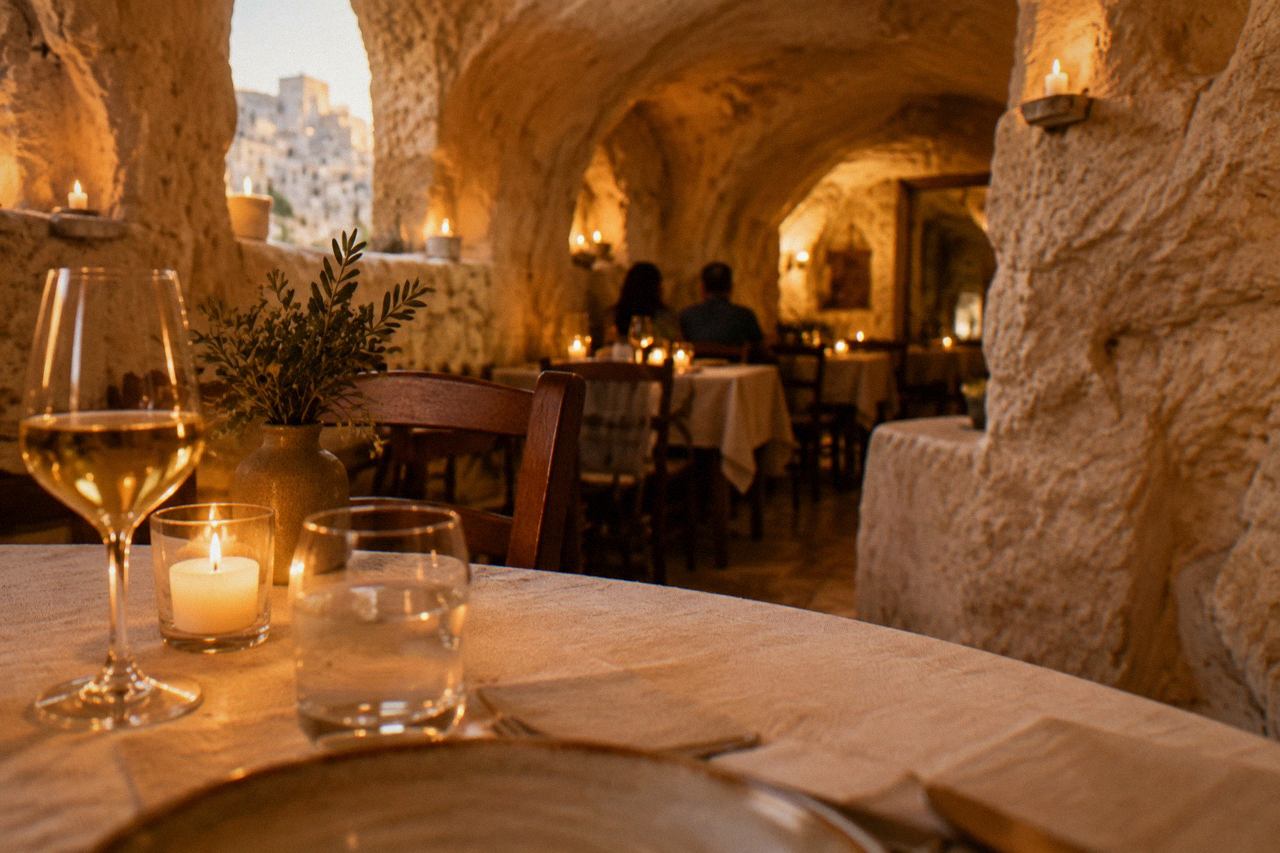
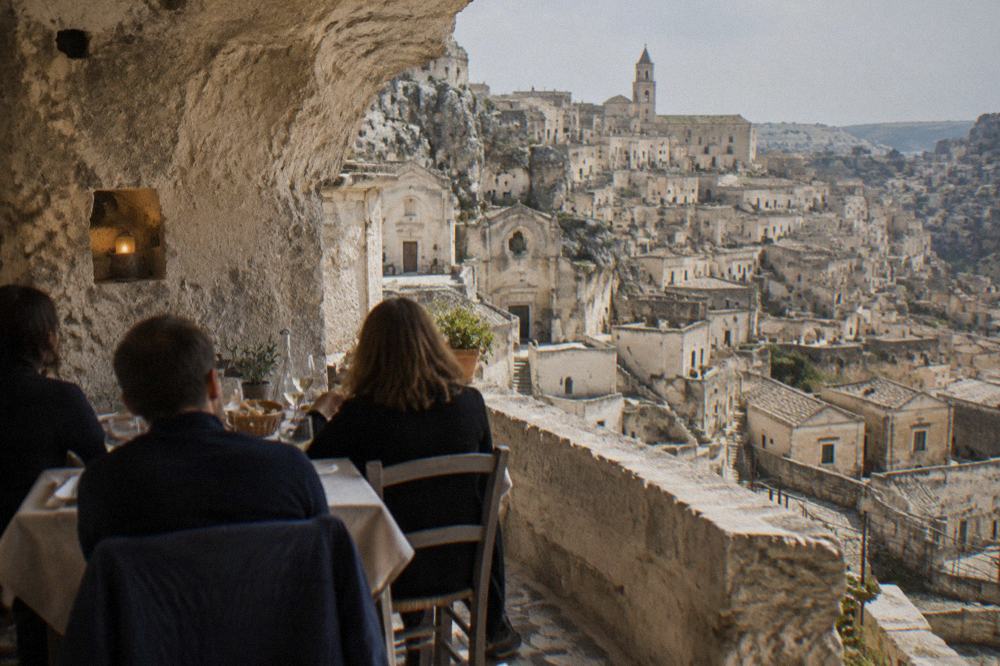
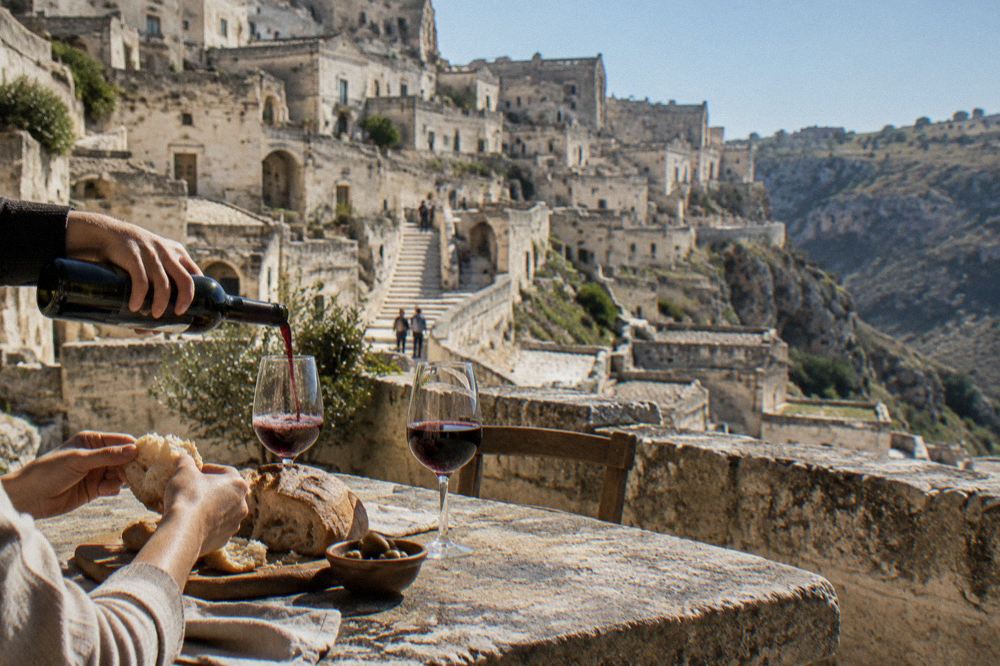
A Matera cave restaurant is a dining room inside or beside a former cave dwelling in the Sassi, the restored stone quarters either side of the Gravina canyon. The cooking is inland southern Italian, bread, pasta, lamb, vegetables and Aglianico wine, and the rooms themselves, carved ceilings and thick stone walls, are as much the point as the menu.
In Matera, an inland city of Basilicata in southern Italy standing about 400 m above sea level on the rim of the Gravina canyon, some of the most atmospheric dining rooms in the country are literally holes in the rock. The Sassi, the two old quarters of Sasso Caveoso and Sasso Barisano, are built out of and into pale tufa limestone, and their former cave dwellings, stables and cisterns have been converted into houses, hotels and restaurants since a 1986 law opened the way to restoration. A Matera cave restaurant is the dining end of that story: a vaulted, rock-cut room where the cooking of inland Basilicata is served under ceilings chiselled by hand. This guide from the Matera Travel Guide editorial desk explains what these rooms are, what the regional table tastes like, what a dinner there involves, and how to fold the meal into a wider trip.
What Is A Matera Cave Restaurant?
A Matera cave restaurant is a restaurant set inside, or built around, a former cave dwelling in the Sassi of Matera, the UNESCO World Heritage quarters of Sasso Caveoso and Sasso Barisano, where vaulted rooms and interiors were cut directly into the tufa limestone of the Gravina canyon wall. The rock itself is the architecture: there are rarely straight walls, and the dining rooms stay naturally cool in summer. The cooking served in them is the inland food of Basilicata, not coastal seafood.
UNESCO inscribed "The Sassi and the Park of the Rupestrian Churches of Matera" in 1993, describing a rock-cut settlement adapted to its setting "with continuity over more than two millennia". These caves were homes until residents were moved out between 1952 and the 1970s, when the overcrowded Sassi were national news; restoration followed the 1986 law. Today the same volumes that once housed families and animals hold wine cellars, hotels and restaurants. Eating in one is the easiest way to stand inside a cave dwelling, and for many travellers it replaces a museum visit: the room does the interpreting.
Two things are worth understanding before booking. First, "cave" here means a room dug into rock, not a cavern with stalactites: expect low vaults, exposed stone, niches and, in some cases, tables in what were animal stalls or rainwater cisterns. Second, the Sassi are steep, stepped and uneven, and no route down into the quarters can be described as step-free or wheelchair accessible; the approach to any cave restaurant involves slopes and stairs, so shoes matter more than in an ordinary city. The question of which specific venue to choose is covered in the site's guide to the best restaurants in Matera.
Where Are The Cave Dining Rooms In Matera?
The cave dining rooms of Matera sit in the two Sassi districts either side of the Civita, the ridge between them: Sasso Caveoso, the lower and rawer quarter facing the Murgia plateau, and Sasso Barisano, the quarter facing north-west where more of the restored cave hotels and their restaurants cluster. Both fall inside the UNESCO property area of 1,016 ha. Outside the Sassi themselves, cave and semi-cave rooms also exist in the new city where the tufa allows.
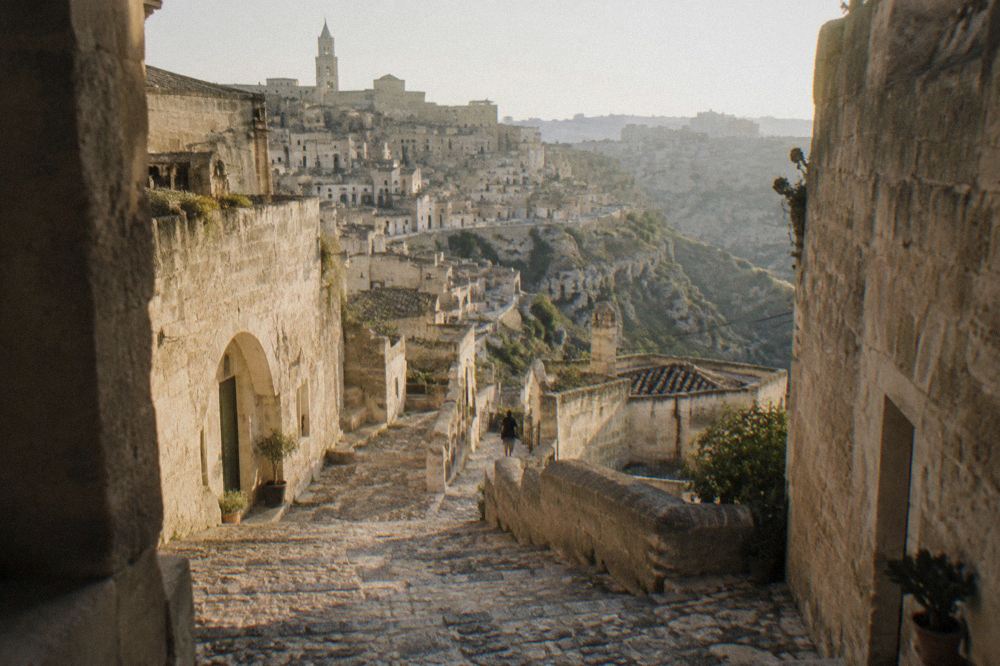
The two quarters give different evenings. Sasso Caveoso, around Piazza San Pietro Caveoso and the streets below, looks straight across the Gravina at the Murgia plateau and the rock churches cut into the opposite cliff; terraces here face the sunset side of the canyon. Sasso Barisano, reached from Via Ridola and Piazza Vittorio Veneto, is the denser of the two, with façades built out from the rock face and cave rooms behind them; it holds many of the converted cave hotels, whose restaurants often serve non-residents too. A third cluster of cave interiors sits around the restored cisterns and cellars near Piazza Vittorio Veneto itself, where the pedestrianised pavement sits on top of a large water system. The site's Sassi cave hotels guide covers the staying side of the same buildings.
| Quarter | Character | Setting of the cave rooms | What to expect at dinner |
|---|---|---|---|
| Sasso Caveoso | Lower, rawer, facing the Murgia | Rooms cut into the canyon wall, terraces over the Gravina | Canyon and plateau views, quieter streets, steeper access |
| Sasso Barisano | Denser, more restored, north-west facing | Cave rooms behind built façades, hotel restaurants | More venues close together, easier access from the centre |
| Around Piazza Vittorio Veneto | Edge of the Sassi and the new city | Converted cisterns and cellars beneath the square | Closest to the modern city, level approach from the piano |
The distinction matters for planning the walk home: from Sasso Caveoso back up to the modern city is a real climb on stepped lanes, and after a long dinner in July heat it deserves respect. The where to stay in Matera guide maps the quarters against hotel locations.
What Does The Food Of Matera And Basilicata Taste Like?
The cooking served in Matera's cave restaurants is the inland food of Basilicata: bread and pasta, lamb and pork, legumes, wild vegetables, sheep's cheese and strong red wine, with almost no seafood, because Matera is an inland city and the sea is hours away by the standards of the past. Dishes are simple, rural and bread-based, and the single most emblematic local product is Pane di Matera, a registered PGI bread since 2008.
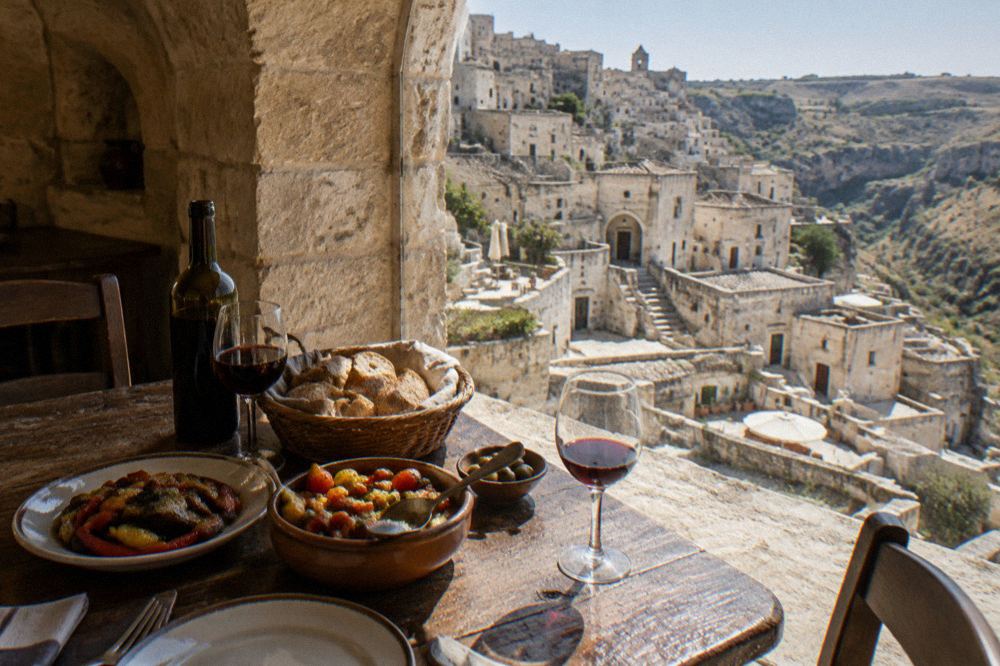
The site's what to eat in Matera guide covers the dishes in detail, but the shape of the menu is consistent across the cave restaurants. Starters are bread with local oil and vegetables, cured pork, and the region's crunchy fried sweet peppers. Pasta courses are hand-made shapes with simple sauces, often with chickpeas or bread crumbs rather than tomato. Meat is lamb, the historic flock animal of the Murgia, plus pork. Cheese is sheep and goat. Dessert leans to pastries with wine or honey. The red wine behind it is Aglianico, the grape of the hills of northern Basilicata, and the Matera wine guide explains the local bottles; the bread has its own page in the Pane di Matera guide.
A guided food walk is one way to sample the same products before committing to a full dinner, and the tour above includes a tasting alongside the Sassi walk, with prices and ratings shown on the operator's live listing. For readers planning a first evening in the city, the general Matera food tour guide compares the options.
How Do You Choose A Cave Restaurant In Matera?
Choose by room, menu and position rather than by name recognition: the cave restaurants of Matera are not individually verified on this site, so no venue is recommended here, but the practical filters are consistent. Decide whether you want a terrace over the Gravina canyon, a deep vaulted interior, or a room attached to a cave hotel; confirm the kitchen serves the regional cooking you came for; and check the walking route to the door, because every venue in the Sassi sits on stepped lanes.
No restaurant, bakery or producer in Matera had its address, hours or prices checked by this desk, so this guide deliberately names none. What can be said is structural. Cave restaurants fall into three groups: hotel restaurants inside converted cave hotels, standalone restaurants in restored cave dwellings, and wine bars with food in old cellars. The first group takes non-residents when tables allow; the third suits a light evening of bread, cheese and Aglianico more than a full dinner. Reservations matter most in September, which the APT Basilicata data shows is the busiest month in the city's accommodation, 61,630 arrivals in September 2025 against 60,257 in August, and 74.5% of those September guests came from abroad.
| Type of venue | Setting | Best for | Practical note |
|---|---|---|---|
| Cave hotel restaurant | Vaulted rooms of a converted dwelling | A full dinner with wine | Often open to non-residents, book ahead |
| Standalone cave restaurant | Restored cave dwelling in the Sassi | The classic cave dinner | Access is by stepped lanes |
| Cellar wine bar with food | Old cistern or wine cellar | Bread, cheese, cured meat, a glass | Suits a lighter evening |
One planning point that surprises arrivals: driving to the door is rarely possible. The Sassi sit inside the ZTL, the restricted traffic zone, whose cameras on Via Buozzi, Via Madonna delle Virtù and Via D'Addozio are active 10:00 to 20:30 from 16 September to 30 June and 10:00 to 24:00 from 1 July to 15 September; the ZTL Centro around the modern streets is active 24 hours a day. The site's Matera parking guide and ZTL guide cover where to leave the car.
How Much Does Dinner At A Matera Cave Restaurant Cost?
Cave restaurants in Matera span a wide range, from simple trattorias in the lower Sassi to hotel dining rooms with tasting menus, and a specific venue's price is confirmed when booking or at the table. Everything around the meal can be budgeted: the euro is the currency, and the paid sights of the Sassi carry the published tariffs listed below.
The admission prices around a food-focused day are verified and worth knowing, because dinner usually follows a day of sightseeing. The table below collects the published 2026 tariffs for the sites most often combined with an evening in the Sassi.
| Site | Published tariff | Note |
|---|---|---|
| Rupestrian church (Santa Lucia alle Malve, Madonna de Idris, San Pietro Barisano) | 4.50 EUR one church, 8.00 EUR two, 10.00 EUR three | Oltre l'Arte tariff, from 28 March 2026 |
| Oltre l'Arte all-inclusive, 8 sites | 25.00 EUR, reduced 16.00 EUR | Includes the three churches, MATA and more |
| Storica Casa Grotta di Vico Solitario | 8.00 EUR full, free to age 10 | Tariff from 4 April 2026 |
| MUSMA sculpture museum | 10 EUR full, 5 EUR reduced | Reduced 5 EUR for ages 7 to 18 |
| Casa Noha | Adults 6.50 EUR, children 3 EUR | Closed 5 to 22 October 2026 for renovation |
A practical budgeting note on the meal itself: this site never quotes a restaurant price it has not verified, and it never builds an average, because a band built from memory is worse than no number. The Matera travel costs guide applies the same discipline to the whole trip.
Can You Combine A Cave Dinner With A Tour Of The Sassi?
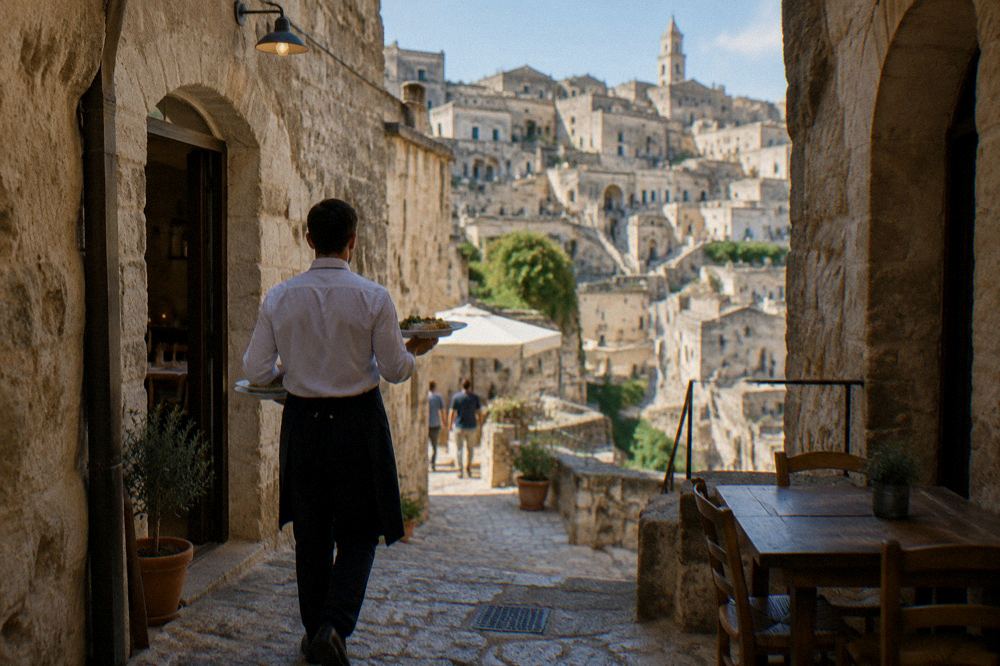
Yes, and it is one of the most efficient pairings in the city: a guided walk of the Sassi in the late afternoon, ending as the terraces light up, followed by dinner in a cave restaurant, turns the two best hours of the day into one plan. Several products sold on this site combine the walk with a tasting or a meal, including one that adds an overnight stay in a cave hotel, and their prices, ratings and durations render in the blocks below from verified listing data.
The logic is simple. The Sassi are hard to read without explanation, and the story of the cave dwellings, the evacuation after 1952 and the restoration is the reason the dining rooms exist at all. A guide who explains the rooms adds to the dinner that follows, because the vault above the table stops being decoration and becomes evidence. The tour below, run with a tour leader, takes the same idea across two towns, pairing Matera with Alberobello in Puglia, about 1 h 23 of driving away by the site's computed road distances; the link beside it goes to the site's own tour page.
Alberobello and Matera day tour explained · Check availability
For a dinner-focused evening in the city itself, the two products below cover the spectrum: one is a full Sassi walk with a church visit and a tasting, the other bundles the stay, the meal and the tour into a single booking.
When Is The Best Time Of Year For A Cave Dinner In Matera?
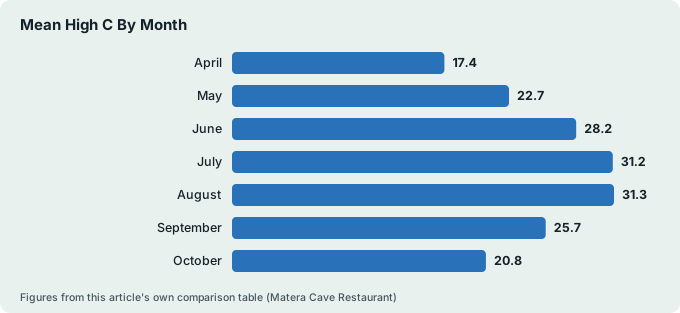
The best months for a cave dinner in Matera are late spring and early autumn: May, June, September and October combine warm evenings with the busiest dining season, and September is the city's peak month, 61,630 accommodation arrivals in 2025 against 15,239 in February, so reservations matter most then. July and August bring mean highs around 31 C in the ERA5 1991-2020 reanalysis, which the thick stone of a cave room handles well, while winter dinners are cosy but the climb home is cold.
The climate table below, from the ERA5 reanalysis 1991-2020 for the Matera grid cell and the APT Basilicata arrivals data, is the planning backbone. Note that the figures are modelled normals, not a weather-station record.
| Month | Mean high C | Mean low C | Rain mm | Arrivals 2025 |
|---|---|---|---|---|
| April | 17.4 | 7.1 | 56.5 | 45,195 |
| May | 22.7 | 11.5 | 41.7 | 54,101 |
| June | 28.2 | 16.0 | 35.1 | 50,186 |
| July | 31.2 | 18.6 | 21.2 | 43,966 |
| August | 31.3 | 18.9 | 21.7 | 60,257 |
| September | 25.7 | 15.2 | 44.8 | 61,630 |
| October | 20.8 | 11.6 | 51.7 | 52,538 |
Two seasonal notes follow from the data. July is as warm as August yet drew fewer arrivals than April, May, June, August, September or October in 2025, so a July table is easier to find than the temperature suggests. And the December figures matter for one specific reason: the Presepe Vivente, the living nativity through the Sasso Caveoso, runs on the December weekends and 2 to 3 January 2027, with tickets at 12.00 EUR full and 9.00 EUR for ages 10 to 18, and a cave dinner around those evenings needs booking well ahead. The best time to visit Matera guide and the Matera weather guide expand on all of this.
What Should You Know On The Night Of The Reservation?
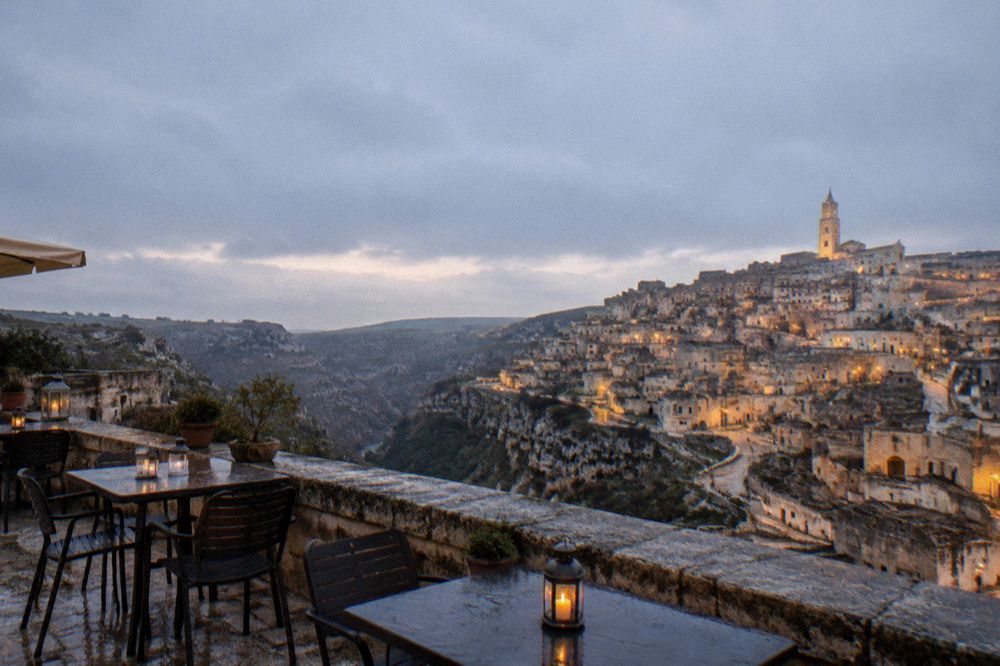
On the night, three things carry the evening: the walk down into the Sassi is steep and stepped, so allow time and wear proper shoes; the emergency number in Italy is 112, live in the Matera district since 2 December 2025; and the terraces are at their best in the hour after sunset, when the cave city is lit from below, so a table booked for just after dark catches the show. Italian is the language, the euro is the currency, and Italy is a Schengen member.
Practicalities in brief. Taxis exist and one private operator's list quotes city rides from 2.50 to 6.00 EUR base, but no municipal tariff was verified, so confirm the fare before getting in. Public transport to a Sassi restaurant is rarely the answer; the lanes are walked. If the evening is part of a bigger itinerary, the site's transport guides cover the approaches: how to get to Matera, Bari to Matera and Bari Airport to Matera, all of which note that the rail operator is FAL, with a change at Altamura from Bari and no trains on Sundays and public holidays.
For the after-dinner walk, the Matera viewpoints guide and the Matera at night guide list where the canyon is seen best after dark, and the bars and aperitivo guide covers the lighter end of the evening.
Can You Stay In A Cave And Eat In One On The Same Trip?
Yes, and it is the most complete version of the cave experience: several cave hotels in the Sassi have their own restaurants in adjacent rock-cut rooms, so the stay, the dinner and the architecture are one booking, and a two-day product sold on this site bundles the overnight stay, a meal and a Sassi tour into a single package whose figures render in its listing. The alternative is a standalone cave hotel with restaurants a walk away in the same lanes.
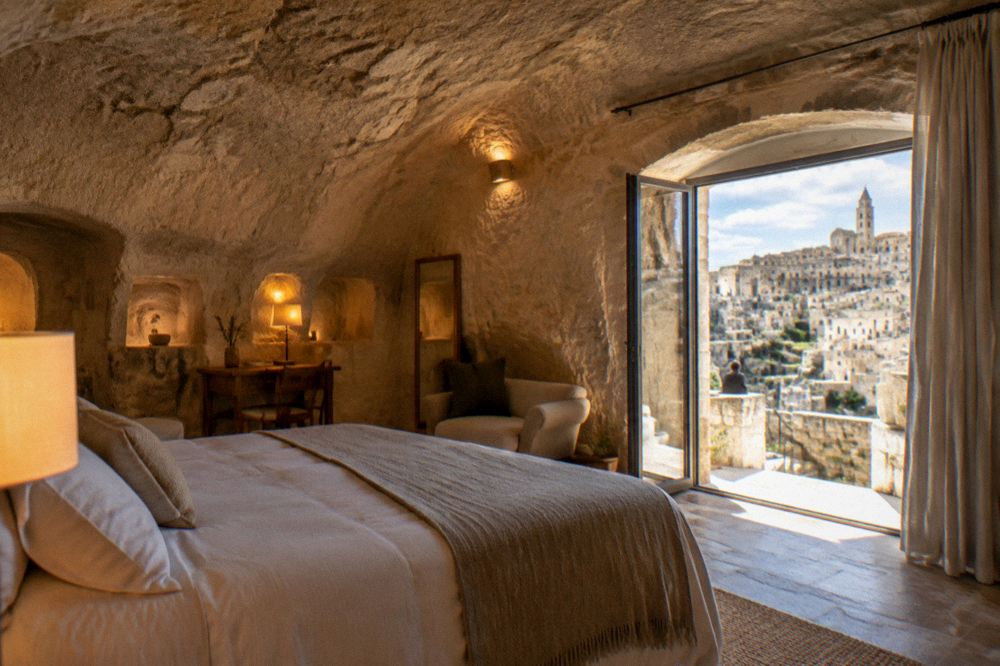
The staying side has its own guide pages: cave hotels in Matera and Sassi di Matera hotels cover where the conversions cluster and what to expect of rooms carved from rock, which share the restaurants' cool summers and damp-edge winters. One honest caveat the desk repeats: no hotel rate on this site is quoted, and the tourist tax is confirmed at booking, not printed here.
For travellers building the whole trip around food and stone, the three days in Matera itinerary sequences the cave dinner on the second evening, after the walking day, and the Matera and Alberobello in one day guide fits when the trip is short.
Common Questions About Matera Cave Restaurants
Is a Matera cave restaurant actually inside a cave?
Usually yes, but "cave" means a room cut into the tufa limestone of the Sassi, not a natural cavern. Expect vaulted rock-cut interiors, low ceilings in places and thick stone walls, either fully underground or behind a built façade with the rooms dug into the cliff behind it.
How far in advance should you book a cave restaurant in Matera?
Book days ahead in the busy months. The APT Basilicata data shows September is the peak, 61,630 accommodation arrivals in 2025, with May, August and October close behind, and December evenings around the living nativity on 5-6, 12-13, 19-20 and 26-27 December 2026 and 2-3 January 2027 are also in demand.
Do Matera cave restaurants serve seafood?
Not as a rule. Matera is an inland city in Basilicata at about 400 m above sea level, and the regional cooking is bread, pasta, lamb, pork, legumes, sheep's cheese and Aglianico wine. The coast, at Metaponto on the Ionian or Polignano a Mare and Bari on the Adriatic, is a day trip away.
Can you reach a cave restaurant by car?
Rarely. The Sassi sit inside the restricted traffic zone, with cameras active 10:00 to 20:30 from 16 September to 30 June and 10:00 to 24:00 from 1 July to 15 September, and the lanes themselves are stepped. Park outside the zone and walk down; the site's parking and ZTL guides cover the detail.
What wine is served with dinner in a Matera cave restaurant?
The regional reds are Aglianico-based, from the hills of northern Basilicata, and the local whites and rosés come from the same inland vineyards. The site's Matera wine guide explains the denominations and what to look for on a list.
A cave dinner is the single most compressed way to experience what the Sassi are: a meal inside the rock architecture of a UNESCO-inscribed settlement, eating the inland cooking that the caves were built around. Choose the room, mind the steps, book ahead in September, and the stone does the rest.