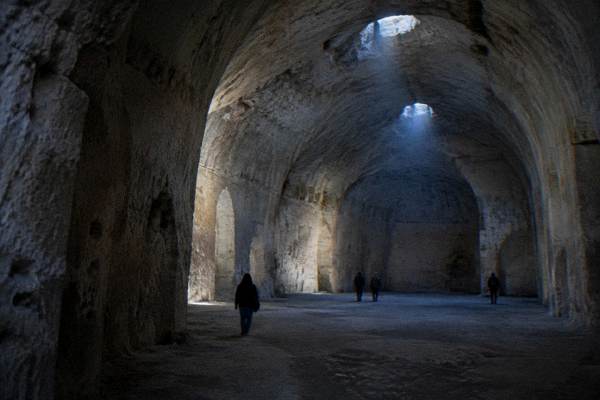
Best Time To Visit Matera
September, not August, is Matera's busiest month: 61,630 accommodation arrivals in September 2025 against 60,257 in August, with three in four September guests arriving from abroad. Here is how the climate, the crowds and the calendar actually line up, month by month.
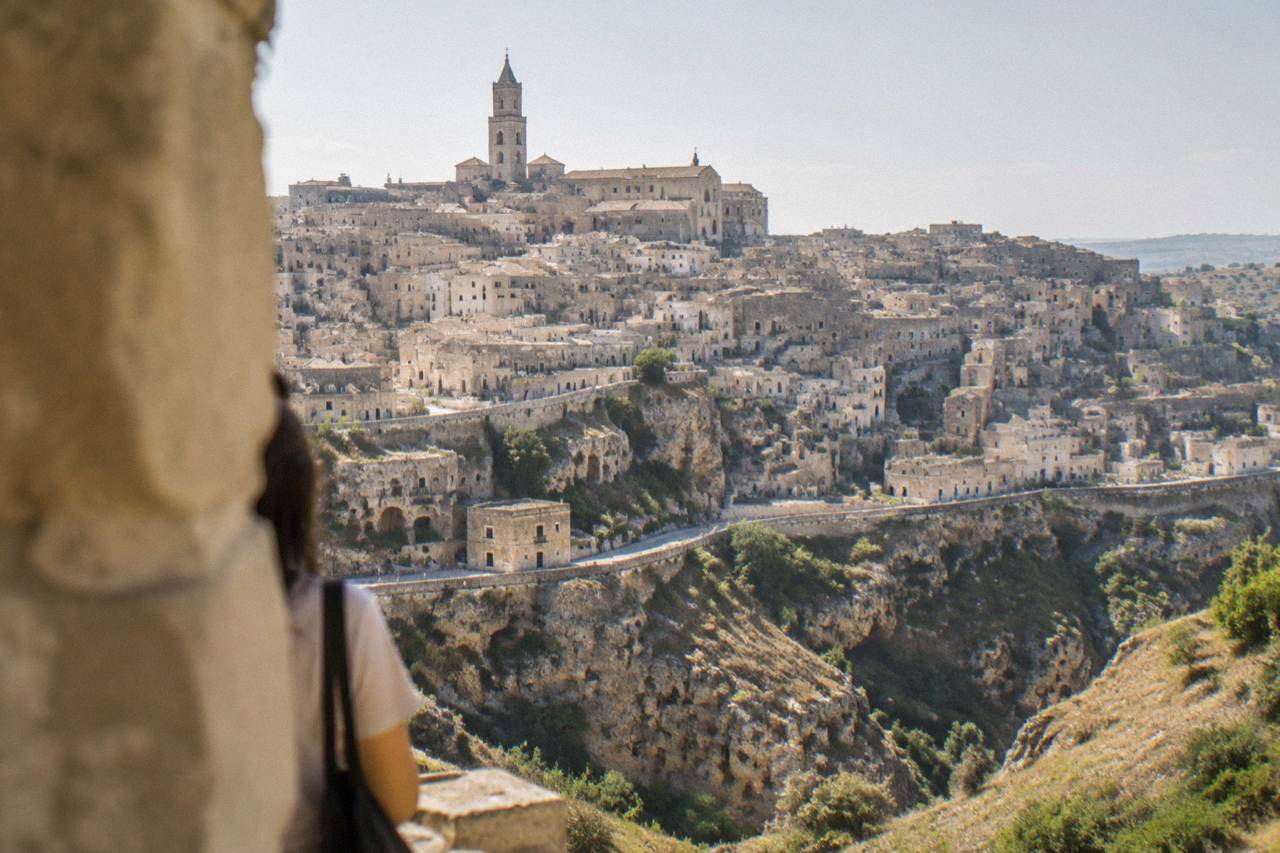
Short answer
May, June, late September and October give Matera its best mix of weather, daylight and walkable heat; July and August are the warmest but also the fullest in August; November to February is quiet, cold at about 400 m elevation and wet in November.
Matera sits inland in Basilicata, southern Italy, at about 400 m above sea level on the rim of the Gravina canyon, and the year it offers visitors is not the seaside calendar of the nearby Adriatic and Ionian coasts. The city's own numbers make the point cleanly: APT Basilicata's accommodation data logged 61,630 arrivals in September 2025, the year's peak, against 43,966 in July, even though the ERA5 reanalysis, 1991-2020, puts July's mean high at 31.2 °C against September's 25.7 °C. People come when the stone city is comfortable to climb through, and the Sassi involve climbing: steep lanes, stepped streets and uneven rock-cut paths connect Sasso Caveoso to Sasso Barisano and the Civita ridge between them.
This guide works through the year with two datasets: the ERA5 reanalysis normals for Matera's grid cell, which are modelled values rather than weather-station records, and the APT Basilicata guest counts, which measure registered accommodation arrivals, not day trippers. Together they answer the practical questions, when it is too hot to walk, when it is too wet, when the city is full, and when the calendar itself is a reason to go. More on the practicalities of arriving is in How To Get To Matera, and the sky-side of the question is covered in the Matera weather guide.
When Is The Best Time To Visit Matera For Weather And Crowds?
The best months for a first visit to Matera are May, June, late September and October, when the ERA5 reanalysis, 1991-2020, puts mean highs between 20.8 and 28.2 °C, rain runs lower than in winter, and the APT arrival counts sit below the September peak. May averaged 54,101 arrivals in 2025 and October 52,538, both busy but below September's 61,630, and the walking conditions in the Sassi are at their most forgiving: warm days, cool evenings, and morning light across the canyon that photographers plan around.
The logic of the Sassi drives this. Seeing Matera properly means being on foot for hours on stepped stone lanes that hold the day's heat in July and August, when mean highs run at 31.2 and 31.3 °C and about 19 to 21 days a month reach 30 °C. In May the mean high is 22.7 °C; in October, 20.8 °C. Those are months when the climb from Sasso Caveoso up to the Civita, or the walk out to a viewpoint over the canyon, costs effort rather than endurance.
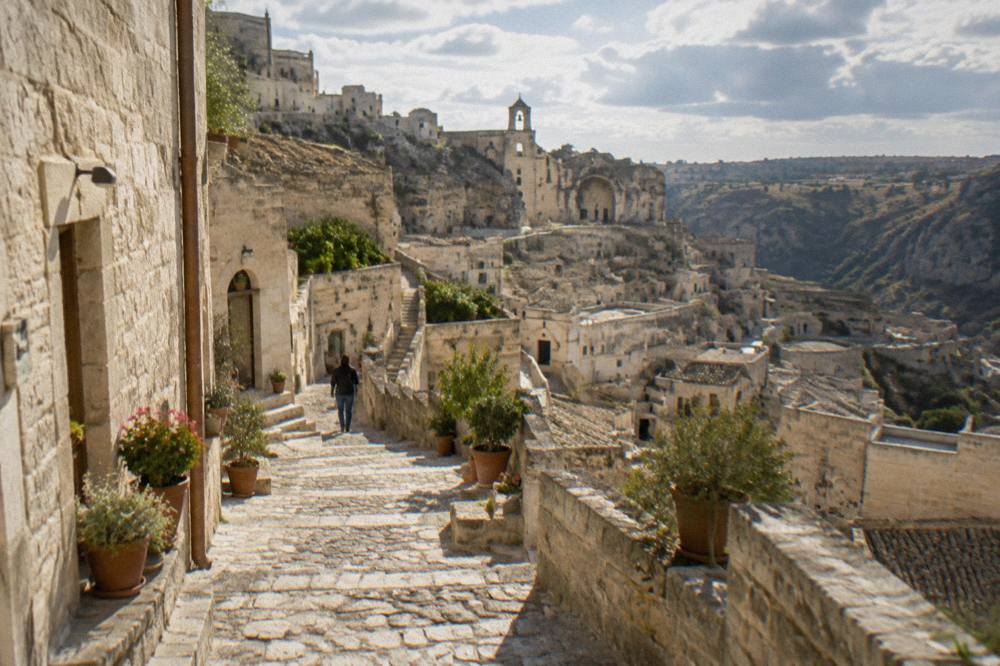
June deserves its own word. At a 28.2 °C mean high with only 35.1 mm of rain across about six rain days, it is close to summer heat without the full August crowd, and its 50,186 arrivals in 2025 sat below both May and September. Late September into early October is the other sweet spot: the peak has passed, the mean high has fallen, and the evening light on the canyon walls, the subject of the Matera viewpoints guide, holds well past seven.
Choosing between these windows is partly a question of what you want alongside the city. Alberobello, the trulli town about 68 km away by road, pairs naturally with Matera on a day trip, and the Alberobello Trulli Walk covers its two districts with a guide; Check availability if spring or autumn dates are in play, since guided capacity thins outside the peak.
What Is Matera's Climate Like Month By Month?
Matera's climate is a continental-leaning Mediterranean one at elevation: mean highs rise from 10.3 °C in January to 31.3 °C in August, mean lows run from 2.2 °C in January and February to 18.9 °C in August, and the year averages 562.5 mm of rain over about 90.7 rain days, per the ERA5 reanalysis, 1991-2020. November is the wettest month at 67.1 mm and July the driest at 21.2 mm, and about 20 days a year see frost, almost all of them between December and March.
The table below is the planning spine of this guide. The arrival figures are APT Basilicata's 2025 accommodation counts for the city of Matera, guests in registered hotels and rentals, not day visitors, and the climate columns are modelled normals for Matera's grid cell, not station records.
| Month | Mean high °C | Mean low °C | Rain mm | Rain days | 2025 arrivals |
|---|---|---|---|---|---|
| Jan | 10.3 | 2.2 | 51.4 | 8.1 | 18,402 |
| Feb | 11.1 | 2.2 | 54.9 | 8.8 | 15,239 |
| Mar | 14.1 | 4.4 | 59.2 | 9.4 | 23,629 |
| Apr | 17.4 | 7.1 | 56.5 | 9.7 | 45,195 |
| May | 22.7 | 11.5 | 41.7 | 7.9 | 54,101 |
| Jun | 28.2 | 16.0 | 35.1 | 6.4 | 50,186 |
| Jul | 31.2 | 18.6 | 21.2 | 4.4 | 43,966 |
| Aug | 31.3 | 18.9 | 21.7 | 4.7 | 60,257 |
| Sep | 25.7 | 15.2 | 44.8 | 7.0 | 61,630 |
| Oct | 20.8 | 11.6 | 51.7 | 7.5 | 52,538 |
| Nov | 15.5 | 7.5 | 67.1 | 8.3 | 23,555 |
| Dec | 11.2 | 3.7 | 57.2 | 8.5 | 30,385 |
Two readings of that table matter more than any single row. First, July and August are nearly identical in temperature, 31.2 against 31.3 °C mean high, yet July drew 43,966 arrivals in 2025 and August 60,257: the Italian holiday month fills the city, while the foreign-heavy months flank it. Second, the arrival curve peaks in September at 61,630, when the mean high has already dropped to 25.7 °C. The APT data shows 57.4% of 2025 arrivals came from abroad, and in September that share reached 74.5%.
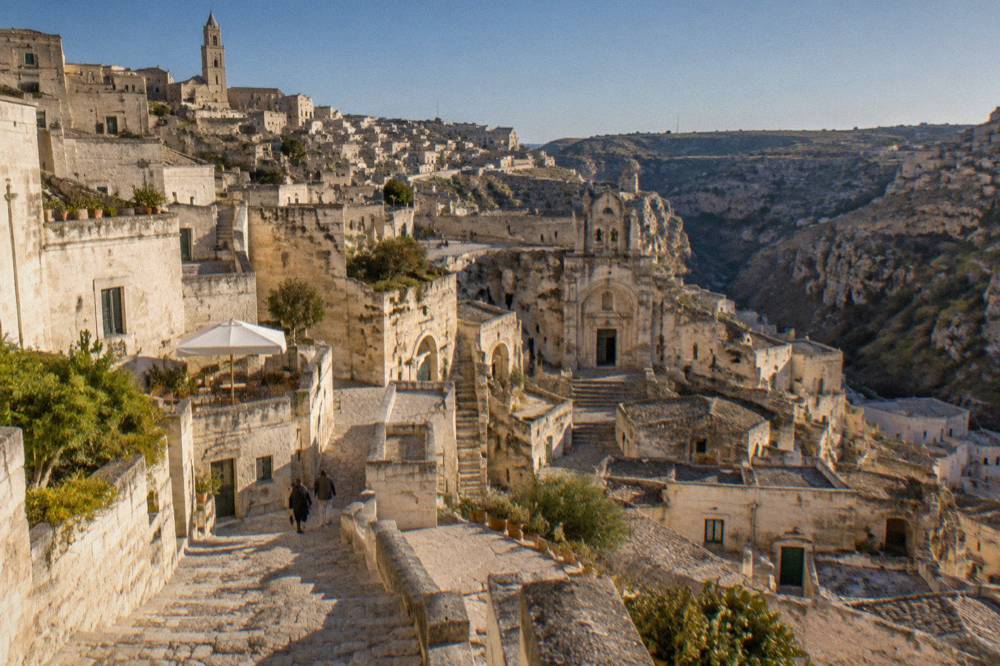
Rain deserves a calmer mention than it usually gets. Even November, the wettest month, averages 67.1 mm across roughly eight rain days, and July about four. The city also has a full indoor circuit, the rock churches of Oltre l'Arte, MUSMA, Palazzo Lanfranchi, covered in the Matera rainy day guide, and the cave interiors themselves hold a steady cool temperature year round.
Is Summer A Bad Time To Visit Matera?
Summer is not a bad time to visit Matera, but it is a demanding one: July and August mean highs of 31.2 and 31.3 °C, about 40 days a year reaching 30 °C falling inside those two months, and an August arrival count of 60,257 that makes it the second busiest month of the year behind September. The heat is dry rather than humid, rain is minimal, and the cave interiors and rock churches stay genuinely cool, but the Sassi's stepped lanes offer little shade in the middle of the day.
The workable summer pattern is to shift the day. Walk the Sassi early, from around sunrise to late morning, spend the early afternoon in a cave-cool interior such as the Casa Grotta di Vico Solitario or MUSMA, and come back out as the shadows lengthen across the canyon. Sunset times, tracked in What Time Is Sunset In Matera, matter more here than in most Italian cities, because the whole Sassi facade turns gold in the last hour of daylight and the evening is when the city does its socializing.
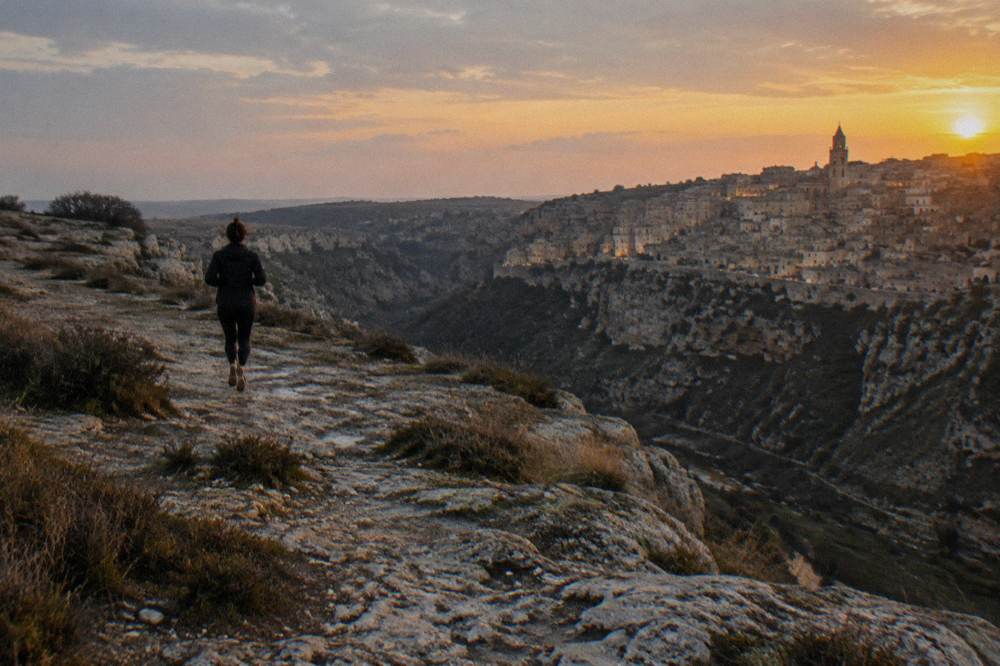
July is the sleeper option. Its 43,966 arrivals in 2025 were fewer than April, May, June, August, September or October drew, which makes it the quietest full-summer month by a wide margin, and the APT data shows foreign guests were the majority that month. If heat is tolerable and an early-morning walking routine is acceptable, July offers high-season hours everywhere with measurably fewer fellow guests than the months either side of it.
A summer visit also benefits from having a couple of things reserved ahead, because high-season guided slots and day-trip seats are the first to thin out. Free cancellation and pay-later options are common on the operator's live listing, so locking a Sassi walk or a paired Alberobello excursion early costs nothing if plans shift.
Is Winter A Good Time To Visit Matera?
Winter in Matera is cold, damp and quiet: mean lows of 2.2 °C in January and February, about 20 frost days a year concentrated between December and March, November's 67.1 mm of rain, and arrival counts that fall to 15,239 in February and 23,555 in November 2025, roughly a quarter of September's peak. What the season gives back is a city at its calmest, hotel availability at its widest, and a calendar that includes one of the region's distinctive December events.
At about 400 m elevation this is not a mild coastal winter. The ERA5 reanalysis, 1991-2020, gives January a mean high of 10.3 °C, which is jacket weather on the exposed canyon rim where the wind funnels up the Gravina. Snow is occasional rather than routine, and the Matera in winter guide covers what to expect and pack. Layers, real shoes and a plan for early darkness are the honest requirements.
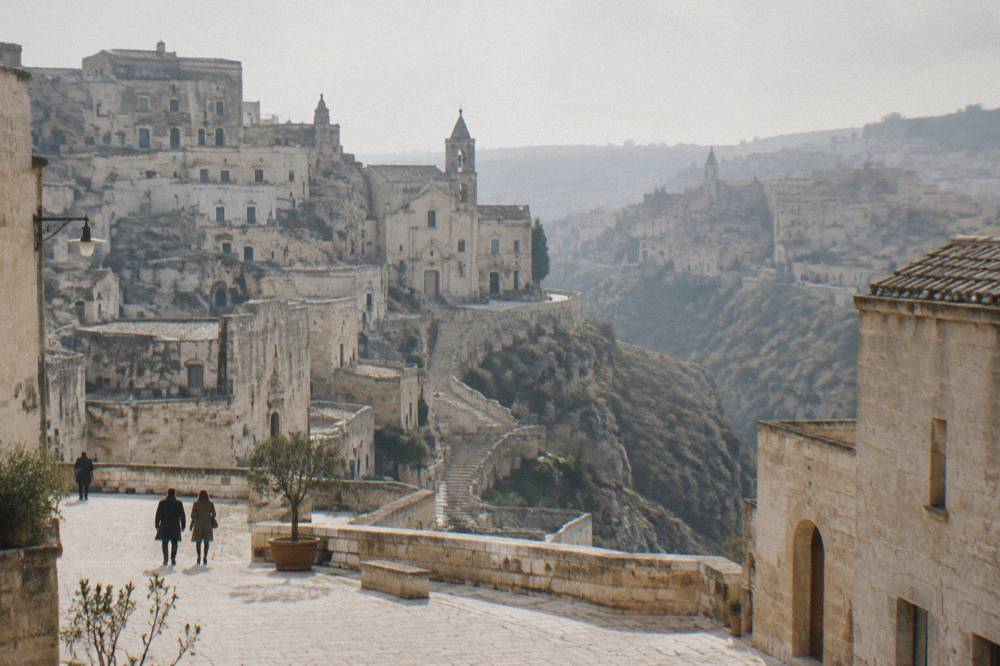
The counterweight is December's Presepe Vivente nei Sassi, a living nativity whose sixteenth edition, titled "Vera Fratellanza", runs public days across the December weekends and 2 to 3 January, with tickets at 12.00 EUR full and 9.00 EUR for ages 10 to 18 per the organisers' own site. Some 20 scenes line a route from Piazza San Pietro Caveoso through Vico Solitario, Rione Malve and Casalnuovo. The Matera at Christmas guide covers the fuller programme, and February, the quietest month of the year on the APT counts, is close to having the Sassi to yourself before the spring build-up begins.
What Are The Busiest And Quietest Months In Matera?
September is Matera's busiest month, with 61,630 accommodation arrivals in 2025 against August's 60,257, and February is the quietest at 15,239, roughly four times fewer than the peak; May (54,101), October (52,538), June (50,186) and April (45,195) fill the second tier, while November, January and February sit far below everything else. These are APT Basilicata counts of guests in registered accommodation, and 57.4% of the 2025 total came from abroad, rising to 74.5% in September.
The composition shifts through the year in a way that matters for planning. Foreign guests were the majority in April, May, June, July, September and October; August is the one warm month Italians dominate, at 53.2% of arrivals. A visitor hoping for thin crowds in August will not find them, and one hoping for a lively atmosphere in February will not find that either.
| 2025 month | Arrivals | Share from abroad | Crowd level |
|---|---|---|---|
| Jan | 18,402 | minority | very quiet |
| Feb | 15,239 | minority | quietest of the year |
| Mar | 23,629 | minority | quiet |
| Apr | 45,195 | majority | busy |
| May | 54,101 | majority | busy |
| Jun | 50,186 | majority | busy |
| Jul | 43,966 | majority | moderate |
| Aug | 60,257 | minority | very busy |
| Sep | 61,630 | 74.5% | peak of the year |
| Oct | 52,538 | majority | busy |
| Nov | 23,555 | minority | quiet |
| Dec | 30,385 | minority | moderate |
Average stay barely moves with the seasons: 1.56 nights per guest across 2025, computed from 748,812 overnight stays over 479,083 arrivals. Matera is a short-stay city for the APT-counted population, which is why arrival counts translate so directly into how full the streets, the restaurants and the cave-house queues feel. On timing your days rather than your month, How Many Nights Should I Stay In Matera works the question from the itinerary side.
What Events Should Shape The Timing Of A Matera Trip?
Three fixed points should shape timing: the Festa della Bruna on 2 July every year, the city's patronal feast dated to 1389; the Matera Film Festival, whose seventh edition runs 7 to 15 November 2026; and the Presepe Vivente nei Sassi across the December weekends into early January, with tickets at 12.00 EUR full and 9.00 EUR for ages 10 to 18 on the organisers' site. Around them sit the Matera 2026 Mediterranean Capital of Culture and Dialogue programme, closing in late November 2026, and a concert season at Auditorium Gervasio running into April 2027.
The Bruna is the one date that transforms the city. Oltre l'Arte, the body running the rupestrian churches, closes all its sites on 2 July for the feast, so a visitor that week should treat the day itself as the event rather than a sightseeing day, and the Festa della Bruna guide covers what the procession involves. Beyond the feast, the calendar leans autumn-winter: film in November, jazz under the Gezziamoci festival into late December, and the living nativity as the year closes.
| Event | Dates | Status |
|---|---|---|
| Festa della Bruna | 2 July every year, 2027 edition is the 638th by the organisers' count | fixed by tradition since 1389 |
| Matera Film Festival, 7th edition | 7 to 15 November 2026, twinned with Tétouan | organisers' programme |
| "The Sea Is Closer Than You See" exhibition | 3 October to 8 December 2026, at Palazzo Lanfranchi, TAM, MUSMA and Basilicata Open Space | reported in local news |
| Presepe Vivente nei Sassi, 16th edition | 5-6, 12-13, 19-20, 26-27 December 2026 and 2-3 January 2027 | 12.00 EUR full, 9.00 EUR ages 10 to 18, under 10 free |
| Gezziamoci jazz festival, 39th edition | runs to 29 December 2026 across Matera venues | festival listing |
| Auditorium Gervasio concert season | 26 October 2026 to 16 April 2027 | season listing |
Two programming notes for late-2026 visitors. Casa Noha, the FAI interpretation centre in the Sassi, is closed 5 to 22 October 2026 for renovation ahead of a relaunch, so a mid-October trip should not count on it. And the Museo Ridola, the archaeological museum, has been closed since 7 April 2025 for energy works with no reopening date published; the Museo Ridola page tracks what that leaves open in the museum circuit.
How Do Seasons Change What A Day In Matera Feels Like?
Seasons change a Matera day mostly through heat, daylight and opening hours: summer days shift sightseeing to early morning and evening around 31 °C afternoons and long light; spring and autumn spread walking across the full day at 17 to 28 °C mean highs; winter compresses everything into roughly 9 to 10 hours of daylight around a 10 to 11 °C mean high, with cave interiors the reliable constant. The Sassi's opening hours stretch in summer, with the Casa Grotta di Vico Solitario running daily 09:00 to 20:30 in July and August against 09:30 to 18:00 on winter weekdays.
Daylight is the silent variable. The ERA5 normals put it at about 15 hours a day in June against 9.3 in December, and a city whose whole visual identity is a sunlit canyon facade changes character with that swing. Summer evenings are the social peak, covered in Matera At Night; winter evenings close in early and move indoors, which is when the cave restaurants, profiled in the Matera cave restaurants guide, earn their keep.
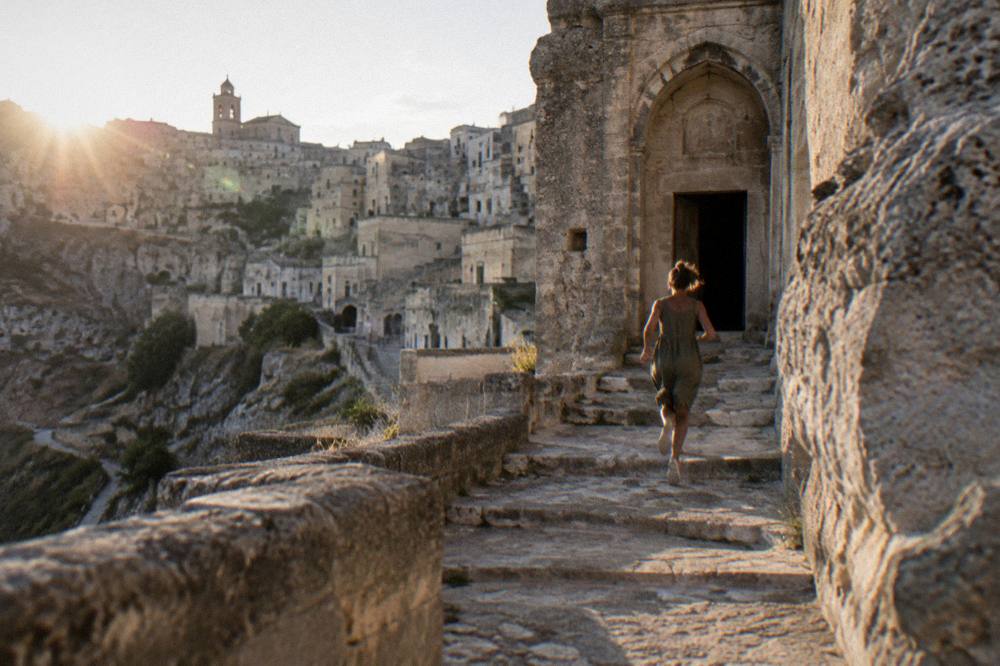
| Season | Mean high / low °C | Daylight (approx.) | Best hours for the Sassi | Main trade-off |
|---|---|---|---|---|
| Spring (Mar-May) | 14.1-22.7 / 4.4-11.5 | 12.0 to 14.5 h/day | all day | April-May crowds |
| Summer (Jun-Aug) | 28.2-31.3 / 16.0-18.9 | 13.8 to 15.0 h/day | before 11:00, after 17:00 | heat, August fullness |
| Autumn (Sep-Nov) | 25.7 down to 15.5 / 15.2 down to 7.5 | 12.5 down to 9.9 h/day | all day in Sep-Oct | September is the peak month |
| Winter (Dec-Feb) | 10.3-11.2 / 2.2-3.7 | 9.3 to 10.7 h/day | 10:00 to 16:00 | cold, damp, short days |
For visitors who want the panorama without the climbing, small-vehicle tours run year round. The Ape Calessino Tour threads the lanes in a three-wheeled calessino, and the Tuk-Tuk History and Legends ride covers the viewpoints with commentary; both are covered in the trio below.
What About Easter, Public Holidays And Shoulder-Week Deals?
Easter and the weeks around it fall inside Matera's spring ramp-up, and 2025 shows the jump plainly: March logged 23,629 arrivals and April 45,195, so the Easter fortnight behaves like a warm-month peak in miniature; Italian public holidays (25 April, 1 May, 2 June, 15 August, 1 November, 8 December) similarly pull local traffic into a city otherwise shaped by foreign guests, and 25 December and 2 July are the two days Oltre l'Arte closes its sites. The tourist tax applies year round, is collected by the accommodation, and its amount is confirmed at booking.
The shoulder logic in Matera is slightly unusual. The classic deals sit in the first three weeks of October, early June, and late March, windows where the weather is already or still walkable and the arrival counts sit a tier below the peak. But September, the classic shoulder month almost everywhere in Italy, is here the single busiest month of the year, so the discount hunter should treat it as peak, not shoulder. The 2026 figures point the same way: 320,741 arrivals from January to August, up 3.1% on the same months of 2025.
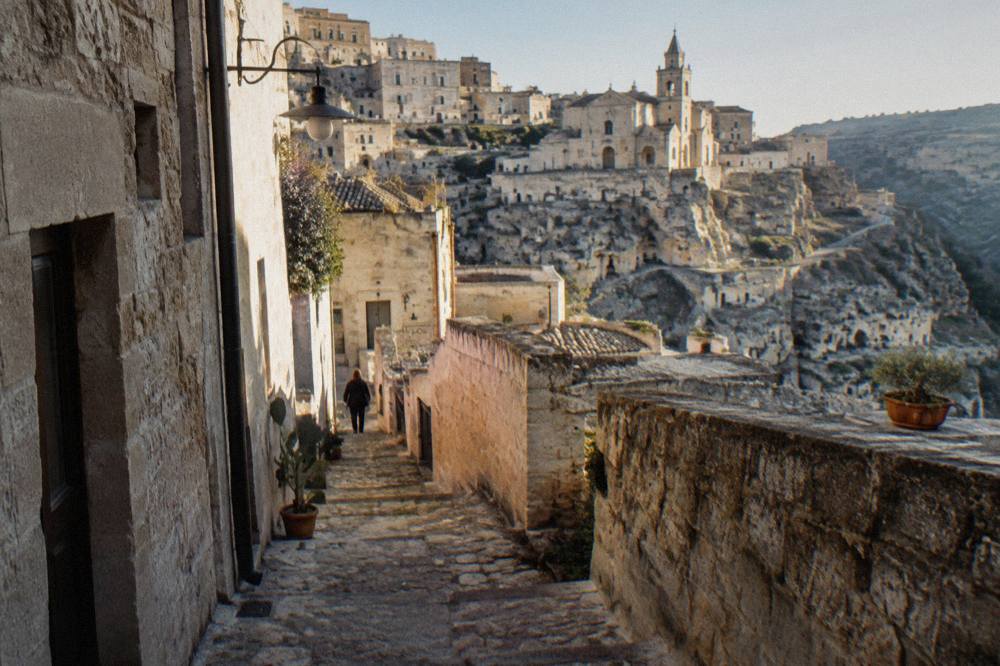
Holy Week itself changes the texture of the city, and the Matera At Easter guide covers the rites; the Cathedral's cultural route also pauses tourist visits on Sunday mornings between 10:00 and 12:30 year round, a detail worth knowing for any weekend trip in any season. Accommodation choice interacts with season too: cave rooms, covered in Matera cave hotels and where to base in the where to stay in Matera guide, stay naturally cool in summer and snug in winter, which is a fair part of their appeal.
Which Month Should You Actually Pick For Matera?
Pick May or early June for the best all-round mix, late September or early October for warm stone and peak-light photography with slightly thinner streets than September's height, July if heat is acceptable and fewer fellow guests are the priority, and February or early December for the quietest city at the cost of short, cold days. August suits visitors who want the full Italian summer social scene and will walk early; November suits visitors here for the film festival or a museum-first itinerary.
For a one-line answer by traveller type:
| If you want... | Pick | Why, from the data |
|---|---|---|
| Comfortable all-day walking | May, early June | 22.7 to 28.2 °C mean highs, 6 to 8 rain days |
| Fewest fellow guests, warm weather | July | 43,966 arrivals, fewer than any month from April to October |
| Golden light on the Sassi | late September, October | 20.8 to 25.7 °C mean highs, evening light past 18:30 |
| The city almost to yourself | February | 15,239 arrivals, the year's low |
| Events as the reason | 2 July, mid-November, late December | Bruna, film festival, Presepe Vivente |
Pair the month with the right ticket plan: the Oltre l'Arte circuit prices at 4.50 EUR for one rupestrian church, 8.00 for two, 10.00 for three, and 25.00 for an eight-site all-inclusive ticket, with the churches open daily 09:30 to 19:30 from late March, hours that shorten in the cooler months and are detailed in the church tickets and passes guide. Booking the big two, a Sassi walk and a Murgia sunset, on separate days spreads the climbing, and the one day in Matera and two days in Matera itineraries show how.
Common Questions About The Best Time To Visit Matera
What is the best month to visit Matera?
May and June combine mean highs of 22.7 to 28.2 °C with rain days in the six to eight range, per the ERA5 reanalysis, 1991-2020, and arrival counts below the September peak. Late September and early October run a close second, with the mean high at 20.8 to 25.7 °C and evening light across the canyon.
What is the busiest month in Matera?
September. APT Basilicata logged 61,630 accommodation arrivals in September 2025 against 60,257 in August, and 74.5% of those September guests came from abroad. The counts cover registered accommodation, not day trippers.
Is Matera too hot in July and August?
The ERA5 normals give July and August mean highs of 31.2 and 31.3 °C, with roughly 40 of the year's days at or above 30 °C falling in those two months. Early-morning and evening walking, with cave interiors midday, makes summer workable; the Sassi lanes themselves hold heat and offer little shade.
Does it snow in Matera in winter?
Snow is occasional rather than routine. The normals show about 20 frost days a year, almost all between December and March, with January and February mean lows of 2.2 °C. Rain is the more likely winter condition, peaking in November at 67.1 mm.
When is the cheapest time to visit Matera?
February is the quietest month on the APT counts, 15,239 arrivals in 2025, with November and January close behind. This site does not quote hotel rates; check rates for your dates directly, and note that the tourist tax is collected by the accommodation and confirmed at booking.
Is December a good time to visit Matera?
December trades warmth, an 11.2 °C mean high, for the Presepe Vivente nei Sassi, whose sixteenth edition runs public days across the December weekends and 2 to 3 January, with tickets at 12.00 EUR full and 9.00 EUR for ages 10 to 18. The 2025 arrival count of 30,385 makes it a moderate, not peak, month.
Whatever month wins, the two decisions that matter most are where to sleep, a cave room in the Sassi or a base on the plain, covered by Matera Travel Guide in its accommodation pages, and how early the first walk of the day starts, because in every season the Sassi are at their best before the crowds and the heat arrive.