Matera History
Matera, an inland city in Basilicata, southern Italy, carries a documented history that runs from Palaeolithic occupation of its cave districts to a UNESCO inscription in 1993 and a European Capital of Culture year in 2019.
Short answer
Matera's history centres on the Sassi, cave districts cut into tufa limestone above the Gravina canyon. UNESCO says the site was first occupied in the Palaeolithic and shows continuity over more than two millennia. Residents were moved out of the Sassi between 1952 and the 1970s, a 1986 law opened restoration, and UNESCO inscribed the Sassi and the park in 1993.
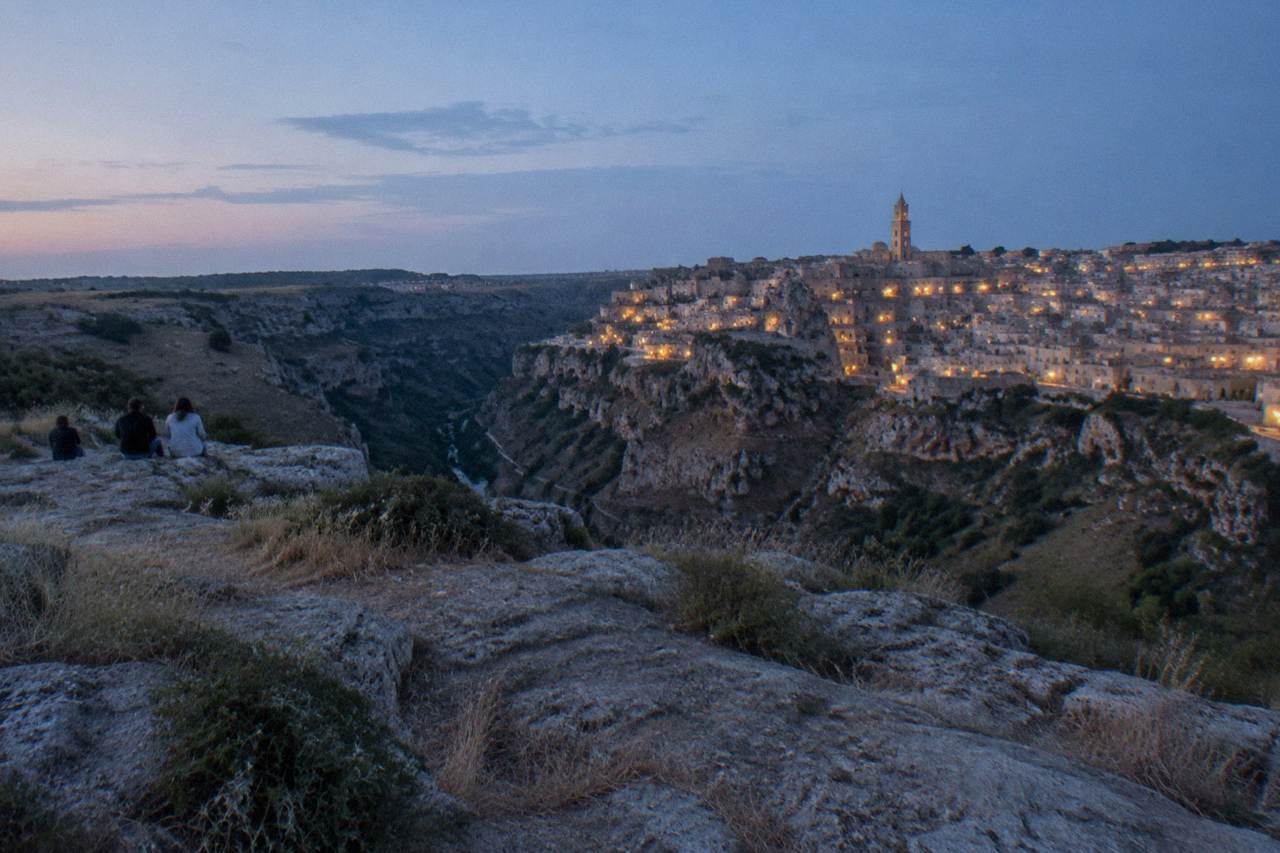
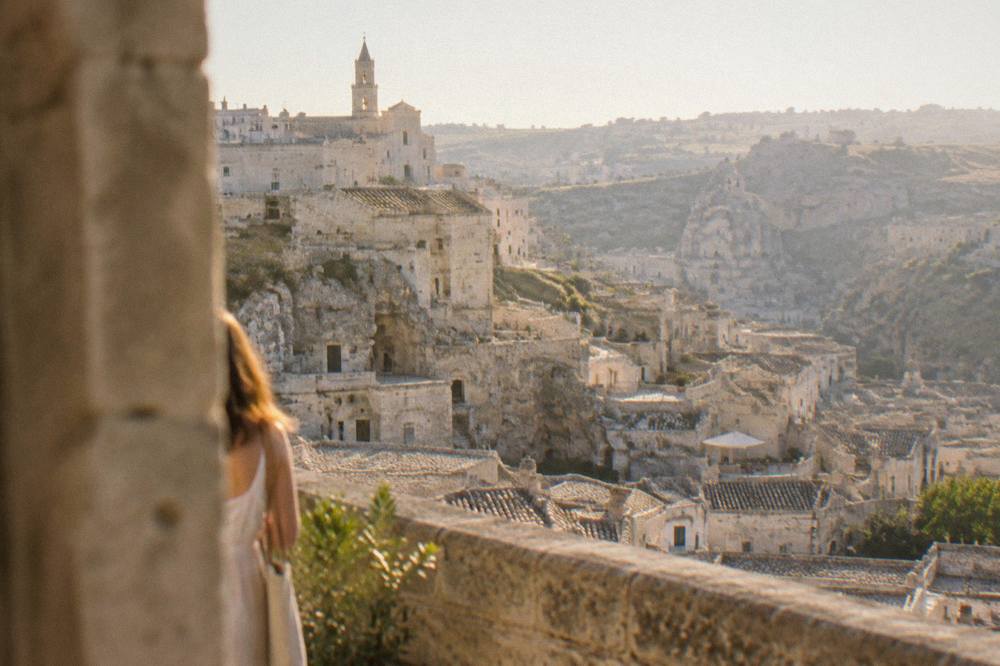
Matera, an inland city in Basilicata, southern Italy, sits at about 400 m above sea level on the edge of the Gravina canyon, with the Murgia plateau rising on the far side. Its old quarters, the Sassi, are cave dwellings and rock-hewn churches cut into pale tufa limestone, and they hold one of the strangest urban histories in Europe: a settlement the UNESCO inscription text says was first occupied during the Palaeolithic, then evacuated by law in the last century, then restored and inscribed on the World Heritage List in 1993. This page assembles that story from dated, verified sources only, and it says plainly where the record stops.
What Is The History Of Matera, In Brief?
Matera's documented story runs from Palaeolithic occupation of the Gravina canyon, through rock-cut settlement over more than two millennia, to the Sassi evacuation that began in 1952, a 1986 restoration law, UNESCO inscription in 1993, the European Capital of Culture year 2019, and the Mediterranean Capital of Culture and Dialogue programme running in 2026. The city is in Basilicata, not Puglia, and it is inland: the coast at Metaponto or Polignano a Mare is a day trip, not a walk. What makes the history unusual is that the cave districts were not a ruin but a living, overcrowded housing stock until the last century, which is why their evacuation and rebirth both happened within living memory.
The city's population today is 59,368 residents at 1 January 2026, according to ISTAT figures quoted by the tuttitalia.it municipal register. The comune covers 392.08 km² of the Murgia plateau and the Gravina gorge. The patron feast is the Madonna della Bruna, held every year on 2 July, a celebration the organisers date to 1389, when Pope Urban VI, who had been archbishop of Matera, tied the feast to the Visitation.
For planning around the modern city rather than its past, the practical pages are how to get to Matera and where to stay in Matera, and the cave-hotel question is covered at Matera cave hotels, since sleeping inside the restored Sassi is itself a piece of the post-1986 story.
Who Lived In The Sassi, And How Far Back Does Occupation Go?
The materani, the people of Matera, lived in the Sassi: until the evacuation that began in 1952, thousands occupied cave houses without running water or sanitation, keeping animals in the same spaces. UNESCO's inscription text for site 670 says the area was first occupied during the Paleolithic and describes the rock-cut settlement as exhibiting continuity over more than two millennia. That is the strongest claim this site will print. What the sources do support is a sequence: cave occupation in prehistory, rupestrian church communities in the Middle Ages, and dense cave housing that lasted into the last century before the evacuation began.
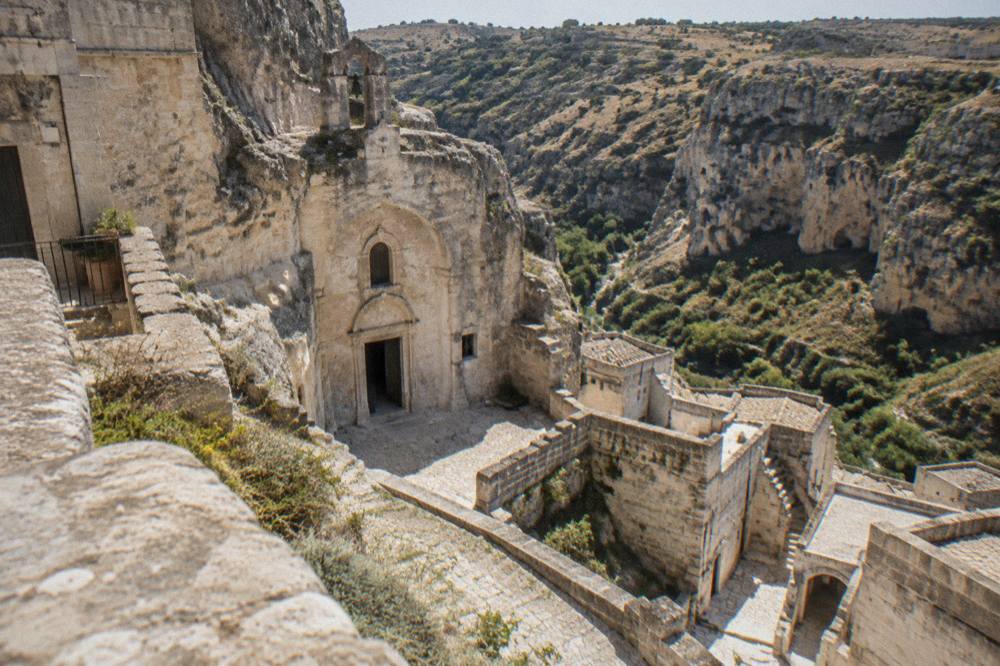
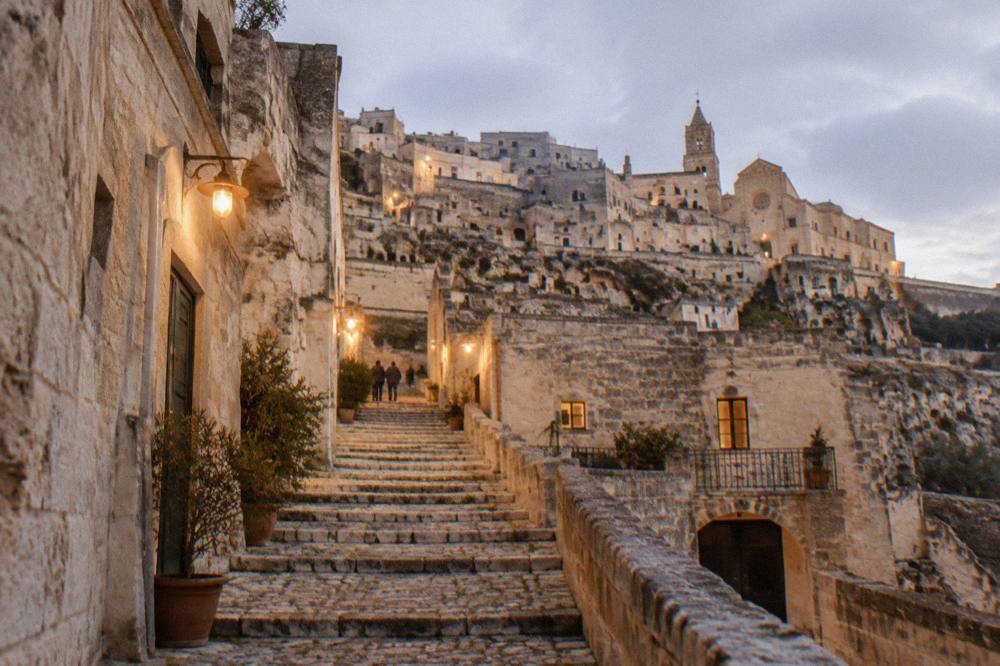
The Sassi are two districts, Sasso Caveoso and Sasso Barisano, flanking the high ground of the Civita where the Cathedral stands. "Sassi" is the plural, "Sasso" the singular. The dwellings are not free-standing buildings with caves behind them: many are the caves themselves, faced with masonry where the rock opened, and the park across the gorge holds a large concentration of rock churches cut by hand into the tufa. Regional Law 11/1990 created the Archaeological Historic Natural Park of the Rupestrian Churches of Matera, which the park's own site measures at about 8,000 hectares, while UNESCO's listing cites regional protection of some 6,500 ha: two official figures exist, and neither is a bare exact number on this page.
The people of Matera are called materani. Until the evacuation that began in 1952, thousands of them lived in the cave houses without running water or sanitation, keeping animals in the same spaces, and the district's problems were the subject of national political attention rather than picturesque postcards. The history of the Sassi districts and the question why Matera was abandoned are covered in their own pages, as is why people lived in caves in Matera.
A walk with a licensed guide is the fastest way to read the layers, because the district explains itself poorly from the street. The Alberobello walk among trulli houses with a local covers the other great UNESCO settlement of the region, and the pairing of the two towns is a classic Basilicata-and-Puglia history day.
The private option suits travellers who want the whole old town and both Sassi in one loop with a guide's full attention, and the James Bond walk traces the 2021 filming locations through the same alleys, which is history of a much shorter vintage.
Why Were The Sassi Evacuated From 1952?
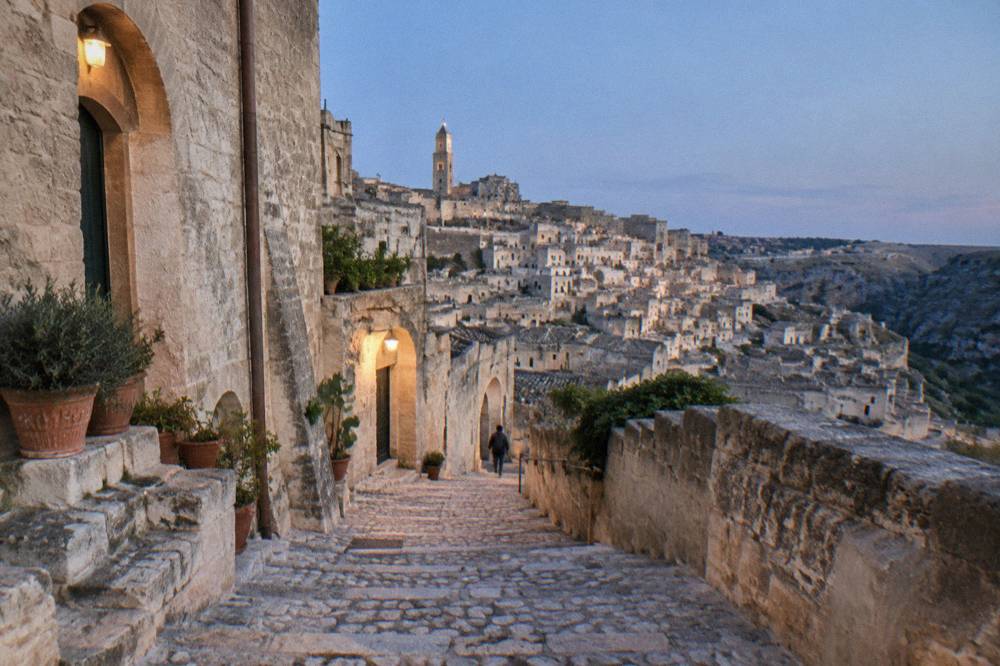
What the evacuation left behind was a district of empty caves. The houses were not demolished on any scale: they stood vacant, and the stone and the rock churches survived because nobody could afford to replace them. That neglect is the accidental reason the Sassi look as they do today. The political language of the era, including the phrase "the shame of Italy" that circulates in guidebooks, belongs to a contested historiography that this site does not quote. The shame of Italy claim has its own page, written the same way.
The Matera of the evacuation decades is also the Matera of Christ Stopped at Eboli, Francesco Rosi's 1979 film of Carlo Levi's memoir, which was shot in the region and is one of the verified film titles tied to the city. The cinema came looking for a landscape that looked like the rural poverty the books described, and the city's later filmography, from Pasolini in 1964 to the Bond production in 2021, is a direct consequence of the district being preserved rather than rebuilt.
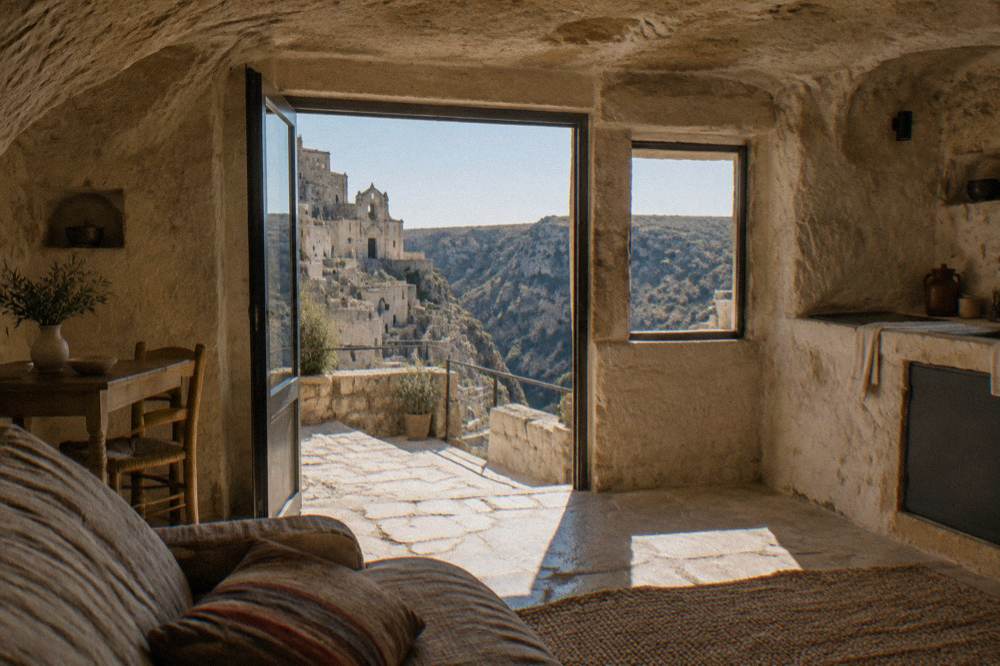
The single best place to see an evacuated cave house as it was kept is the Storica Casa Grotta di Vico Solitario, whose 2026 tariff lists 8.00 EUR full, 5.00 EUR reduced, 3.00 EUR for ages 11 to 18 and free entry to age 10, covering the cave house, the Neviera ice pit, the natural cave and the rock church of Sant'Agostino al Casalnuovo. Its own page has the full detail at Casa Grotta di Vico Solitario.
What Did The 1986 Law Change?
A 1986 national law opened the way to restoring the Sassi by funding rehabilitation and allowing the cave houses to be brought back to residential use, which is the legal turning point between the abandoned district and the inhabited, hotel-filled one of today. Before 1986 the Sassi were legally and practically frozen: unserviced, unsellable, and decaying. After it, restoration work brought water, sewers and electricity into the caves, and a new population moved back in, first as pioneers and then, decisively, as the hospitality industry.
The restoration economy is measurable. In 2025 the city's registered accommodation logged 479,083 arrivals and 748,812 overnight stays, against 388,158 arrivals in 2019, the Capital of Culture year, and 407,068 in 2024, according to the APT Basilicata accommodation counts. Those are guests in registered accommodation, not day visitors, and 57.4% of the 2025 arrivals came from abroad. The average stay works out at 1.56 nights. A district that was emptied by law between 1952 and the 1970s now runs a hotel trade inside the very caves that were condemned.
The table below sets the dated milestones of that reversal side by side.
| Year | Milestone |
|---|---|
| 1952 | National housing law begins the resettlement out of the Sassi |
| Between 1952 and the 1970s | Cave-district residents relocated to new quarters on the plateau |
| 1986 | National law opens restoration and residential reuse of the Sassi |
| 1990 | Regional Law 11/1990 creates the Park of the Rupestrian Churches |
| 1993 | UNESCO inscribes the Sassi and the park, site 670, 17th session |
| 2019 | Matera is European Capital of Culture |
| 2026 | Mediterranean Capital of Culture and Dialogue programme year |
The reopening of individual cave houses as museums is part of this same arc. Casa Noha, the FAI visitor centre in Recinto Cavone 9 that tells the city's story to arriving guests, charges 6.50 EUR for adults and 3 EUR for children, and it is closed 5 to 22 October 2026 for renovation ahead of a relaunch with new displays, per the FAI page. Its own guide is at Casa Noha.
When Did Matera Become A UNESCO World Heritage Site?
UNESCO inscribed "The Sassi and the Park of the Rupestrian Churches of Matera", site 670, in 1993 at the 17th session of the World Heritage Committee, under criteria (iii), (iv) and (v), with a property area of 1,016 ha covering more than a thousand dwellings and a large number of shops and workshops. Criterion (iii) carries the historical weight: the listing calls the Sassi an outstanding example of a rock-cut settlement, adapted perfectly to its geomorphological setting and ecosystem and exhibiting continuity over more than two millennia. That is the sentence to quote when someone asks what UNESCO actually recognised.
The inscription was the hinge between restoration and tourism. It put the city on the international map six years before the film industry returned in force for The Passion of the Christ in 2004, and it created the legal and planning frame in which cave hotels, cave restaurants and the park's visitor infrastructure could be built. The full story of the listing, including the criteria in plain language, is at Matera UNESCO.
What the inscription protects is specific and visible. The rupestrian churches inside the park, cut into the canyon walls, are the core of criterion (iii), and several of the most important ones inside the Sassi themselves are ticketed by the operator Oltre l'Arte, whose 2026 tariff is reproduced below from its own ticket page. Other pages covering the same trip are gathered on Matera Travel Guide.
| Oltre l'Arte ticket | Price | Notes |
|---|---|---|
| 1 rupestrian church | 4.50 EUR | Santa Lucia alle Malve, Madonna de Idris or San Pietro Barisano |
| 2 churches | 8.00 EUR | Any two of the three |
| 3 churches | 10.00 EUR | All three |
| Cathedral and MATA museum | 4.00 EUR | Daily 09:00 to 19:00, last entry 18:45 |
| 8-site all-inclusive | 25.00 EUR | Reduced 16.00 EUR; churches, MATA, Museo del Pane and more |
The three churches keep long hours from 28 March 2026, with Santa Lucia alle Malve and Madonna de Idris open daily 09:30 to 19:30 and San Pietro Barisano daily 10:00 to 19:00, per the same page, which also notes that all Oltre l'Arte sites close on 25 December and 2 July, the day of the Bruna feast. Individual guides cover each church: Santa Maria de Idris, Santa Lucia alle Malve and San Pietro Barisano.
Which Films Were Shot In Matera?
Matera's verified filmography includes The Gospel According to St. Matthew (1964), C'era una volta (1967), King David (1985), The Night Sun (1990), The Passion of the Christ (2004), The Nativity Story and The Omen (both 2006), Wonder Woman (2017) and No Time to Die (2021), plus the TV series Imma Tataranni from 2019, each title named on an official tourism or film-commission page. The pattern is consistent: productions come to Matera for a landscape that reads as ancient Judaea or a timeless Mediterranean past, because the Sassi survived the last century unrebuilt. Christ Stopped at Eboli (1979) and Ben-Hur (2016) are also tied to the city.
The James Bond production of 2021 is the one that changed the city's visitor profile most visibly, since the Sassi streets and the Madonna delle Vergini area appear in the film and now appear in half the itineraries sold in the city. The James Bond locations in Matera page maps them, and a themed walk is among the tours below.
| Film | Year |
|---|---|
| The Gospel According to St. Matthew | 1964 |
| C'era una volta | 1967 |
| Christ Stopped at Eboli | 1979 |
| King David | 1985 |
| The Night Sun | 1990 |
| The Passion of the Christ | 2004 |
| The Nativity Story | 2006 |
| The Omen | 2006 |
| Ben-Hur | 2016 |
| Wonder Woman | 2017 |
| No Time to Die | 2021 |
What Did The 2019 Capital Of Culture Year Do To Matera?
Matera was European Capital of Culture in 2019, a year that left the city with permanent cultural infrastructure and a foundation that still operates, and the accommodation data shows 2025 has since surpassed it: 479,083 arrivals in 2025 against 388,158 in 2019, a rise of 23.4%. The Fondazione Matera-Basilicata 2019 continues to run cultural programming, and in 2026 it coordinates "Matera 2026 Mediterranean Capital of Culture and Dialogue", a programme year whose closing is reported for 28 November 2026. The foundation's own site is the source for both the foundation's survival and the 2026 programme.
The monthly rhythm of the modern city is not the summer one outsiders expect. The APT Basilicata accommodation counts for 2025 show September as the busiest month, 61,630 arrivals, ahead of August at 60,257, and February the quietest at 15,239. In September 2025, 74.5% of arrivals came from abroad. Anyone planning a visit around the city's cultural calendar should read the best time to visit Matera and Matera events alongside this page.
The fixed point of the calendar is the Festa della Bruna on 2 July, which the organisers date to 1389 and count as the city's oldest continuous civic celebration, with the 2027 edition set for 2 July. The feast has its own page at Festa della Bruna.
What Can You Still See Of Matera's History Today?
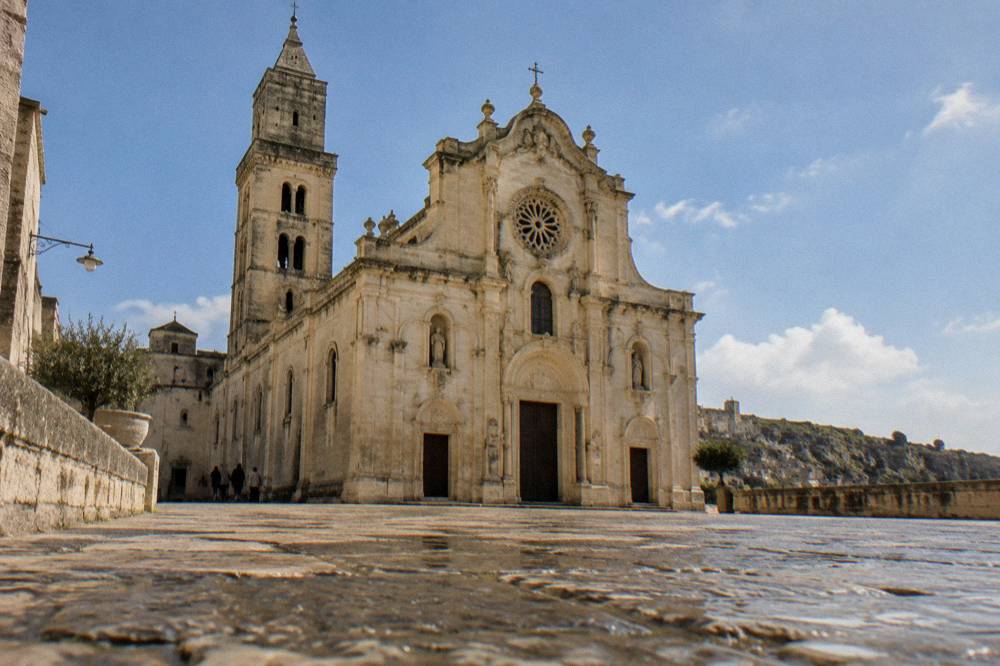
The visible record includes the cave houses at the Casa Grotta di Vico Solitario and the Antica Casa Grotta in Via Fiorentini, the rupestrian churches of the Sassi and the Murgia park, the water cisterns under Piazza Vittorio Veneto, the Cathedral on the Civita, and the museums at Palazzo Lanfranchi, MUSMA and Casa Noha. One gap matters: the Museo Archeologico Nazionale Domenico Ridola, the city's archaeology museum, has been closed since 7 April 2025 for energy works and a new display, with no reopening date published, so the prehistoric and ancient collections are not currently viewable.
The museums that are open carry the deep history well. The Museo Nazionale di Matera at Palazzo Lanfranchi charges 10.00 EUR per site, or a 15.00 EUR cumulative ticket valid two days across all its sites, with under 18 free, per its own ticket page. MUSMA, the sculpture museum in the Sasso Caveoso, charges 10 EUR full with reductions at 5 and 7 EUR. Palazzo Lanfranchi's museum site also carries a works notice, "Cantiere Lanfranchi", while the palace stays open daily 09:00 to 20:00.
| Site | 2026 admission | Status |
|---|---|---|
| Casa Grotta di Vico Solitario | 8.00 EUR full, free to age 10 | Open, tariff from 4 April 2026 |
| Casa Noha | 6.50 EUR adults, 3 EUR children | Closed 5 to 22 October 2026 |
| MUSMA | 10 EUR full, 5 or 7 EUR reduced | Open, October to March 10:00 to 18:00 |
| Museo Nazionale, Palazzo Lanfranchi | 10.00 EUR, 15.00 EUR cumulative | Open daily 09:00 to 20:00 |
| Museo Ridola | 10.00 EUR on the tariff sheet | Closed since 7 April 2025 |
| Presepe Vivente nei Sassi | 12.00 EUR full, 9.00 EUR ages 10 to 18 | Public days in December 2026 and January 2027 |
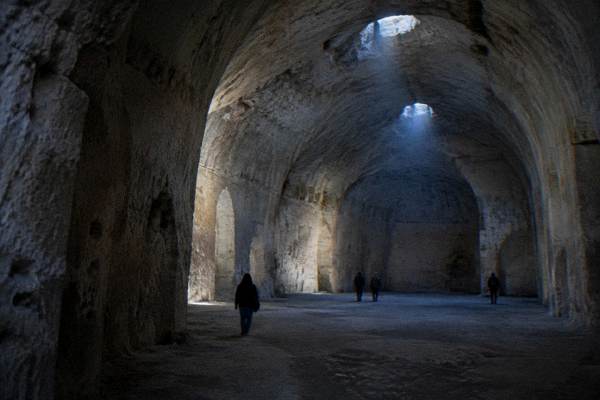
The water system is the least visible and most impressive layer. Under Piazza Vittorio Veneto sit enormous cisterns, including the Palombaro Lungo, carved into the rock to store rainwater for the districts above, and the piazza's own page and Palombaro Lungo cover what can be visited; the cistern's ticket price is not published on an official page, so this site does not print one. Across the gorge, the park's visitor infrastructure has been upgraded recently: the Jazzo Gattini visitor centre has operated since 6 February 2026 under a new concession, with an info point and ticket office for access towards Murgia Timone.
How Does The Murgia Park Fit Into Matera's History?
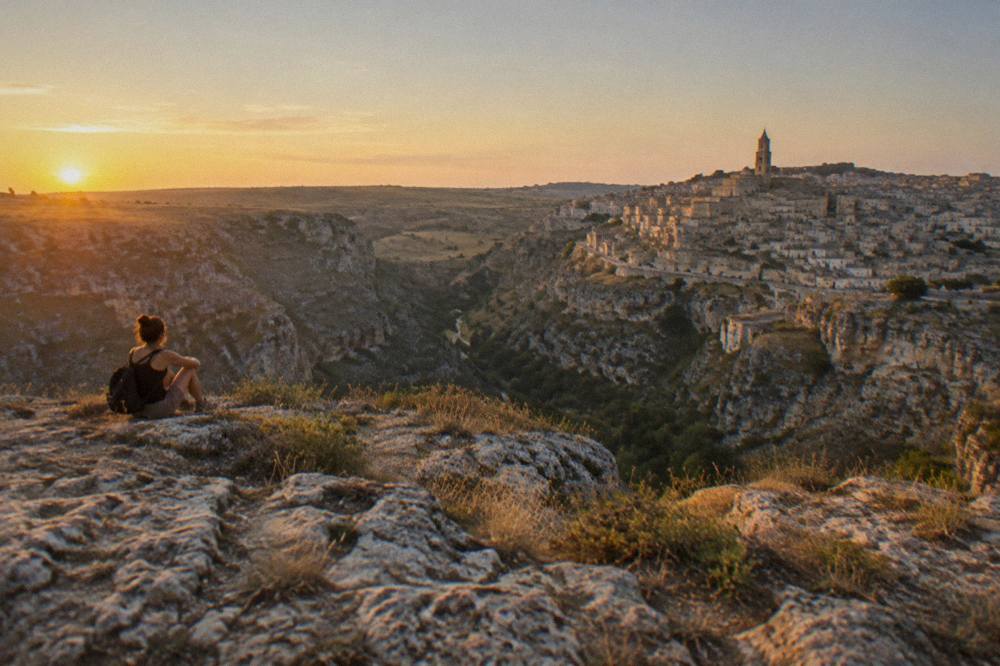
The Parco della Murgia Materana, created by Regional Law 11/1990 and measured at about 8,000 hectares by the park's own site, protects the plateau opposite the Sassi and its rock churches, and since March 2026 its best-known path, Sentiero 406 with the suspension bridge over the Gravina, has had a staffed access point and an online access ticket. The park is not scenery around the city: it is half the UNESCO inscription, named in the site title itself, and its rupestrian churches are the counterpart of those inside the Sassi. The park's own site credits it with 923 plant species, about a sixth of the national flora.
Access rules have tightened recently and older guides are out of date. The staffed point on Sentiero 406 was announced by the park on 5 March 2026, and the access ticket is sold online; the price shown on the ticket page conflicts with press figures, so this site prints none and sends readers to the park's own ticketing. Half price applies for visitors under 25, and entry is free for residents of Matera and Montescaglioso, children under 6, and disabled visitors with a companion. The details are at the Tibetan bridge and Parco della Murgia Materana, and the classic viewpoint looking back at the Sassi is covered at Belvedere Murgia Timone.
The park's newest project is a visitor centre in the former convent of Santa Lucia in the Sassi, listed by the park as opening soon, with no date published. For the walk down into the gorge and up the other side, sturdy shoes matter: the routes are steep, stepped and uneven, and no named route here is step-free.
Common Questions About Matera History
Is Matera really one of the oldest cities in the world?
No official source says so. UNESCO's inscription text states that the area was first occupied during the Palaeolithic and that the rock-cut settlement exhibits continuity over more than two millennia, and that is the strongest dated claim this site prints.
When were people moved out of the Sassi?
Residents were relocated between 1952 and the 1970s under state resettlement programmes, after the cave districts were declared unfit for habitation. A 1986 national law later opened the way to restoration and residential reuse.
When did Matera become a UNESCO World Heritage Site?
In 1993, at the 17th session of the World Heritage Committee, as "The Sassi and the Park of the Rupestrian Churches of Matera", site 670, under criteria (iii), (iv) and (v), with a property area of 1,016 ha.
Do people still live in the Sassi?
Yes. After the evacuation between 1952 and the 1970s and the restoration that followed the 1986 law, the Sassi are inhabited again, including homes, hotels and restaurants inside the former cave houses. The question has its own page at do people still live in the Sassi di Matera.
What is the oldest thing you can see in Matera?
The rock-cut churches of the Sassi and the Murgia park, and the cave dwellings themselves, are the oldest visible fabric, and several are ticketed: Oltre l'Arte's 2026 tariff lists 4.50 EUR for one rupestrian church up to 25.00 EUR for an eight-site all-inclusive ticket. The city's archaeology museum, the Museo Ridola, has been closed since 7 April 2025.
Why is Matera famous for films?
Because the Sassi survived the last century unrebuilt, productions seeking an ancient or timeless backdrop kept returning: The Gospel According to St. Matthew in 1964, The Passion of the Christ in 2004, Wonder Woman in 2017 and No Time to Die in 2021 are all verified titles, and the James Bond locations page maps the 2021 sites.
The through-line of Matera's history is a single place that has been occupied, condemned, emptied, restored and inscribed, all within a span the older residents of the plateau can remember in full. Read the city with that sequence in mind, from the Sassi districts to the viewpoints across the gorge, and the stones explain themselves.