What Does Sassi Mean In Italian?
The Italian word Sassi means stones, and in Matera, Basilicata, it names the two cave districts carved into tufa limestone. Here is what the word means and where it comes from.
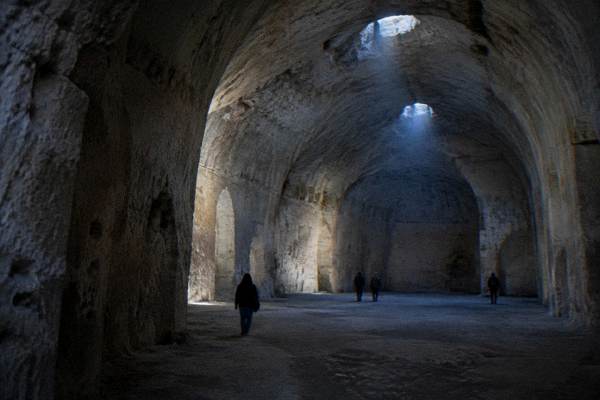
In Matera, the inland city of Basilicata in southern Italy, the word Sassi is everywhere: on signs, on maps, in the name of the UNESCO World Heritage property. It is not a family name or a founder's name. It is an ordinary Italian noun, the plural of "sasso", and it means "stones". The old quarters of the city carry this plain word as their name because the districts themselves are made of stone, cut into the pale tufa limestone that forms the edge of the Gravina canyon, and because for centuries the materani built, dug and lived inside that same rock.
What Does Sassi Mean In Italian?
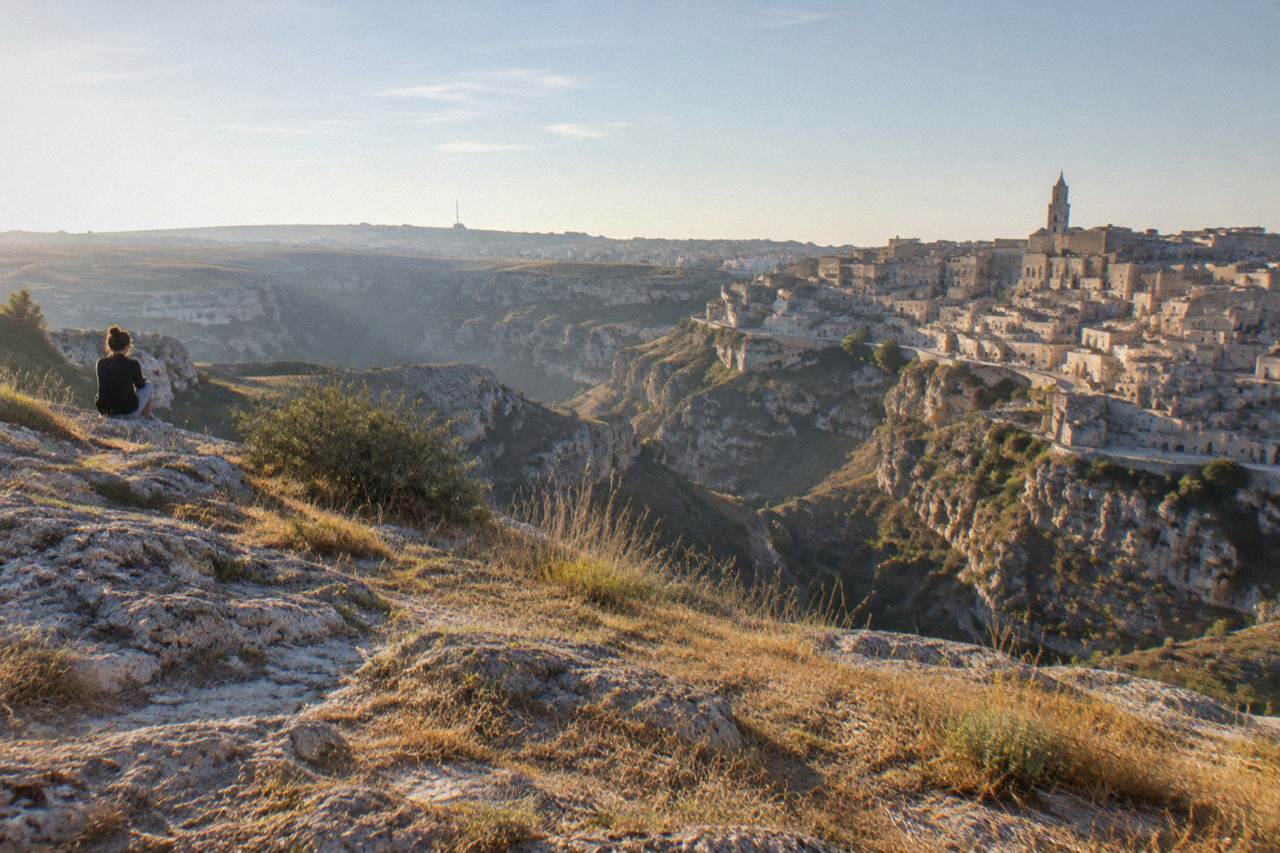
In Italian, "sassi" is the plural of "sasso" and means "stones" or "rocks". One stone is "un sasso", two or more are "sassi", and in Matera, Basilicata, the word names the two old cave districts of the city, Sasso Caveoso and Sasso Barisano, carved into tufa limestone on the edge of the Gravina canyon. The singular "Sasso" names each district, and the plural "Sassi" names them together as one place.
The word is as ordinary in Italian as "stones" is in English. A child skipping a stone into a river in Tuscany throws "un sasso". A builder in Rome orders stone as "sassi". What makes the word remarkable in Matera is not the meaning but the use: an everyday noun became the proper name of an entire urban landscape, and eventually of a World Heritage property. UNESCO inscribed the site in 1993, at the 17th session of the World Heritage Committee, under the name "The Sassi and the Park of the Rupestrian Churches of Matera", site 670, with criteria (iii), (iv) and (v). The property area is 1,016 hectares.
So when a guide in Matera says "the Sassi", the sentence works on two levels at once. It means "the stones", and it means a specific pair of districts where people dug dwellings, churches, cisterns and stables directly into the rock face. The word carries the whole history of the place inside four letters. For more on how the districts differ from the modern city around them, see the companion piece on the difference between Matera and Sassi di Matera.
Why Are Matera's Cave Districts Called The Sassi?
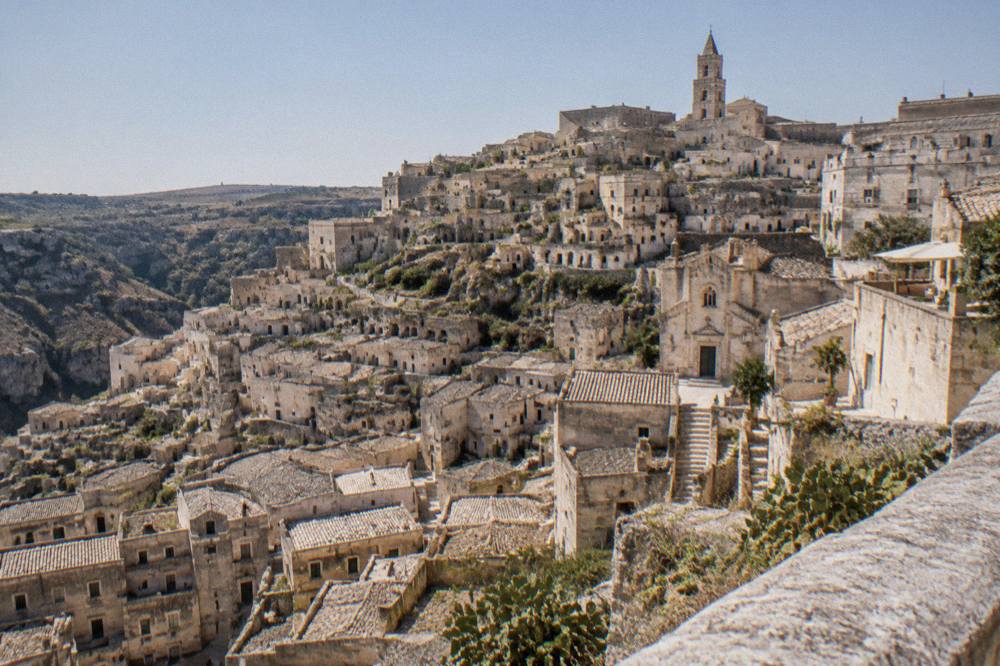
The two districts are called Sassi because they are literally made of stone: houses, courtyards, stairways, cisterns and rock churches were all cut into the tufa limestone of the Gravina canyon rather than built on top of it. The singular "Sasso" names each district, Sasso Caveoso and Sasso Barisano, and the plural "Sassi" became the collective name for the cave quarters that UNESCO inscribed in 1993 as part of site 670.
Tufa, the soft pale limestone of the Murgia plateau, can be cut with hand tools and hardens when exposed to air. That single geological fact shaped the city. Instead of quarrying stone and carrying it elsewhere, the materani dug downward and inward, hollowing rooms out of the canyon wall and using the excavated material for the facades that closed the caves. A house and its material are the same thing. The name Sassi records this: the quarters are not built of stone in the way a normal town is, they are subtracted from it.
The naming goes back a long way. The districts appear in medieval documents with their individual names, Sasso Caveoso facing south toward the Murgia plateau, and Sasso Barisano facing north toward the town of Altamura's direction, the "Barisano" element pointing toward Bari. Over time the plural noun simply became the place name, the way a description hardens into a proper noun. Between the two Sassi sits the Civita, the original fortified core of the city on the spur between the two canyon arms, and around everything grew the modern town on the plateau above, the Piano.
The scale of the districts explains why the word needs explaining at all. UNESCO's inscription text describes "more than a thousand dwellings and a large number of shops and workshops" inside the 1,016-hectare property, and the rock-hewn churches of the park opposite hold around 150 of them by the park's own count. The Sassi are not a monument you look at from behind a rope. They are streets, staircases, working hotels, restaurants and homes, and people still live in them, a story covered in detail in do people still live in the Sassi di Matera.
What Is The Difference Between Sasso Caveoso And Sasso Barisano?
Sasso Caveoso is the southern of the two Sassi, facing the open canyon and the Murgia plateau, and it keeps the rawer, more excavated cave character, with rock churches such as Santa Lucia alle Malve and Madonna de Idris cut into its cliff. Sasso Barisano is the northern district, more built up with stone facades and arcades, and the two are separated by the Civita, the old fortified heart on the spur between them.
Both are Sassi, both are carved from the same tufa, and the difference is one of degree rather than kind. Caveoso looks outward onto the emptiness of the canyon, which is why its skyline is the one on postcards. Barisano was the wealthier face of the cave city, where facades, balconies and doorways were assembled from cut stone in front of the dug-out rooms behind. A useful way to hold the distinction: Caveoso is mostly cave, Barisano is mostly house in front of cave.
| District | Position | Character | Known sights |
|---|---|---|---|
| Sasso Caveoso | South side, facing the Murgia plateau across the Gravina | Rawer, more excavated cave dwellings, open canyon views | Santa Lucia alle Malve, Madonna de Idris, San Giovanni in Monterrone, Piazza San Pietro Caveoso |
| Sasso Barisano | North side, facing away from the open canyon | More built-up, cut-stone facades and arcades over cave rooms | San Pietro Barisano, Casa Grotta di Vico Solitario area, restored cave hotels |
| Civita | Spur between the two Sassi | Original fortified core of the city | Matera Cathedral, the medieval town nucleus |
The two districts reward being seen from outside before being walked through. The classic viewpoints are on the rim of the canyon and across the Gravina at the Belvedere Murgia Timone, where the whole crescent of Caveoso appears at once. The related panoramic tuk-tuk tour on this site covers those viewpoints in a short loop with a driver-guide, a practical first hour for anyone who wants the geography explained before descending into the lanes; Check availability on the operator's live listing. The walk down into the Sassi themselves is steep, stepped and uneven, so the ride is also a way to save the legs for later.
Where Does The Word Sassi Appear Around Matera?
The word appears across Matera in street names, business names, site names and the official UNESCO title, "The Sassi and the Park of the Rupestrian Churches of Matera", inscribed in 1993. Locals say "i Sassi" with the definite article, the Sassi, and the singular "Sasso" survives inside the two district names, Sasso Caveoso and Sasso Barisano, as well as in the name of the park authority that manages the canyon and its rock churches.
Once you know the word, you hear it constantly. The park opposite the city is the Parco della Murgia Materana, whose full founding name under Regional Law 11/1990 is the Archaeological Historic Natural Park of the Rupestrian Churches, and whose managing body is Società Parco Sassi Srl, the "Sassi" again. Hotels in the cave quarters call themselves cave hotels in the Sassi. The living nativity scene each December, the Presepe Vivente, runs its route through the Sasso Caveoso. The word does the work that "old town" does in other cities, but with a harder, more literal edge: it names the stone itself.
| Use of the word | What it refers to | Example |
|---|---|---|
| sassi (common noun) | Stones, rocks, in everyday Italian | "Un sasso" is one stone |
| i Sassi (place name) | The two cave districts together | The UNESCO property inscribed in 1993 |
| Sasso Caveoso | The southern district | Rock churches of Santa Lucia alle Malve and Madonna de Idris |
| Sasso Barisano | The northern district | Cut-stone facades over cave interiors |
| Parco Sassi | The park management company | Società Parco Sassi Srl, running visitor services since February 2026 |
The word also travels badly, which is why this question gets asked. In English, "the Stones" sounds like a band name, so translations often dodge it and write "the Sassi districts" or "the cave quarters", keeping the Italian word as a label. That is the right instinct. The name is now fixed by the UNESCO inscription, by the park law and by decades of maps, so it functions in English exactly as it does in Italian: as a proper noun that happens to be transparent to Italian speakers.
How Do You Use The Word Correctly When Visiting Matera?
Say "the Sassi" for both districts together, "Sasso Caveoso" or "Sasso Barisano" for one of them, and never mix the plural with a singular district name. The Sassi are the stones, one district is a Sasso, and the word is capitalized as a place name in Matera even though it stays a common noun everywhere else in Italian. A sentence like "the Sassi are carved into tufa" is correct; "the Sasso are" is not.
Two small errors trip up visitors. The first is treating "Sassi di Matera" as if it named a separate town, when it simply means "the stones of Matera", the same districts inside the same city. The second is assuming the word implies something grand, a palace or a monument, when its force is the opposite: the name is blunt and material, stone, because the city's whole method was to dig rather than build. The rough honesty of the word is part of why the story of the Sassi is complicated, a history that runs from cave poverty to national shame to World Heritage, told in why Matera was called the shame of Italy.
For a sense of the word in use, stand on Piazza Vittorio Veneto, the pedestrian square on the plateau above, and look down: the pavement there conceals a huge rainwater cistern, the Palombaro Lungo, itself carved in the stone, and the Sassi cascade below it on both sides of the Civita. The square is the Piano, the flat town; the drop is the Sassi, the stone town. That single contrast, plateau against canyon, is what the name encodes.
Common Questions About The Sassi In Matera
What does Sassi mean in Italian?
Sassi is the plural of sasso and means stones. In Matera the word names the two old cave districts, Sasso Caveoso and Sasso Barisano, which are carved into the tufa limestone of the Gravina canyon and were inscribed by UNESCO in 1993.
Is Sassi one place or two?
Two. Each district is a Sasso, Sasso Caveoso to the south and Sasso Barisano to the north, and together they are the Sassi. The Civita, the old fortified core with the cathedral, sits on the spur between them.
Do the Sassi mean the same as Matera?
No. Matera is the whole city, including the modern town on the plateau, the Piano. The Sassi are the two cave districts below it. The distinction is unpacked in the site's guide to the difference between Matera and Sassi di Matera.
Why are the Sassi made of caves?
The tufa limestone of the area is soft enough to cut with hand tools and hardens on exposure to air, so digging rooms into the canyon wall was faster and cheaper than building. The excavated stone was reused for facades, making each house both carved and built.
Are the Sassi the same as the rock churches?
The rock churches are inside and around the Sassi and across the canyon in the park. UNESCO's inscription covers both under one name, "The Sassi and the Park of the Rupestrian Churches of Matera", site 670, inscribed in 1993.
The word Sassi, in the end, is the shortest possible description of the place it names. Stones: the material, the method and the districts in one syllable-heavy plural. For where the name of the city itself comes from, see what Matera means in English, and for planning the visit itself, the Matera Travel Guide covers the districts, the viewpoints and the cave hotels in full.