Sasso Barisano
Sasso Barisano is the northwestern of Matera's two Sassi quarters, a UNESCO World Heritage area of cave dwellings and rock-hewn churches facing the Gravina canyon. This guide covers what it is, what to see, verified ticket prices, viewpoints and how to plan a visit.
Short answer
Sasso Barisano is the northwestern of Matera's two Sassi districts, a UNESCO World Heritage area of cave dwellings and rock-hewn churches facing the Gravina canyon. Its key paid sights are the rock church of San Pietro Barisano and Palazzo Lanfranchi, and a half day covers the quarter well.
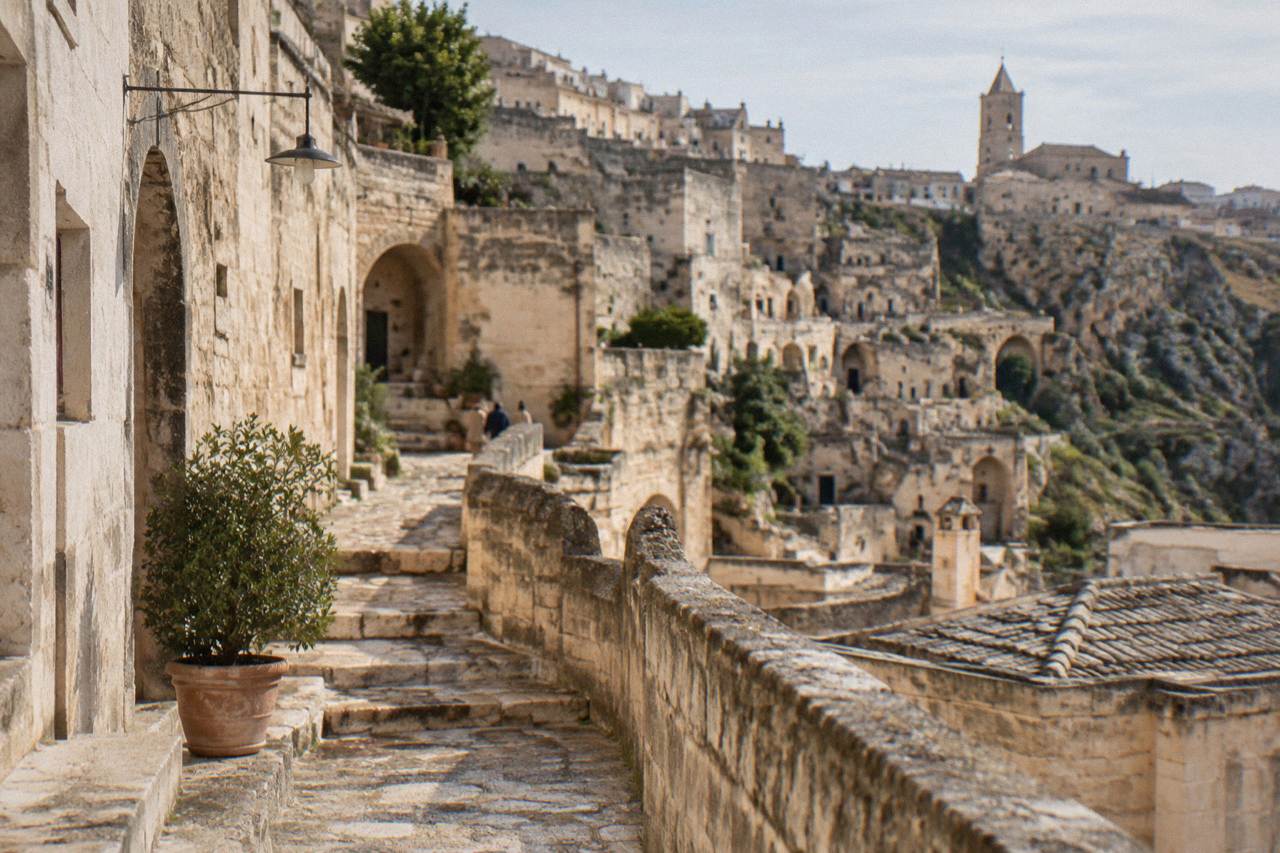
Sasso Barisano is the northwestern of the two Sassi quarters of Matera, the inland city of Basilicata in southern Italy that sits at about 400 m above sea level on the edge of the Gravina canyon. Where its twin, Sasso Caveoso, keeps a rougher, cave-dwelling face, Sasso Barisano is the quarter where the rock architecture climbs into proper facades: stairways, balconies, arched doorways and rooftop terraces stacked over cave interiors hollowed from pale tufa limestone. The two quarters face each other across the Civita, the old ridge between them that carries the Cathedral, and together they make up the UNESCO World Heritage property inscribed in 1993 as "The Sassi and the Park of the Rupestrian Churches of Matera". This page from the Matera Travel Guide editorial desk covers what Sasso Barisano is, what there is to see, which prices are verified, where the viewpoints are, and how long a visit needs.
What Is Sasso Barisano In Matera?
Sasso Barisano is the northwestern of Matera's two Sassi quarters, a hillside of cave dwellings, stone houses and rock-hewn churches cut into tufa limestone below the modern city centre, facing the Gravina canyon with the Murgia plateau opposite. It is named for Bari, the direction it faces, and it forms one half of the UNESCO World Heritage property inscribed in 1993. UNESCO's citation describes the Sassi as an outstanding example of a rock-cut settlement adapted to its geomorphological setting, with continuity over more than two millennia and first occupation during the Palaeolithic. The property covers 1,016 ha and UNESCO's listing speaks of more than a thousand dwellings plus a large number of shops and workshops.
The name is directional. "Barisano" points the quarter toward Bari, to the northwest, while Sasso Caveoso faces southeast toward the port town of Taranto, for which "Caveoso" is the adjective. The Civita, Matera's oldest fortified core, sits on the ridge between the two quarters and carries the Cathedral; the modern city, the Piano, grew on the plateau above after the Sassi were evacuated. Residents were moved out of the cave districts between 1952 and the 1970s, and a 1986 law opened the way to the restoration that turned much of Sasso Barisano into the hotels, restaurants and homes standing today.
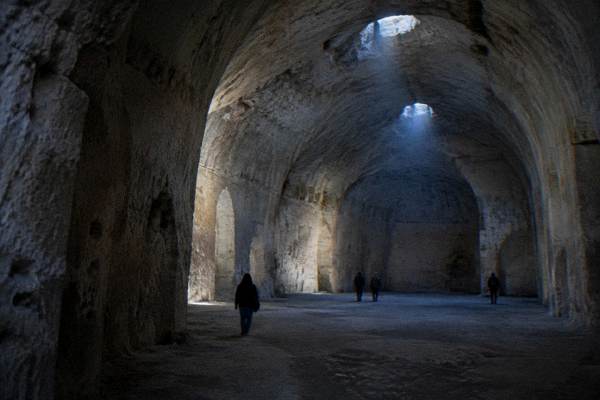
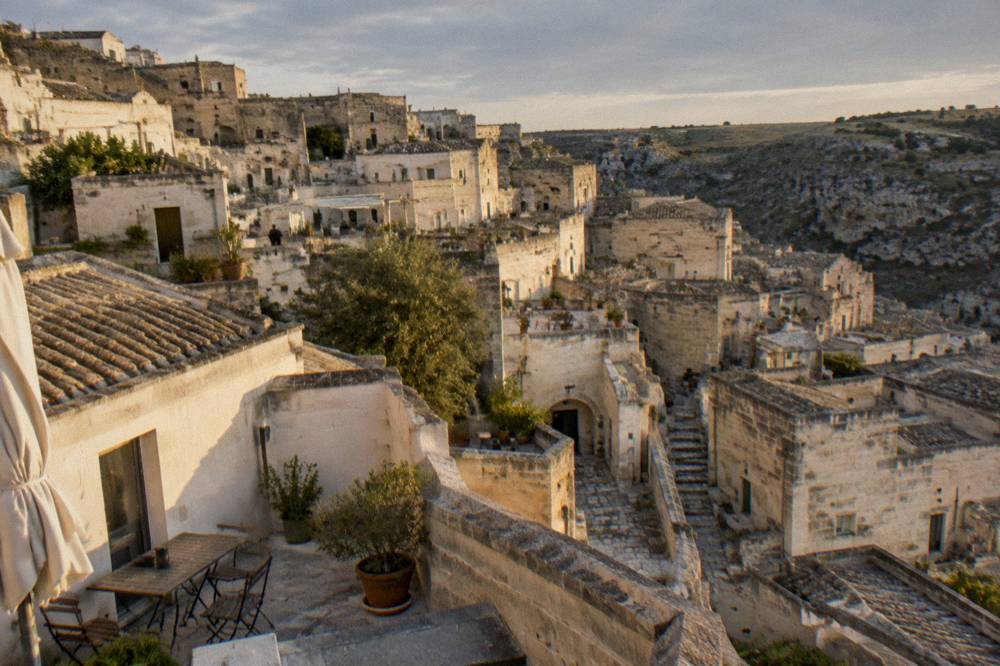
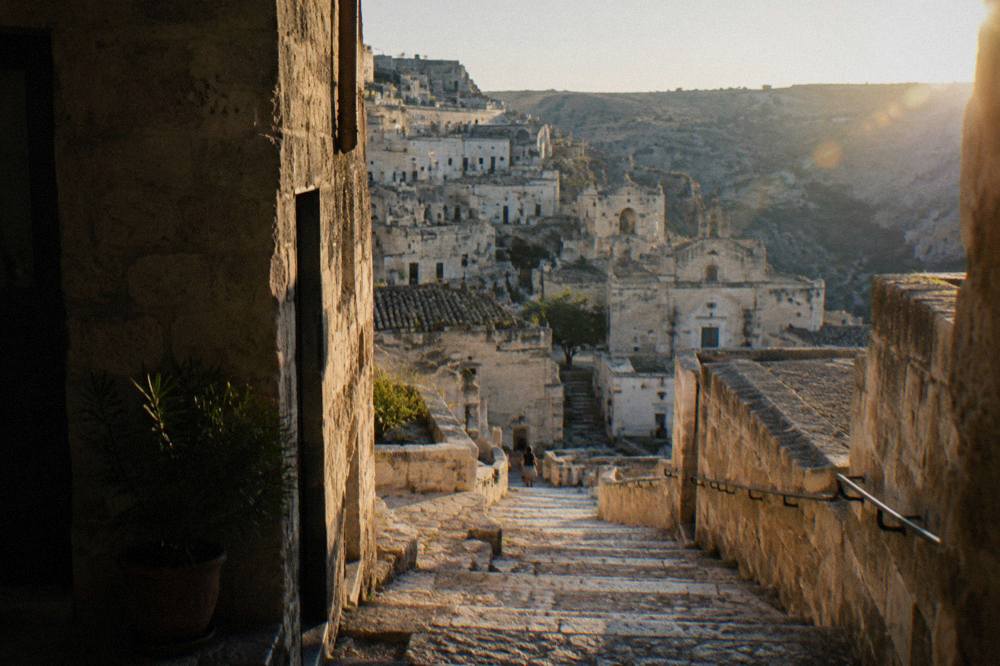
The restoration left the quarter's structure legible. Streets in Sasso Barisano often run along the roofs of the houses below them, because the dwellings were dug horizontally into the slope, and a doorway at street level can open into a cave that continues ten metres into the rock. Facades are the visible part; behind them the rooms are the hill itself. That layering is why the quarter rewards slow walking and why a guided walk explains far more than a map does, a point covered in the main Sassi guide.
What To See In Sasso Barisano?
The headline sights inside Sasso Barisano are the rock church of San Pietro Barisano, the largest rupestrian church in the Sassi, the Chiesa del Purgatorio with its exhibition space, Palazzo Lanfranchi at the quarter's edge, and Casa Cava, a restored cistern turned auditorium, with canyon viewpoints along Via Madonna delle Virtù. Several sights carry cave interiors, and the quarter's restaurants and cave hotels are sights in themselves.
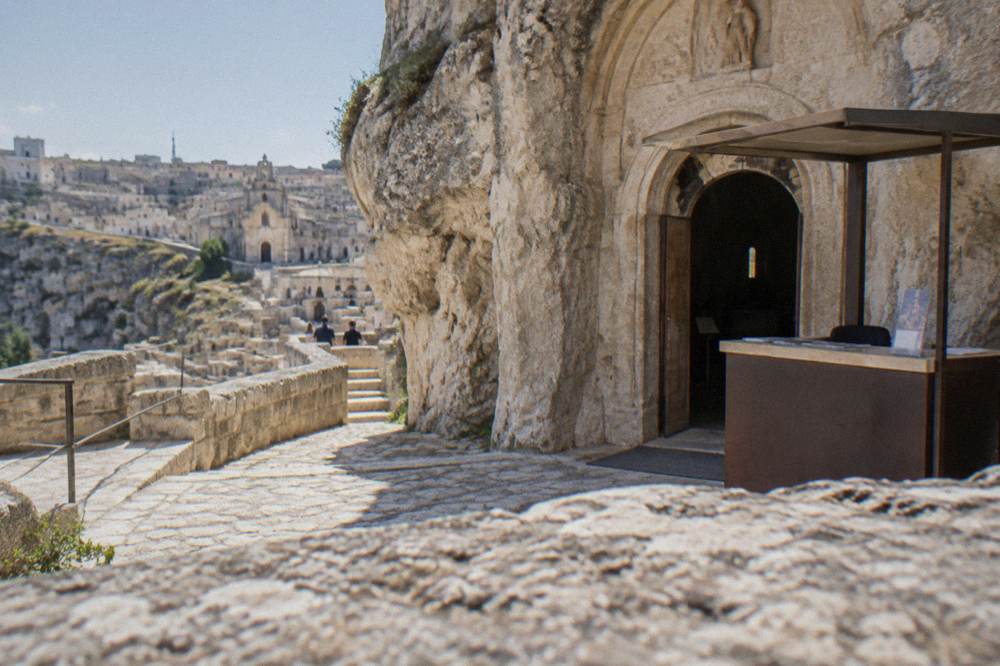
San Pietro Barisano is the deepest of the three rock churches run by Oltre l'Arte, a stone facade built onto a church hollowed into the rock, with a bell tower, a crypt below and a baptismal font cut into the floor. It is open daily 10:00 to 19:00, with last entry at 18:50, on the schedule in force from 28 March 2026. Oltre l'Arte's ticket page prices it at 4.50 EUR alone, or as part of the two-church and three-church combinations with Santa Lucia alle Malve and Madonna de Idris in the Caveoso.
Palazzo Lanfranchi, the former seminary at the top of the Barisano slope, now houses the Museo Nazionale di Matera's painting and decorative-arts collections and charges 10.00 EUR per site, 15.00 EUR for the cumulative ticket valid two days, with under-18s free. The museum's own site gives site-wide hours of 09:00 to 20:00, Monday to Sunday, and notes a works programme, the "Cantiere Lanfranchi", that leaves the palace open throughout. Its terrace is also one of the best elevated looks down into the Sasso Barisano rooftops.
Casa Cava, a vast rainwater cistern dug into the tufa and converted into a concert auditorium, anchors the quarter's cultural life, and the Chiesa del Purgatorio near Piazza del Sedile hosts Oltre l'Arte exhibitions daily 09:30 to 19:00. Neither has a verified standalone price on an operator page, so confirm at the door. From Via Madonna delle Virtù, the terrace road at the Barisano rim, the view drops straight into the Gravina canyon toward the Murgia cliffs and the Belvedere Murgia Timone opposite; the story of that rim and its terrace restaurant, Madonna delle Virtù itself, sits in the dedicated viewpoint guide.
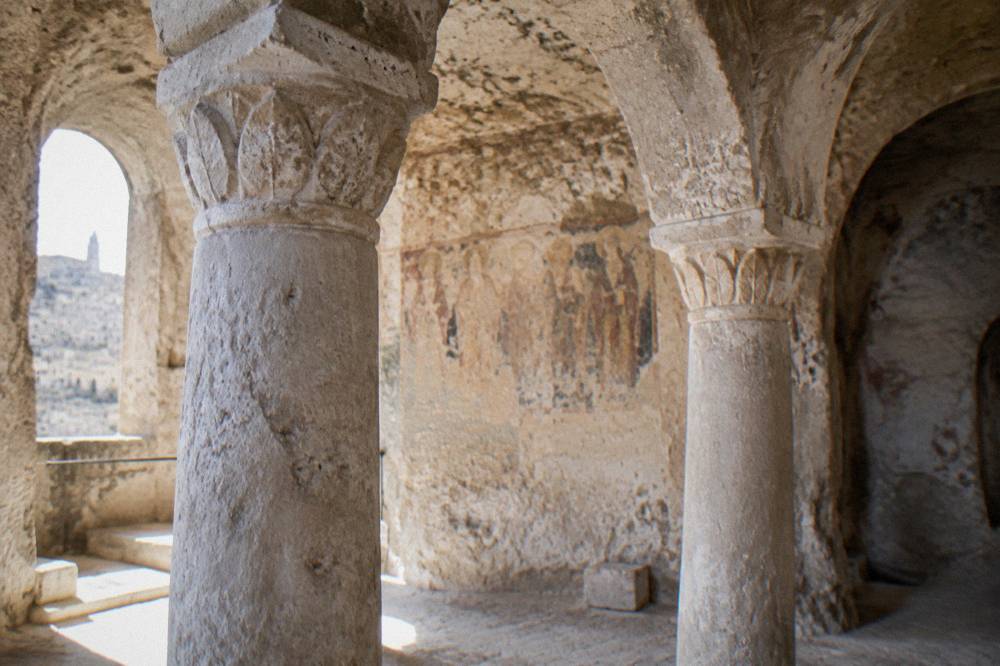
A structured walk ties the quarter together in a loop: start on Piazza Vittorio Veneto, drop into the Barisano by the stairs beside the Hypogeum, follow the lane down to San Pietro Barisano, climb back up to Palazzo Lanfranchi, then walk the Via Madonna delle Virtù terrace to the canyon edge. Walks with a licensed guide are the main way visitors decode the quarter, and the site's Matera walking tour page compares the options; tip-based walks also run locally, and the tip arrangement should be confirmed with the guide directly.
What Do Tickets To The Sasso Barisano Sights Cost?
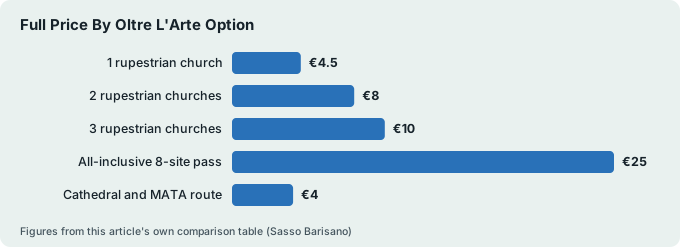
The verified prices are: San Pietro Barisano 4.50 EUR for one church, 8.00 EUR for two, 10.00 EUR for three under Oltre l'Arte's combinations, Palazzo Lanfranchi 10.00 EUR, or 15.00 EUR for the national museum's cumulative two-day ticket, and the Oltre l'Arte all-inclusive pass at 25.00 EUR covering 8 sites across both Sassi. Reduced rates apply at each, and under-18s enter the national museum free.
There is no entry fee for the quarter itself. Sasso Barisano is a lived-in district of public streets, and the only charges are for the individual monuments. Oltre l'Arte's tariff, published on its own ticketing page, is the one that covers the rock churches; the national museum's tariff covers Palazzo Lanfranchi and the other state sites, keeping in mind the Museo Ridola remains closed since 7 April 2025 with no reopening date published.
| Oltre l'Arte option | Full price | Reduced | Covers |
|---|---|---|---|
| 1 rupestrian church | 4.50 EUR | 3.50 EUR | San Pietro Barisano, Santa Lucia alle Malve or Madonna de Idris |
| 2 rupestrian churches | 8.00 EUR | 5.50 EUR | Any two of the three churches |
| 3 rupestrian churches | 10.00 EUR | 7.50 EUR | All three churches, both Sassi |
| All-inclusive 8-site pass | 25.00 EUR | 16.00 EUR | The 3 churches, Vicinato a Pozzo, Antica Casa Grotta in Via Fiorentini, MATA, the Purgatorio exhibition and the Museo del Pane |
| Cathedral and MATA route | 4.00 EUR | listed on ticket page | Cathedral and diocesan museum, daily 09:00 to 19:00 |
Reduced rates on the Oltre l'Arte tickets apply to disabled visitors, groups of 20 or more and FAI members, and children up to 10 with a parent enter free; visits with a licensed guide pay the lower guide rates of 2.50, 4.00 and 5.00 EUR. All Oltre l'Arte sites close on 25 December and 2 July, the day of the Festa della Bruna. These hours and prices are the ones Oltre l'Arte itself lists from 28 March 2026; treat any older figure in a printed guide with suspicion, since the operator's tariff page is the authority.
| Sasso Barisano sight | Verified price | Verified hours | Note |
|---|---|---|---|
| San Pietro Barisano | 4.50 EUR single, or combos above | Daily 10:00 to 19:00, last entry 18:50 | Largest rupestrian church in the Sassi |
| Palazzo Lanfranchi, Museo Nazionale | 10.00 EUR, 15.00 EUR cumulative, under 18 free | Monday to Sunday 09:00 to 20:00 | Open through the works programme |
| Chiesa del Purgatorio exhibition | Included in 25.00 EUR pass | Daily 09:30 to 19:00 | Standalone price not published, confirm on site |
| Casa Cava auditorium | No verified price on an operator page | Event-dependent | A converted rainwater cistern |
| The quarter's streets and viewpoints | Free | Always open | Lived-in public district |
Is Sasso Barisano Or Sasso Caveoso The Better Quarter To Visit?
Both quarters belong to the same World Heritage property and neither is skippable, but they read differently: Sasso Barisano is the restored, facade-forward quarter with the hotels, restaurants and Palazzo Lanfranchi, while Sasso Caveoso is the rawer face, where cave houses still stand empty and a preserved cave-house museum shows a pre-evacuation home at 8.00 EUR full entry. First-time visitors should walk both, which takes one unhurried afternoon.
The museum in question is the Storica Casa Grotta di Vico Solitario in the Caveoso, whose 8.00 EUR full tariff from 4 April 2026 is the one detail that most rewards the walk across the Civita. The standard framing, that Barisano is the "rich" quarter and Caveoso the "poor" one, is shorthand rather than history. Both quarters held wealthy and poor dwellings before the evacuation, and both were restored under the same post-1986 programme. What differs is the surviving fabric. Barisano kept more of its upper-storey palazzi and now concentrates the hospitality trade; Caveoso kept more uninterrupted cave frontage and the empty cliff faces below San Pietro Caveoso, plus the rock churches of Santa Lucia alle Malve and Madonna de Idris that pair with San Pietro Barisano on the combined ticket.
| Sasso Barisano | Sasso Caveoso | |
|---|---|---|
| Orientation | Northwest slope, facing Bari | Southeast slope, facing Taranto |
| Character | Restored facades, hotels, restaurants | Rougher cave frontage, emptier terraces |
| Key rock church | San Pietro Barisano | Santa Lucia alle Malve, Madonna de Idris |
| Key museum | Palazzo Lanfranchi, 10.00 EUR | MUSMA sculpture museum, 10 EUR |
| Best canyon view | Via Madonna delle Virtù terrace | Piazza San Pietro Caveoso and the Murgia rim opposite |
| Evening feel | Lit facades, dining terraces | Quieter, darker lanes |
The Civita ridge between the two quarters, with the Cathedral at its spine, is the natural connector; the Civita guide and the Piano guide cover the ridge and the modern centre above. For a single day that stitches all of it together, the one-day Matera itinerary sequences the quarters, the viewpoints and the ticket choices.
Where Are The Best Viewpoints Over Sasso Barisano?
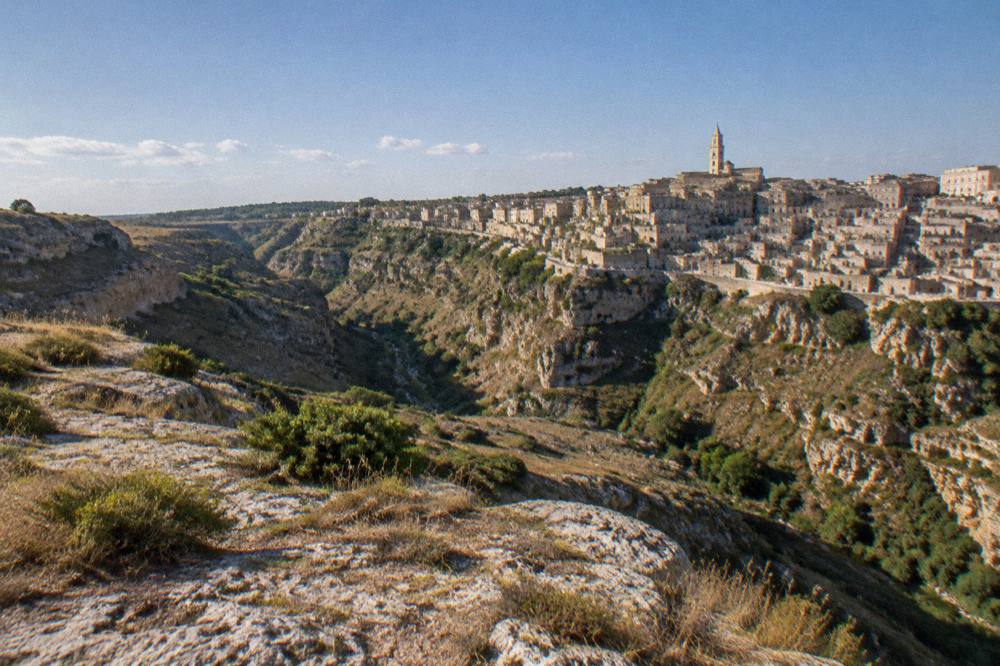
The best views of Sasso Barisano come from three edges: the Via Madonna delle Virtù terrace on the quarter's own rim, the Murengio or Santa Lucia road on the opposite side of the canyon, and the Murgia Timone belvedere across the Gravina, reachable on foot or with the sunset tours that include transfer. From the far rim, the whole quarter reads as one stacked wall of cave architecture above the canyon.
To take in those canyon views without all the stairs, book a panoramic bus tour here.
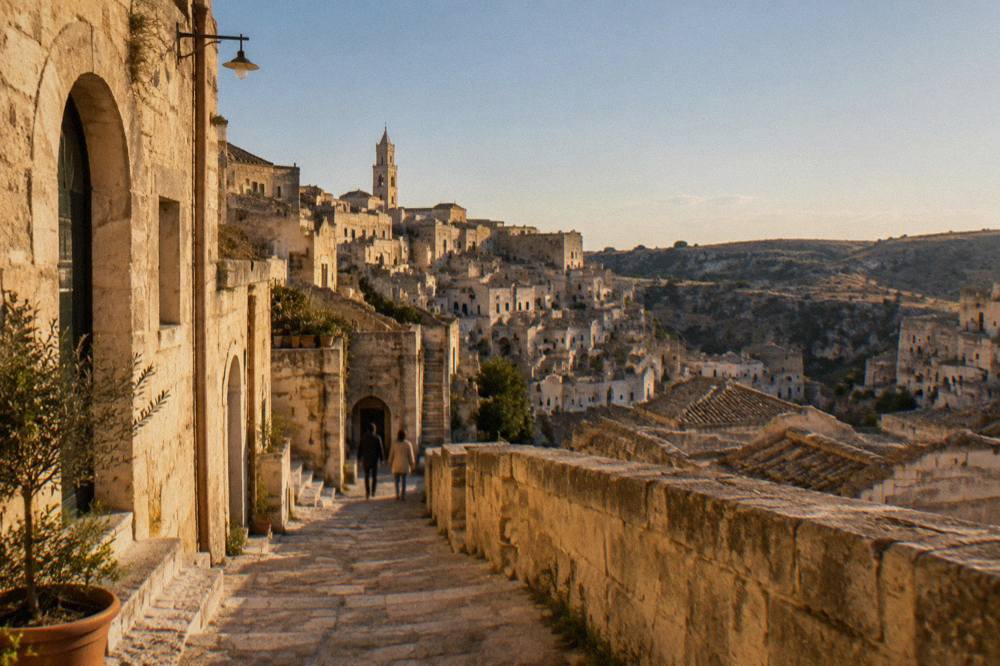
The Via Madonna delle Virtù terrace is the close view: you stand on the Barisano's own rim with the rooftops below your feet and the canyon opening beyond them. The Murengio side, reached from the Piano by the Santa Lucia road, gives the full frontal view of the quarter that appears in nearly every photograph of Matera, with the Civita and the Cathedral rising to its right. Cross the Gravina, or view from Belvedere Murgia Timone in the park, and the two Sassi appear as a single continuous cliff city, which is the panorama the Parco della Murgia protects.
Since March 2026 the park has run a staffed access point and an online access ticket for Sentiero 406, the path with the suspension bridge over the Gravina, with half price for under-25s and free entry for Matera and Montescaglioso residents; the exact tariff is not settled on the park's own pages, so confirm at booking. The Jazzo Gattini visitor centre has been the park's info point and ticket office since 6 February 2026. A guided sunset walk to the Timone belvedere, with transfer included, is the version that needs no route-finding:
After that, note the practical details. The Sassi are steep, stepped and uneven underfoot on every route, and no named path in or around the quarter should be treated as step-free. At dusk the facades of Sasso Barisano are lit from below, which is why the Matera at night walking advice and the photography spots guide send shooters to the far rim for blue hour rather than into the lanes.
How Long Does A Visit To Sasso Barisano Take?
A focused walk through Sasso Barisano with entry to San Pietro Barisano and a viewpoint stop runs about two hours; a half day allows Palazzo Lanfranchi plus the canyon terrace at leisure; and a full day is right if you add the opposite rim, the Murgia belvedere and a long dinner in the quarter. APT Basilicata's data shows the average guest in Matera stays 1.56 nights, so the majority of itineraries compress both Sassi into one long day.
The two-hour floor is realistic because the quarter is compact. From Piazza Vittorio Veneto to the canyon terrace and back up through the San Pietro Barisano lanes is a loop of under two kilometres, but the stairways double the effort the distance suggests. Add the church interior, the museum, or a terrace meal and the clock moves quickly, and the sunset over the Gravina is the one fixed appointment worth planning around, since the light on the facades changes the quarter completely.
| Time budget | What fits | What it misses |
|---|---|---|
| 2 hours | The Barisano loop, San Pietro Barisano, one viewpoint | Museums, the Caveoso, the far rim |
| Half day | Barisano plus Palazzo Lanfranchi and the canyon terrace | The Murgia side, leisurely dining |
| One day | Both Sassi, the Civita and Cathedral, viewpoints at sunset | Day trips to Alberobello or the coast |
| Two days | Everything above plus the Murgia park and a food experience | Nothing major in the city itself |
For pacing across a whole stay, the two days in Matera itinerary gives one day per quarter-plus-rim combination, and travellers arriving from Bari on a clock should read the Matera day trip from Bari plan, which triages the Sassi for a single afternoon.
Where To Eat And Drink In And Around Sasso Barisano?
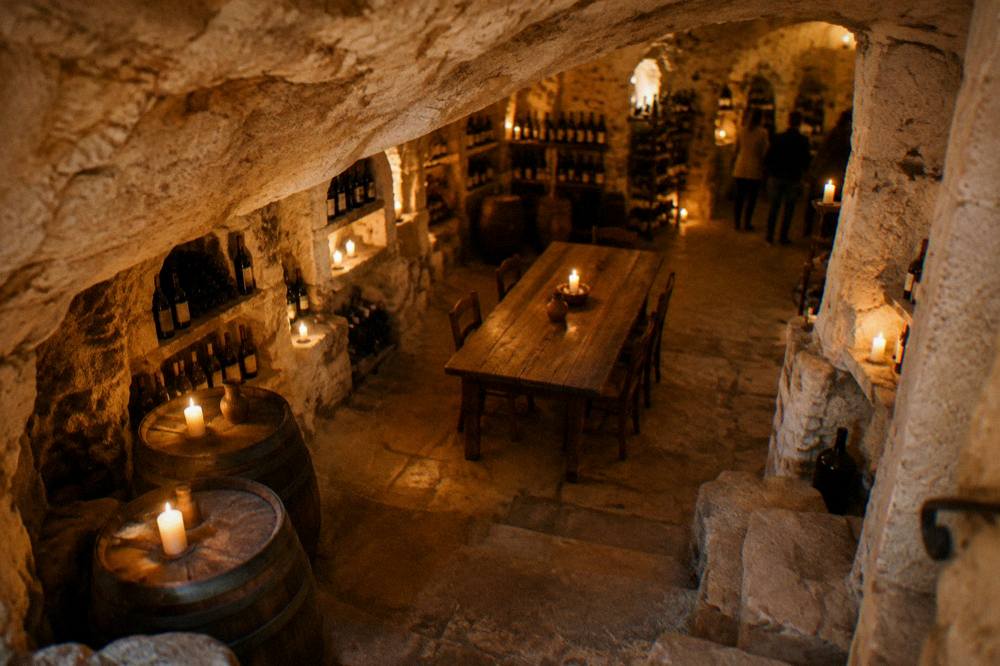
Sasso Barisano concentrates Matera's terrace dining: restaurants cut into the rock along Via Madonna delle Virtù and the lanes below Piazza del Sedile, cave wine bars in the old cisterns, and aperitivo spots on the rim with the canyon below. Dishes to look for are the bread of Matera, pane di Matera, aglianico del Vino doc wines, lamb and the cruschi sweet peppers of the Lucanian hills, with tasting plates served in several cave cellars.
No restaurant price is verified on this site, so treat every figure as something to check on the menu, but the food geography is stable. The terrace road holds the dining rooms with the vertical views; the lanes inside the quarter hold the smaller osterias where the ceiling is the tufa itself; and the Piano above, around Piazza Vittorio Veneto, holds the aperitivo bars where the evening passeggia begins. Matera's bread, registered as a PGI product in 2008, anchors the local table, and the pane di Matera guide covers how it is made and why the flour matters.
| Food or drink | What it is | Where it fits a Sasso Barisano visit |
|---|---|---|
| Pane di Matera IGP | Sourdough-style bread with a cracked crust, PGI since 2008 | Bread basket at nearly every table |
| Aglianico del Vino doc | Basilicata's red, grown in the hills south of Matera | Cave wine bars in the quarter |
| Peperoni cruschi | Sweet dried peppers fried crisp, from the Senise area | Antipasti plates |
| Lamb and murgia cheeses | Hill pasture meat and caciocavallo | Main courses in the osterias |
| Aperitivo on the rim | Early evening drink on the canyon terrace | Between the museums and sunset |
The food-and-wine angle also runs as a guided experience. A tour built around the patriarchs' olive trees and the "oil temples" of the Matera countryside walks the landscape the Sassi grew out of, and a small-group wine tasting with food pairing runs in the evening inside the quarter, both bookable below:
Is Sasso Barisano Accessible And Where Should You Stay?
Sasso Barisano is steep, stepped and uneven throughout, and no route in the quarter is step-free, so visitors with mobility limits should plan around the rim roads, the viewpoints reachable from above, and the site's dedicated accessibility guide rather than the interior lanes. Staying in the quarter itself means a cave hotel room dug into the tufa, with luggage assistance standard at the established properties and arrival by car restricted by the ZTL cameras.
The accessibility guide in question is Matera accessibility, which covers the step-free viewpoints on the Piano and the practical routes around the canyon rim. The restricted traffic zone matters for anyone booking a room inside the Sassi. ZTL Sassi cameras, on Via Buozzi, Via Madonna delle Virtù and Via D'Addozio, run 10:00 to 20:30 from 16 September to 30 June and 10:00 to 24:00 from 1 July to 15 September, weekdays and holidays alike; the comune's PDF lists a loading window of 07:00 to 10:30 and 15:00 to 17:00. ZTL Centro streets above are active 24 hours a day. Hotels in the quarter normally arrange access and parking logistics directly, so confirm the procedure with the property before driving down. The cave-hotel guide and the where-to-stay comparison cover the trade-offs between sleeping inside the Sassi and staying on the Piano, and Matera's tourist tax is collected by the accommodation, with the amount confirmed at booking.
Common Questions About Sasso Barisano
Is Sasso Barisano free to enter?
Yes. The quarter is a public, lived-in district and the streets cost nothing. Only the monuments inside it charge: San Pietro Barisano at 4.50 EUR for a single church under Oltre l'Arte's combinations, and Palazzo Lanfranchi at 10.00 EUR for the national museum.
What does Sasso Barisano mean?
"Sasso" is Italian for stone and is the singular of "Sassi", the name for Matera's two cave quarters. "Barisano" means "of Bari", the city to the northwest the quarter faces; the twin quarter, Sasso Caveoso, faces southeast.
Which is better, Sasso Barisano or Sasso Caveoso?
Neither is a substitute for the other. Sasso Barisano holds the restored facades, the cave hotels and Palazzo Lanfranchi; Sasso Caveoso holds the emptier cave frontages and two of the three Oltre l'Arte rock churches. The three-church ticket at 10.00 EUR spans both quarters, so walking both is the usual plan.
Can you stay in a cave in Sasso Barisano?
Yes, several cave hotels operate inside the quarter, with rooms dug into the tufa behind stone facades. Arrivals by car are constrained by the ZTL camera hours, so arrange access with the property, and expect the tourist tax to be collected by the hotel with the amount confirmed at booking.
How do you get to Sasso Barisano from the station?
From Matera Centrale the quarter is a downhill walk of roughly twenty minutes, or a short taxi ride; there is no Trenitalia service into Matera at all, the regional operator is FAL, and from Bari the posted weekday timetable involves a change at Altamura with no trains on Sundays and public holidays. Check FAL's timetable page for current times.
Is Sasso Barisano suitable for wheelchair users?
The interior lanes are steep, stepped and uneven throughout, and no route through the quarter is step-free. The rim roads above and the viewpoints reachable from the Piano are the practical alternative, and the site's accessibility guide covers them in detail.