Is Matera Expensive
Matera, in Basilicata, southern Italy, is cheaper to see than its World Heritage billing suggests, because the Sassi themselves cost nothing to walk through and the main ticketed sites cluster in the 4.00 to 10.00 EUR band. The real money goes on lodging and the journey in, and both deserve a close look before booking.
Short answer
Matera is mid-priced for southern Italy: the Sassi districts are free to wander, the main museums and cave houses charge 4.00 to 10.00 EUR, and an all-inclusive 8-site ticket is 25.00 EUR. The costs the city does not publish, the tourist tax rate, parking tariffs and the Bari Airport shuttle fare, are confirmed at booking or on arrival.
Matera, the cave city of Basilicata in southern Italy, has a reputation problem that cuts both ways: some guides sell it as a bargain corner of the south, others as a boutique destination priced like Florence. The verified numbers say neither. Walking the Sassi, the two cave districts inscribed by UNESCO in 1993, costs nothing at all, while the ticketed sites inside them run from 2.00 EUR for a small cave house to 25.00 EUR for an eight-site all-inclusive pass. What genuinely moves a Matera budget is the journey in, where you are coming from and whether you are driving, and the length of the stay, since the APT Basilicata data gives an average of just 1.56 nights per guest in 2025. This page, from the Matera Travel Guide editorial desk, puts the figures in one place and flags the costs nobody can honestly quote in advance.
Is Matera Expensive To Visit?
No, not by the standards of Italy's major destinations, though the answer depends heavily on what is being priced. The Sassi districts of Sasso Caveoso and Sasso Barisano are public streets, free to walk at any hour, and the principal paid sites charge between 2.00 and 10.00 EUR a head. The costs that can surprise are structural rather than scenic: the tourist tax, collected by your accommodation at a rate confirmed only at booking, and the journey in, since Matera sits about 64 road kilometres from Bari Airport.
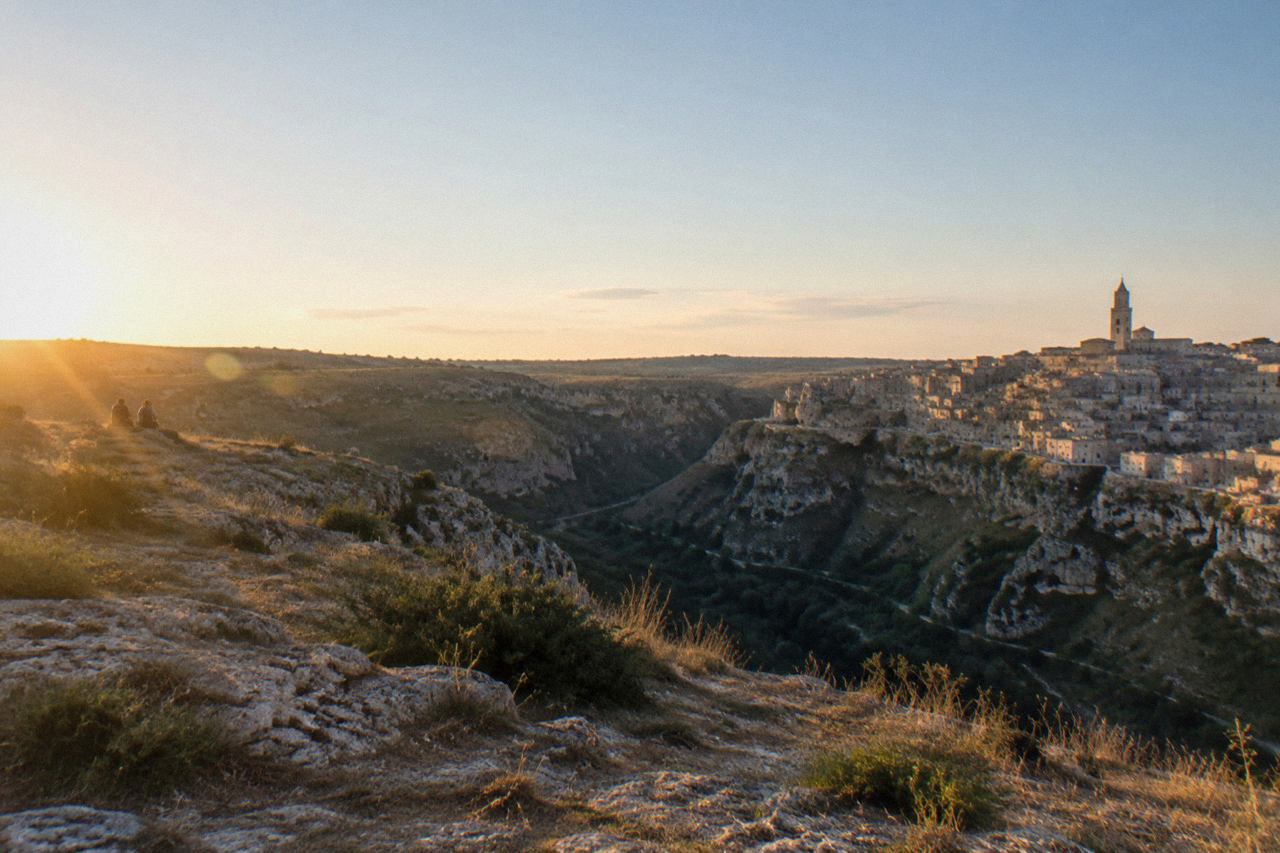
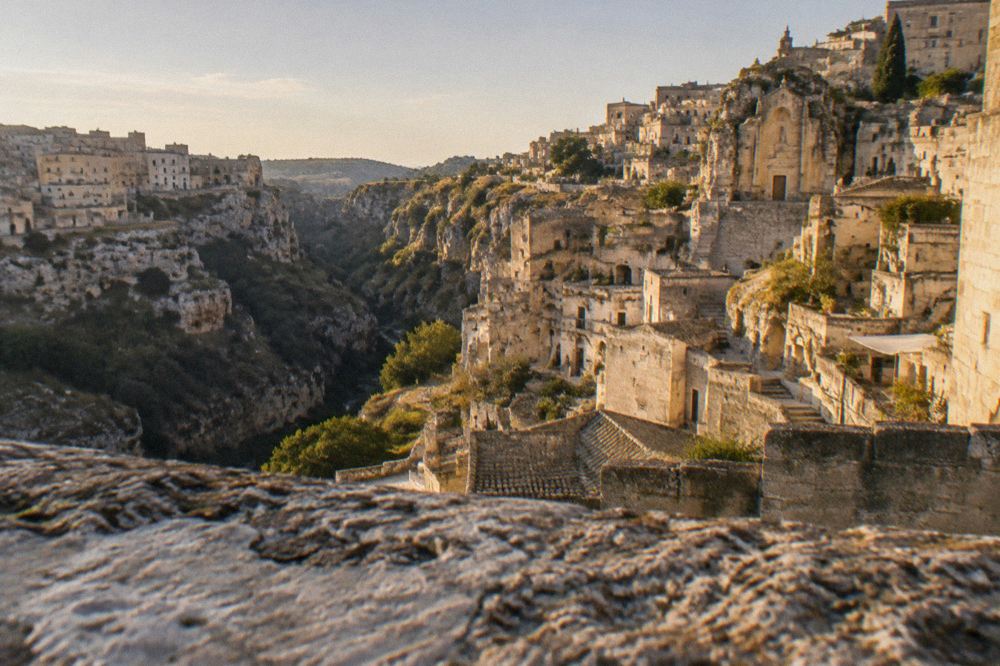
The framing matters because Matera's headline sights split into two very different cost groups. The first group is the landscape itself: the Gravina canyon, the Murgia plateau opposite, the viewpoints and the tangled stone lanes. None of it is ticketed, and the Belvedere Murgia Timone lookout across the canyon is reached on foot through the park. The second group is the interiors: rupestrian churches, cave houses and museums, and here the city is unusually tidy, because one operator, Oltre l'Arte, runs most of the church sites under a single sliding tariff, and the independent museums publish their own.
A fair planning frame, using only figures verified on the operators' own pages, looks like this: a day of paid sightseeing in Matera runs from roughly 4.50 EUR (one rupestrian church) to about 25.00 EUR (the eight-site pass), with most single-site tickets landing at 8.00 to 10.00 EUR. Add a walking tour, whose price renders from the live listing rather than from this page, and a coffee in the square, and a full day is still cheaper than a single major-museum day in Rome or Venice. The one-day itinerary shows how much fits into that frame without adding a second ticket.
What the city does not publish deserves equal attention. The tourist tax rate for Matera has never been verified on an official comune page by this desk, so the honest instruction is the only one: the amount is confirmed at booking. The same holds for parking tariffs, the urban bus fare and the airport shuttle, and each of those is flagged where it comes up below.
What Do The Main Attractions In Matera Cost?
Oltre l'Arte's rupestrian churches cost 4.50 EUR for one church, 8.00 EUR for two and 10.00 EUR for three, with the Cathedral and MATA museum at 4.00 EUR and an eight-site all-inclusive ticket at 25.00 EUR (16.00 EUR reduced), hours and tariff in force from 28 March 2026. Independent sites add their own prices: MUSMA is 10.00 EUR, the Storica Casa Grotta di Vico Solitario is 8.00 EUR, and Casa Noha is 6.50 EUR.
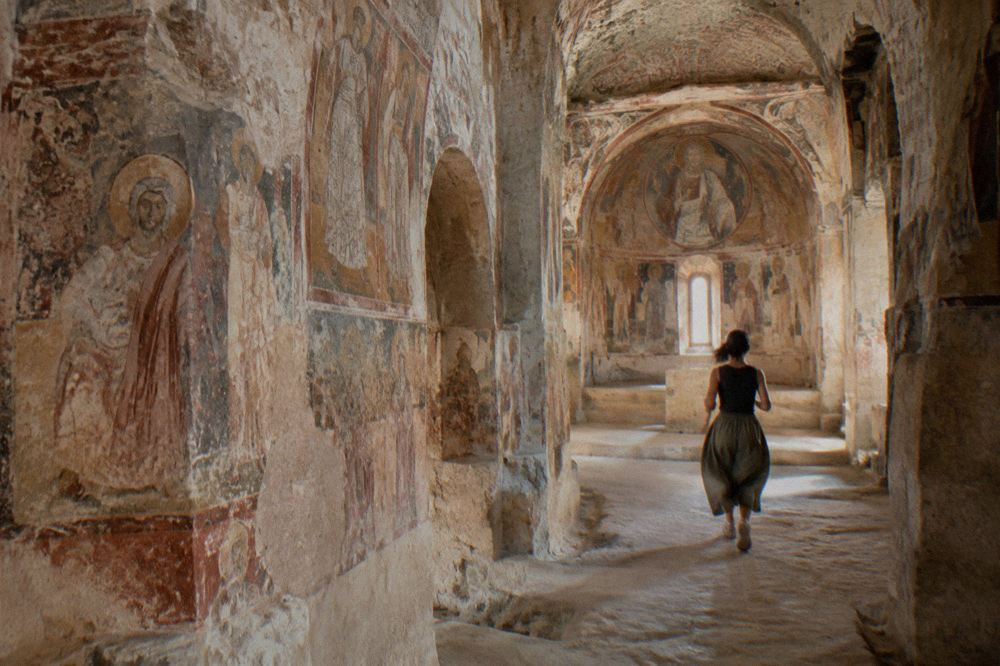
The Oltre l'Arte tariff is the backbone of a sightseeing budget because it covers the three great rupestrian churches, Santa Lucia alle Malve, Madonna de Idris with San Giovanni in Monterrone, and San Pietro Barisano, all open daily 09:30 to 19:30 or 10:00 to 19:00 from 28 March 2026. Oltre l'Arte's own ticket page lists reductions to 3.50, 5.50 and 7.50 EUR for disabled visitors, groups of 20 or more and FAI members, a lower guide-accompanied rate, and free entry for children up to 10 with a parent. The 25.00 EUR pass adds Vicinato a Pozzo, the Antica Casa Grotta in Via Fiorentini, the MATA museum, the Purgatory church exhibition and the bread museum. Every Oltre l'Arte site closes on 25 December and 2 July, the day of the Festa della Bruna, when the city belongs to the festival.
| Oltre l'Arte ticket | Full price | Reduced |
|---|---|---|
| 1 rupestrian church | 4.50 EUR | 3.50 EUR |
| 2 rupestrian churches | 8.00 EUR | 5.50 EUR |
| 3 rupestrian churches | 10.00 EUR | 7.50 EUR |
| Cathedral and MATA | 4.00 EUR | listed on the ticket page |
| 8-site all-inclusive | 25.00 EUR | 16.00 EUR |
The independent sites are priced separately and verified on their own pages. The Storica Casa Grotta di Vico Solitario charges 8.00 EUR full, 5.00 EUR reduced, 3.00 EUR for ages 11 to 18, free to age 10, a tariff in force from 4 April 2026 that older guides still misquote as 3 to 5 EUR. The ticket covers four things, not one: the cave house, the Neviera ice store, a natural cave and the rock church of Sant'Agostino al Casalnuovo. MUSMA, the sculpture museum in the Sasso Caveoso, is 10.00 EUR with 5.00 and 7.00 EUR reductions, and the Museo Nazionale di Matera charges 10.00 EUR per site or 15.00 EUR cumulative over two days, free for under-18s. Casa Noha, the FAI orientation site that explains the Sassi better than anything else in the city, is 6.50 EUR, though note it was closed 5 to 22 October 2026 for renovation ahead of a relaunch.
| Independent site | Full price | Notes from the operator's page |
|---|---|---|
| Storica Casa Grotta di Vico Solitario | 8.00 EUR | 5.00 reduced, 3.00 ages 11 to 18, free to 10 |
| MUSMA | 10.00 EUR | 5.00 or 7.00 reduced, free to age 6 |
| Museo Nazionale di Matera | 10.00 EUR | 15.00 EUR cumulative, 2 days, under 18 free |
| Casa Noha (FAI) | 6.50 EUR | children 3.00 EUR, closed Wednesdays |
| Museo Ridola | 10.00 EUR on the tariff | closed since 7 April 2025, no reopening date |
Two warnings save real money. First, the Museo Ridola still appears on third-party lists with hours and a price, but the museum's own site states it has been temporarily closed since 7 April 2025 for energy works and a new display; do not build an itinerary around it. Second, the Crypt of the Original Sin, 13 road kilometres away near the SS7 Appia, requires a mandatory e-ticket booked at least 90 minutes ahead with slots of 20 people, and its price sits inside the booking engine, so this desk does not print one. The guide to Matera's church tickets and passes walks through which combination suits a short stay.
The park side of the canyon has its own economics. Sentiero 406, the path to the suspension bridge over the Gravina, has had a staffed access point and an online access ticket since March 2026; the ticket page's own text shows 10.00 EUR summer and 5.00 EUR winter for a free visit, but press reports quoted different figures, so the honest line is to check the park's ticket page before setting out. Half price applies for under-25s, and access is free for residents of Matera and Montescaglioso, under-6s and disabled visitors with a companion. A guided crossing with commentary is bookable below.
How Much Does Getting To Matera And Around It Cost?
The train from Bari to Matera sits in fare band 70 of FAL's 2026 fare matrix, the verified label for the route, with no euro figure published in a form this desk can quote; driving from Bari Airport is 64 km and about one hour free-flow. Within Matera the ZTL camera hours shape parking decisions more than any tariff, since no official car park price list exists. The airport shuttle's fare and timetable are unverified and must be confirmed before travel.
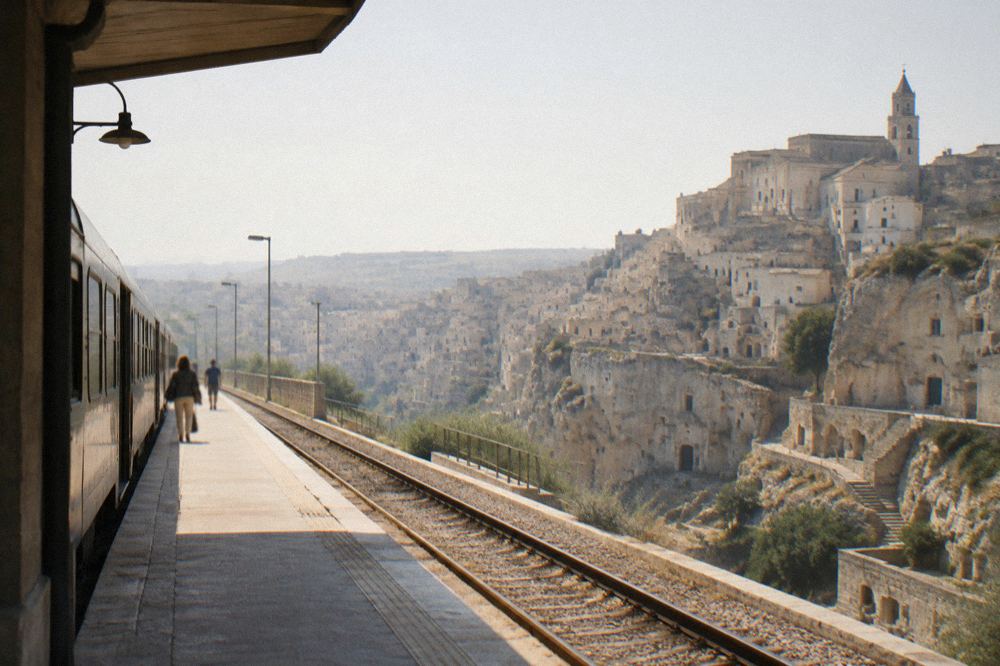
Matera has no Trenitalia station. The railway is FAL, Ferrovie Appulo Lucane, and from Bari Centrale the posted weekday timetable involves a change at Altamura and a journey of about 1 h 45 to 2 h; FAL's notice of 9 October 2026 also changed the rail programme between Matera Sud and Altamura from 12 October 2026, so exact current times belong to FAL's own timetable page, never to a guide printed months earlier. On Sundays and public holidays no trains run at all and FAL operates replacement buses, eight arrivals and eight departures at Matera Centrale in the festive sheet. The fare structure is published as bands: Bari to Matera Centrale is band 70 in the matrix in effect from 1 January 2026, and the euro value of band 70 did not extract cleanly from the PDF, so it is not printed here. Confirm the fare on FAL's fares page or at the ticket machine.
Driving changes the arithmetic. From Matera Centrale, the verified free-flow drive times are 20 minutes to Altamura, about 1 h 23 to Alberobello, 1 h 29 to Polignano a Mare and about 1 h 02 to Bari. These are routing-engine figures over open data, with no traffic and no stops, so round them up when planning. Once in the city, the cost question shifts from fuel to the limited-traffic zones: the ZTL Sassi cameras run 10:00 to 20:30 from 16 September to 30 June and 10:00 to 24:00 from 1 July to 15 September, while ZTL Centro gates are active 24 hours a day, every day. No official public car park tariff page exists for Matera, so parking prices, where quoted anywhere, are third-party and unreliable; the practical guidance is in the parking guide and the ZTL guide, both of which stick to what the comune's own ordinances say.
| Journey | Verified figure | Source basis |
|---|---|---|
| Bari Centrale to Matera Centrale, train | about 1 h 45 to 2 h, change at Altamura | FAL posted timetable |
| Bari to Matera fare | fare band 70 (no verified euro figure) | FAL 2026 fare matrix |
| Bari Airport to Matera, driving | 64 km, about 1 hour free-flow | routing engine over OpenStreetMap |
| Matera to Alberobello, driving | 68 km, about 1 h 23 | routing engine over OpenStreetMap |
| Matera to Polignano a Mare, driving | 100 km, about 1 h 29 | routing engine over OpenStreetMap |
| Matera to Bari, driving | 68 km, about 1 h 02 | routing engine over OpenStreetMap |
Taxis are the last piece, and here restraint is the rule. The 80 EUR airport figure that circulates online comes from one private operator's price list, not a municipal tariff, so it is not printed as fact. For travellers who would rather not calculate rail connections at all, a day tour with a tour leader and transport included removes the whole question for one price, shown live below.
When Is Matera Most And Least Expensive To Visit?
September, not August, is Matera's busiest month, with 61,630 accommodation arrivals in 2025 against 60,257 in August and only 15,239 in February, so pricing pressure on rooms peaks in early autumn, and 74.5 percent of September arrivals came from abroad. The cheapest window by crowd data is November to March, excluding the Presepe Vivente weekends in late December, when the living nativity charges 12.00 EUR a ticket and the city fills.
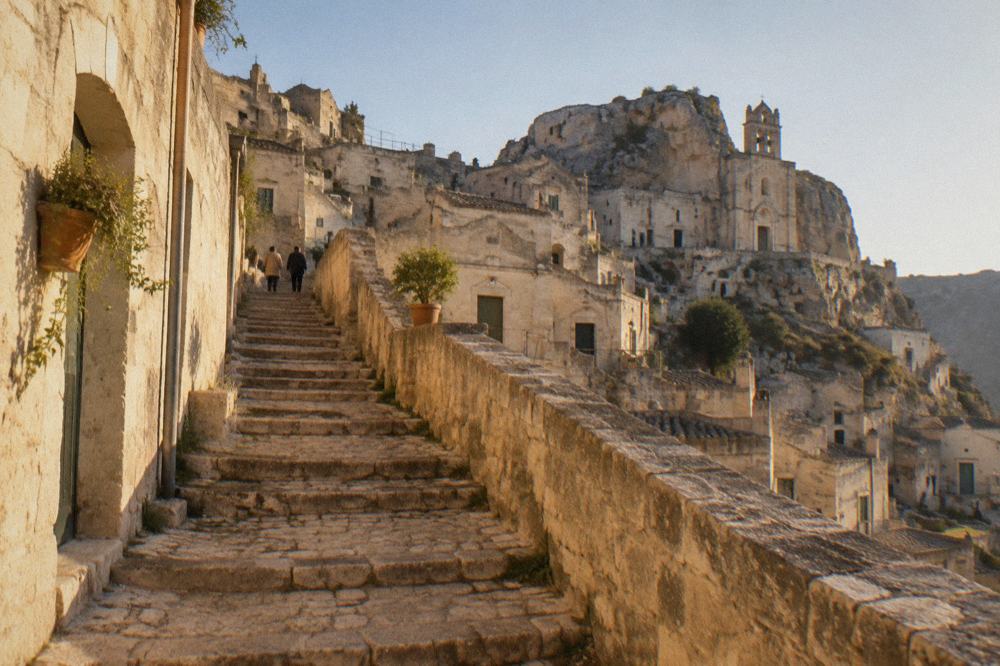
The APT Basilicata accommodation counts, the only visitor figures this site treats as verified, tell a story that contradicts the standard guidebook line about August. September 2025 logged 61,630 arrivals, the year's peak, with August second at 60,257 and May close behind at 54,101. October held at 52,538. The winter collapses: February saw 15,239 arrivals and November 23,555, roughly a quarter of the September level. Room pricing is not published in any dataset this desk holds, so no nightly rate appears on this page, but demand of that shape is what pricing follows, and the guide to the best time to visit Matera maps it month by month.
| Month (2025) | Arrivals | Foreign share of the month | ERA5 mean high (1991-2020) |
|---|---|---|---|
| February | 15,239 | minority | 11.1 C |
| April | 45,195 | majority | 17.4 C |
| May | 54,101 | majority | 22.7 C |
| July | 43,966 | majority | 31.2 C |
| August | 60,257 | 53.2 percent Italian | 31.3 C |
| September | 61,630 | 74.5 percent from abroad | 25.7 C |
| October | 52,538 | majority | 20.8 C |
| November | 23,555 | minority | 15.5 C |
The July line deserves a second look. July's mean high, 31.2 C in the ERA5 reanalysis for 1991 to 2020, is within a tenth of a degree of August's, yet July 2025 drew 43,966 arrivals, fewer than April, May, June, August, September or October. Whatever mix of heat and holiday calendars explains it, the pattern repeats in the data: the crowd and the heat do not move together. Across the whole of 2025, 57.4 percent of arrivals were from abroad, and the average stay was 1.56 nights, which means a large share of the market is short-break traffic that books late and pays peak rates. The city's total was 479,083 arrivals and 748,812 overnight stays, figures that count registered accommodation guests only, never day trippers. The full index of guides sits on Matera Travel Guide.
One December exception matters. The Presepe Vivente nei Sassi, the living nativity on its sixteenth edition, runs public days on 5-6, 12-13, 19-20 and 26-27 December 2026 plus 2-3 January 2027, with tickets at 12.00 EUR full, 9.00 EUR for ages 10 to 18 and free under 10, verified on the organisers' own site. Those weekends invert the winter lull, and anyone combining Christmas in the Sassi with a budget should read the winter guide alongside the event details.
What Does A Guided Tour In Matera Cost?
Guided tour prices in Matera are printed by the live listing, not by this page, because operators change them seasonally; what can be said from the verified roster is the shape of the market, with group walking tours of the Sassi starting around the 20 to 30 EUR range and private tours priced per group rather than per person. Tip-based walks also run locally, and the tip is agreed with the guide, never booked as a fixed price here.
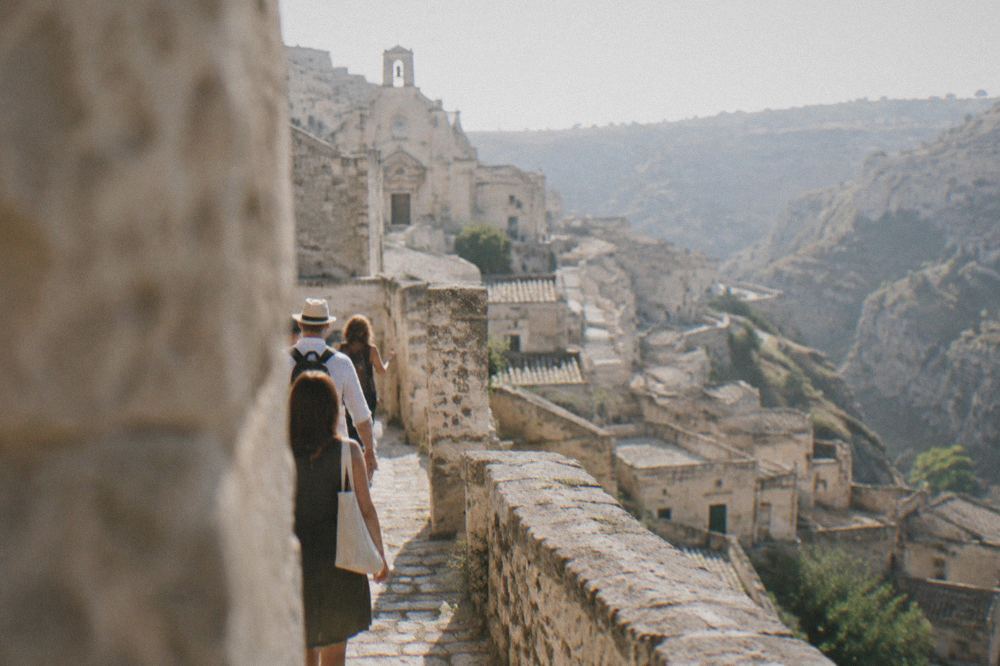
The reason this desk refuses to type a tour figure is simple: prices, ratings and durations on this site render from verified data inside the booking blocks, and a number typed by hand goes stale the week it is published. What a reader can plan around is structure. Group walking tours of the Sassi, the kind that include a cave house and a rupestrian church, sit at the accessible end of the scale and typically cover the same ground as a first solo walk plus the interiors that need a guide to open. Private tours are priced per group, which changes the maths completely for three or four travellers splitting one fee. The walking tour guide and the city overview page set out which style suits which stay.
Food-and-drink experiences and panorama rides fill the middle of the range. A pasta class in a farmhouse or an ancient wine cellar costs more than any walk but replaces a restaurant dinner, which is how many travellers justify it. The panoramic options, open-top eco-bus, tuk-tuk and Ape Calessino rides, are short, priced per person at the lower end of the tour scale, and solve a specific problem: seeing the canyon-side viewpoints without climbing the stairs twice. The stairs, it should be said, are real; no route into or out of the Sassi is step-free or wheelchair accessible, and pretending otherwise costs more energy than money.
Panorama rides give you the canyon views without the stairs. Book an open bus tour ticket here.
The sunset market is worth understanding before booking anything. Murgia Timone, the lookout across the canyon, is reached through park access controlled from the Jazzo Gattini visitor centre, active under a new concession since 6 February 2026 with an info point and ticket office. A guided sunset tour with transfer included solves the awkward timing of getting there and back in fading light, and the listing below carries the current price.
Is Matera Expensive Compared With Alberobello And The Coast?
This desk holds verified price data for Matera only, so no honest ranking of towns exists here; what is verified is the geometry, with Alberobello 68 km and about 1 h 23 by road from Matera, Polignano a Mare 100 km and 1 h 29, and Bari 68 km and 1 h 02, which makes combined itineraries cheap in time even where town-by-town price comparison is impossible. Any page ranking these towns by cost without a source for each figure is guessing.
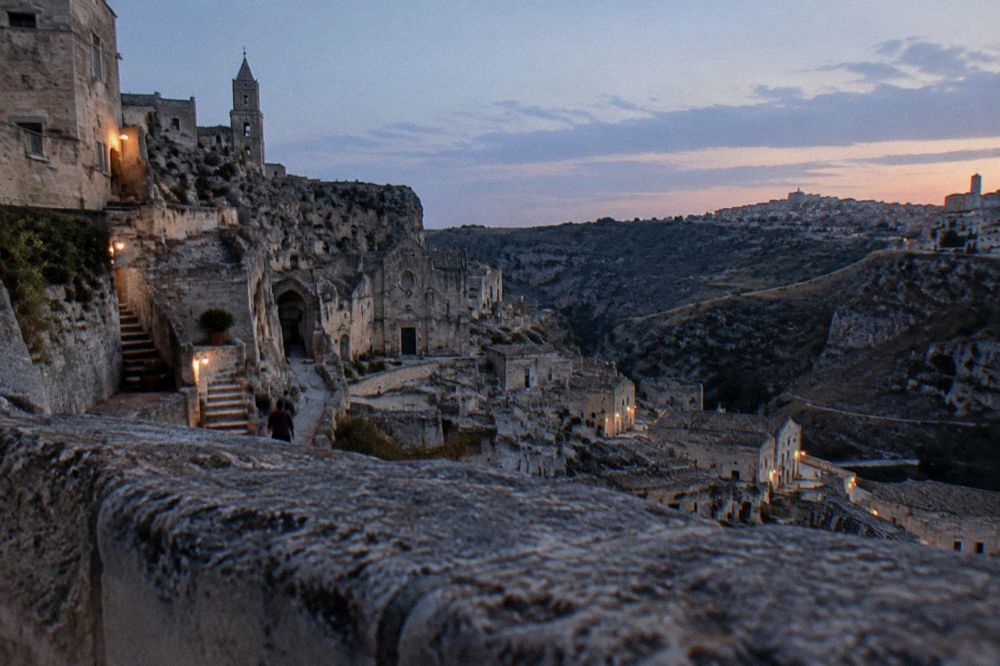
The comparison question arrives constantly, usually as "Matera or Alberobello", and the only defensible answer is structural. Matera and Alberobello are both UNESCO-inscribed, both in the wider region travellers lump together as the deep south, and just under an hour and a half apart by road. Alberobello is in Puglia, Matera in Basilicata, a border crossing that costs nothing but confuses every itinerary written by someone who has not checked a map. The verified Matera-side facts that bear on cost: parking pressure and ZTL cameras in the historic centre, the free-to-walk Sassi streets, and the 25.00 EUR ceiling on the biggest attraction pass. Nothing in this desk's sources prices a trullo visit or an Alberobello restaurant, so none of that appears here.
What the distances do license is a statement about trip design. Because Matera to Alberobello is about 1 h 23 of driving and Matera to Polignano a Mare about 1 h 29, a two-base trip, Matera plus a Puglian coast town, spends less time in transit than a single-base Rome trip. Note the coastline itself is never Matera's: this is an inland city at about 400 m elevation on the edge of the Gravina canyon, and the sea, whether the Ionian at Metaponto or the Adriatic at Polignano and Monopoli, is always a day trip. Travellers who want both towns in one day without driving can book a combined tour with a tour leader, transport included, at the live price below.
How Do You Keep A Matera Trip Cheap?
Walk the Sassi early and pay for interiors selectively: the streets, the canyon views and the Belvedere Murgia Timone approach cost nothing, children up to 10 enter the Oltre l'Arte churches free with a parent, under-18s enter the national museums free, and the 25.00 EUR pass only pays for itself past four or five sites. The tourist tax exists but its rate is confirmed only at booking, and the off-season, November to March outside the nativity weekends, is the verified low-demand window.
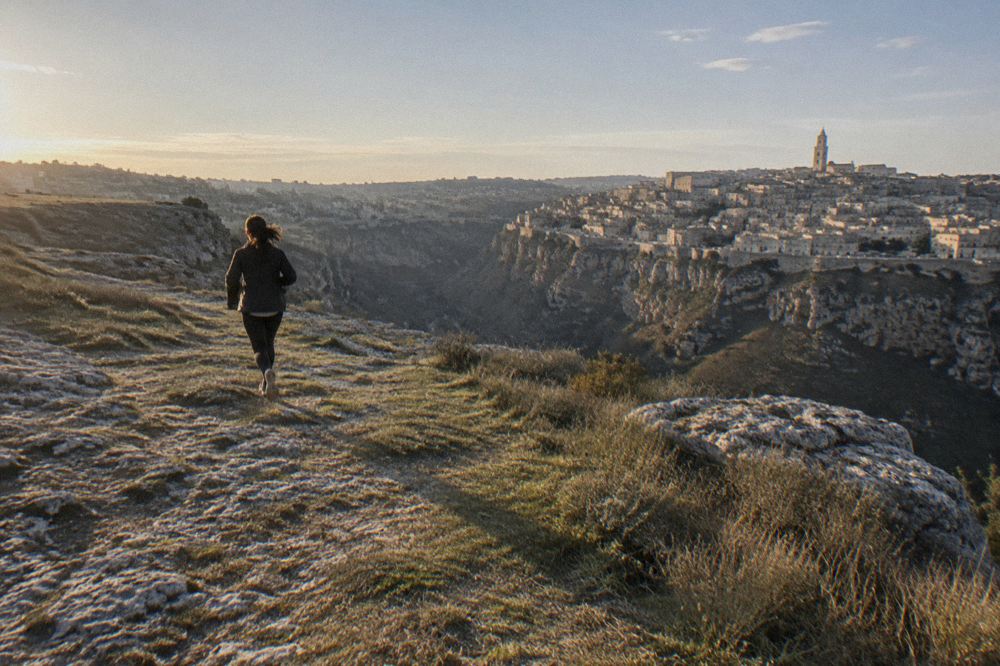
The genuinely free list is longer than in most Italian heritage cities. The Sassi districts themselves, Sasso Caveoso and Sasso Barisano, are lived-in public streets. The canyon rim paths and the viewpoints on the Murgia side are parkland. The Cathedral's exterior and the Piazza Vittorio Veneto, which sits over a giant invisible cistern, cost nothing to stand in. Oltre l'Arte's tariff gives free church entry to children up to 10 with a parent; the Museo Nazionale's cumulative ticket is free for under-18s; the Casa Grotta di Vico Solitario is free for Matera residents and disabled visitors; and Sentiero 406 access is free for residents of Matera and Montescaglioso and half price for under-25s. Nobody verifies a "free walking tour" price here: tip-based walks run locally and the tip is agreed with the guide.
| Free or reduced item | Who qualifies | Stated by |
|---|---|---|
| Sassi streets, canyon, viewpoints | everyone, all day | public streets and parkland |
| Oltre l'Arte churches | free to age 10 with a parent | operator's ticket page |
| Museo Nazionale sites | free under 18 | museum's tariff page |
| Casa Grotta di Vico Solitario | free for residents and disabled visitors | operator's tariff page |
| Sentiero 406 access | free for local residents, half price under 25 | park's ticket page |
| MUSMA | free to age 6 | museum's contacts page |
The pass arithmetic is the biggest single lever. One rupestrian church at 4.50 EUR is cheaper than the 25.00 EUR pass, obviously; but the pass covers eight sites, so a visitor who intends the churches plus the MATA museum plus the bread museum and the Purgatory exhibition crosses the break-even around the fourth or fifth entry. A one-night visitor, and the APT data says the average stay is 1.56 nights, will rarely see eight sites and should buy single tickets. A three-night visitor almost certainly should not.
Finally, the costs that must be confirmed rather than budgeted, because no official figure exists. Printing any of the numbers that circulate for these online would be guesswork dressed as advice, and this desk will not do it.
| Cost | What is verified | What to do |
|---|---|---|
| Tourist tax | exists, collected by the accommodation | confirm the amount at booking |
| Bari Airport shuttle | no official timetable or fare readable | confirm before travel |
| FAL fare in euros | fare band 70 only | check FAL's fares page |
| Car park tariffs | no official tariff page | check signage on arrival |
| Urban bus fare | no official page | confirm locally |
| Palombaro Lungo | site exists, no official price or hours | check with the city before visiting |
| Crypt of the Original Sin price | booking mandatory, price in the engine | check the booking page |
Where to sleep is the last lever, and the only honest framing is that this desk publishes no nightly rates. The verified structural facts: cave hotels sit inside the Sassi themselves, the modern town on the plateau above is generally the practical base for drivers because of the ZTL, and the where to stay guide with its cave hotels page sets out the trade-offs without inventing figures.
For the full spread of bookable options across walking tours, day trips and sunset experiences, with live prices and cancellation terms on each listing, the current selection is below.
Common Questions About Matera Travel Costs
Is Matera expensive?
Not by Italian heritage-city standards. The Sassi streets and canyon viewpoints are free, the main ticketed sites cost 2.00 to 10.00 EUR, and the largest pass, eight Oltre l'Arte sites, is 25.00 EUR. The main open variables are lodging, the tourist tax confirmed at booking, and the journey in.
How much are tickets to the rupestrian churches in Matera?
Oltre l'Arte charges 4.50 EUR for one church, 8.00 EUR for two and 10.00 EUR for three, with reductions to 3.50, 5.50 and 7.50 EUR, and free entry for children up to 10 with a parent, on the tariff in force from 28 March 2026.
What does the Casa Grotta di Vico Solitario cost?
8.00 EUR full, 5.00 EUR reduced, 3.00 EUR for ages 11 to 18 and free to age 10, under the tariff in force from 4 April 2026. The ticket covers the cave house, the Neviera, a natural cave and the rock church of Sant'Agostino al Casalnuovo.
How much is the train from Bari to Matera?
The route sits in fare band 70 of FAL's 2026 fare matrix; no verified euro figure for that band exists on this site. Check FAL's fares page or the ticket machine before travel.
When is Matera cheapest to visit?
By the verified demand data, November to March is the low window, with February 2025 at 15,239 arrivals against September's 61,630. The exceptions are the Presepe Vivente weekends in late December and early January, when the living nativity fills the city.
Does Matera have a tourist tax?
Yes, and it is collected by your accommodation. The rate, night cap and exemptions have not been verified on an official page, so confirm the exact amount at booking rather than trusting figures quoted online.