Matera Weather
Matera sits at about 400 m above sea level on the edge of the Gravina canyon, and its climate is a continental-leaning Mediterranean one: hot dry summers, cold damp winters with frost, and a shoulder seasons sweet spot in between.
Short answer
Matera's mean highs run from 10.3 C in January to 31.3 C in August, with 562.5 mm of rain a year. July is the driest month and November the month with the most rain. Spring and autumn are the most comfortable seasons for walking the Sassi.
Matera, in Basilicata, southern Italy, is an inland city at about 400 m above sea level on the edge of the Gravina canyon, and its weather behaves like it. The climate is a continental-leaning Mediterranean one: hot, dry summers with mean highs above 30 C, cold, damp winters with roughly twenty frost days a year, and shoulder seasons that are markedly kinder to anyone planning to walk the stepped lanes of the Sassi all day. This guide sets out what the ERA5 reanalysis, 1991-2020, shows for the city, month by month, and what each season means for a visit.
A note on the numbers before anything else. Every temperature and rainfall figure on this page comes from the ERA5 reanalysis, 1991-2020, a modelled grid cell for Matera at about 398 m, not a weather-station record. It is the most consistent dataset available for the city, and it is labelled as such throughout. For planning, the Matera Travel Guide editorial desk pairs it with the APT Basilicata accommodation figures, which show how demand actually moves through the year, and those two pictures do not always match the way guidebook folklore expects.
What Is The Weather Like In Matera Through The Year?
Matera has hot, dry summers and cold, damp winters: mean highs run from 10.3 C in January to 31.3 C in August, with mean lows near 2.2 C in January and February. The year brings 562.5 mm of rain over about 90.7 rain days, with July the driest month at 21.2 mm and November the month with the most rain at 67.1 mm. About 55 days a year reach 30 C, and about 20 are frost days.
The elevation is the detail that surprises people. Matera is southern Italy, but it is not the seaside: the coast at Metaponto or Polignano a Mare is a day trip away, and the city itself sits on a plateau edge where heat radiates off the tufa in July and August and where winter nights genuinely drop below freezing. The Sassi districts, cut into the limestone, stay cooler inside the cave dwellings than the street above, which is part of why the cave architecture exists at all. Frost days cluster between December and March, so a January visit can mean icy patches on the stone steps of Sasso Caveoso in the early morning.
| Month | Mean high C | Mean low C | Rain mm | Rain days |
|---|---|---|---|---|
| Jan | 10.3 | 2.2 | 51.4 | 8.1 |
| Feb | 11.1 | 2.2 | 54.9 | 8.8 |
| Mar | 14.1 | 4.4 | 59.2 | 9.4 |
| Apr | 17.4 | 7.1 | 56.5 | 9.7 |
| May | 22.7 | 11.5 | 41.7 | 7.9 |
| Jun | 28.2 | 16.0 | 35.1 | 6.4 |
| Jul | 31.2 | 18.6 | 21.2 | 4.4 |
| Aug | 31.3 | 18.9 | 21.7 | 4.7 |
| Sep | 25.7 | 15.2 | 44.8 | 7.0 |
| Oct | 20.8 | 11.6 | 51.7 | 7.5 |
| Nov | 15.5 | 7.5 | 67.1 | 8.3 |
| Dec | 11.2 | 3.7 | 57.2 | 8.5 |
Read the table as ranges, not promises. A mean high of 20.8 C in October still allows afternoons at 25 C and mornings near 10 C, and the rain-day counts tell you how often a wet day is likely, not whether your specific Tuesday will be one. For what the numbers mean for choosing dates, the separate best time to visit Matera guide works through the trade-offs in detail.
When Is The Best Weather For Walking The Sassi In Matera?
April, May, June, September and October are the months when Matera's weather and walking conditions line up best: mean highs of 17.4 C to 28.2 C, mean lows above 7 C, and monthly rainfall between 35.1 mm and 56.5 mm. September combines a mean high of 25.7 C with 44.8 mm of rain, and October drops only to a 20.8 C mean high. The ERA5 reanalysis, 1991-2020, puts these five months in the comfortable band.
The Sassi are steep, stepped and uneven, and that terrain is the reason weather matters more here than in a flat city. A hot August afternoon on the sun-exposed stairways of Sasso Barisano is a different experience from the same walk in May, and the cave churches run by Oltre l'Arte hold a naturally cool interior temperature year round, which makes them a useful midday stop in summer. In winter the stone can be slick after rain, and the viewpoints across the Gravina, which the Matera viewpoints guide covers, are exposed to wind that the canyon funnels.
June deserves a specific mention. It is the last month before the mean high crosses 30 C, with 28.2 C and only 6.4 rain days, and the APT Basilicata data shows the city's accommodation logged 50,186 arrivals in June 2025, which is to say the good-weather window is no secret. September is the demand peak, 61,630 arrivals in 2025, and 74.5% of those September arrivals came from abroad, so the weather window and the crowd window overlap almost exactly.
| Season | Mean high range | Character | Walking the Sassi |
|---|---|---|---|
| Spring (Mar to May) | 14.1 to 22.7 C | Warming, occasional rain | Comfortable, green plateau |
| Summer (Jun to Aug) | 28.2 to 31.3 C | Hot, dry, 4.4 to 6.4 rain days | Start early, use shade and caves |
| Autumn (Sep to Nov) | 25.7 down to 15.5 C | Cooling, November rain peak | Excellent in Sep and Oct |
| Winter (Dec to Feb) | 10.3 to 11.2 C | Cold nights, frost, damp | Fine midday, slippery when wet |
How Hot Does Matera Get In Summer?
Matera's summer is genuinely hot: the ERA5 reanalysis, 1991-2020, gives mean highs of 28.2 C in June, 31.2 C in July and 31.3 C in August, with mean lows of 16.0 C to 18.9 C, and about 55 days a year reaching 30 C, of which 19.4 fall in July and 20.9 in August. Rain is scarce, at 21.2 mm in July and 21.7 mm in August, roughly 4.4 to 4.7 rain days a month.
The heat is dry rather than humid, which changes how it feels, but the practical advice is the same as for any hot-weather city: walk early, break at midday, and use the middle of the day for the interiors. The cave houses, the rock churches and the museums are all naturally cool, and the Sassi di Matera guide explains how the cave architecture keeps its temperature. Evening is when the city reclaims itself, and the Matera at night guide covers the aperitivo hours and the lit-up canyon views that make a summer visit work.
One planning point that the arrival data makes clearly: July 2025 drew 43,966 arrivals, fewer than April, May, June, August, September or October, despite July matching August for heat. The APT Basilicata figures suggest the city's busiest hot month is August, when Italians dominate the mix, 53.2% Italian that month in 2025, and the summer calendar, including the Festa della Bruna on 2 July, pulls its own crowd. The Matera in summer guide goes deeper on the season.
For a day trip that works around the heat, the Alberobello and Matera tour by private bus from Bari is the site's featured option for this page, since it moves between two towns with a tour leader handling the logistics. Check availability on the operator's live listing.
Does It Rain Much In Matera, And When?
Matera averages 562.5 mm of rain a year over about 90.7 rain days, spread unevenly: November has the most rain at 67.1 mm, December follows at 57.2 mm, March at 59.2 mm and October at 51.7 mm, while July and August are the driest months at 21.2 mm and 21.7 mm. The ERA5 reanalysis, 1991-2020, counts 8.3 rain days in November against 4.4 in July.
The rain pattern is Mediterranean with a continental edge: the wet months are the cool ones, and the rain arrives in concentrated spells rather than drizzle. A November or December day in Matera can be a downpour followed by clear cold air, which is actually good photography weather, and the Matera rainy day guide lists the interiors that carry a wet afternoon, from MUSMA to the Palazzo Lanfranchi museums. Note one closure that matters for rainy-day planning: the Museo Ridola has been closed since 7 April 2025 for works, and no reopening date has been published.
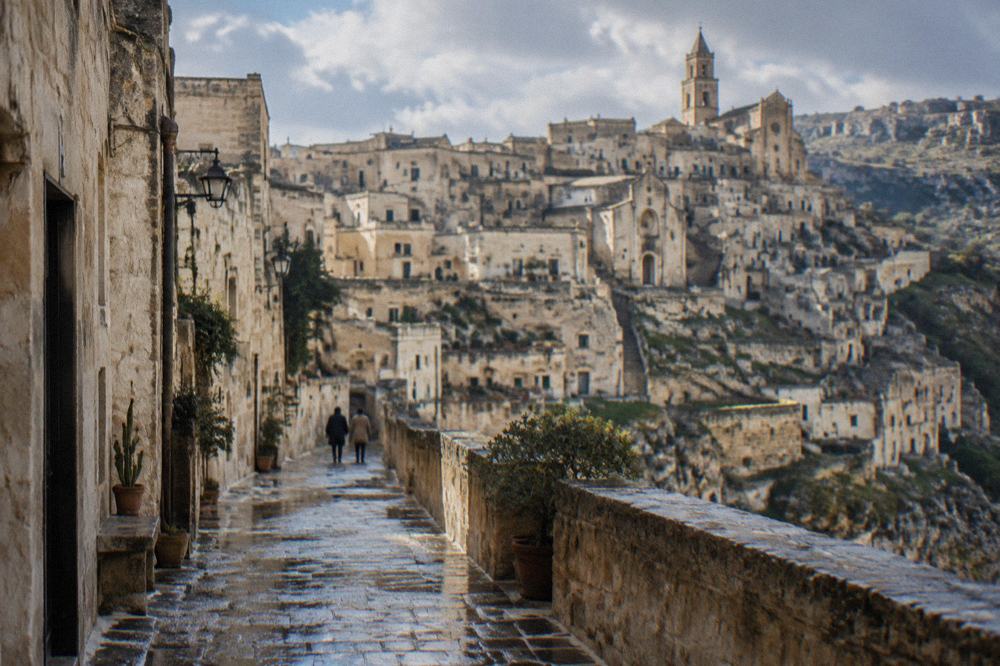
Rain also changes the ground underfoot. The Sassi stairways and the paths into the Parco della Murgia become slippery, and the park's own access rules for Sentiero 406, which has had a staffed, ticketed access point since March 2026, should be checked before any canyon walk in wet weather. The hiking in Matera guide covers the terrain in detail.
How Cold Does Matera Get In Winter?
Matera's winters are cold and damp, not mild: mean lows are 2.2 C in January and February, 3.7 C in December, and mean highs only reach 10.3 C in January and 11.2 C in December, with about 20 frost days a year, almost all between December and March. The ERA5 reanalysis, 1991-2020, also counts 8.5 rain days in December and 8.1 in January.
The elevation explains the gap between expectation and reality. A city this far south, at sea level, would be warmer, but Matera stands about 400 m up on the Murgia plateau edge, and the canyon drains cold air through the Sassi at night. Frost on the stone is a normal January sight, and the cave interiors, cool in summer, feel comparatively mild in winter. The Matera in winter guide treats the season properly, and the Matera at Christmas one covers the Presepe Vivente, whose sixteenth edition runs on set December and January days with tickets at 12.00 EUR full and 9.00 EUR for ages 10 to 18.
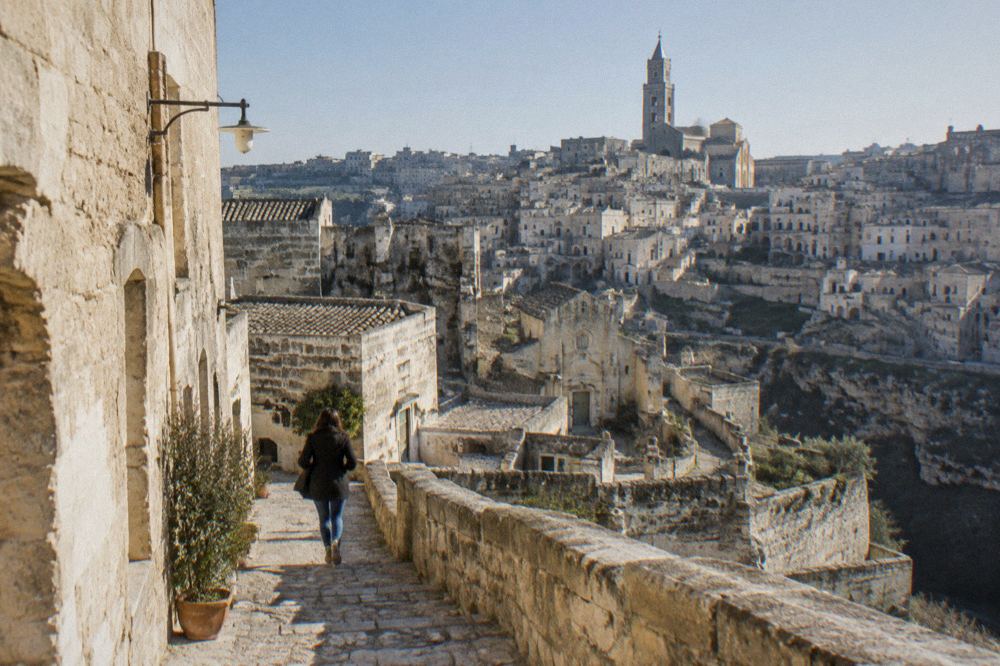
Winter is also the quiet season, and the APT data quantifies it: February 2025 logged 15,239 arrivals against 61,630 in September, roughly a quarter of the peak. For anyone who prefers empty lanes to warm evenings, that is the trade on the table, and the Matera travel costs guide looks at what the low season does to prices.
| Winter month | Mean high C | Mean low C | Rain mm | Frost risk |
|---|---|---|---|---|
| Dec | 11.2 | 3.7 | 57.2 | High |
| Jan | 10.3 | 2.2 | 51.4 | High |
| Feb | 11.1 | 2.2 | 54.9 | High |
| Mar | 14.1 | 4.4 | 59.2 | Moderate |
What Should You Pack For Matera's Weather?
Pack for two climates in one bag: in summer, breathable layers, a sun hat and water for mean highs above 31 C in July and August; in winter, a proper coat, warm layers and shoes with grip for mean lows of 2.2 C and about 20 frost days a year; and in every season, sturdy shoes with real tread, because the Sassi are steep, stepped and uneven and no route in them can be called step-free.
Footwear is the single most repeated piece of advice on this site because the terrain earns it. The stone stairways are worn smooth in places, wet stone is slick, and the canyon paths are rough track. Beyond shoes, the seasonal packing logic follows the tables above: light cover-ups for the cave churches, where shoulders are expected to be covered, a warm mid-layer for spring and autumn evenings when the mean low drops toward 7 C, and rain protection for October through March, when monthly rainfall runs from 51.4 mm in January to 59.2 mm in March.
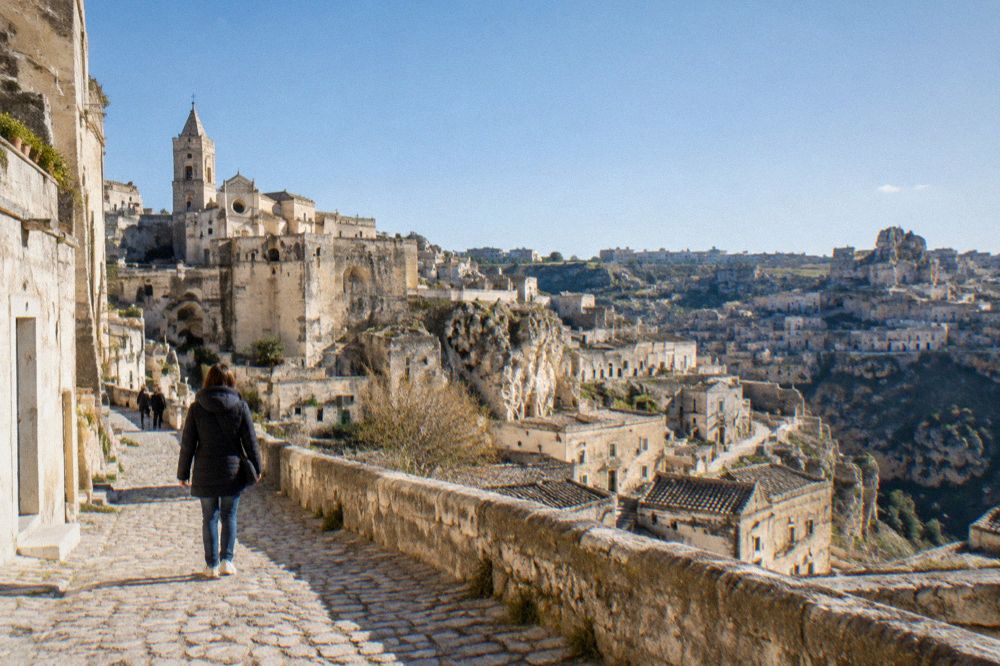
Layering matters more than the daily high suggests, because the swing between afternoon and night is large for much of the year: in May, a 22.7 C mean high sits against an 11.5 C mean low, and in October the spread is 20.8 C against 11.6 C. A day that starts with frost can end warm enough for a table outside, and the what clothes should I pack for Matera answer page lists the specifics.
How Does Matera's Weather Compare With The Rest Of The Year's Demand?
Weather and crowds in Matera overlap but do not match: the ERA5 reanalysis shows July and August as the warm months, both with mean highs near 31 C, yet the APT Basilicata data shows September was the busiest month of 2025 with 61,630 arrivals, ahead of August at 60,257, while July drew 43,966, fewer than April, May or June. The quietest month was February, with 15,239 arrivals.
That mismatch is the most useful planning insight on this page. The city's demand peak arrives in September, when the mean high has already eased to 25.7 C and 74.5% of arrivals come from abroad, and the data shows 57.4% of all 2025 arrivals were from abroad, with foreign guests the majority in April, May, June, July, September and October. August is the one warm month Italians dominate. In 2025 the city logged 479,083 arrivals in total, with an average stay of 1.56 nights, so the weather window and the short-stay pattern together shape when the lanes feel full.
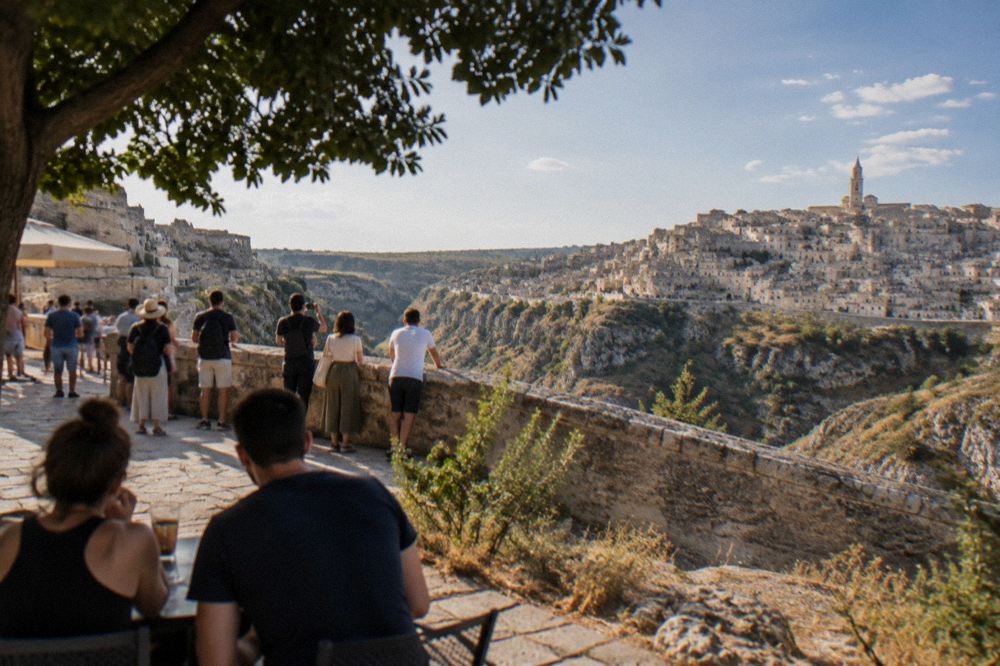
| Month | Mean high C | Arrivals 2025 | Planning read |
|---|---|---|---|
| Apr | 17.4 | 45,195 | Mild, busy |
| May | 22.7 | 54,101 | Warm, busy |
| Jun | 28.2 | 50,186 | Hot, busy |
| Jul | 31.2 | 43,966 | Peak heat, dip in demand |
| Aug | 31.3 | 60,257 | Peak heat, Italian holiday month |
| Sep | 25.7 | 61,630 | Peak demand, softer heat |
| Oct | 20.8 | 52,538 | Mild, busy |
| Feb | 11.1 | 15,239 | Cold, quiet |
The how many nights should I stay in Matera answer works through what the 1.56-night average means for an itinerary, and the one day in Matera and two days in Matera guides build plans around it.
Does Weather Affect Tours And Day Trips From Matera?
Yes, and in specific ways: summer heat argues for morning starts and interior-heavy middles, winter cold and about 20 frost days a year argue for shorter canyon walks, and rain, 67.1 mm in November alone, makes the Sassi stairways and the Murgia paths slippery, so guided tours with a set structure are the safer bet in the wet months. Day trips to Alberobello, Bari or the coast add road time on top of the walking.
The day-trip geography is weather-sensitive in both directions. Alberobello is about 68 km and roughly 1 h 23 of driving from Matera, Polignano a Mare about 100 km and 1 h 29, and the coast is where summer heat is at its most manageable, since there is no sea at Matera itself. In winter, the same roads are fine but the trulli towns and viewpoints are bitterly exposed, and the Matera and Alberobello in one day guide notes what the timing costs. Whatever the forecast, booking with free cancellation lets a plan flex, and the tours below cover the main structures.
For sunset specifically, the Murgia Timone belvedere tour with transfer included is the option that puts the canyon view at the hour when the light is at its best, and the Matera photography spots guide explains why that hour matters. Check availability if the forecast looks clear.
Common Questions About Matera Weather
What Is The Weather Like In Matera?
Matera has hot, dry summers and cold, damp winters. The ERA5 reanalysis, 1991-2020, gives mean highs of 31.2 C in July and 31.3 C in August, and 10.3 C in January, with mean lows of 2.2 C in January and February. The year averages 562.5 mm of rain over about 90.7 rain days.
What Is The Rainiest Month In Matera?
November, with 67.1 mm of rain over 8.3 rain days in the ERA5 reanalysis, 1991-2020. December follows at 57.2 mm and March at 59.2 mm. July is the driest month, at 21.2 mm.
Does It Ever Freeze In Matera?
Yes. The reanalysis counts about 20 frost days a year, almost all between December and March, with mean lows of 2.2 C in January and February. The city sits about 400 m above sea level, and winter is cold and damp rather than mild.
Is Matera Too Hot In July And August?
The ERA5 reanalysis, 1991-2020, gives mean highs of 31.2 C in July and 31.3 C in August, with about 55 days a year reaching 30 C, of which 40 fall in those two months. The heat is dry, and early starts plus cave-church interiors make it manageable, but midday walking in the Sassi is hard work.
When Is The Best Weather For Visiting Matera?
April, May, June, September and October combine mean highs between 17.4 C and 28.2 C with moderate rain. September, the busiest month in the APT Basilicata data, pairs a 25.7 C mean high with the demand peak, so May, June and October offer similar weather with somewhat thinner crowds.
Is Matera Warm In Winter?
Mild by day, cold by night. Mean highs run 10.3 C to 11.2 C from December to February, but mean lows sit near freezing and frost is common. Layers and grippy shoes are the right kit, and the cave interiors feel milder than the streets.
Whatever month is on the calendar, the honest summary is that Matera rewards planning around its numbers: walk the canyon edges in the shoulder seasons, start early in summer, and keep a museum list ready for the November rain.