Matera Travel Tips
Matera, in Basilicata, southern Italy, rewards a little planning: the Sassi are steep, the rail link is not Trenitalia, and September, not August, is the busiest month. This page collects the practical facts.
Short answer
Plan around the terrain and the timetables: FAL trains reach Matera from Bari with a change at Altamura in about 1 h 45 to 2 h, the Sassi districts are stepped and steep, Oltre l'Arte's church tickets start at 4.50 EUR, and September is the peak month with 61,630 arrivals in 2025.
Matera, in the region of Basilicata in southern Italy, is an inland city of about 59,368 residents (ISTAT, 1 January 2026) standing about 400 m above sea level on the edge of the Gravina canyon, with the Murgia plateau on the opposite rim. There is no sea here. The coast, Metaponto on the Ionian and Polignano a Mare and Bari on the Adriatic, is a day trip away. What brings travellers is the Sassi, Sasso Caveoso and Sasso Barisano, cave dwellings and rock-hewn churches cut into pale tufa limestone, inscribed by UNESCO in 1993 as "The Sassi and the Park of the Rupestrian Churches of Matera". This page gathers the practical tips the editorial desk can stand behind: how the transport really works, what tickets cost on the operators' own pages, how to handle the steep terrain, and the small details that shape a visit. For the full sightseeing picture, start with the site's Matera Travel Guide overview and the root things to do in Matera page.
What Should You Know About Matera Before You Arrive?
Matera is an inland cave city in Basilicata, not part of Puglia and not on the coast, with steep stepped districts called the Sassi, a UNESCO inscription from 1993, a population of about 59,368, and a tourist tax collected by your accommodation at an amount confirmed when you book. The city sits about 400 m above sea level above the Gravina, and the Murgia plateau faces it across the canyon. UNESCO's own wording describes "continuity over more than two millennia" and first occupation in the Palaeolithic; this site does not repeat the "oldest city" claims, which no official source we opened supports.
A few structural facts save confusion later. There is no Trenitalia station in Matera: the railway is FAL, Ferrovie Appulo Lucane, and from Bari the posted weekday timetable involves a change at Altamura. The Sassi are steep, stepped and uneven; no named route through them can be called step-free. The Museo Archeologico Nazionale Domenico Ridola has been closed since 7 April 2025 for energy works and a new display, with no reopening date published, so strike it from any list. And the emergency number here is 112: Matera's 0835 phone district joined the single European number on 2 December 2025.
The rhythm of the year matters more than elsewhere. APT Basilicata's accommodation data shows 479,083 arrivals and 748,812 overnight stays in 2025, with September the peak at 61,630 arrivals, ahead of August at 60,257. February was the quietest month at 15,239. The APT data also shows the average stay is short, 1.56 nights, so overnight visitors are competing for rooms in a compact city that also receives heavy day traffic from Bari and the Puglia coast. Book beds early for April, May, September and October.
For orientation once you arrive, the Sassi di Matera guide covers the two districts street by street, and where to stay in Matera breaks down the neighbourhoods.
How Do You Get To Matera, And Do You Need A Car?
You reach Matera by FAL train from Bari, changing at Altamura, in about 1 h 45 to 2 h, or by road: Bari Airport is 64 km and about one hour's free-flow drive, Bari itself 68 km, and Naples and Rome are long transfers best planned as separate journeys. You do not need a car in Matera itself. The historic centre is pedestrian-priority, several limited-traffic zones (ZTL) operate around the clock, and parking information is thin on official pages, so arriving by train and walking is the calmest option.
The rail detail that catches people out: FAL, not Trenitalia, runs Matera's railway. In the posted weekday sheet, 21 departures leave Bari Centrale and 18 arrivals reach Matera Centrale. On Sundays and public holidays no trains run at all; FAL operates replacement buses, with 8 arrivals and 8 departures at Matera Stazione Centrale on the festive sheet. FAL's notice of 9 October 2026 also changes the rail programme between Matera Sud and Altamura from 12 October 2026, replacing two early trains with buses, so always read the live timetable before quoting a departure to yourself. The single fare is fare band 70 in the 2026 fare matrix; this site does not print a euro figure for it.
| Route | Mode and detail | Verified figure |
|---|---|---|
| Bari Centrale to Matera | FAL train, change at Altamura | About 1 h 45 to 2 h |
| Bari Airport to Matera | By road, free-flow | 64 km, about 1 hour |
| Bari to Matera | By road, free-flow | 68 km, about 1 h 02 |
| Alberobello to Matera | By road, free-flow | 68 km, about 1 h 23 |
| Polignano a Mare to Matera | By road, free-flow | 100 km, about 1 h 29 |
| Matera on Sundays | No FAL trains; replacement buses | 8 arrivals, 8 departures |
The detailed routes have their own pages: how to get to Matera, Bari to Matera, Bari airport to Matera, Rome to Matera and Naples to Matera. For the airport question specifically, Matera airport explains what does and does not exist.
If you do drive, read the ZTL rules before you turn the key. The Sassi gates on Via Buozzi, Via Madonna delle Virtù and Via D'Addozio run cameras from 10:00 to 20:30 between 16 September and 30 June, and from 10:00 to 24:00 from 1 July to 15 September, weekdays and holidays alike. ZTL Centro, around Via del Corso and Piazza Sedile, is active 24 hours a day. The Matera ZTL and Matera parking guides carry the full breakdown, and car rental and driving in Matera covers the practical side.
How Do You Explore The Sassi Without Exhausting Yourself?
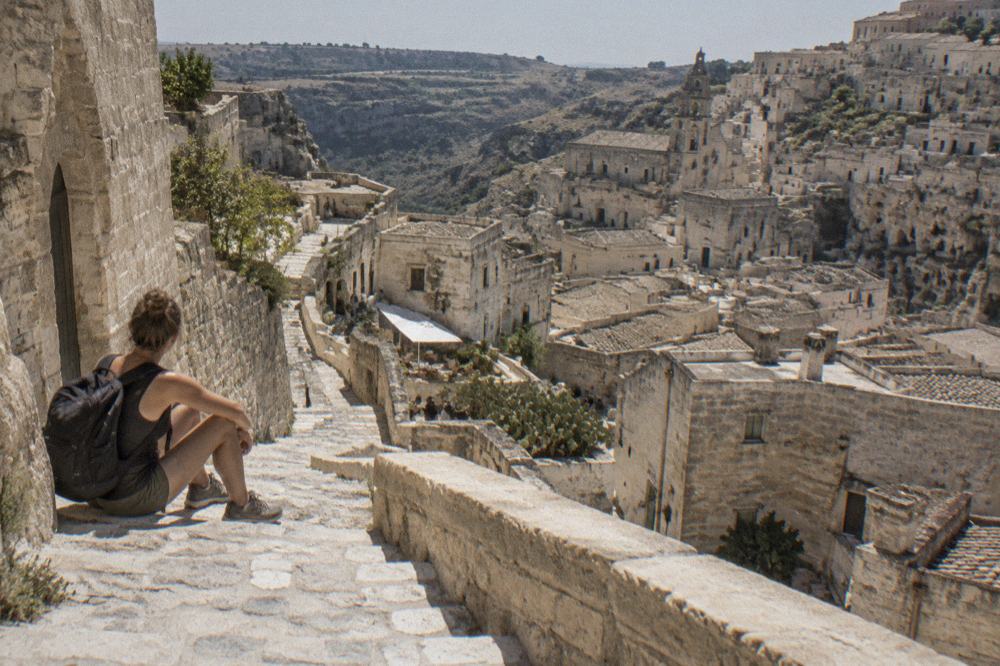
Walk the Sassi in small vertical slices, one district at a time, wearing shoes with grip, because the lanes are stepped, uneven stone that climbs and drops between the Civita ridge and the canyon floor, and no route down to the canyon or through Caveoso can be described as accessible or step-free. The geography forces the plan: the modern city sits on the plateau, the Sassi drop below it on either side of the ridge, and the belvederes above Piazza Vittorio Veneto look straight down onto the roofs. Descending into Sasso Caveoso or Sasso Barisano means stairs, and returning means climbing them.
The pacing tip the sources support: spread the entries. The three Oltre l'Arte rupestrian churches, Santa Lucia alle Malve, Madonna de Idris with San Giovanni in Monterrone, and San Pietro Barisano, are ticketed individually or together, and the Casa Grotta di Vico Solitario is a separate site with its own tariff. Doing all of them plus MUSMA in one afternoon is a lot of steep ground. The self-guided walking route guide sequences them sensibly, and getting around Matera covers the lift, escalators and shuttle options that soften the climbs.
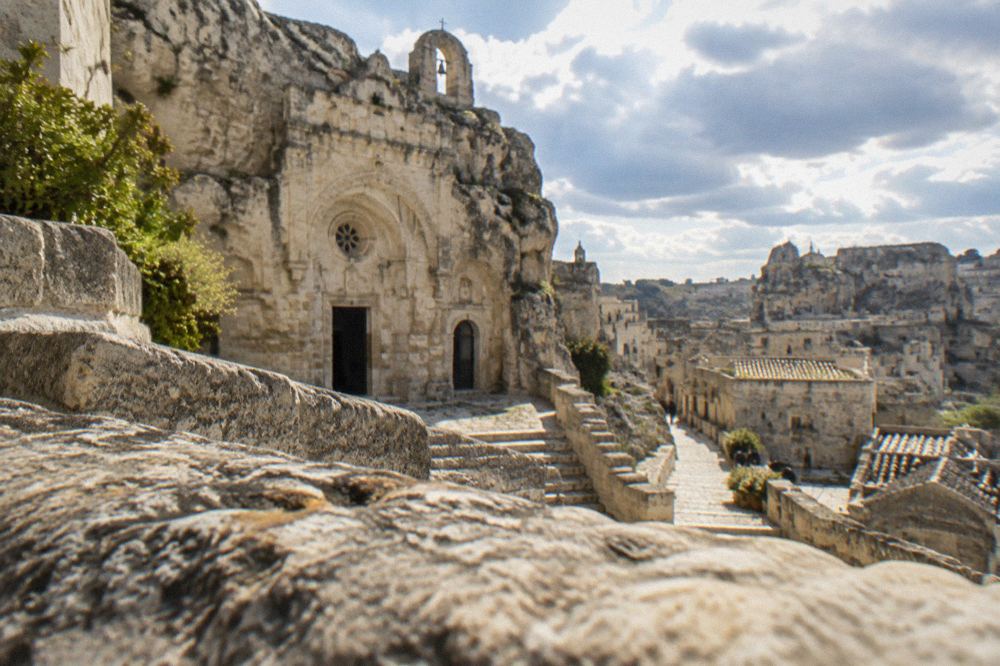
For the view from the other side, the Belvedere Murgia Timone and the park trails across the canyon are managed by the Parco della Murgia. The Jazzo Gattini visitor centre has been the park's info point and ticket office since 6 February 2026, and access to Sentiero 406, the path with the suspension bridge over the Gravina, has run through a staffed point with an online access ticket since March 2026. The access price is unsettled between the ticket page text and press reports, so this site prints none of it; confirm on the park's own channels. The Parco della Murgia, Belvedere Murgia Timone and Tibetan bridge guides carry the detail.
What Do The Tickets Actually Cost, And Which Passes Make Sense?
On the operators' own pages, Oltre l'Arte charges 4.50 EUR for one rupestrian church, 8.00 EUR for two and 10.00 EUR for three, the Cathedral and MATA route is 4.00 EUR, the 8-site all-inclusive ticket is 25.00 EUR reduced to 16.00 EUR, and the Casa Grotta di Vico Solitario is 8.00 EUR full under the tariff in force from 4 April 2026. MUSMA is 10 EUR full, the Museo Nazionale sites are 10.00 EUR each or 15.00 EUR cumulative over two days with under-18s free, and Casa Noha is 6.50 EUR for adults.
| Site | Ticket | Source detail |
|---|---|---|
| Oltre l'Arte rupestrian churches | 1: 4.50 EUR, 2: 8.00 EUR, 3: 10.00 EUR | Tariff page, hours from 28 March 2026 |
| Oltre l'Arte all-inclusive, 8 sites | 25.00 EUR (reduced 16.00) | 3 churches, Vicinato a Pozzo, Casa Grotta Fiorentini, MATA, Purgatorio, Bread Museum |
| Storica Casa Grotta di Vico Solitario | 8.00 EUR full, 5.00 reduced, 3.00 ages 11-18 | Tariff from 4 April 2026 |
| Cathedral and MATA | 4.00 EUR | Daily 09:00 to 19:00 |
| MUSMA | 10 EUR full | Open Monday to Sunday |
| Museo Nazionale di Matera | 10.00 EUR per site, 15.00 EUR cumulative | Under 18 free |
| Casa Noha (FAI) | 6.50 EUR adults, 3 EUR children | Closed Wednesdays; closed 5 to 22 October 2026 |
Two timing notes shape a ticket strategy. All Oltre l'Arte sites close on 25 December and on 2 July, the Festa della Bruna, when the whole city is given over to the festival. And Casa Noha is closed 5 to 22 October 2026 for renovation ahead of a relaunch, so check the FAI page if your trip falls in that window. The church tickets and passes guide compares the combinations, and individual sites have their own pages, from Santa Maria de Idris to the Casa Grotta di Vico Solitario.
Prices the sources do not settle, this site does not print: the Crypt of the Original Sin's price sits inside its booking engine (booking is mandatory, by e-ticket at least 90 minutes ahead, with 20 people per guided slot), Palombaro Lungo's official price is unreadable, and the Sentiero 406 access figures conflict between the ticket page and press reports. For each, confirm at booking. A guided walk that bundles entries and explanations is one way around the ticket puzzle, and tip-based walks also run locally, confirmed directly with the guide.
When Should You Visit, And What Should You Pack?
The climate data, ERA5 reanalysis 1991-2020 for the Matera grid cell, shows mean highs of about 31 C in July and August against 11 C in December and January, with November the wettest month at 67.1 mm and July the driest at 21.2 mm, while the APT data shows the crowds peak in September, not August. That pairing defines the sweet spots: May, June and October deliver warm days, 22.7 C and 28.2 C and 20.8 C mean highs, with 54,101, 50,186 and 52,538 arrivals respectively, busy but not at the September peak of 61,630.
| Month | Mean high C | Mean low C | Rain mm | Arrivals 2025 |
|---|---|---|---|---|
| Jan | 10.3 | 2.2 | 51.4 | 18,402 |
| Mar | 14.1 | 4.4 | 59.2 | 23,629 |
| May | 22.7 | 11.5 | 41.7 | 54,101 |
| Jul | 31.2 | 18.6 | 21.2 | 43,966 |
| Sep | 25.7 | 15.2 | 44.8 | 61,630 |
| Nov | 15.5 | 7.5 | 67.1 | 23,555 |
Packing follows the terrain and the seasons. Frost days, about 20 a year, fall almost entirely between December and March, so winter means layers and a proper jacket, and the Matera in winter guide covers what stays open. Summer means the steep lanes hold heat after midday; the ERA5 data counts about 55 days a year reaching 30 C, of which 19.4 fall in July and 20.9 in August, so walking early and resting through the peak is the pattern the numbers support. Year-round, shoes with grip matter more than anything else in the suitcase, because the Sassi are stepped stone that is polished, uneven and occasionally slick after rain.
Season-specific pages go deeper: Matera weather, best time to visit Matera, Matera in summer and Matera at Christmas, when the Presepe Vivente runs on late-December and early-January days at 12.00 EUR full, 9.00 EUR for ages 10 to 18 and free under 10.
How Much Does A Trip To Matera Cost?
Your fixed costs are the attraction tickets, which run 4.00 EUR for the Cathedral route up to 25.00 EUR for the Oltre l'Arte all-inclusive eight sites, plus a tourist tax whose amount is only confirmed at booking, while food and lodging vary widely and this site quotes no hotel or restaurant rates it cannot source, so the honest budget method is to price the tickets, then price the bed. What the verified numbers do settle: an average stay of 1.56 nights, and a city that drew 57.4% of its 2025 arrivals from abroad, which tells you demand is international and spring and autumn beds need booking ahead.
The reliable lever is what you bundle. The Oltre l'Arte all-inclusive at 25.00 EUR covers eight sites against 4.50 EUR for a single church, so it pays for itself after roughly five entries. The Museo Nazionale cumulative at 15.00 EUR beats two separate 10.00 EUR sites if Palazzo Lanfranchi and company are on your list. Free entry exists too: under-18s at the national museums, children up to 10 at Oltre l'Arte's churches and at the Casa Grotta, and the viewpoints, the belvederes and the canyon walks, cost nothing at all, a theme the free things to do in Matera guide develops.
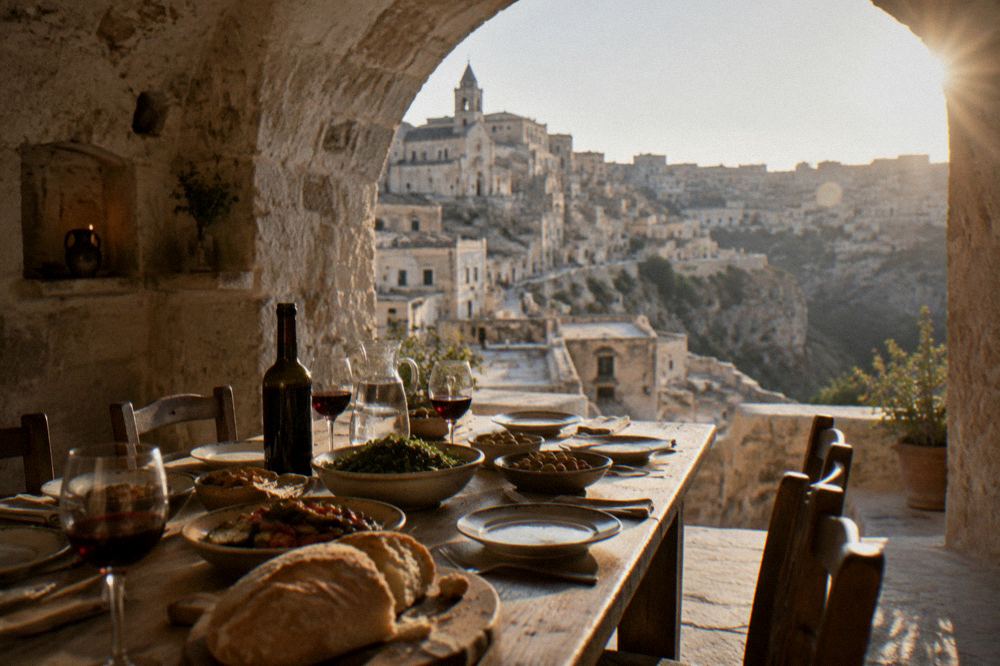
For the eating budget, the Matera travel costs guide itemises what can be itemised, and what to eat in Matera and the best restaurants in Matera cover the table itself, from pane di Matera, the PGI-registered bread, to the cave dining rooms of Sasso Barisano. The Matera wine and peperoni cruschi pages add the local pours and the crisp fried peppers that turn up on nearly every antipasto board.
Is Matera Safe, And What Should You Watch Out For?
Matera is a small regional city where the practical risks are terrain and heat rather than crime: the emergency number is 112, live across the Matera 0835 district since 2 December 2025, and the hazards the sources actually document are the steep stepped Sassi lanes, summer temperatures averaging 31 C mean highs, and driving into a ZTL whose cameras run up to 24 hours a day depending on the zone. The tap water question has its own answer on can I drink tap water in Matera, and the broader safety picture sits on is Matera a safe city to visit.
The ZTL is the one that costs money. Cameras on the Sassi gates operate 10:00 to 20:30 from mid-September to the end of June and 10:00 to 24:00 across the summer, and ZTL Centro never closes. If your hotel sits inside a gate, arrange passage with the property in advance; the comune lists a transit declaration portal for exactly this. On foot, the same geography that makes the Sassi beautiful makes them demanding: no route here is honestly described as wheelchair accessible, and Matera accessibility sets out what is realistic.
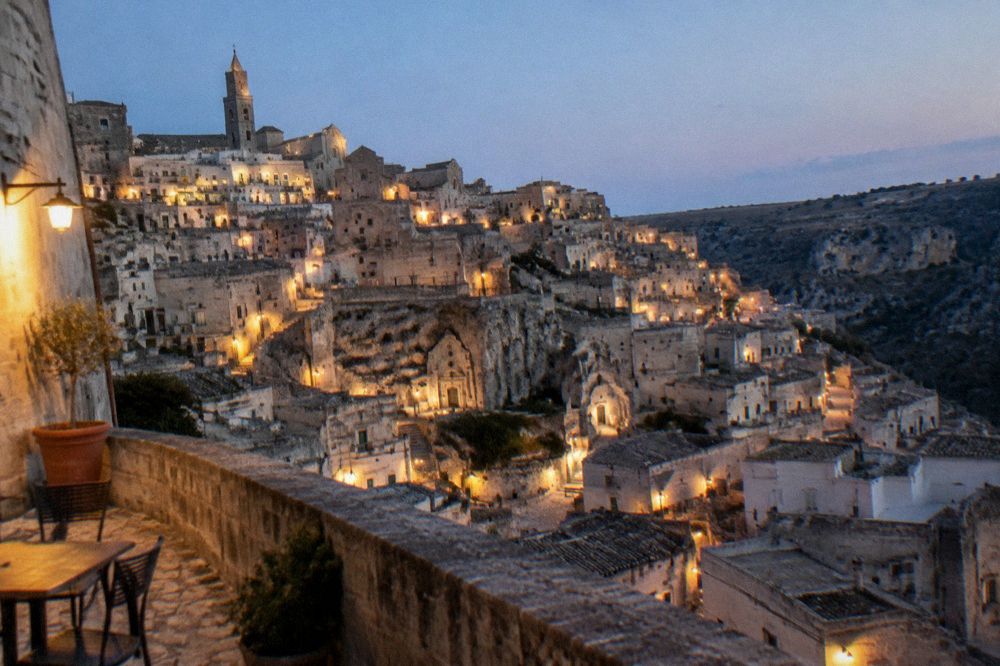
One cultural note that is also a safety note: 2 July, the Festa della Bruna, a festival the organisers date to 1389, fills the city completely, and Oltre l'Arte closes its sites that day. If you are coming for the festival, book months ahead and expect crowds on a scale the monthly arrival averages do not show; the Festa della Bruna guide explains the day. For ordinary evenings, Matera at night covers the Sassi after dark, when the lanes are lit and the belvederes fill with tripods, a scene the Matera photography spots guide maps.
What Day Trips Work From Matera?
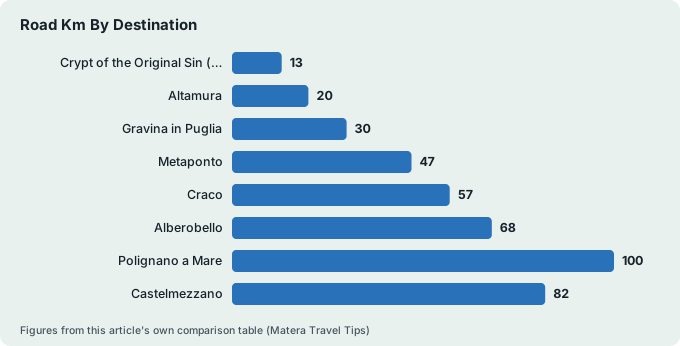
The verified road distances put Altamura 20 km and about 20 minutes away, the Crypt of the Original Sin ticket office 13 km and about 19 minutes, Alberobello 68 km and about 1 h 23, Polignano a Mare 100 km and about 1 h 29, and the Castelmezzano and Pietrapertosa pair 82 and 79 km out across the Dolomiti Lucane, so realistic day trips split into a near ring under 30 km and a far ring at an hour or more. These are free-flow driving times computed by routing engine over OpenStreetMap, with no traffic, no stops and no parking, so round them up.
| Destination | Road km | Drive time |
|---|---|---|
| Crypt of the Original Sin (ticket office) | 13 | About 19 min |
| Altamura | 20 | About 20 min |
| Gravina in Puglia | 30 | About 31 min |
| Metaponto | 47 | About 52 min |
| Craco | 57 | About 58 min |
| Alberobello | 68 | About 1 h 23 |
| Polignano a Mare | 100 | About 1 h 29 |
| Castelmezzano | 82 | About 1 h 23 |
The pairing the desk would flag: Craco, the abandoned hill town, sits 57 km out, and the guided hike between Castelmezzano and Pietrapertosa crosses the most dramatic landscape in the region, with a via ferrata reputation of its own. That hike is the site's featured tour for this page: Check availability on the operator's live listing if the mountains call. The Basilicata road trip, Craco and Castelmezzano and Pietrapertosa guides cover the routes, and the Puglia side, Alberobello, Polignano a Mare and Bari, is close enough that Matera and Alberobello in one day is a real, if full, plan.
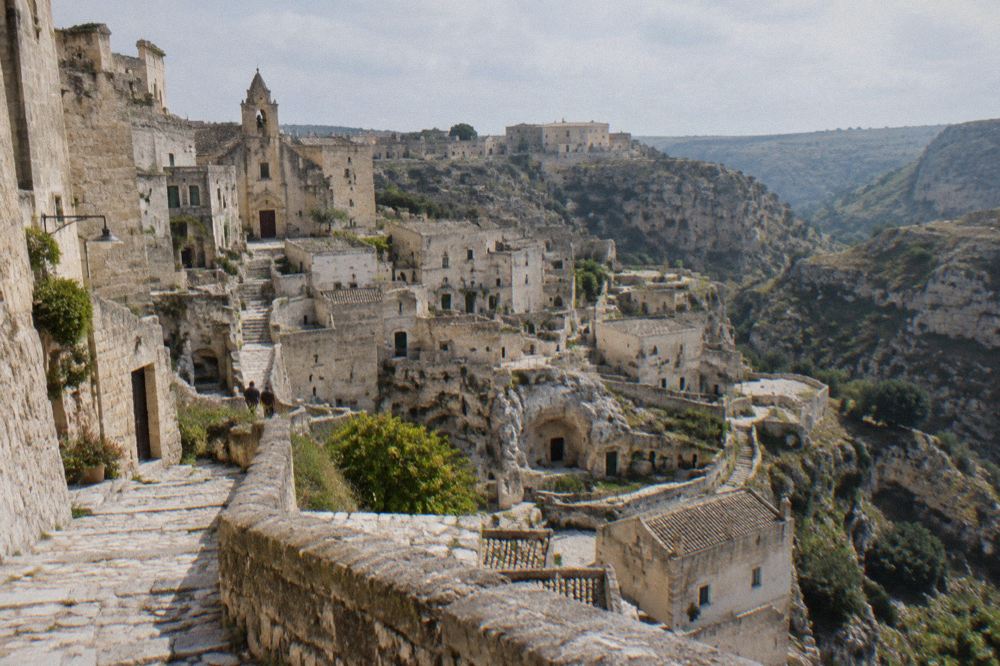
The coast question deserves its own sentence because it confuses people: there is no beach at Matera. The nearest sea options are Metaponto on the Ionian at 47 km and the Adriatic towns further on; beaches near Matera explains the honest choices and the drive times.
How Many Days Do You Need, And What About Staying Overnight?
The APT Basilicata data shows the average stay in 2025 was 1.56 nights, but the practical minimum the site's own itinerary guides support is one full day for the Sassi core and two to three days to add the park, the museums and a day trip, with the overnight case strong because the Sassi change character completely after the day crowds leave and the hotels carved into the caves are the reason many people come at all. The one day in Matera, two days in Matera and three days in Matera guides do the hour-by-hour work.
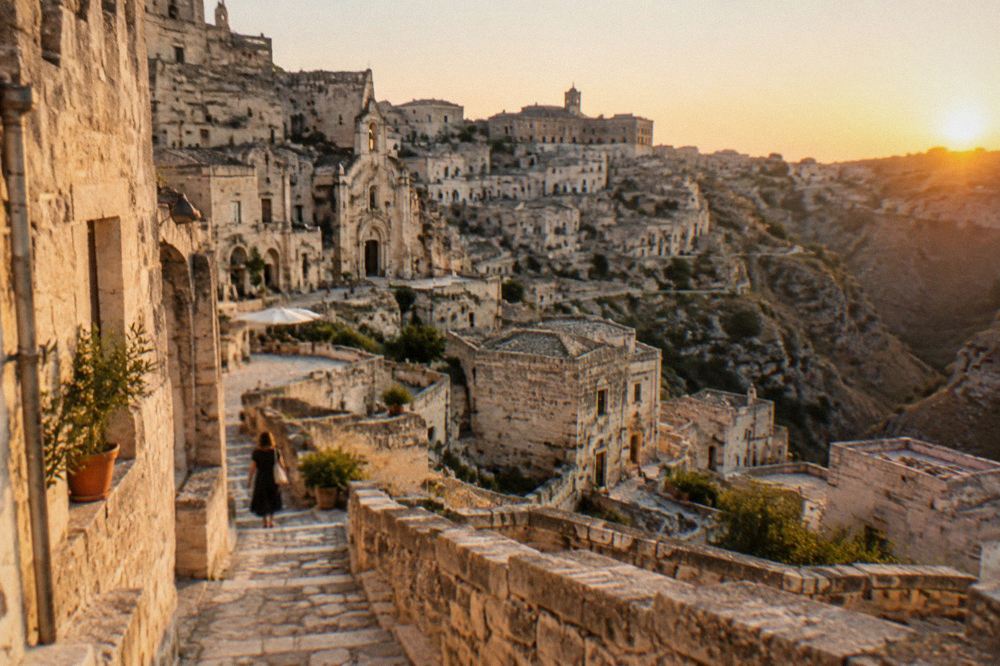
Sleeping in the Sassi is the signature choice. The cave hotels occupy restored cisterns and dwellings inside the districts, and the Matera cave hotels and Sassi di Matera hotels guides explain where the properties sit relative to the stairs. If you arrive by car, where to stay in Matera with a car matters, since several of the prettiest addresses sit inside ZTL gates. Travelling with children changes the calculus only slightly; Matera with kids keeps the stair count honest.
One event that should anchor a winter stay: the Presepe Vivente nei Sassi, in its sixteenth edition titled "Vera Fratellanza", opens 4 December 2026 with public days on 5-6, 12-13, 19-20 and 26-27 December and 2-3 January, winding from Piazza San Pietro Caveoso through Vico Solitario, Rione Malve and Casalnuovo with 20 scenes, at 12.00 EUR full, 9.00 EUR for ages 10 to 18 and free under 10. The Matera Film Festival, seventh edition, runs 7 to 15 November 2026, and the Matera events page tracks the calendar.
Common Questions About Matera Travel Tips
Do you need a car in Matera?
No. The historic centre is walkable and largely pedestrian-priority, FAL trains connect the city to Bari, and the ZTL camera zones make driving in the centre a liability. A car helps mainly for day trips into Basilicata and Puglia.
How do you get from Bari to Matera?
By FAL train with a change at Altamura, taking about 1 h 45 to 2 h, or by road, 68 km and about 1 h 02 free-flow from Bari and 64 km about one hour from the airport. On Sundays and public holidays no trains run and FAL operates replacement buses.
What shoes should you wear in the Sassi?
Shoes with real grip. The Sassi lanes are stepped, uneven, polished stone that climbs between the plateau and the canyon, and no route through them is step-free.
How much do the main attractions cost?
On the operators' pages: Oltre l'Arte churches from 4.50 EUR, the 8-site all-inclusive 25.00 EUR, the Casa Grotta di Vico Solitario 8.00 EUR, MUSMA 10 EUR and the national museums 10.00 EUR each or 15.00 EUR cumulative, with under-18s free.
When is the busiest time in Matera?
September. APT Basilicata logged 61,630 arrivals in September 2025 against 60,257 in August, and 74.5% of the September arrivals came from abroad.
What is the emergency number in Matera?
112. Matera's 0835 phone district joined the single European emergency number on 2 December 2025.
The last word goes to pacing. Matera is a city that punishes the over-scheduled: the stairs alone enforce rest, the light changes the Sassi by the hour, and the views across the Gravina reward standing still. Read the history of Matera before you arrive so the stones mean something when you are standing among them, then let the timetable facts on this page handle the logistics and keep your days simple.