Matera Self Guided Walking Tour
A self guided walking route through Matera, in Basilicata, southern Italy: what to see in the Sassi, what tickets cost, which churches are open, and how to link the viewpoints on foot.
Short answer
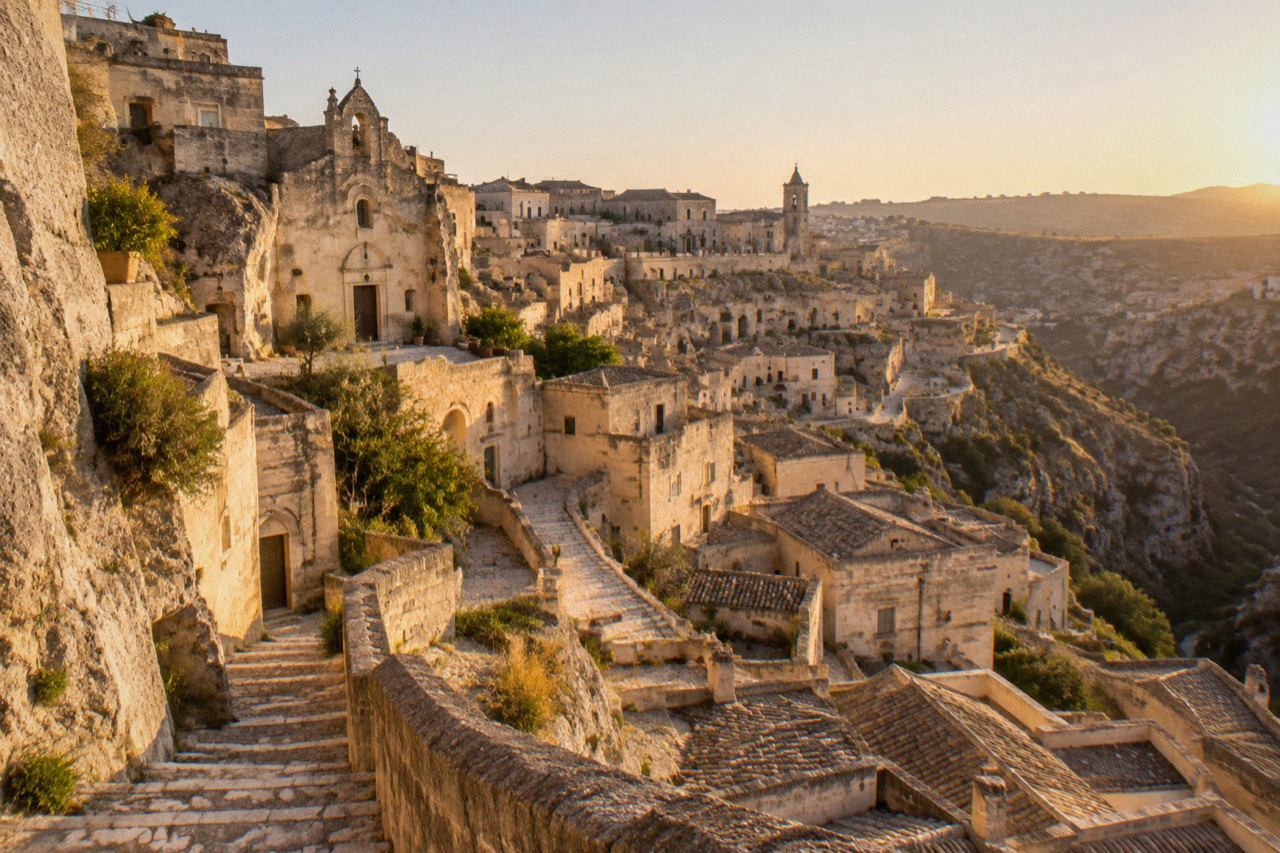
A full self guided walk of Matera's historic centre covers Sasso Barisano, the Civita ridge with the Cathedral, and Sasso Caveoso, ending at a viewpoint over the Gravina canyon. It can be done in a long half day at an unhurried pace, with three paid church sites and several free viewpoints along the way.
Matera, in the region of Basilicata in southern Italy, is an inland city of 59,368 residents standing roughly 400 m above sea level on the edge of the Gravina canyon, with the Murgia plateau rising on the far side. Its historic quarters, the Sassi, are cave dwellings and rock-hewn churches cut into pale tufa limestone, inscribed by UNESCO in 1993 as "The Sassi and the Park of the Rupestrian Churches of Matera". This page lays out a self guided walking route through the whole historic centre: the two Sassi districts, the Civita ridge between them, the panoramic terraces and the belvedere facing the canyon, with verified ticket prices and opening hours at each stop. The route needs no car and no booking, only comfortable shoes and a sense of how steep the ground is.
The walk described here is a loop. It starts on the modern plateau at Piazza Vittorio Veneto, drops into Sasso Barisano, climbs the Civita to the Cathedral, descends through Sasso Caveoso to the rupestrian churches, and finishes at a viewpoint over the canyon before an optional lift back up. Done at museum pace, with the paid churches entered, it fills most of a day. Done fast, it is a strenuous couple of hours. The Matera Travel Guide itinerary collection also includes a shorter version in one day in Matera and a slower one in two days in Matera.
What Does A Self Guided Walking Tour Of Matera Cover?
A self guided walk of Matera covers the three historic nuclei on foot: Sasso Barisano, the Civita ridge with the Cathedral of Santa Maria della Bruna, and Sasso Caveoso, linked by stepped lanes and finished at a terrace overlooking the Gravina canyon. The full loop from Piazza Vittorio Veneto is walkable in a long half day without a car, and every stop except the rupestrian churches can be seen from the street for free. UNESCO inscribed the whole area in 1993.
Three districts, not two, is the first thing to get right. Visitors often speak of the Sassi as one place, but the historic centre is a ridge (the Civita) with a cave district flanking it on each side: Sasso Barisano to the north-west and Sasso Caveoso to the south-east. The Civita carries the Cathedral and the town's defensive core. The Sassi di Matera overview page explains how the three fit together.
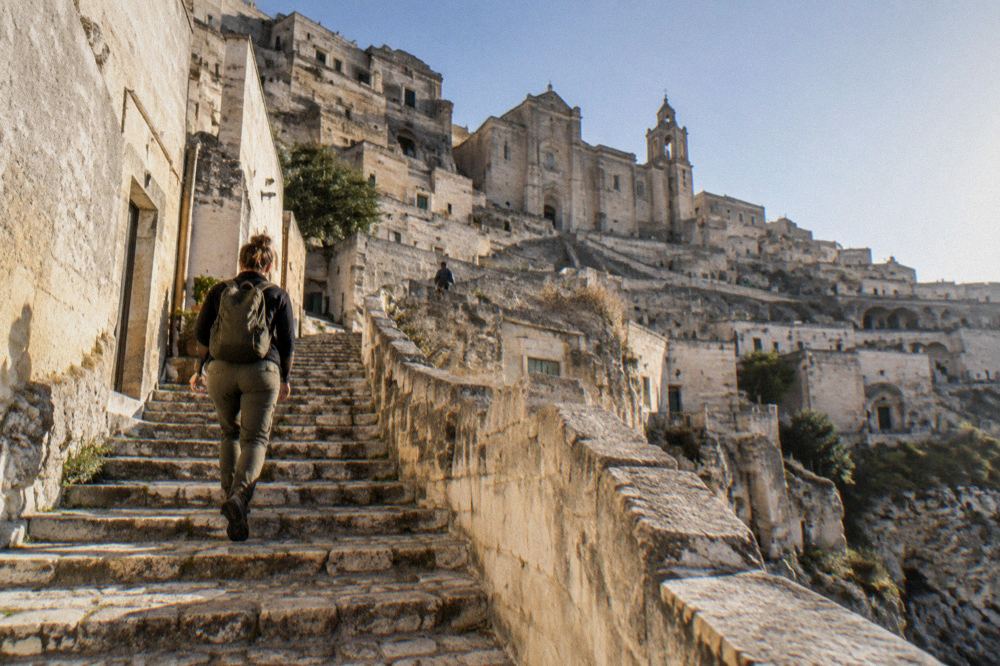
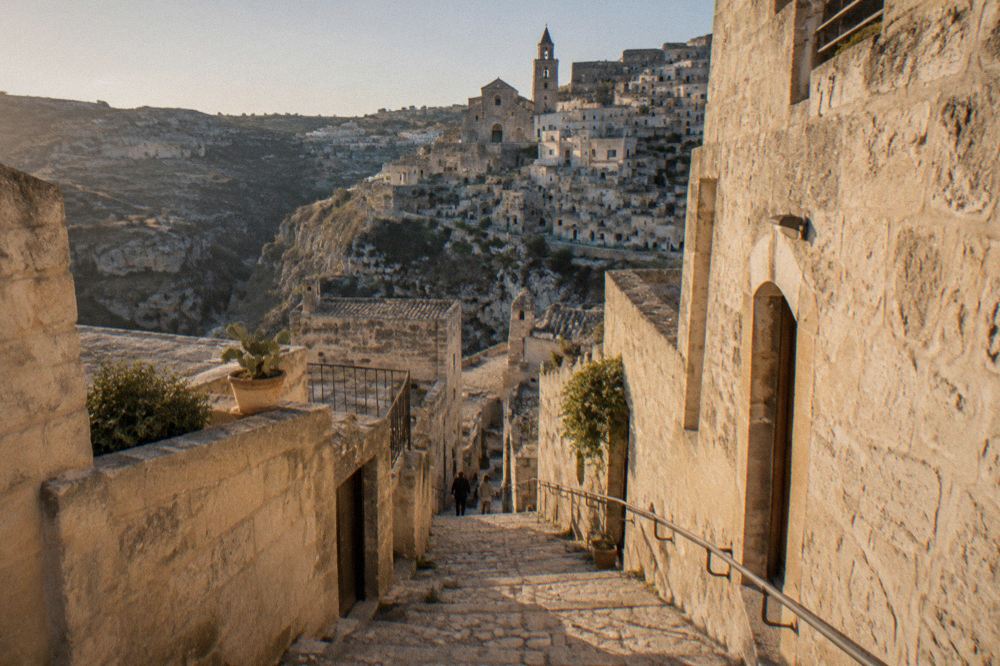
The ground is the second thing to get right. The Sassi are steep, stepped and uneven: stairways cut into rock, cobbled slopes and lanes that double as rooftops for the houses below. No named route in the Sassi can honestly be called step-free or wheelchair accessible, and shoes with grip matter more than anything else in the rucksack. Water and shade are scarce in July and August, when the ERA5 reanalysis, 1991-2020, puts the mean high at about 31 °C.
The third thing is orientation. The modern town sits on the plateau above and around the Sassi; the canyon (the Gravina) lies below and opposite. Everything in this walk is either "down into the Sassi", "up onto the Civita", or "up and out to a viewpoint". Losing the vertical picture is the usual cause of getting lost, not the lanes themselves.
Where Does The Matera Walking Route Start, And What Is The First Section?
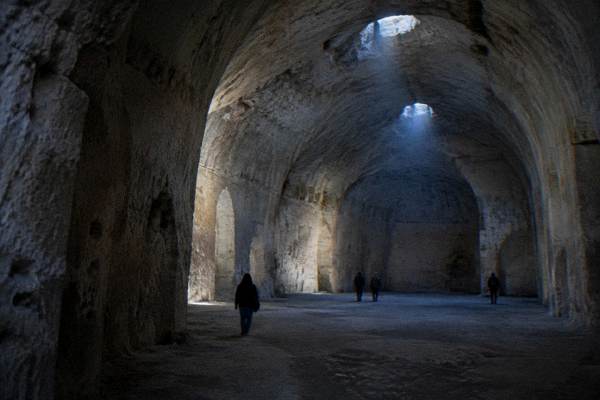
The most practical start is Piazza Vittorio Veneto, the large square on the modern plateau directly above Sasso Barisano, because it sits above the underground Palombaro Lungo cistern, has the first free viewpoint over the Sassi at its edge, and lets walkers drop into the lanes of Sasso Barisano on a gentle downhill gradient. From the square the route enters Sasso Barisano within two minutes on foot.
Piazza Vittorio Veneto is closed to vehicles all day; the municipality's posted rules say retractable bollards open only between 04:00 and 08:00 on weekdays for deliveries. Under the square lies the Palombaro Lungo, the vast water cistern, and the Palombaro Lungo page covers what a visit involves. Its official site states that booking by phone is not possible, so check current arrangements before counting on a visit.
From the square's southern edge the view over Sasso Barisano is free and immediate: façades of tufa, chimneys rising out of what look like gardens but are actually rooftops. The first section of the walk then descends into Sasso Barisano, the more restored of the two districts, where hotels, workshops and wine cellars occupy former cave homes. Barisano is the gentler introduction: the lanes are wider, the restoration more complete, and the drops less dramatic than in Caveoso.
A reasonable first stop inside Barisano is the Storica Casa Grotta di Vico Solitario, a furnished cave house preserved as it was lived in. Its own tariff page lists 8.00 EUR full entry, 5.00 EUR reduced, 3.00 EUR for ages 11 to 18 and free entry up to age 10, on the tariff in force from 4 April 2026, and the ticket covers four sites: the cave house, the Neviera ice store, a natural cave and the rock church of Sant'Agostino al Casalnuovo. The full details are on the Casa Grotta di Vico Solitario page.
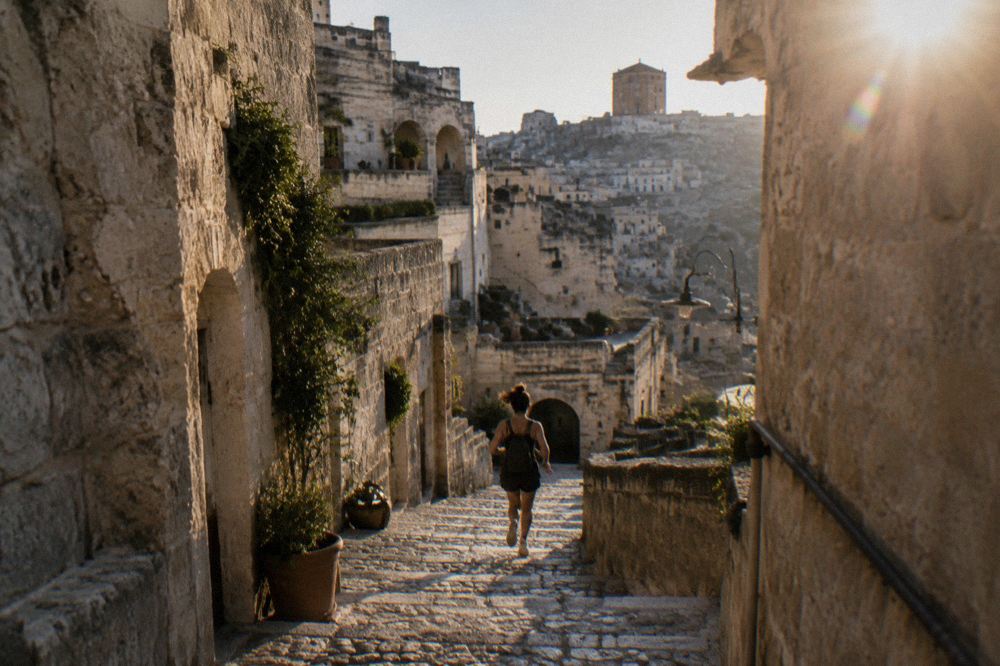
Sasso Barisano's walking time is short: the district is compact, and the lanes between its upper edge and its floor amount to a few hundred metres of descent. What takes the time is looking. The cave façades, the rooftop lanes and the workshops selling local bread and ceramics reward a slow first hour, and the section ends at the foot of the district where the route turns up towards the Civita.
How Do You Walk From Sasso Barisano To The Cathedral On The Civita?
From the floor of Sasso Barisano the route climbs to the Civita, the ridge between the two Sassi districts, where the Cathedral of Santa Maria della Bruna stands at the highest point of the historic centre; the climb is stepped and takes roughly ten to fifteen minutes at a steady pace, and the Cathedral's own ticket system lists a combined Cathedral and MATA museum entry at 4.00 EUR, daily 09:00 to 19:00.
The Civita is the oldest part of the walkable centre, the defensive nucleus from which the cave districts grew down and outward. Its lanes are the narrowest of the route, and the climb, while short, is unrelentingly stepped. The reward is twofold: the Cathedral's Romanesque apse over the canyon, and the terrace beside it, which looks directly across the Gravina at the Murgia plateau and its rock churches.
The Matera Cathedral page covers the building in detail. The Oltre l'Arte ticket system runs the Cathedral visit as part of a "Percorso Culturale" with the MATA diocesan museum, at 4.00 EUR per its ticket page, with tourist visits pausing between 10:00 and 12:30 on Sundays and solemnities. The same operator sells a 25.00 EUR all-inclusive ticket covering eight sites, including the three main rupestrian churches, the Museo del Pane and the exhibition in the Chiesa del Purgatorio; reduced price 16.00 EUR. All its sites close on 25 December and 2 July, the day of the Festa della Bruna.
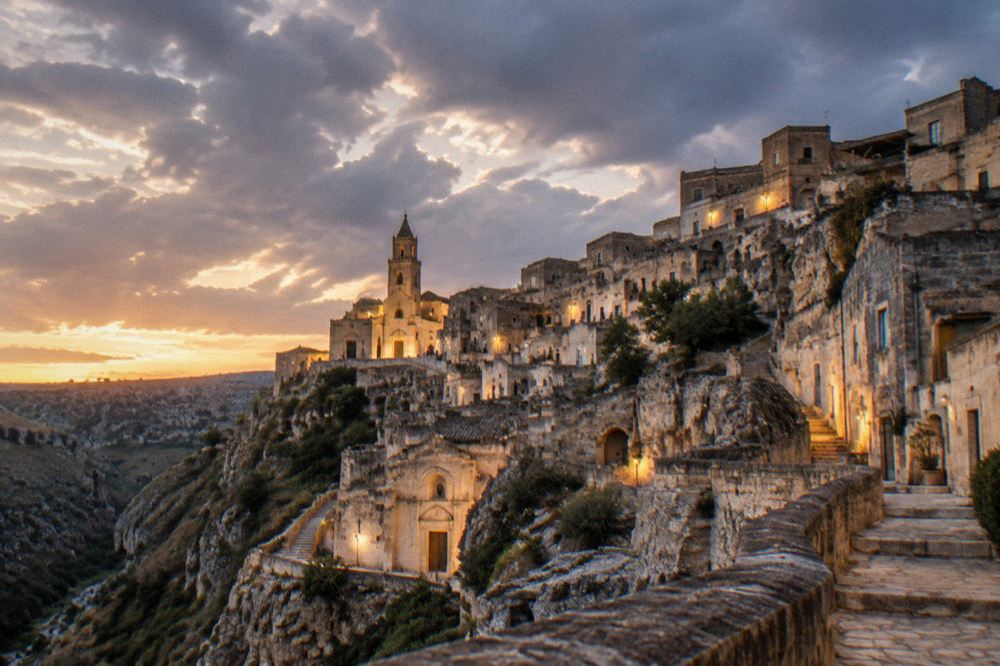
From the Cathedral terrace the whole logic of the city becomes visible: the Gravina canyon below, the Murgia plateau opposite, and the cave façades of Caveoso falling away to the right. This is the natural midpoint of the walk, the place to rest before the descent into the harder district.
For walkers who prefer a narrated version of this same stretch, the guided options above cover the city centre and the cave houses with a licensed guide, and a farmhouse cooking class makes a good afternoon pairing once the walking is done. The self guided route below continues regardless: everything that follows can be done independently at posted hours.
What Is The Route Through Sasso Caveoso And Its Rock Churches?
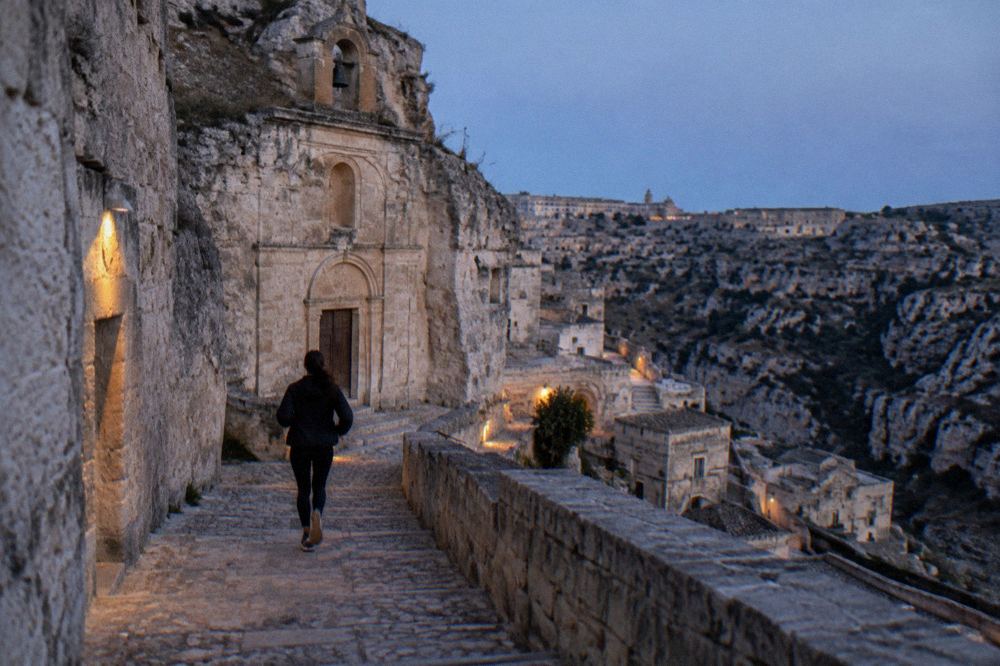
The route descends from the Civita into Sasso Caveoso, the rawer and less restored of the two districts, aiming for Piazza San Pietro Caveoso and the cluster of rupestrian churches around it: Santa Lucia alle Malve, Madonna de Idris with San Giovanni in Monterrone, and San Pietro Barisano, all run by Oltre l'Arte at 4.50 EUR for one church, 8.00 EUR for two and 10.00 EUR for three on the current tariff.
Caveoso is where the walk stops feeling like a town and starts feeling like the landscape it is. Houses here are cut directly into the rock face, and the district's lower lanes run along the canyon rim. The drop from the Civita to Piazza San Pietro Caveoso is stepped and exposed in places; take it slowly, and treat the rooftop logic seriously: what looks like a lane may be the roof of a house.
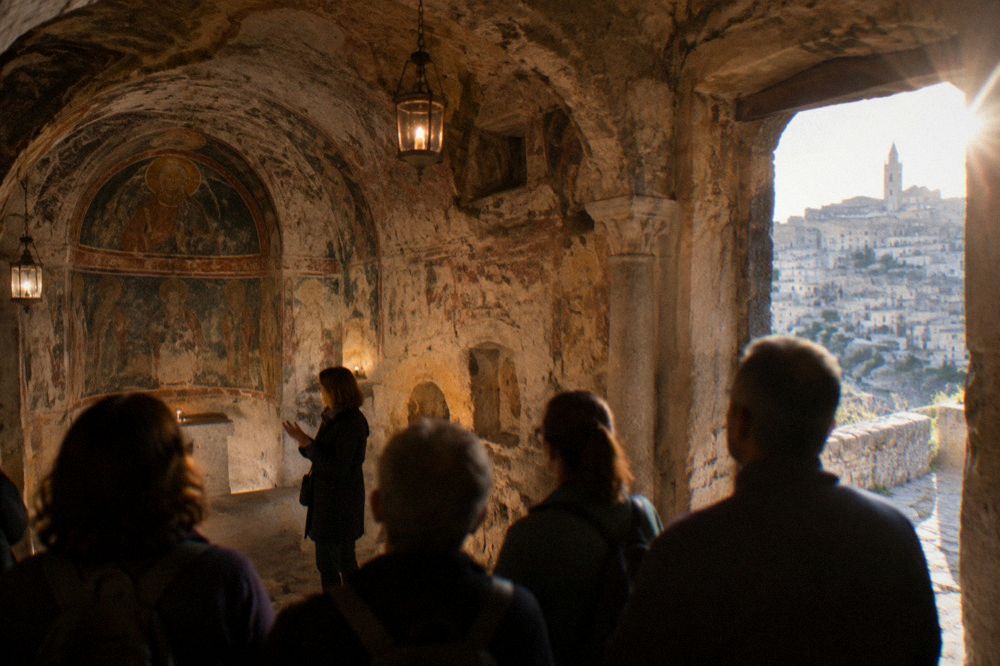
The three open rupestrian churches are the substance of this section. The rupestrian churches of Matera page gives the full picture; the essentials for a walking route are the hours on Oltre l'Arte's ticket page from 28 March 2026: Santa Lucia alle Malve and Madonna de Idris daily 09:30 to 19:30 (last entry 19:20), San Pietro Barisano daily 10:00 to 19:00 (last entry 18:50). Reduced prices exist for disabled visitors, groups of 20 or more and FAI members, and children up to 10 enter free with a parent. Individual church pages cover Santa Maria de Idris, Santa Lucia alle Malve and San Pietro Barisano.
From Piazza San Pietro Caveoso the free view is as good as any paid one: the terrace at the square's edge looks straight down the canyon and across at the Murgia, with the rock church of San Pietro Caveoso closing the square. The Sasso Caveoso page covers the district's lanes and the church square in more detail.
Two smaller paid stops sit in or near this section for walkers with time. MUSMA, the sculpture museum in the Sasso Caveoso on Via San Giacomo, lists 10 EUR full entry on its contacts page, open Monday to Sunday, 10:00 to 20:00 from April to September and 10:00 to 18:00 from October to March. Casa Noha, the FAI interpretation centre at Recinto Cavone 9, lists 6.50 EUR for adults, but note the closure of 5 to 22 October 2026; the Casa Noha page has details.
Where Are The Best Viewpoints On A Matera Walking Route, And In What Order?
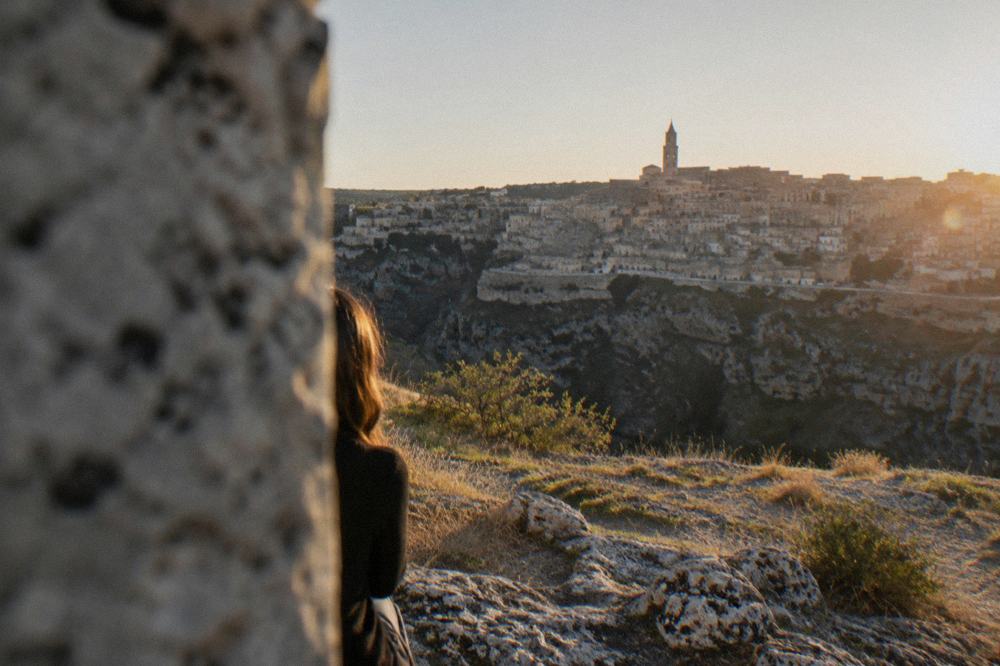
The five viewpoints that matter on foot are, in walking order: the edge of Piazza Vittorio Veneto over Sasso Barisano, the Cathedral terrace on the Civita, the terrace of Piazza San Pietro Caveoso, the belvedere reached from the upper town facing the whole Sassi bowl, and, across the canyon, Belvedere Murgia Timone in the park of the rupestrian churches, which is the classic full-frontal view of the Sassi.
Four of the five are free and need no booking. The fifth, Murgia Timone, sits in the Parco della Murgia across the Gravina, and reaching it on foot means either the park's trails or the route over the canyon; the Belvedere Murgia Timone page covers access, and the park now runs a staffed visitor centre at Jazzo Gattini, active since 6 February 2026 under a new concession, with an info point and ticket office controlling access towards Murgia Timone. The Parco della Murgia Materana page explains the park's scale: about 8,000 hectares by the park's own count, protecting a landscape of rupestrian churches and gorge.
For photographers the order matters because of the light. The Sassi face roughly south-east, so the canyon-facing terraces are at their best late in the day. The Matera photography spots guide works through the timings; the short version for walkers is to keep Piazza San Pietro Caveoso and the canyon rim for late afternoon, and to do the upper viewpoints early.
One warning about the classic cross-canyon shot: the suspension bridge over the Gravina, often photographed with a lone figure on it, is on Sentiero 406, and since March 2026 access is managed with a staffed point and an online access ticket sold on the park's ticketing site. The exact price is not settled on an official page, so confirm it at the park's own channels rather than from older guides. The Tibetan bridge Matera page covers the path.
How Long Does A Self Guided Walk Of Matera Take, And What Should It Cost?
The full loop, Piazza Vittorio Veneto through Sasso Barisano, the Civita, Sasso Caveoso and back up, takes a long half day at museum pace, or roughly two hours walked without stopping. The paid stops, at the verified tariffs, include the three rupestrian churches at 10.00 EUR, the Casa Grotta at 8.00 EUR and the Cathedral with MATA at 4.00 EUR, or a single 25.00 EUR Oltre l'Arte all-inclusive ticket covering eight sites, which replaces several individual entries.
The cost table below uses only tariffs read on the operators' own pages. Anything not on an official page (Palombaro Lungo's price, the Crypt of the Original Sin's price, the Sentiero 406 access ticket) is listed as "confirm locally", because this site does not print unverified figures.
| Stop On The Walk | Full Ticket | Reduced | Notes From The Operator's Page |
|---|---|---|---|
| Rupestrian churches, 1 site | 4.50 EUR | 3.50 EUR | Oltre l'Arte tariff; children to 10 free |
| Rupestrian churches, 3 sites | 10.00 EUR | 7.50 EUR | Santa Lucia alle Malve, Idris, San Pietro Barisano |
| Oltre l'Arte all-inclusive, 8 sites | 25.00 EUR | 16.00 EUR | Includes the 3 churches, MATA, Museo del Pane |
| Cathedral and MATA | 4.00 EUR | listed on page | Daily 09:00 to 19:00 |
| Casa Grotta di Vico Solitario | 8.00 EUR | 5.00 EUR | Tariff from 4 April 2026; free to age 10 |
| MUSMA | 10 EUR | 5 or 7 EUR | Mon to Sun; hours vary by season |
| Casa Noha | 6.50 EUR | 3 EUR children | Closed Wednesdays; closed 5 to 22 Oct 2026 |
| Palombaro Lungo | confirm locally | confirm locally | Phone booking not possible, per its site |
Walking time is harder to tabulate but easier to plan. The table below breaks the route into sections with honest pace estimates for a walker of average fitness; the Sassi's gradients make "distance" a poor measure, so the figures are walking time only, excluding visits inside buildings.
| Section | Terrain | Walking Time At Ease |
|---|---|---|
| Piazza Vittorio Veneto into Sasso Barisano | Downhill, stepped | 10 to 15 min |
| Sasso Barisano floor up to the Civita | Uphill, stepped | 10 to 15 min |
| Civita to the Cathedral terrace | Uphill, narrow lanes | 5 to 10 min |
| Civita down to Piazza San Pietro Caveoso | Downhill, stepped, exposed | 15 to 20 min |
| Piazza San Pietro Caveoso up to the plateau | Uphill, stepped | 15 to 20 min |
| Plateau to a canyon-facing belvedere | Level | 10 min |
Add museum time on top. A day that includes the Casa Grotta, one rupestrian church and the Cathedral realistically runs five to six hours with lunch. The how long does it take to walk around Matera question is covered separately for readers who want the short answer.
What Should You Wear And Carry For Walking The Sassi?
Wear closed shoes with grip and carry more water than feels reasonable in summer: the Sassi's lanes are stepped, polished and uneven, the ERA5 reanalysis, 1991-2020, puts July and August mean highs at about 31 °C with just 21.2 and 21.7 mm of rain, and the route's stairways offer almost no shade between late morning and mid afternoon.
The clothing question comes up every season and the what clothes should I pack for Matera page answers it in full. For the walk itself, three points matter. First, grip: the steps are worn smooth in places, and in the rare wet weather (November averages 67.1 mm of rain, the year's wettest month in the ERA5 normals) they become slippery. Second, layers: Matera sits at about 400 m, and January's mean low is 2.2 °C, so winter mornings in the canyon are genuinely cold. Third, a torch is useful inside the rupestrian churches and cave houses even where lighting is installed.
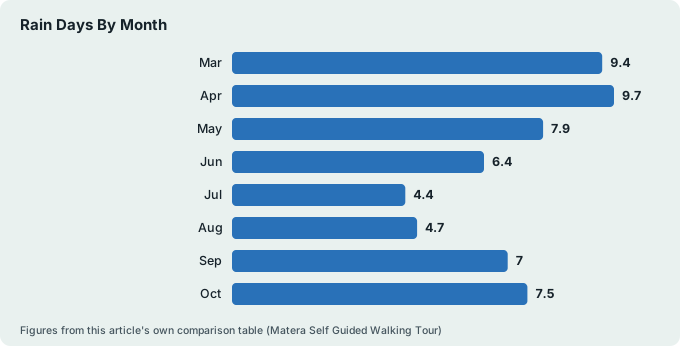
The climate table below, from the ERA5 reanalysis 1991-2020, is the planning baseline for choosing when to do the walk.
| Month | Mean High °C | Mean Low °C | Rain MM | Rain Days |
|---|---|---|---|---|
| Mar | 14.1 | 4.4 | 59.2 | 9.4 |
| Apr | 17.4 | 7.1 | 56.5 | 9.7 |
| May | 22.7 | 11.5 | 41.7 | 7.9 |
| Jun | 28.2 | 16.0 | 35.1 | 6.4 |
| Jul | 31.2 | 18.6 | 21.2 | 4.4 |
| Aug | 31.3 | 18.9 | 21.7 | 4.7 |
| Sep | 25.7 | 15.2 | 44.8 | 7.0 |
| Oct | 20.8 | 11.6 | 51.7 | 7.5 |
| Nov | 15.5 | 7.5 | 67.1 | 8.3 |
Timing the crowds matters as much as timing the weather. APT Basilicata's accommodation data shows September was the busiest month of 2025 with 61,630 arrivals, ahead of August at 60,257, and 74.5% of those September guests came from abroad. Early morning is the quiet window in any month; the lanes between 10:00 and 16:00 carry the day-trip flow. The best time to visit Matera guide works through the whole year.
Can A Self Guided Walk Replace A Guided Tour Of Matera?
A self guided walk covers the same streets, viewpoints and ticketed churches as a guided tour, and the open sites' own pages give enough signage and printed material for an independent visit; what a guide adds is interpretation of the cave civilisation, the evacuation history and the rock art, which no street plaque fully replaces, and walkers who want that layer can book a guided walk with cave churches and houses and still walk the route independently on another day.
The honest division of labour is this: the route, the views and the paid interiors work fine self guided. The story works better explained. Matera's Sassi were evacuated as residents were moved out between 1952 and the 1970s, after the cave dwellings' living conditions became a national scandal, and a 1986 law opened the way to the restoration visible today; that arc, from shame to UNESCO inscription in 1993, is the part of the visit that benefits most from a narrator. The site's free walking tour Matera and Matera walking tour pages lay out the guided options, including tip-based walks that run locally; confirm arrangements directly with the guide.
What Are The Common Mistakes On A Self Guided Matera Walk?
The mistakes that ruin self guided walks in Matera are consistent: starting mid-morning and meeting the crowds, attempting the Sassi in heels or smooth-soled shoes, planning the Museo Ridola into the day when it has been closed since 7 April 2025, assuming a shuttle or bus reaches Belvedere Murgia Timone, and driving into the Sassi's restricted traffic zone, whose cameras operate daily from 10:00 to 20:30 between 16 September and 30 June and from 10:00 to 24:00 from 1 July to 15 September.
The traffic zone deserves emphasis because fines arrive by post. The ZTL Sassi gates sit on Via Buozzi, Via Madonna delle Virtù and Via D'Addozio, and the city's posted ordinance PDF gives the hours above; the ZTL Centro streets (Via Scotellaro, Via del Corso, Via delle Beccherie, Via Duomo, Piazza Sedile, San Francesco) are active 24 hours a day. Walkers arriving by car should park outside the zones and descend on foot; the Matera parking and Matera ZTL pages cover the detail, and the where to stay in Matera with a car question is answered separately.
The second set of mistakes is calendar-based. The Museo Ridola closure is the big one: older guides still list it. Casa Noha's October 2026 closure is the other. And Oltre l'Arte's eight sites all close on 25 December and 2 July, so a walker arriving on the Festa della Bruna day finds the paid church interiors shut even as the city celebrates around them; the Festa della Bruna page explains why that day is unlike any other in Matera.
How Do You Extend The Walk Into A Full Day Or A Second Day?
The loop extends in three directions: across the Gravina into the Parco della Murgia for the canyon-side view of the Sassi, out along the canyon rim trails to the suspension bridge on Sentiero 406, or by car or tour to the day-trip ring around Matera, with Altamura 20 km away by road, the Crypt of the Original Sin 13 km, and Alberobello 68 km, distances computed by routing engine over OpenStreetMap.
The park extension is the natural one for strong walkers. The trails opposite the city give the view of the Sassi that the city itself cannot, and the park's managed access points (Jazzo Gattini since February 2026, the Sentiero 406 staffed point since March 2026) mean the days of wandering in unmarked are over: check the park's own channels for the current access arrangements. The hiking in Matera guide covers the canyon trails.
The day-trip extension suits a second day. The Crypt of the Original Sin lies about 13 km from Matera, with booking mandatory by e-ticket at least 90 minutes before the slot and the ticket office at a farm on the SS7 Appia; its price is not published outside the booking engine, so confirm there. The Alberobello day trip, the Matera and Alberobello in one day plan and the wider Puglia and Matera itinerary cover the regional options, and three days in Matera strings the whole stay together.
| Extension | Distance From Matera Centrale | Free-Flow Drive Time | Best For |
|---|---|---|---|
| Altamura | 20 km | about 20 min | Bread town, lunch stop |
| Crypt of the Original Sin | 13 km | about 19 min | Rock-art crypt, book ahead |
| Metaponto, Ionian coast | 47 km | about 52 min | Greek ruins, the sea |
| Craco | 57 km | about 58 min | Abandoned hill town |
| Bari Airport | 64 km | about 1 h 01 | Departures |
| Alberobello | 68 km | about 1 h 23 | Trulli town |
| Polignano a Mare | 100 km | about 1 h 29 | Adriatic cliffs, the sea |
Matera has no sea of its own; the coast is a day trip, with Metaponto on the Ionian and Polignano a Mare and Bari on the Adriatic. The beaches near Matera page covers the honest options.
Should You Walk Matera Alone Or With A Group?
Walk the route alone if you want the viewpoints, the paid interiors and the lanes at your own pace, because every stop on this page is independently accessible at posted hours; add a guided walk, private tour or cooking class if you want the city's history interpreted, the cave houses explained, or the day anchored around food, and both approaches can be combined on a single trip with a walk on day one and a tour on day two.
The group question is really a depth question. This site's editorial desk reports what the operators publish, and the listings show the spread of options: a guided city centre walk with cave churches and houses, a farmhouse pasta cooking class, and a private Sassi tour with an official guide. What none of them can change is the ground itself: the same steps, the same views, the same canyon. Choose based on how much of the story you want narrated, not on access.
For travellers who keep circling back to the same question, the practical answer is to book the interpretive layer in advance and leave the walking free: a private tour with an official guide can be reserved for the first evening, and the route on this page done independently the next morning, when the lanes are quiet and the light is soft.
Whichever way the days are divided, the route itself does not change: down into Barisano, up the Civita, down through Caveoso, out to the terrace. The three options above are the guided versions of that same ground, and the private option below suits families and small groups who want the narrator to themselves.
Common Questions About A Self Guided Walking Tour Of Matera
Can you walk Matera without a guide?
Yes. Every viewpoint on this route is free and public, and the paid interiors (the rupestrian churches, the Casa Grotta, the Cathedral, MUSMA) sell individual entry at posted hours on the operators' own pages. A guide adds interpretation, not access.
How long does it take to walk around Matera?
The historic centre loop takes a long half day at museum pace, or roughly two hours walked without stopping. The Sassi are steep and stepped, so comfortable shoes matter more than fitness.
What should I wear for walking the Sassi?
Closed shoes with grip, and more water than feels reasonable from June to September, when the ERA5 reanalysis 1991-2020 puts mean highs at 28 to 31 °C. In winter, layers: January's mean low is 2.2 °C.
Is the Matera walking route accessible for wheelchairs or strollers?
No named route through the Sassi can honestly be called step-free: the districts are stepped, uneven and cut into rock. The upper town and Piazza Vittorio Veneto are level and give a full view over the Sassi from above.
Which churches can you go inside in the Sassi?
Three rupestrian churches run by Oltre l'Arte: Santa Lucia alle Malve, Madonna de Idris with San Giovanni in Monterrone, and San Pietro Barisano, at 4.50 EUR for one, 8.00 EUR for two and 10.00 EUR for three on the current tariff. All close on 25 December and 2 July.
When is the quietest time to walk the Sassi?
Early morning, any month. APT Basilicata's data shows September is the busiest month, with 61,630 accommodation arrivals in 2025 against 15,239 in February, so the lanes are quietest in the winter low season and in the first hours of any day.