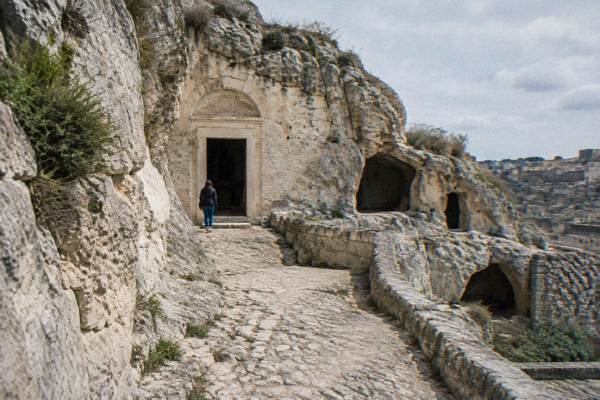
Convicinio Di Sant Antonio In Matera: The Rock Church Courtyard Of The Sasso Caveoso
The Convicinio di Sant'Antonio is a small courtyard of rock-hewn churches in the Sasso Caveoso of Matera, one of the densest clusters of rupestrian architecture in a city UNESCO inscribed in 1993 for exactly this tradition of cutting churches, houses and stables out of soft limestone.
Short answer
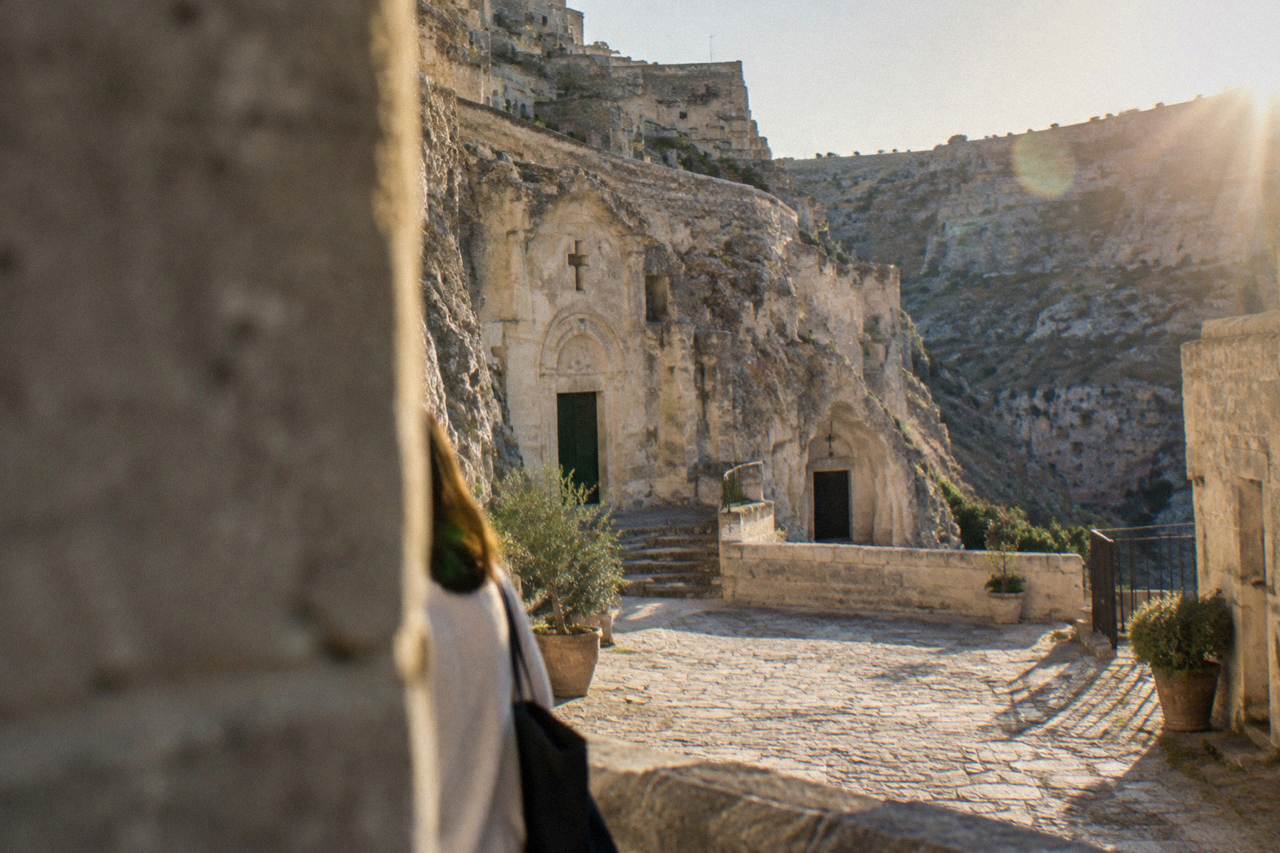
The Convicinio di Sant'Antonio is a courtyard complex of cave churches in the Sasso Caveoso quarter of Matera, in Basilicata, southern Italy. It sits in the part of the Sassi where rock churches, cave dwellings and shared courtyards formed the fabric of daily life, and it is best visited on foot as part of a walk through the Sasso Caveoso.
The Convicinio di Sant'Antonio is a courtyard complex of rock-hewn churches in the Sasso Caveoso, the southern of Matera's two Sassi districts, in the region of Basilicata in southern Italy. Matera is an inland city at about 400 m above sea level on the edge of the Gravina canyon, and its old quarters are built into pale tufa limestone rather than on top of it. UNESCO inscribed "The Sassi and the Park of the Rupestrian Churches of Matera" in 1993, citing, in its own words, "an outstanding example of a rock-cut settlement, adapted perfectly to its geomorphological setting and ecosystem and exhibiting continuity over more than two millennia". The Convicinio belongs to that tradition: a cluster of cave churches opening onto a shared courtyard, the form of communal space that organised life in the Sassi for centuries.
This page from the Matera Travel Guide editorial desk reports what the verified sources say about the Convicinio and the quarter around it: what the complex is, where it sits, how it fits the wider network of rupestrian churches, and how to plan a visit. Where a detail is not confirmed on an operator's or authority's own page, this guide says so and sends you to check locally rather than guessing.
What Is The Convicinio Di Sant Antonio In Matera?
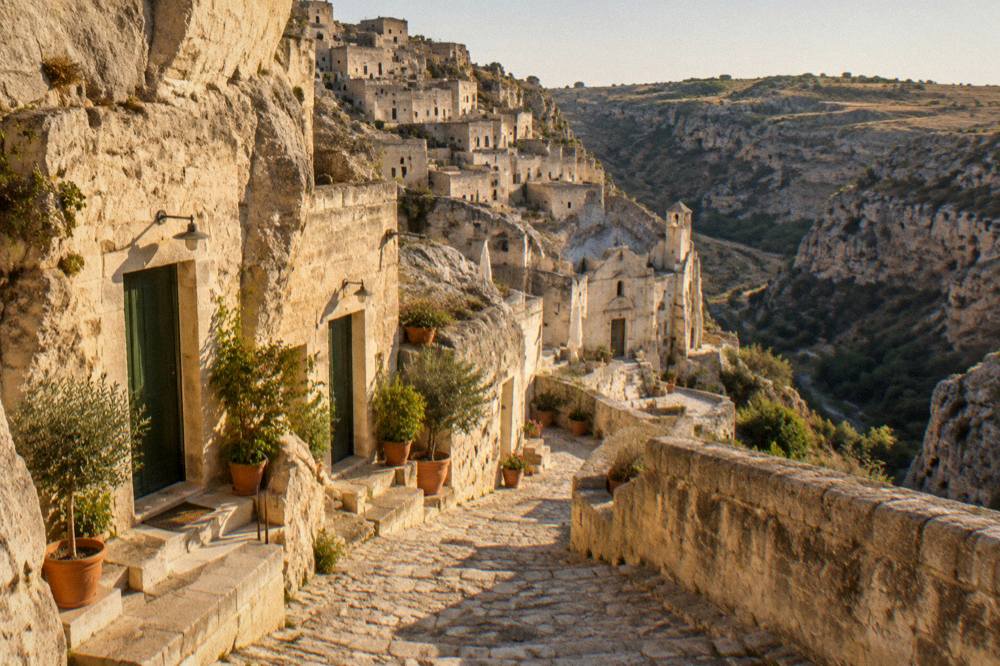
The Convicinio di Sant'Antonio is a group of rock-hewn churches arranged around a shared courtyard in the Sasso Caveoso, the district of Matera where cave dwellings, stables and churches were cut directly into the limestone slope. It takes its name from Sant'Antonio, the church at its heart, and its layout preserves the courtyard pattern that structured everyday life in the Sassi before the evacuation that began in 1952.
The word "convicinio" itself describes the pattern: neighbouring houses and churches sharing one courtyard, with the rock above and the rock below doing the structural work. In the Sassi, the roof of one dwelling was often the floor of another, and the courtyard was the shared space where water was collected, animals were kept and the neighbourhood met. The rupestrian churches of Matera were not exceptions to this fabric, they were part of it. The park that protects them, created by regional Law 11/1990 as the "Archaeological Historic Natural Park of the Rupestrian Churches of Matera", counts about 8,000 hectares by its own tally, and the UNESCO property itself covers 1,016 ha with, in UNESCO's words, "more than a thousand dwellings and a large number of shops and workshops".
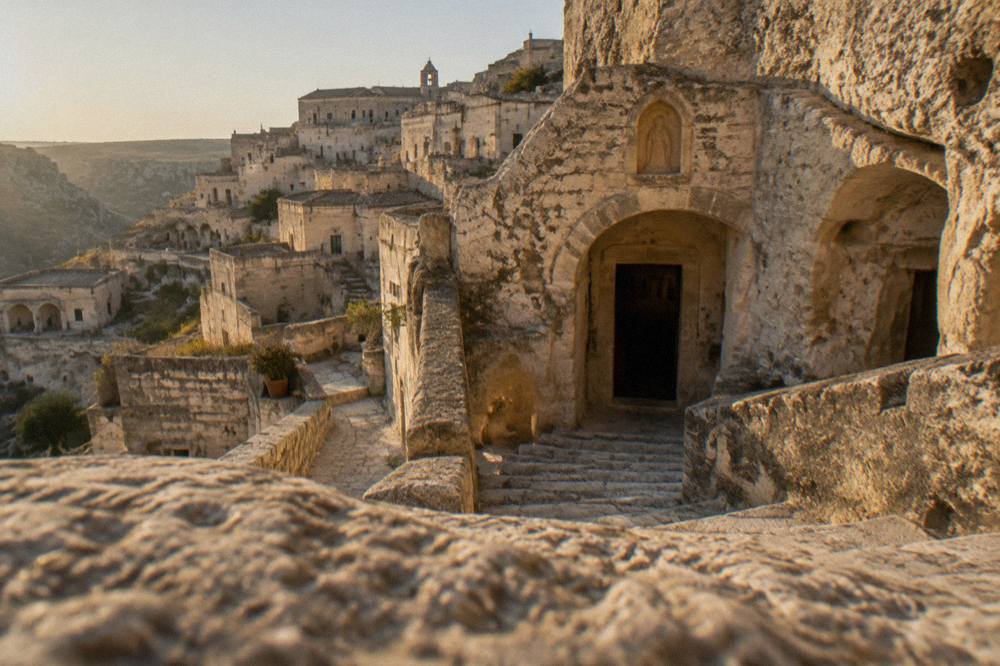
What makes a visit to the Sasso Caveoso different from a visit to a conventional historic centre is that the churches here are subtracted from the rock rather than built onto it. Walk into one of these spaces and the interior is the negative of the hillside: columns left standing where the carvers needed them, apses hollowed where the liturgy required them, niches cut where lamps or graves were placed. The Convicinio shows this craft at courtyard scale. The Sassi districts as a whole are the subject of the Sassi di Matera attraction guide, which covers the two quarters, Sasso Caveoso and Sasso Barisano, and how they differ.
A practical note on access: the interior opening arrangements of individual rupestrian complexes in the Sasso Caveoso are not all published on a single official tariff page, and this site does not print a price or an opening hour it has not read on the operator's own page. Some of Matera's rupestrian churches are run by the operator Oltre l'Arte with a published tariff and hours, and those are covered with their verified prices further down this page. For the Convicinio itself, confirm locally or with a licensed guide whether interiors are open on the day of your visit.
Where Is The Convicinio Di Sant Antonio Located, And How Do You Reach It?
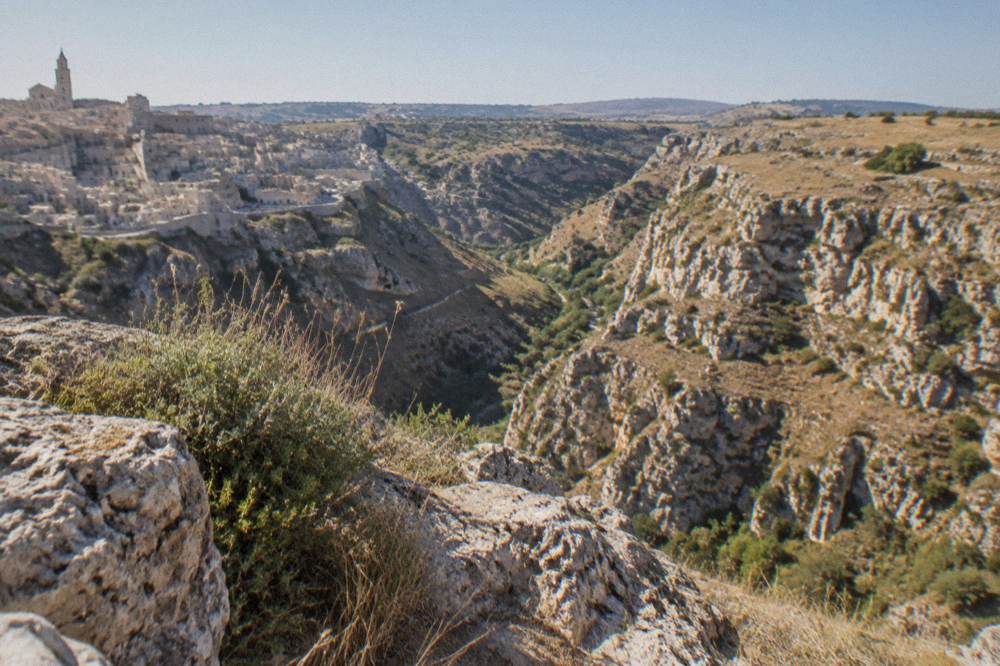
The Convicinio sits in the Sasso Caveoso, the southern and steeper of Matera's two Sassi districts, below the modern centre and facing the Gravina canyon and the Murgia plateau opposite. It is reached on foot: there is no vehicle access into the Sassi lanes, the ZTL Sassi cameras run 10:00 to 20:30 from 16 September to 30 June and 10:00 to 24:00 from 1 July to 15 September, and the streets themselves are stepped, uneven and steep.
The walk down into the Sasso Caveoso starts from the modern city around Piazza Vittorio Veneto, which is closed to vehicles all day, with retractable bollards opening only 04:00 to 08:00 on weekdays for deliveries. From there the descent into the Sassi is a matter of staircases and stone lanes, and the going underfoot is exactly what the geography implies: worn tufa steps, uneven paving and gradients that reward solid shoes. No named route in the Sassi can be described as step-free, and this site never calls one accessible.
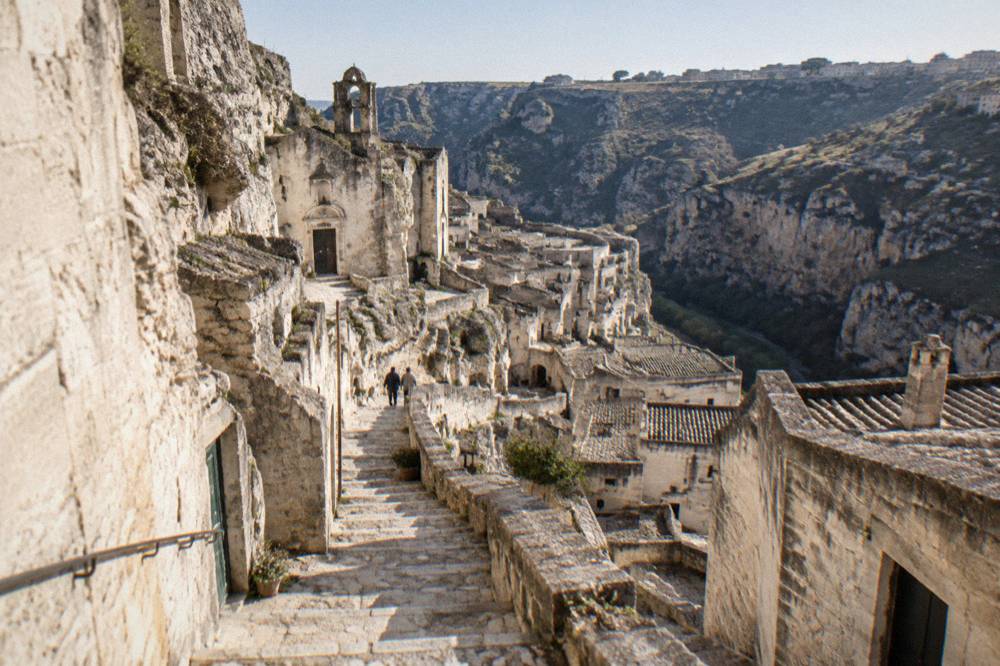
For orientation, the Sasso Caveoso is the district that drops towards Piazza San Pietro Caveoso, the open terrace at the district's southern end, with the rock church of San Pietro Caveoso above it and the Murgia cliffs directly opposite across the canyon. The Convicinio belongs to the fabric of lanes between the upper city and that terrace. The district's other landmarks, the rupestrian complexes of Santa Lucia alle Malve and Santa Maria de Idris, are covered in their own guides on this site.
Reaching Matera itself is covered in detail in the site's transport guides, but two facts matter for any plan. There is no Trenitalia station in Matera: the rail operator is FAL, and from Bari the posted weekday timetable involves a change at Altamura, about 1 h 45 to 2 h in total, with no trains at all on Sundays and public holidays, when FAL runs replacement buses. FAL's own timetable page carries the current sheets. By road, Bari Airport is 64 km and about an hour's free-flow drive from Matera Centrale. A licensed guide who knows the lanes is one way to find the smaller courtyard complexes without losing an hour to wrong turns, and a walk with a guide can be reserved through the operator's live listing.
Guided options above cover the Sassi on foot, from group walks to private tours with an official guide. The James Bond 007 walk is a themed route through the Sassi locations used by the 2021 Bond film No Time to Die, one of the titles confirmed on the official film-commission pages for Matera; the private option covers the old town and the Sassi in one loop. Both are booked through the operator's live listing, with the price, rating and current availability shown there.
What Can You See Inside The Convicinio Di Sant Antonio?
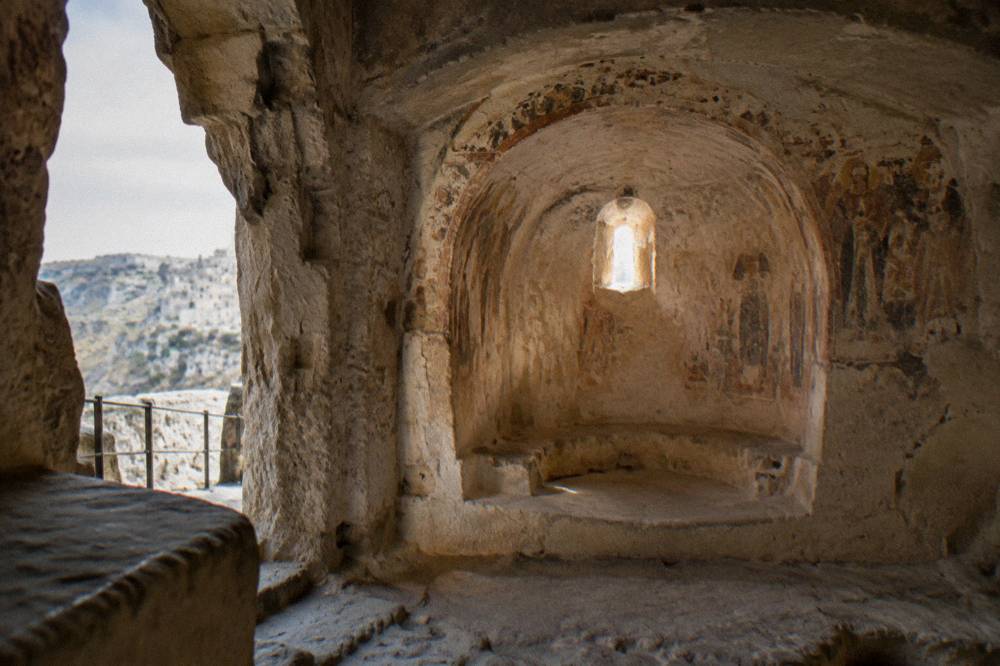
Inside the Convicinio, the visitor sees a set of cave church interiors cut from a single rock face around one courtyard: hollowed naves, carved columns left standing in the tufa, apses and niches, and the worn thresholds that connected church, dwelling and stable in one continuous carved landscape. The interiors show the carving technique common to Matera's rupestrian churches, where the mason removed stone rather than adding it, and the courtyard shows the shared space that gave the Sassi their social shape.
The interiors of Matera's rock churches follow patterns the carvers repeated across the Murgia: a nave cut into the slope, an apse at the liturgical east end, small windows or light shafts piercing the facade, and fresco fragments where pigment survived the centuries of use, abandonment and damp. What a specific complex holds on a specific day is best checked locally, since interior access, restoration state and whether a space is furnished as a museum or left as a bare cave vary across the Sassi and are not consolidated on one official page.
For comparison, the rupestrian complexes with a fully published visitor offer are the three Oltre l'Arte churches, Santa Lucia alle Malve, Santa Maria de Idris with San Giovanni in Monterrone, and San Pietro Barisano, all in or beside the Sasso Caveoso. Their verified tariff, read on the operator's own ticket page, is set out below. The all-inclusive ticket covers eight sites, including the Museo del Pane and the Antica Casa Grotta in Via Fiorentini, and every Oltre l'Arte site closes on 25 December and 2 July, the day of the Festa della Bruna.
| Oltre l'Arte ticket | Full price | Reduced | With a licensed guide |
|---|---|---|---|
| 1 rupestrian church | 4.50 EUR | 3.50 EUR | 2.50 EUR |
| 2 churches | 8.00 EUR | 5.50 EUR | 4.00 EUR |
| 3 churches | 10.00 EUR | 7.50 EUR | 5.00 EUR |
| Cathedral and MATA museum | 4.00 EUR | 4.00 EUR | 4.00 EUR |
| 8-site all-inclusive | 25.00 EUR | 16.00 EUR | 25.00 EUR |
Children up to 10 enter the Oltre l'Arte churches free with a parent, and the operator's hours from 28 March 2026 list Santa Lucia alle Malve and Madonna de Idris daily 09:30 to 19:30, San Pietro Barisano daily 10:00 to 19:00. The Convicinio is not on that tariff, so treat the table as the benchmark for what a managed rupestrian church in the Sasso charges, and confirm the Convicinio's own arrangements on site or with a guide.
A guided walk solves the access question in one step, since a licensed guide knows which cave interiors are open on a given day and how to sequence them without backtracking up the Sassi's staircases. Booking is through the operator's live listing, and free cancellation before the start time means a plan can be adjusted once the weather or the day's opening arrangements are clear.
If you would rather have the cave interiors sequenced for you, book a guided Sassi tour here.
How Does The Convicinio Fit Matera's Wider Network Of Rupestrian Churches?
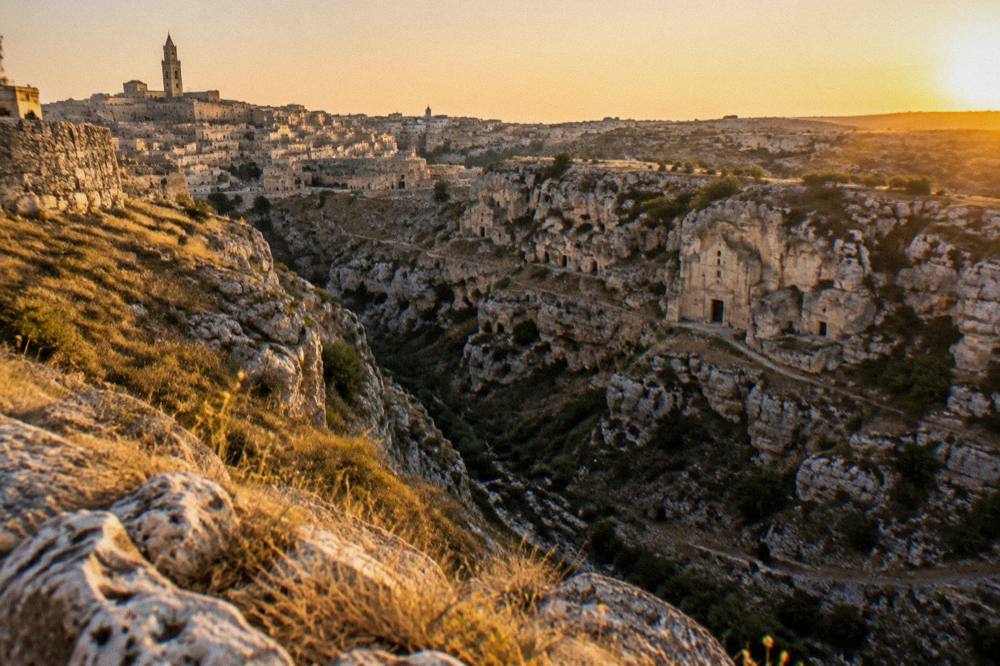
The Convicinio is one node in a network of rupestrian churches that runs through both Sassi districts and across the Murgia plateau opposite, a landscape where churches were cut into the rock on both sides of the Gravina canyon. The park that protects them was created by regional Law 11/1990, and UNESCO inscribed the Sassi and the park together in 1993 under criteria (iii), (iv) and (v), recognising the rock-cut settlement as a whole rather than any single church.
The number of rupestrian churches in the park is quoted as about 150, a figure this site reports with the caveat that it comes from a search result citing the park's pages rather than from text the desk read directly. What is verified is the structure: the park exists by regional law, covers about 8,000 hectares by its own count, and lists 923 plant species, about a sixth of the national flora, on its own site. The churches across the canyon, reached by the managed path known as Sentiero 406 with its suspension bridge over the Gravina, are part of the same carved landscape; the park has run a staffed access point and an online access ticket on that path since March 2026, though the price is not settled between the ticket page and press reports, so this site prints none.
The table below places the main rupestrian and cave sites a visitor can actually enter, with the verified price where the operator publishes one and an explicit note where it does not.
| Site | District | Verified entry | Notes |
|---|---|---|---|
| Santa Lucia alle Malve | Sasso Caveoso | 4.50 EUR single church | Oltre l'Arte, daily 09:30 to 19:30 |
| Santa Maria de Idris and San Giovanni in Monterrone | Sasso Caveoso | 8.00 EUR for 2 churches | Oltre l'Arte, daily 09:30 to 19:30 |
| San Pietro Barisano | Sasso Barisano edge | 10.00 EUR for 3 churches | Oltre l'Arte, daily 10:00 to 19:00 |
| Storica Casa Grotta di Vico Solitario | Sasso Caveoso | 8.00 EUR full, 5.00 reduced | Tariff from 4 April 2026, covers 4 sites |
| Convicinio di Sant'Antonio | Sasso Caveoso | Not published on an operator page | Confirm access locally or with a guide |
| Crypt of the Original Sin | 13 km from Matera | Price not published | Booking mandatory, e-ticket 90 minutes ahead |
The Casa Grotta di Vico Solitario deserves its mention here because it shows the domestic side of the same carving tradition: its verified ticket covers the cave house, the Neviera ice store, the natural cave and the rock church of Sant'Agostino al Casalnuovo, one ticket across four carved spaces. The Casa Grotta di Vico Solitario guide on this site carries the full tariff and seasonal hours.
What Is The History Behind The Convicinio And The Sassi?
The history behind the Convicinio is the history of the Sassi: a rock-cut settlement with, in UNESCO's wording, continuity over more than two millennia and first occupation during the Palaeolithic, whose residents were moved out between 1952 and the 1970s, and whose restoration was opened by a 1986 law that reversed the evacuation. The courtyard complexes like the Convicinio predate that rupture, and they preserve the layout of a neighbourhood that shared water, shade and stone.
The evacuation is the pivot of every Sassi story. From 1952 and through the following decades, the residents of the cave districts were relocated to new housing on the plateau, and the Sassi emptied, a story covered in full in the site's answer to why Matera was abandoned and in the guide to the difference between Matera and the Sassi. The 1986 national law made restoration and reoccupation possible, and the decades since turned the districts from a byword for poverty into a UNESCO site and a European Capital of Culture in 2019.
The numbers tell the scale of the turnaround. In 2025, Matera's hotels and rentals logged 479,083 arrivals and 748,812 overnight stays, against 388,158 arrivals in 2019, the Capital of Culture year, an increase of 23.4% in arrivals. The average stay was 1.56 nights. These are APT Basilicata accommodation counts, guests in registered accommodation, not day-tripper totals, and this site never presents them as a count of all visitors. The monthly pattern is worth knowing before planning any Sassi walk: September, not August, was the busiest month of 2025, with 61,630 arrivals against 60,257 in August, and 74.5% of those September arrivals came from abroad.
| Month | Mean high C (ERA5 1991-2020) | Rain mm | Arrivals 2025 (APT) |
|---|---|---|---|
| January | 10.3 | 51.4 | 18,402 |
| February | 11.1 | 54.9 | 15,239 |
| March | 14.1 | 59.2 | 23,629 |
| April | 17.4 | 56.5 | 45,195 |
| May | 22.7 | 41.7 | 54,101 |
| June | 28.2 | 35.1 | 50,186 |
| July | 31.2 | 21.2 | 43,966 |
| August | 31.3 | 21.7 | 60,257 |
| September | 25.7 | 44.8 | 61,630 |
| October | 20.8 | 51.7 | 52,538 |
| November | 15.5 | 67.1 | 23,555 |
| December | 11.2 | 57.2 | 30,385 |
The climate column is ERA5 reanalysis, 1991-2020, a modelled grid cell for Matera rather than a station record. The pairing that matters for a Sassi visit: July and August are equally warm on the mean high, 31.2 and 31.3 C, but July logged fewer arrivals than six other months, while September combined the year's highest arrivals with a mean high of 25.7 C. November is the wettest month at 67.1 mm and July the driest at 21.2 mm.
Do People Still Live Around The Convicinio Di Sant Antonio?
Yes, people still live in the Sassi around the Convicinio, though far fewer than before the evacuation, and the district today mixes homes, cave hotels, restaurants and museumised cave houses. The Sassi are not an open-air museum with a gate: they are functioning neighbourhoods of Matera, a city of 59,368 residents at 1 January 2026 by ISTAT-based figures, and a walk through the Sasso Caveoso passes front doors, laundry and delivery scooters alongside the ticketed churches.
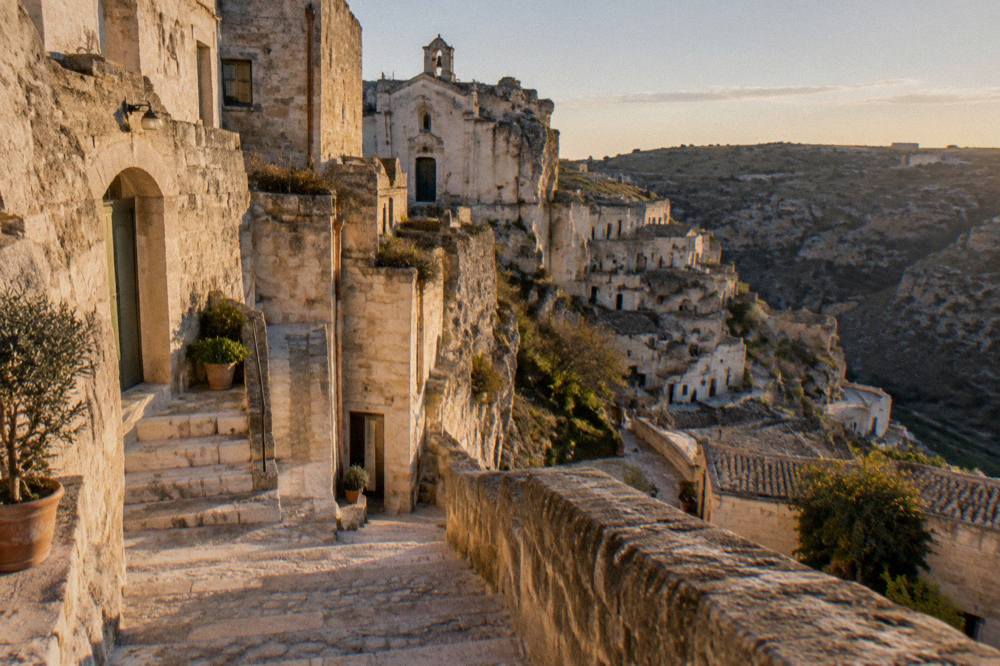
The reoccupation since the 1986 law has taken more than one form. Some cave houses returned to family use, many became cave hotels, the subject of the site's guide to Sassi di Matera hotels, and others became visitor sites like the Casa Grotta di Vico Solitario, which preserves a domestic interior as it was. The upshot for a visitor is that the courtyard complexes sit inside living streets, and the etiquette of a living neighbourhood applies: doorways that are private are private, and the lanes are shared with residents, not reserved for tourists.
The rhythm of the district also follows Matera's food culture, which grew in the same cave economy: the bread of the Sassi is the subject of the site's Pane di Matera guide, covering the PGI-registered loaf that was baked in communal cave ovens. A cooking class in a farmhouse outside the Sassi is one way to handle that tradition practically, and it can be reserved through the operator's live listing.
The class above covers the pasta traditions of the Matera countryside, and its price, rating and duration render from the listing rather than from this page. Between the Sassi walk and the table, it rounds out a day that would otherwise be all stone and staircases.
How Much Time Should You Allow, And When Should You Visit?
Allow half a day to walk the Sasso Caveoso at a real pace, with the Convicinio as one stop among several, and a full day if the plan includes the Murgia side of the canyon or a longer museum visit. The quietest months on the APT arrivals data are February, with 15,239 arrivals, and November, with 23,555, while September is the busiest at 61,630: the same lanes feel entirely different in the February low and the September peak.
Timing inside the day matters as much as the month. The Sassi face roughly south and east across the canyon, and the light on the facades changes character from morning to evening, a subject the site's photography guide treats in detail. The ZTL Sassi cameras run on the seasonal schedule given above, which matters only if a hire car is part of the plan; the car stays outside the districts in any case, and the site's parking and ZTL guides cover the verified rules.
Two closures in that list affect Sassi plans directly. Casa Noha, the small FAI interpretation centre that oriented many visitors at the start of a Sassi walk, reopens after 22 October 2026 with new displays; its normal tariff is 6.50 EUR for adults and 3 EUR for children, closed on Wednesdays. The Museo Ridola, the archaeological museum on the other side of the city, remains closed with no published date, so no plan should include it. The Casa Noha guide on this site carries the full verified hours.
What Else Is Near The Convicinio Di Sant Antonio?
Within a short walk of the Convicinio sit the terrace of Piazza San Pietro Caveoso, the rupestrian complexes of Santa Lucia alle Malve and Santa Maria de Idris, the MUSMA sculpture museum in the Sasso Caveoso, and the viewpoints over the Gravina toward Belvedere Murgia Timone; the Cathedral and the Palazzo Lanfranchi museums sit on the plateau above. Everything in the list below is reachable on foot, though none of the Sassi routes are step-free.
The distances involved are small, but the vertical metres are not, so sequencing a Sasso Caveoso walk saves real effort. The table below orders the nearest verified sites with their published entry prices where they exist.
| Site near the Convicinio | Verified entry | Hours as published |
|---|---|---|
| Santa Lucia alle Malve | 4.50 EUR single church | Daily 09:30 to 19:30 |
| Santa Maria de Idris | 8.00 EUR for 2 churches | Daily 09:30 to 19:30 |
| San Pietro Barisano | 10.00 EUR for 3 churches | Daily 10:00 to 19:00 |
| MUSMA sculpture museum | 10 EUR full, 5 or 7 EUR reduced | April to September 10:00 to 20:00, October to March 10:00 to 18:00 |
| Casa Grotta di Vico Solitario | 8.00 EUR full | Seasonal, last entry 20 minutes before closing |
| Matera Cathedral and MATA | 4.00 EUR | Daily 09:00 to 19:00, Sunday pause 10:00 to 12:30 |
| Palazzo Lanfranchi, Museo Nazionale | 10.00 EUR | Monday to Sunday 09:00 to 20:00 |
| Palombaro Lungo | Price not published | Confirm locally |
The Palazzo Lanfranchi row carries a curiosity worth knowing: the museum's own site runs a works page for the palace while it stays open on its normal hours. The Palombaro Lungo, the vast water cistern under Piazza Vittorio Veneto, is covered in its own Palombaro Lungo guide, but its price and hours are not published on an official page, so this site prints none and sends you to check on site. For the full picture of what the city offers beyond the Sassi, the root things to do in Matera page consolidates every verified attraction.
For a private version of the same walk, with the courtyard complexes sequenced to the day's openings, the operator's live listing carries the price and availability.
A private tour with an official guide covers the Sassi at the group's own pace, and the listing renders the current price and rating. It suits anyone who wants the smaller cave interiors, the ones without a published tariff, opened and explained rather than found by trial and error.
Common Questions About The Convicinio Di Sant Antonio In Matera
What is the Convicinio di Sant'Antonio in Matera?
It is a courtyard complex of rock-hewn churches in the Sasso Caveoso, the southern of Matera's two Sassi districts, part of the rock-cut settlement UNESCO inscribed in 1993. Its layout preserves the shared-courtyard pattern that organised cave dwellings, stables and churches as one carved fabric.
Where is the Convicinio di Sant'Antonio located?
It sits in the Sasso Caveoso, below Matera's modern centre, on the slope facing the Gravina canyon and the Murgia plateau. It is reached on foot from Piazza Vittorio Veneto or from the terrace of Piazza San Pietro Caveoso, via stepped stone lanes.
How much does the Convicinio di Sant'Antonio cost to visit?
No operator page publishes a tariff for the Convicinio, so this site prints no price. The managed rupestrian churches nearby, run by Oltre l'Arte, charge 4.50 EUR for one church, 8.00 EUR for two and 10.00 EUR for three on the tariff read on the operator's own page. Confirm the Convicinio's access locally or with a licensed guide.
Can you walk to the Convicinio from Matera's centre?
Yes, and walking is the only way in. The ZTL Sassi cameras run 10:00 to 20:30 from 16 September to 30 June and 10:00 to 24:00 from 1 July to 15 September, no vehicles enter the lanes, and the descent from Piazza Vittorio Veneto takes in staircases and uneven stone paving. Solid shoes are the practical choice.
Is the Convicinio di Sant'Antonio accessible for wheelchairs?
No route into the Sassi can be described as step-free: the districts are steep, stepped and uneven by nature, and this site never labels a named Sassi route accessible. The site's accessibility guide covers what the verified sources say about visiting Matera with limited mobility.
When is the best time to visit the Convicinio and the Sassi?
On the APT Basilicata arrivals data, February is the quietest month, with 15,239 arrivals in 2025, and September the busiest, with 61,630. The ERA5 reanalysis, 1991-2020, gives a July and August mean high of about 31 C against 25.7 C in September, so early morning and late afternoon suit a summer walk best.
The Convicinio di Sant'Antonio rewards the visitor who arrives on foot, early or late in the day, with a guide or with the patience to confirm openings door by door, and it is one of the places where the Sassi stop being a backdrop and show the courtyard logic that built them.