Pane Di Matera
Pane di Matera is the registered PGI bread of Matera, the cave city of Basilicata in southern Italy. This guide covers what the registration covers, how the Sassi bakeries work, and how to fit the city's bread culture into a visit.
Short answer
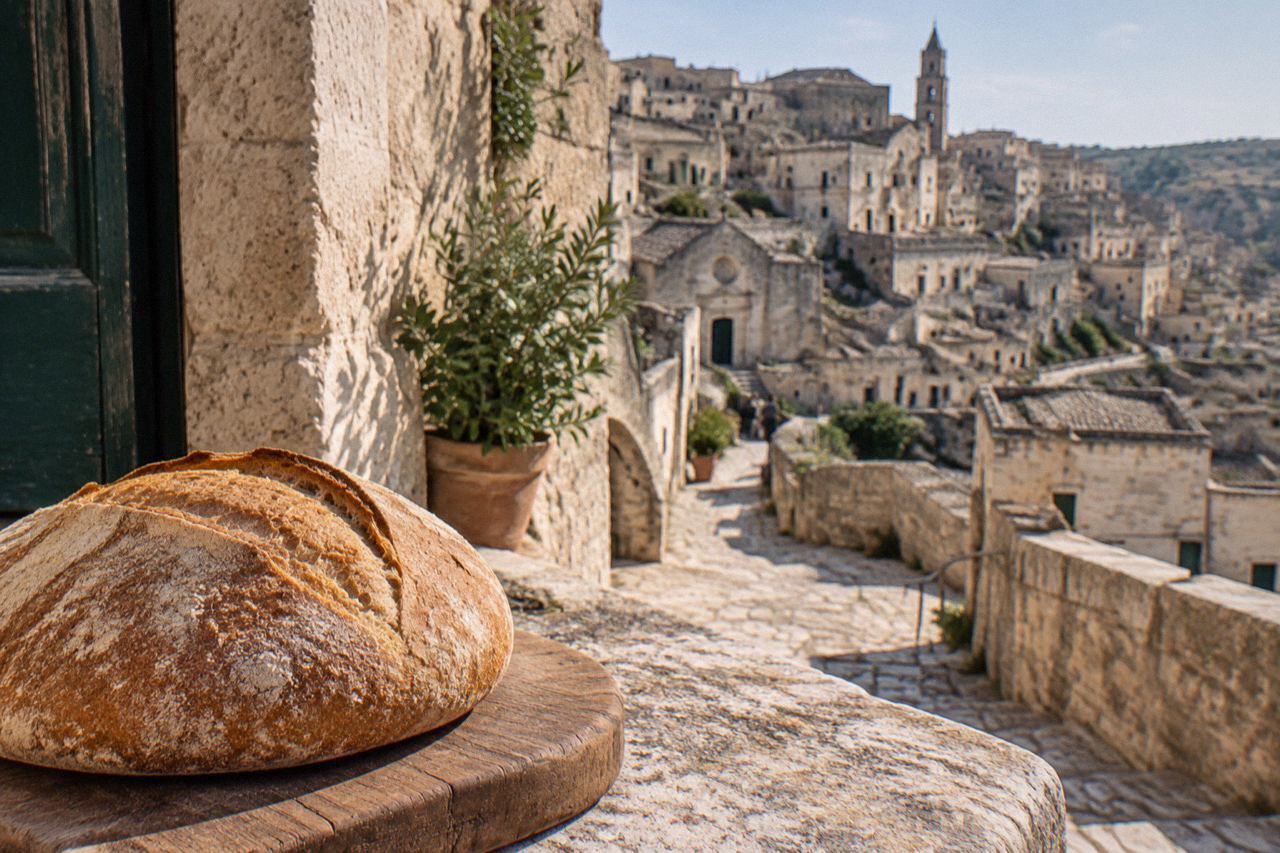
Pane di Matera is a bread with protected geographical indication, registered in 2008 under Regulation CE 160/2008, baked in and around the Sassi cave quarters of Matera in Basilicata. The loaves are sold in the city's bakeries and served with the simple dishes of the Lucanian table.
Matera, in the region of Basilicata in southern Italy, is a city cut into pale tufa limestone above the Gravina canyon, and one of the things the materani have always made here is bread. Pane di Matera is the city's registered bread, protected at European level under the PGI scheme, and it is sold fresh every day in bakeries across the Sassi and the modern town above them. This guide sets out what the registration covers, how the bread fits into the city's food culture, and how to plan a visit around it, with the climate and crowd data an editorial desk can actually verify.
What Is Pane Di Matera?
Pane di Matera is a bread from Matera, the cave city of Basilicata in southern Italy, that holds protected geographical indication status under the European PGI scheme. The registration is generally dated to 2008, under Regulation CE 160/2008, and it ties the bread's name to the city and its surrounding area. The bread is baked in the city and sold daily in its bakeries, and it belongs to the same regional food tradition as the cave restaurants and simple Lucanian dishes of the Sassi.
The PGI mark, indicazione geografica protetta in Italian, means the name is legally tied to a place whose reputation the product draws on. In this case the place is Matera itself, an inland city at about 400 m above sea level on the edge of the Gravina canyon, with the Murgia plateau opposite and the sea a day trip away rather than on the doorstep. The registration is the one food fact this desk can source with confidence; deeper detail on flour specifications and dough method circulates widely online but is not the kind of figure this site prints without a primary source.
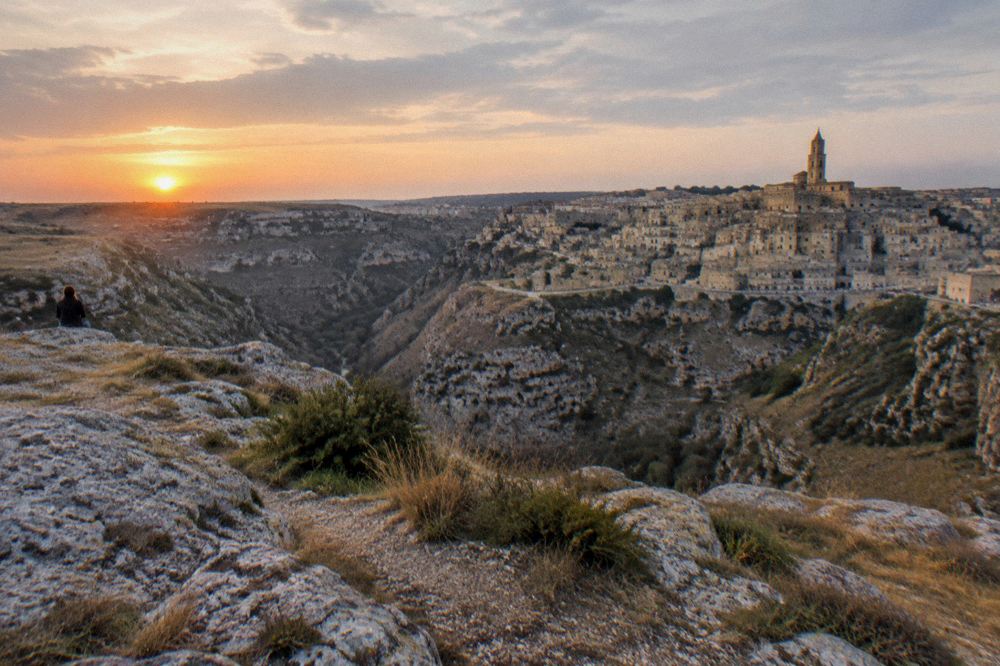
Bread belongs to the city's identity in a very physical way. The Sassi, the two old quarters of Sasso Caveoso and Sasso Barisano, are cave dwellings and stone houses with rock-hewn churches cut into the rock, and their kitchens, cellars and ovens were carved into the same tufa as everything else. The UNESCO inscription of 1993, which covers the Sassi and the Park of the Rupestrian Churches of Matera, describes continuity of settlement over more than two millennia, and bread baking is one of the practices that ran through that continuity. For the wider story of the quarters themselves, see the guide to the Sassi of Matera, and for the question of who lives in them today, do people still live in the Sassi.
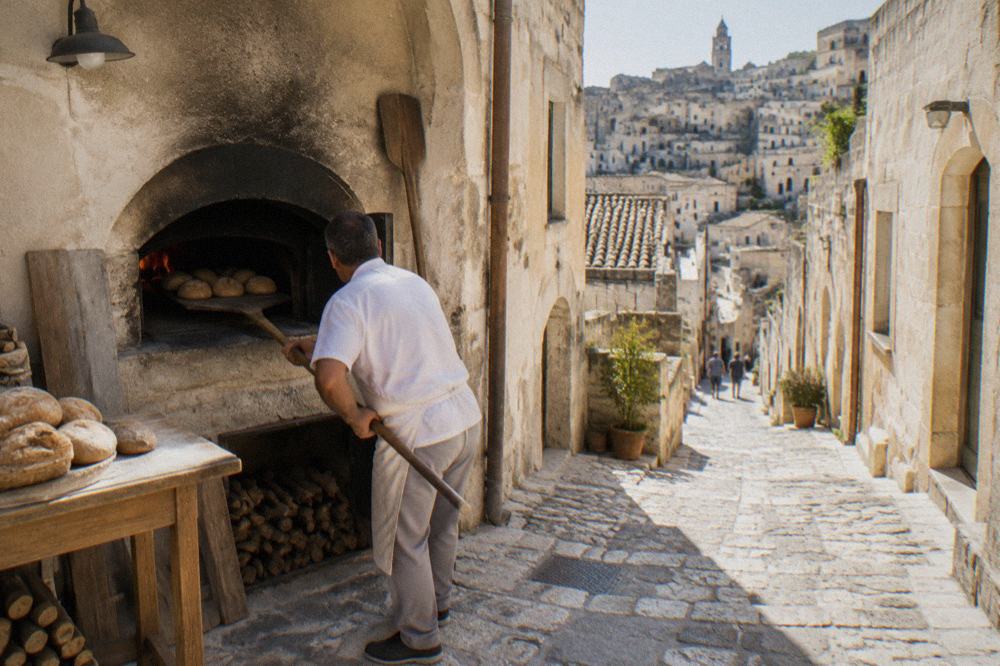
A practical note for anyone planning around food: the Museo del Pane, the bread museum run by the Oltre l'Arte network, is open daily 09:00 to 19:00 and is included in the network's 25.00 EUR all-inclusive ticket covering eight sites. That ticket is verified on Oltre l'Arte's own tariff page. No individual bakery in Matera has had its address, hours or prices checked by this desk, so no bakery is named here as a recommendation; the honest advice is to follow the smell of the ovens in the Sassi and confirm opening details on the spot.
Where Does The Bread Culture Of Matera Sit In The City?
The bread culture of Matera sits inside the Sassi and the streets immediately above them, where cave cellars, stone doorways and carved kitchens line the lanes of Sasso Caveoso and Sasso Barisano. The city centre around Piazza Vittorio Veneto and the Civita is where the modern town meets the old quarters, and it is there, within a compact walkable area, that the bakeries, the bread museum and the cave restaurants that serve the local loaf are all found.
Matera's geography explains its food. The city stands on the edge of a canyon with the Murgia plateau opposite, a dry limestone landscape of scrub and scattered cultivation, and the historical diet of the materani was built on hard wheat, legumes, oil and bread rather than on fish. The coast, Metaponto on the Ionian and Polignano a Mare and Bari on the Adriatic, is a day trip away, so the kitchen of Matera is an inland one. For the distinction between the city as a whole and its cave quarters, see what is the difference between Matera and the Sassi.
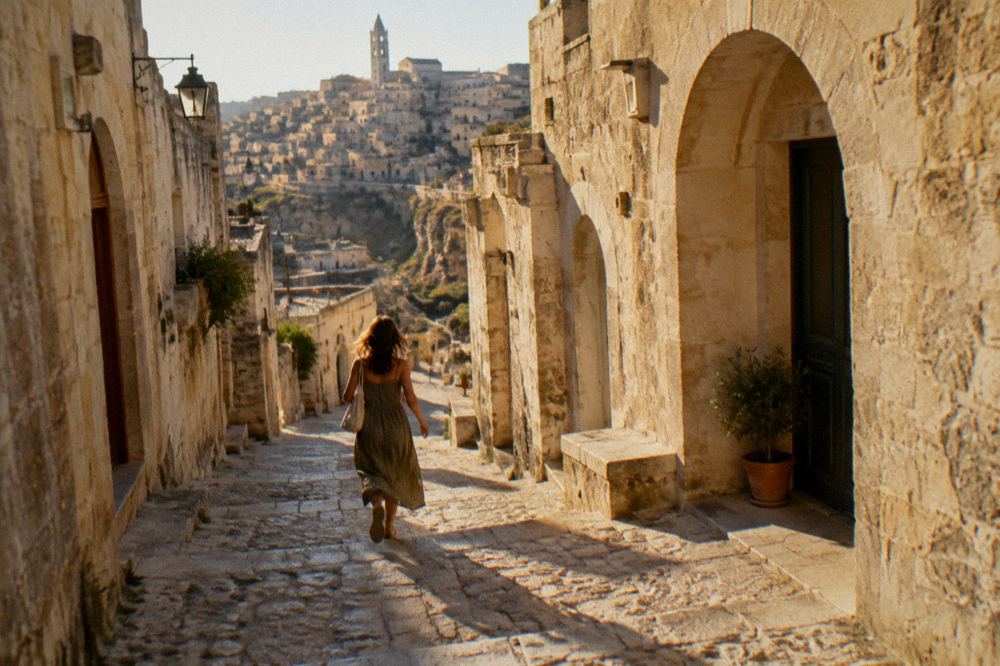
Visitors usually arrive through the upper town and descend into the Sassi on foot. The lanes are steep, stepped and uneven, cut into and built over the rock, and the walk between a bakery in the upper town and a viewpoint over Sasso Caveoso can involve serious stair work. No named route here can be described as step-free. Comfortable shoes matter, and so does a sense of direction, because the quarters fold into themselves around cave complexes like the Convicinio di Sant'Antonio, where four rock churches sit around a shared courtyard; the Convicinio di Sant'Antonio has its own page on this site.
For travellers who want to see the whole sweep of the quarters without the stair climb, panoramic rides loop the Sassi on the roads above and across the canyon. Beyond the city, the same region produces the bread's raw material, and a day out into the hills shows the landscape the kitchen depends on.
How Do You Build A Day In Matera Around Its Food?
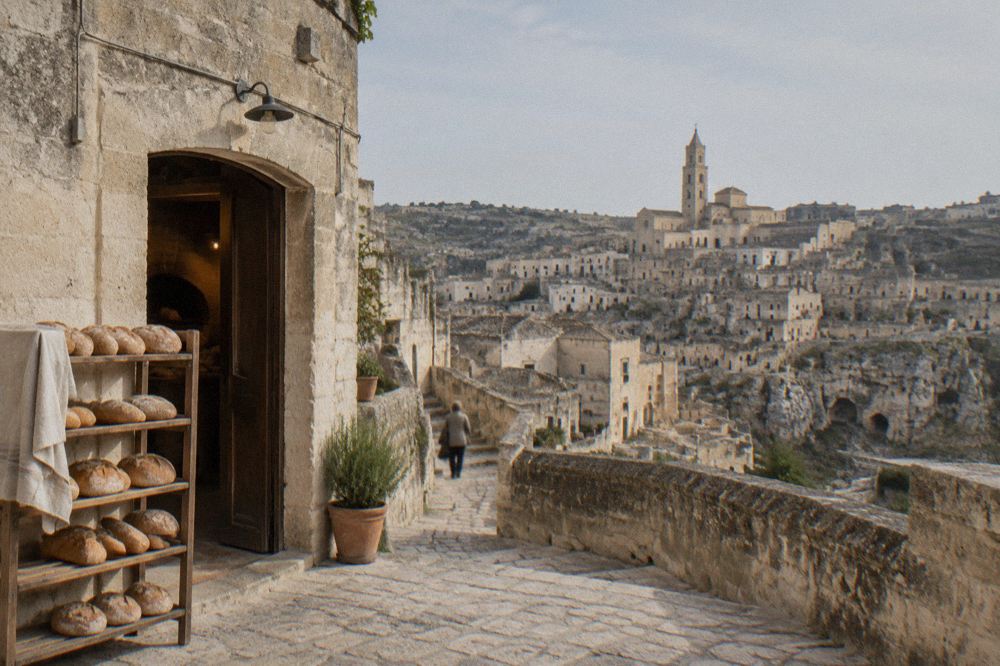
A day in Matera built around food runs from a morning bakery stop in the upper town, through a walk down into Sasso Caveoso or Sasso Barisano, to a long lunch of the region's simple dishes and an afternoon at the bread museum or a rupestrian church, finishing at a canyon viewpoint at sunset. The city is compact, arrival is easiest from Bari by the FAL railway, and the whole circuit is walkable, with the steep lanes of the Sassi the only real demand.
To try the city's oven traditions with your own hands, book a Matera cooking class here.
Getting there is straightforward once you know one thing: there is no Trenitalia station in Matera. The rail operator is FAL, and from Bari the posted weekday timetable involves a change at Altamura, with a journey of about 1 h 45 to 2 h; no trains run on Sundays and public holidays, when FAL operates replacement buses. This desk sends readers to FAL's own timetable page rather than printing times, because the programme changes, and a notice of 9 October 2026 altered the Matera Sud to Altamura stretch from 12 October 2026. The full transport picture is in how to get to Matera, with dedicated pages for Bari to Matera, Bari Airport to Matera and Matera Airport.
Drivers should read the ZTL rules before setting out. The Sassi limited traffic zone has cameras active 10:00 to 20:30 from 16 September to 30 June, and 10:00 to 24:00 from 1 July to 15 September, on weekdays and holidays alike, while the ZTL Centro around the main shopping streets is active 24 hours a day. Public car park names and tariffs are not verified by this site, so confirm parking details with your accommodation; the pages on parking in Matera and the Matera ZTL set out what is verified.
| Journey to Matera | Verified figure |
|---|---|
| Bari Centrale to Matera by FAL train, weekdays | About 1 h 45 to 2 h, changing at Altamura |
| Bari Airport to Matera by road | 64 km, about 1 hour free-flow driving |
| Altamura by road | 20 km, about 20 minutes |
| Metaponto by road (Ionian coast) | 47 km, about 52 minutes |
| Alberobello by road (Puglia) | 68 km, about 1 h 23 |
| Polignano a Mare by road (Adriatic coast) | 100 km, about 1 h 29 |
Once in the city, food anchors the day well because the meals are unhurried. No restaurant on this site has been checked for address, hours or prices, so none is named, but the general shape of the Lucanian table is documented: bread, legumes, vegetables, oil, aged cheeses and pork in the regional style, with peperoni cruschi, the sweet dried peppers of Basilicata, among the signature ingredients. Dishes are described in general terms only, and meal prices are not printed. What this desk can recommend structurally is to eat where the bread is taken seriously, and to treat the restaurants of Matera and the guide to what to eat in Matera as the starting list.
The hills south of the city put the bread landscape in context. A guided hike between Castelmezzano and Pietrapertosa, two villages set into the Dolomiti Lucane about 80 km from Matera by road, is one way to see the interior that the regional kitchen draws on, and it is the featured day trip on this page. Check availability on the operator's live listing for current dates and prices.
When Is The Best Time To Visit Matera For Bread And Food Travel?
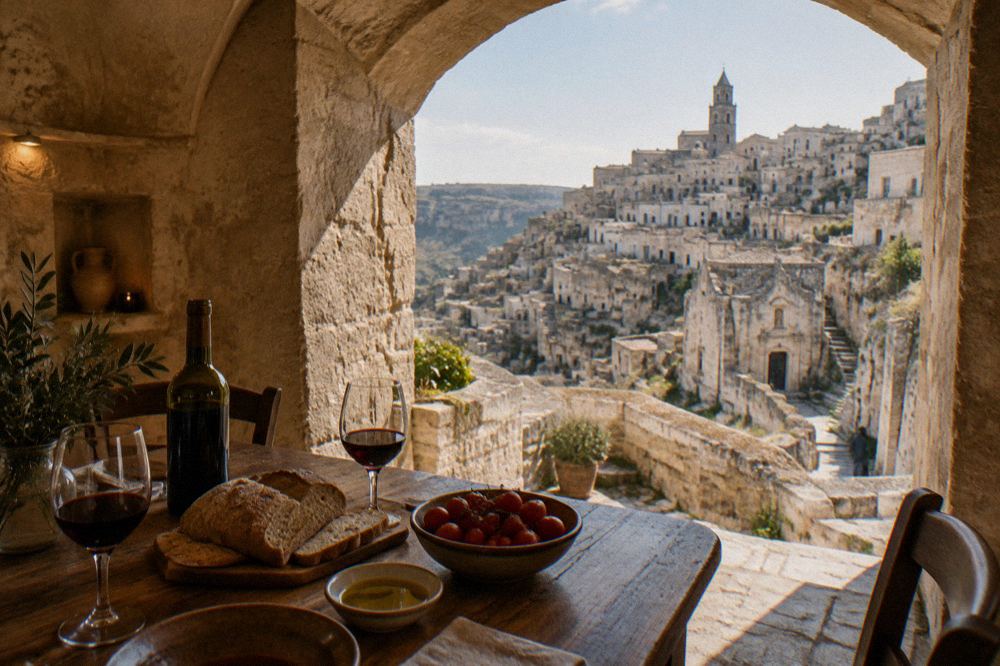
The best time to visit Matera for a food-focused trip is late April to June, when the ERA5 reanalysis, 1991-2020, puts the mean high between 17.4 and 28.2 C, or September and October, when arrivals reach 61,630 and 52,538 but the mean high eases to 25.7 and 20.8 C. November, with 67.1 mm of rain, and February, with arrivals at 15,239, both work for a trip built around ovens and cave restaurants.
The crowd data is the part most guides get wrong. September is Matera's busiest month, not August: the APT Basilicata accommodation count for 2025 gives 61,630 arrivals in September against 60,257 in August, and 74.5 percent of those September arrivals came from abroad. August is the one warm month when Italians dominate the count, at 53.2 percent. What that means for a bread-and-food trip is simple: book tables and rooms early for September, expect the Sassi lanes to be full through the evening in summer, and consider the shoulder months if you want ovens, museums and restaurants at a calmer pace.
| Month | Mean high C | Mean low C | Rain mm | Arrivals 2025 |
|---|---|---|---|---|
| Jan | 10.3 | 2.2 | 51.4 | 18,402 |
| Feb | 11.1 | 2.2 | 54.9 | 15,239 |
| Mar | 14.1 | 4.4 | 59.2 | 23,629 |
| Apr | 17.4 | 7.1 | 56.5 | 45,195 |
| May | 22.7 | 11.5 | 41.7 | 54,101 |
| Jun | 28.2 | 16.0 | 35.1 | 50,186 |
| Jul | 31.2 | 18.6 | 21.2 | 43,966 |
| Aug | 31.3 | 18.9 | 21.7 | 60,257 |
| Sep | 25.7 | 15.2 | 44.8 | 61,630 |
| Oct | 20.8 | 11.6 | 51.7 | 52,538 |
| Nov | 15.5 | 7.5 | 67.1 | 23,555 |
| Dec | 11.2 | 3.7 | 57.2 | 30,385 |
These climate rows are ERA5 reanalysis values for the 1991-2020 period, a modelled grid cell rather than a weather-station record, and the arrivals are guests in registered accommodation, not day visitors. Frost days, about 20 a year in the same dataset, fall almost entirely between December and March, which matters if you are planning a winter trip around wood-fired ovens and long lunches. The full seasonal picture, including the winter and Christmas periods, is in Matera weather and the best time to visit Matera.
Winter has one food-adjacent event worth flagging. The Presepe Vivente nei Sassi, the living nativity that winds through Sasso Caveoso, runs on the December weekends and 2-3 January in its sixteenth edition, with tickets at 12.00 EUR full, 9.00 EUR for ages 10 to 18 and free under 10, verified on the event's own site. It is a spectacle rather than a food fair, but it draws the crowds that fill the bakeries and restaurants around Piazza San Pietro Caveoso on those days.
Where Should You Stay To Be Near The Bakeries And The Sassi?
To be near the bakeries and the Sassi, stay inside or on the edge of the Sassi districts themselves, in Sasso Caveoso or Sasso Barisano, or in the upper town within a short walk of Piazza Vittorio Veneto, which puts the whole bread circuit of the city within walking distance. Cave hotels, converted from the old dwellings, are the distinctive option, and every address in the historic quarters puts steep lanes and staircases between you and the upper town.
The choice of quarter matters more than the choice of hotel brand. Sasso Barisano, on the northwestern side, holds many of the restored cave accommodations and restaurants; Sasso Caveoso, facing the canyon, is the rawer of the two, with cave houses still showing their original form at the Storica Casa Grotta di Vico Solitario, entry 8.00 EUR full on the tariff in force from 4 April 2026. The Civita, the ridge between the two Sassi, and the Piano, the modern town above, complete the map. The practical pages are where to stay in Matera, Matera cave hotels and Sassi di Matera hotels. Everything else covered here is indexed on Matera Travel Guide.
Two practical notes apply to any stay. Matera charges a tourist tax collected by the accommodation, and the amount is confirmed at booking, because no verified tariff is published on the comune's site. And the ZTL hours listed above mean that driving to a hotel inside the Sassi outside the permitted windows is not possible, so arrange arrival details with the property in advance.
What Else Should A Food-Focused Visitor See In Matera?
A food-focused visitor should see the cave houses, at least one rupestrian church, a viewpoint over the canyon, and one museum, because these explain the world the bread comes from. The Storica Casa Grotta di Vico Solitario costs 8.00 EUR, the three Oltre l'Arte rupestrian churches cost 10.00 EUR together, the Cathedral route costs 4.00 EUR, and the MUSMA sculpture museum costs 10.00 EUR, all on tariffs verified on the operators' own tariff pages.
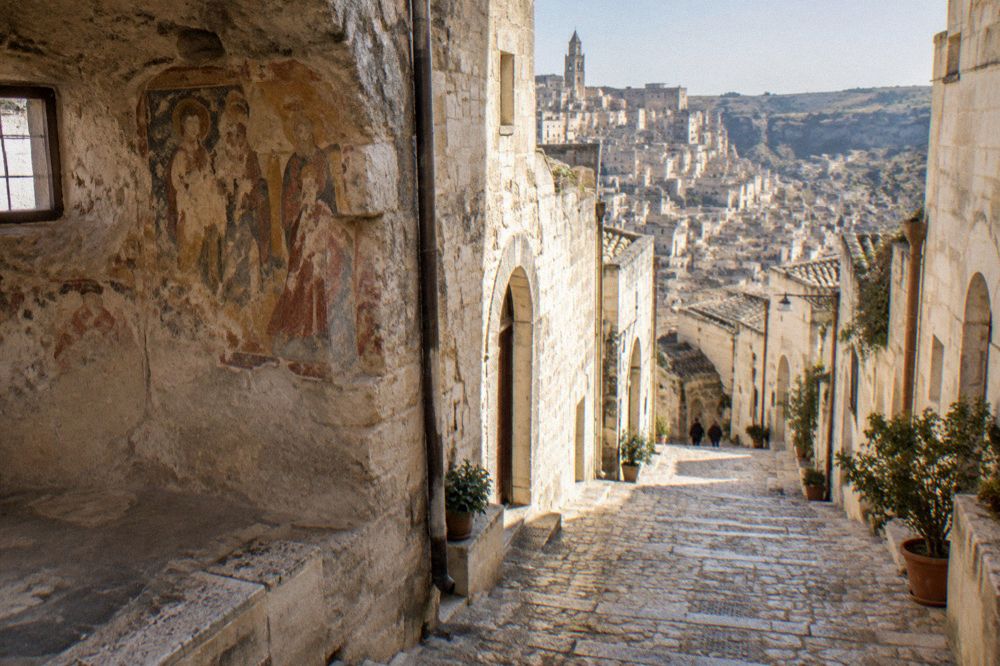
The logic is that bread in Matera is not a museum piece but the product of a living city, and the city's sights explain the economy that produced it. A cave house shows the kitchen where loaves were managed at home; a rock church shows the communal life of the same quarters; a viewpoint shows the canyon landscape of the Murgia. The rupestrian churches of Matera and the Parco della Murgia have their own pages.
| Sight | Verified tariff | Notes |
|---|---|---|
| Storica Casa Grotta di Vico Solitario | 8.00 EUR full, 5.00 reduced, 3.00 ages 11 to 18 | Covers the cave house, Neviera, natural cave and rock church; tariff from 4 April 2026 |
| Oltre l'Arte rupestrian churches | 4.50 EUR one, 8.00 EUR two, 10.00 EUR three | Santa Lucia alle Malve, Madonna de Idris, San Pietro Barisano |
| Cathedral and MATA | 4.00 EUR | Daily 09:00 to 19:00 |
| Oltre l'Arte 8-site ticket | 25.00 EUR, reduced 16.00 EUR | Includes the Museo del Pane |
| MUSMA | 10.00 EUR, reduced 5.00 or 7.00 EUR | April to September 10:00 to 20:00 |
| Casa Noha | 6.50 EUR adults, 3.00 EUR children | Closed 5 to 22 October 2026 for renovation |
One closure to plan around: the Museo Archeologico Nazionale Domenico Ridola has been closed since 7 April 2025 for energy works and a new display, and no reopening date has been published. Casa Noha, the FAI interpretation centre, is shut only for a short renovation window, 5 to 22 October 2026. All Oltre l'Arte sites, including the Museo del Pane, close on 25 December and on 2 July, the day of the Festa della Bruna, the city's patronal feast fixed to that date since 1389 by the organisers' own history.
The fuller sightseeing circuit, from the Cathedral to the viewpoints over the canyon, is laid out on this site's root page of things to do in Matera. For a first visit built around a single day, the itinerary pages cover one, two and three days in the city.
Can You Combine Pane Di Matera With A Wider Basilicata Or Puglia Trip?
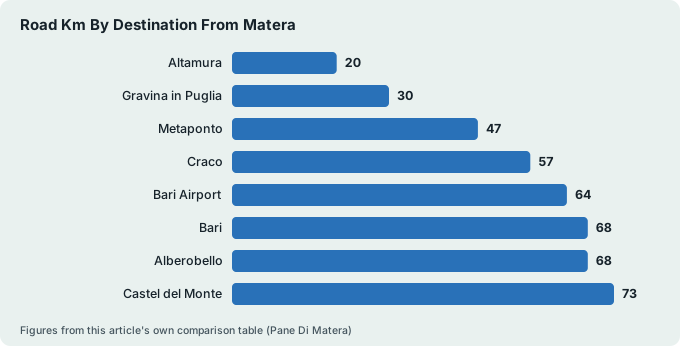
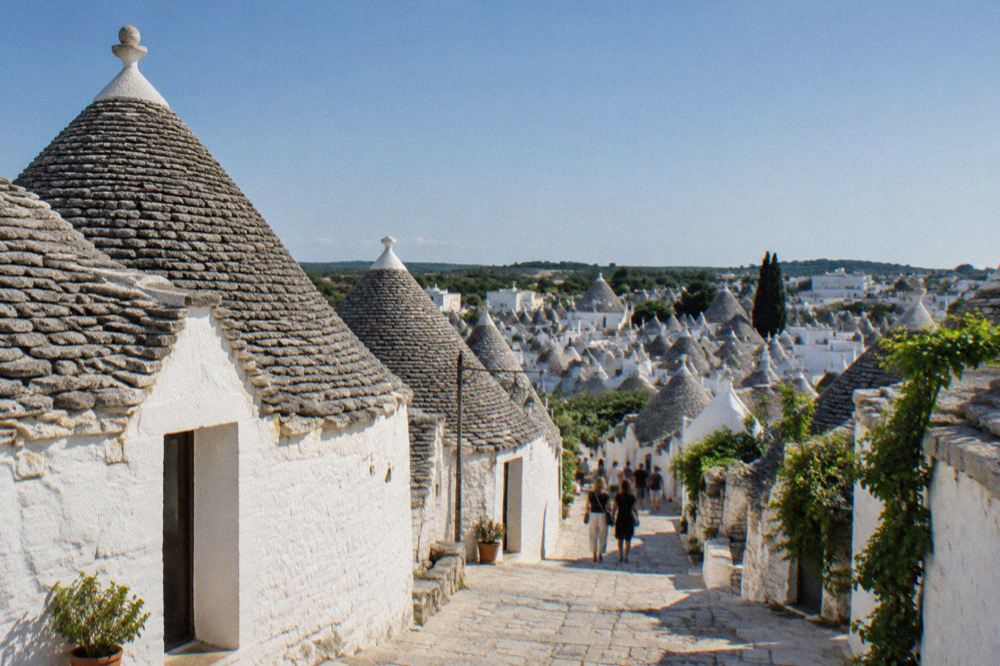
Yes, and it combines naturally, because Matera sits on the regional border: Alberobello is 68 km and about 1 h 23 away by road in Puglia, Altamura is 20 km and about 20 minutes, the Ionian coast at Metaponto is 47 km, and the Adriatic at Polignano a Mare is 100 km. The bread itself is a reason to cross into Puglia, since Altamura, a short drive northeast, is the home of another famous PGI bread of the same southern wheat tradition.
The road distances and times below are computed with an open routing engine over OpenStreetMap, free-flow, without traffic or stops, and they should be read as planning figures rather than promises. Altamura is the obvious companion stop, both as the change point on the FAL railway from Bari and as a bread town in its own right; the Altamura page covers it. A combined bread-and-Sassi itinerary across the regional border is laid out in Puglia and Matera and Matera and Alberobello in one day.
| Destination from Matera | Road km | Free-flow drive time |
|---|---|---|
| Altamura | 20 | 20 min |
| Gravina in Puglia | 30 | 31 min |
| Metaponto | 47 | 52 min |
| Craco | 57 | 58 min |
| Bari Airport | 64 | 1 h 01 |
| Bari | 68 | 1 h 02 |
| Alberobello | 68 | 1 h 23 |
| Castel del Monte | 73 | 1 h 11 |
| Polignano a Mare | 100 | 1 h 29 |
| Lecce | 204 | 3 h 08 |
Remember the regional geography: Matera is in Basilicata, and Alberobello, Polignano a Mare, Bari and Lecce are in Puglia. Two-car-hire practicalities matter for a loop like this: the ZTL cameras described above, and the fact that the Sassi districts are closed to through traffic for most of the day. Longer routes into the region from the north or the Campania side are covered in Rome to Matera and Naples to Matera, and the question of where the city actually sits is answered plainly in where is Matera.
For travellers who would rather not drive, the panoramic rides around Matera and the guided day trips into the hills cover a good share of the same ground. The second selection below gathers the options this site carries, including the featured hike between the two Dolomiti Lucane villages.
What Should You Know Before Booking A Food Trip To Matera?
Before booking a food trip to Matera, know four things: the busiest month is September, not August, so book rooms early; the city is reached by the FAL railway from Bari with a change at Altamura, with no trains on Sundays or public holidays; the Sassi lanes are steep and stepped; and the tourist tax is collected by your accommodation and confirmed at booking. Everything else, from bakery hours to restaurant prices, is best confirmed on the ground.
This site's editorial desk reports what primary sources say and claims no visit, no tasting and no personal verdict on the bread. Where a figure appears on this page it comes from a named, verifiable source: the PGI registration generally dated to 2008 under Regulation CE 160/2008, the APT Basilicata accommodation counts, the ERA5 reanalysis for the 1991-2020 period, the operators' own tariff pages, and routing-engine distances. Where a figure is not verified, such as bakery addresses, restaurant prices, taxi tariffs and the tourist tax rate, the page says so rather than guessing.
For the food traveller, the honest summary is this: the bread of Matera is real, registered, and baked daily in a city whose cave quarters are themselves a World Heritage Site, and the pleasure of the trip is in walking from an oven in the upper town down into the Sassi with a loaf under your arm, then planning the next meal around it. Build the visit around the shoulder months if you can, sleep inside or beside the quarters, and treat the day trips into the Basilicata hills as part of the same food landscape. The rest, from the exact bakery to the exact lunch, is the part worth discovering for yourself.
For everything the city offers beyond the table, start from the things to do in Matera page, and for the year's biggest single event, read up on the Festa della Bruna, held every 2 July, when the bakeries and every other kitchen in the Sassi close for the day and the city gives itself over to its patron feast.
Common Questions About Pane Di Matera
What Is Pane Di Matera?
Pane di Matera is the bread of Matera in Basilicata, protected at European level as a PGI product, a registration generally dated to 2008 under Regulation CE 160/2008. It is baked in and around the city and sold fresh daily in its bakeries.
Is Pane Di Matera A Protected Bread?
Yes. The bread holds protected geographical indication, which ties its name legally to Matera. The registration is attributed softly here as 2008, Regulation CE 160/2008, on a Wikipedia-based source this desk has not re-read on a consortium page.
Where Can You Buy Bread In Matera?
In the bakeries of the upper town and the Sassi quarters. This desk has verified no individual bakery's address, hours or prices, so none is named: follow the ovens in the lanes of Sasso Caveoso and Sasso Barisano and confirm details on the spot.
Is There A Bread Museum In Matera?
Yes, the Museo del Pane, run by the Oltre l'Arte network, open daily 09:00 to 19:00 and included in the network's 25.00 EUR eight-site all-inclusive ticket. All Oltre l'Arte sites close on 25 December and 2 July.
When Is The Best Month To Visit Matera For Food?
Late April to June and September to October suit a food trip. September is the city's busiest month, 61,630 arrivals in 2025 by the APT Basilicata count, so book ahead; November brings 67.1 mm of rain in the ERA5 reanalysis, 1991-2020.
Can You Visit Matera And Alberobello On The Same Trip?
Yes. Alberobello is 68 km and about 1 h 23 by road from Matera, in the neighbouring region of Puglia, and the two are commonly combined on a single day trip or a two-base itinerary.