Matera Sum Ipogeo
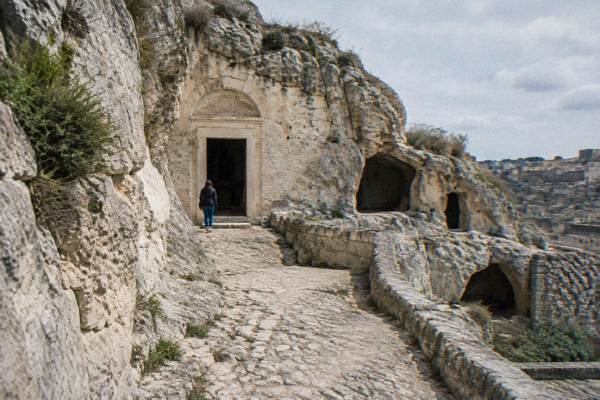
The Matera Sum Ipogeo is one of the underground spaces carved into the limestone of the Sassi of Matera, the UNESCO-listed cave quarters of an inland city in Basilicata, southern Italy.
Short answer
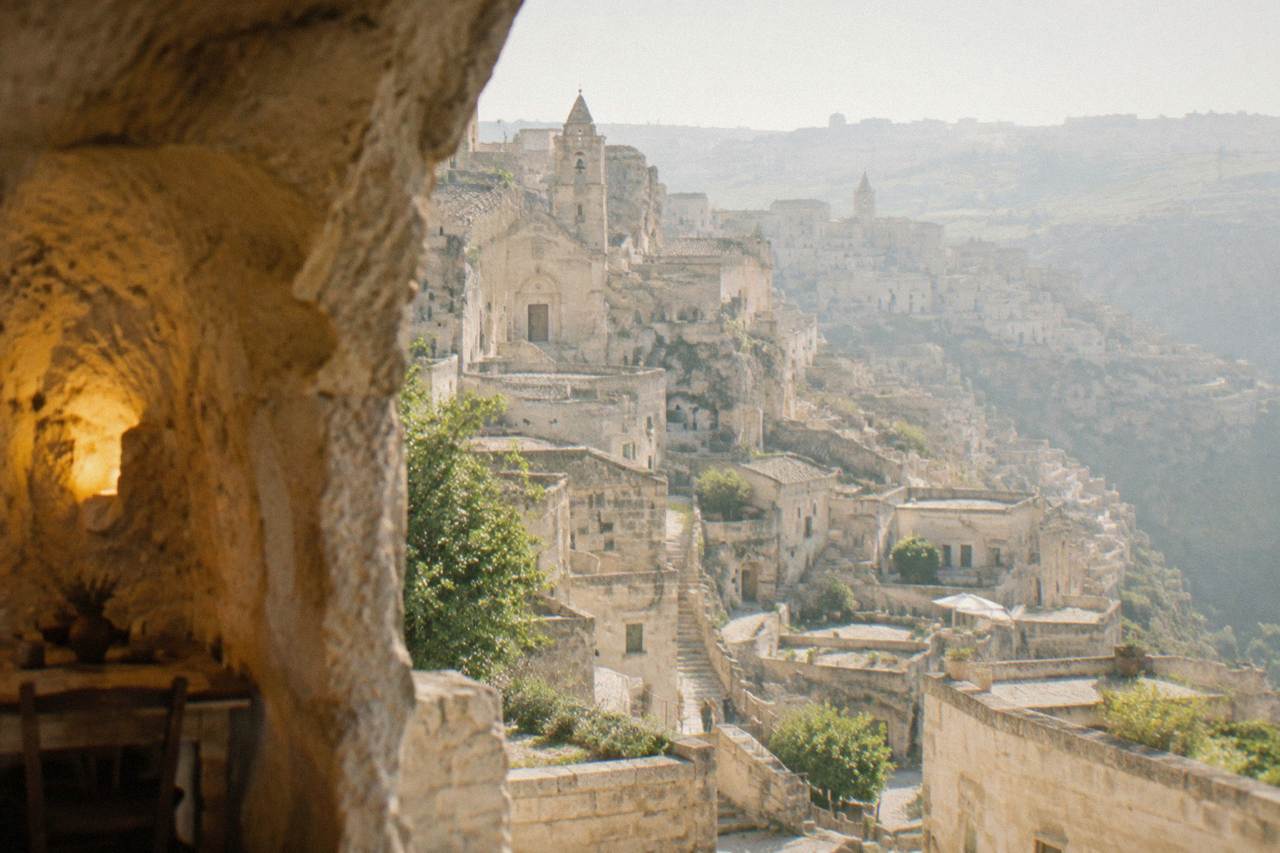
The Matera Sum Ipogeo is a hypogeum, an underground chamber cut into the pale tufa beneath the Sassi of Matera in Basilicata. Matera has no sea and sits at about 400 m above sea level on the Gravina canyon; its underground heritage of cisterns, cellars and grain pits is part of the UNESCO inscription of 1993. Confirm opening details and tickets for the ipogeo directly at booking.
Matera, in the region of Basilicata in southern Italy, is an inland city of about 400 m above sea level on the edge of the Gravina canyon, with the Murgia plateau rising on the far side. There is no sea here; the coast is a day trip. What Matera has instead is depth. The old quarters, the Sassi, are a rock-cut settlement of cave dwellings, stone houses and rupestrian churches hewn into pale tufa limestone, inscribed by UNESCO in 1993 as "The Sassi and the Park of the Rupestrian Churches of Matera" under criteria (iii), (iv) and (v). Beneath the visible city lies a second one: cisterns, cellars, grain stores and stables dug into the same soft rock. The Matera Sum Ipogeo belongs to that underground layer, and this guide sets out what it is, how a visit works, and how to fit it into time in the city. Background on the cave city is in the site's Sassi of Matera guide.
What Is The Matera Sum Ipogeo?
The Matera Sum Ipogeo is an underground hypogeum in Matera, Basilicata: a man-made cavity cut into the tufa limestone beneath and around the Sassi, the cave quarters UNESCO inscribed in 1993. A hypogeum in Matera is typically a water cistern, a cellar, a grain pit or a space reused over centuries, and the ipogei are part of why UNESCO cites the site as a rock-cut settlement with continuity over more than two millennia. Opening hours, price and visit rules for this specific space are confirmed at booking.
The word tells you the shape of the thing. "Ipogeo" comes from the Greek for "under the earth", and in Matera it names any chamber excavated below ground level rather than built above it. The tufa of the Murgia is soft enough to cut with hand tools and stable enough to hold a room for centuries, so the materani dug downward as readily as upward. Rainwater was funnelled into cisterns, grain was stored in sealed pits, wine and oil sat in cool cellars, and livestock was stalled in caves at the base of the dwellings. UNESCO's citation for the Sassi describes "more than a thousand dwellings and a large number of shops and workshops" across a property area of 1,016 hectares, and much of that working infrastructure sat below the living floor.
The underground network is not a curiosity bolted onto the Sassi; it is the reason the Sassi functioned. Water has no easy source on the plateau edge, so the canyon city survived on captured rain and on the large public cistern later known as the Palombaro Lungo, covered in the site's Palombaro Lungo guide. Grain pits, of the kind you see interpreted at the cave-house museums, kept stores dry and cool year round. A visit to any single ipogeo, Matera Sum included, is a visit to that support system.
One caution from this desk: this site's verified facts file carries no independently checked price, timetable or capacity figure for the Matera Sum Ipogeo, so none is printed here. Where a competitor guide quotes one, treat it as unverified. Details of access, guided entry and cost are confirmed with the operator at booking.
Where Is The Matera Sum Ipogeo Inside The Sassi Of Matera?
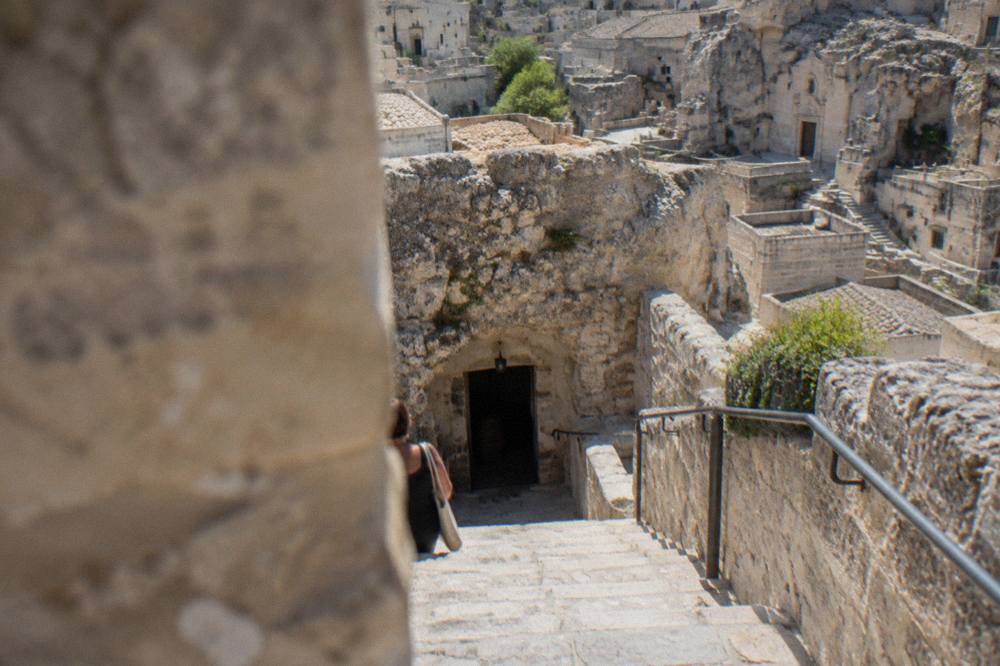
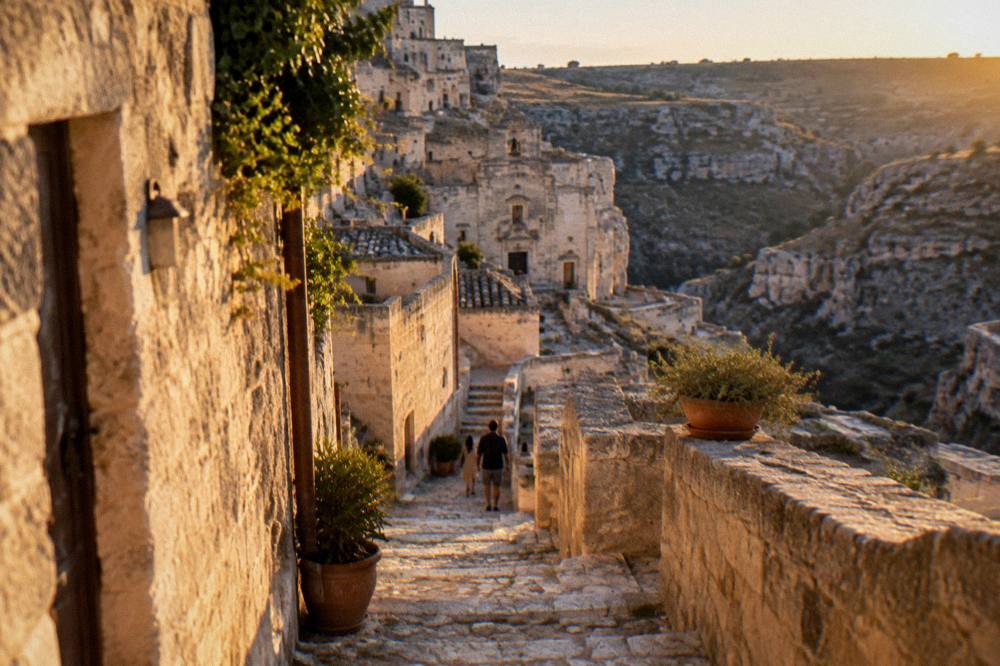
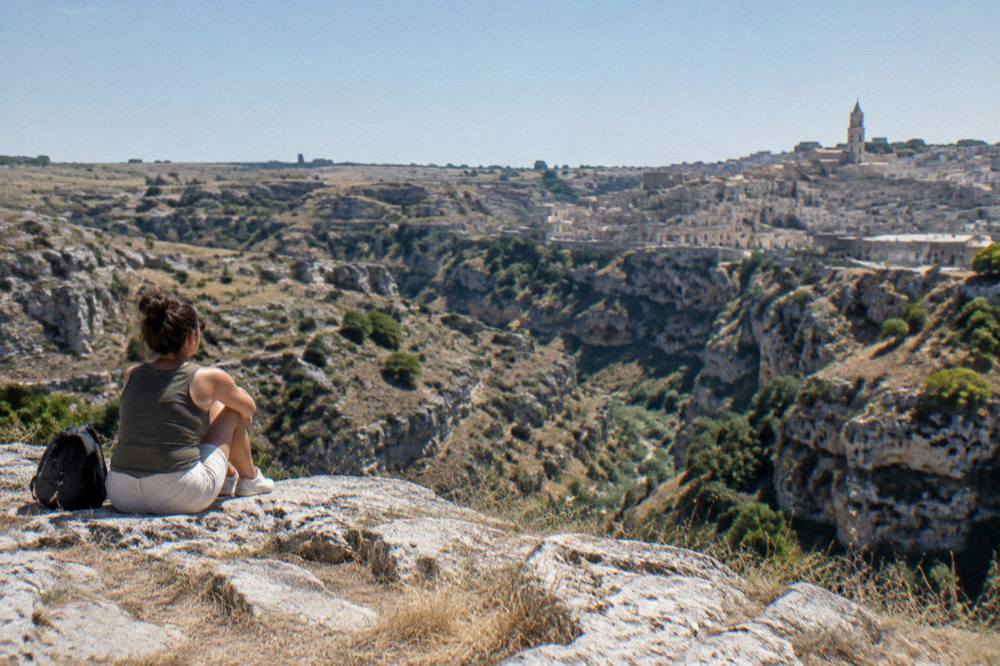
The Matera Sum Ipogeo sits in the Sassi of Matera, the two cave quarters, Sasso Caveoso and Sasso Barisano, that fall from the Civita ridge toward the Gravina canyon. Matera is inland Basilicata, with the Murgia plateau opposite and no coast of its own. The exact street entrance, meeting point and directions for the ipogeo are given by the operator when you book, and the Sassi are steep, stepped and uneven underfoot.
Matera's old core has three parts. The Civita is the fortified ridge at the top, carrying the Cathedral. Sasso Barisano folds down its north-west face; Sasso Caveoso drops to the south-east and faces the open canyon and the Murgia. Barisano was the quarter where facades were built proud over the caves and where workshops and commerce clustered; Caveoso kept a rawer face, with cave dwellings opening straight onto the rock. The two quarters and the plateau opposite were protected together by regional Law 11/1990, which created the Archaeological Historic Natural Park of the Rupestrian Churches, about 8,000 hectares by the park's own count.
| Quarter or zone | Character | Position |
|---|---|---|
| Civita | Cathedral and fortified ridge | Top of the promontory, between the two Sassi |
| Sasso Barisano | Built facades over caves, workshops and commerce | North-west slope |
| Sasso Caveoso | Cave dwellings facing open rock, the Murgia opposite | South-east slope |
| Murgia plateau | Rupestrian churches and the canyon belvedere, a protected park | Opposite bank of the Gravina |
Underground spaces like the Matera Sum Ipogeo exist in both quarters, because both were dug for storage and water as well as shelter. Wayfinding in the Sassi is genuinely three-dimensional: stairways double back, streets become roofs, and a level map is little help. Confirm the ipogeo's entrance point at booking, wear closed shoes with grip, and expect steps.
For orientation before arrival, the site's one day in Matera itinerary sequences the main sights from the Civita down to the canyon edge, and it is a sane frame for slotting an underground visit between a walk and a viewpoint.
Seeing the Sassi whole, from across the Gravina or from the air, is what makes the underground layer legible: you grasp how far the city digs down only when you see its full profile. One way to do that is the balloon flight this site features, which drifts over the canyon and the Sassi at sunrise; details and dates render on the tour's own page, and you can Check availability at the operator's live listing.
How Much Does The Matera Sum Ipogeo Cost To Visit?
This desk has no verified ticket price for the Matera Sum Ipogeo and will not print one; the cost is confirmed with the operator at booking. For orientation, prices for Matera's cave and underground heritage run from 2.00 EUR for a small Oltre l'Arte site to 10.00 EUR for MUSMA or the Museo Nazionale, and 479,083 arrivals were logged in Matera accommodation in 2025, so book underground visits ahead in the busy months.
The comparison table below is built only from prices this site's facts file verified on operators' own pages. It is planning context, not a quote for the ipogeo itself.
| Matera site | Price | Source basis |
|---|---|---|
| Oltre l'Arte rupestrian church, single | 4.50 EUR | Oltre l'Arte ticket page |
| Oltre l'Arte, two churches | 8.00 EUR | Oltre l'Arte ticket page |
| Oltre l'Arte, three churches | 10.00 EUR | Oltre l'Arte ticket page |
| Oltre l'Arte 8-site all-inclusive | 25.00 EUR (reduced 16.00) | Oltre l'Arte ticket page |
| Storica Casa Grotta di Vico Solitario | 8.00 EUR full, 3.00 EUR ages 11 to 18 | Casagrotta tariff from 4 April 2026 |
| Casa Noha (FAI) | 6.50 EUR adults | FAI page |
| MUSMA | 10 EUR full | MUSMA contacts page |
| Museo Nazionale di Matera | 10.00 EUR per site, 15.00 EUR cumulative | Museum ticket page |
Two practical notes on the wider budget. Matera charges a tourist tax collected by your accommodation, and its amount is confirmed at booking rather than printed on this site. And if you plan to visit several Oltre l'Arte sites, the all-inclusive ticket above covers eight of them, which is the arithmetic that usually decides it.
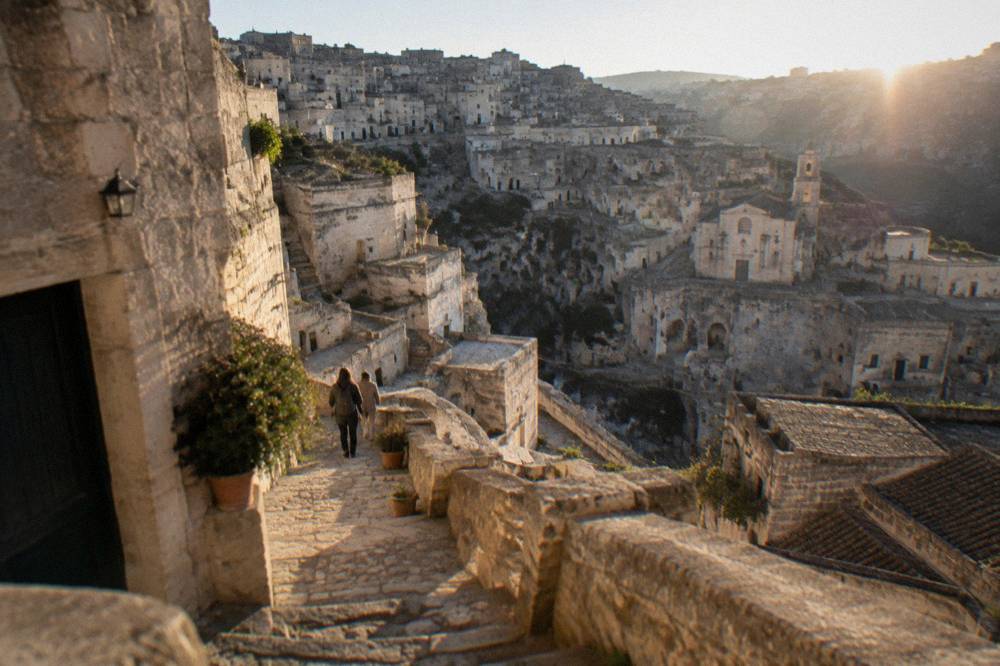
Demand is seasonal in a way that surprises people expecting an August peak. The APT Basilicata accommodation data for 2025 shows September was the busiest month, at 61,630 arrivals, against 60,257 in August and a low of 15,239 in February. Foreign guests were 57.4 percent of the year's arrivals, and 74.5 percent of September's. In that context, any small underground space with limited headcount should be booked ahead from April through October.
What Will You See Inside The Matera Sum Ipogeo?
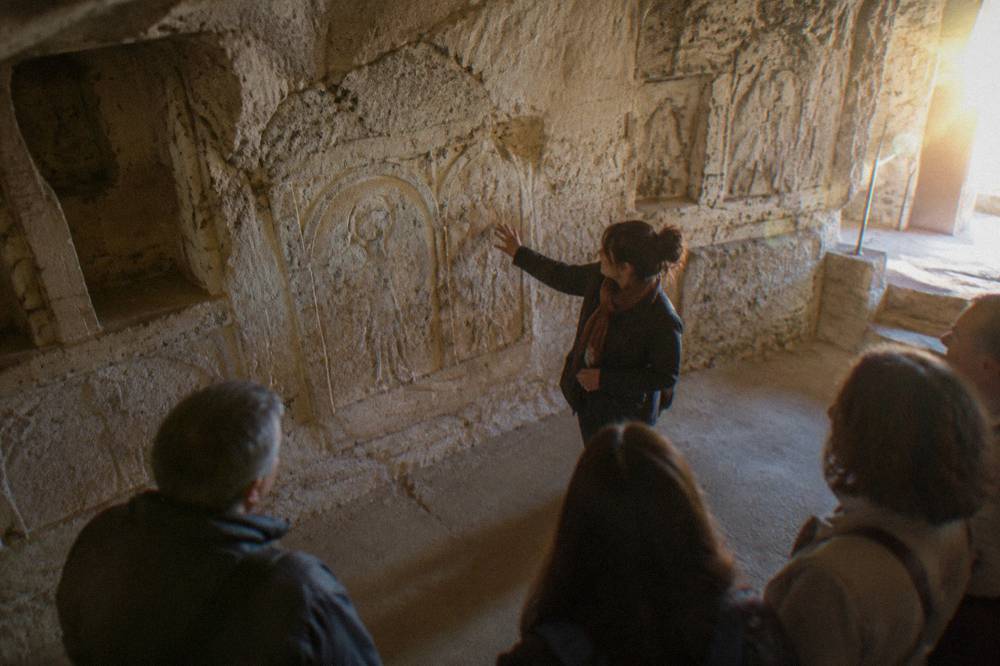
A visit to the Matera Sum Ipogeo means carved tufa: hand-cut walls showing tool marks, vaulted or bell-shaped chambers, and the traces of whatever the space stored, whether water, grain or wine, in a city UNESCO describes as a rock-cut settlement adapted to its ecosystem with continuity over more than two millennia. Exact chambers, lighting and guided content vary, and the operator's listing describes the current visit; no inventory is invented here.
What can be said firmly is what Matera's hypogei generally are, because the archaeology is shared. Cisterns were cut with tapering profiles to keep them stable and plastered with waterproof cistern mortar, and the public system culminated in the Palombaro Lungo beneath Piazza Vittorio Veneto. Grain pits, such as the Neviera-type spaces interpreted at the Casa Grotta, were sealed to keep stores dry. Cellars held wine and oil at a naturally steady temperature; the tufa buffers heat and cold, which is why the same physics that made the caves liveable in summer made them useful for storage year round. The Casa Grotta di Vico Solitario is the place where that domestic system is laid out with signage, ticket in hand.
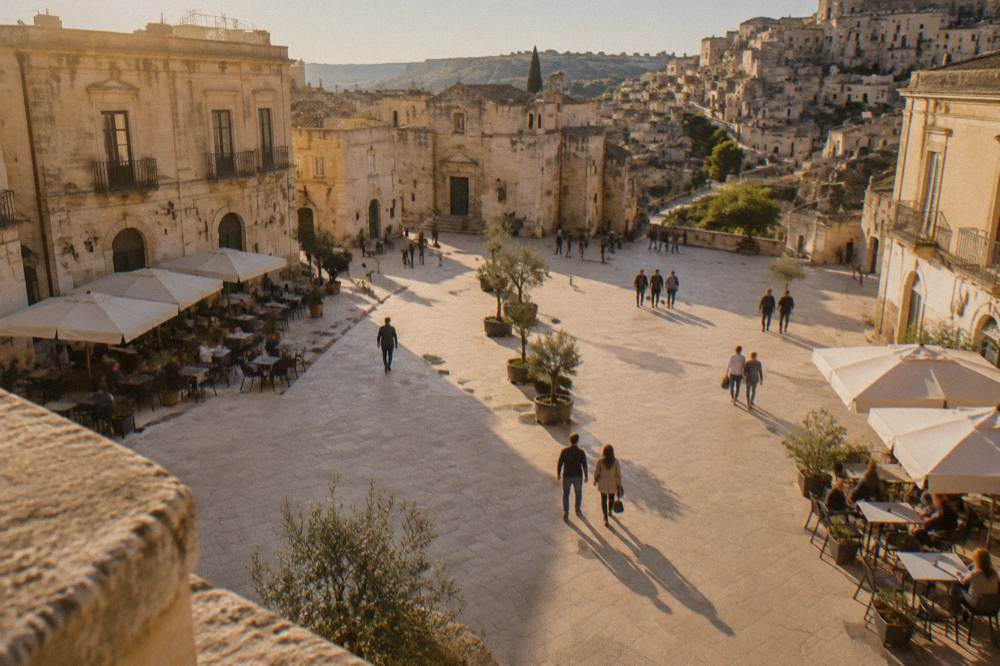
Approach the visit as part of a pair. One cave-house museum shows the lived surface of the Sassi, one ipogeo shows what sat beneath it, and together they explain what a walking tour alone cannot: the water economy of a city with no river and no coast, and the storage economy of a poor quarter that could not afford to lose a harvest. The rupestrian churches, covered in the site's rupestrian churches guide, are the sacred version of the same digging skill, with frescoed interiors cut into the canyon walls.
To see the cave house and the underground layer with a guide, book a Sassi walking tour here.
How Long Does A Visit To The Matera Sum Ipogeo Take?
No verified duration for the Matera Sum Ipogeo itself is printed here; small hypogeum visits in Matera are typically short, and the operator's listing states the current length. Plan the wider day instead: the Sassi walk between Piazza Vittorio Veneto and the canyon edge is compact on the map and slow on foot, because the terrain is stepped and steep.
A practical frame is the APT Basilicata figure for average stay: 1.56 nights per guest in 2025. That means the typical visitor is compressing Matera into a day and a half at most, and an underground visit has to earn its slot. A sequence that works on paper is: the Civita and the Cathedral in the morning, one cave-house museum, then an ipogeo or the cistern, then the canyon belvedere toward sunset. The site's free things to do in Matera guide lists the viewpoints and churches that cost nothing, useful padding around a paid underground slot.
| Month | Mean high °C (ERA5 1991-2020) | Mean low °C | Rain days | 2025 arrivals (APT) |
|---|---|---|---|---|
| Apr | 17.4 | 7.1 | 9.7 | 45,195 |
| May | 22.7 | 11.5 | 7.9 | 54,101 |
| Jun | 28.2 | 16.0 | 6.4 | 50,186 |
| Jul | 31.2 | 18.6 | 4.4 | 43,966 |
| Aug | 31.3 | 18.9 | 4.7 | 60,257 |
| Sep | 25.7 | 15.2 | 7.0 | 61,630 |
| Oct | 20.8 | 11.6 | 7.5 | 52,538 |
| Nov | 15.5 | 7.5 | 8.3 | 23,555 |
The climate column matters for an underground visit in one specific way: an ipogeo holds a steady cool temperature when the mean high outside is 31.3 °C in August, and it feels cold in a Matera November at 15.5 °C mean high with 67.1 mm of rain, the wettest month in the ERA5 1991-2020 reanalysis. Bring a layer in any season. Other pages covering the same trip are gathered on Matera Travel Guide.
Is The Matera Sum Ipogeo Accessible For Visitors With Limited Mobility?
No underground space in the Sassi of Matera is described on this site as step-free or wheelchair accessible, and the Matera Sum Ipogeo is no exception: hypogei are reached by steps and sometimes ladders or narrow passages cut into rock. The Sassi as a whole are steep, stepped and uneven. Confirm the specific access conditions with the operator before booking, and the single European emergency number in Matera is 112.
That bluntness is deliberate. Matera's terrain defeated the camera crews' equipment carts and it defeats wheelchairs in large parts of the two Sassi; stairs are the connective tissue of the quarter. Anyone with limited mobility should plan around the Piano, the modern upper city, which is flat and carries the shops and many hotels, and pick sightseeing from the viewpoints along its edge, including Piazza Vittorio Veneto, which sits directly over the great cistern.
| Matera zone | Terrain | Notes for limited mobility |
|---|---|---|
| Piano (modern city) | Flat | Hotels, shops, viewpoint edges |
| Civita ridge | Mostly level, paved | Cathedral approach |
| Sasso Barisano | Steep, stepped lanes | Some accessible entries at the top edge |
| Sasso Caveoso | Steep, stepped, uneven rock | Hardest terrain; canyon views from the top |
| Murgia plateau opposite | Unpaved paths | Reached by road or tour transfer, not on foot |
Two verified practical details are worth having in your phone. The ZTL Sassi cameras operate 10:00 to 20:30 from 16 September to 30 June and 10:00 to 24:00 from 1 July to 15 September, per the comune's posted hours, so driving to the cave quarters midday is not an option; the ZTL Centro around Via del Corso is active 24 hours. And Matera's 0835 phone district joined the single European emergency number 112 on 2 December 2025.
When Is The Best Time To Visit The Matera Sum Ipogeo And Matera?
The quietest months for Matera are November to February, with 23,555 arrivals in November 2025 and 15,239 in February, against a September peak of 61,630; the ERA5 1991-2020 reanalysis puts November as the wettest month at 67.1 mm and July the driest at 21.2 mm, with July and August mean highs at 31.2 and 31.3 °C. An underground visit suits both extremes: cool in August, dry in November.
The pairing this site's data keeps surfacing is the useful one. July is as hot as August in the reanalysis means, yet July 2025 drew 43,966 arrivals, fewer than April, May, June, August, September or October, so early summer trades heat for thinner crowds. September, the actual peak, combines a 25.7 °C mean high with three in four arrivals from abroad, and October at 52,538 arrivals is nearly as busy with better temperatures. February is the empty month, and the underground sites are the natural bad-weather anchor of a winter visit.
| Season | Crowds (APT 2025) | Weather (ERA5 1991-2020) | Best for |
|---|---|---|---|
| Spring (Apr to Jun) | Rising, 45,195 to 54,101 arrivals | Mean highs 17.4 to 28.2 °C | Walking and everything outdoors |
| July | Quieter than June, 43,966 | 31.2 °C mean high, 4.4 rain days | Early starts, ipogei at midday |
| August | Busy, 60,257 | 31.3 °C mean high | Italians dominate (53.2 percent) |
| September | Peak, 61,630 | 25.7 °C mean high | Book everything ahead |
| Winter (Nov to Feb) | Low, 15,239 to 30,385 | 5.9 °C January mean, frost nights | Museums, ipogei, Presepe Vivente in December |
December carries one event that reshapes the Sassi: the Presepe Vivente, the living nativity whose sixteenth edition, titled "Vera Fratellanza", runs public days on 5-6, 12-13, 19-20, 26-27 December 2026 and 2-3 January 2027, with tickets at 12.00 EUR full, 9.00 EUR ages 10 to 18 and free under 10, per the organisers' own site. Its route runs from Piazza San Pietro Caveoso through Vico Solitario, Rione Malve and Casalnuovo, straight through the lanes an ipogeo visit uses.
What Else To See Near The Matera Sum Ipogeo?
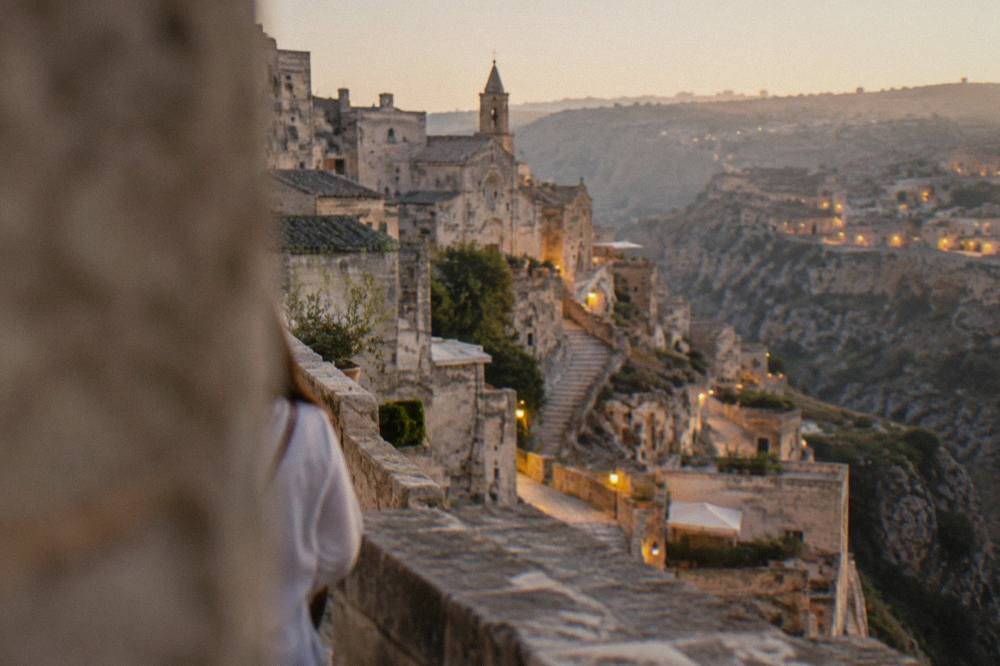
Around the Matera Sum Ipogeo the Sassi offer the Storica Casa Grotta di Vico Solitario at 8.00 EUR, the three Oltre l'Arte rupestrian churches from 4.50 EUR each, MUSMA at 10 EUR and the great cistern of Palombaro Lungo beneath Piazza Vittorio Veneto, all within walking distance of one another, plus the Murgia belvederes across the canyon reached by road. Two closures matter: Museo Ridola has been shut since 7 April 2025 and Casa Noha closed 5 to 22 October 2026.
Build the underground spine first. Palombaro Lungo is the monumental end of the water story; the ipogei and the Casa Grotta are its domestic end. Note that this desk holds no verified price or timetable for Palombaro Lungo, so confirm it locally. The Casa Grotta di Vico Solitario's tariff, in force from 4 April 2026, is 8.00 EUR full, 5.00 EUR reduced and 3.00 EUR for ages 11 to 18, free to age 10, and the ticket covers the cave house, the Neviera, a natural cave and the rock church of Sant'Agostino al Casalnuovo, which makes it four stops in one.
| Nearby site | Verified detail | Walking from the Sassi |
|---|---|---|
| Casa Grotta di Vico Solitario | 8.00 EUR, tariff from 4 April 2026 | Inside Sasso Caveoso |
| Santa Lucia alle Malve | 4.50 EUR single church | Sasso Caveoso |
| Madonna de Idris and San Giovanni in Monterrone | 8.00 EUR for two churches | Sasso Caveoso |
| MUSMA | 10 EUR, 10:00 to 20:00 April to September | Sasso Caveoso edge |
| Palazzo Lanfranchi | 10.00 EUR, open 09:00 to 20:00 daily | Above Sasso Caveoso |
| Palombaro Lungo | Price and hours unverified, confirm locally | Piazza Vittorio Veneto |
Oltre l'Arte, which runs the three main rupestrian churches, closes all its sites on 25 December and 2 July, the Festa della Bruna, Matera's patronal feast fixed on 2 July since 1389 by the organisers' own history. If your trip touches that date, the city is given over to the procession and the float, and church tickets are off the table that day anyway.
Beyond the city, the same digging culture produced the Crypt of the Original Sin, 13 km from Matera Centrale, where booking an e-ticket at least 90 minutes ahead is mandatory and slots cap at 20 people. Alberobello, 68 km away in Puglia, pairs with Matera on many itineraries; this site's Matera and Alberobello in one day guide covers the sequencing. A private-transfer tour of Alberobello from Matera is one of the options this site lists.
For sunset, the Murgia side of the canyon gives the classic view back over the Sassi; a guided sunset walk with transfer from Matera is another listed option, and the trail network there now includes the managed Sentiero 406 with its suspension bridge over the Gravina, accessed since March 2026 through a staffed point with an online access ticket whose settled price this site does not print.
The Matera Sum Ipogeo earns its slot because it explains the layer of Matera that the postcards leave out: the dug city beneath the built one. Pair it with a cave house and a cistern, book ahead between April and October, and carry a layer for the cool of the rock.
Common Questions About The Matera Sum Ipogeo
What is the Matera Sum Ipogeo?
It is an underground hypogeum in Matera, Basilicata: a chamber cut into the tufa limestone of the Sassi, part of the cave city's network of cisterns, cellars and grain pits that UNESCO cited when inscribing the Sassi and the Park of the Rupestrian Churches in 1993.
How much does the Matera Sum Ipogeo cost?
This site has no verified price for it and does not print one; the cost is confirmed with the operator at booking. For orientation, Matera's cave and underground tickets run from 2.00 EUR for a small Oltre l'Arte site to 10.00 EUR for MUSMA or the Museo Nazionale.
Is the Matera Sum Ipogeo in the Sassi of Matera?
Yes, it belongs to the Sassi, the two cave quarters, Sasso Caveoso and Sasso Barisano, that slope from the Civita ridge to the Gravina canyon. The exact entrance and meeting point are confirmed at booking.
Is the Matera Sum Ipogeo accessible?
No underground space in the Sassi is described on this site as step-free or wheelchair accessible. Hypogei are reached by steps and narrow rock passages; the Sassi are steep and uneven. Confirm access conditions with the operator before booking, and note the emergency number in Matera is 112.
When is the best time to visit the Matera Sum Ipogeo?
Crowds peak in September, 61,630 arrivals in 2025, and drop to 15,239 in February. An ipogeo is naturally cool, so it works at the August mean high of 31.3 °C and in the November rain, the wettest month in the ERA5 1991-2020 reanalysis at 67.1 mm.
What else is near the Matera Sum Ipogeo?
The Casa Grotta di Vico Solitario at 8.00 EUR, the three Oltre l'Arte rupestrian churches from 4.50 EUR, MUSMA at 10 EUR, Palazzo Lanfranchi at 10.00 EUR and the Palombaro Lungo cistern are all within the Sassi and the upper Piano, all walkable from one another.