Free Things To Do In Matera
Matera, in Basilicata, southern Italy, gives away its biggest sight for nothing: the Sassi themselves. This guide lists what is genuinely free, what carries a verified ticket price, and where the two meet.
Short answer
The Sassi districts, the viewpoints over the Gravina canyon, Piazza Vittorio Veneto, the public squares and the park trails are all free. Only entry to specific cave churches, museums and managed sites carries a ticket, from 2.00 EUR at a small cave house up to 25.00 EUR for an 8-site pass.
Matera, an inland city in Basilicata, southern Italy, sits at about 400 m above sea level on the edge of the Gravina canyon, and the single thing people travel here for, the Sassi cave districts themselves, charges no admission. The city's paid sights are interiors: cave churches, museums and cave houses. Everything around them, the stairways, the canyon rims, the plateau opposite, the public squares, is open space. This page from the Matera Travel Guide editorial desk separates the two, with verified ticket prices for the paid sights so the line is never fuzzy. A fuller rundown of paid and free activities together lives on the main things to do page.
What Can You Actually Do In Matera For Free?
You can walk both Sassi districts end to end, stand on every public viewpoint over the Gravina canyon, cross Piazza Vittorio Veneto, climb to the Civita and the Piano, follow the film-location spots and hike open park trails, all without a ticket. The free side of Matera is the city itself. What costs money is entry to specific interiors: the rupestrian churches, the museums, the cave houses and the managed park sites. Roughly a full day of the typical visit happens outdoors, and none of it needs a booking.
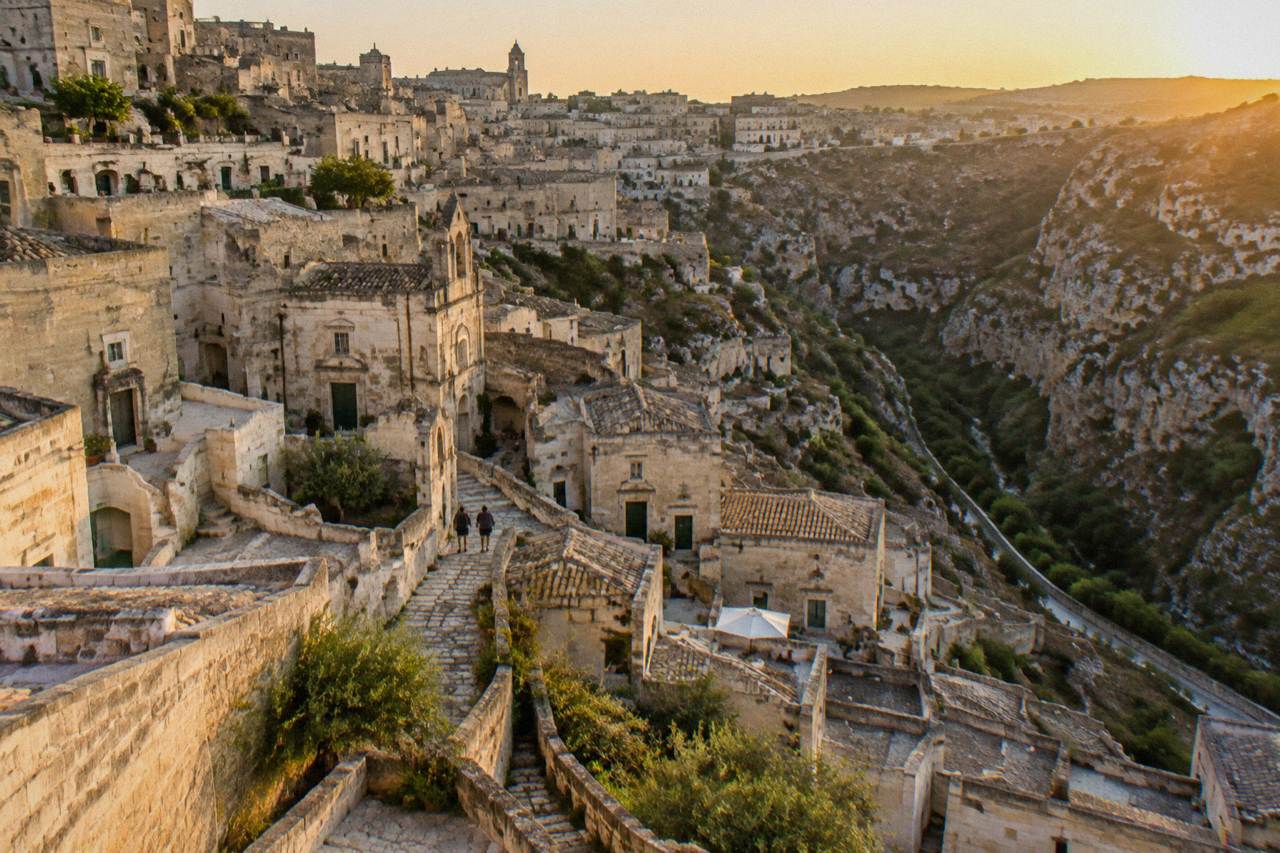
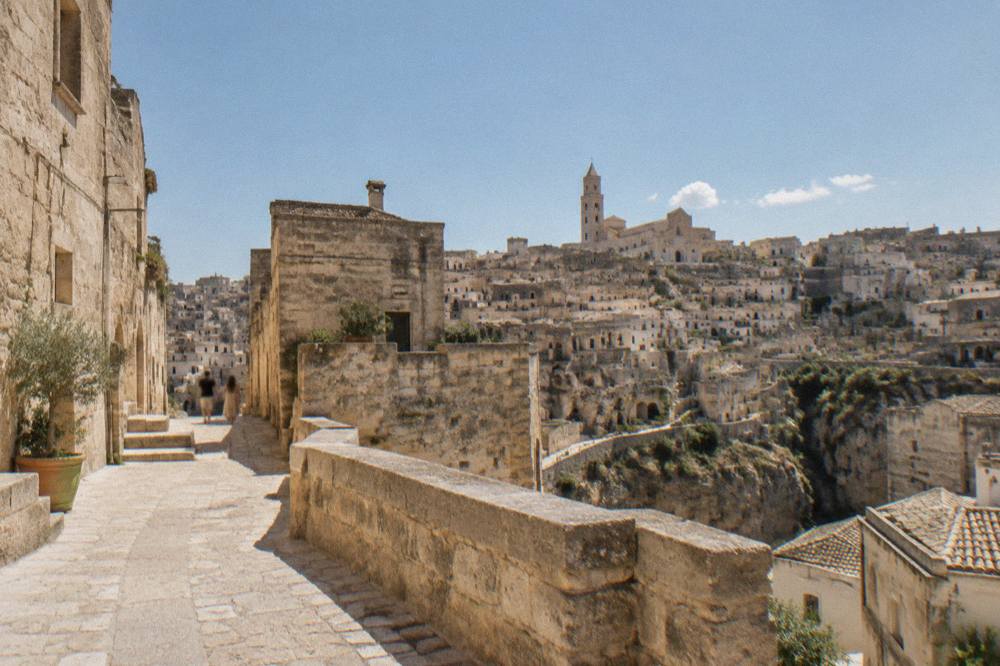
The Sassi are two districts, Sasso Caveoso and Sasso Barisano, cut into pale tufa limestone below the modern city. There is no gate, no fence and no ticket booth at any entrance. Streets like Vico Solitario, Via Fiorentini and the stairways down from Piazza San Pietro Caveoso are public highways. The history of the districts explains why residents were moved out between 1952 and the 1970s and how a 1986 law opened restoration, which is the reason the quarter reads as it does today.
What the free walk does not include is going inside. The rupestrian churches run by Oltre l'Arte, the cave house museums and MUSMA all sell tickets, and their prices are listed further down this page so you can see exactly where the free city ends and the paid one begins.
Which Free Viewpoints In Matera Give The Best Look At The Sassi?
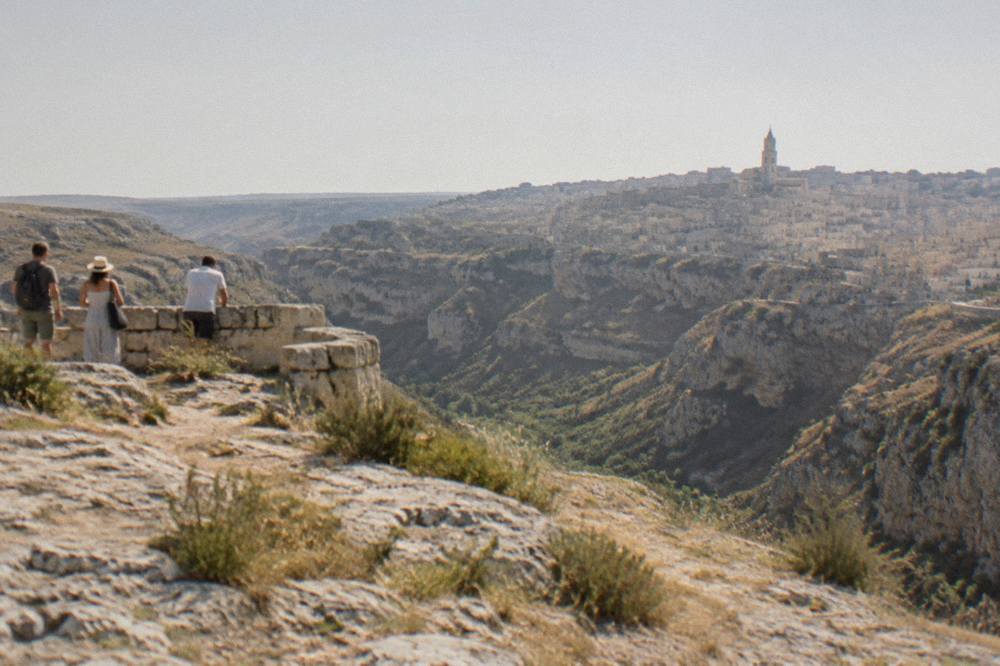
The free viewpoints are Piazza Vittorio Veneto and the pedestrian edge above the canyon, the terrace of Piazza San Pietro Caveoso, the balconies along Via Madonna delle Virtù, and the Belvedere Murgia Timone on the plateau opposite, reached on foot from Jazzo Gattini. All of them look at the same UNESCO-inscribed cave landscape from different angles, and none charges a fee for standing there. The classic postcard shot, the one with the whole ravine face of the Sassi under the Murgia, is taken from the plateau side.
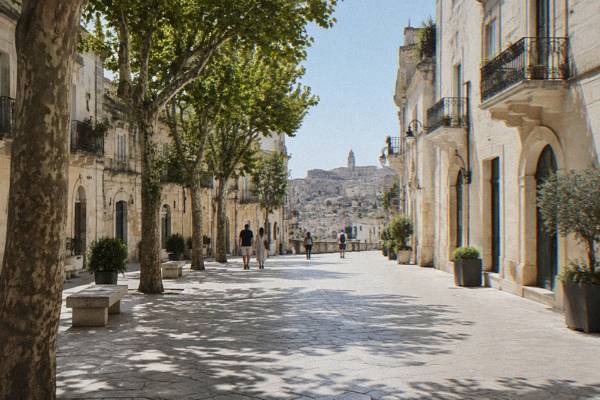
Piazza Vittorio Veneto is the easiest of them. The square is a pedestrian area closed to vehicles all day, per the comune's posted rules, and its southern edge sits directly over the Sasso Barisano and the canyon beyond. From there the route descends into the districts, which is where the free part of Matera gets physical: the Sassi are steep, stepped and uneven, and no route down should be treated as flat.
Across the canyon, the Murgia plateau is a regional park. The park's own site states it covers about 8,000 hectares by its own count, with 923 plant species. The Jazzo Gattini visitor centre has been the park's info point and ticket office since 6 February 2026 under a new concession, and it controls access towards Murgia Timone. One piece of the park is no longer free: Sentiero 406, the path with the suspension bridge over the Gravina, has had a staffed access point and an online access ticket since March 2026, and the park has not settled a single published price between its own ticket page and press figures, so confirm the cost at booking. The Belvedere Murgia Timone guide style logistics are covered elsewhere on this site.
Is Walking Through The Sassi Di Matera Really Free?
Yes, the entire street network of the Sassi is public and free, in both Sasso Caveoso and Sasso Barisano, at any hour. There is no Sassi entry fee and no visitor cap enacted. The mayor spoke in April 2026 of a "tourism package" that might raise the tourist tax and add a coach charge, but no figure and no date exist, so nothing has changed for a visitor walking in on foot today. Tickets apply only when a door opens into a church interior or a museum.
That distinction is worth repeating because confusion about it is common. The cave churches of Matera and their interiors are ticketed, the cave face they are cut into is not. The Storica Casa Grotta di Vico Solitario charges for its interior, the lane named Vico Solitario is a public street you can photograph freely.
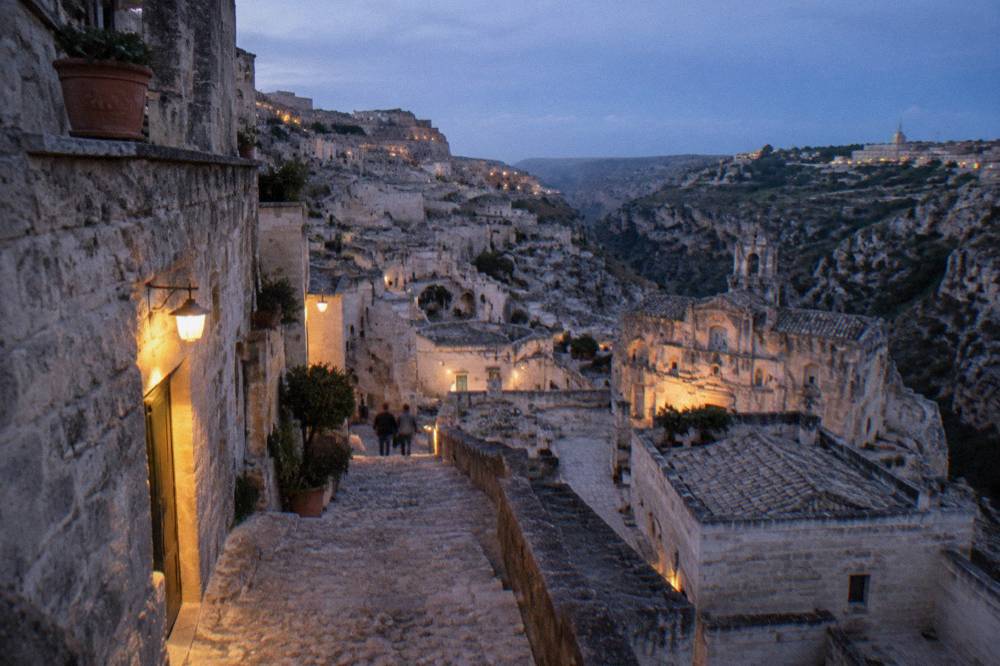
A reasonable free circuit runs from Piazza Vittorio Veneto down through Sasso Barisano, across to the Civita, the high ridge between the two districts where the Cathedral stands, and down into Sasso Caveoso to Piazza San Pietro Caveoso. The Cathedral's exterior, its piazza and the view south from there cost nothing; entry to the Cathedral and the MATA museum together is 4.00 EUR on Oltre l'Arte's posted tariff, with tourist visits pausing on Sundays and solemnities from 10:00 to 12:30.
For anyone who wants structure rather than self-direction, tip-based walks run locally; confirm arrangements directly with the guide, as this site does not list them. A free walking tour option is covered separately on this site.
Which Matera Sights Cost Money, And Which Are Free?
The free sights are all outdoors: the Sassi streets, the viewpoints, the public squares and the open park. The paid sights are interiors, and their prices run from 2.00 EUR for the Casa Grotta di Via Fiorentini to 25.00 EUR for Oltre l'Arte's 8-site all-inclusive ticket, with single cave churches at 4.50 EUR, the Casa Grotta di Vico Solitario at 8.00 EUR, MUSMA at 10.00 EUR and the Museo Nazionale sites at 10.00 EUR each.
The table below is the full verified picture, read from each operator's own tariff page. Anything not on it has no readable official price, and this site will not print a guess.
| Sight | Entry | Verified price |
|---|---|---|
| Sassi street network, both districts | Outdoor, public | Free |
| Piazza Vittorio Veneto, canyon edge | Outdoor, pedestrian area | Free |
| Belvedere Murgia Timone terrace | Outdoor, park | Free to stand at; access controlled via Jazzo Gattini |
| Oltre l'Arte rupestrian church, 1 site | Interior | 4.50 EUR |
| Oltre l'Arte rupestrian churches, 3 sites | Interiors | 10.00 EUR |
| Cathedral and MATA combined | Interiors | 4.00 EUR |
| Oltre l'Arte 8-site all-inclusive | Interiors | 25.00 EUR, reduced 16.00 EUR |
| Storica Casa Grotta di Vico Solitario | Interior | 8.00 EUR full, 5.00 EUR reduced, free to age 10 |
| MUSMA sculpture museum | Interior | 10.00 EUR full, 5.00 or 7.00 EUR reduced |
| Museo Nazionale di Matera, per site | Interior | 10.00 EUR, under 18 free |
| Museo Nazionale cumulative, 2 days | Interiors | 15.00 EUR |
Two caveats from the operators' own pages. All Oltre l'Arte sites close on 25 December and 2 July, the Festa della Bruna. And the Museo Archeologico Nazionale Domenico Ridola has been closed since 7 April 2025 for energy works and a new display, with no reopening date published, so its 10.00 EUR tariff is theoretical until the museum says otherwise.
When Is The Free Side Of Matera At Its Best?
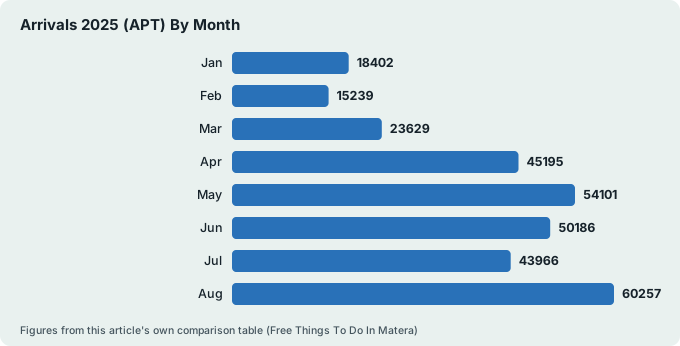
September is the busiest month on the APT Basilicata accommodation count, 61,630 arrivals in 2025 against 60,257 in August, and February the quietest at 15,239, so the free outdoor city is calmest from November to March, when the ERA5 reanalysis 1991-2020 gives mean highs of 14.1 to 15.5 C and the most rain of the year falls in November, 67.1 mm. The crowds thin long before the temperature does.
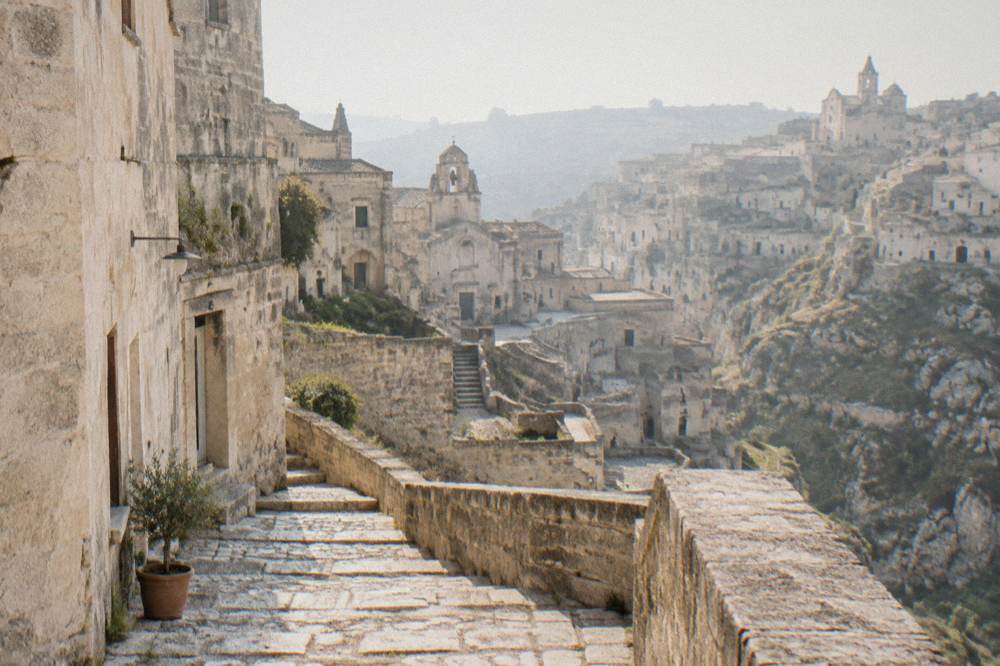
The pairing worth knowing: July and August have nearly identical mean highs, 31.2 and 31.3 C on the ERA5 reanalysis 1991-2020, yet July 2025 drew only 43,966 arrivals, fewer than April, May, June, August, September or October. The APT data also shows 57.4% of 2025 arrivals came from abroad, peaking at 74.5% in September. In practical terms, early mornings in the Sassi are quiet in every month, and the whole free city is at its emptiest in the November-to-February window, frost and all: about 20 frost days a year, nearly all December to March. Full figures are in the Matera weather guide and the month-by-month breakdown in the best time to visit guide.
| Month | Mean high C (ERA5 1991-2020) | Rain mm | Arrivals 2025 (APT) |
|---|---|---|---|
| Jan | 10.3 | 51.4 | 18,402 |
| Feb | 11.1 | 54.9 | 15,239 |
| Mar | 14.1 | 59.2 | 23,629 |
| Apr | 17.4 | 56.5 | 45,195 |
| May | 22.7 | 41.7 | 54,101 |
| Jun | 28.2 | 35.1 | 50,186 |
| Jul | 31.2 | 21.2 | 43,966 |
| Aug | 31.3 | 21.7 | 60,257 |
| Sep | 25.7 | 44.8 | 61,630 |
| Oct | 20.8 | 51.7 | 52,538 |
| Nov | 15.5 | 67.1 | 23,555 |
| Dec | 11.2 | 57.2 | 30,385 |
Can You Visit Matera's Rock Churches For Free?
You can see dozens of rupestrian church facades from public ground for free, since the churches are cut into open canyon walls, but going inside the three Oltre l'Arte churches, Santa Lucia alle Malve, Madonna de Idris with San Giovanni in Monterrone and San Pietro Barisano, costs from 4.50 EUR for one church to 10.00 EUR for all three on the tariff in force from 28 March 2026. There is no free interior access to these sites, apart from children up to 10 with a parent, who enter free.
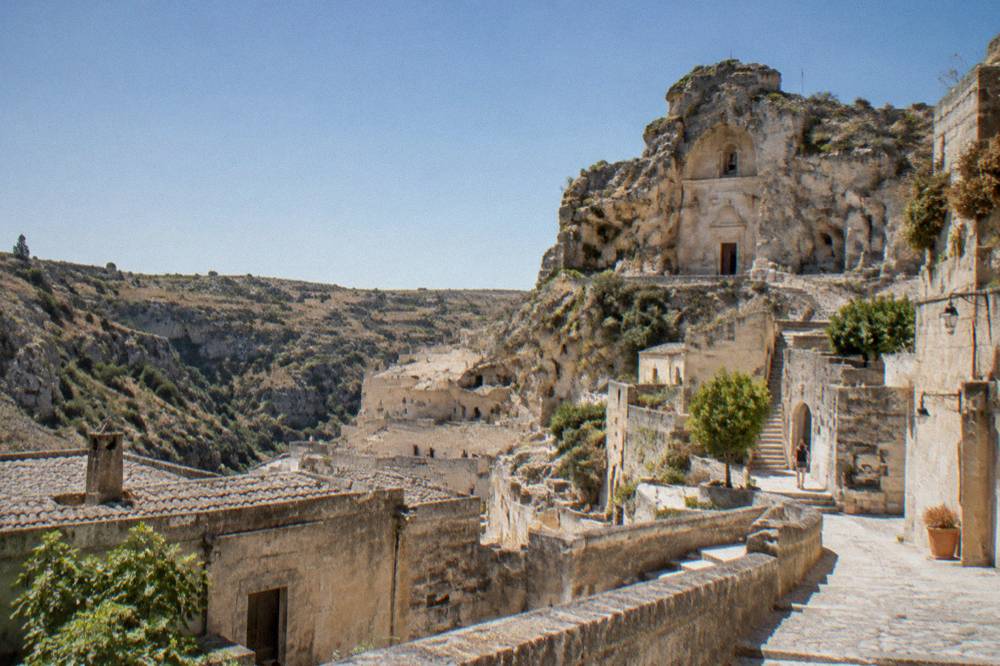
The distinction matters because the facades themselves are the free show. From the canyon rim and from points inside the Sassi, the church openings, their carved arches and the cave mouths around them are visible at no cost, and photographing them from public streets is unrestricted. The paid product is the painted interior behind the door.
Oltre l'Arte's ticket page also lists a licensed-guide rate, 2.50 EUR for one church rising to 5.00 EUR for three, for visitors who arrive with their own guide, and a reduced tariff for disabled visitors, groups of 20 or more and FAI members. Hours from 28 March 2026 run daily 09:30 to 19:30 for Santa Lucia alle Malve and Madonna de Idris, and 10:00 to 19:00 for San Pietro Barisano, with last entries 10 or 20 minutes before closing.
What Free Events And Public Moments Does Matera Offer?
The fixed free public moments are the Festa della Bruna on 2 July every year, the city's patronal feast dated by its organisers to 1389, and the public days of the Presepe Vivente nei Sassi in late December and early January, though the Presepe itself is ticketed at 12.00 EUR full and 9.00 EUR for ages 10 to 18, with under 10s free. Watching the Bruna procession in the streets is a public street event; the Presepe's route through Sasso Caveoso is a ticketed production.
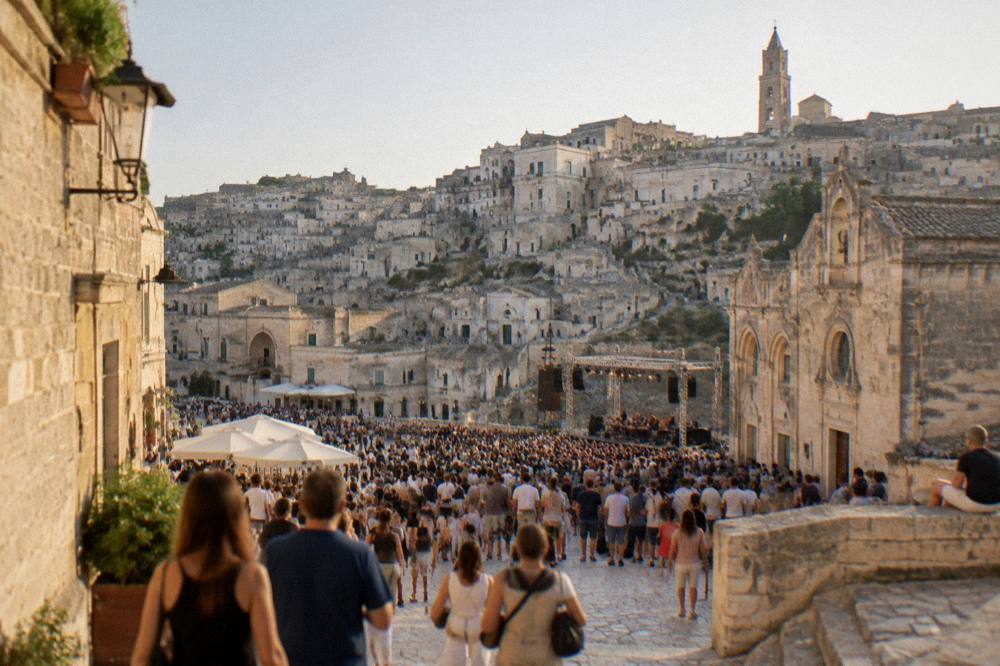
The 2026 calendar adds free-to-witness cultural moments. The Matera Film Festival runs 7 to 15 November 2026, its seventh edition, twinned with Tétouan. The exhibition "The Sea Is Closer Than You See" runs to 8 December 2026 across Palazzo Lanfranchi, TAM, MUSMA and the Basilicata Open Space, though museum entry rules apply inside each venue. The Matera 2026 Mediterranean Capital of Culture and Dialogue programme, coordinated by the Fondazione Matera-Basilicata 2019, closes on 28 November 2026 by the reported schedule. The Festa della Bruna guide covers the July feast in detail.
| Event | Date | Cost to watch |
|---|---|---|
| Festa della Bruna | 2 July, every year | Public street feast; no fee to watch |
| Matera Film Festival, 7th edition | 7 to 15 November 2026 | Programme-specific |
| The Sea Is Closer Than You See | To 8 December 2026 | Venue entry rules apply |
| Presepe Vivente, public days | 5-6, 12-13, 19-20, 26-27 Dec 2026, 2-3 Jan 2027 | 12.00 EUR full, under 10 free |
| Gezziamoci jazz festival, 39th edition | To 29 December 2026 | Venue-specific |
Can You Follow The Matera Film Locations For Free?
Yes, every film location in Matera is a public outdoor spot and following them costs nothing, because the productions shot in the streets, squares and canyon faces rather than inside ticketed buildings. The verified list from the official Basilicata tourism and film commission pages runs from Pasolini's The Gospel According to St. Matthew in 1964 through The Passion of the Christ in 2004, Wonder Woman in 2017 and No Time to Die in 2021. The James Bond walk is a free itinerary by definition.
The titles named on the official pages are: The Gospel According to St. Matthew (1964), C'era una volta (1967), King David (1985), The Night Sun (1990), The Passion of the Christ (2004), The Nativity Story (2006), The Omen (2006), Wonder Woman (2017), No Time to Die (2021) and the TV series Imma Tataranni, Sostituto procuratore from 2019. This site does not print scene-by-scene addresses, since those specifics rest on unconfirmed sourcing, but the James Bond locations guide covers what is verified. A themed guided walk also exists as a paid product if you would rather have the stories attached.
For a self-guided version, pair the locations walk with the viewpoints above: the canyon face, the Sasso Caveoso lanes and the plateau rim between them cover nearly everything the cameras used.
What Free Walking Routes Work Around Matera?
The free walking routes are the Sassi circuit between the two districts via the Civita, the canyon-rim walk from Piazza Vittorio Veneto, and the open park paths on the Murgia plateau reached from Jazzo Gattini, all public and unticketed, with one exception: Sentiero 406 with its suspension bridge over the Gravina, which has required a staffed, ticketed access since March 2026. Park conduct rules apply to ticketed paths, and the park lists them on its own site.
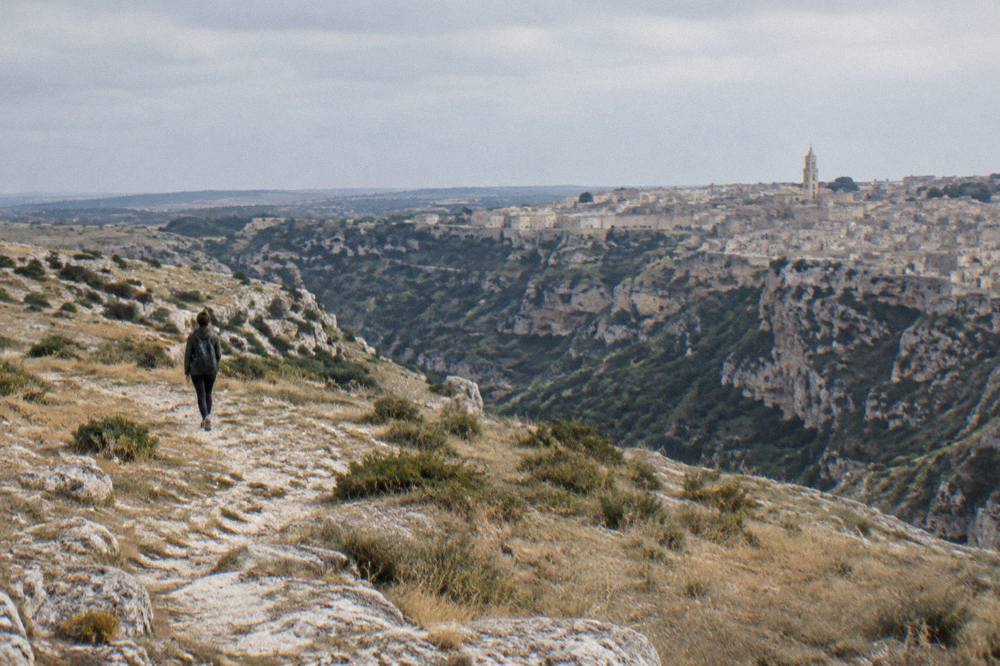
Terrain is the honest caveat on every route. The Sassi are steep, stepped and uneven underfoot, and no named route in this city should be described as step-free or wheelchair accessible. Footwear matters more than a map. The free trails are covered in more depth in the hiking guide section of this site's outdoor coverage, and the caves explainer separates the natural caves from the dug dwellings, which most first-time visitors conflate.
| Free route | Terrain | Notes |
|---|---|---|
| Sassi circuit, Barisano to Caveoso via Civita | Stepped, uneven | Public streets, no ticket |
| Piazza Vittorio Veneto canyon rim | Flat, pedestrian | Square closed to vehicles all day |
| Piazza San Pietro Caveoso terrace | Stepped access | Free view over Sasso Caveoso |
| Murgia plateau paths from Jazzo Gattini | Rocky trails | Info point active since 6 February 2026 |
| Sentiero 406 with suspension bridge | Rocky, exposed | Ticketed access, price confirmed at booking |
If you base yourself in the districts rather than day-tripping in, the free evenings matter as much as the free days: the Sasso face is lit at night and the terraces above it stay public. The where to stay guide and the cave hotels roundup cover that side.
Does Getting To The Free Sights In Matera Cost Anything?
Arriving is the one part of a free day that always costs something, though nothing on this page prints an unverified fare: the FAL train from Bari takes about 1 h 45 to 2 h with a change at Altamura and sits in fare band 70 in the 2026 matrix, no trains run on Sundays and public holidays, and driving from Bari Airport covers about 64 km in around an hour free-flow, after which parking rules, not petrol, are the real cost. The ZTL camera hours are published and unforgiving.
The ZTL Sassi cameras run 10:00 to 20:30 from 16 September to 30 June and 10:00 to 24:00 from 1 July to 15 September, weekdays and holidays alike, under ordinances 147 and 148/2025. ZTL Centro, covering Via del Corso, Via Duomo and Piazza Sedile among others, is active 24 hours a day. Public car park tariffs are not verified by any official page this site could read, so confirm locally. The ZTL guide and the parking coverage carry the detail, and the getting to Matera routes cover the rail side.
One more cost that is never zero: Matera charges a tourist tax collected by the accommodation, and its amount is confirmed at booking, not on this site, because no official tariff page could be verified.
How Do You Build A Full Free Day In Matera?
Start at Piazza Vittorio Veneto before the tour groups, descend through Sasso Barisano while the lanes are empty, cross the Civita past the Cathedral exterior, drop into Sasso Caveoso to Piazza San Pietro Caveoso, then choose: either the canyon rim for the close view or the climb to Jazzo Gattini and the plateau for the far one, and finish back on a terrace for the lit Sasso face after dark. Every step of that day is free; only a church interior or a cave house, if you add one, breaks the zero.
For a second day at no cost, the park paths, the film-location walk and the December public spaces fill it. For a paid contrast, the related option below pairs Matera with Alberobello across the region, a day trip that covers ground no free walk can, since Alberobello is 68 road-km from Matera, about 1 h 23 free-flow. Check availability if that split of free city and guided day suits your plans.
Common Questions About Free Things To Do In Matera
Is it free to walk around the Sassi in Matera?
Yes. Both Sassi districts are public street networks with no gate or ticket. Only interiors, such as the cave churches and cave house museums, charge entry.
Is the viewpoint over the Sassi free?
The classic viewpoints, Piazza Vittorio Veneto, Piazza San Pietro Caveoso and the Belvedere Murgia Timone terrace, are free to stand at. Access on the plateau side passes the park's Jazzo Gattini visitor centre, active since February 2026.
Can you enter Matera's rock churches for free?
The three Oltre l'Arte churches charge from 4.50 EUR for one to 10.00 EUR for three. Children up to 10 with a parent enter free. The facades, seen from public ground, cost nothing.
Is the walk to the Tibetan bridge in Matera free?
No. Sentiero 406 has had a staffed access point and an online access ticket since March 2026. The price is not settled publicly, so confirm at booking on the park's ticket page.
What is the best free thing to do in Matera?
The free city itself: the Sassi streets, the canyon viewpoints and the plateau trails. On the APT Basilicata count, September is the busiest month and February the quietest, so timing changes the experience more than spending does.
Does Matera have a beach or seafront that is free?
No. Matera is an inland city in Basilicata at about 400 m above sea level. The coast is a day trip: Metaponto on the Ionian, Polignano a Mare, Monopoli and Bari on the Adriatic.