Madonna Delle Virtu Matera
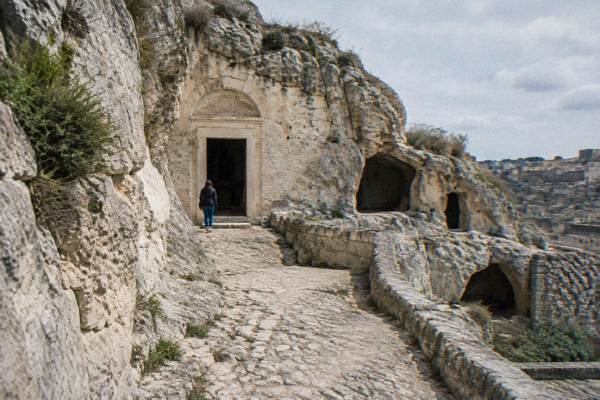
Madonna delle Virtù and San Nicola dei Greci are two cave churches stacked in the cliff face of the Sasso Barisano in Matera, the inland city of the Sassi in Basilicata, southern Italy.
Short answer
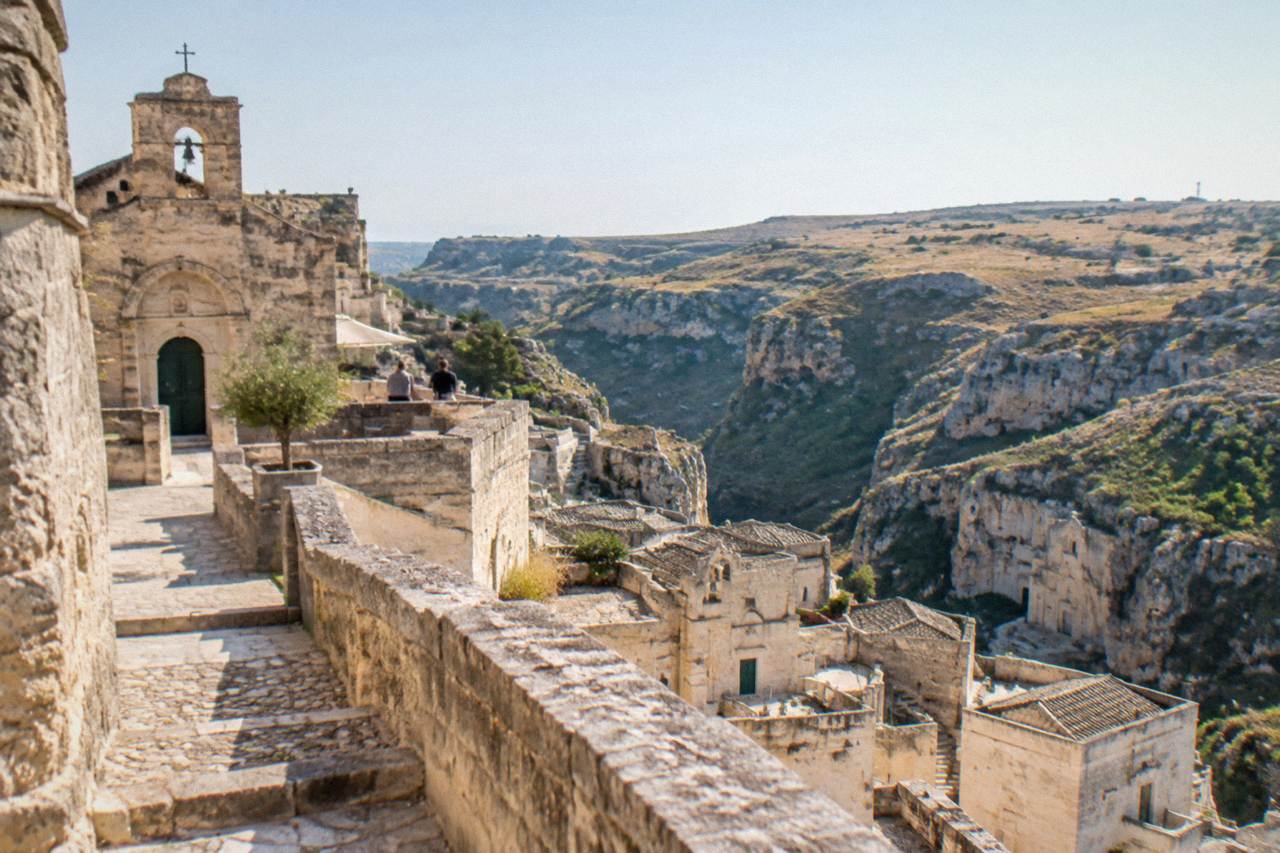
Madonna delle Virtù and San Nicola dei Greci are two rock-hewn churches set one above the other in the tufa cliff of the Sasso Barisano in Matera, overlooking the Gravina canyon and the Murgia plateau opposite. No operator page with a ticket price or opening hours was found, so visitors should check locally or book a guided visit.
Madonna delle Virtù and San Nicola dei Greci are two rock-hewn churches carved directly into the pale tufa cliff of the Sasso Barisano, one of the two Sassi districts of Matera, the inland city of Basilicata in southern Italy that sits at about 400 m above sea level on the edge of the Gravina canyon. The two churches sit stacked in the rock face, one above the other, and their terrace looks straight across the canyon to the Murgia plateau and its scattered rupestrian churches. This page explains what the pair are, where they sit in the Sassi, what the sources say about them, and how to plan a visit without falling for the gaps in the published information.
What Are The Madonna Delle Virtù And San Nicola Dei Greci In Matera?
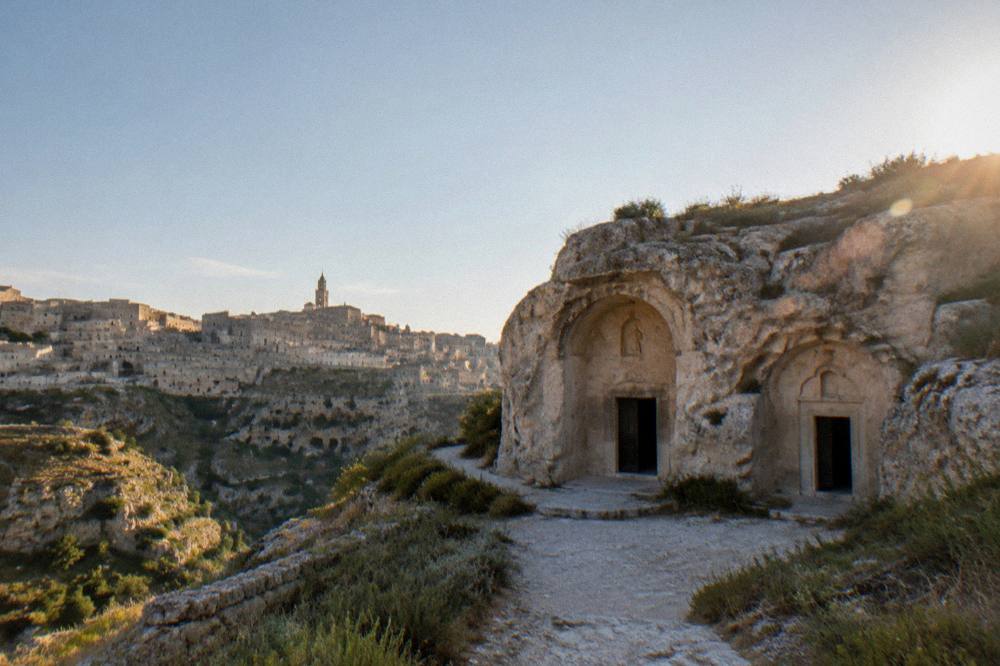
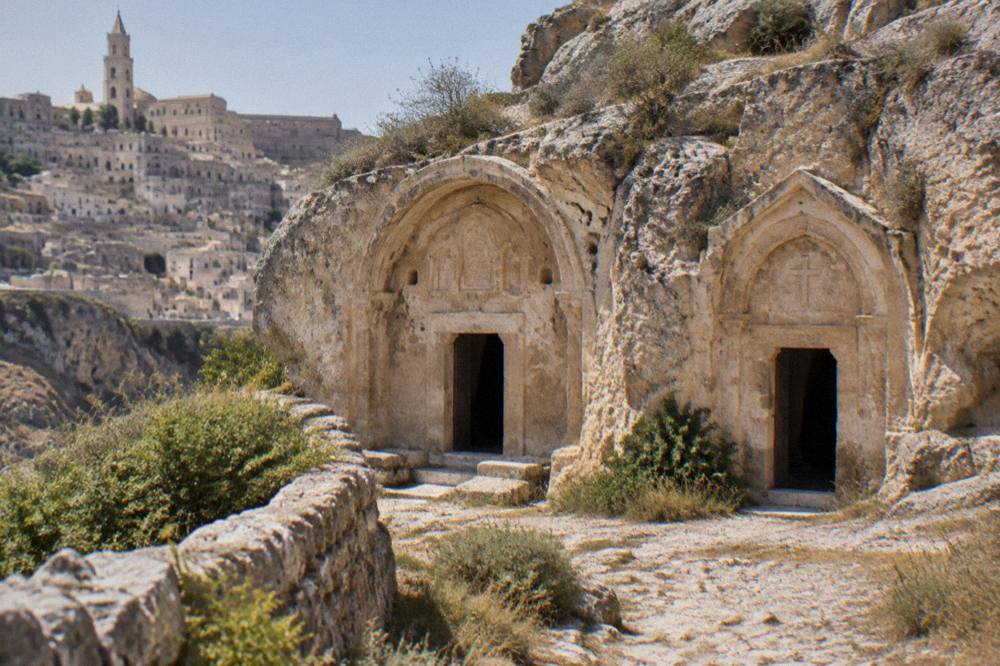
The Madonna delle Virtù and San Nicola dei Greci are two churches cut into the rock of the Sasso Barisano cliff in Matera, built one above the other so that the lower church, dedicated to the Madonna delle Virtù, opens onto a terrace facing the Gravina canyon and the Murgia plateau, while the upper church, dedicated to San Nicola dei Greci, sits directly over it in the same tufa face. They belong to the rupestrian tradition of Matera, in which churches, houses, cisterns and stables were all excavated from the soft limestone rather than built on top of it.
The pair is best understood as one complex rather than two separate sights. Excavating downward and sideways into the cliff was cheaper and faster than building upward in stone, and the Sassi are the result of that logic applied over many centuries. UNESCO inscribed "The Sassi and the Park of the Rupestrian Churches of Matera" on the World Heritage List in 1993, describing the site as an outstanding example of a rock-cut settlement adapted to its geomorphological setting, with continuity over more than two millennia. The Madonna delle Virtù sits inside that inscribed landscape, on the northern flank of the canyon where the Sasso Barisano meets the drop to the Gravina.
The name of the lower church refers to the Madonna of the Virtues. The upper church carries the name of Saint Nicholas of the Greeks, a dedication that points to the Byzantine-rite monastic communities who used many of the cave churches of Matera and of the Murgia opposite before the Latin rite became dominant. The Sassi and the plateau across the canyon hold the densest concentration of this heritage anywhere in the region, and the Sassi di Matera as a whole carry the UNESCO inscription rather than any single church.
For orientation, the other famous cave-church cluster of the city, the rupestrian churches of the Sasso Caveoso such as Santa Maria de Idris and Santa Lucia alle Malve, sits on the southern side of the canyon. The Madonna delle Virtù is the Barisano counterpart to that group, and the two sides face each other across the Civita, the high spur between them where the Cathedral stands.
Where Do The Madonna Delle Virtù And San Nicola Dei Greci Sit Within The Sassi Of Matera?
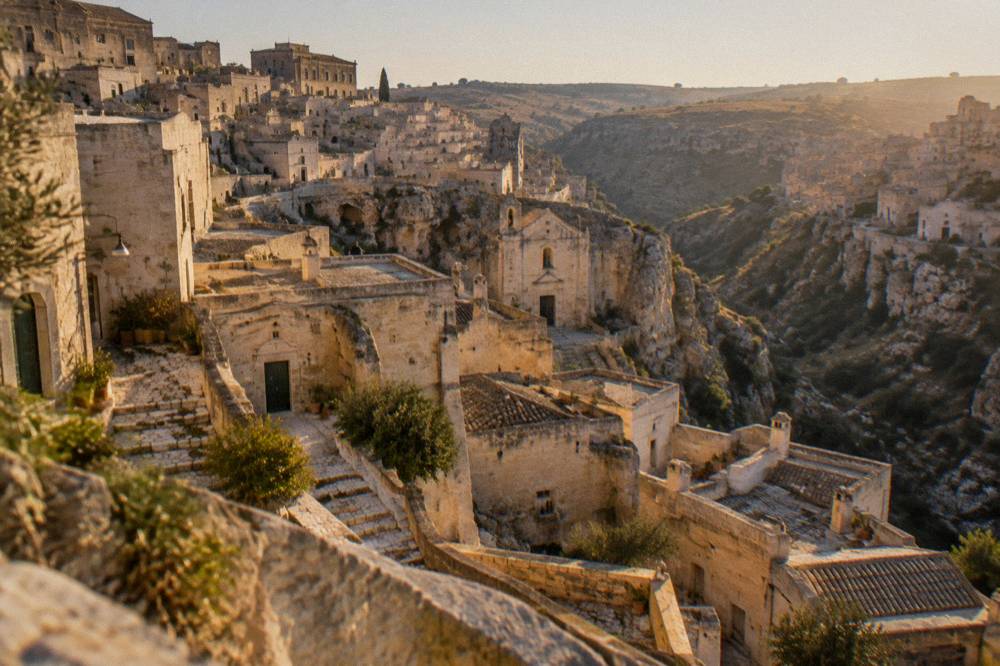
The two churches sit in the lower Sasso Barisano, on the cliff edge where the district drops toward the Gravina canyon, a short walk downhill from Piazza Vittorio Veneto and the upper town, with the terrace of the lower church giving one of the classic views across the canyon to the Murgia plateau and the rupestrian churches scattered on the opposite slope. The Sasso Barisano is the northern of the two Sassi districts, and this stretch of its cliff face is among the most photographed parts of Matera.
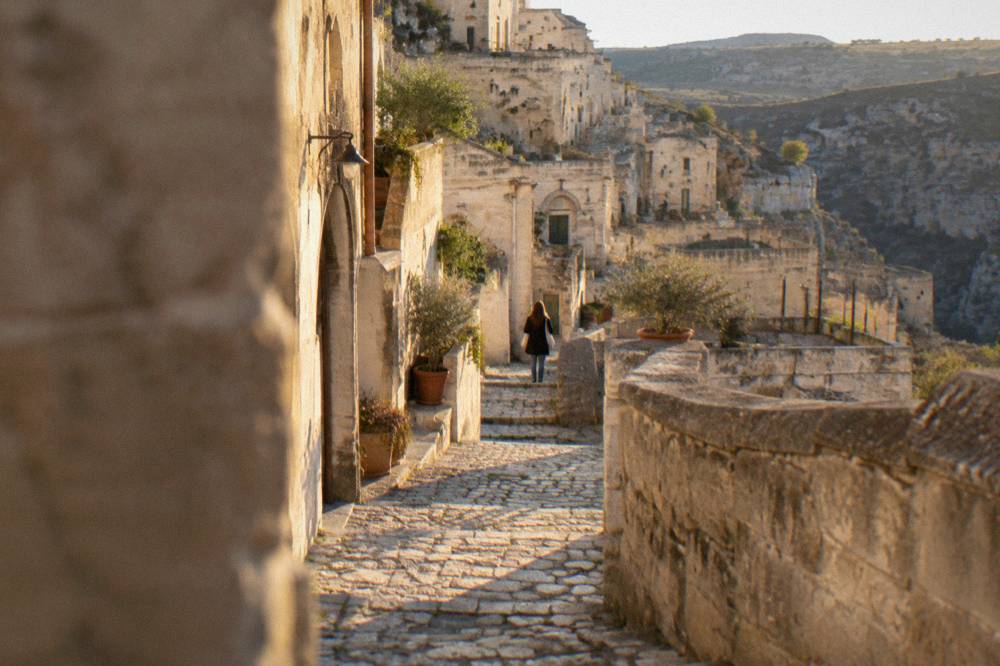
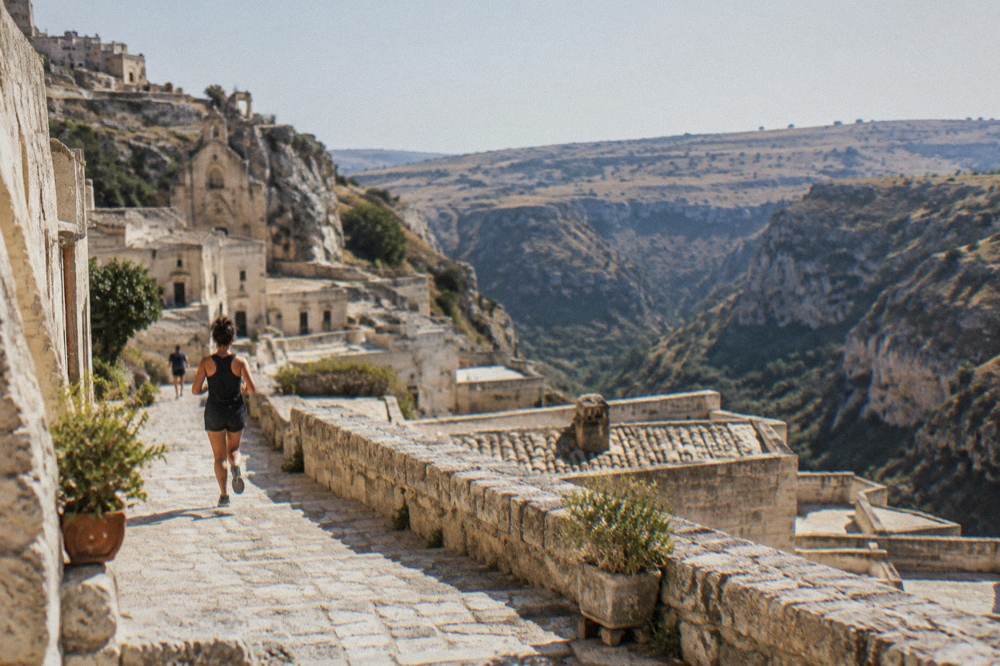
Reaching them involves the terrain the Sassi are known for: stepped lanes, stone stairways and uneven paving cut into the slope. The route down from the Piano, the modern upper town around Piazza Vittorio Veneto, is short but steep in places. Comfortable shoes with grip matter more here than in almost any other Italian city, and the same applies to the climb back up. No route in the Sassi can be described as step-free.
The table below places the pair among the main reference points a first-time visitor uses to navigate the city.
| Reference Point | Position Relative To The Churches | Notes |
|---|---|---|
| Piazza Vittorio Veneto | Uphill, a few minutes on foot | Main upper-town square, above a large hidden cistern |
| The Civita and the Cathedral | On the high spur between the two Sassi | The Cathedral towers over both districts |
| Sasso Caveoso | Across the canyon, south side | Holds Santa Maria de Idris and Santa Lucia alle Malve |
| Murgia plateau | Opposite, across the Gravina | Protected park, seen from the church terrace |
| Sasso Barisano | The churches' own district | Northern Sassi, cave façades and stacked dwellings |
The terrace view from this stretch of cliff is one of the reasons photographers time their visit for late afternoon, when the low sun lights the far side of the canyon. The guided Murgia Timone belvedere sunset tour approaches the same view from the opposite rim, and pairing the two sides of the canyon is a common way to structure a first day. Visitors who want a guided introduction to the streets, cave houses and rock churches of the district can compare the main options below.
What Can You See Inside Madonna Delle Virtù And San Nicola Dei Greci In Matera?
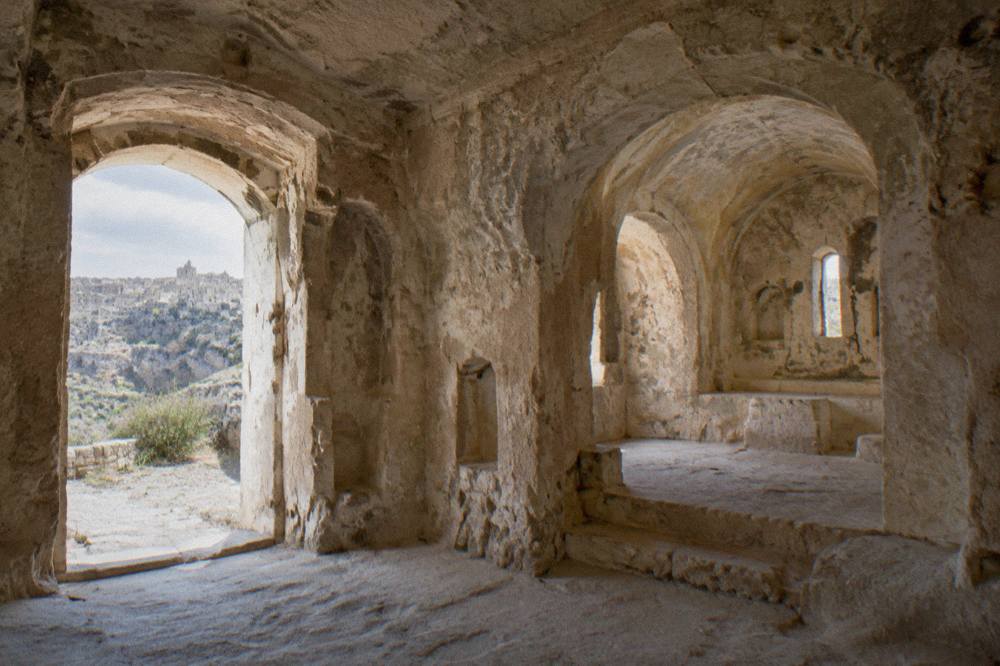
Inside, the two churches hold the excavated architecture typical of Matera's rupestrian buildings: arched niches carved from the living rock, columns and vaults cut rather than built, side chambers and traces of frescoes on the tufa walls, with the lower church opening onto the canyon-facing terrace that gives the complex its fame. No operator page with a ticket price, opening hours or visit length for the two churches was found in this site's research, so the practical details must be checked locally or through a guided visit that includes them.
That silence on price and hours is unusual for Matera, where several of the main rupestrian churches publish clear tariffs. The Oltre l'Arte network, which runs the three great Caveoso churches, lists its prices openly, and the contrast is worth knowing when planning. The table below shows what is published for the church sites that do state their terms.
| Church Or Ticket | Published Price | Notes |
|---|---|---|
| One Oltre l'Arte rupestrian church | 4.50 EUR | Santa Lucia alle Malve, Madonna de Idris or San Pietro Barisano |
| Two Oltre l'Arte churches | 8.00 EUR | Any two of the three |
| Three Oltre l'Arte churches | 10.00 EUR | All three |
| Oltre l'Arte 8-site all-inclusive | 25.00 EUR, reduced 16.00 EUR | Churches plus MATA, museums and cave-house sites |
| Madonna delle Virtù and San Nicola dei Greci | Not published on any page found | Check locally or book a guided visit |
The frescoes that survive in Matera's cave churches are usually the reason visitors go inside rather than viewing from the lane. In the Caveoso churches run by Oltre l'Arte, the wall paintings range from medieval cycles to later devotional overlays, and the same layered use marks rupestrian interiors across the city. Where a painting is dim, a guide's torch does more for it than daylight ever will, which is one honest argument for a guided walk over a solo wander.
For the two churches of this page, the practical route for most visitors is a guided Sassi walk that includes them in its route. The Sassi walk with cave house covers a cave dwelling and a rock church alongside the streets of the two districts, and its listing states what is included.
Prefer the interiors opened for you on a guided route? Book a guided city center tour here.
A second option is the panoramic open-bus circuit, which passes along the cliff roads above and below the Sassi and gives the canyon views without the stairways. Neither replaces standing on the terrace itself, but both frame the complex within the wider district.
How Do The Two Churches Connect To Matera's Rupestrian Tradition?
The Madonna delle Virtù and San Nicola dei Greci belong to the rupestrian tradition of Matera, in which hundreds of churches were cut into the tufa of the Sassi and of the Murgia plateau opposite, a tradition tied to Byzantine-rite monasticism and to the practical economics of digging into soft limestone rather than building with it, and protected today inside the park created by regional Law 11/1990. The Greek-rite dedication of the upper church is one visible trace of that eastern monastic presence.
The park that protects this heritage, the Archaeological Historic Natural Park of the Rupestrian Churches of Matera, covers about 8,000 hectares by the park's own count, and the park's own site lists 923 plant species, about a sixth of the national flora, growing among the canyon, the plateau and the abandoned cave settlements. From the terrace of the Madonna delle Virtù the far side of that landscape is in full view: the Parco della Murgia Materana slope, dotted with church façades cut into the rock.
The deeper tradition is documented across the city's other cave churches, several of which this site covers in detail.
| Rupestrian Site | Side Of The Canyon | What Distinguishes It |
|---|---|---|
| Santa Maria de Idris and San Giovanni in Monterrone | Sasso Caveoso | Hilltop church over a lower crypt, joined interior |
| Santa Lucia alle Malve | Sasso Caveoso | First female monastic settlement in the Sassi, painted cycles |
| San Pietro Barisano | Sasso Barisano | Largest rupestrian church in the city |
| Madonna delle Virtù and San Nicola dei Greci | Sasso Barisano | Stacked pair on the canyon-facing terrace |
| Crypt of the Original Sin | Outside the city, on the SS7 road | Painted cycle, booking mandatory |
The Crypt of the Original Sin, a short drive out of the city, holds the most celebrated painted cycle of the area and requires a booked e-ticket, a reminder that rupestrian Matera extends well beyond the two districts. Within the Sassi themselves, the tradition also produced domestic architecture: the Casa Grotta di Vico Solitario, in the Caveoso, preserves a furnished cave dwelling with its stable and cistern, and its published tariff, 8.00 EUR full from 4 April 2026, shows how a cave interior was organised around water, animals and a single living space.
Can You See The Madonna Delle Virtù From The Murgia Side Of Matera?
Yes, the cliff face containing the two churches is one of the landmarks visible from the Murgia side of the Gravina, and the classic counter-view is from the Belvedere Murgia Timone, the panoramic terrace on the plateau opposite, from which the whole Sasso Barisano cliff, the Civita and the Sasso Caveoso line up along the canyon rim in a single frame. Many of the canonical photographs of Matera are taken from that side, not from inside the city.
Reaching the belvedere now runs through a managed access system. The park's Jazzo Gattini visitor centre reopened under a new concession on 6 February 2026 as an info point and ticket office controlling access toward Murgia Timone, and the Belvedere Murgia Timone can be reached on foot paths from the Sassi side or by road from the plateau. No verified bus route serves it, so visitors without a car should walk, join a tour with transfer, or check locally for current transport options.
The sunset tour mentioned earlier includes transfer, which matters because the light on the Sassi faces west and the best hour on the terrace is the last one of the day. From the Timone side, the two churches of this page are small details in the cliff wall, but the terrace line they sit on is easy to trace with the eye, running along the base of the Barisano façades. The guided options below cover both sides of that view. The rest of the planning pages sit on Matera Travel Guide.
How Do You Plan A Visit Around The Two Churches In Matera?
Plan the two churches as one stop inside a half-day or full-day walk of the Sassi rather than a destination in their own right: descend from Piazza Vittorio Veneto into the Sasso Barisano, reach the terrace by the stepped lanes, then cross to the Caveoso churches and one of the cave-house museums, allowing for steep terrain, comfortable shoes and a morning or late-afternoon start in the warmer months. Checking locally on whether the interiors are open, or booking a guided walk that includes them, removes the only real uncertainty.
Timing matters more in Matera than in most cities, because the crowds are sharply seasonal. The APT Basilicata accommodation counts show 61,630 arrivals in September 2025 against 15,239 in February, roughly four times the winter low, and September, not August, was the peak month. The climate, ERA5 reanalysis 1991-2020 for the Matera grid cell, pairs with that pattern: mean highs of 31.2 C in July and 31.3 C in August against 25.7 C in September. The table below lines up the two sets of figures for the months that matter most.
| Month | Mean High C, ERA5 1991-2020 | Rain mm | Arrivals 2025, APT Basilicata |
|---|---|---|---|
| April | 17.4 | 56.5 | 45,195 |
| May | 22.7 | 41.7 | 54,101 |
| July | 31.2 | 21.2 | 43,966 |
| August | 31.3 | 21.7 | 60,257 |
| September | 25.7 | 44.8 | 61,630 |
| October | 20.8 | 51.7 | 52,538 |
| November | 15.5 | 67.1 | 23,555 |
November, the wettest month at 67.1 mm in the reanalysis, is also one of the quietest, and a damp morning in the Sassi is a fair trade against the September peak for travellers who do not mind clouds. Whatever the month, the Sassi are an evening city as much as a daytime one: the façades light up after dark, and the canyon views hold their shape. The question of how long to stay has its own answer on this site.
A practical checklist for the walk itself:
- Start at Piazza Vittorio Veneto, where the upper town meets the Sassi, and descend into the Sasso Barisano.
- Reach the churches' terrace by the stepped lanes, allowing for uneven paving and steep sections in both directions.
- Cross to the Civita and the Cathedral, then descend into the Sasso Caveoso for the Oltre l'Arte churches.
- Close the loop at one of the canyon viewpoints on the Caveoso rim, facing back toward the Barisano cliff.
What Else Is Near The Madonna Delle Virtù In Matera?
Within a few minutes' walk of the two churches stand the whole spine of the Sasso Barisano and the upper town: San Pietro Barisano, the largest rupestrian church in the city, the cave restaurant terraces of the district, the Civita with the Cathedral, Piazza Vittorio Veneto with the hidden Palombaro Lungo cistern beneath it, and the lanes leading down toward the canyon rim. The compactness of Matera is its quiet advantage: nearly everything a first visit needs sits inside one walkable bowl.
The Palombaro Lungo, the vast water cistern under the main square, is part of the same story of digging into the rock, this time for water rather than worship. Like the two churches of this page, it publishes no verified ticket details on an operator page this site could open, so its practicalities should be confirmed locally. The Casa Noha visitor centre in the Sassi, which orients many first-time visitors with its film on the district's history, is closed 5 to 22 October 2026 for renovation ahead of a relaunch with new displays, and adults pay 6.50 EUR outside that window.
| Nearby Site | Segment | Published Visitor Detail |
|---|---|---|
| San Pietro Barisano | Sasso Barisano | 4.50 EUR single, part of Oltre l'Arte tickets |
| Cathedral and MATA | Civita | 4.00 EUR, daily 09:00 to 19:00 |
| MUSMA sculpture museum | Sasso Caveoso | 10 EUR full, 5 to 7 EUR reduced |
| Casa Noha | Sassi | 6.50 EUR adults, closed 5 to 22 October 2026 |
| Palazzo Lanfranchi | Piano | 10.00 EUR, Monday to Sunday 09:00 to 20:00 |
Beyond the city, the pair makes a natural anchor for a wider Basilicata itinerary. The Dolomiti Lucane range south of the city, with the paired villages of Castelmezzano and Pietrapertosa, lies about 82 and 79 road kilometres from Matera respectively, roughly an hour and a quarter to an hour and a half of free-flow driving, and the guided hike between the two villages is this site's featured trip for travellers combining the Sassi with the mountains. Check availability below.
Alberobello, the trulli town in neighbouring Puglia, is about 68 km and an hour and a half by road, and the combined UNESCO day tours from Bari that link it with Matera are listed below for travellers basing themselves on the coast. Matera itself is in Basilicata, not Puglia, a distinction that matters when planning regional travel.
Why Do The Sources Stay Quiet On The Two Churches' Opening Details?
Because no operator page with a ticket price, opening hours or visit length for the Madonna delle Virtù and San Nicola dei Greci was found in this site's verified research, this page states none of those details: publishing a number without a source would be a guess, and older third-party pages about Matera regularly carry stale or invented prices for exactly this kind of semi-managed site. The honest instruction is to check locally or book a guided visit that includes the complex.
This is not an isolated case. The same research sweep found no readable official price for the Palombaro Lungo, the Crypt of the Original Sin's ticket cost, or the access ticket for Sentiero 406, where the park's own ticket page shows two different figures depending on season and press reports gave a third set. Matera rewards visitors who treat printed prices with a little suspicion and confirm at the door or at booking, and it rewards guides who know which doors are open on a given morning.
What is stable is the landscape. The cliff, the terrace, the canyon and the plateau opposite do not close, do not charge and do not change, and the view from outside the churches is itself the reason the spot appears in so many photographs of the city. A visit built around that certainty, with the interiors treated as a bonus, is the plan least likely to disappoint.
For travellers who want the interiors opened for them, the guided walks of the Sassi are the reliable route, and the premium-guided walk below is one of the options whose listing sets out what is covered.
The free walking tour question has its own page on this site: tip-based walks do run locally, and the way to treat them is to confirm the terms with the guide directly.
Common Questions About Madonna Delle Virtù Matera
What are the Madonna delle Virtù and San Nicola dei Greci in Matera?
Two rock-hewn churches cut into the tufa cliff of the Sasso Barisano, stacked one above the other, with the lower church opening onto a terrace facing the Gravina canyon and the Murgia plateau. They belong to the rupestrian tradition protected inside the UNESCO-inscribed Sassi of Matera.
How much does it cost to visit the Madonna delle Virtù in Matera?
No operator page with a ticket price for the two churches could be found. Check locally or book a guided visit of the Sassi that includes the complex.
What are the opening hours of Madonna delle Virtù and San Nicola dei Greci?
No published hours from an operator page were found. Visitors should confirm locally, or join a guided walk whose listing states which interiors it covers.
Where is the best view of the Madonna delle Virtù from outside?
From the Murgia side of the Gravina canyon, above all from the Belvedere Murgia Timone, from which the whole Sasso Barisano cliff lines up along the canyon rim. Access to that side runs through the park's managed entry points.
Is the walk to the churches difficult?
The route from the upper town descends stepped, uneven stone lanes and climbs back the same way. No route in the Sassi is step-free, and shoes with grip are the standard advice for the whole district.
Are the two churches part of the Oltre l'Arte ticket network?
No. The Oltre l'Arte network covers the rupestrian churches of the Sasso Caveoso and other sites, and its published prices apply to those. The Madonna delle Virtù and San Nicola dei Greci are not on the tariff list this site verified.
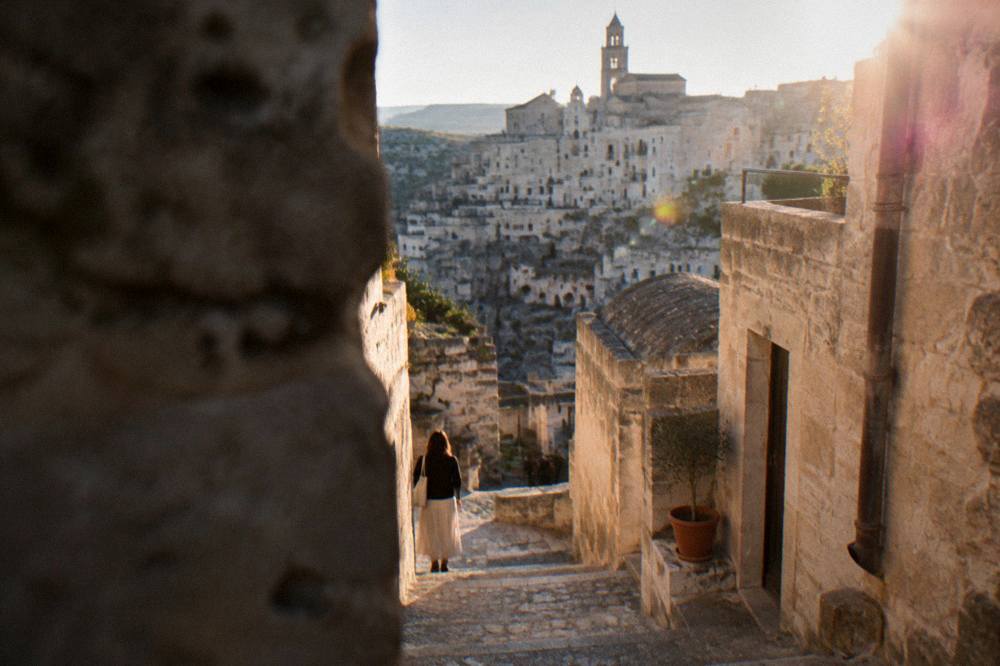
The Madonna delle Virtù and San Nicola dei Greci reward the visitor who arrives with the right expectations: a terrace, a cliff face and a pair of excavated sanctuaries at the heart of the most extraordinary urban landscape in Basilicata, with the practical details confirmed at the door and the canyon doing the rest.