Free Walking Tour Matera
Matera, an inland city in Basilicata, southern Italy, is walked, not driven: its Sassi quarters are stepped stone districts where a guide earns their fee on the first flight of stairs. Here is what the free and tip-based walking options actually are, what they cover, and how to plan around them.
Short answer
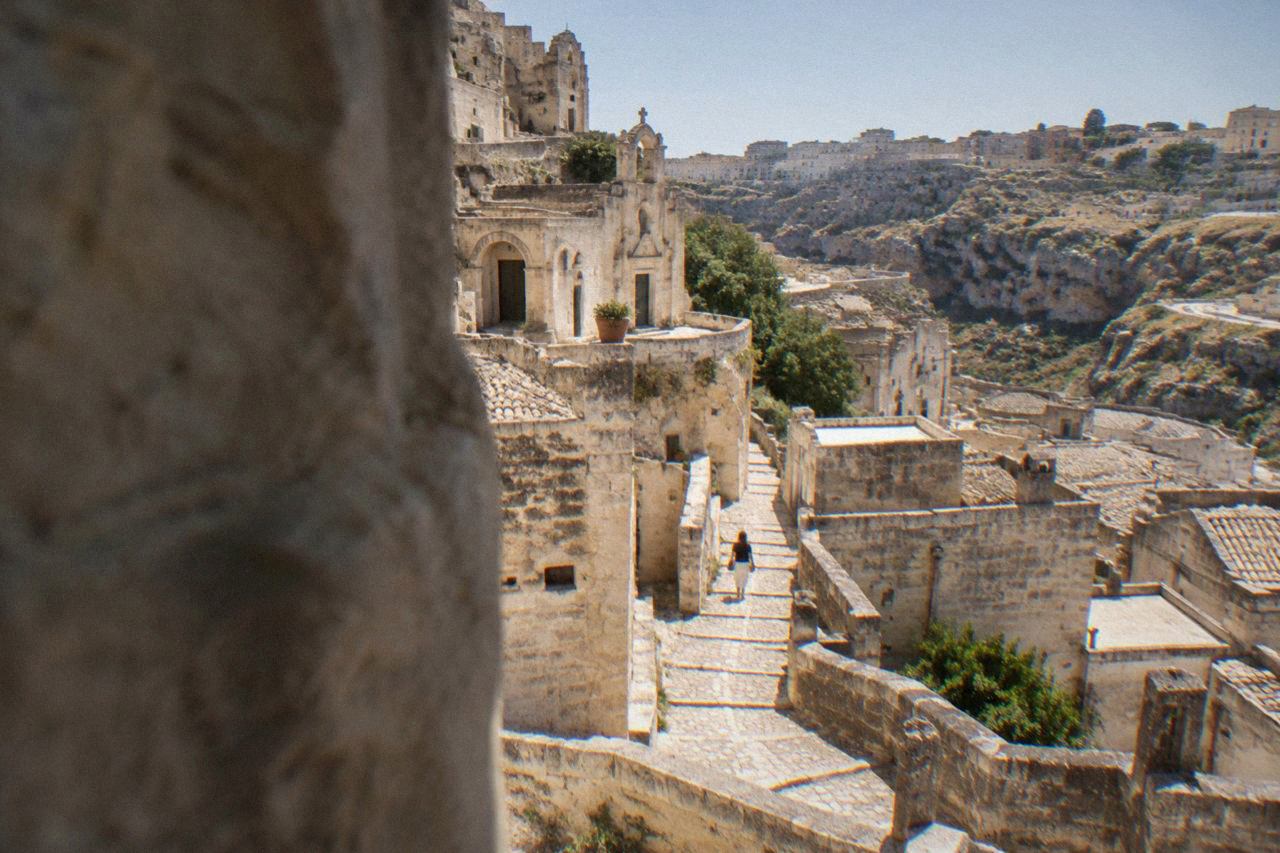
Free walking tours of Matera do exist as tip-based walks run by local guides: you book a slot, walk the Sassi, and pay the guide directly at the end. No platform or operator is named on this site, because the walks change often; confirm the meeting point and the tip arrangement with the guide when you book. Everything else on this page, viewpoints, churches, cave houses and itineraries, can be planned for free in advance.
Matera sits inland in Basilicata, southern Italy, at about 400 m above sea level on the rim of the Gravina canyon, and its two old cave quarters, the Sasso Caveoso and the Sasso Barisano, are entirely pedestrian in character: stepped lanes, stone staircases and rock-hewn churches cut into pale tufa limestone. That geography is why walking tours dominate the city's offer. Tip-based walks do run locally, and this page explains how they work, what a free walk can and cannot cover, and how to build a free self-guided route if you would rather walk alone. For the wider picture of paid and free activities across the city, start with the site's things to do in Matera overview.
What Is A Free Walking Tour Of Matera, And How Does It Work?
A free walking tour of Matera is a tip-based walk: a local guide leads a group through the Sassi and the historic centre, and each participant pays the guide directly at the end, in cash, at whatever amount they choose. The walk itself has no ticket price, entry to any paid site is never included, and the meeting point is confirmed with the guide at booking. Tip-based walks run locally in Matera; confirm the arrangement and the meeting place with the guide before you go.
This site does not name individual operators or platforms for these walks, because the offer changes and no operator's details are held in the verified facts behind this page. What is stable is the model. You reserve a slot, usually online, turn up at an agreed point in the centre, and walk. The routes concentrate on the public fabric of the city: Piazza Vittorio Veneto, the views over the Sasso Caveoso, the outer lanes of the Sasso Barisano, and the canyon rim facing the Murgia plateau.
What a tip-based walk cannot do is take you inside the paid sites. The rupestrian churches run by Oltre l'Arte, the Casa Grotta di Vico Solitario and the museums all charge admission, and those tickets are bought separately at each site. A free walk is therefore a strong first orientation, not a replacement for going inside at least one cave church and one furnished cave house, which is where Matera's story becomes physical.
Where Do Free And Tip-Based Walks Of The Matera Sassi Start?
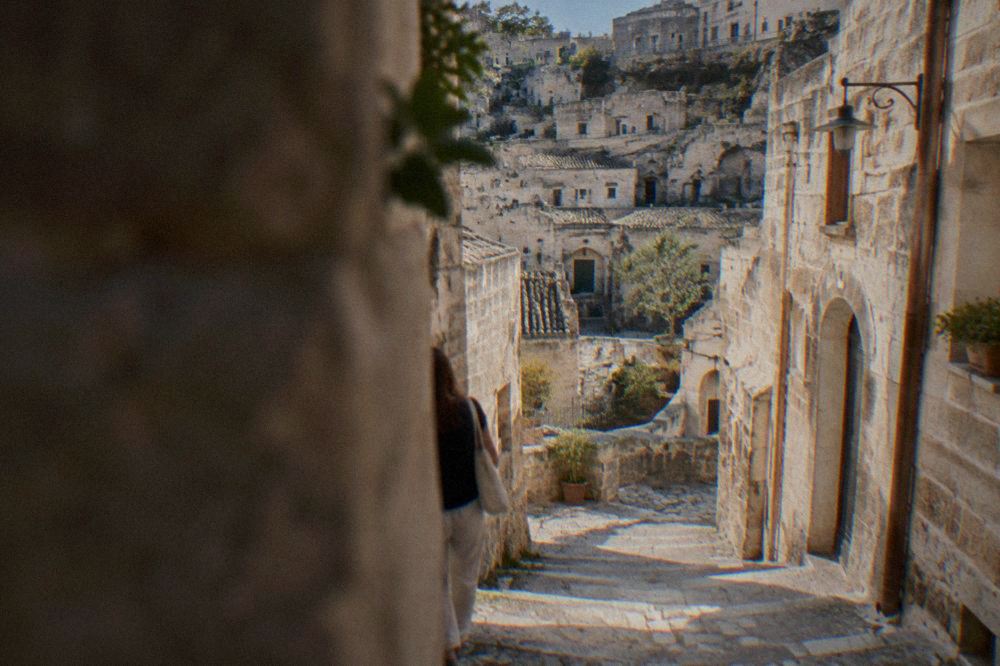
Free and tip-based walks of Matera meet at a handful of central points: Piazza Vittorio Veneto above the Sasso Barisano, Piazza del Sedile on the spine between the two Sassi, and Piazza San Pietro Caveoso at the top of the Caveoso are the recurring ones, because all three are reachable on foot from anywhere in the centre and all three stand at the edge of the pedestrian fabric. Confirm the exact point with the guide when booking. The geography explains the choice. Matera's centre is compact but vertical: the Civita, the old town on the ridge between the two Sassi, is flat enough, while both cave districts drop away in stepped lanes toward the Gravina canyon. A walk that starts at Piazza Vittorio Veneto can descend into the Sasso Barisano and climb back out; one that starts at San Pietro Caveoso does the same for the Caveoso, with the canyon wall directly opposite.
The Sassi districts themselves are public streets. You can walk every lane, stair and belvedere in both quarters without a ticket, at any hour, which is what makes a free walk possible at all: the guide is selling knowledge and navigation, not access. What carries a ticket is entry into the rock-cut churches, the cave houses and the museums, listed further down this page with their verified prices.
If you arrive by train at Matera Centrale, the FAL station stands a short walk above the centre, and the whole route down to Piazza Vittorio Veneto is on ordinary pavements before the stepped lanes begin. The self-guided walking route on this site covers the same ground in detail for walkers who prefer to go alone.
What Will You Actually See On A Free Walking Tour Of Matera?
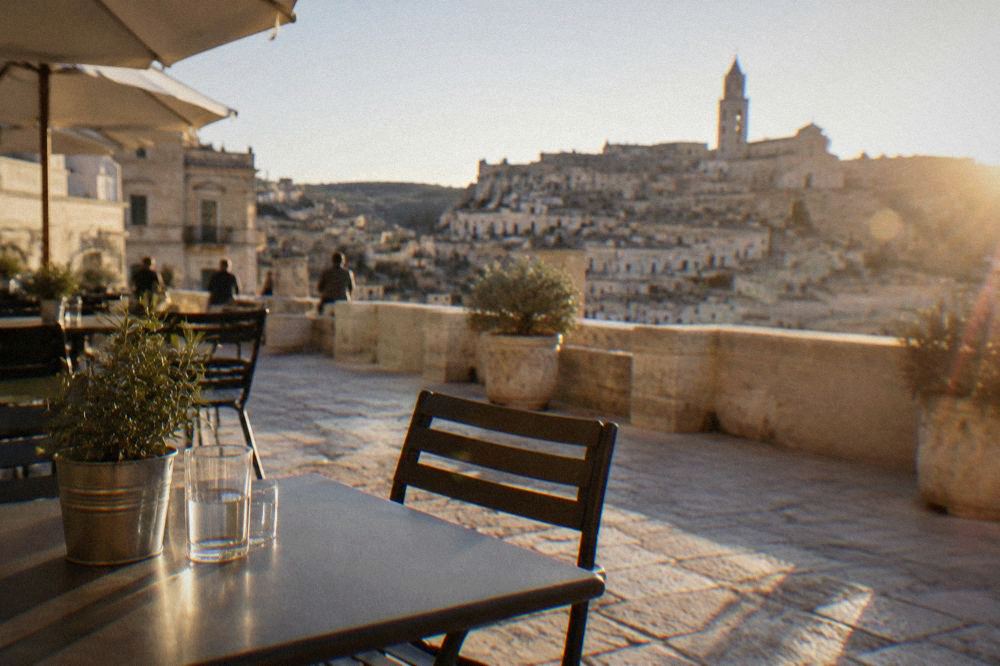
A free walking tour of Matera covers the open-air city: the two Sassi districts from the outside, the canyon rim facing the Murgia plateau, the rupestrian church facades cut into the rock, the viewpoints over the Gravina, and the baroque centre on the Civita ridge. It does not include entry to any church interior, cave house or museum, since those sites sell their own tickets. Expect narration on the Sassi's history from cave settlement to the evacuation that began in 1952 and the UNESCO listing in 1993.
The historical spine of any competent walk is this: the Sassi are cave dwellings and stone houses occupied continuously over more than two millennia in UNESCO's own wording, with the site first occupied during the Palaeolithic. Residents were moved out of the Sassi between 1952 and the 1970s, a 1986 law opened the way to restoration, and UNESCO inscribed "The Sassi and the Park of the Rupestrian Churches of Matera" in 1993, the first World Heritage listing in southern Italy. A guide who can tell that arc while pointing at an actual cave facade is giving you the city in ninety useful minutes.
What the walk shows from the outside is genuinely the main show: the stacked facades of the Sasso Barisano, the rawer rock face of the Sasso Caveoso, and across the canyon the plateaus of the Parco della Murgia, about 8,000 hectares by the park's own count, with its rock churches. If you want to understand what is behind those facades, plan at least one paid entry afterwards, and read the site's guide to the rupestrian churches of Matera before choosing which one.
Here is how the paid entries compare, using the ticket prices verified on the operators' own pages:
| Site | Full ticket | Reduced | What the ticket covers |
|---|---|---|---|
| Rupestrian churches (Oltre l'Arte), 1 church | 4.50 EUR | 3.50 EUR | One rock-cut church interior, choice of three |
| Rupestrian churches (Oltre l'Arte), 2 churches | 8.00 EUR | 5.50 EUR | Any two of Santa Lucia alle Malve, Madonna de Idris, San Pietro Barisano |
| Rupestrian churches (Oltre l'Arte), 3 churches | 10.00 EUR | 7.50 EUR | All three rock churches |
| Storica Casa Grotta di Vico Solitario | 8.00 EUR | 5.00 EUR, 3.00 EUR ages 11 to 18 | Cave house, Neviera, natural cave and the rock church of Sant'Agostino al Casalnuovo |
| Casa Noha (FAI) | 6.50 EUR | 3.00 EUR children | The orientation exhibition on the Sassi's history |
| MUSMA sculpture museum | 10.00 EUR | 5.00 EUR or 7.00 EUR | Contemporary sculpture in a cave palace, Sasso Caveoso |
Two cautions from the verified facts: Casa Noha is closed from 5 to 22 October 2026 for renovation ahead of a relaunch, and the Museo Archeologico Nazionale Domenico Ridola has been closed since 7 April 2025 with no reopening date published. The Casa Grotta di Vico Solitario remains the single best paid complement to a free walk, because its four-site ticket shows a furnished cave dwelling rather than a bare interior.
What Does A Free Walking Tour Of Matera Not Cover?
A free walking tour of Matera does not cover entry tickets, transport, food, or the sites outside the city centre: the Parco della Murgia across the Gravina canyon, the Sentiero 406 suspension bridge with its managed access point, the Crypt of the Original Sin thirteen road kilometres away, or any day trip. Guides on tip-based walks also cannot reserve skip-the-line entries, and on a crowded September day the church queues are the walker's own problem.
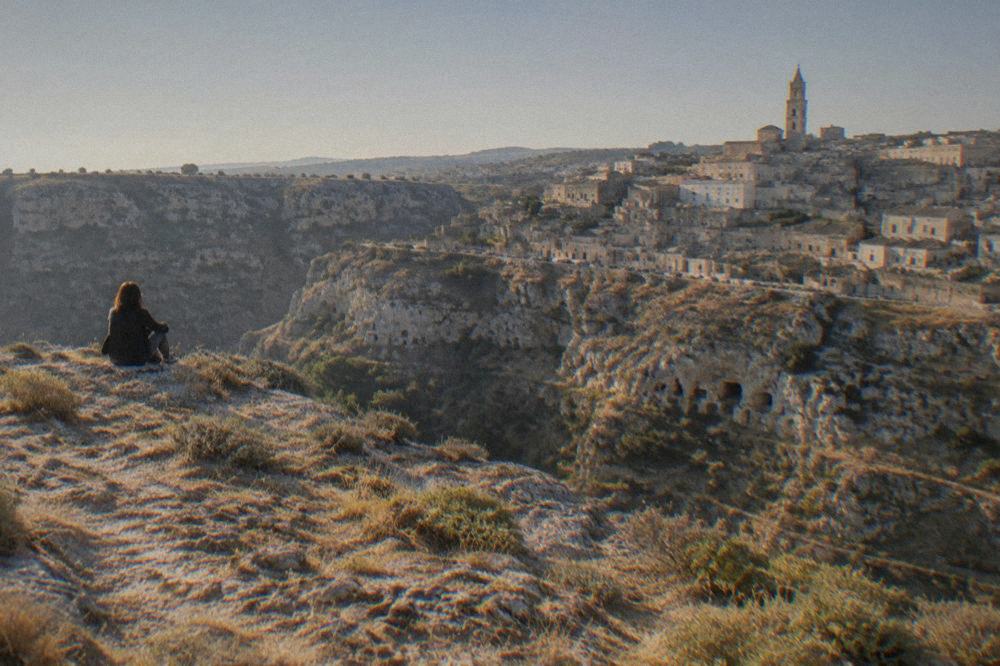
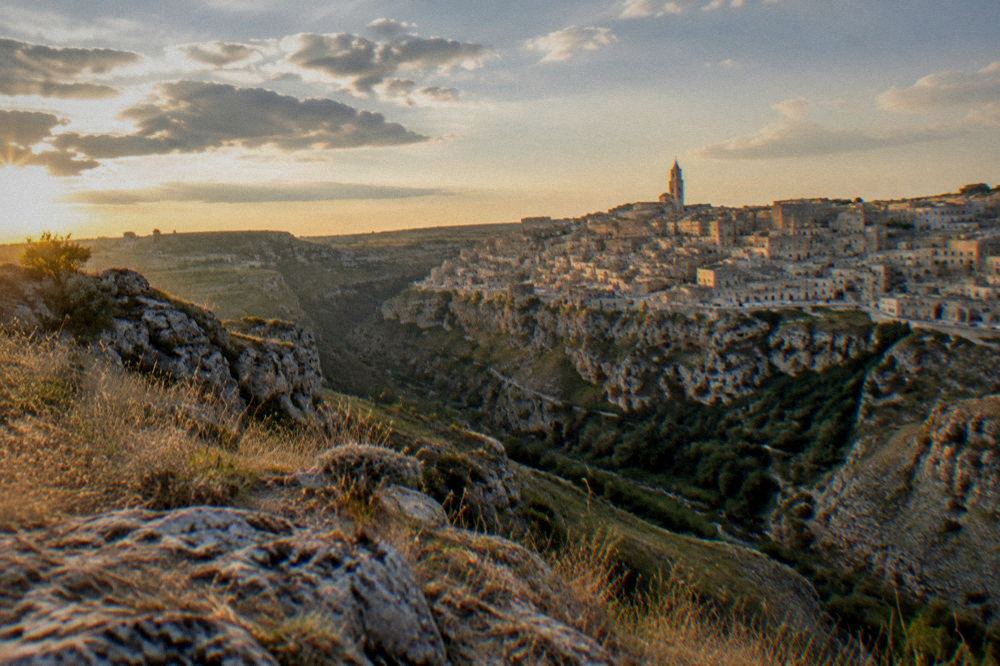
The canyon is the biggest omission. Standing in the Sassi and looking at the Murgia is one experience; standing on the Murgia and looking back at the Sassi is the photograph everyone came for, and it needs either a steep walk down to the Gravina and up the other side, or a short drive to the Belvedere Murgia Timone. Access to Murgia Timone now runs through the Jazzo Gattini visitor centre, active since 6 February 2026 under a new concession, with an info point, ticket office and access control. The Parco della Murgia guide covers the current arrangements.
The Crypt of the Original Sin, a painted rock church on a farm track off the SS7 Appia, requires a mandatory pre-booked e-ticket and a drive or taxi of about fifteen minutes; no walk in the city includes it. Its page on this site, Crypt of the Original Sin, explains the slot system, which runs as few as four guided visits a day from November to February.
Equally outside the free walk is the Palombaro Lungo, the vast water cistern under Piazza Vittorio Veneto. Its official site states that phone booking is not possible and directs visitors to the on-site arrangements; no verified price is published, so confirm at the cistern itself. The Palombaro Lungo guide has what is known.
How Much Should You Tip On A Free Walking Tour In Matera?
There is no verified tariff for tipping on a tip-based walk in Matera, and this site prints none. The working principle is that the guide's income is the tip, so the amount should reflect what a paid guided walk of similar length costs in the city, adjusted for group size and quality, agreed in cash at the end. Confirm the expectation with the guide when booking, since arrangements differ from walk to walk. What can be stated from this site's verified data is the paid benchmark: fixed-price group walks of the Sassi start in the low tens of euros per person, and their exact from-prices render on the tour tiles lower down this page rather than being typed here. That is the comparison a walker can hold in mind, not a published obligation.
Cash matters. Small-denomination euro notes are worth carrying in Matera generally, since tipping a guide, buying a church ticket and paying an aperitivo bill can all happen in the same hour. Italy uses the euro and is a Schengen member, and card acceptance in the Sassi's smaller venues is not universal.
One more financial note that trips up planners: Matera charges a tourist tax collected by your accommodation, and the amount is confirmed at booking, not on this site, because no verified municipal tariff could be found. Do not let any listing or blog figure convince you otherwise.
Free Ways To See Matera Without A Guide At All
Matera is unusually generous to unguided walkers: both Sassi districts, the canyon-rim viewpoints, the Murgia side of the Gravina, the exterior of the Cathedral and every public staircase are free to access, with no ticket, no reservation and no time limit. A walker with this site's self-guided route and one paid cave-house entry sees the city for the price of a single 8.00 EUR ticket.
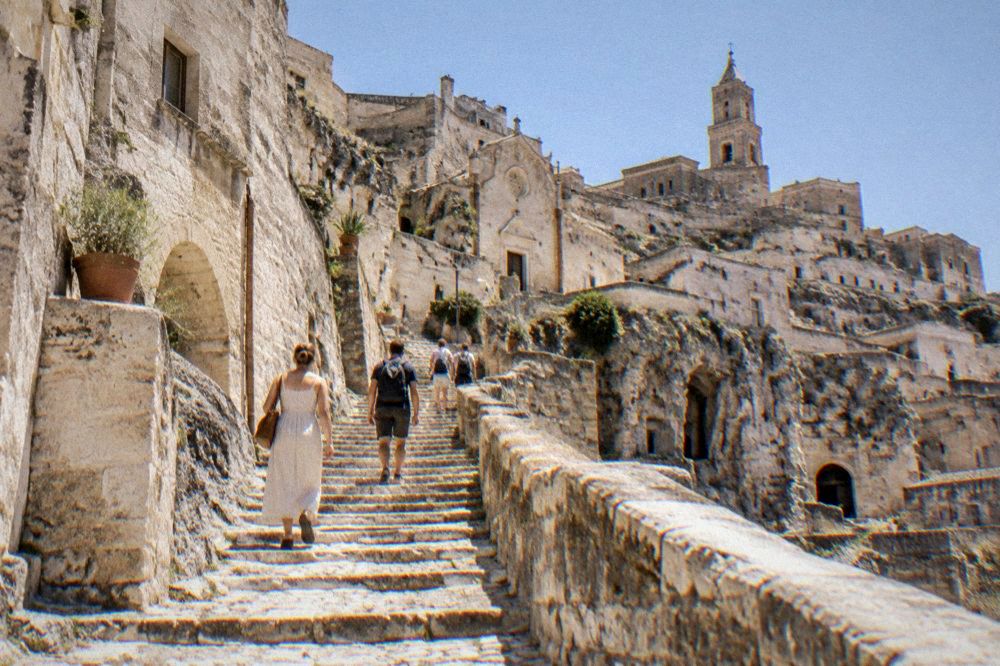
The free core is real and large. From Piazza Vittorio Veneto, walk the rim above the Sasso Barisano. Cross into the Sasso Caveoso and descend to Piazza San Pietro Caveoso, where the lane ends at the canyon face. Climb back through the Malve and look down over the stacked roofs. Then cross to the Sasso Barisano side for the gentler, rebuilt quarter with its workshops. The full loop is steep but short, and the site's one day in Matera itinerary sequences it hour by hour.
The biggest free view costs only the walk across the canyon. From the Murgia side, the whole Sassi escarpment opens up, and at golden hour the tufa turns the colour the postcards promise. The site's guide to free things to do in Matera lists the full set, including the plain, the staircases and the churches you can enter without a ticket.
When Is The Best Time Of Year For A Walking Tour In Matera?
The best months for a walking tour of Matera are April, May, June, September and October, when the ERA5 reanalysis for 1991-2020 shows mean highs of 17.4 to 25.7 C and the APT Basilicata counts show 45,195 arrivals in April rising to 61,630 in September, with the crowd peak falling in September, not August. July and August bring mean highs above 31 C on stepped stone with little shade; November is the wettest month at 67.1 mm.
The pattern is worth reading closely, because Matera contradicts the coastal-Italy calendar. In 2025 the city's registered accommodation logged 61,630 arrivals in September against 60,257 in August, and 74.5 percent of those September arrivals came from abroad. July, as warm as August at a 31.2 C mean high, drew fewer arrivals than April, May, June, August, September or October. Walking conditions and crowds therefore do not move together the way they do on the coast.
| Month | Mean high C (ERA5 1991-2020) | Rain mm | Arrivals 2025 (APT Basilicata) |
|---|---|---|---|
| Jan | 10.3 | 51.4 | 18,402 |
| Feb | 11.1 | 54.9 | 15,239 |
| Mar | 14.1 | 59.2 | 23,629 |
| Apr | 17.4 | 56.5 | 45,195 |
| May | 22.7 | 41.7 | 54,101 |
| Jun | 28.2 | 35.1 | 50,186 |
| Jul | 31.2 | 21.2 | 43,966 |
| Aug | 31.3 | 21.7 | 60,257 |
| Sep | 25.7 | 44.8 | 61,630 |
| Oct | 20.8 | 51.7 | 52,538 |
| Nov | 15.5 | 67.1 | 23,555 |
| Dec | 11.2 | 57.2 | 30,385 |
For a walker the practical readings are these: winter is cold rather than bitter, with a January mean low of 2.2 C and about twenty frost days a year, almost all from December to March, so layers and a rain shell serve better than a heavy coat. Summer walking should start early or end late, because the stone staircases hold heat and the mean high sits above 31 C in both July and August. The full picture, including what the shoulder months mean for the evening passeggiata, is in the site's climate guide at Matera weather.
Guided Walks Worth Paying For In Matera
If a tip-based walk feels like the wrong commitment, Matera has a deep bench of fixed-price guided walks whose prices, ratings and durations render on the tiles below: an English-language group walk of the ancient city, a Sassi walk that includes a cave house and a rupestrian church, and a rock-church tour with entry included. Each locks the route, the language and the inclusions in one booking, which matters when church opening hours or closures eat into a short stay.
The choice between them is about inclusions, not quality of storytelling. A walk that bundles a cave-house entry saves queueing at the door; one that enters a rock church answers the question every walker asks at the first facade, which is what these interiors actually look like. The Matera walking tour overview on this site compares the formats at length, and the Matera food tour guide covers the walks that pair the Sassi with tastings.
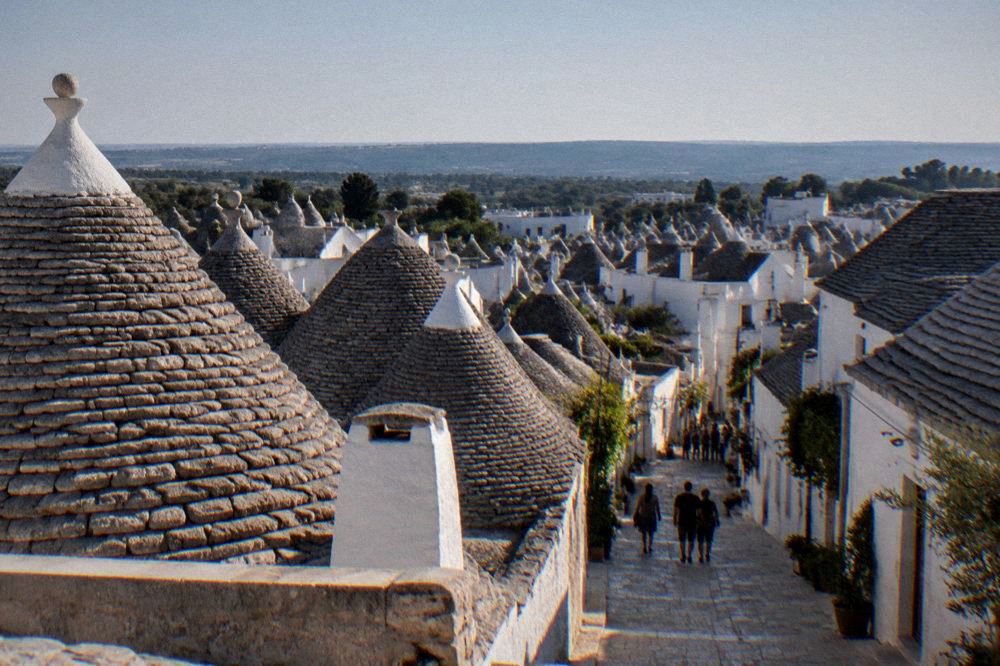
Beyond the city, the guided format pays off on the day trips, because public transport across this part of the interior is thin. Alberobello, the trulli town in Puglia about 68 road kilometres away, is the classic pairing and is covered in the site's Alberobello day trip guide.
Practical Tips For Walking The Matera Sassi
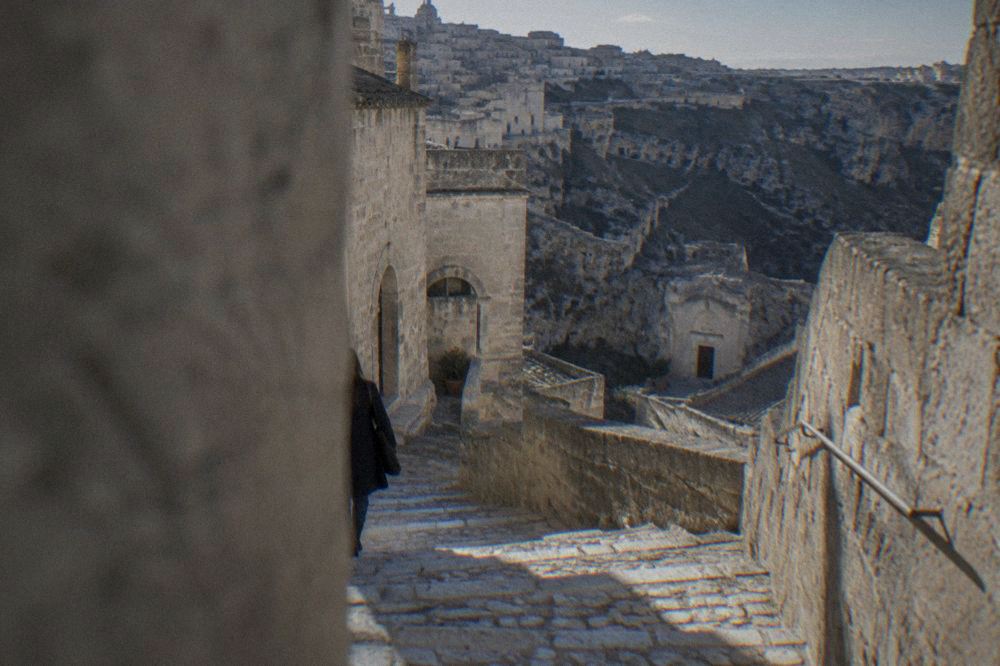
Walking the Matera Sassi safely needs shoes with grip, water and a realistic sense of the terrain: the districts are steep, stepped and uneven by nature, and no named route in the Sassi can be described as step-free or wheelchair accessible. The emergency number in Matera is 112, live in the 0835 district since 2 December 2025. Streets are public and lit, but canyon edges beyond the paths are unfenced.
Footwear is the single most repeated local advice for good reason: the staircases are worn tufa and limestone, polished by decades of feet, and slippery when wet. Rain days average 7 to 9 a month from October through March, so a wet morning changes the grip underfoot more than it changes the views.
A second practical point is driving. The ZTL Sassi camera gates are active from 10:00 to 20:30 between 16 September and 30 June, and from 10:00 to 24:00 from 1 July to 15 September, on weekdays and holidays alike, with the ZTL Centro closed to traffic 24 hours a day. Anyone staying inside those zones must confirm access and parking with the accommodation before arriving. The site's parking guide, Matera parking, and the ZTL guide at Matera ZTL carry the verified hours.
For timing, allow more than you think. The how long does it take to walk around Matera question is answered at length elsewhere on this site, but the short version is that the Sassi's verticality defeats distance estimates: two lanes that sit side by side on the map can be many minutes apart on foot, via stairs.
Here is what else is currently closed or changed, from the verified notices:
| Site or service | Status | Source of the notice |
|---|---|---|
| Museo Ridola | Closed since 7 April 2025, no reopening date | Museum's own site |
| Casa Noha | Closed 5 to 22 October 2026 for renovation | FAI site |
| Oltre l'Arte sites | All close on 25 December and 2 July | Ticketing page |
| Sentiero 406 suspension bridge | Staffed access point and online access ticket since March 2026 | Park site |
| Jazzo Gattini visitor centre | Info point and ticket office since 6 February 2026 | Park site |
Free Walking Tour Matera Compared With A Day Trip Walk
A free walking tour stays inside Matera; a day-trip walk starts somewhere else and usually ends somewhere else, most often in Alberobello, Altamura or Gravina in Puglia, all of them in the neighbouring region of Puglia except where stated. Matera is in Basilicata, and the border runs close: Altamura is 20 road kilometres away, Gravina 30, Alberobello 68. The bus day trips from Bari bundle Matera with Alberobello in one ticketed day.
For visitors basing themselves in Bari, the pairing tours solve a real problem, since public transport between the two towns is slow and the coast-bound trains do not serve Matera at all: the rail operator here is FAL, with a change at Altamura from Bari and no trains on Sundays and public holidays. The site's Bari day trip guide works through the timing, and the getting to Matera guide covers every approach.
Road distances and free-flow drive times from Matera Centrale, computed over OpenStreetMap:
| Destination | Region | Road km | Drive time |
|---|---|---|---|
| Altamura | Puglia | 20 | about 20 min |
| Gravina in Puglia | Puglia | 30 | about 30 min |
| Metaponto (Ionian coast) | Basilicata | 47 | about 50 min |
| Craco | Basilicata | 57 | about 1 h |
| Bari Airport | Puglia | 64 | about 1 h |
| Alberobello | Puglia | 68 | about 1 h 25 |
| Polignano a Mare | Puglia | 100 | about 1 h 30 |
The coast, for the record, is none of these walks' business: Matera has no sea, and the nearest beaches are a day trip to Metaponto on the Ionian or Polignano a Mare and Monopoli on the Adriatic, as the site's beaches near Matera guide explains.
Booking A Free Walk, And What To Check First
Booking a tip-based walk in Matera means reserving a slot and then confirming four things directly with the guide: the exact meeting point, the language of the walk, whether the route suits anyone in your party with limited mobility, and how the tip is handled at the end. No site entry is ever included, so buy church and cave-house tickets separately, and check the seasonal hours before setting out, since several sites change times between summer and winter.
The hours matter more than walkers expect. The three Oltre l'Arte rupestrian churches run on summer hours from 28 March 2026, generally 09:30 to 19:30, while the Casa Grotta di Vico Solitario shortens to weekday closing at 18:00 from October to December. The Cathedral and MATA cultural route is 4.00 EUR, daily 09:00 to 19:00, pausing for tourist visits on Sunday mornings. Aligning a walk's finish time with a site's last entry is the difference between seeing a painted rock church and reading about one.
For a stay built entirely around walking, the site's two days in Matera itinerary is the next page to read, and the Matera Travel Guide homepage collects every verified price, hour and route in one place.
Common Questions About Free Walking Tours In Matera
Are free walking tours in Matera really free?
The walk has no ticket price, but it is tip-based: the guide is paid directly by participants at the end, in cash, at an amount each walker chooses. Site entries, food and transport are never included. Confirm the arrangement with the guide at booking.
Do you need to book a free walking tour of Matera in advance?
Reserving a slot is the normal procedure, since group sizes are limited and September, the busiest month by the APT Basilicata counts, fills walks in the mornings. Book, then confirm the meeting point with the guide.
Can a free walking tour enter the Sassi cave houses?
No. The cave houses and rupestrian churches sell their own tickets: 8.00 EUR full at the Storica Casa Grotta di Vico Solitario, from 4.50 EUR for one Oltre l'Arte rock church, all verified on the operators' own pages. A free walk shows the districts from the public streets.
Is Matera walkable for someone with mobility problems?
The Sassi are steep, stepped and uneven, and no named route there can be called step-free or wheelchair accessible. The upper town around Piazza Vittorio Veneto and the Civita ridge are flatter, and viewpoints over the Sassi are reachable by road on the Murgia side.
How long does a walking tour of Matera last?
Durations vary by product and render on the tour tiles on this page rather than being quoted here. The city itself is compact: the site's guide to walking around Matera explains how the vertical terrain, not the distance, sets the pace.
What is the best time of day for a free walking tour in Matera?
Morning or late afternoon. In July and August the ERA5 1991-2020 normals show mean highs above 31 C on stone that holds heat, so midday walks are punishing. Late afternoon also lets a walk end near sunset over the canyon.