Sorrento To Matera
Sorrento and the Amalfi Coast sit on the Tyrrhenian; Matera sits inland in Basilicata at about 400 m above sea level on the edge of the Gravina canyon. This guide covers how the two fit into one trip, what the crossing involves, and what changes when you arrive.
Short answer
There is no direct rail or sea link between Sorrento and Matera. The usual plan is a long day of driving (with the Amalfi drive first), or a train ride around the top of the Apennines to Bari and onward on FAL, or an organised day tour. Allow at least one overnight in Matera; the Sassi are an evening city.
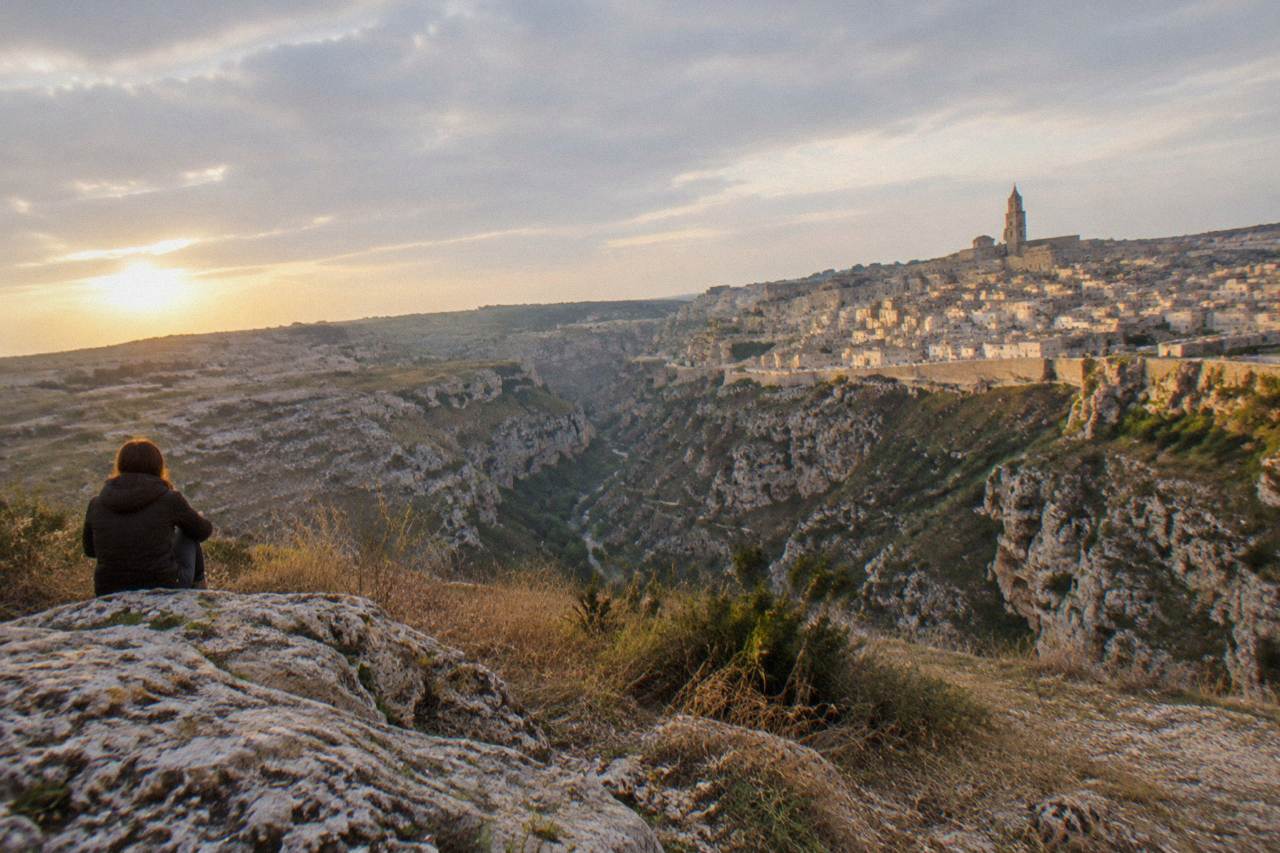
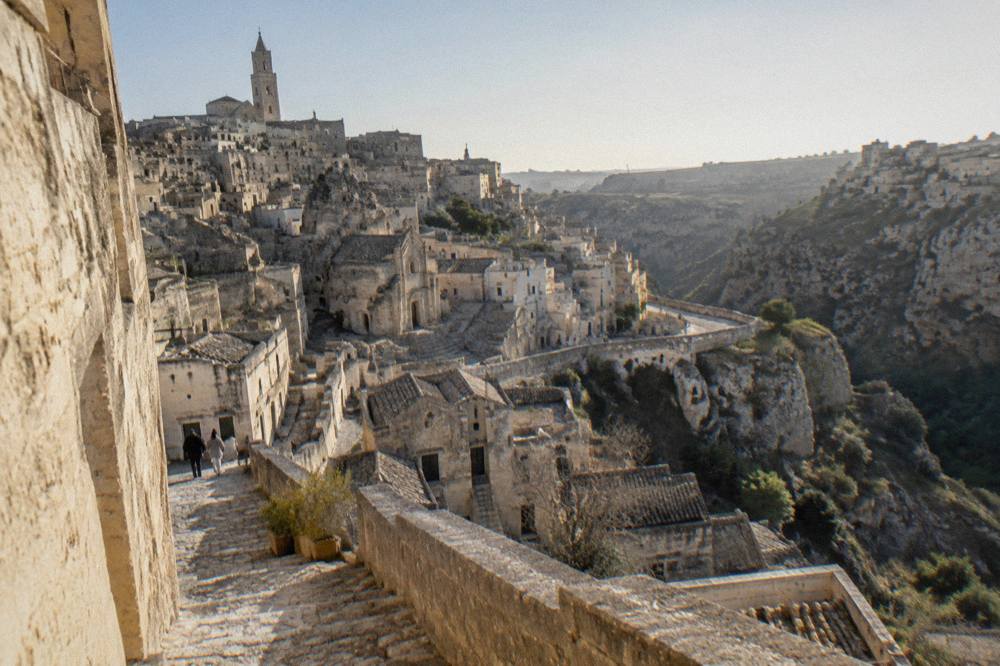
Sorrento and the Amalfi Coast look out over the Tyrrhenian Sea; Matera looks out over nothing but a canyon. The city sits inland in Basilicata, southern Italy, at about 400 m above sea level on the edge of the Gravina, with the Murgia plateau on the far rim, and its old quarters, the Sassi, are cave dwellings and rock-hewn churches cut into pale tufa limestone. There is no sea at Matera. The nearest beaches belong to day trips: Metaponto on the Ionian, Polignano a Mare, Monopoli and Bari on the Adriatic. That contrast is exactly why the pairing works. You trade the water for stone, and the trade is a good one, provided you plan the crossing properly.
This guide covers the practical side of going from Sorrento or the Amalfi Coast to Matera: which routes exist, what to do with a car when you get there, what the Sassi cost to enter, and how long the stay deserves. The Matera Travel Guide site carries the detailed transport pages, including how to get to Matera and the Naples to Matera route, which shares most of its length with the Sorrento run.
How Far Is Sorrento From Matera, And Why Does It Take So Long?
Sorrento and Matera sit on opposite sides of the southern Apennines, Sorrento facing west onto the Gulf of Naples and Matera east onto the Gravina canyon in Basilicata, so the crossing is a full day of travel however you make it: the Circumvesuviana and the Campania coastal railway never reach Matera, and its only rail link is the FAL line to Bari. Every route runs either around the mountains through the Campanian plain and the Ofanto valley or over them on slow inland roads. The Circumvesuviana and the Campania coastal railway never reach Matera, and Matera itself has no Trenitalia station at all: its only rail link is the FAL line to Bari. The practical consequence is simple: treat the transfer as a journey in itself, not a hop, and decide before you leave the coast whether you want to drive it, ride around the top of the boot by train, or let an organised tour do the driving for you.
The geography explains the effort. Sorrento faces west onto the Gulf of Naples. Matera faces east onto the Gravina canyon in Basilicata, and everything in between is hill country. For orientation, the verified road figures this site holds run from Matera outward: Bari is 68 km and about 1 h 02 of free-flow driving, Bari Airport 64 km and about 1 h, Alberobello 68 km in about 1 h 23, and Lecce, at the far end of Puglia, 204 km in just over three hours. Naples and Sorrento sit west of the mountains on a different axis, and any driving plan has to cross the Apennine watershed.
The other thing to fix in your head before planning: the drive out of the Amalfi Coast is its own event. The coast road is narrow, crowded in season and slow, and it adds real time to the first leg before you have even joined a motorway north or east. Many travellers pick up the car in Sorrento rather than on the coast itself, or arrange a transfer to Naples and start the Matera leg from there. The site's where is Matera page sets out the wider map of the region if you are still sketching the trip.
What Are The Real Options For Getting From Sorrento To Matera?
Driving the whole way with a hire car, taking the train from Naples across to Bari and onward on the FAL railway, or joining an organised day tour that reaches Matera by coach: these three options cover almost every trip. There is no ferry, no direct bus line, and no fast rail option between Sorrento and Matera. There is no ferry and no direct bus line this site can verify between Sorrento and Matera, and no fast rail option. Driving gives you the freedom to break the journey in Basilicata's hill towns; the train trades speed for the relief of not crossing Naples and Bari by car; an organised tour removes the driving entirely and pairs Matera with places like Alberobello in a single long day, which matters when time is short.
By car, the shape of the route is Naples first, then east. What matters once you near Matera is where you leave the car, because the historic centre is closed to through traffic. The Matera ZTL rules are verified and strict: the Sassi zone's cameras run 10:00 to 20:30 from 16 September to 30 June and 10:00 to 24:00 from 1 July to 15 September, weekdays and holidays alike, while the central streets around Via Duomo and Piazza Sedile are closed 24 hours a day. Piazza Vittorio Veneto and Via Ridola are pedestrian areas with bollards. Do not plan to drive into the Sassi; plan to park outside and walk down. The Matera parking page explains the approach in detail, including the advice that public car park tariffs in the city are not published on an official page and should be confirmed on arrival.
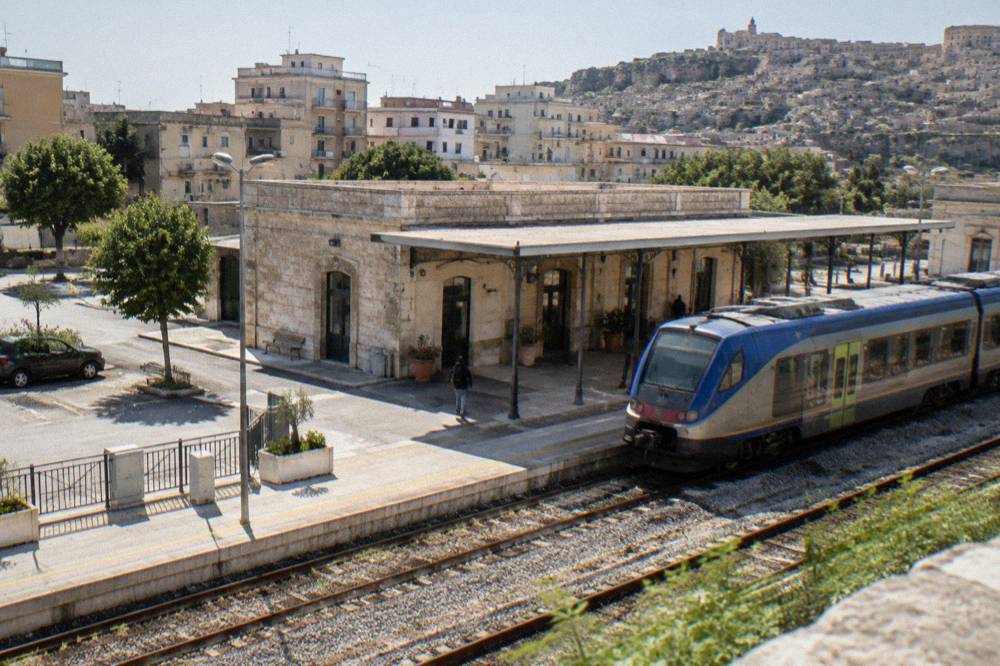
By train, the honest description is "long but possible". From Naples you ride the main line across to Bari, and from Bari Centrale the FAL railway covers the last stretch to Matera. FAL's posted weekday timetable requires a change at Altamura and the journey takes about 1 h 45 to 2 h; FAL's own notices show trains running on that stretch in October 2026, with a programme change on the Matera Sud to Altamura section from 12 October 2026 affecting two early services. On Sundays and public holidays no trains run at all and FAL operates replacement buses, eight arrivals and eight departures at Matera Centrale on the posted festive sheet. The Bari to Matera fare sits in band 70 of FAL's 2026 fare matrix, and the exact euro price should be read on FAL's tariff page rather than trusted to a guidebook. The Bari to Matera page carries the full breakdown.
Is It Better To Drive, Take The Train, Or Book A Tour From The Amalfi Coast?
Driving suits travellers who want to break the journey or keep a car for Basilicata; the train suits those who dislike mountain and city driving; an organised tour suits anyone on a tight clock who wants Matera and its region without logistics. A tour that leaves from Bari rather than from Sorrento is usually the more comfortable shape, because you can ride the coast-to-Bari leg by train or transfer first and join the coach there. Tours from Bari reach Matera, and some pair it with Alberobello, 68 km from Matera by road, inside a single day.
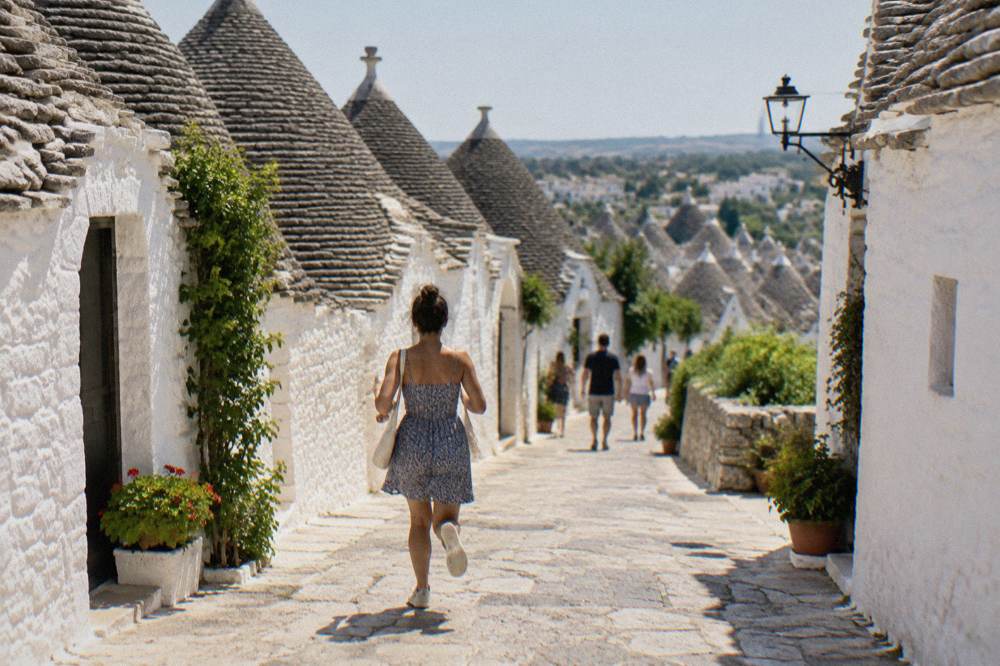
The deciding factor is usually what the car is worth to you afterwards. Inside Matera itself a car is close to useless: the Sassi are stepped, steep and uneven, and the ZTL gates make driving into the centre a fine-generating exercise. But Basilicata and Puglia beyond the city reward wheels. Craco, the abandoned hill town, is 57 km and about 58 minutes of driving from Matera. The hiking pair of Castelmezzano and Pietrapertosa sit 82 and 79 km out, each about an hour and a quarter by road. Metaponto, with its Ionian beaches and Greek ruins, is 47 km in about 52 minutes. If those names appeal, drive; if Matera is your single destination, arrive by rail and walk.
For the day-tour route, this site's featured option from the region is the guided hike between Castelmezzano and Pietrapertosa, two villages of the Lucanian Dolomites that sit within reach of Matera on the same southern flank of the region. It is a Castelmezzano to Pietrapertosa guided hike best planned as its own excursion once you are based in Matera rather than squeezed into a transfer day, and Check availability before you commit to dates, because mountain excursions depend on weather windows.
| From Matera by car | Road km | Free-flow drive |
|---|---|---|
| Altamura | 20 | about 20 min |
| Metaponto (Ionian coast) | 47 | about 52 min |
| Craco ghost town | 57 | about 58 min |
| Bari Airport | 64 | about 1 h 01 |
| Bari | 68 | about 1 h 02 |
| Alberobello | 68 | about 1 h 23 |
| Pietrapertosa | 79 | about 1 h 22 |
| Castelmezzano | 82 | about 1 h 23 |
| Polignano a Mare (Adriatic coast) | 100 | about 1 h 29 |
| Lecce | 204 | about 3 h 08 |
Times are free-flow routing figures, computed on OpenStreetMap data with no traffic and no stops; round them up in season, and always add the walk from wherever you park.
How Many Nights Should You Stay In Matera After The Amalfi Coast?
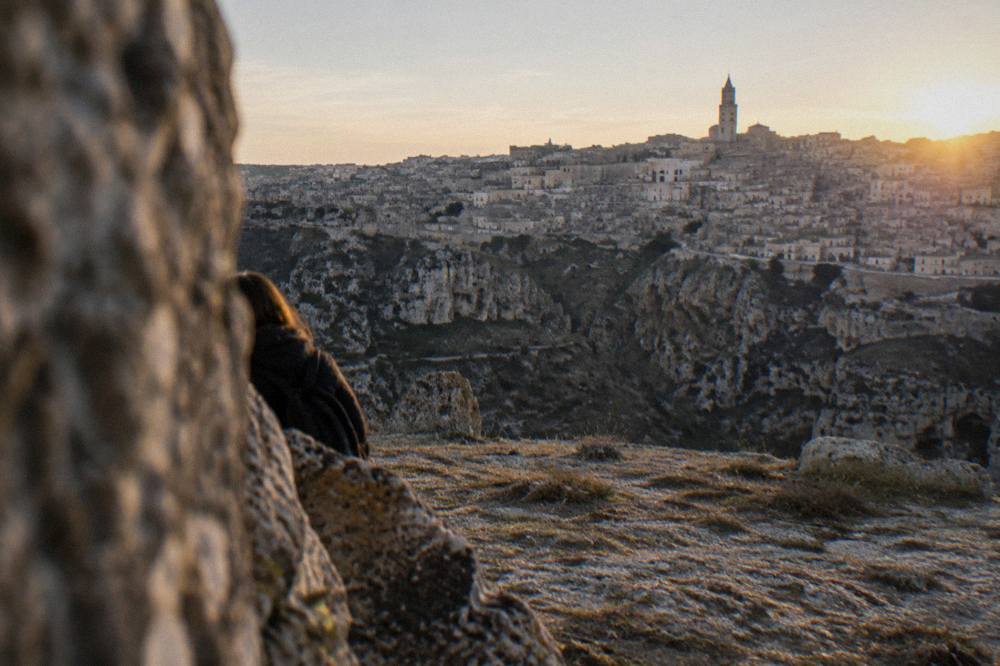
One night is the workable minimum and two is the comfortable standard, because the Sassi change character after dark and APT Basilicata data shows guests average just 1.56 nights per stay. Arriving off the Amalfi leg, one night gives you the evening view from the Sasso Caveoso side, and two nights let you cross the canyon into the Parco della Murgia at sunset. Matera logged 479,083 arrivals and 748,812 overnight stays in registered accommodation in 2025, and that ratio is the arithmetic of a city that many people treat as a single overnight between longer stays on the coast. One night, arriving off the Amalfi leg in the late afternoon, gives you the evening view from the Sasso Caveoso side and a morning inside a cave house and a rock church. Two nights let you cross the canyon into the Parco della Murgia at sunset, the classic panorama.
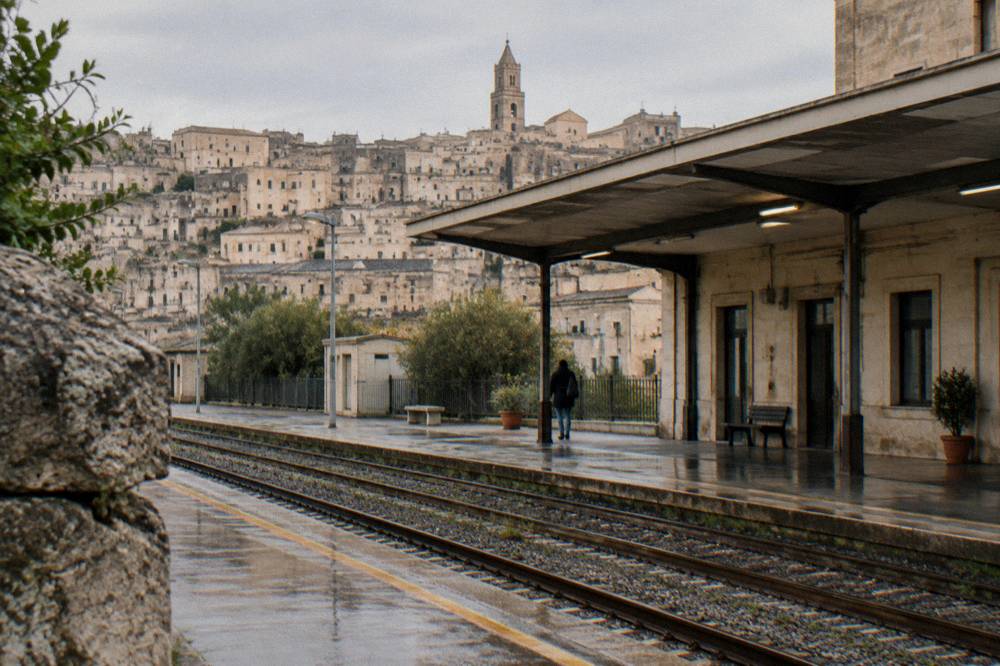
Where to sleep is half the reason to stay over. Sleeping in a cave is the point in Matera, and the restored dwellings in the two Sassi districts, Sasso Caveoso and Sasso Barisano, range from simple rooms to full hotels carved into the tufa. The site's where to stay in Matera guide maps the districts, and the Matera cave hotels and Sassi di Matera hotels pages cover the cave-sleeping options specifically. A tourist tax applies in Matera and is collected by the accommodation; the amount is confirmed at booking, because no official tariff is published on a page this site could verify.
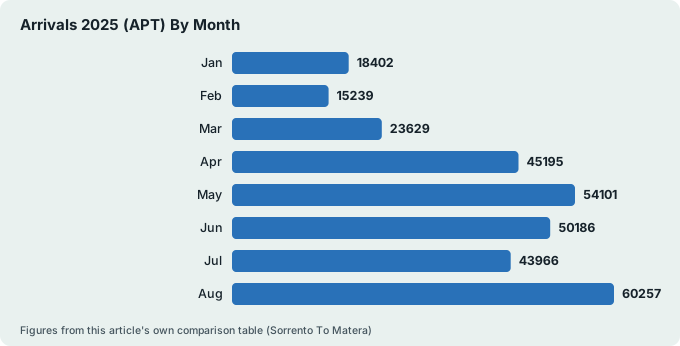
Timing matters as much as length. The APT data shows September, not August, is the city's busiest month: 61,630 arrivals in September 2025 against 60,257 in August, and 74.5% of those September arrivals came from abroad. February was the quietest month, with 15,239 arrivals. The best time to visit Matera page works through the trade in full, alongside the ERA5 reanalysis, 1991-2020, climate normals: mean highs of 31.2 °C in July and 31.3 °C in August against 25.7 °C in September, and November the wettest month at 67.1 mm of rain against 21.2 mm in July.
| Month | Mean high °C (ERA5 1991-2020) | Rain mm | Arrivals 2025 (APT) |
|---|---|---|---|
| Jan | 10.3 | 51.4 | 18,402 |
| Feb | 11.1 | 54.9 | 15,239 |
| Mar | 14.1 | 59.2 | 23,629 |
| Apr | 17.4 | 56.5 | 45,195 |
| May | 22.7 | 41.7 | 54,101 |
| Jun | 28.2 | 35.1 | 50,186 |
| Jul | 31.2 | 21.2 | 43,966 |
| Aug | 31.3 | 21.7 | 60,257 |
| Sep | 25.7 | 44.8 | 61,630 |
| Oct | 20.8 | 51.7 | 52,538 |
| Nov | 15.5 | 67.1 | 23,555 |
| Dec | 11.2 | 57.2 | 30,385 |
The climate rows are ERA5 reanalysis values for the Matera grid cell, 1991-2020, not a weather-station record. The arrivals column counts guests in registered accommodation, not day visitors.
What Does It Cost To Visit The Sassi Once You Arrive From Sorrento?
Walking the Sassi streets costs nothing, but the interiors carry tariffs: a single Oltre l'Arte rupestrian church is 4.50 EUR, two are 8.00 EUR and three are 10.00 EUR, an eight-site all-inclusive ticket is 25.00 EUR, and the Storica Casa Grotta di Vico Solitario cave house is 8.00 EUR full under the tariff in force from 4 April 2026. Add MUSMA at 10 EUR, Palazzo Lanfranchi at 10 EUR with a 15 EUR cumulative ticket covering the Museo Nazionale sites over two days, and Casa Noha at 6.50 EUR, and the entry budget for a thorough one-day visit sits somewhere between the price of a single church and the 25 EUR pass, depending on depth.
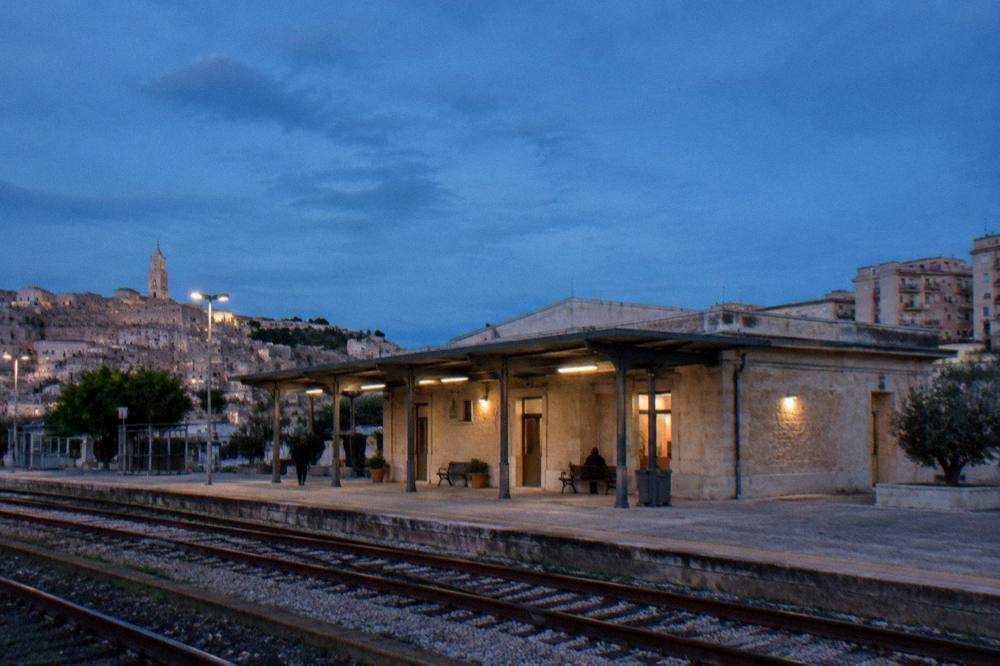
The ticket that decides itself is the eight-site pass. Oltre l'Arte's tariff page lists it at 25.00 EUR, reduced 16.00 EUR, and it bundles the three main rupestrian churches, Santa Lucia alle Malve, Madonna de Idris with San Giovanni in Monterrone and San Pietro Barisano, with the Vicinato a Pozzo courtyard, the Antica Casa Grotta in Via Fiorentini, the MATA museum, the Purgatorio exhibition and the Museo del Pane. All of Oltre l'Arte's sites close on 25 December and 2 July, the day of the Festa della Bruna. Church hours from 28 March 2026 run 09:30 to 19:30 for Santa Lucia alle Malve and Madonna de Idris, and 10:00 to 19:00 for San Pietro Barisano, with last entries 20 minutes or so before closing.
| Site | Tariff | Notes |
|---|---|---|
| Oltre l'Arte: 1 rupestrian church | 4.50 EUR | 2 churches 8.00, 3 churches 10.00 |
| Oltre l'Arte 8-site all-inclusive | 25.00 EUR | reduced 16.00 EUR |
| Storica Casa Grotta di Vico Solitario | 8.00 EUR | from 4 April 2026; reduced 5.00 |
| MUSMA sculpture museum | 10 EUR | reduced 5 or 7 EUR |
| Palazzo Lanfranchi (Museo Nazionale) | 10.00 EUR | cumulative 15.00 EUR, 2 days, all sites; under 18 free |
| Casa Noha (FAI) | 6.50 EUR | children 3 EUR; closed Wednesdays; closed 5 to 22 October 2026 |
| Presepe Vivente dei Sassi (December) | 12.00 EUR | ages 10 to 18 pay 9.00, under 10 free |
Two closures matter for 2026 planning. Casa Noha, the small FAI house that many guides rightly recommend as a first stop, is closed 5 to 22 October 2026 for renovation. The Museo Ridola, the archaeological museum, has been closed since 7 April 2025 with no published reopening date; do not build an itinerary around it. Beyond the paid interiors, the city's outdoor fabric, the viewpoints, the stairways, the canyon rim, is free, and the free things to do in Matera sibling page lists it in full.
A guided walk is the other line in the budget, and prices for those render in the listings rather than in prose. A Sassi walk with a guide covers the districts, a cave house and at least one rock church, and English-language group walks run daily; tip-based walks also run locally, and you should confirm arrangements directly with the guide. If you want the structure of a booked tour, the English group city walk is the reference option, and Check availability for your dates on the operator's live listing.
What Should You Do In Matera On The Days After The Drive?
Plan around three anchors: a walk through the Sassi districts and a cave house on day one, the canyon and the Parco della Murgia on the opposite rim on day two, and the evening light from a viewpoint above Sasso Caveoso on whichever night you have. The park across the Gravina, about 8,000 hectares by the park's own count, protects the rock-cut churches and the belvedere that frames the classic postcard of the Sassi. Access to Murgia Timone now runs through the Jazzo Gattini visitor centre, active since 6 February 2026 under a new concession, with an info point, ticket office and access control.
The suspension bridge over the Gravina, on Sentiero 406, has been a managed access since March 2026: a staffed point and an online access ticket sold on the park's ticketing site, with half price for under-25s and free entry for residents of Matera and Montescaglioso, children under 6 and disabled visitors with a companion. The price is not printed here because two conflicting figures circulate; read it on the official ticket page before you go, and accept the park's conduct rules when you buy. The canyon paths are rough; no route down into or across the Gravina is step-free.
Food fills the evenings. Matera's bread, Pane di Matera, is a PGI-registered loaf, and the city's cave restaurants serve the peasant cooking of the Murgia alongside Basilicata's peperoni cruschi, the sweet fried peppers. The best restaurants in Matera and what to eat in Matera pages carry the detail, and the bread guide explains why the loaf holds a protected name.
| Day-trip target from Matera | What it is | Road km |
|---|---|---|
| Metaponto | Ionian beach town with Greek ruins | 47 |
| Craco | Abandoned hill town, guided access | 57 |
| Gravina in Puglia | Ravine old town, 30 km | 30 |
| Alberobello | Trulli town, UNESCO listed | 68 |
| Castelmezzano and Pietrapertosa | Lucanian Dolomites villages, 82 and 79 km | 82 |
| Polignano a Mare | Adriatic cliff town | 100 |
If the coast-to-Matera move has left you without a car, the coach day trips cover the headline pairing: an Alberobello and Matera by private bus excursion runs from Bari and takes in both UNESCO towns in one day, a shape that suits a traveller who has ridden the train from Naples and wants Puglia folded into the same stay. Check availability against your dates.
What Practical Rules Change When You Arrive In Matera From The Coast?
Matera is a ZTL city with active camera gates, an inland climate with real winters, an emergency number of 112, and an evening economy that starts late, and each of those four facts changes how a coastal itinerary behaves once you cross the mountains. The ZTL cameras are the trap for drivers: the Sassi gates run 10:00 to 20:30 outside summer and 10:00 to 24:00 from 1 July to 15 September, the central zone is closed around the clock, and the transit declaration portal is the comune's own. The climate is the surprise for coast-trained travellers: the ERA5 reanalysis, 1991-2020, puts January's mean low at 2.2 °C with about 20 frost days a year city-wide, almost all from December to March, nothing like the sea-moderated Amalfi winter.
The emergency number changed recently: Matera's 0835 district joined the single European number 112 on 2 December 2025, with automatic location and multilingual support. The Sassi terrain is the other practical rule. Streets become stairways, surfaces are uneven tufa, and shoes that survived the Amalfi cliffs will earn their keep again here; no named route through the Sassi is step-free or wheelchair accessible, and the site's accessibility guidance says so plainly.
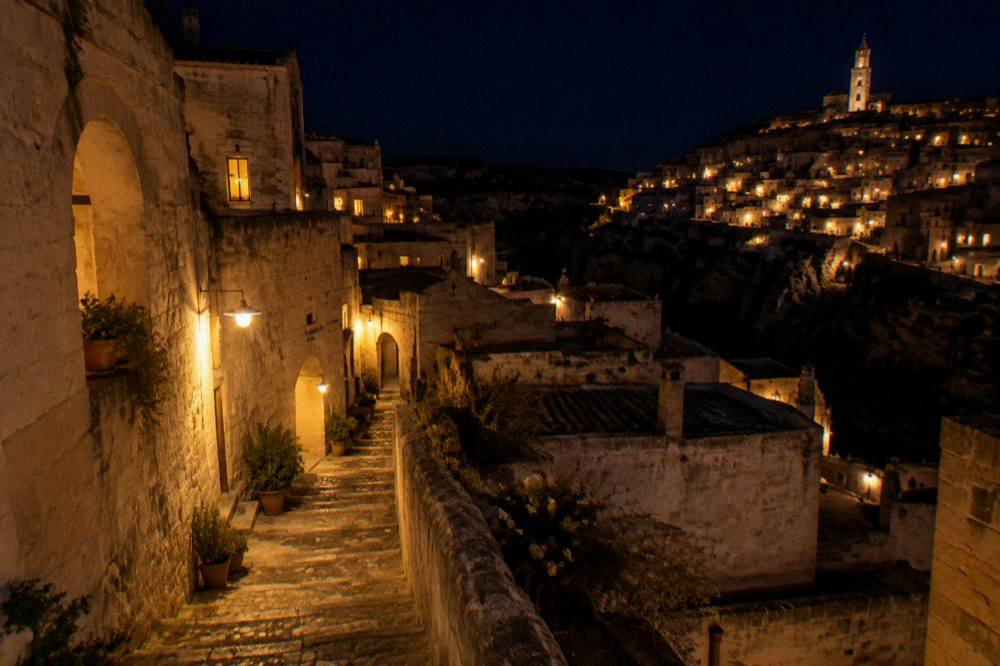
The evening economy rewards the overnight stay. The Sassi read best at dusk and after dark, when the cave facades catch lamplight and the canyon rim silhouettes, and the Matera at night page maps the viewpoints and the bars. Film interest runs deep too: Pasolini shot The Gospel According to St. Matthew here in 1964, Mel Gibson shot The Passion of the Christ in 2004, and the No Time to Die opening ran through the Sassi in 2021, all documented on the official tourism pages; the James Bond locations in Matera walk retraces them.
| Practical rule | What the sources say |
|---|---|
| ZTL Sassi cameras | 10:00 to 20:30 (16 Sep to 30 Jun); 10:00 to 24:00 (1 Jul to 15 Sep) |
| ZTL Centro | 24 hours a day, every day |
| Emergency number | 112, single European number since 2 December 2025 |
| Tourist tax | Charged by the accommodation; amount confirmed at booking |
| Rail on Sundays | No FAL trains; replacement buses, 8 arrivals and 8 departures |
| Terrain | Steep, stepped, uneven; no step-free Sassi route |
What Events In Matera Are Worth Timing The Trip Around?
The fixed dates are the Festa della Bruna on 2 July every year, the Matera Film Festival from 7 to 15 November 2026, and the Presepe Vivente dei Sassi, the living nativity, on the December weekends of 5-6, 12-13, 19-20 and 26-27 2026 plus 2-3 January 2027. The Bruna is the city's patronal feast, dated by its organisers to 1389, and the whole centre shuts for it; Oltre l'Arte's sites close that day. The living nativity threads 20 scenes through the Sasso Caveoso from Piazza San Pietro Caveoso to Via Bruno Buozzi, with tickets at 12.00 EUR full and 9.00 EUR for ages 10 to 18, free under 10.
A 2026 layer sits on top: Matera holds the Mediterranean Capital of Culture and Dialogue programme for 2026, coordinated by the foundation that ran the 2019 European Capital of Culture year, with the exhibition "The Sea Is Closer Than You See" running to 8 December 2026 across Palazzo Lanfranchi, TAM, MUSMA and the APT's Basilicata Open Space. The title is an apt joke for this itinerary: the sea at Matera is a day trip, and the exhibition's name says so. A concert season runs at Auditorium Gervasio from 26 October 2026 into April 2027.
For timing against crowds, work the APT table above. September is the peak, February the floor, and December lifts off the winter low on the strength of the nativity. Whatever month you choose, book cave accommodation and the Crypt of the Original Sin, which lies 13 km out at Contrada Petrapenta and requires an e-ticket booked at least 90 minutes ahead of a timed slot, well in advance; the crypt's price sits inside the booking engine and is confirmed there, and no shuttle is included in the ticket.
Common Questions About Travel From Sorrento To Matera
Is there a direct train from Sorrento to Matera?
No. Sorrento's railway is the Circumvesuviana line toward Naples, and Matera's only rail link is the FAL line from Bari, with a change at Altamura and a journey of about 1 h 45 to 2 h on the posted timetable. The usual rail plan is Naples to Bari, then FAL; on Sundays and public holidays FAL runs replacement buses instead of trains.
How many days do I need between Sorrento and Matera?
Allow a full travel day for the crossing, then at least one night in Matera. The APT Basilicata data shows guests average 1.56 nights per stay in the city; two nights is the comfortable standard if you want the canyon rim, a cave house and an evening walk through the Sassi.
Can I drive from the Amalfi Coast to Matera in a day?
Yes, as a single long day of driving, with the Amalfi coast road as the first and slowest stretch. Once you reach Matera, park outside the centre: the ZTL camera gates run from 10:00 for most of the year, and the central zone is closed to traffic 24 hours a day.
Is Matera near the sea like Sorrento?
No. Matera is an inland city in Basilicata at about 400 m above sea level on the edge of the Gravina canyon. The nearest beaches are day trips: Metaponto on the Ionian at 47 km and about 52 minutes by road, or Polignano a Mare and Monopoli on the Adriatic, 100 and 110 km out.
What does it cost to go inside the cave churches in Matera?
Oltre l'Arte's tariff lists 4.50 EUR for one rupestrian church, 8.00 EUR for two and 10.00 EUR for three, with a 25.00 EUR all-inclusive ticket covering eight sites. The Storica Casa Grotta di Vico Solitario cave house costs 8.00 EUR full under the tariff in force from 4 April 2026.
When is the busiest time to visit Matera?
September, not August. The city's accommodation logged 61,630 arrivals in September 2025 against 60,257 in August, and 74.5% of September arrivals came from abroad. February is the quietest month, with 15,239 arrivals.
The pairing of a Tyrrhenian coast with a canyon city is one of southern Italy's best trades, and the crossing, planned with a night or two on the Matera side, is easier than the map suggests.