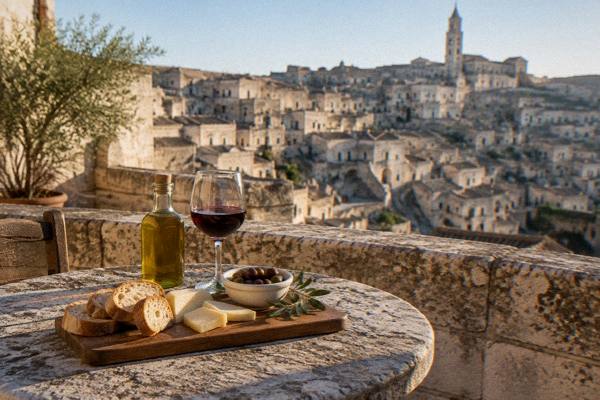
Matera Restaurants
Matera, in Basilicata, southern Italy, eats from a poor-farming tradition turned restaurant cuisine: bread, pulses, vegetables, lamb and simple pastas served in cave rooms and on terraces above the Gravina canyon.
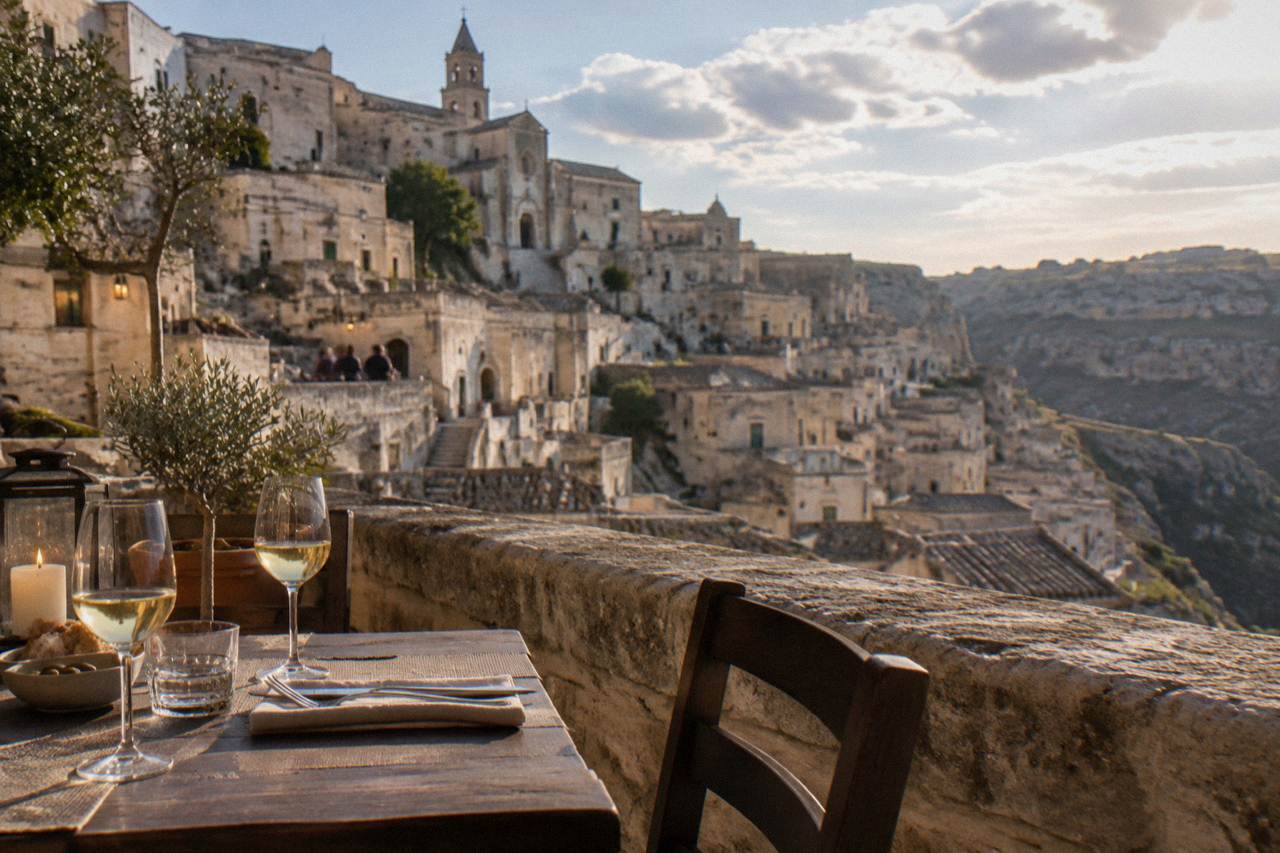
Short answer
Matera restaurants serve the inland cooking of Basilicata, not coastal seafood: bread-led, vegetable-heavy plates, lamb, legume pastas and local wine, eaten across the Sasso Caveoso, Sasso Barisano and the modern Piano, with no sea within the city itself.
Matera is an inland city in Basilicata, southern Italy, perched at about 400 m above sea level on the edge of the Gravina canyon, and its restaurants cook for that landscape rather than for a coastline that does not exist here. The sea is a day trip away, at Metaponto on the Ionian side or Polignano a Mare and Bari on the Adriatic. What the kitchens of the Sassi and the Piano serve instead is the cooking of the Murgia plateau: bread, olive oil, pulses, vegetables, lamb and simple pasta shapes, the food of a poor rural society that the city's cave dwellings were built around. This guide from the Matera Travel Guide editorial desk covers what the Matera restaurant table looks like, where to eat within the city's three main quarters, how bread anchors everything, and how to plan meals around the caves, the churches and the day trips beyond the city.
What Kind Of Food Do Matera Restaurants Serve?
Matera restaurants serve the inland cooking of Basilicata rather than coastal seafood: bread-led and vegetable-heavy plates, pasta with legumes or greens, lamb and mutton from the Murgia, sheep and cow cheeses, olive oil, and simple sweets, all rooted in the cuisine of the peasant households that occupied the Sassi before the mid-twentieth-century evacuation. The register is cucina povera, cooking built on what a dry limestone plateau produced. Dishes arrive close to their ingredients: pulses and bitter peppers, wild greens, bread used as an ingredient rather than a side, and meat that was once festive rather than everyday.
The historical background matters for reading any menu here. Residents were moved out of the Sassi between 1952 and the 1970s, and a 1986 law opened the way to restoration, after which the cave dwellings became hotels, museums and dining rooms. The restaurants of the Sassi therefore serve old household food in spaces that were literally houses, stables and cisterns, and the cooking deliberately tells that story. UNESCO inscribed the Sassi and the Park of the Rupestrian Churches in 1993, citing, among other criteria, an outstanding example of a rock-cut settlement exhibiting continuity over more than two millennia.
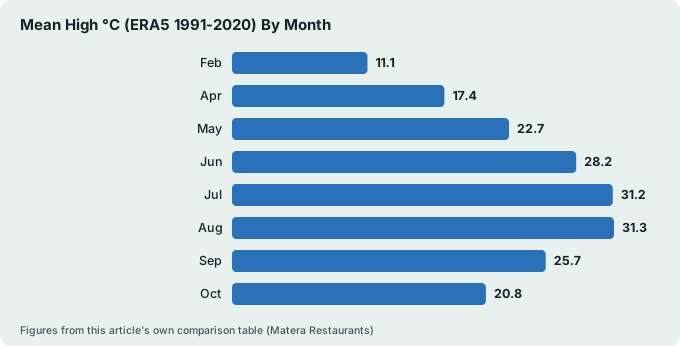
Two Basilicata products anchor most menus. The first is Pane di Matera, a bread with registered PGI status, registered in 2008 under Reg. CE 160/2008, attributed softly here because the registration detail comes from a secondary source rather than the consortium's own page. The second is peperoni cruschi, sweet red peppers dried and fried until they shatter, used over pasta, cheese and greens as the region's signature crunch. Around them sit the usual suspects of the southern inland table: pasta shapes thrown with pulses, ceci and beans, sausages and lamb, aged sheep cheese, and bitter herbal digestifs of the Amaro Lucano tradition, the same liqueur that gives a Craco day trip its tasting stop.
The general shape of a meal, described in the general terms the region's food culture supplies and without naming any individual kitchen, looks like this:
| Course | What The Regional Table Serves |
|---|---|
| Bread and opener | Pane di Matera PGI with olive oil, dried and fried sweet peppers, cured pork from the plateau |
| Primi | Pasta with ceci or beans, pasta with greens and breadcrumbs, legume soups served with bread |
| Secondi | Lamb and mutton, sausages, simple poultry, cheeses from the Murgia pastures |
| Contorni | Wild and farm greens, potatoes, peppers, seasonal vegetables |
| Sweets and close | Simple almond and honey sweets, must-based sweets, bitter herbal amaro |
No restaurant, bakery, bar or producer listed on this site has had its address, hours, prices or phone checked by the desk, so this page names none as a recommendation and prints no meal prices. For a tasted, guided introduction, the site's food-and-walk product blocks below cover a cave quarter, a rock church and a tasting, with every price, rating and duration rendered from verified listing data.
Where To Eat In Matera: Sasso Caveoso, Sasso Barisano Or The Piano?
Matera splits its dining into three zones: the Sasso Caveoso, the rupestrian, cave-room quarter facing the Murgia plateau; the Sasso Barisano, the denser, more restored northern Sassi with terraces over the canyon; and the Piano, the modern plateau city around Piazza Vittorio Veneto, where materani themselves eat everyday meals outside the tourist flow. Each zone carries a different trade-off between atmosphere, walkability and price sense, and the city is small enough, though steep, to move between them on foot in under half an hour when the stairways are dry.
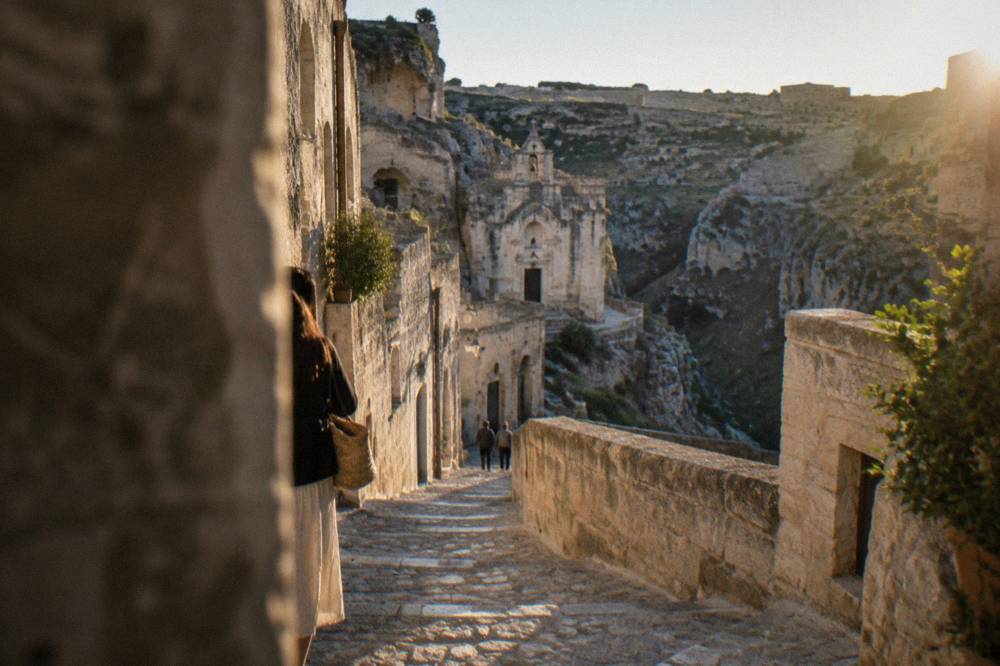
The Sasso Caveoso is the rawer half of the old city. Streets narrow into stairways, several rock churches open directly off the lanes, and the quarter's dining rooms are frequently carved into the tufa itself, the pale limestone that gives the Sassi their colour. The rupestrian churches of Matera are a short walk from any table here, and Oltre l'Arte's ticket page lists the entry combinations: one church 4.50 EUR, two churches 8.00 EUR, three churches 10.00 EUR, with hours from 28 March 2026 running daily from 09:30 at Santa Lucia alle Malve and Madonna de Idris and from 10:00 at San Pietro Barisano. A meal plan that pairs a church visit before closing and a late terrace dinner afterwards fits this quarter naturally.
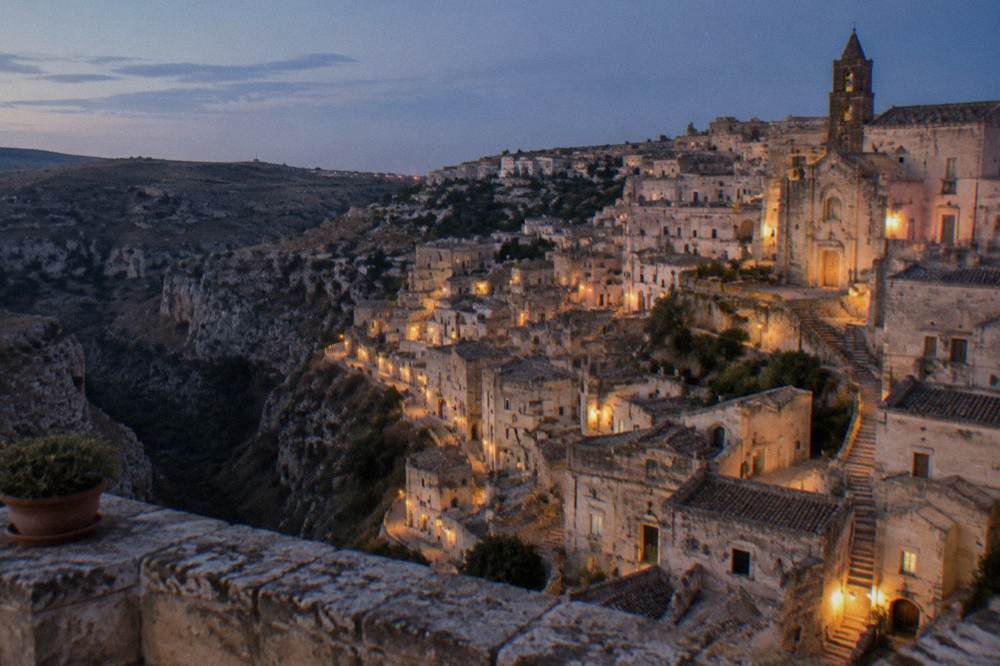
The Sasso Barisano holds more of the restored cave hotels and the bigger terraces. The Sasso Barisano guide on this site covers the quarter in detail; for dining, its position above the canyon means the classic view tables sit here, and the evening panorama toward the Murgia is the one every photograph of Matera at night chases. The matera at night page picks up where dinner ends.
The Piano, the flat modern city on top, is where the everyday bars, pastry shops and trattorias serve the city of 59,368 residents that ISTAT counted at 1 January 2026. Piazza Vittorio Veneto and Via Ridla are pedestrian areas closed to vehicles all day, per the comune's ZTL hours PDF, which makes them the natural evening stroll even when dinner is down in the Sassi. The where to stay in Matera guide maps the same three zones for sleeping.
How Do You Combine A Meal With A Sassi Visit In Matera?
The efficient pattern is to book a timed cave or church visit for late afternoon, eat in the same quarter afterwards, and let the evening panorama close the day, because Matera's main ticketed sites cluster in walkable ranges inside the two Sassi, the last entries fall between one and twenty minutes before closing, and dinner service in southern Italy starts too late for the sites to compete with it. A table booked for 20:00 or later costs you nothing in sightseeing hours, since the last Oltre l'Arte entries are at 18:50 or 19:20 depending on the church, and the MUSMA sculpture museum closes at 20:00 from April to September with last entry an hour before.
The desk cannot check any individual restaurant's hours, and the desk does not print meal prices. What the verified ticket data does allow is a planning table of the sites most often paired with a Sassi dinner, all figures read on the operators' own pages:
| Site | Ticket | Hours As Posted |
|---|---|---|
| Oltre l'Arte rupestrian churches (1 / 2 / 3 churches) | 4.50 / 8.00 / 10.00 EUR | Daily 09:30 to 19:30 or 10:00 to 19:00, from 28 March 2026 |
| Storica Casa Grotta di Vico Solitario | 8.00 EUR full, 5.00 reduced, 3.00 ages 11 to 18 | Apr to Jun and Sep: Mon to Fri 09:30 to 19:00, Sat and Sun to 20:00 |
| MUSMA, Sasso Caveoso | 10 EUR full, 5 or 7 EUR reduced | Apr to Sep 10:00 to 20:00; Oct to Mar 10:00 to 18:00 |
| Museo Nazionale, Palazzo Lanfranchi | 10.00 EUR, 15.00 EUR cumulative 2 days | Monday to Sunday 09:00 to 20:00 |
| Casa Noha (FAI) | Adults 6.50 EUR, children 3 EUR | Closed 5 to 22 October 2026 for renovation |
Two closures matter to this pattern. The Museo Ridola, the archaeological museum, has been closed since 7 April 2025 for energy works and a new display, with no reopening date published, so it cannot anchor any morning. Casa Noha, the FAI orientation site in the Recinto Cavone, is closed 5 to 22 October 2026 for renovation ahead of a relaunch. Oltre l'Arte closes all its sites on 25 December and 2 July, the latter for the Festa della Bruna, when the whole city is at the feast.
A guided option bundles the cave quarter, a rupestrian church and a tasting into one booked slot, which suits travellers who want the food explained rather than merely served:
Why Is Bread The Centre Of The Matera Table?
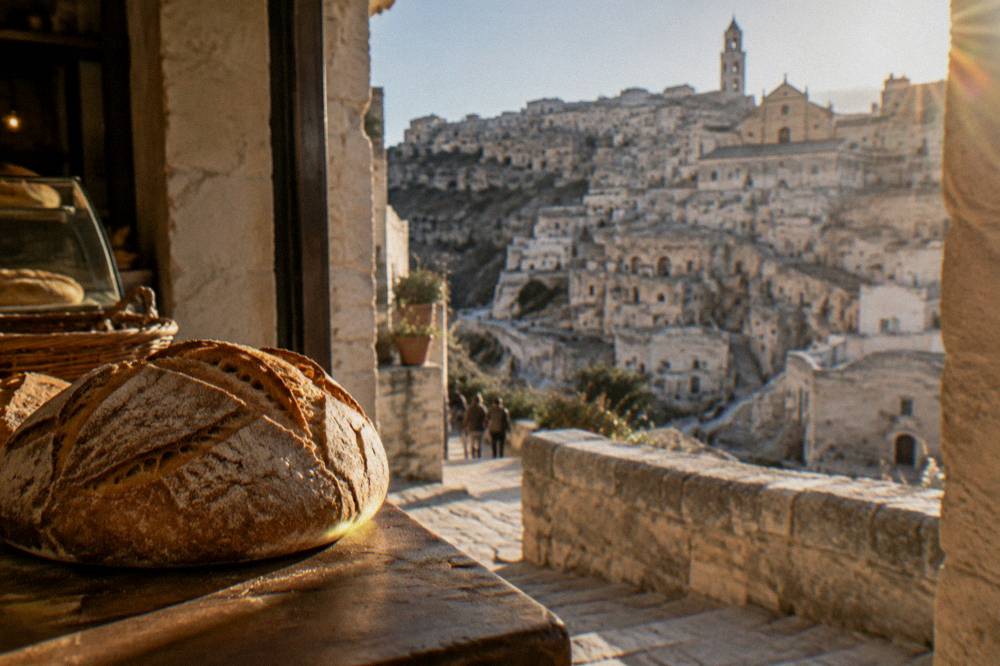
Pane di Matera is the city's registered product: a PGI bread recorded in 2008 under Reg. CE 160/2008, shaped in large high-crumb loaves that hold for days, and it anchors the Matera table both as the bread course and as an ingredient, thickened into soups, dried into breadcrumbs for pasta, and sold in bakeries across the Sassi and the Piano. The registration detail is attributed softly, as it reaches this desk through a secondary source rather than the consortium's own page, but the bread's presence on every menu is the region's own doing and needs no citation.
The reason bread, not pasta, leads here is agricultural. The Murgia is wheat and sheep country, and the Sassi households baked in communal wood ovens. The pane di Matera guide on this site covers the loaf's history in full; for the restaurant visitor, the practical consequences are three. First, the bread basket is not free filler but the point, so judge a table by it. Second, pasta dishes finished with toasted breadcrumbs, the poor cook's cheese, are authentic rather than lazy. Third, buying a loaf to carry on a Murgia walk is a normal local act, not a tourist one.
What Wine And Drinks Belong With A Matera Meal?
The Matera table drinks inland: Basilicata reds built on Aglianico, the grape behind the region's structured wines, plus white and rosé from the same hills, mineral water, and the bitter herbal amari of the Lucanian tradition, with wine tasting offered in the city both as a standalone hour and folded into longer food walks. No producer's prices, addresses or hours have been checked by this desk, so none is named, but the regional style is well defined: Aglianico's firm tannins are built for lamb and aged sheep cheese, exactly the secondi the Sassi kitchens serve.
Curious how the Aglianico pairs with the local table? Book a small group wine tasting here.
For visitors who want the pairing explained rather than guessed, a small-group tasting with food pairing runs in the city, and a farmhouse pasta class covers the cooking side. Both render their own verified prices and ratings from the blocks below:
What Day Trips From Matera Are Worth Planning Around A Long Lunch?
The strongest food-adjacent day trips from Matera are Alberobello, 68 km and about 1 h 23 of free-flow driving; Altamura, 20 km, a bread city in its own right; the Adriatic fish towns of Polignano a Mare at 100 km and Monopoli at 110 km; and the abandoned hill town of Craco at 57 km, which pairs with an Amaro Lucano tasting on a booked excursion. These are OSRM routing figures over OpenStreetMap, free-flow and without traffic, so round them up when planning; the desk states no journey time the routing data does not give for that exact route.
| Day Trip From Matera | Road Distance | Free-Flow Drive Time |
|---|---|---|
| Altamura | 20 km | 20 min |
| Craco | 57 km | 58 min |
| Bari Airport | 64 km | 1 h 01 |
| Alberobello | 68 km | 1 h 23 |
| Polignano a Mare | 100 km | 1 h 29 |
| Monopoli | 110 km | 1 h 36 |
Altamura, in Puglia, is the natural companion to a bread-themed visit, and the Altamura guide covers it. Alberobello, the trulli town, is the single booked excursion most often combined with Matera on a single ticket, and a private-transfer version runs from Matera itself.
For the coast, remember the geography: there is no sea at Matera. Metaponto on the Ionian sits 47 km and about 52 minutes away, Polignano a Mare 100 km on the Adriatic. Fish restaurants belong to those towns, not to the Sassi, and any menu in Matera leading with seafood is telling you where it thinks its customers are from.
When Is The Best Time Of Year To Eat Out In Matera?
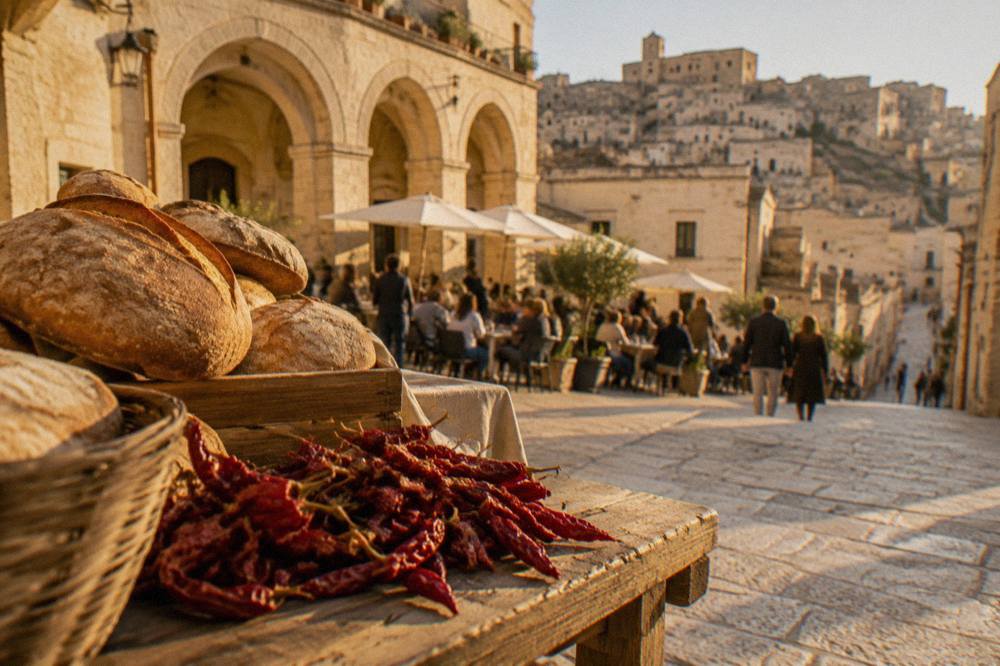
The best dining months by the data are May, June and October: warm without the plateau's July and August heat, which the ERA5 reanalysis, 1991-2020, puts at 31.2 and 31.3 °C mean highs, and outside the September arrival peak, when APT Basilicata logged 61,630 guest arrivals in 2025, the city's busiest month, ahead of August at 60,257. February is the quietest month on the same data, 15,239 arrivals, and November the wettest at 67.1 mm of rain in the ERA5 normals, which matters because the Sassi stairways are steep, stepped and uneven and no named route here is step-free.
| Month | Mean High °C (ERA5 1991-2020) | Rain Days (1 mm Or More) | Guest Arrivals 2025 (APT Basilicata) |
|---|---|---|---|
| Feb | 11.1 | 8.8 | 15,239 |
| Apr | 17.4 | 9.7 | 45,195 |
| May | 22.7 | 7.9 | 54,101 |
| Jun | 28.2 | 6.4 | 50,186 |
| Jul | 31.2 | 4.4 | 43,966 |
| Aug | 31.3 | 4.7 | 60,257 |
| Sep | 25.7 | 7.0 | 61,630 |
| Oct | 20.8 | 7.5 | 52,538 |
Christmas changes the table. The Presepe Vivente, a living nativity routed from Piazza San Pietro Caveoso through Vico Solitario, Rione Malve and Casalnuovo, turns the Sasso Caveoso into a staged village on four December weekends, and the Matera at Christmas guide covers the season. Arriving hungry in December means choosing between the presepe route and a relaxed dinner, not both in the same lanes.
What Should You Know Before Booking A Table In Matera?
Matera's practical dining facts are these: the city charges a tourist tax collected by your accommodation and confirmed at booking; the Sassi are car-hostile, with ZTL cameras active from 10:00 to 20:30 between 16 September and 30 June and from 10:00 to 24:00 from 1 July to 15 September on the Sassi gates; the emergency number is 112, live in the Matera district since 2 December 2025; and reservations matter most in September, the busiest month on the arrivals data. None of these require a car inside the city, and arriving by FAL train, about 1 h 45 to 2 h from Bari with a change at Altamura and no trains on Sundays and public holidays, deposits you within walking range of every quarter, steeply.
For drivers, the Matera parking and Matera ZTL guides carry the verified camera hours; this desk prints no car park tariffs because none has been confirmed on an official page. For trip framing, the what to eat in Matera guide covers the dishes in depth, and the Matera weather and best time to visit Matera pages hold the full climate picture.
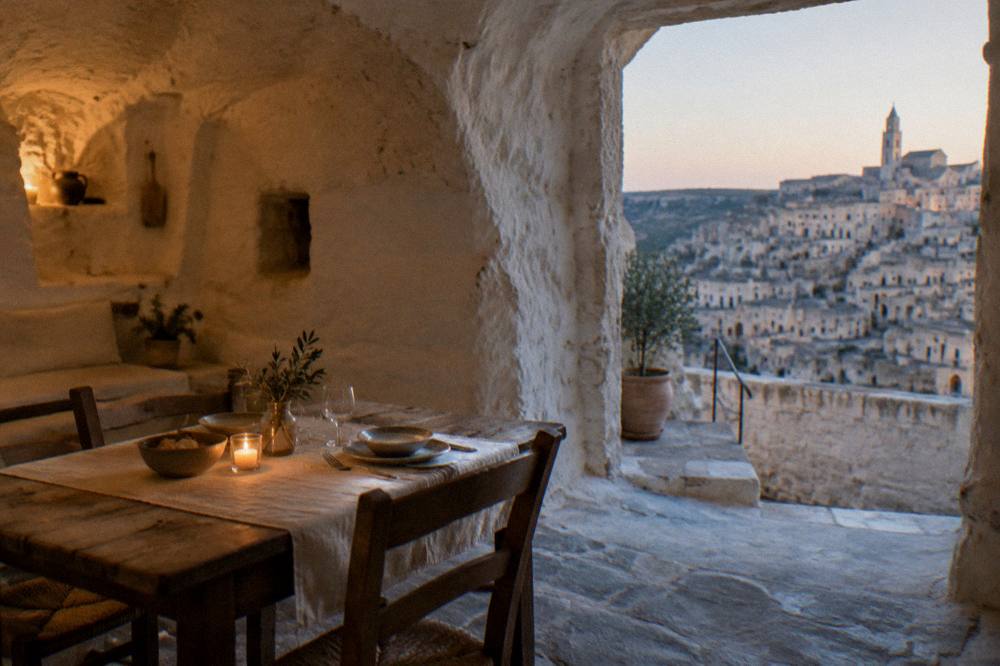
The one habit worth importing from the materani is time. Dinner in southern Italy starts late, the sites close by 20:00 at the latest, and the Sassi's stone holds the day's heat well past sunset in summer. A 20:30 table in July, when the mean low is still 18.6 °C in the ERA5 normals, is not a compromise; it is the correct local temperature for the terrace.
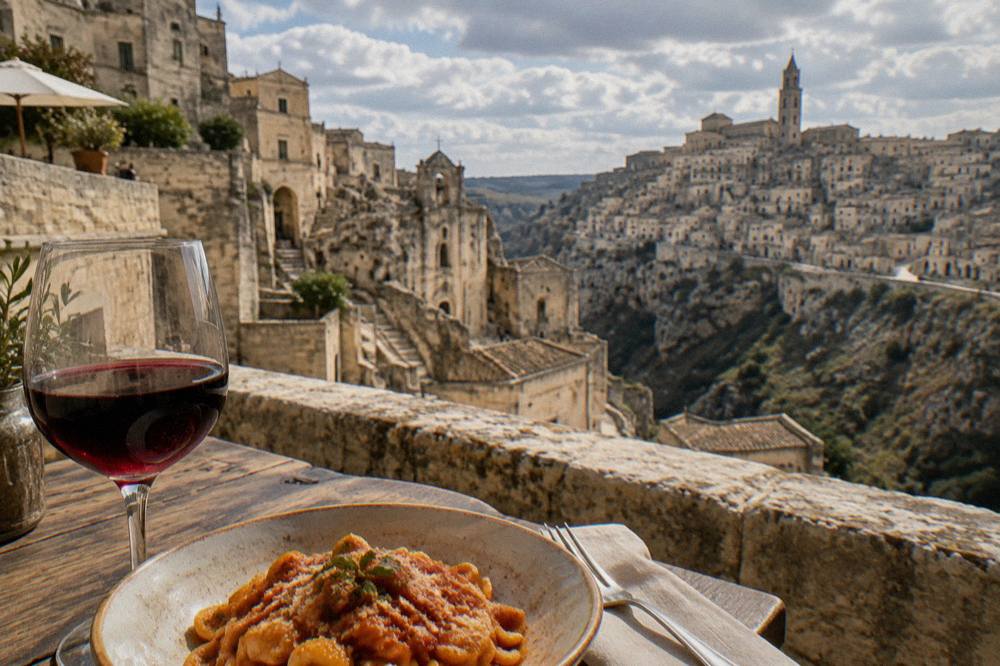
For travellers who want both the meal and the itinerary handled, the site's trio of booked experiences pairs a private-transfer Alberobello excursion, a full Sassi walk with a tasting, and an overnight stay with a meal and a tour:
Common Questions About Matera Restaurants
Are there seafood restaurants in Matera?
Matera is an inland city at about 400 m above sea level with no sea; its restaurants cook the inland food of Basilicata. Seafood tables belong to the coast, a day trip away at Metaponto, Polignano a Mare, Monopoli or Bari.
Do you need to book restaurants in Matera in advance?
This desk has checked no individual restaurant's booking policy, so confirm at booking. The demand signal is clear though: APT Basilicata logged 61,630 arrivals in September 2025 alone, the city's busiest month, and the average stay is 1.56 nights, so the terrace tables turn over fast at peak.
What is the most famous food in Matera?
Pane di Matera, a bread with registered PGI status recorded in 2008 under Reg. CE 160/2008. Around it the table runs to pasta with legumes, lamb and mutton, sheep cheeses, dried and fried sweet peppers and bitter herbal amari.
Where do locals eat in Matera?
The materani, 59,368 residents at 1 January 2026 by ISTAT count, live and eat largely on the Piano, the modern city above the Sassi, where Piazza Vittorio Veneto and Via Ridola are pedestrianised all day. No single venue is named on this site because none has been verified.
Can you eat inside a cave in Matera?
Yes, several dining rooms in the Sassi occupy restored cave spaces, a direct result of the 1986 law that opened the restoration of the former dwellings after residents were moved out between 1952 and the 1970s. Choose by listing description and confirm accessibility, since the Sassi routes are steep and stepped.
Is Matera expensive for eating out?
This desk prints no meal prices because none has been verified, and it will not invent a band. General cost planning for the whole trip, including the tourist tax collected by your accommodation and confirmed at booking, sits in the site's travel-cost coverage; for a fixed-price introduction, the tasting experiences in the blocks above render their own verified prices.
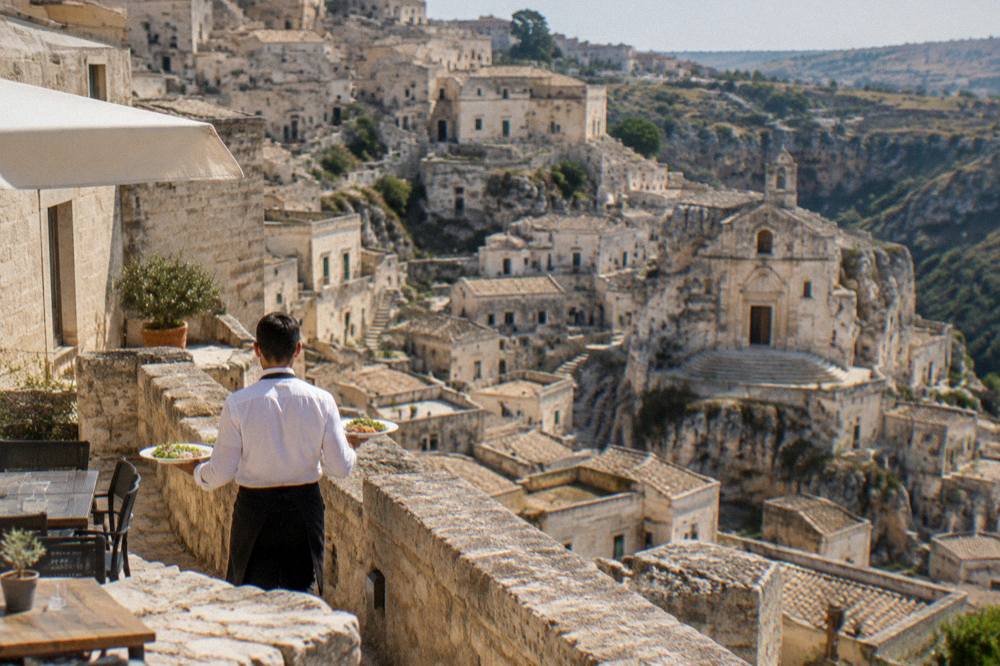
A final planning note in the desk's own voice: eat where the bread is taken seriously, book the terrace for late, and leave the fish to the coast.