Matera Or Alberobello
Matera in Basilicata and Alberobello in Puglia sit about 68 km apart by road, and travellers to southern Italy keep asking which one deserves the nights. This guide compares what is actually sourced: drive times, Matera's verified admissions, climate and crowd data.
Short answer
See both if you can: Alberobello is about 1 h 23 by road from Matera, and the pairing works well as a day trip in either direction. If the choice is forced, this guide's verified Matera data, UNESCO detail and monthly crowd figures make the case for basing in Matera and visiting Alberobello.
Matera, in the region of Basilicata in southern Italy, is an inland city of cave dwellings and rock-hewn churches on the edge of the Gravina canyon; Alberobello, about 68 km away by road across the regional border in Puglia, is the town of the trulli. Both appear on UNESCO's World Heritage list, and both pull hard on the same itinerary. The question of Matera or Alberobello is really a question about time, terrain and what kind of town you want to sleep in, and this guide works through it using figures this site has verified: road distances computed over OpenStreetMap, ticket prices read on the operators' own pages, and the APT Basilicata accommodation counts for the city of Matera. What this guide does not do is invent facts about Alberobello: for the trulli town it sticks to what a comparison can safely carry, and points to the site's Alberobello day-trip guide for the detail.
Matera Or Alberobello: Which One Deserves Your Time?
Matera deserves the nights, and Alberobello deserves a day, if the itinerary allows only that split. Matera's Sassi districts are a UNESCO site of 1,016 hectares with more than a thousand dwellings, per UNESCO's own listing, and its registered accommodation logged 479,083 arrivals in 2025. Alberobello is about 1 h 23 away by road, close enough for a comfortable return trip, and the pairing works as a single organised day.
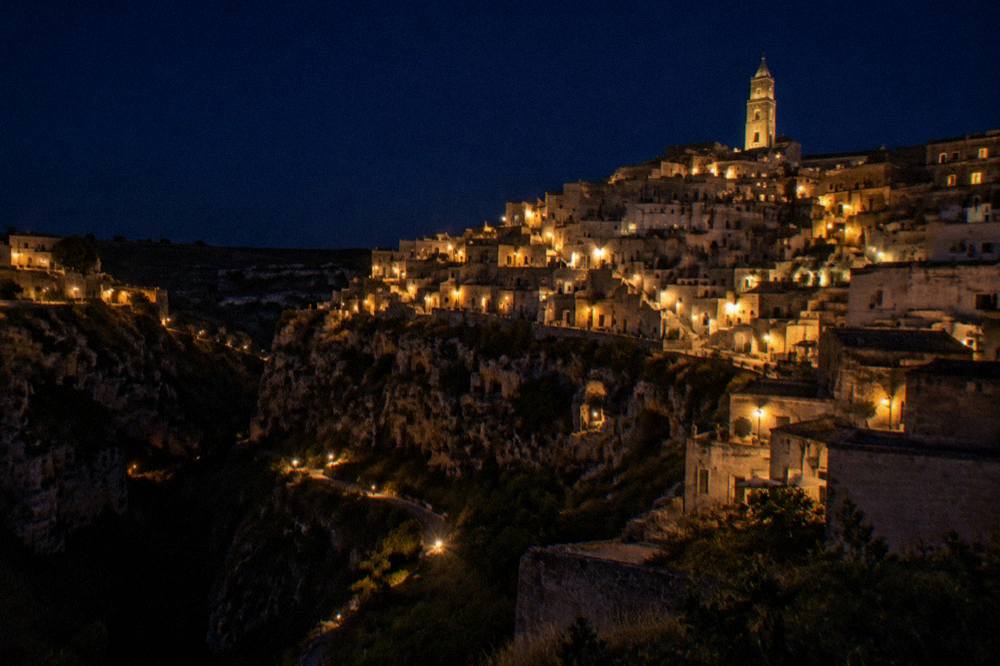
The honest framing is this: Matera is a city and Alberobello is a small town, and the two are not really interchangeable. Matera's old quarters, the Sasso Caveoso and the Sasso Barisano, spread down a canyon side in a continuous built landscape that UNESCO inscribed in 1993 under criteria (iii), (iv) and (v), citing "an outstanding example of a rock-cut settlement" with "continuity over more than two millennia". The surface you would explore is measured in hectares and steep stairways, not in a couple of streets, and the site's Matera and Alberobello in one day itinerary shows how the pairing works.
Alberobello, by contrast, is compact. This site holds no verified data on the trulli town's attractions, opening hours or prices, so it does not pretend to rank the two. What the sources do support is the geography: the two towns are 68 km apart by road, a drive of about 1 h 23 in free-flow conditions, computed over OpenStreetMap from Matera Centrale station. That single figure drives the whole decision, because it makes Alberobello one of the easier day trips from Matera, alongside Locorotondo at 77 km and Polignano a Mare at 100 km.
There is also the region question, which trips up a surprising number of itineraries. Matera is in Basilicata. Alberobello, Bari, Polignano a Mare, Ostuni and Lecce are in Puglia. The two regions share a border and a lot of food culture, but a "Puglia only" plan that squeezes Matera in by accident tends to underestimate the drive times, and the site's Puglia and Matera itinerary page handles that case directly.
How Far Is Alberobello From Matera, And How Do You Get There?
Alberobello is 68 km from Matera by road, a drive of about 1 h 23 in free-flow conditions, computed over OpenStreetMap from Matera Centrale. There is no direct rail link between the two towns: Matera's rail operator is FAL, whose line runs towards Bari through Altamura, and the Alberobello branch sits on a different network out of Bari or Locorotondo. In practice the trip between the two towns is made by car, by tour coach, or by heading back through Bari.
The drive is the practical answer. The free-flow times in the table below come from a routing engine over OpenStreetMap, with no traffic and no stops, and they should be rounded mentally upward for real summer Saturdays. Note that Puglia's road network carries the second half of the journey, and the SS roads around the Itria valley slow down in July and August.
| Destination from Matera | Road km | Free-flow drive time |
|---|---|---|
| Montescaglioso | 19 | 26 min |
| Altamura | 20 | 20 min |
| Gravina in Puglia | 30 | 31 min |
| Metaponto (Ionian coast) | 47 | 52 min |
| Bari | 68 | 1 h 02 |
| Alberobello | 68 | 1 h 23 |
| Castel del Monte | 73 | 1 h 11 |
| Locorotondo | 77 | 1 h 30 |
| Polignano a Mare (Adriatic coast) | 100 | 1 h 29 |
| Ostuni | 102 | 2 h 00 |
| Lecce | 204 | 3 h 08 |
Rail deserves a careful paragraph, because Matera breaks a common assumption: there is no Trenitalia station in the city. The operator is FAL, Ferrovie Appulo Lucane, and its posted weekday timetable has passengers changing at Altamura, with a journey of about 1 h 45 to 2 h from Bari Centrale to Matera. On Sundays and public holidays no trains run at all, and FAL runs replacement buses instead. FAL's fare matrix places Bari to Matera Centrale in fare band 70; the euro figure for that band was not readable in the published sheet, so this site does not print one. Anyone planning the rail legs should read the live sheets on FAL's own timetable page, and the site's how to get to Matera and Bari to Matera guides carry the verified detail.
For drivers there is a Matera-specific warning that has nothing to do with distance. The Sassi sit inside restricted traffic zones enforced by cameras: the ZTL Sassi gates run 10:00 to 20:30 from 16 September to 30 June and 10:00 to 24:00 from 1 July to 15 September, while the ZTL Centro is active 24 hours a day. The site's Matera parking and Matera ZTL pages explain where to leave the car and what the gates actually enforce.
One of the tours above covers the trulli town with a guide, one covers both UNESCO towns in a single organised day, and one stays in Matera's Sassi. Which of those three shapes fits depends entirely on the next question.
To explore the trulli district with a local, book an Alberobello walking tour here.
Can You See Matera And Alberobello In One Day?
Yes, one day is enough to see the highlights of both towns, because the drive is only about 1 h 23 each way, and organised tours sell exactly this pairing with a tour leader on board the coach. But a one-day split means choosing between depth and coverage: the Sassi alone contain multiple pay-to-enter cave houses and rock churches, and this site's data on Matera's sights, tickets and walking terrain suggests a rushed day in both towns trades away most of what makes either one distinctive.
The arithmetic works. Leave Matera in the morning, spend the middle of the day among the trulli, and return for the evening view over the canyon. An organised version removes the driving entirely.
The argument against the one-day version is terrain. The Sassi are steep, stepped and uneven, and this site never describes a named route there as step-free. Seeing the Sassi properly means walking down into them, and the two cave-house museums and three open rupestrian churches each take real time, with last entries that close well before the doors shut. The site's one day in Matera guide exists precisely because the city rewards a full day on its own.
A reasonable compromise, for a trip with two full days, is to give Matera the first day and night, then take Alberobello as a half-day or full-day trip on the second, folding in Locorotondo at 77 km if the pace allows. Locorotondo and Alberobello sit close together in the Itria valley, and the drive between them is a fraction of the Matera leg.
How Do The Sights And Ticket Prices Compare In Matera?
Matera's main paid sights carry prices that add up quickly: the Oltre l'Arte rupestrian churches cost 4.50 EUR for one, 8.00 EUR for two and 10.00 EUR for three, the Casa Grotta di Vico Solitario costs 8.00 EUR full, MUSMA costs 10 EUR, and the Museo Nazionale sites cost 10.00 EUR each or 15.00 EUR cumulative over two days. For Alberobello this site holds no verified price data, so no comparison figure for the trulli town is printed here.
Those prices were read on the operators' own ticketing pages, and they let a visitor budget Matera with precision. The full list this site has verified:
| Matera sight | Verified price | Notes |
|---|---|---|
| Oltre l'Arte rupestrian churches (Santa Lucia alle Malve, Madonna de Idris, San Pietro Barisano) | 4.50 / 8.00 / 10.00 EUR for 1 / 2 / 3 churches | Children up to 10 free with a parent |
| Oltre l'Arte 8-site all-inclusive ticket | 25.00 EUR, reduced 16.00 EUR | Covers the three churches, Vicinato a Pozzo, the Antica Casa Grotta in Via Fiorentini, MATA, the Purgatorio exhibition and the Museo del Pane |
| Storica Casa Grotta di Vico Solitario | 8.00 EUR full, 5.00 reduced, 3.00 ages 11 to 18 | Tariff from 4 April 2026; covers the cave house, the Neviera, the natural cave and the rock church of Sant'Agostino al Casalnuovo |
| MUSMA sculpture museum | 10 EUR full, 5 or 7 EUR reduced | April to September 10:00 to 20:00 |
| Museo Nazionale di Matera (Palazzo Lanfranchi) | 10.00 EUR per site, 15.00 EUR cumulative | Under 18 free; Ridola site closed |
| Casa Noha (FAI) | 6.50 EUR adults, 3 EUR children | Closed 5 to 22 October 2026 for renovation |
| Presepe Vivente nei Sassi (December) | 12.00 EUR full, 9.00 EUR ages 10 to 18 | Public days across four December weekends and 2 to 3 January |
Two closures matter to planning. The Museo Archeologico Nazionale Domenico Ridola has been closed since 7 April 2025 for energy works and a new display, with no reopening date published, and this site never lists it as open. Casa Noha, the FAI interpretation centre in the Sassi, is closed 5 to 22 October 2026 for renovation ahead of a relaunch with new displays.
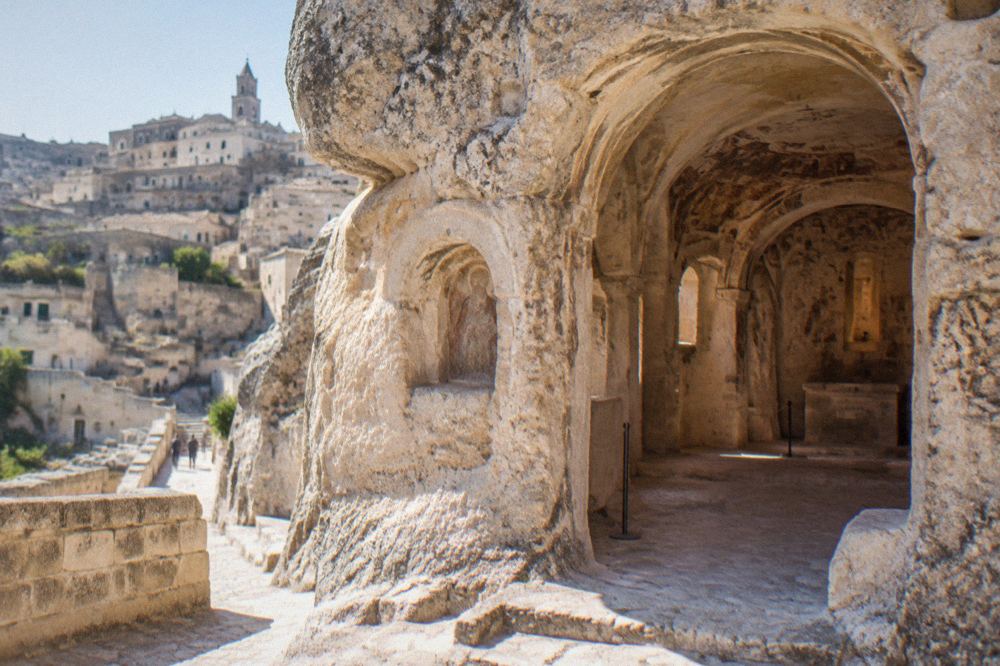
The rupestrian churches alone are a category Alberobello cannot match, and that is a sourced statement, not a judgement: UNESCO's listing names "The Sassi and the Park of the Rupestrian Churches of Matera" as one property of 1,016 hectares, and the park's own site counts about 8,000 hectares by its own measure, with 923 recorded plant species, about a sixth of the national flora, on the Murgia plateau opposite the city. A visitor who cares about rock-cut architecture has only one of these two towns on the itinerary in any serious way.
For a walk that puts the churches and a cave house into context, the Sassi walk with premium guides covers the historic fabric with a licensed guide, and Check availability shows the current listing. If the decision is a coin toss between the two towns, this comparison by the site editorial desk suggests starting with the Sassi walk and letting Alberobello follow as the day trip.
What Do The Climate And Crowd Numbers Say About Timing?
September, not August, is Matera's busiest month: the APT Basilicata data gives 61,630 arrivals in September 2025 against 60,257 in August, and 74.5 percent of those September arrivals came from abroad. The ERA5 reanalysis for Matera, 1991 to 2020, puts the September mean high at 25.7 C against 31.2 C in July, so the crowd peak lands after the summer heat, and February is the quietest month at 15,239 arrivals.
That pairing of heat and crowds is the useful planning fact. July is as hot as August by the modelled normals, 31.2 against 31.3 C mean high, yet July 2025 drew 43,966 arrivals, fewer than April, May, June, August, September or October recorded. The city's accommodation fills when the temperatures ease. Anyone deciding between the two towns for a summer trip should also weigh the terrain: the Sassi's stepped stone holds heat, and a 31 C afternoon down in Sasso Caveoso is a different walk from a small-town street. The full index of guides sits on Matera Travel Guide.
| Month | Mean high C (ERA5 1991-2020) | Rain mm | Matera arrivals 2025 |
|---|---|---|---|
| Jan | 10.3 | 51.4 | 18,402 |
| Feb | 11.1 | 54.9 | 15,239 |
| Mar | 14.1 | 59.2 | 23,629 |
| Apr | 17.4 | 56.5 | 45,195 |
| May | 22.7 | 41.7 | 54,101 |
| Jun | 28.2 | 35.1 | 50,186 |
| Jul | 31.2 | 21.2 | 43,966 |
| Aug | 31.3 | 21.7 | 60,257 |
| Sep | 25.7 | 44.8 | 61,630 |
| Oct | 20.8 | 51.7 | 52,538 |
| Nov | 15.5 | 67.1 | 23,555 |
| Dec | 11.2 | 57.2 | 30,385 |
November is the wettest month at 67.1 mm in the modelled normals and July the driest at 21.2 mm, and the year totals 562.5 mm over about 91 rain days. These are ERA5 reanalysis values for the Matera grid cell, 1991 to 2020, not a weather-station record, and the site labels them that way wherever they print. Alberobello sits lower and nearer the Adriatic; this site holds no climate file for it, and prints nothing.
Winter has its own draw. The Presepe Vivente nei Sassi, a living nativity in its sixteenth edition, runs on public days across four December weekends and 2 to 3 January 2027, with tickets at 12.00 EUR full and 9.00 EUR for ages 10 to 18, and December 2025 logged 30,385 arrivals against November's 23,555. The site's Matera at Christmas and best time to visit Matera pages expand on the season.
Where Should You Stay: The Sassi Or The Trulli Town?
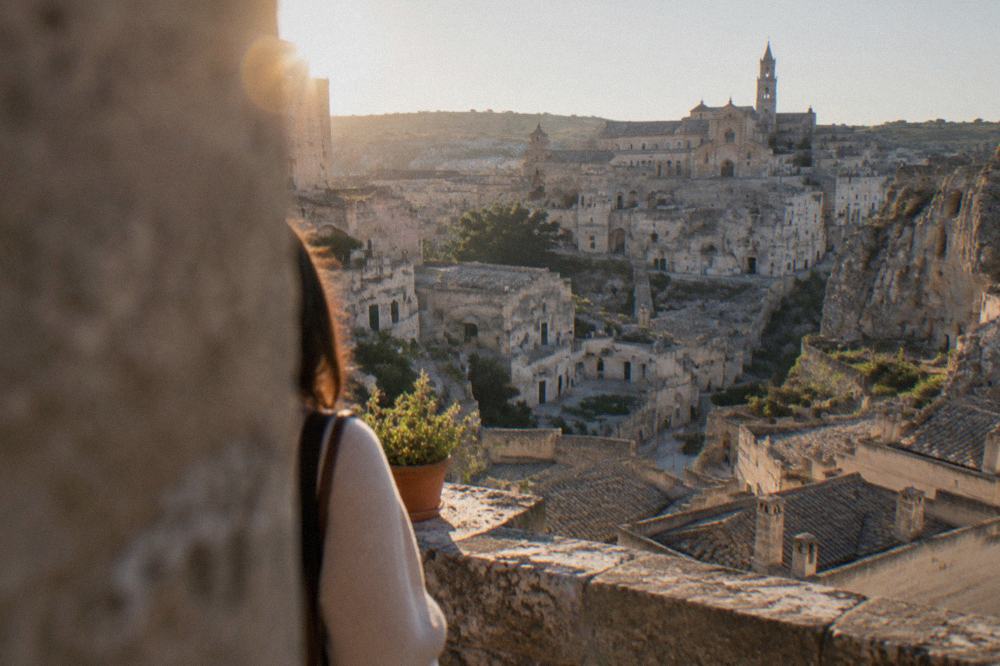
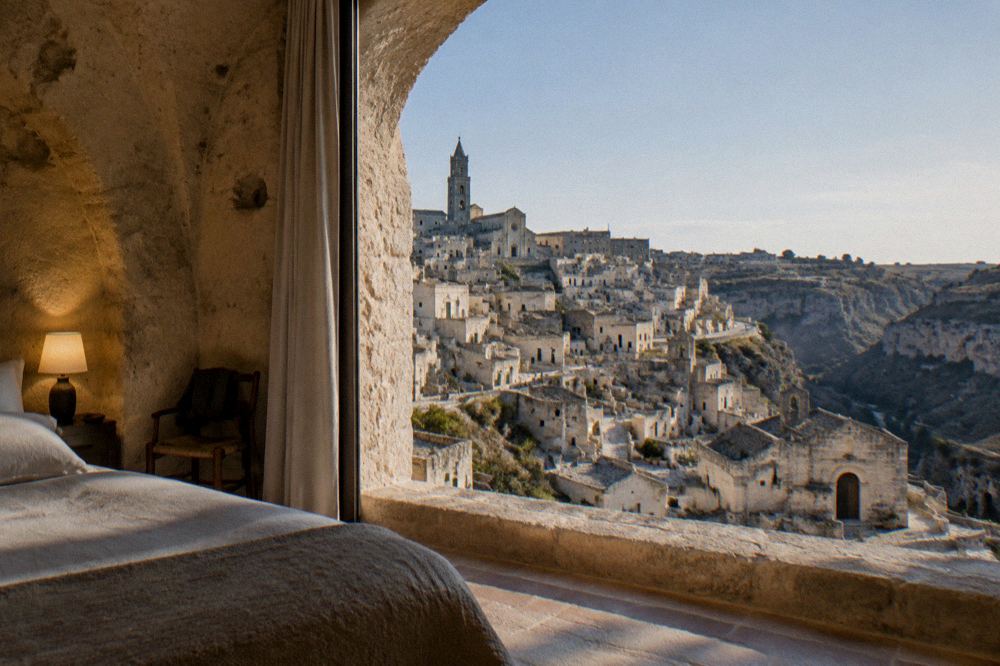
Stay in Matera if the trip has two or more nights, because the city's verified offering is built for overnights: cave hotels in the Sassi, an evening panorama over the canyon, and the APT data showing an average stay of 1.56 nights in 2025, which signals that visitors treat it as a base, not a stop. Staying overnight in Alberobello is a real alternative for trulli accommodation, but this site has no verified hotel data for the Puglia town and makes no claim about it.
The sleeping-in-a-cave experience is Matera's signature, and the site's where to stay in Matera and cave hotels pages map the options across the two Sassi districts and the modern centre on the plateau above. No hotel rate is printed anywhere on this site: nightly prices change constantly and none is in the verified pack.
| Decision factor | Matera (sourced) | Alberobello (this site's data) |
|---|---|---|
| UNESCO status | Inscribed 1993, criteria iii, iv, v, property 1,016 ha | No verified detail held on this site |
| Road distance between the two | 68 km, about 1 h 23 free-flow | Same road, opposite direction |
| Arrivals 2025 (registered accommodation) | 479,083 | Not held |
| Average stay 2025 | 1.56 nights | Not held |
| Terrain | Steep, stepped, uneven Sassi streets | Not held |
| Coast | Inland, about 400 m elevation; coast is a day trip | Not held |
| Rail | FAL line via Altamura; no Trenitalia station; no Sunday trains | Not held |
One practical note for anyone basing in Matera with a car: the tourist tax exists and is collected by the accommodation, and its amount is confirmed at booking, not on this site. The ZTL camera hours listed earlier apply to the Sassi streets themselves, so a cave hotel stay and a rental car need a parking plan, and the site's where to stay in Matera with a car blog page addresses the pairing directly.
What Else Is Within Reach Of Each Base?
Matera sits within an hour's drive of Altamura, Gravina in Puglia and the Ionian coast at Metaponto, and within two hours of Bari, Alberobello, Castel del Monte and Polignano a Mare, by the verified free-flow road times; the coast nearest Matera is a day trip, because the city itself is inland at about 400 m above sea level. Alberobello's own radius, the Itria valley, is not covered by this site's verified data beyond the distances below.
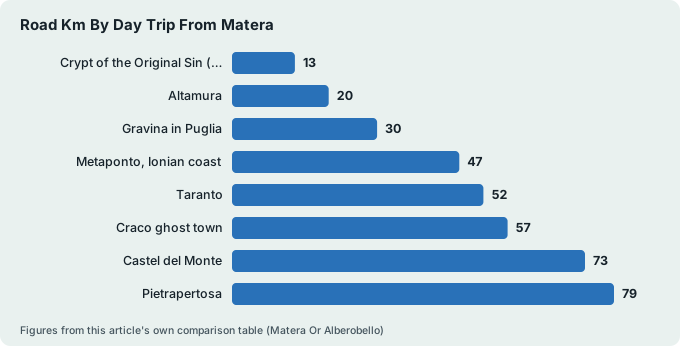
A base choice is also a day-trip-network choice, and here the sourced distances give Matera the wider net. From Matera Centrale, the computed road times reach two coastlines and a string of inland towns in every direction:
| Day trip from Matera | Road km | Free-flow drive time |
|---|---|---|
| Crypt of the Original Sin (ticket office) | 13 | 19 min |
| Altamura | 20 | 20 min |
| Gravina in Puglia | 30 | 31 min |
| Metaponto, Ionian coast | 47 | 52 min |
| Taranto | 52 | 1 h 08 |
| Craco ghost town | 57 | 58 min |
| Castel del Monte | 73 | 1 h 11 |
| Pietrapertosa | 79 | 1 h 22 |
| Castelmezzano | 82 | 1 h 23 |
| Trani | 81 | 1 h 21 |
| Monopoli | 110 | 1 h 36 |
Two of those deserve a flag from the verified pack. The Crypt of the Original Sin, 13 km out, takes only pre-booked e-tickets bought at least 90 minutes before the slot, with guided visits in fixed daily slots and no shuttle included; its price sits inside the booking engine and is never printed here. And Craco, the abandoned hill town, and the Castelmezzano to Pietrapertosa hiking pair give Basilicata-only itineraries an inland depth that the Puglia coast towns cannot, which is the strongest structural argument for basing on the Matera side of the border.
How Do You Choose With Limited Time: The Short Version?
Give Matera the stay and Alberobello the trip whenever time is short, because Matera's verified sight list needs at least a full day on its own, the two towns are a single 68 km drive apart, and organised tours exist that cover both UNESCO towns in one move with a tour leader on board. Reverse the split only if trulli lodging is the specific goal of the trip, a preference this guide respects and cannot price.
A simple allocation for the main trip lengths:
| Trip length | Verified-source recommendation |
|---|---|
| 1 day total | One town only: the Sassi, with a walk and one cave-house entry; the drive to Alberobello and back costs about 3 hours of road time |
| 2 days | Day 1 the Sassi and MUSMA or the rupestrian churches, overnight in a cave hotel, day 2 Alberobello with optional Locorotondo |
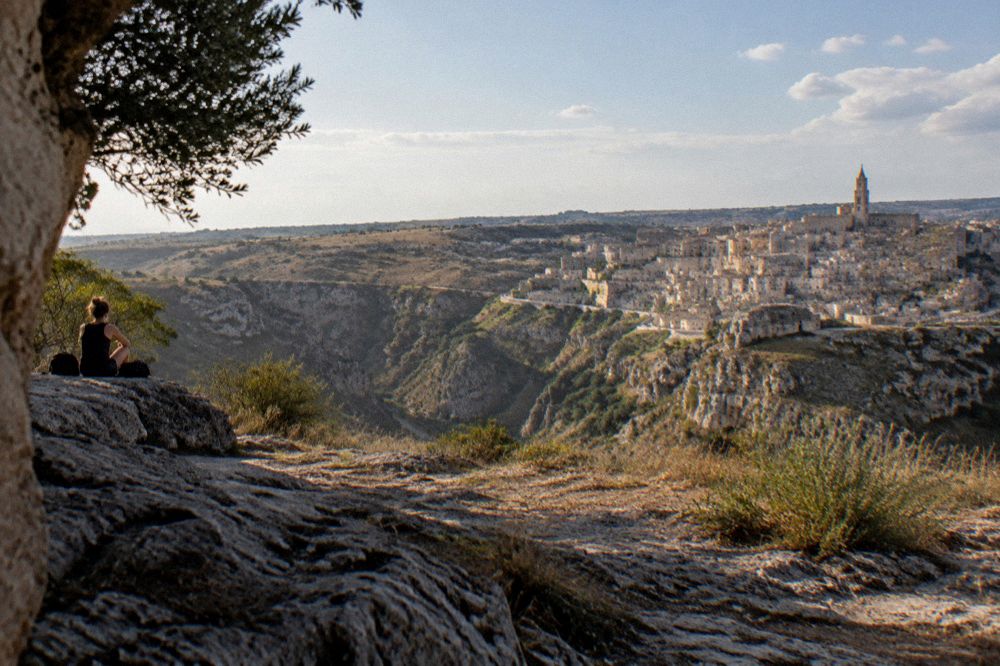
| 3 days | Add the Parco della Murgia side of the canyon, the Crypt of the Original Sin, or a coast day at Metaponto or Polignano a Mare |
| A week | Base in Matera, then work through the day-trip table above towards Bari, the Itria valley and the two coasts |
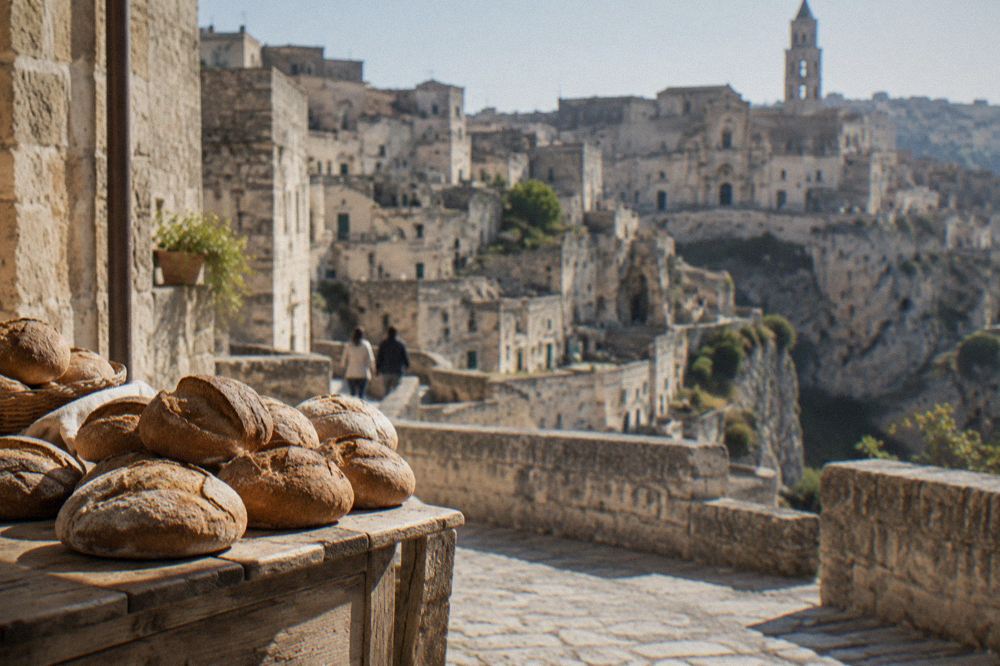
For the days spent on the Matera side, the food layer is its own draw: the site's what to eat in Matera and Pane di Matera pages cover the city's registered PGI bread and the Lucanian dishes that stop appearing once the border into Puglia is crossed. Peperoni cruschi, the crisp fried sweet peppers of the region, belong to the Basilicata side of this comparison, and the peperoni cruschi guide explains them.
Is One Town Enough On Its Own For A Short Holiday?
Matera alone carries a short holiday: this site documents enough verified sights for three full days, from the three Oltre l'Arte rupestrian churches to the Casa Grotta di Vico Solitario, MUSMA, Palazzo Lanfranchi and the Murgia park opposite, plus a calendar that includes the Matera Film Festival from 7 to 15 November 2026 and the Festa della Bruna every 2 July. Alberobello alone is not assessed here, because this site holds no verified sight data for the trulli town beyond the road distance.
The event calendar matters more than visitors expect. The Festa della Bruna, the city's patronal feast dated to 1389 by the organisers' own history page, fills Matera every 2 July, and Oltre l'Arte closes all its sites on that day and on 25 December. In November 2026 the Matera Film Festival runs 7 to 15 November in its seventh edition, twinned with Tétouan. December brings the Presepe Vivente. A town that closes its box-office day for a feast that has run for over six centuries is a town whose calendar can anchor a trip, and the Matera events page tracks it.
The contrast with the alternative is not that Alberobello lacks events; it is that this site cannot say whether it does or not, and says so. That is the honest boundary of a comparison page: everything above about Matera is sourced, everything about the trulli town beyond geography and UNESCO status is somebody else's claim.
Common Questions About Matera Or Alberobello
Matera or Alberobello: which is better?
No ranking is printed here, because this site holds verified data only for Matera. What the sources support: Matera is a UNESCO city of 1,016 hectares with more than a thousand dwellings and a three-day sight list at verified prices, while Alberobello is 68 km away by road and works well as a day trip from Matera in either a self-driven or an organised form.
Is one day enough for both Matera and Alberobello?
One day covers the highlights of both, since the drive is about 1 h 23 each way in free-flow conditions, and tours with a tour leader on board sell exactly that pairing. The trade-off is depth: the Sassi's cave houses and rupestrian churches each take real time, and a rushed day in both towns short-changes each of them.
Is Alberobello closer to Bari or Matera?
Alberobello is closer to Bari by road: the verified free-flow distance from Matera Centrale is 68 km at about 1 h 23, while Bari is 68 km at about 1 h 02 from Matera, and Alberobello sits on the Bari side of the Itria valley. All three pairings work; the simplest triangle is Bari, Alberobello, then Matera or the reverse.
Are Matera and Alberobello in the same region?
No. Matera is in Basilicata, an inland city at about 400 m above sea level on the Gravina canyon. Alberobello is in Puglia, across the regional border. Both are UNESCO World Heritage sites, but itineraries that treat them as one region tend to underestimate the drives.
Which town has more to see?
On this site's verified data, Matera does: three ticketed rupestrian churches, a cave-house museum at 8.00 EUR, MUSMA, Palazzo Lanfranchi, the Murgia park with its managed Sentiero 406, and a documented event calendar. This site holds no comparable sight data for Alberobello and prints none.
Can you get from Matera to Alberobello by train?
Not directly. Matera's rail operator is FAL, running towards Bari with a change at Altamura in about 1 h 45 to 2 h, with no trains on Sundays and public holidays. Alberobello sits on a different network out of the Bari side, so the practical links are the car, a tour coach, or a routing through Bari.
The choice between Matera and Alberobello resolves itself once the map and the calendar are on the table: the two UNESCO towns are a 68 km drive apart, Matera's verified offering fills the days and the nights, and the trulli town sits comfortably inside a day trip from the Sassi.