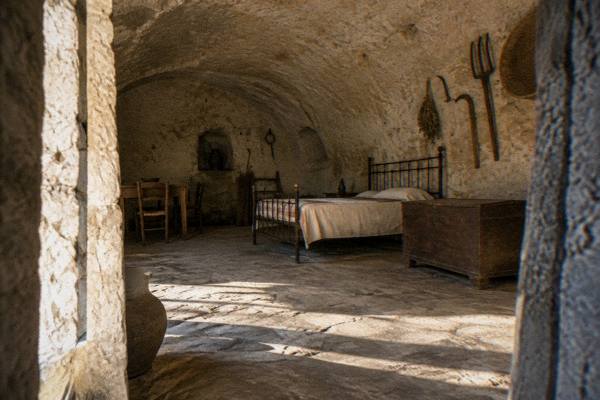
Casa Cava Matera
Casa Cava is one of Matera's recovered underground water cisterns, a hypogeum in the Sassi turned into a venue for concerts and cultural events in the city that UNESCO inscribed in 1993.
Short answer
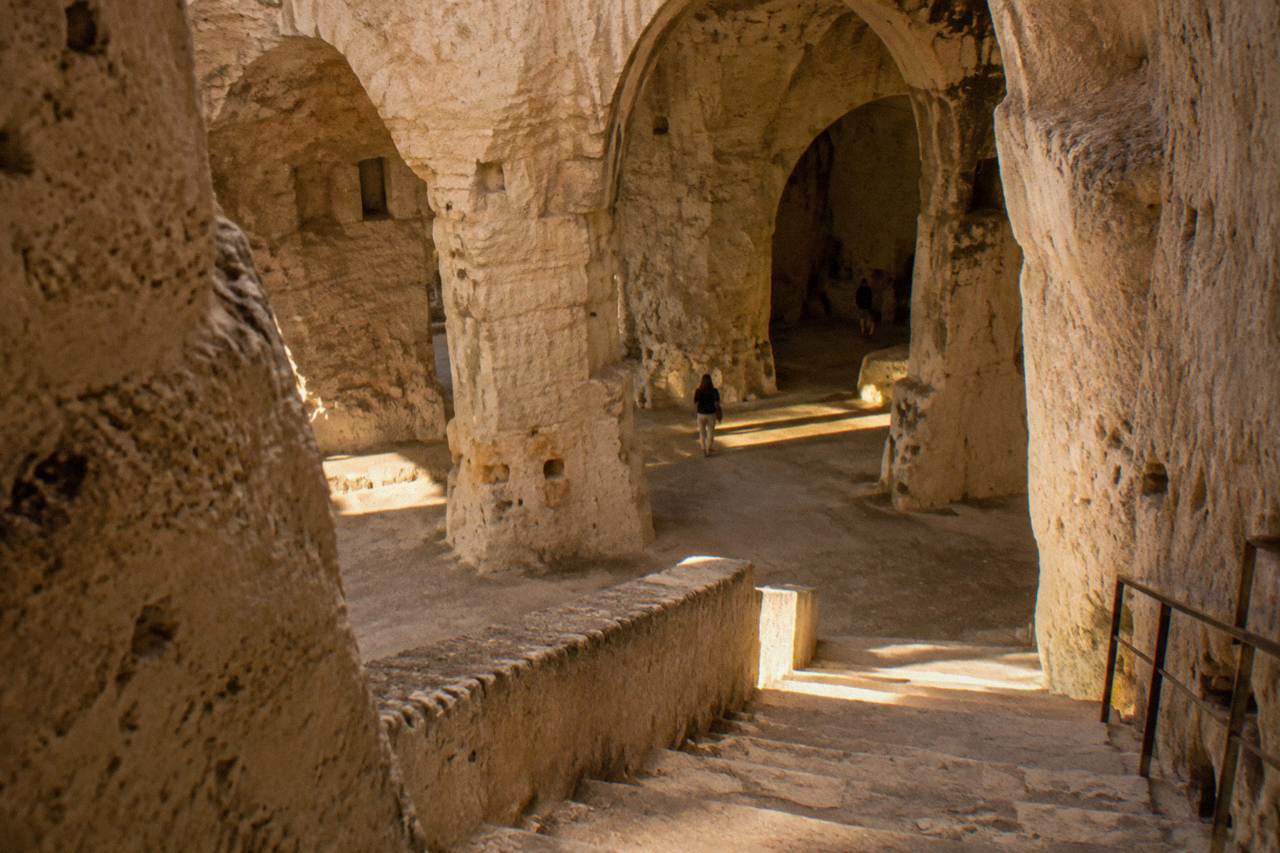
Casa Cava is a former rainwater cistern hollowed out of the tufa beneath Matera's Sassi and converted into an underground auditorium. No operator page with a ticket price or opening hours was found, so visitors should check locally or book a guided visit; the sites around it, from the rupestrian churches to the Casa Grotta di Vico Solitario, carry verified tariffs.
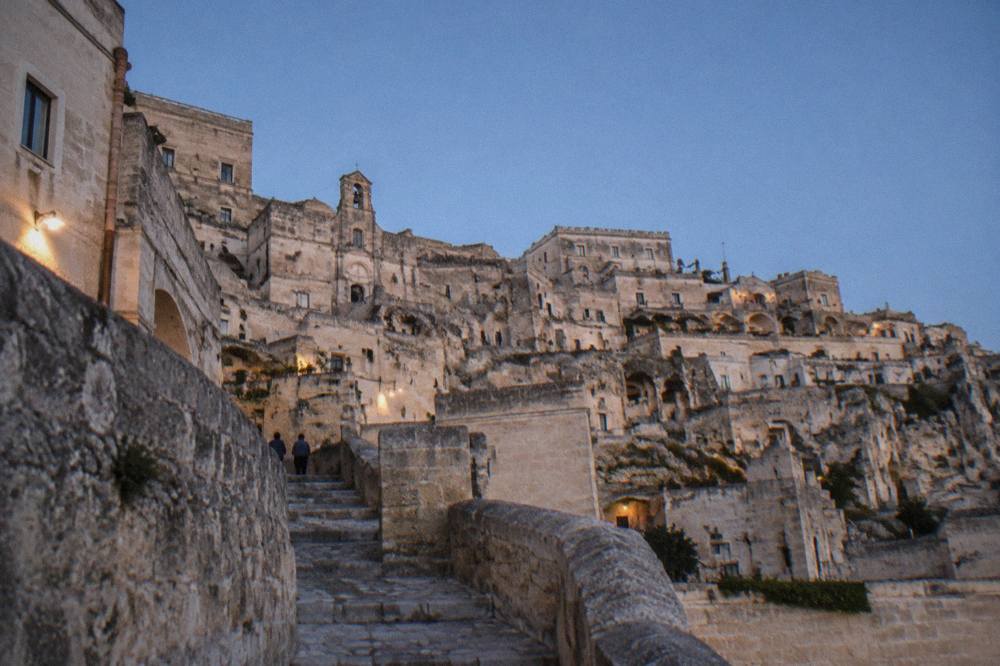
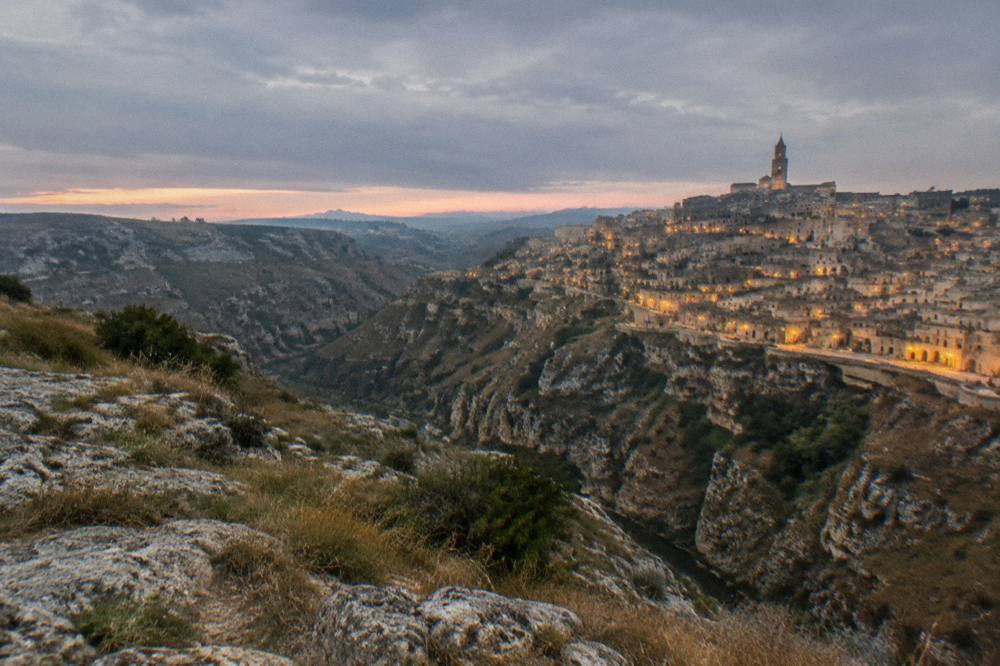
Matera, in the region of Basilicata in southern Italy, is an inland city of about 400 m above sea level on the edge of the Gravina canyon, and almost everything that makes it famous is underground. The Sassi, the two old quarters of Sasso Caveoso and Sasso Barisano, are a dense lattice of cave dwellings, stone houses and rock-hewn churches cut into pale tufa limestone, inscribed by UNESCO in 1993 as "The Sassi and the Park of the Rupestrian Churches of Matera". Casa Cava belongs to that underground world: a large disused cistern, a hypogeum carved to hold rainwater, recovered in the city's restoration wave and turned into a venue for concerts, conferences and cultural events. This guide explains what the site is, how it fits among Matera's other cave monuments, what a visit involves, and what to confirm before you go, because no operator page with a ticket price or opening hours was found for Casa Cava itself.
What Is Casa Cava In Matera?
Casa Cava is a recovered underground cistern in the Sassi of Matera, a hypogeum that once stored rainwater and that has been restored and equipped as an auditorium and cultural venue, part of the wave of reuse that followed the 1986 Italian law opening the Sassi to restoration. No operator page with a ticket price or opening hours was found, so the site is best treated as an event venue and a stop on a guided walk, with current access confirmed locally or at booking.
The story of Casa Cava is the story of Matera's water. Before the modern aqueduct, the Sassi survived on rainwater collected from the rooftops and courtyards and channelled into cisterns dug into the soft tufa. The same geology that made cave dwellings easy to cut made cisterns easy to cut, and the two often sat in the same block of rock, house above, water below. UNESCO's inscription text for Matera describes "more than a thousand dwellings and a large number of shops and workshops" across a property area of 1,016 hectares, and the cisterns were the hidden half of that system, invisible from the street and enormous once you are inside.
When the Sassi were evacuated, with residents moved out between 1952 and the 1970s, the cisterns were abandoned along with the houses. The 1986 law that opened the way to restoration brought the caves back into use as homes, hotels, museums and performance spaces, and Casa Cava is one of the clearest examples of that reuse: the tank was emptied, consolidated and fitted out as an underground hall, where the carved stone vault does the work a built concert hall needs heavy acoustic panels to do.
The venue belongs to the same family of Matera sites as the Palombaro Lungo, the vast cistern beneath Piazza Vittorio Veneto, which this site covers separately, and the recovered hypogea that now serve as wine cellars, spa rooms and museum spaces across the two Sassi districts. What sets Casa Cava apart is its public function: it exists to be filled with people and sound, not just looked at. The Sassi di Matera guide on this site gives the wider picture of the two quarters and how they are laid out.
Where Is Casa Cava And How Do You Find It?
Casa Cava sits inside the Sassi districts of Matera, the cave quarters that fall in terraces from the modern Piano down towards the Gravina canyon, and reaching it means descending stone lanes that are steep, uneven and not step-free. There is no car access into the Sassi: the ZTL Sassi cameras on Via Buozzi, Via Madonna delle Virtù and Via D'Addozio are active 10:00 to 20:30 from 16 September to 30 June and 10:00 to 24:00 from 1 July to 15 September.
The practical consequence is that every visit to Casa Cava is a walking visit. The Sassi are a vertical city: lanes become stairways, stairways become rooftops, and the same pale stone is underfoot, overhead and everywhere in between. Shoes with grip matter more here than in almost any other Italian town, and the descent is harder on the knees than the guidebook photos suggest. The Matera Travel Guide walking route page sets out a sensible order for the lanes and staircases.
Because the venue operates as an event space, the honest answer to "when can I get in" is: when something is on, or with a guide who has the keys. Matera's cultural calendar is unusually dense for a city of 59,368 residents (ISTAT, 1 January 2026), and 2026 is a programme year: the Fondazione Matera-Basilicata 2019 runs "Matera 2026 Mediterranean Capital of Culture and Dialogue", with a programme reported to close on 28 November 2026. Underground venues like Casa Cava are natural stages for that kind of year, and the city's event listings are the place to check what is scheduled during a stay. The Matera events guide collects the fixed dates.
For visitors arriving without a car, the venue sits within easy walking range of the transport hub: FAL trains and replacement buses serve Matera Centrale on Via Aldo Moro, and the descent into the Sassi begins within a few minutes on foot. The getting around Matera guide covers the city's layout, and the Matera parking guide and the Matera ZTL guide explain where a hire car has to be left, because the ZTL hours above are enforced by cameras, not by gates a driver can see.
How Does Casa Cava Compare With Matera's Other Cave Sites?
Casa Cava is one of several underground monuments in Matera, and the only major one without a published tariff: the rupestrian churches run by Oltre l'Arte charge 4.50 EUR for one church up to 25.00 EUR for an eight-site all-inclusive ticket, the Casa Grotta di Vico Solitario charges 8.00 EUR full, and MUSMA charges 10 EUR, while Casa Cava's price and hours must be confirmed locally or at booking. The sites overlap in geology but not in function: church, house museum, cistern, art gallery.
That comparison matters for planning, because a visitor who tries to see everything underground in Matera will spend more time below ground than above it. The table below sets out the verified tariffs for the sites with an operator page, and the honest blank for the ones without. Prices are read from the operators' own pages; where a figure is missing, no figure belongs on this page.
| Site | Type | 2026 full tariff | Source status |
|---|---|---|---|
| Casa Cava | Recovered cistern, event venue | Confirm locally or at booking | No operator page found |
| Rupestrian churches (Oltre l'Arte, per church) | Rock-cut churches | 4.50 EUR for 1, 8.00 EUR for 2, 10.00 EUR for 3 | Verified on the operator's ticket page |
| Oltre l'Arte 8-site all-inclusive | Multi-site ticket | 25.00 EUR, reduced 16.00 EUR | Verified on the operator's ticket page |
| Casa Grotta di Vico Solitario | Furnished cave house museum | 8.00 EUR full, 3.00 EUR ages 11 to 18 | Verified on the operator's tariff page |
| MUSMA | Sculpture museum in a cave complex | 10 EUR full, 5 or 7 EUR reduced | Verified on the museum's contact page |
| Museo Nazionale di Matera (Palazzo Lanfranchi) | National museum | 10.00 EUR per site, 15.00 EUR cumulative 2 days | Verified on the ticket page |
| Casa Noha (FAI) | Orientation museum on the Sassi | Adults 6.50 EUR, children 3 EUR | Verified on the FAI page |
Two of those sites deserve a note. The Casa Grotta di Vico Solitario is the furnished cave house that shows how a materano family actually lived, and its 8.00 EUR full ticket, in force from 4 April 2026, covers the house, the Neviera ice pit, the natural cave and the rock church of Sant'Agostino al Casalnuovo. Casa Noha, the FAI property that orients first-time visitors with a short multimedia history of the Sassi, is closed 5 to 22 October 2026 for renovation ahead of a relaunch with new displays, so anyone counting on it for an introduction in that window should re-plan. The Casa Noha guide has the seasonal hours.
The rupestrian churches of Matera are the other half of the underground city, and the Oltre l'Arte network, Santa Lucia alle Malve, Madonna de Idris with San Giovanni in Monterrone, and San Pietro Barisano, is the practical way in: one ticket structure, posted hours from 28 March 2026, and reduced prices for groups, disabled visitors and FAI members. All Oltre l'Arte sites close on 25 December and 2 July, the day of the Festa della Bruna.
To see the carved churches and the lanes with a guide, book a Sassi walking tour here.
For travellers who want the underground city explained rather than self-assembled, guided walks bundle several of these stops into one visit. The Bari bus excursion below is the simplest version for anyone starting on the Adriatic coast.
What Can You See Inside Matera's Recovered Cisterns?
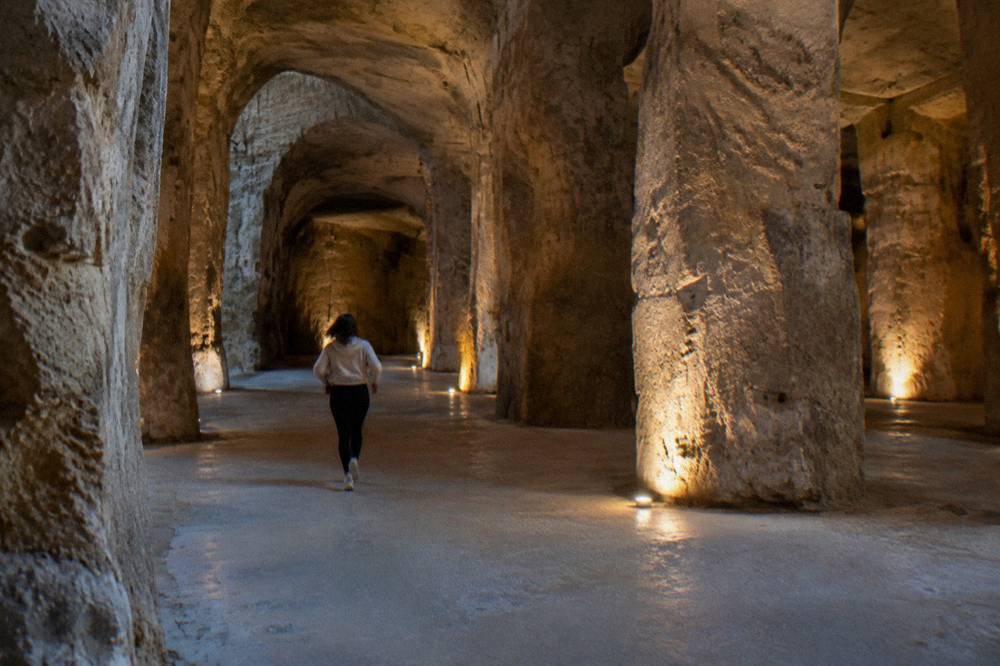
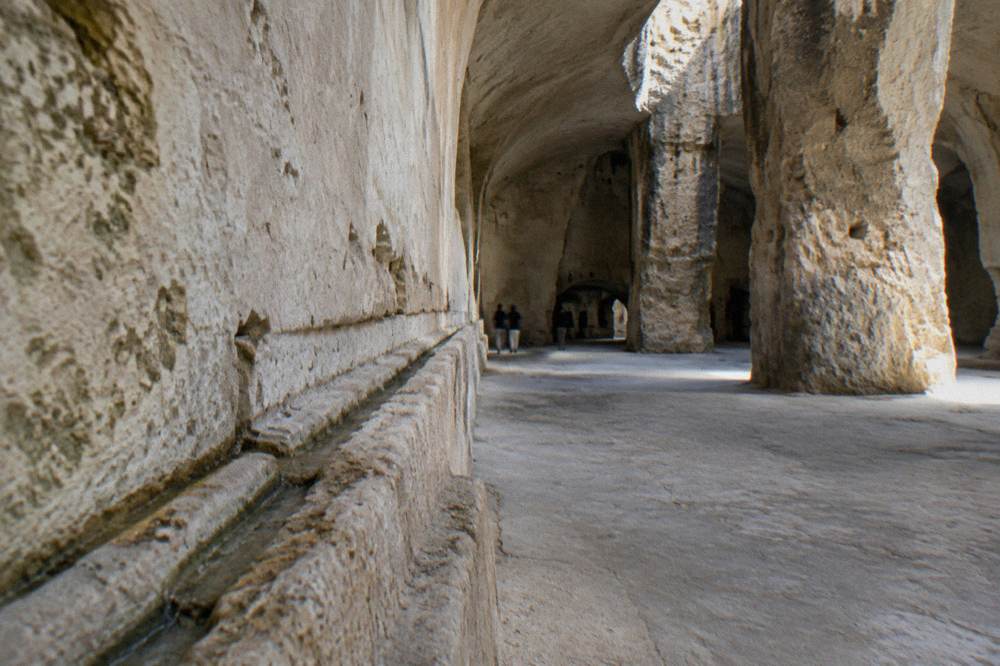
Inside a recovered Matera cistern the visible features are the carved tufa vault, the water channels and catchment surfaces cut into the rock, and the consolidated masonry added during restoration; at Casa Cava the space is fitted as an auditorium, while at the Palombaro Lungo the cistern survives as a monument, and neither site has a verified ticket price or opening hours on an operator page, so visits are confirmed locally or through a guided tour.
The Palombaro Lungo is the largest of the surviving tanks, dug beneath what is now Piazza Vittorio Veneto, and it is the reference point for anyone trying to picture Casa Cava before arriving. Its official site exists and states that phone booking is not possible, but no official page with a price or opening hours was found, so this site says only that visitors should check locally or book a guided visit. The Palombaro Lungo guide and the Piazza Vittorio Veneto guide cover the square above it, where the pedestrian bollards open only 04:00 to 08:00 on weekdays for deliveries.
What the cisterns share is the logic of their construction. Rain fell on the limestone plateau and the rooftops, ran along channels cut into the stone, and settled in tanks sealed with cocciopesto, a lime-and-crushed-tile plaster that hardened watertight against the tufa. The tank sat in darkness at a constant cool temperature, which is exactly why the recovered spaces work so well as venues today: the same physics that kept water from spoiling keeps a summer concert audience comfortable.
The conversion of cisterns into halls is part of a wider pattern of hypogeum reuse across the Sassi. The Ipogeo Materasum and the Convicinio di Sant'Antonio show the same carved geology put to other purposes, and the Matera caves guide gives the full picture of which underground spaces can be entered and how. For a visitor deciding between them, the honest summary is this: the churches and the house museums have published tariffs and hours, the cisterns do not, and a guided walk is the reliable route into the cisterns.
Can You Visit Casa Cava Without A Tour In Matera?
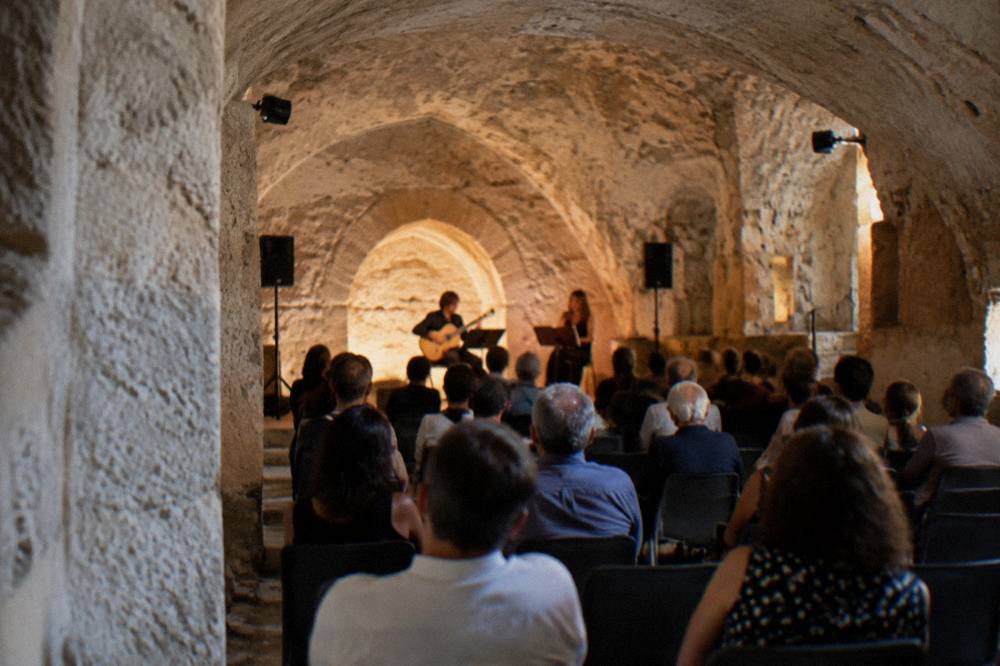
Casa Cava can be seen as a venue when an event is scheduled, but there is no verified standing ticket desk, posted price or published opening hours, so an independent visit depends on what is on during your stay; the reliable alternatives are the city's event listings, a guided walk of the Sassi that includes recovered hypogea, or a cultural programme event, with access confirmed locally or at booking.
That is not a hedge, it is the state of the sources. Matera's cultural infrastructure runs on a rolling programme: the Matera Film Festival holds its 7th edition from 7 to 15 November 2026, twinned with Tétouan; the Gezziamoci jazz festival, 39th edition, runs to 29 December 2026 across Matera venues; the Orchestra ICO della Magna Grecia season at Auditorium Gervasio runs from 26 October 2026 to 16 April 2027; and the exhibition "The Sea Is Closer Than You See" runs to 8 December 2026 at Palazzo Lanfranchi, TAM, MUSMA and Basilicata Open Space. Underground and recovered spaces across the Sassi host parts of programmes like these, and the venue's own listings, the city's event pages and the Matera 2026 programme are where a scheduled Casa Cava event will appear.
| Matera event, 2026 to 2027 window | Dates | Venue or spread |
|---|---|---|
| Matera 2026 Mediterranean Capital of Culture and Dialogue | Programme year, reported close 28 November 2026 | City-wide |
| "The Sea Is Closer Than You See" exhibition | To 8 December 2026 | Palazzo Lanfranchi, TAM, MUSMA, Basilicata Open Space |
| Matera Film Festival, 7th edition | 7 to 15 November 2026 | Festival venues, twinned with Tétouan |
| Gezziamoci jazz festival, 39th edition | Runs to 29 December 2026 | Matera and Basilicata venues |
| Orchestra ICO della Magna Grecia season | 26 October 2026 to 16 April 2027 | Auditorium Gervasio |
| Presepe Vivente nei Sassi, 16th edition | Public days 5-6, 12-13, 19-20, 26-27 December 2026 and 2-3 January 2027 | Route through Sasso Caveoso |
The Presepe Vivente deserves its own word even though it is not a Casa Cava event, because it is the clearest example of the Sassi being used as a stage: a living nativity with 20 scenes routed from Piazza San Pietro Caveoso through Vico Solitario, Rione Malve and Casalnuovo to Via Bruno Buozzi, tickets at 12.00 EUR full and 9.00 EUR for ages 10 to 18, free under 10, on the organiser's own page.
For visitors who prefer a fixed itinerary to a programme listing, the guided options are straightforward. A walk with a licensed guide covers the Sassi lanes, a furnished cave house and one or more rock churches in a single loop, and the Ape Calessino tours below cover the same ground seated, which matters for anyone the steps will defeat.
How Do You Get To Casa Cava From Bari?
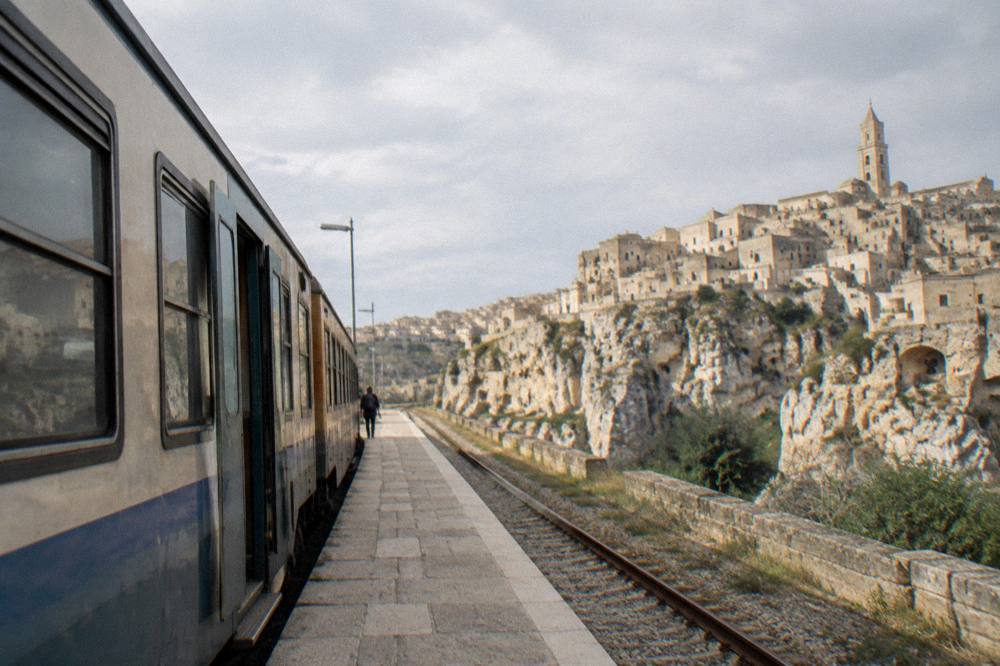
From Bari, the verified route to Matera is the FAL railway, about 1 h 45 to 2 h with a change at Altamura, with 21 weekday departures from Bari Centrale and 18 arrivals at Matera Centrale in the posted timetable; there is no Trenitalia station in Matera, no FAL trains on Sundays and public holidays, when replacement buses run instead, and by road it is 64 km and about 1 hour from Bari Airport to Matera Centrale in free-flow conditions.
The rail detail matters because the timetable is not what visitors assume. FAL is a regional operator, narrow gauge, and the posted weekday sheet shows the change at Altamura; FAL's notice of 9 October 2026 changes the rail programme on the Matera Sud to Altamura stretch from 12 October 2026, replacing two trains with buses, so exact current times must be read on FAL's own timetable page rather than quoted from a guide. The fare for Bari to Matera Centrale sits in band 70 of the 2026 fare matrix, in effect from 1 January 2026; the euro price for that band did not extract cleanly from the PDF, so this site does not print one. The Bari to Matera guide and the Bari Airport to Matera guide carry the full detail, including what is and is not verified about the airport shuttle.
Once in Matera, the driving constraints bite. The ZTL Sassi cameras are active 10:00 to 20:30 from 16 September to 30 June and 10:00 to 24:00 from 1 July to 15 September, on weekdays and holidays alike, and the ZTL Centro, covering Via Scotellaro, Via del Corso, Via delle Beccherie, Via Duomo, Piazza Sedile and San Francesco, is active 24 hours a day. A driver parks outside the restricted zones and walks down. No public car park names, capacities or tariffs could be verified on an official page, so this site does not print any; the car rental and driving guide explains the practicalities.
For anyone starting from Bari without a car at all, the excursion below is the established pattern: a coach day trip from the Adriatic coast into the Sassi, with the descent to the cave quarters handled by the itinerary.
| Route to Matera | Distance or service | Verified figure |
|---|---|---|
| Bari Airport to Matera Centrale by road | 64 km | About 1 hour free-flow |
| Bari to Matera by FAL rail, weekdays | 21 departures from Bari Centrale | About 1 h 45 to 2 h, change at Altamura |
| Bari to Matera, Sundays and holidays | Replacement buses only | 8 arrivals at Matera Centrale |
| Matera stops on the FAL line | Venusio, Serra Rifusa, Villa Longo, Centrale, Sud | Posted on the FAL fare sheet |
| Altamura to Matera by road | 20 km | About 20 minutes free-flow |
| Bari Airport shuttle to Matera | Operator, timetable and fare | Not verified, confirm before travel |
When Is The Best Time To Visit Matera For Casa Cava?
The best time to visit Matera for an underground venue like Casa Cava is spring or autumn: the APT Basilicata data shows September was 2025's busiest month with 61,630 arrivals in registered accommodation, ahead of August at 60,257, while the ERA5 reanalysis 1991-2020 gives a September mean high of 25.7 C against 31.3 C in August, so September combines the peak cultural calendar with heat that has broken; February, at 15,239 arrivals, is the quietest month.
That September peak is the single fact that most guides get wrong. Matera's accommodation logged 479,083 arrivals and 748,812 overnight stays in 2025, a year that beat 2019, the European Capital of Culture year, when the counts were 388,158 and 730,434. The average stay works out at 1.56 nights, which tells its own story: the city draws short cultural stays, not beach holidays, and the calendar of exhibitions, festivals and concerts is what moves those numbers. In 2025, 57.4 per cent of arrivals came from abroad, rising to 74.5 per cent in September.
| Month | Mean high C (ERA5 1991-2020) | Rain mm | Arrivals 2025 (APT) |
|---|---|---|---|
| March | 14.1 | 59.2 | 23,629 |
| April | 17.4 | 56.5 | 45,195 |
| May | 22.7 | 41.7 | 54,101 |
| June | 28.2 | 35.1 | 50,186 |
| July | 31.2 | 21.2 | 43,966 |
| August | 31.3 | 21.7 | 60,257 |
| September | 25.7 | 44.8 | 61,630 |
| October | 20.8 | 51.7 | 52,538 |
| November | 15.5 | 67.1 | 23,555 |
For Casa Cava specifically, the underground physics is a bonus in the hot months: a carved cistern holds a steady cool temperature while the July and August mean highs sit above 31 C, and about 55 days a year reach 30 C in the ERA5 series, 19.4 of them in July and 20.9 in August. In winter the same spaces feel mild against January's mean low of 2.2 C, and the Presepe Vivente in late December and early January is the season's underground spectacle. The best time to visit Matera guide, the Matera in winter guide and the Matera at Christmas guide break the seasons down.
One caution applies year-round: the Sassi lanes are steep, stepped and uneven, and no route into the Sassi can be called step-free. The Matera accessibility guide covers what is realistic, and the seated panoramic tours are the practical answer for visitors the stairways would otherwise exclude.
What Should You Combine With Casa Cava On A Matera Itinerary?
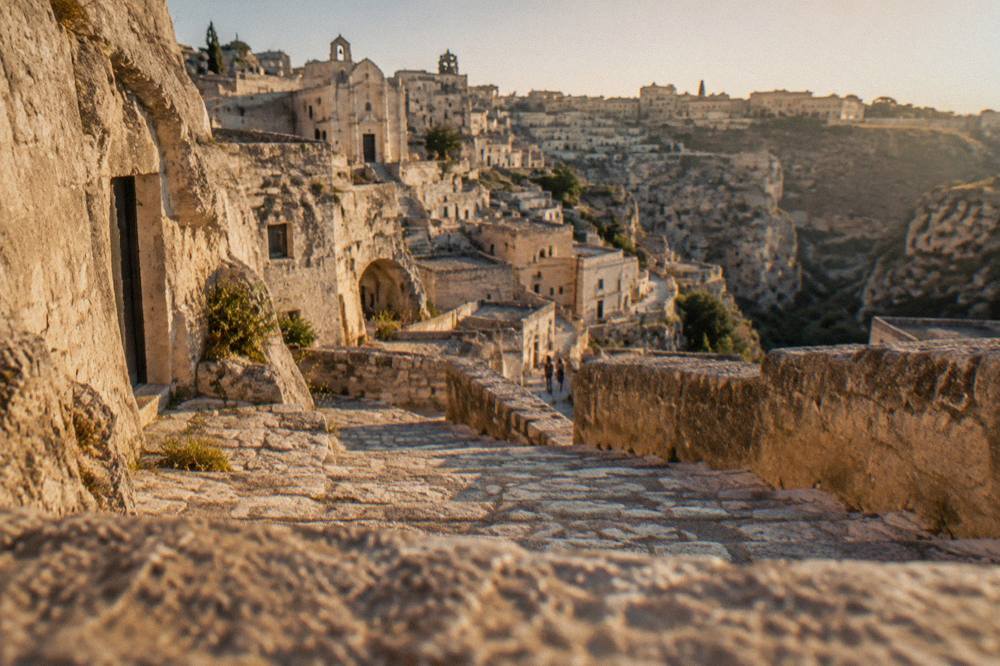
A sensible Casa Cava itinerary pairs the venue with the sights within walking distance in the Sassi: the Casa Grotta di Vico Solitario at 8.00 EUR, one or more of the Oltre l'Arte rupestrian churches from 4.50 EUR, MUSMA at 10 EUR, and the viewpoints over the Gravina, all reachable on foot from the venue, with the Crypt of the Original Sin and the Murgia park as half-day add-ons requiring a car or a booked transfer.
The one-day version is tight but workable, and the one day in Matera guide sequences it. The two-day version, in the two days in Matera guide, adds the Murgia side of the canyon: the park runs to about 8,000 hectares by its own count, with 923 recorded plant species, and the Belvedere Murgia Timone gives the classic Sassi panorama from the opposite rim. Access to the Sentiero 406 path and its suspension bridge over the Gravina has been managed since March 2026 by a staffed point and an online access ticket sold on the park's ticketing site, half price under 25 and free for residents of Matera and Montescaglioso, under 6, and disabled visitors with a companion; the exact price is unsettled between the ticket page text and press reports, so this site does not print one. The Tibetan bridge guide and the Belvedere Murgia Timone guide carry the detail.
The Crypt of the Original Sin, the painted rock church 13 km and about 19 minutes' drive away, is the one underground site that requires forward planning: booking is mandatory by e-ticket at least 90 minutes before the slot, capacity is 20 people a slot, and the ticket office sits at Azienda Agricola F.lli Dragone on the Fondo Valle del Bradano road, with no shuttle included. Its price is not verified and does not appear on this site. The Crypt of the Original Sin guide has the slot times.
| Add-on from central Matera | Road distance | Free-flow drive time |
|---|---|---|
| Crypt of the Original Sin ticket office | 13 km | About 19 minutes |
| Montescaglioso | 19 km | About 26 minutes |
| Altamura | 20 km | About 20 minutes |
| Gravina in Puglia | 30 km | About 31 minutes |
| Metaponto, Ionian coast | 47 km | About 52 minutes |
| Craco ghost town | 57 km | About 58 minutes |
| Alberobello | 68 km | About 1 h 23 |
| Polignano a Mare | 100 km | About 1 h 29 |
The distances come from routing over OpenStreetMap in free-flow conditions, so they exclude traffic, stops and parking. Matera is inland, and the sea is a day trip, not a stroll: Metaponto on the Ionian and Polignano a Mare or Monopoli on the Adriatic are the nearest coasts. The beaches near Matera guide covers them, and the Matera and Alberobello in one day guide handles the most-requested pairing.
What Else Should You Know Before Visiting Casa Cava Matera?
Before visiting Casa Cava, know three things: the venue has no verified ticket price or opening hours, so access is confirmed locally, at booking or through the event calendar; the Sassi are a restricted traffic zone with cameras active from 10:00 for most of the year, so arrival is on foot from outside the ZTL; and the tourist tax exists, is collected by the accommodation, and its amount is confirmed at booking rather than printed anywhere on this site.
A few practical points close the picture. The emergency number in Matera is 112, the single European number, live in the 0835 district since 2 December 2025. The city's museums have their own rhythms: the Museo Ridola has been closed since 7 April 2025 for energy works and a new display, with no reopening date published, while Palazzo Lanfranchi stays open Monday to Sunday 09:00 to 20:00 with a works page running alongside. Anyone planning a museum-heavy stay should read the Matera church tickets and passes guide before buying anything, because the Oltre l'Arte all-inclusive at 25.00 EUR only pays off across several sites.
For travellers weighing Matera against its neighbours, the Matera vs Alberobello guide and the Matera vs Lecce guide compare the three southern itineraries most often shortlisted together, and the Puglia and Matera itinerary guide strings them into one route. Matera is in Basilicata, not Puglia, a distinction that matters on every map and timetable, even though Alberobello, Bari and Lecce are the day trips most often bolted onto it.
The seated tours below suit visitors who want the Sassi's stories without the stairways, and they pair well with a Casa Cava event evening.
Common Questions About Casa Cava Matera
What is Casa Cava in Matera?
Casa Cava is a recovered underground cistern in the Sassi of Matera, a hypogeum carved into tufa to store rainwater, restored and fitted out as an auditorium and cultural venue following the reuse of the Sassi that the 1986 Italian law made possible.
How much does Casa Cava cost?
No operator page with a ticket price or opening hours was found for Casa Cava, so this site prints no figure. Check locally, watch the Matera event listings for a scheduled event, or book a guided visit that includes recovered hypogea.
Can you visit Casa Cava without a tour?
Only when something is scheduled: the venue operates as an event space, and access depends on the cultural programme. A guided walk of the Sassi is the reliable alternative, and tip-based walks run locally, to be confirmed with the guide.
How do you get to Casa Cava from Bari?
Take the FAL railway from Bari Centrale, about 1 h 45 to 2 h with a change at Altamura, and note that no trains run on Sundays and public holidays, when replacement buses operate. By car it is 64 km and about 1 hour from Bari Airport in free-flow conditions, and the Sassi are a camera-enforced ZTL, so arrival is on foot.
Is Casa Cava the same as the Palombaro Lungo?
No. The Palombaro Lungo is the large cistern beneath Piazza Vittorio Veneto, visited as a monument; Casa Cava is a separate recovered cistern fitted as an auditorium. Neither has a verified ticket price on an operator page, so both are confirmed locally or through a guided visit.
When is the best time to visit Casa Cava?
Spring and autumn, when the APT Basilicata data shows the city at its cultural peak, 61,630 arrivals in September 2025 against 15,239 in February, and the ERA5 reanalysis 1991-2020 gives a September mean high of 25.7 C. An underground venue is also comfortable in the hot months, when mean highs exceed 31 C in July and August.