Matera Caves
The caves of Matera, in Basilicata, are not a single attraction but a whole city: two ancient districts of cave dwellings, rock churches and underground cisterns cut into the tufa above the Gravina canyon.
Short answer
Matera's caves are the Sassi districts, Sasso Caveoso and Sasso Barisano, plus rock-cut churches and underground water cisterns, all carved into pale limestone on the edge of the Gravina canyon. Key entries cost 4.50 EUR for one rupestrian church, 8.00 EUR for the Casa Grotta di Vico Solitario and 10 EUR for MUSMA, on the tariffs listed on the operators' own pages.
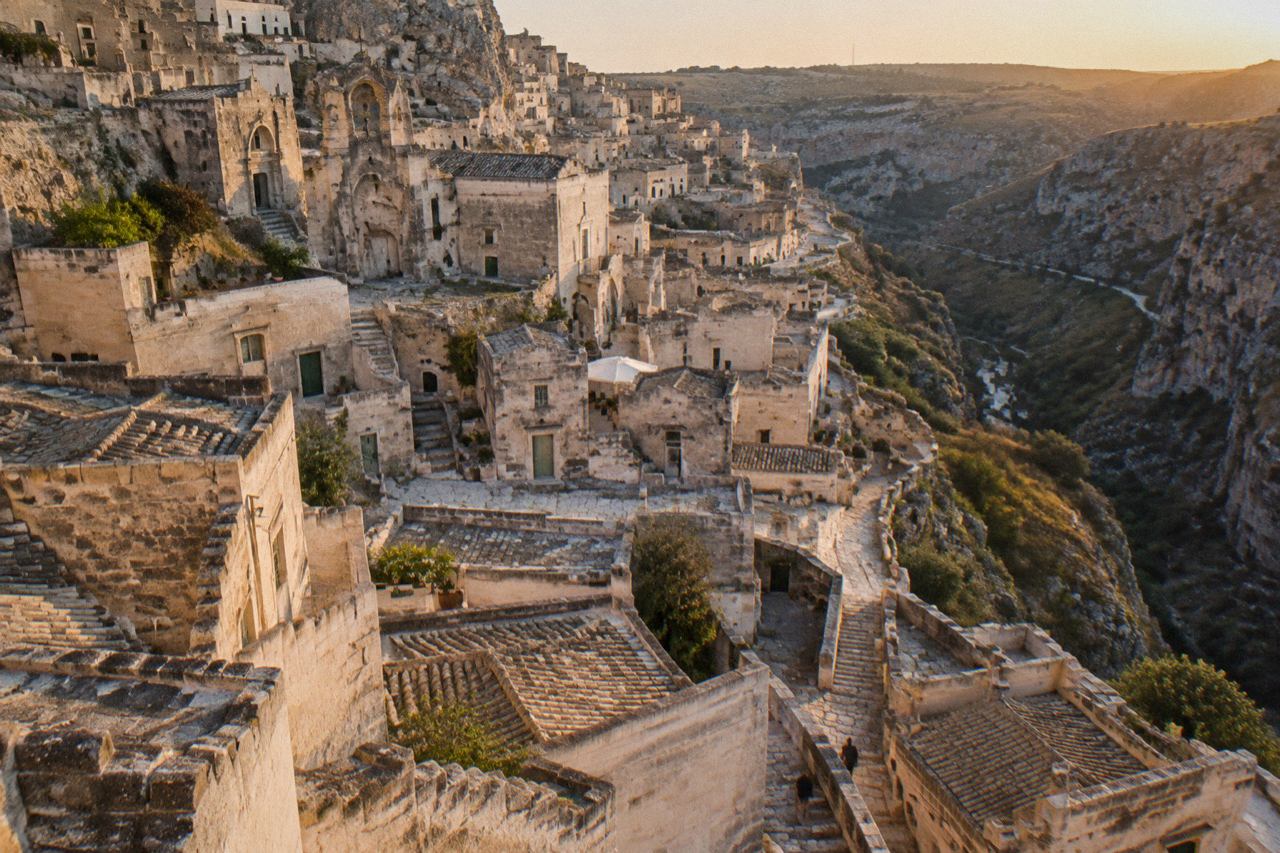
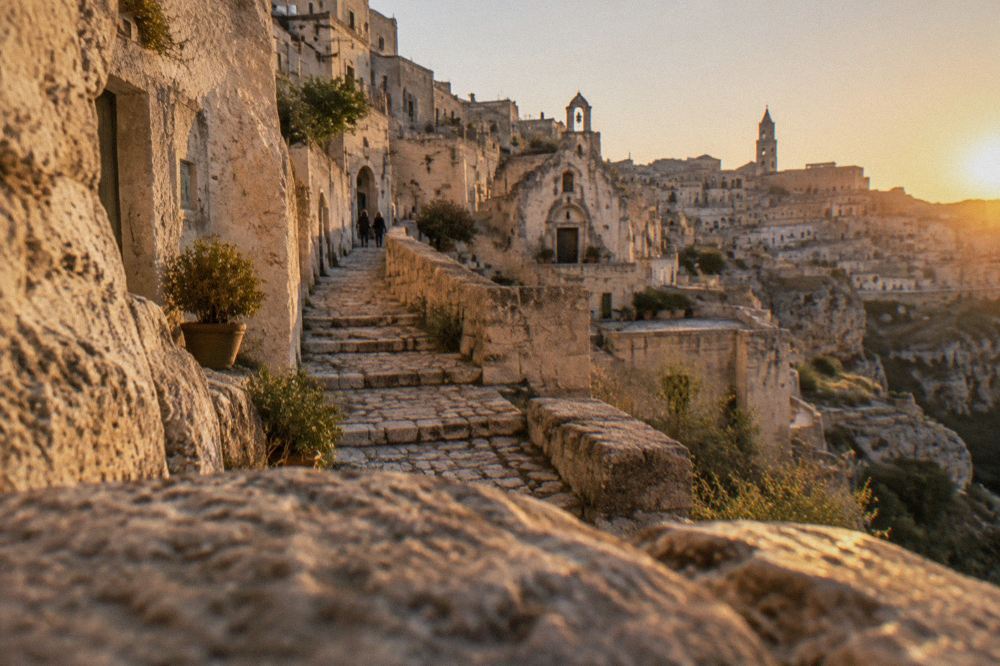
Matera, in the region of Basilicata in southern Italy, is a city built inside its own caves. The two old quarters, the Sassi di Matera, are districts of cave dwellings, stone houses and rock-hewn churches cut directly into the pale tufa limestone on the steep slope above the Gravina canyon, with the Murgia plateau facing them across the gorge. UNESCO inscribed "The Sassi and the Park of the Rupestrian Churches of Matera" on the World Heritage List in 1993, describing a rock-cut settlement adapted to its setting with, in its own words, "continuity over more than two millennia". This guide from the Matera Travel Guide editorial desk sets out what the caves are, which ones you can enter, what the verified tickets cost, and where you can sleep or eat inside one.
What Are The Caves Of Matera?
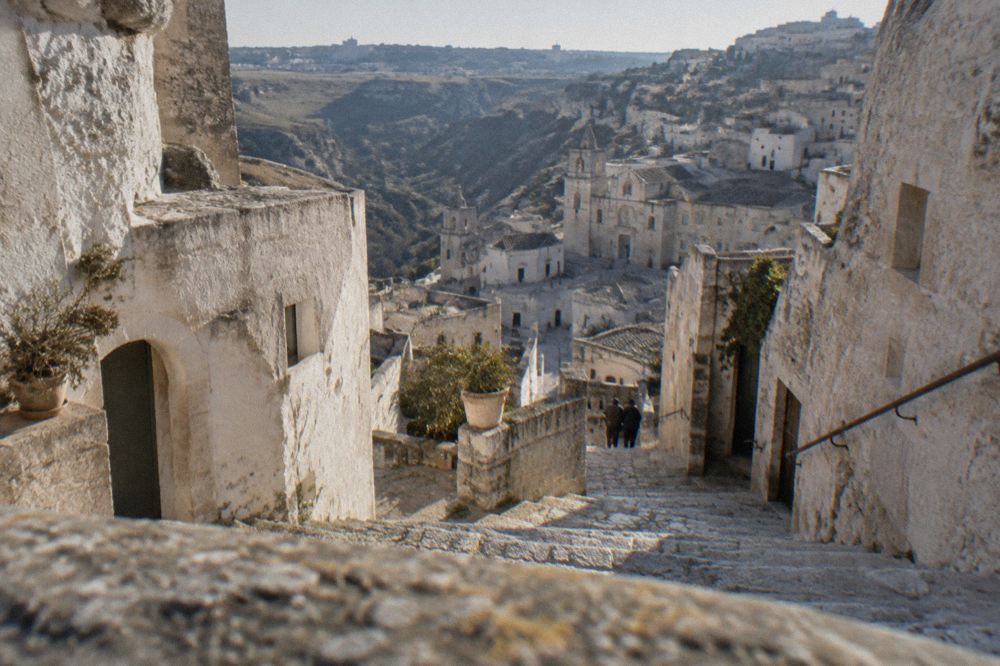
The caves of Matera are a lived-in rock-cut city, not a show cave: two districts, Sasso Caveoso and Sasso Barisano, hold more than a thousand dwellings plus workshops and rock-hewn churches, all carved into the tufa limestone on the walls of the Gravina canyon, and they are home to residents, hotels, restaurants and museums today. UNESCO's 1993 inscription covers both the Sassi and the facing Park of the Rupestrian Churches, a protected area of about 8,000 hectares by the park's own count, created by regional law in 1990.
The story is older than the buildings that now face you. The soft limestone of the Murgia plateau could be dug with hand tools, so the earliest dwellings were the caves themselves, and only later did facades close them in. Where a neighbouring guide would write experience, the record says this: residents were moved out of the Sassi between 1952 and the 1970s, and a 1986 law opened the way to restoration, after which people, businesses and hotels returned. The question of why families lived in caves at all, and what the sanitary conditions were, is covered in detail in why people lived in caves in Matera.
What that history means in practice is that "the caves" split into five visitable groups, and the mistake is treating them as one ticket.
| Cave type | What it is | Where to start |
|---|---|---|
| Cave house museums | Furnished dwellings showing domestic life in the Sassi | Storica Casa Grotta di Vico Solitario, Casa Grotta di Via Fiorentini |
| Rupestrian churches | Churches dug into the rock face, with frescoes | Santa Lucia alle Malve, Madonna de Idris, San Pietro Barisano |
| Underground waterworks | Cisterns and canals beneath the modern city | Palombaro Lungo, Vicinato a Pozzo |
| The Murgia caves | Churches and shelters on the plateau across the canyon | Jazzo Gattini visitor centre, Belvedere Murgia Timone |
| Living caves | Hotels, restaurants and homes in restored cavities | Sasso Caveoso and Sasso Barisano throughout |
Which Cave Houses Can You Actually Walk Inside In Matera?
The Storica Casa Grotta di Vico Solitario is the reference visit at 8.00 EUR full, 5.00 EUR reduced, 3.00 EUR for ages 11 to 18 and free up to age 10, on the tariff in force from 4 April 2026, and its ticket covers four spaces: the cave house itself, the Neviera ice store, a natural cave and the rock church of Sant'Agostino al Casalnuovo. The Casa Grotta in Via Fiorentini, run by the same Oltre l'Arte network, costs 2.00 EUR and is open daily 09:00 to 19:00.
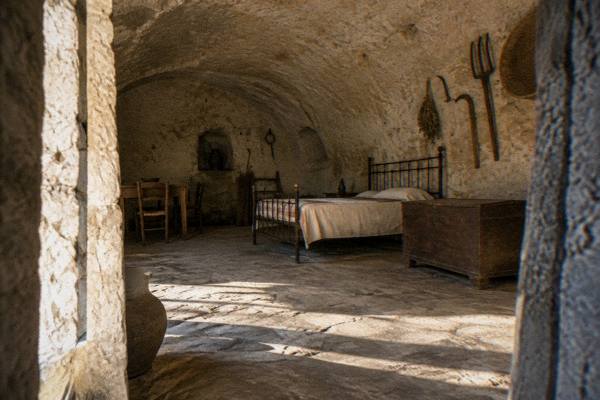
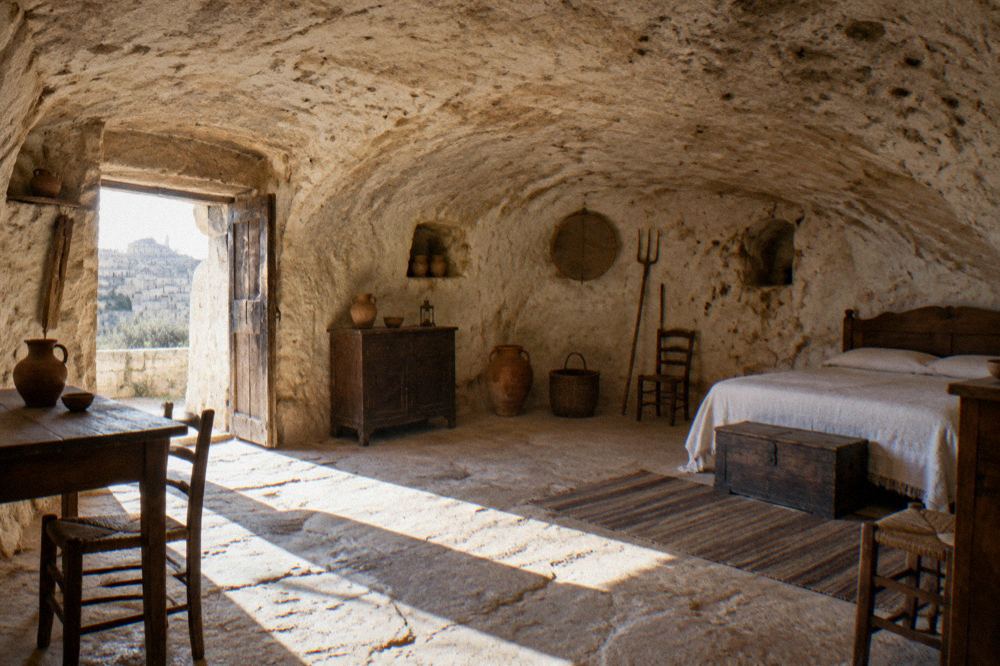
The casagrotta.it tariff page lists those prices and the full seasonal hours: October to December, Monday to Friday 09:30 to 18:00, and last entry always 20 minutes before closing. Older guides still print 3 to 5 EUR, a figure the 2026 tariff has superseded. A visit here answers the practical question every walk through the Sassi raises: what did one family's home actually contain? The rooms show the bed behind a curtain, the mule stall, the water jars and the hearth all sharing one cavity, with the animal's warmth part of the heating logic.
The interior of the Casa Grotta is deliberately left unfurnished-lookalike? No, deliberately staged, and the paired Neviera shows the other half of cave life: the deep pit where winter snow was compacted into ice for summer use. The included rock church of Sant'Agostino al Casalnuovo rounds the ticket off, so a single entry covers domestic, food-storage and religious cave use, three of the five groups above.
What Do The Rock-Cut Churches Of Matera Cost To Enter?
Oltre l'Arte, the body that runs the main rupestrian churches, charges 4.50 EUR for one church, 8.00 EUR for two and 10.00 EUR for three, covering Santa Lucia alle Malve, Madonna de Idris with San Giovanni in Monterrone, and San Pietro Barisano, with hours from 28 March 2026 of 09:30 to 19:30 daily at the first two and 10:00 to 19:00 at the third, and an eight-site all-inclusive ticket at 25.00 EUR, reduced 16.00 EUR. The same network closes every one of its sites on 25 December and 2 July, the day of the Festa della Bruna.
| Ticket | Price | Notes |
|---|---|---|
| 1 rupestrian church | 4.50 EUR | Reduced 3.50 EUR, with a licensed guide 2.50 EUR |
| 2 churches | 8.00 EUR | Reduced 5.50 EUR, with guide 4.00 EUR |
| 3 churches | 10.00 EUR | Reduced 7.50 EUR, with guide 5.00 EUR |
| Cathedral and MATA | 4.00 EUR | Daily 09:00 to 19:00, visits pause 10:00 to 12:30 on Sundays and solemnities |
| All-inclusive, 8 sites | 25.00 EUR | Reduced 16.00 EUR; adds Vicinato a Pozzo, the Antica Casa Grotta, MATA, the Purgatorio exhibition and the bread museum |
| Children | Free to age 10 | With a parent, at Oltre l'Arte sites |
The three-church ticket is the one the arithmetic favours, and the pairing matters: Madonna de Idris and San Giovanni in Monterrone sit above one another at the Sasso Caveoso edge, while Santa Lucia alle Malve holds the fresco cycles and San Pietro Barisano is the largest rock church in the city. The full run of these buildings, their frescoes and their factions is covered in the rupestrian churches of Matera guide, and individual churches have their own pages, including Santa Maria de Idris, Santa Lucia alle Malve and San Pietro Barisano.
A guided walk that bundles a cave house and a rock church entry saves queueing at three separate ticket desks, and the Sassi walk with cave house entry is the format the listing describes. For readers who want the plateau side instead, the caves across the canyon are a different ticket world entirely, covered below.
Want the cave house and rock churches covered in one walk? Book a Sassi walking tour here.
Can You Visit The Caves Across The Canyon In The Murgia Park?
Yes, and access is now managed: since March 2026 the Parco della Murgia has run a staffed access point and an online access ticket for Sentiero 406, the path with the suspension bridge over the Gravina, with half price for under-25s and free entry for residents of Matera and Montescaglioso, children under 6 and disabled visitors with a companion, while the Jazzo Gattini visitor centre, active since 6 February 2026, serves as the park's info point and ticket office. The exact access price is not settled on a single official figure, so confirm it at the ticket page before you go.
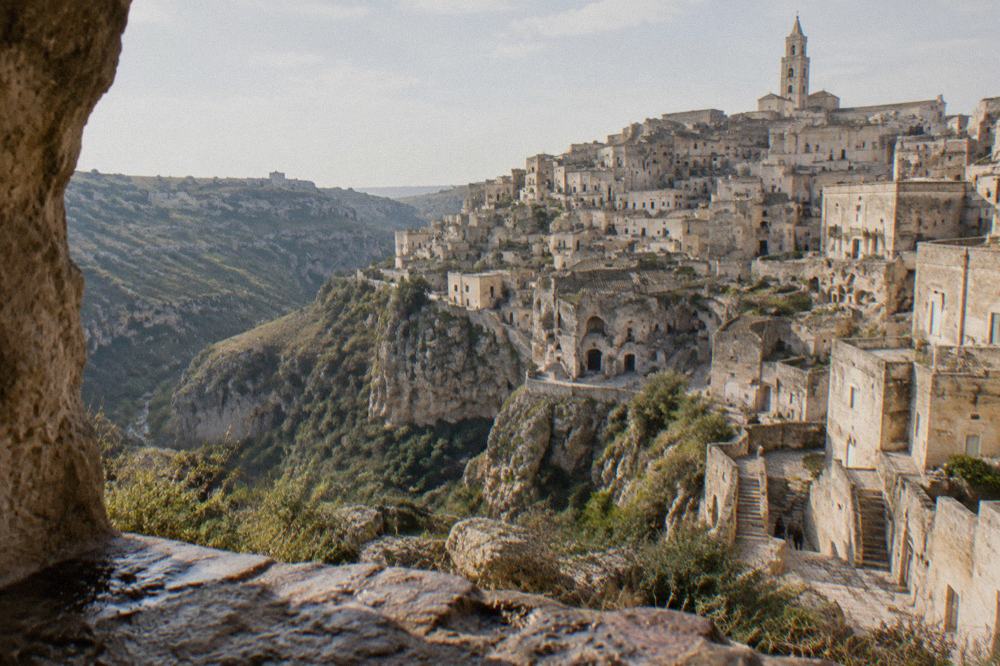
The park is the other half of the UNESCO inscription. Its own site counts about 8,000 hectares and 923 plant species, roughly a sixth of the national flora by its statement. The caves on that side are rupestrian churches and shepherd shelters rather than homes, reached on footpaths from Jazzo Gattini, and the classic view back across the canyon is the Belvedere Murgia Timone terrace, with the whole Sassi face stacked above the gorge. The Belvedere Murgia Timone and Tibetan bridge pages carry the detail, and the wider park is covered under Parco della Murgia Materana.
One sunset walk on the park side pairs the bridge, the terrace and the caves in a single loop, with transfer included in the listing's terms. Check availability for the date, as access times on the bridge path are set by the park.
What Is Beneath The Modern City: Cisterns And Underground Matera?
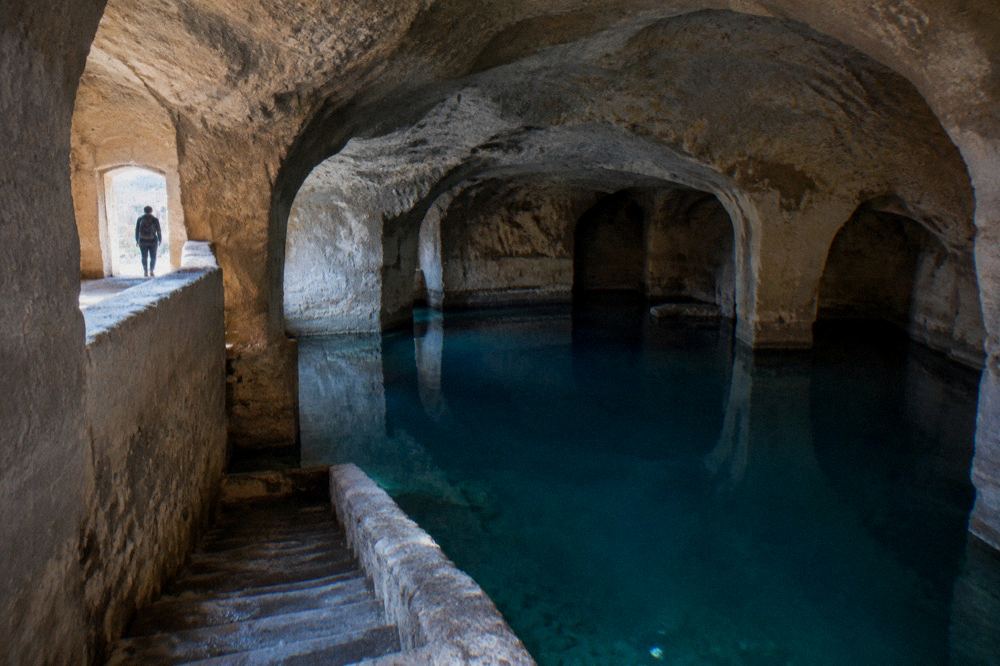
Under the pavements of modern Matera sits a network of cisterns and canals that collected rainwater for the cave city, and the two visitable pieces are the Vicinato a Pozzo neighbourhood well court at 8.00 EUR, open daily 09:30 to 19:00 with last entry 18:00, and the Palombaro Lungo, the great water reservoir beneath Piazza Vittorio Veneto, whose price and hours are not published on a readable official page, so confirm locally before planning a visit. Both belong to the same story: a city with no river solved water by carving storage into the rock.
The palombarolungo.it site states that phone booking is not possible, which tells you entry runs on scheduled visits, but no official tariff page could be opened, so this desk prints no figure for it. The Piazza Vittorio Veneto above it is itself worth the stop, since the open square sits on a roof of cavities, and the Piazza Vittorio Veneto guide covers what lies under it. For the water system as a whole, the Palombaro Lungo page gathers what is verified.
The Vicinato a Pozzo is the easier of the two to fold into a day: it is on the Oltre l'Arte circuit, so the 25.00 EUR all-inclusive ticket already covers it, and it shows how a cluster of cave families shared a single courtyard well.
Can You Sleep Or Eat Inside A Cave In Matera?
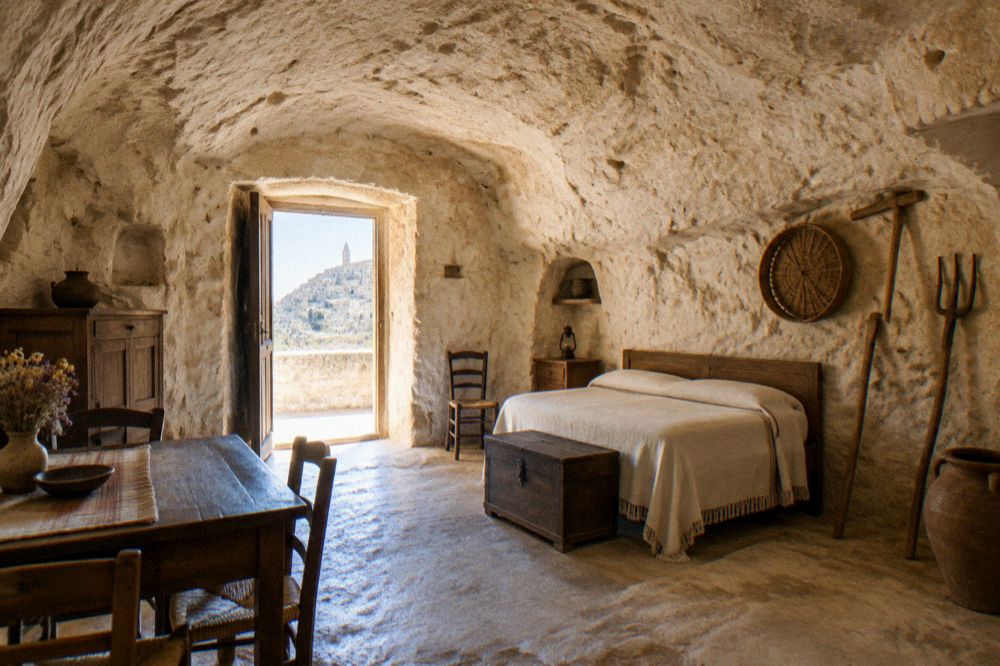
Yes: restored cavities across both Sassi districts now hold cave hotels and cave restaurants, and the dedicated guides on this site break the districts down by feel, from the cave hotels page to the Sassi hotels and where-to-stay guides, with the cave restaurants page covering the food side. No nightly rate is printed here: hotel prices move with the season, and the desk holds none that is verified.
Two practical cautions for visitors. First, the Sassi are steep, stepped and uneven: no named route through them is step-free, and that applies to hotel approaches too, so check the luggage route with the property before booking a cavity room high on the slope. Second, the tourist tax exists and is collected by the accommodation, and its amount is confirmed at booking rather than printed here.
Eating in a cave works the same way. The tufa keeps the rooms cool in summer, which is why so many kitchens occupy former cisterns and stalls, and the best restaurants in Matera and what to eat in Matera guides list where the cave settings and the food both hold up. The bread of Matera, itself a PGI product registered in 2008, belongs to the same food tradition and has its own Pane di Matera page. For sleeping, start with the Matera cave hotels and Sassi di Matera hotels pages, plus where to stay in Matera for the district-by-district view.
For a taste of the countryside caves rather than the city ones, an e-bike ride among the trulli and olive groves outside Alberobello, with focaccia and wine along the way, is bookable from the region: Check availability on the operator's live listing.
What Is Closed Or Changed Among Matera's Caves Right Now?
Three verified changes matter for a 2026 or 2027 visit: the Museo Archeologico Nazionale Domenico Ridola has been closed since 7 April 2025 for energy works and a new display with no reopening date published, Casa Noha is closed 5 to 22 October 2026 for renovation ahead of a relaunch, and access to Sentiero 406 has been staffed and ticketed since March 2026, while Palazzo Lanfranchi stays open Monday to Sunday 09:00 to 20:00 despite its works page. The museum network's own pages carry all three statements.
Casa Noha, the FAI interpretation centre that many guides still list as a first stop, charges 6.50 EUR for adults and 3 EUR for children when open, every day except Wednesday, and its closure window is short enough to plan around. The Casa Noha and Museo Ridola pages track both. The Matera UNESCO page holds the inscription detail behind all of this.
How Many Days Do The Matera Caves Need?
Two full days cover the cave city at a reasonable pace: day one for Sasso Caveoso, the rupestrian churches, a cave house museum and the Murgia viewpoint at sunset, day two for Sasso Barisano, the Cathedral and MATA at 4.00 EUR, MUSMA at 10 EUR and one underground water site, which is the shape the two-days-in-Matera itinerary follows, while the one-day version pages the same list down to a single church, one cave house and the terrace. The APT Basilicata data gives an average stay of 1.56 nights in 2025, so the typical guest is closer to the one-day version.
The sequencing logic is simple. The Sasso Caveoso side holds the three Oltre l'Arte churches, the Casa Grotta and the canyon edge, so it is the dense half-day. Sasso Barisano and the Civita ridge between them hold the Cathedral, MUSMA's sculpture caves in the Sasso Caveoso cliff and the palazzi, a second half-day. The Murgia side is a separate outing on foot or with a transfer, best at the end of the afternoon. The one day in Matera and two days in Matera pages carry both plans in full.
| Half-day block | Sites | Verified entry cost |
|---|---|---|
| Sasso Caveoso core | Santa Lucia alle Malve, Casa Grotta di Vico Solitario | 10.00 EUR (3 churches) or 8.00 EUR (cave house) |
| Canyon and viewpoints | Madonna de Idris, Belvedere Murgia Timone across the gorge | Included in church ticket; park access ticketed separately |
| Civita and Cathedral | Cathedral, MATA diocesan museum | 4.00 EUR |
| Sasso Barisano and museums | MUSMA, Museo Nazionale at Palazzo Lanfranchi | 10 EUR each, or 15.00 EUR cumulative for all national museum sites over 2 days |
| Underground water | Vicinato a Pozzo | 8.00 EUR, or inside the 25.00 EUR all-inclusive ticket |
When Is The Best Time To Visit The Matera Caves?
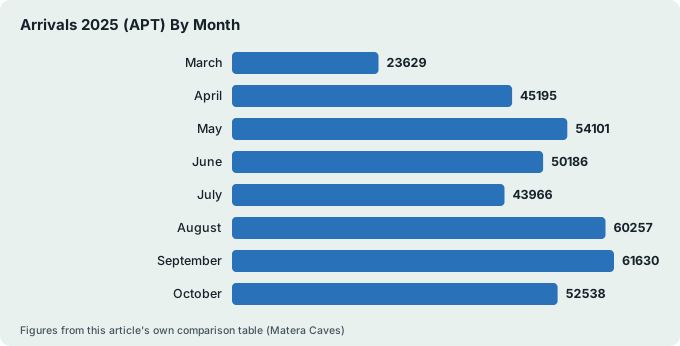
September is the busiest month by the APT Basilicata accommodation count, 61,630 arrivals against 60,257 in August, 54,101 in May and a low of 15,239 in February, and it comes with an ERA5 reanalysis 1991-2020 mean high of 25.7 C against July and August highs of 31.2 and 31.3 C, so late April to June and September to mid-October give the best balance of cave-comfort and crowd, while November is the wettest month at 67.1 mm. Three of four September arrivals, 74.5 percent, came from abroad, the highest foreign share of the year.
| Month | Mean high C (ERA5 1991-2020) | Rain mm | Arrivals 2025 (APT) |
|---|---|---|---|
| March | 14.1 | 59.2 | 23,629 |
| April | 17.4 | 56.5 | 45,195 |
| May | 22.7 | 41.7 | 54,101 |
| June | 28.2 | 35.1 | 50,186 |
| July | 31.2 | 21.2 | 43,966 |
| August | 31.3 | 21.7 | 60,257 |
| September | 25.7 | 44.8 | 61,630 |
| October | 20.8 | 51.7 | 52,538 |
| November | 15.5 | 67.1 | 23,555 |
The cave logic cuts against the beach logic. Rock interiors stay cool in the heat and damp-cold in winter, so a 31 C August afternoon is exactly when a frescoed church or cistern is at its best, but the stepped lanes above them are at their most crowded. The Matera weather and best time to visit Matera pages carry the full tables, including the winter months when the Matera in winter conditions apply.
One winter caveat cuts the other way: hours contract. The Casa Grotta runs 09:30 to 18:00 on weekdays from October to December, and the December draw is the Presepe Vivente nei Sassi, the living nativity routed through the cave lanes on the December weekends and the first January weekend, at 12.00 EUR full and 9.00 EUR for ages 10 to 18, free under 10, per the presepematera.it tariff page.
How Do You Get To The Cave City, And What About Driving In?
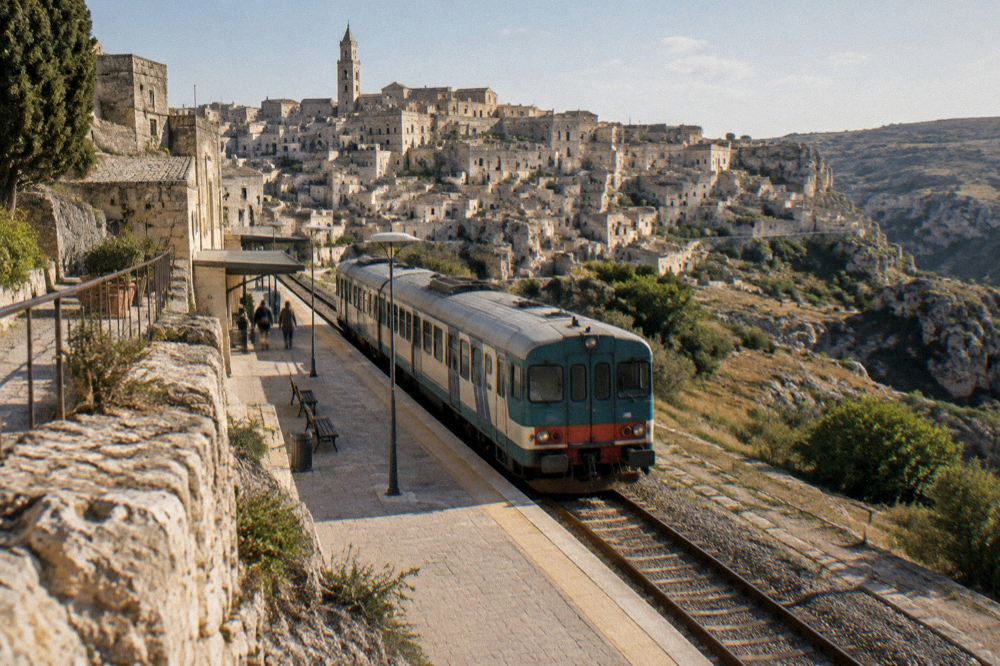
Matera has no Trenitalia station: the rail operator is FAL, whose posted weekday timetable runs Bari to Matera in about 1 h 45 to 2 h with a change at Altamura, and no trains run on Sundays and public holidays, when FAL substitutes buses, while driving from Bari Airport is 64 km and about one hour free-flow, and the Sassi sit inside a camera-enforced limited traffic zone. The zone's cameras run 10:00 to 20:30 from 16 September to 30 June and 10:00 to 24:00 from 1 July to 15 September.
The how to get to Matera, Bari to Matera and Bari Airport to Matera pages carry the detail, with Rome to Matera and Naples to Matera for longer approaches. From 12 October 2026 FAL changes the rail programme between Matera Sud and Altamura, replacing two early trains with buses, so the live timetable on FAL's own page is the only one to trust. For drivers, the practical answer is to park outside the zones and walk down: the Matera parking and Matera ZTL pages map the gates on Via Buozzi, Via Madonna delle Virtù and Via D'Addozio, and the loading windows that do not apply to visitors. In an emergency, anywhere in the city, the number is 112, live in the Matera district since 2 December 2025.
What Does A Visit To The Matera Caves Cost?
The entry costs of a two-day cave visit are all verified and listed below: the three-church ticket at 10.00 EUR, the Casa Grotta at 8.00 EUR, the Cathedral and MATA at 4.00 EUR and MUSMA at 10 EUR, with the 25.00 EUR all-inclusive ticket as the bundle alternative, and children up to 10 enter the Oltre l'Arte sites free while under-18s enter the national museums free. On top of entries, budget accommodation, meals and the tourist tax, whose amount is confirmed at booking.
| Item | Verified cost | Notes |
|---|---|---|
| Oltre l'Arte, 3 churches | 10.00 EUR | Free to age 10 with a parent |
| Casa Grotta di Vico Solitario | 8.00 EUR | Tariff from 4 April 2026, covers 4 sites |
| Cathedral and MATA | 4.00 EUR | Pause 10:00 to 12:30 Sundays and solemnities |
| MUSMA | 10 EUR | Reduced 5 EUR ages 7 to 18, students, groups |
| All-inclusive, 8 sites | 25.00 EUR | Reduced 16.00 EUR |
| National museums cumulative | 15.00 EUR | 2 days, all sites, under 18 free |
| Presepe Vivente (December) | 12.00 EUR | 9.00 EUR ages 10 to 18, free under 10 |
| Palombaro Lungo | Not published | Confirm locally |
| Crypt of the Original Sin | Not published | Booking mandatory, e-ticket 90 minutes ahead minimum |
The Crypt of the Original Sin, the frescoed cave church outside the city, deserves its own half-day and its own planning: visits are by guided slot only, booked by e-ticket at least 90 minutes ahead, with slots Monday to Sunday at 09:30, 11:00, 12:30, 15:30, 17:00 and 18:30 from April to September, and the ticket office sits a short drive from Matera with no shuttle included. The Crypt of the Original Sin page has the full method. Food costs are covered on the Matera travel costs page rather than guessed here.
Common Questions About The Matera Caves
Are the Matera caves real caves or houses?
Both. The earliest dwellings were natural and dug cavities in the tufa, and later facades closed them in, so a single building can be a cave at the back and a stone house at the front. UNESCO's inscription text records "more than a thousand dwellings and a large number of shops and workshops".
Can you go inside the Sassi caves in Matera?
Yes. The Casa Grotta di Vico Solitario is a furnished cave house open at 8.00 EUR full, and the Oltre l'Arte network opens rupestrian churches from 4.50 EUR for one. Cave hotels and restaurants also let you enter restored cavities as a guest.
Do people still live in the Matera caves?
Residents were moved out of the Sassi between 1952 and the 1970s, and a 1986 law opened the way to restoration, after which people returned. Today the districts hold homes, hotels and businesses, though the furnished cave house museums show the pre-evacuation domestic life.
What is the difference between the Sassi and the Murgia caves?
The Sassi are the inhabited cave districts on the city side of the Gravina canyon. The Parco della Murgia is the protected plateau on the other side, with rupestrian churches and shepherd shelters, managed access on Sentiero 406 since March 2026, and the classic view back across to the Sassi.
Is the Matera cave visit suitable for wheelchairs or strollers?
The Sassi are steep, stepped and uneven, and no named route through them is step-free. Individual sites and hotels should be checked directly for access before booking.
Which is better, Sasso Caveoso or Sasso Barisano?
Sasso Caveoso holds the rupestrian churches, the Casa Grotta and the raw canyon edge, so it carries the deeper cave experience. Sasso Barisano is the more restored, hotel-and-restaurant side. A full visit walks both, and they meet at the Civita ridge where the Cathedral stands.