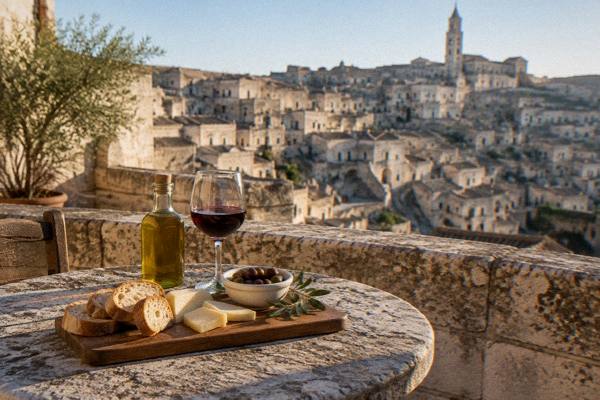
Matera Food: What To Eat In The Sassi And Around Basilicata
Matera food is inland peasant cooking from the Basilicata interior: slow-fermented PGI bread, hand-shaped pasta, sun-dried peppers, sheep cheese and Aglianico wine, served today in cave rooms cut into the Sassi.
Short answer
Eat pane di Matera with its PGI crust, orecchiette and hand-rolled pasta, lamb and murgiana beef, peperoni cruschi, caciocavallo podolico and Aglianico del Vulture wine, ending with amaro. Book a food tour or a pasta class through the site's listings, and read the dish guide below before choosing a restaurant.
Matera, in the region of Basilicata in southern Italy, eats like the inland plateau it sits on: this is a city of grain, sheep, sun-dried vegetables and cave cellars, an hour and more from any coast. The food of the Sassi grew out of subsistence farming on the Murgia, where materani baked bread in communal wood ovens, dried peppers on rooftops and stored wine in cisterns cut into the rock. That repertoire is now the backbone of every Matera menu, from the simplest café on Piazza Vittorio Veneto to the candle-lit cave restaurants of Sasso Barisano. This guide walks through the dishes, the bread with its protected name, the wine of the extinct Vulture volcano, and how to fit all of it into a stay, without printing a single invented price.
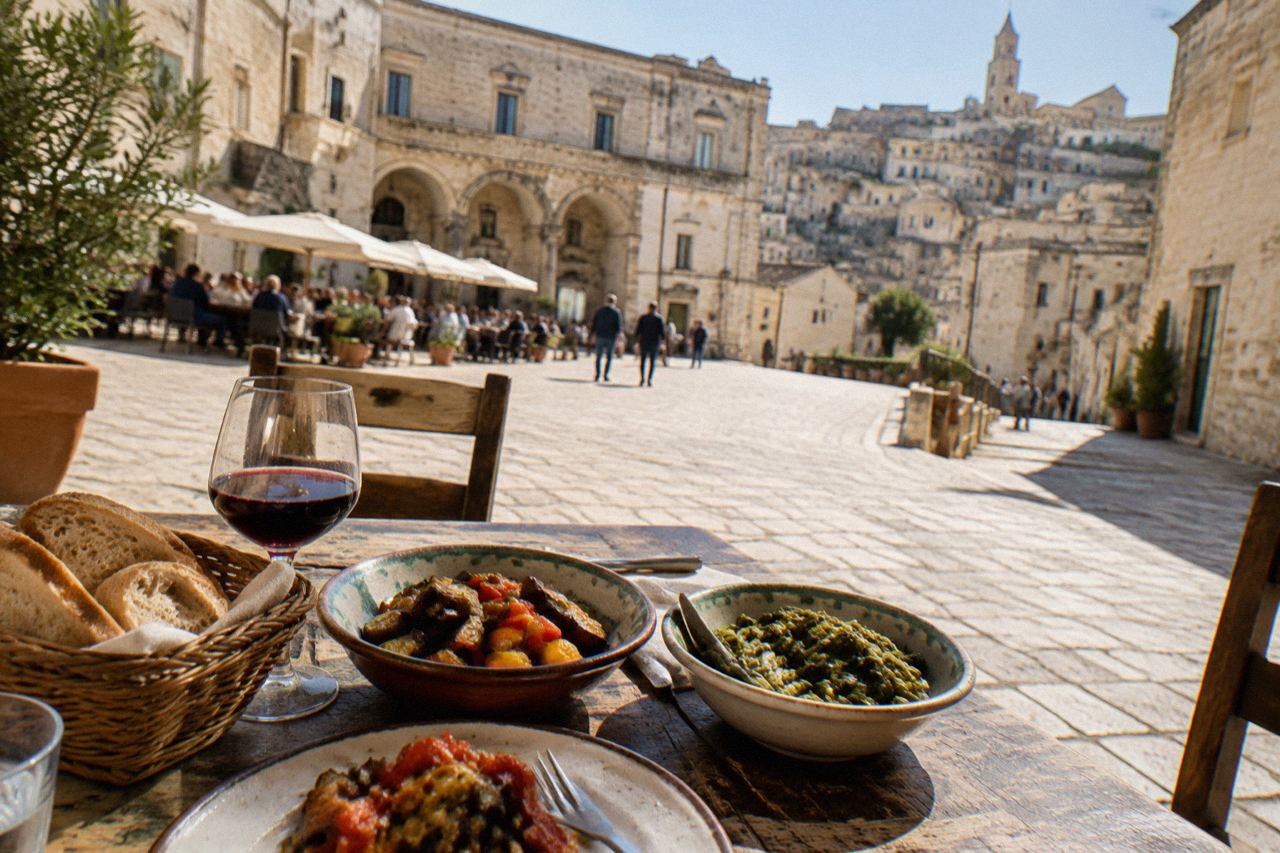
What Is Matera Food, And Why Is It Different From Coastal Puglia?
Matera food is the inland cooking of Basilicata's Murgia plateau: wheat bread with a protected name, hand-shaped pasta, lamb and mutton, dried sweet peppers, aged sheep cheese and volcanic red wine, with almost no fish on the historic table. The city sits about 400 m above sea level on the edge of the Gravina canyon, and the nearest coast is a day trip, Metaponto on the Ionian or Polignano a Mare and Bari on the Adriatic. What the cooking lacks in seafood it makes up for in preservation techniques born of hard winters and hot, dry summers: sun-drying, salting, cave ageing and long fermentation.
The contrast with Puglia next door is real, even though the regions share a border and some shapes of pasta. Puglia is Italy's great vegetable-and-fish region, an olive-oil economy wrapped around two long coastlines. Basilicata is mountainous and continental in winter, and its pantry reflects that: shepherds' cheese over mozzarella, mutton and pork over raw fish, and Aglianico grown on volcanic soil rather than the primitivo of the Salento plain. Matera's location on the western edge of the Murgia, the limestone plateau it shares with Puglia, puts its wheat fields and its bread ovens at the centre of the story.
Two things give the local table a shape a visitor can actually plan around. First, bread: Pane di Matera is a registered PGI product, and the site keeps a full page on Pane di Matera and its PGI rules. Second, the setting: eating in a cave room, a sassi restaurant carved into the tufa, is itself part of the meal, and the site covers that separately in its guide to Matera's cave restaurants. Book a table in one of them at least, because the room is half of what you are eating.
What Dishes Should You Actually Order In Matera?
Order pane di Matera with everything, then one hand-shaped pasta, with orecchiette, cruschi peppers and breadcrumbs as the signature plate, a lamb or murgiana beef main, caciocavallo podolico cheese, a legume soup such as crapiata, and a digestivo of Amaro Lucano at the end. Those six moves cover the whole regional repertoire, and every serious kitchen in the Sassi can do them. Vegetarians are well served by the vegetable half of the list, since dried peppers, wild greens and pulses are the historic core of the diet here rather than an afterthought.
Tempted to make those hand-shaped pastas yourself. Book a Matera cooking class here.
The dish-by-ditch version:
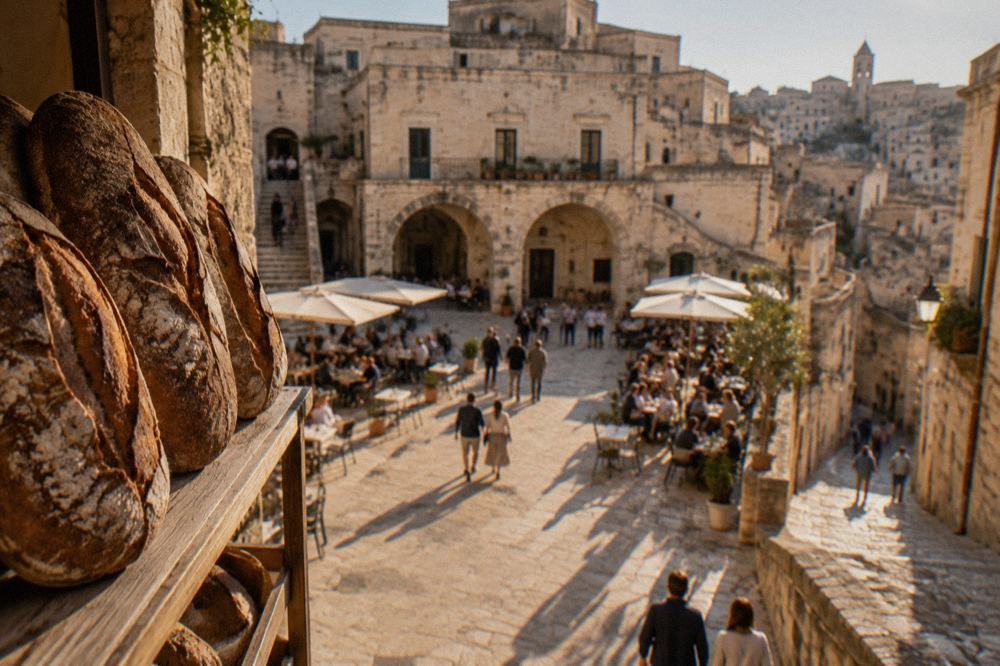
- Pane di Matera: a tall, coarse-crumbled loaf with a dark, flour-dusted crust, slow-leavened and baked in a wood oven. Its PGI registration dates to 2008 under Reg. CE 160/2008, and the shape and method are written into the specification.
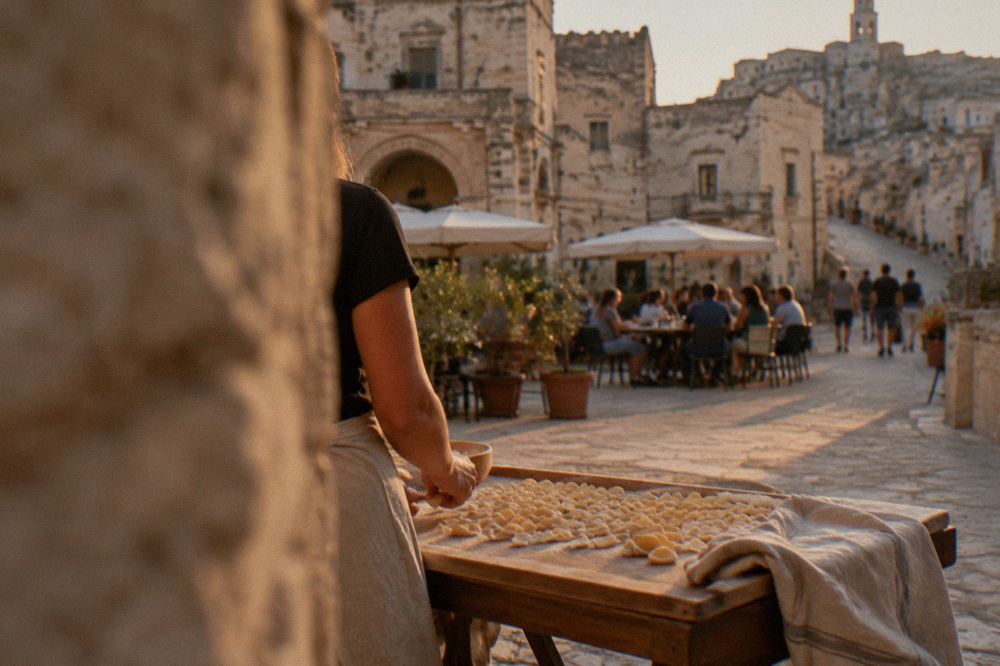
- Orecchiette and hand-rolled pasta: the signature pairing is orecchiette with peperoni cruschi, the crisp fried sweet peppers of the region, often finished with breadcrumbs or ricotta salata.
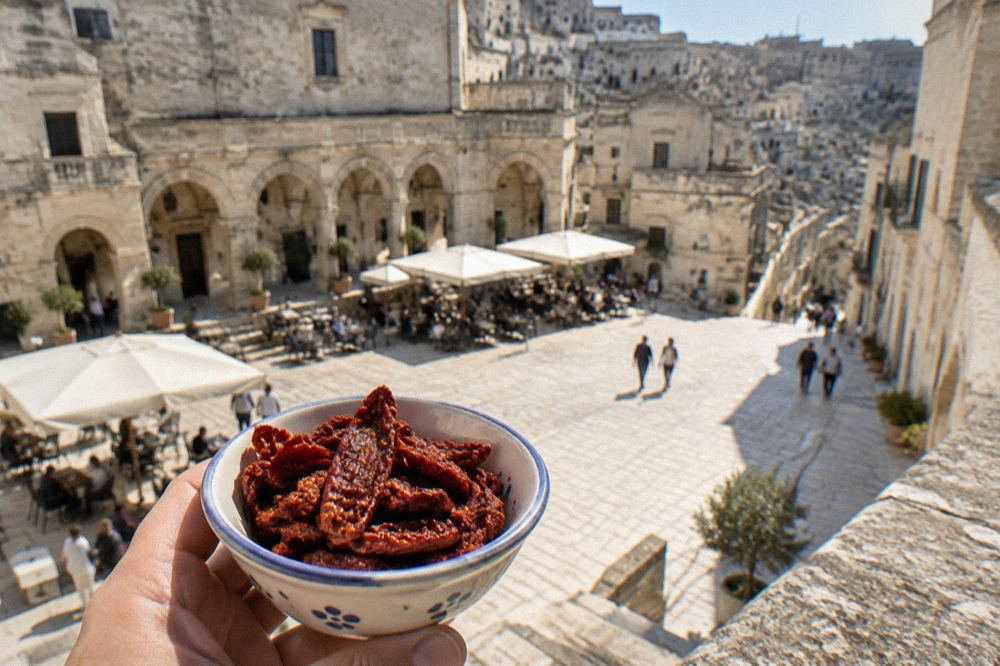
- Peperoni cruschi: Senise-type peppers dried in the sun, then flash-fried so they shatter like crisps. The site has a dedicated page on peperoni cruschi and how they are made.
- Caciocavallo podolico: a pear-shaped aged cheese from pasture-raised cows, one of the strong southern cheeses.
- Lamb and murgiana beef: sheep farming built this landscape, and lamb, mutton and goat appear roasted, braised and in ragù; the Murgia also carries a recognised cattle breed used for slow-cooked cuts.
- Crapiata and legume soups: a Matera-area soup of mixed grains and pulses that began as a harvest ritual.
- Amaro Lucano: the herbal bitter born in nearby Pisticci in Basilicata, by the brand's own account, drunk neat or with ice at the end of a meal. It is the reason a food-motivated traveller may want the Craco day trip described later on this page.
A note on honesty: this site names no individual restaurant, bakery or bar as a recommendation, because none had its address, hours or prices verified. The companion page on the best restaurants in Matera covers how to choose a table in the Sassi, and the page on bars and aperitivo covers the drinking side of the evening.
Is Pane Di Matera Really Protected, And What Makes It Different?
Yes. Pane di Matera is a registered PGI product (Indicazione Geografica Tipica), registered in 2008 under Regulation CE 160/2008. A loaf sold under the name must follow the specification: a tall shape with a scored, flour-dusted top crust, a soft porous crumb with irregular holes, long natural leavening, and baking that gives the crust its characteristic dark finish, all fixed to the Matera production area. The protection means a loaf sold under the name must follow the specification: a tall shape with a scored, flour-dusted top crust, a soft porous crumb with irregular holes, long natural leavening, and baking that gives the crust its characteristic dark finish. By most accounts the tradition reaches back to the communal wood ovens of the Sassi, where families brought their own dough to be baked.
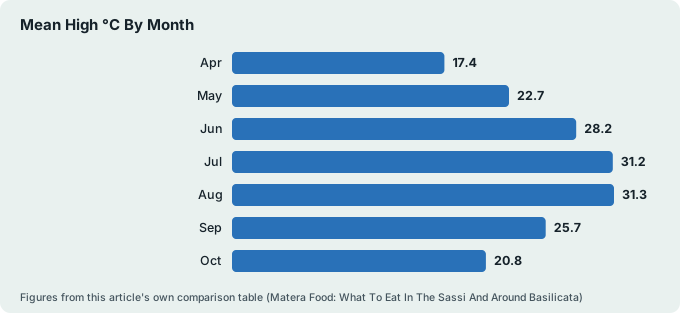
The bread's staying power is partly climate. Matera's summers are hot and dry and its winters cold, an inland continental-leaning Mediterranean pattern; the ERA5 reanalysis, 1991-2020, puts the July mean high around 31.2 °C and the January mean low around 2.2 °C. A thick-crusted, slowly leavened loaf keeps for days in exactly that kind of weather, which is why it became the base of the diet rather than an accompaniment. Old recipes treat it as an ingredient: moistened in salads, fried, or broken into soup.
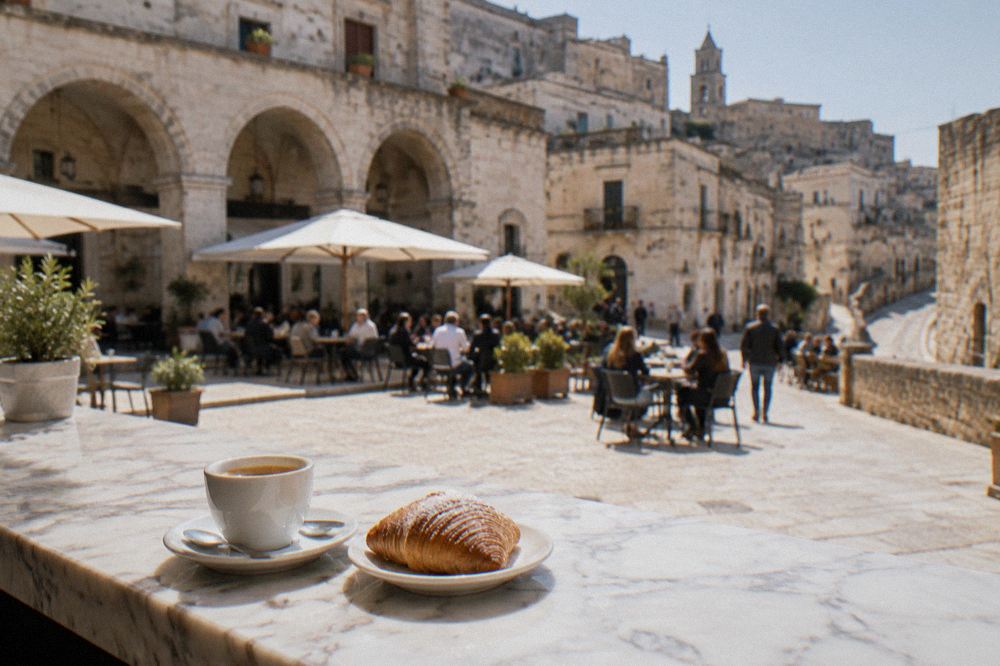
Where the loaf meets the visit: bakeries across the modern city and the Sassi sell it by weight, and no menu in town serves a bread basket without it. The site's full page on Pane di Matera goes deeper into the specification and the ovens, and the breakfast habit of the city, coffee and a sweet pastry standing at a bar counter, is covered on the aperitivo and bars page rather than here.
What Should You Drink With A Matera Meal?
Drink Aglianico del Vulture red wine, the volcanic wine grown on the slopes of the extinct Mount Vulture volcano to the west, alongside Matera-labelled whites and rosés at lighter meals, and finish the evening with Amaro Lucano or a local grappa as a digestivo. Aglianico del Vulture is Basilicata's flagship wine, a structured red from Aglianico grapes grown on volcanic soil, and it is the natural partner for the lamb dishes and aged cheeses of the Murgia. The full background sits on the site's Matera wine page, including how a DOCG Vulture label differs from a Matera DOC one.
The aperitivo hour, roughly early evening, is its own institution: a bitter spritz or a glass of sparkling wine with olives, taralli and small bites, taken standing or at a table on a square. That scene, and the addresses question, is covered on the bars and aperitivo page. At dinner, order by the glass if you want to compare an Aglianico with a Matera white without committing to a bottle.
For context on when to time all this eating and drinking, the monthly picture helps. The table below pairs the ERA5 reanalysis climate normals, 1991-2020, for Matera with the 2025 guest arrivals the APT Basilicata accommodation data records, so you can see both the weather and the crowds a month carries:
| Month | Mean high °C | Rain mm | Arrivals 2025 |
|---|---|---|---|
| Apr | 17.4 | 56.5 | 45,195 |
| May | 22.7 | 41.7 | 54,101 |
| Jun | 28.2 | 35.1 | 50,186 |
| Jul | 31.2 | 21.2 | 43,966 |
| Aug | 31.3 | 21.7 | 60,257 |
| Sep | 25.7 | 44.8 | 61,630 |
| Oct | 20.8 | 51.7 | 52,538 |
The APT data shows September was the busiest month for the city's registered accommodation in 2025, with 61,630 arrivals against 60,257 in August, and 74.5% of those September arrivals came from abroad. July, as warm as August on the reanalysis means, drew fewer arrivals than April, May, June, August, September or October. In plain terms: shoulder-season tables book out too, especially the small cave rooms.
Which Food Tour Or Cooking Class Should You Book In Matera?
Book a guided Sassi walk with tastings if you want the dishes explained street by street, a farmhouse pasta class if you want to make orecchiette by hand, a wine tasting in a historic cellar if the Aglianico side matters more than the walking, and the Craco day trip if you want the food paired with the landscape it comes from. The site sells several verified food-and-drink experiences, and their prices, ratings and durations render from the live listings rather than from this page. What follows is what each kind covers, so you can match it to your appetite.
The Craco and Amaro Lucano day trip is the one food-adjacent option that leaves the city: it pairs the abandoned ghost town of Craco, one of Basilicata's most striking sights, with a tasting built around the region's famous herbal amaro. Craco lies about 57 km from Matera by road, a drive of roughly an hour free-flow per the OSRM routing data. The trip suits a second or third day in the city, after the Sassi themselves have been walked. A full introduction to the ruined town sits on the site's Craco guide.
In the city, the classic choice is a walking tour that strings the Sassi together with stops for bread, cheese, cold cuts and wine, which the site lists at the food tour page. Pasta classes, including a farmhouse version and one held in an ancient wine cellar, teach the hand shapes the region eats daily: orecchiette, cavatelli and the crumb-topped preparations that carry cruschi peppers. Wine tastings in small groups focus on Basilicata labels, a useful primer before a dinner order. Confirm dietary needs with the operator at booking, since cave kitchens and farmhouses have limited flexibility on the day.
Where Should You Eat: The Cave Restaurants, The Piano, Or Street Level?
Eat at least one dinner in a cave restaurant in the Sassi, one casual meal street-level near Piazza Vittorio Veneto, and breakfast standing at a bar counter on the Piano, the modern upper town; the three settings are genuinely different experiences, and a two-day visit can cover all three. A cave dinner is the meal to reserve first, because the vaulted rooms are small and the demand is steady. The Sassi are steep, stepped and uneven underfoot, so budget time and shoe grip for the climb back up after a long dinner in Sasso Caveoso or Sasso Barisano.
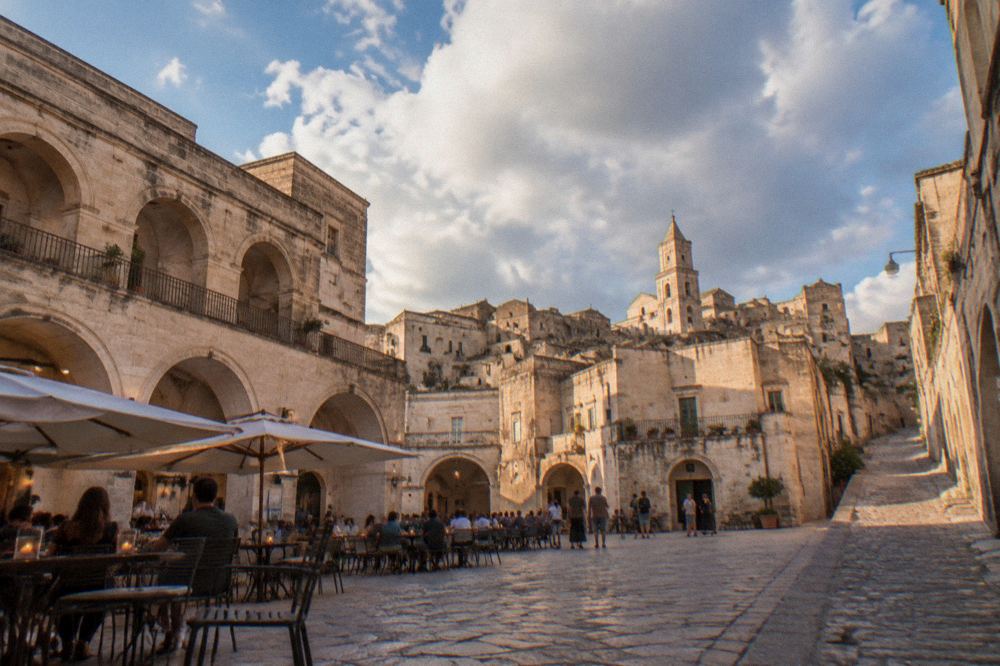
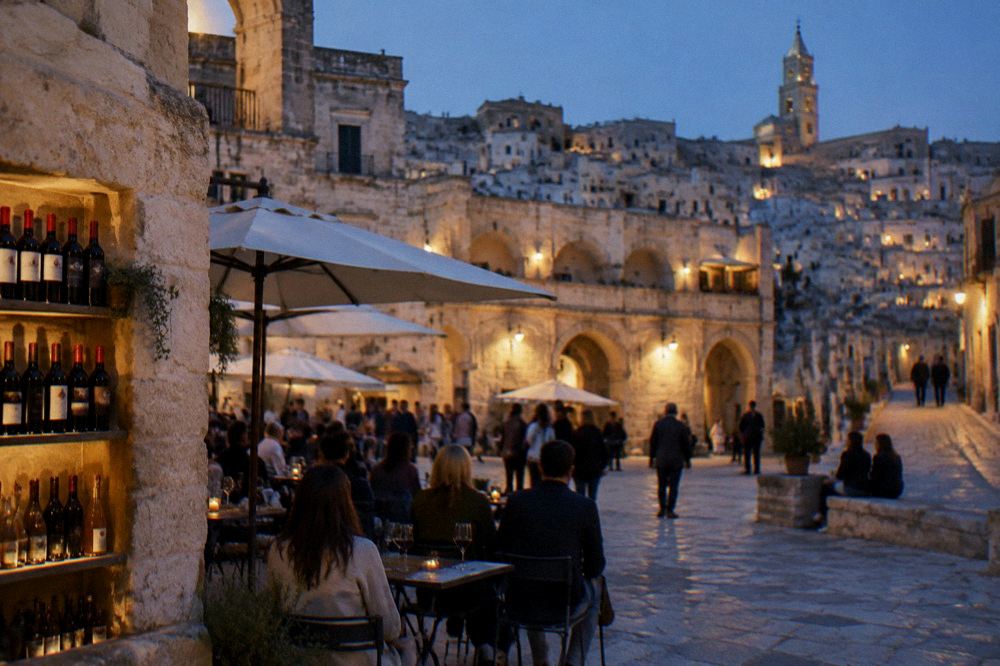
The cave restaurants occupy restored cisterns and dwellings, vaulted rooms cut into the tufa where the temperature barely moves between seasons; that is why they were cellars and it is why they are comfortable now. The site's cave restaurants guide covers how they work and how to book. Street level around the main squares is where the quicker meals happen: pizza by the slice, focaccia, panini with caciocavallo, and the standing coffee culture of the bar counter. For choosing between the two Sassi districts and the modern centre, see where to stay in Matera, which explains the layout of Sasso Caveoso, Sasso Barisano and the Piano.
A practical warning on driving to dinner: the Sassi sit inside a camera-enforced limited traffic zone (ZTL). The comune's own ordinance PDF shows the ZTL Sassi cameras active 10:00 to 20:30 from 16 September to 30 June, and 10:00 to 24:00 from 1 July to 15 September, on weekdays and holidays alike, while the ZTL Centro around the main streets is active 24 hours a day. Arrive and park outside the zones: the site's Matera parking guide and ZTL guide give the detail. The one figure never printed on this site is the tourist tax: it exists, it is collected by the accommodation, and the amount is confirmed at booking.
What Food Events Fill The Matera Calendar?
The fixed anchors are the Festa della Bruna on 2 July every year, the Matera Film Festival from 7 to 15 November 2026, and the Presepe Vivente living nativity across four December weekends and 2-3 January 2027, with tickets at 12.00 EUR full and 9.00 EUR for ages 10 to 18 and free entry under 10. None of these is a food festival in the narrow sense, but each one puts the city's kitchens and squares under peak load, which matters for anyone planning to eat well on those dates. The Bruna, Matera's patronal feast dated to 1389 by the organisers' own history page, is the single biggest day of the Matera year, and Oltre l'Arte closes all its sites on 2 July for it.
The verified diary for the season ahead:
| Event | Dates | Food angle |
|---|---|---|
| Matera Film Festival, 7th edition | 7 to 15 Nov 2026 | City full; book dinners early |
| Orchestra ICO season opens | 26 Oct 2026 | Evening demand near Auditorium Gervasio |
| Matera 2026 culture programme closes | late Nov 2026 | Late-season dining demand |
| Presepe Vivente nei Sassi, 16th edition | 5-6, 12-13, 19-20, 26-27 Dec 2026 and 2-3 Jan 2027 | 12.00 EUR full ticket, 9.00 EUR ages 10-18, under 10 free |
| Festa della Bruna | 2 Jul 2027 | Peak day; attractions closed |
The Presepe Vivente deserves a special note for food travellers: it is a living nativity routed through the Sasso Caveoso, from Piazza San Pietro Caveoso via Vico Solitario and Rione Malve to Via Bruno Buozzi, with 20 scenes, and its ticket prices are verified on the organisers' own site. December also brings the Christmas market atmosphere described on the site's Matera at Christmas page, and winter eating generally is covered in Matera in winter.
What Food Day Trips Work From Matera?
The strongest food day trips from Matera are Craco with an Amaro Lucano tasting, the Aglianico wine country around Mount Vulture to the west, Alberobello across the regional border in Puglia for its trulli dining scene, Altamura for its own protected bread, and Metaponto or Polignano a Mare when the coast calls. Matera is a small city and its kitchen rewards a day of variation. Distances below are road figures computed with the OSRM routing engine over OpenStreetMap, free-flow, from Matera Centrale station, and should be rounded up in practice.
| Destination | Road km | Drive time |
|---|---|---|
| Altamura (bread country) | 20 | 20 min |
| Craco (ghost town) | 57 | 58 min |
| Metaponto (Ionian coast) | 47 | 52 min |
| Alberobello (trulli town) | 68 | 1 h 23 |
| Polignano a Mare (Adriatic) | 100 | 1 h 29 |
| Bari | 68 | 1 h 02 |
Altamura, 20 km away, is another PGI bread city and an easy comparison loaf; its bread, like Matera's, carries a protected name. Alberobello is in Puglia, not Basilicata, and the site keeps a full Alberobello guide plus a dedicated page on Matera and Alberobello in one day. Wine travellers should note that the Vulture zone lies beyond these tables to the west; the wineries there are the source of the Aglianico described on the Matera wine page.
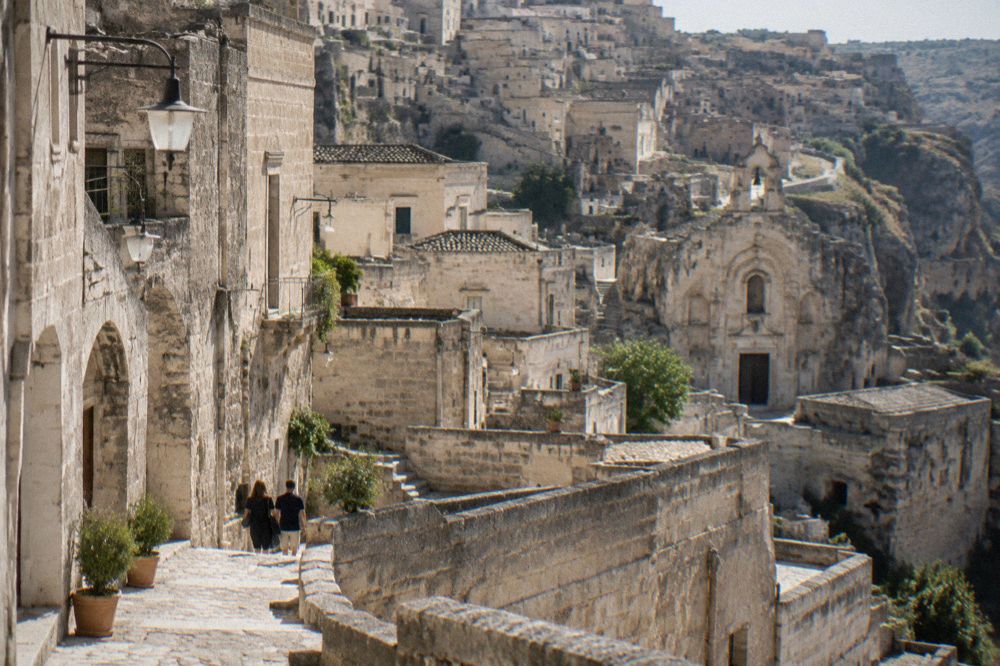
For the evening back in the city, the sunset over the Sassi from the Murgia side is the classic pairing with an aperitivo hour, and a guided transfer to the Belvedere Murgia Timone viewpoint removes the parking question entirely:
How Much Does Eating In Matera Cost?
No verified restaurant price list exists for Matera, so this site prints no meal prices and no invented price bands; plan on the simple rule that a cave restaurant dinner costs more than a street-level meal, and that fixed-price tasting menus appear in the Sassi in peak season, with the exact figures confirmed only at the table or at booking. What can be stated with verified numbers are the food-adjacent sight entries: the Museo del Pane, the bread museum among Oltre l'Arte's sites, is included in that operator's 25.00 EUR eight-site all-inclusive ticket, and the Casa Grotta di Vico Solitario cave house, which shows the kitchen and pantry a Sassi family actually ate from, is 8.00 EUR full on the tariff in force from 4 April 2026.
The cave house is the single most food-relevant museum visit in the city: its rooms display the domestic setup of a materano family, including where grain, oil and wine were stored. The site's page on the Casa Grotta di Vico Solitario gives the full tariff and hours detail. The bread museum's hours and the ticket combinations are tabulated on the site's page on Matera church tickets and passes.
For the budget line that does have verified numbers, the tasting experiences sold through the site render their own from-prices from the live listings, so compare them on the booking page rather than on any figure typed here. The tourist tax, again, is confirmed at booking, never on this page.
What Should You Bring Home From A Matera Food Trip?
Bring Pane di Matera if you are travelling within a day or two (it keeps, but not forever), bags of peperoni cruschi, a jar of local honey or mosto cotto, caciocavallo vacuum-packed from a cheese seller, bottles of Aglianico del Vulture wine, and a bottle of Amaro Lucano, all of it sold in the Sassi and on the Piano. Every item on that list travels well. The site's souvenirs and shopping guide covers the non-food side, from tufa carvings to ceramics, and the luggage question, including storage services for a last day, is handled on the luggage storage page.
Two practical notes. Cheese and cured meat entering non-EU countries are subject to the destination's customs rules, so check before packing a wheel of caciocavallo into a hold bag. Wine travels well but a bottle of Aglianico is heavy; an option many sellers offer is shipping, and confirm at purchase. And on the way out of the country, remember Matera has no Trenitalia station at all: the rail link is FAL, changing at Altamura from Bari, about 1 h 45 to 2 h on the posted weekday pattern, with no trains on Sundays and public holidays when replacement buses run. The details, and the airport alternatives, are on the site's pages on how to get to Matera, Bari to Matera and Bari Airport to Matera.
How Do You Fit The Best Eating Into One, Two Or Three Days?
One day: breakfast at a bar counter on the Piano, a midday walking food tour through the Sassi, an afternoon at the Casa Grotta cave house, and dinner in a cave restaurant. Two days: add a pasta class or a wine tasting on day two, an aperitivo at sunset from the Murgia side, and a slower lunch built on the lamb and cheese dishes you missed. Three days: give the third to a food day trip, Craco with the amaro tasting, or Alberobello across the regional border. That sequence front-loads the things that need booking (the cave dinner and the class) and leaves the flexible street food to fill the gaps.
The site's itinerary pages carry the full non-food skeleton for each length: one day in Matera, two days in Matera and three days in Matera. Food slots neatly into all of them because the city is compact: the distance from the modern centre down into the Sassi and back is minutes on foot, steeply. Reserve the cave restaurant before you reserve anything else, especially for a September or December visit, the two months the APT data and the events calendar both flag as busy.
For travellers who want the panorama without the long dinner, the open-bus circuit is the lightest way to see where everything sits before choosing a quarter to eat in:
Common Questions About Matera Food
What food is Matera famous for?
Matera is famous for Pane di Matera, a PGI bread registered in 2008, peperoni cruschi (crisp fried dried peppers), orecchiette pasta, lamb and murgiana beef, caciocavallo cheese and Aglianico del Vulture wine, with Amaro Lucano as the digestivo.
Is Matera good for food?
Yes, for inland southern Italian cooking: cave restaurants, bread with a protected name, shepherd's cheese and volcanic wine. It is not a seafood city; Matera is inland at about 400 m elevation, and the nearest coast is a day trip such as Metaponto or Polignano a Mare.
What is pane di Matera?
A tall, slow-leavened loaf with a dark scored crust and porous crumb, baked to a specification protected as a PGI since 2008 under Reg. CE 160/2008. The protection ties the name to the Matera production area and method. See the site's full page on Pane di Matera.
Do you need to book restaurants in Matera in advance?
Book cave restaurants ahead in every busy month, and always for dinner. The APT Basilicata data shows September was the busiest month of 2025 with 61,630 accommodation arrivals, ahead of August, and December carries the Presepe Vivente crowds.
What should you drink in Matera?
Aglianico del Vulture red with meat and cheese dishes, Matera DOC whites and rosés with lighter meals, a spritz or sparkling wine at the evening aperitivo, and Amaro Lucano neat at the end of dinner. The site's Matera wine page covers the labels.
Can you do a food tour or cooking class in Matera?
Yes. The site lists guided Sassi walks with tastings, farmhouse pasta classes, a pasta class held in an ancient wine cellar, and small-group wine tastings. Prices and durations render from the live listings; confirm dietary requirements with the operator at booking.
One last planning note from the Matera Travel Guide editorial desk: the city's food is best understood as a landscape you can eat. The wheat came from the plateau, the peppers were dried on its roofs, the cheese moved with its flocks, and the wine grew on a dead volcano an hour west. Eat in that order, from the bread to the amaro, and the Sassi will taste exactly like what they are.