Peperoni Cruschi
Peperoni cruschi are the crisp fried sweet peppers of the Basilicata countryside, and Matera is the city where visitors meet them first: scattered over pasta, folded into bread and cheese, or sold in paper bags to carry home.
Short answer
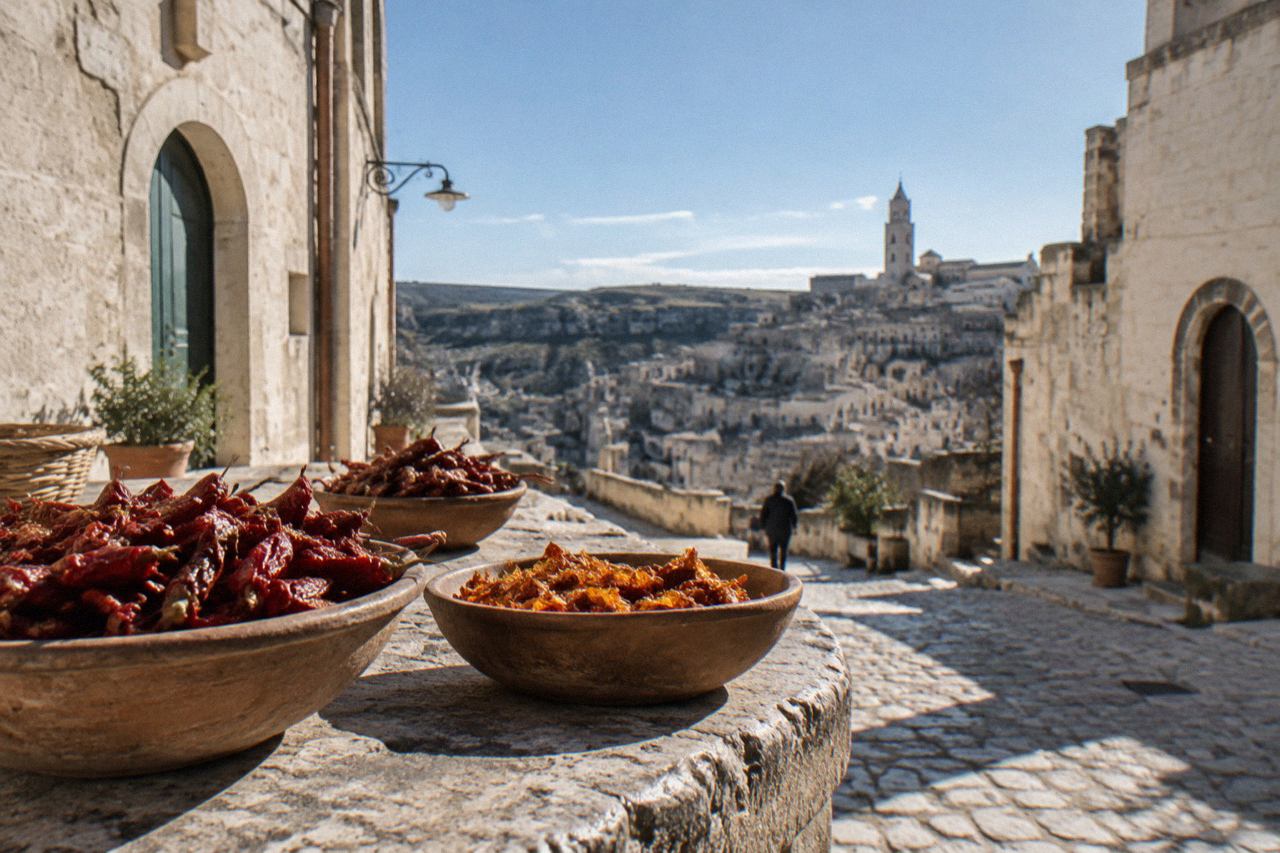
Peperoni cruschi are thin sweet red peppers, grown in the hills of Basilicata, dried and flash fried until they shatter like glass. In Matera they appear on nearly every traditional menu, from cicerchie pasta to strascinate with breadcrumbs, and they keep for months, which makes them one of the few local specialties worth packing in a suitcase.
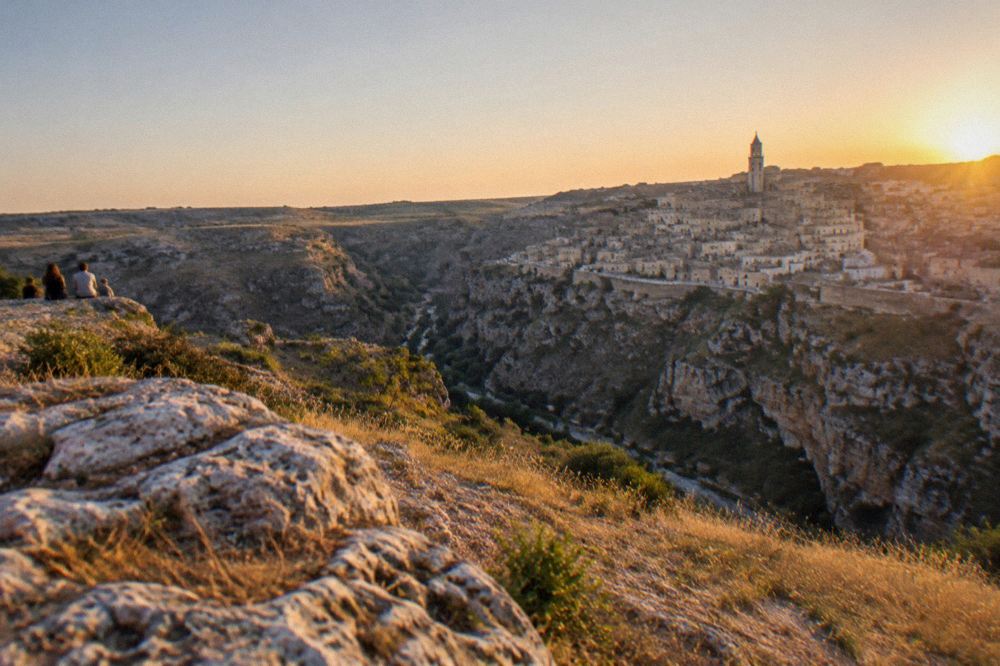
Peperoni cruschi are the crisp fried sweet peppers of Basilicata, the region of southern Italy that Matera sits in, an inland city at about 400 m above sea level on the edge of the Gravina canyon. The peppers are harvested in the inland hills, hung in strands or laid on nets to dry in the summer heat, then dropped for a few seconds into hot oil until they turn glassy and brittle. The result is a garnish, a snack and an ingredient all at once, and it has moved from farmhouse pantries onto nearly every traditional menu in the Sassi. This guide explains what they are, where to taste them in Matera, how the seasons shape the supply, and how to bring a bag home.
What Are Peperoni Cruschi And Why Do They Matter In Matera?
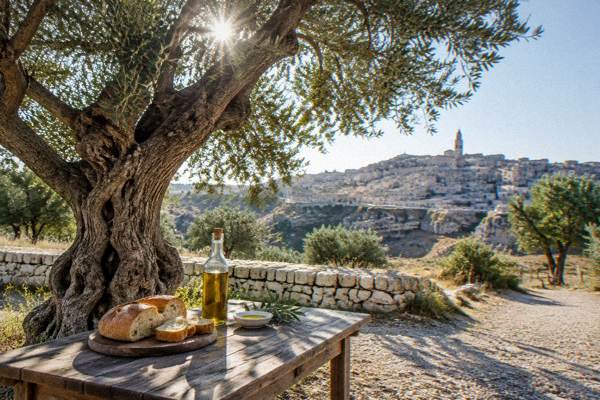
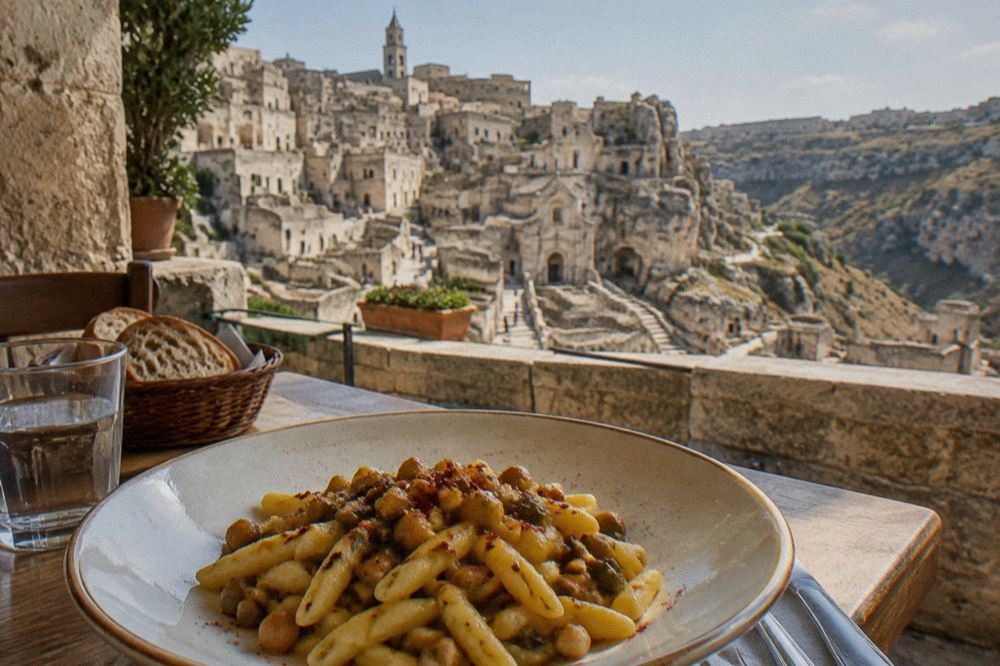
Peperoni cruschi are thin-walled sweet red peppers, a countryside staple of Basilicata, dried whole until papery and then fried briefly in olive oil so they snap like a crisp. In Matera they are crushed over pasta, layered into bread and cheese dishes, and served as a bar snack, and they belong to the same peasant cooking tradition as pane di Matera and the legume pastas of the Materan hills. The word cruschi simply means crisp, and that texture is the whole point.
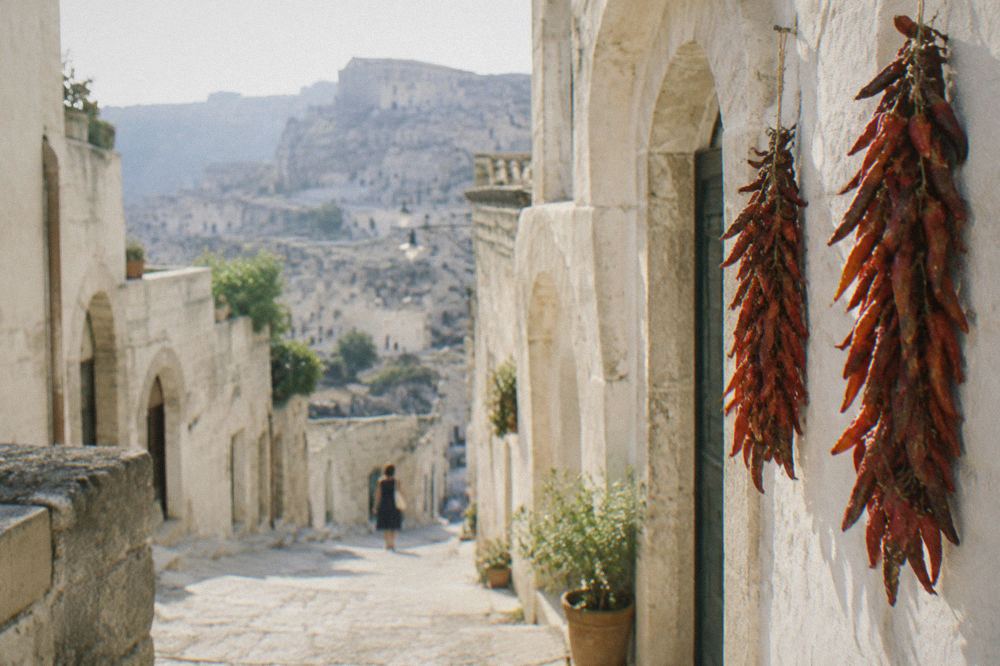
The dish belongs to a cooking tradition built around preservation. Summers in the interior of Basilicata are hot and dry, the ERA5 reanalysis, 1991-2020, puts the July mean high at 31.2 °C in Matera, and winters are cold enough for frost. Households across the region therefore dried peppers, tomatoes, figs and legumes in August and September and ate them through the winter. Frying the dried pepper in oil takes seconds and turns a leathery storecupboard ingredient into something that shatters.
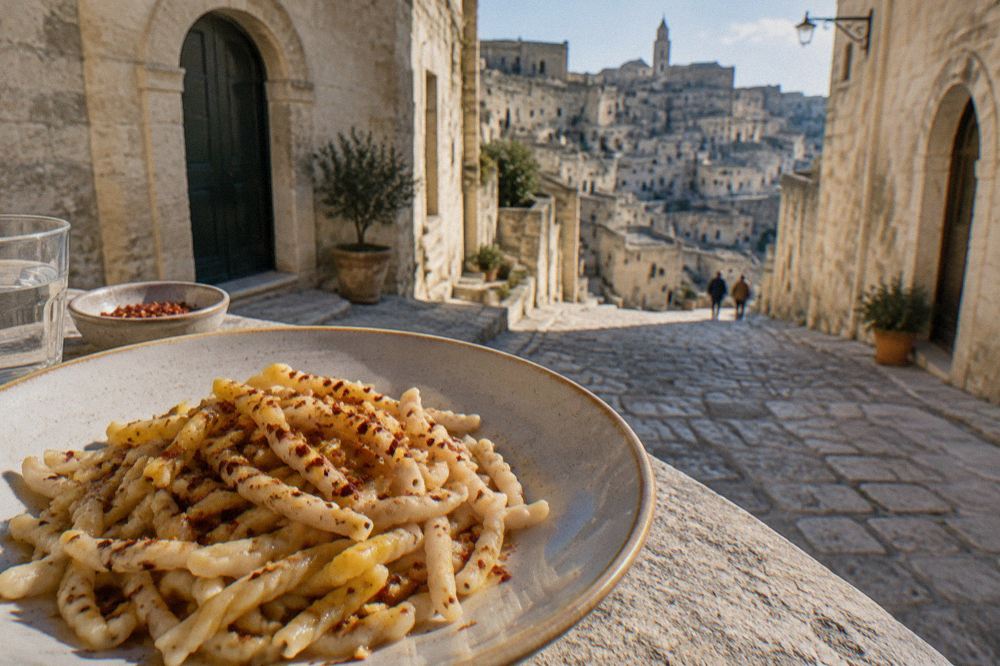
Matera is where that tradition meets visitors. The Sassi, the two cave quarters inscribed by UNESCO in 1993, hold the restaurants, wine bars and trattorie that rebuilt the repertoire of Materan home cooking after a 1986 law opened the way to the quarters' restoration. Peperoni cruschi appear on menus as a scattering of deep red flakes over pasta with cicerchie, a traditional Materan legume, over strascinate with breadcrumbs and salted ricotta, and as a side with potatoes and onions.
For context on the wider table, the companion guide to what to eat in Matera covers the full repertoire, and the bread of Matera page explains the loaf that shares the pantry with these peppers. Neither is a side note here: peperoni cruschi and pane di Matera come from the same logic of drying and keeping.
Where To Taste Peperoni Cruschi In Matera?
The reliable places to taste peperoni cruschi in Matera are the traditional trattorie of the Sasso Caveoso and Sasso Barisano, the cave restaurants carved into the tufa, and the wine bars of the Civita and Piano, where they are served as a snack with local Aglianico and Primitivo. Menus change with the seasons and the operator, so no single address is guaranteed on any given night, but the dish is standard enough that a menu without it is the exception.
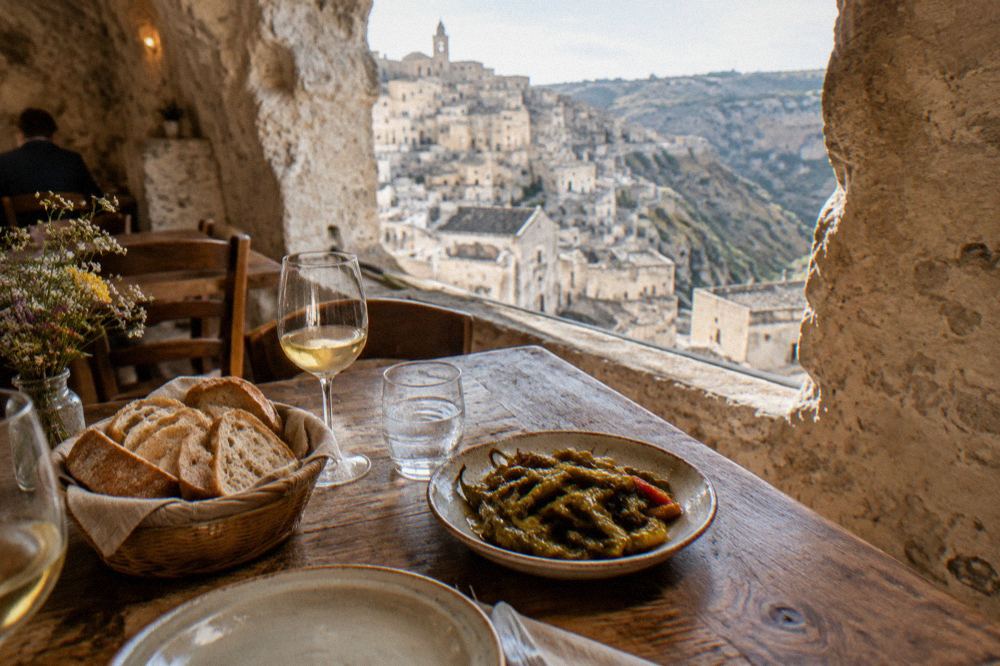
Start in the Sassi. The two quarters are steep, stepped and uneven, and the restaurants sit at every level, from terrace dining rooms with canyon views to cellar rooms with vaulted rock ceilings. Traditional kitchens there keep the Materan repertoire: pasta with cicerchie and cruschi, strascinate with cruschi and breadcrumb, salted ricotta and cruschi, and potato dishes where the peppers supply the crunch. The guide to the best restaurants in Matera sorts the neighbourhoods and the price settings, and it is the right first stop for planning meals around the Sassi.
Wine bars are the second route. A glass of red with a bowl of cruschi is an ordinary aperitivo in Matera, and bars cluster on the Piano, the modern plateau, and around Piazza Vittorio Veneto. The pepper is salty, oily and brittle, which makes it a natural partner for the area's structured reds.
A guided food walk compresses the search. The tasting tour below moves through the Sassi with a guide and includes stops at a rock church and a tasting, and its details and price render from the operator's live listing:
If the plan is a first visit built around walking and eating, a set of vetted options covers the city itself:
How Do You Pair Peperoni Cruschi With Wine And Other Matera Dishes?
The classic pairings for peperoni cruschi in Matera are legume pastas, salted ricotta, potatoes, sheep cheese and the structured reds of Basilicata, Aglianico and Primitivo above all. The pepper is fried in oil and intensely savoury, so it wants either a starchy base that absorbs the oil or a tannic red that stands up to it. Sweet uses exist, with chocolate and with almonds, but the savoury side of the repertoire is the one a visitor meets first.
The pairings follow the structure of the Materan pantry. Cicerchie, the chickling pea, is cooked soft and dressed with oil and cruschi. Strascinate, a hand-rolled pasta, takes breadcrumbs, cruschi and grated salted ricotta. Potatoes and onions are roasted with the peppers scattered over at the end, so they keep their snap. Sheep cheeses from the Murgia plateau carry the same flakes. In every case the rule is the same: the cruschi go on at the last moment, because steam and sauce soften them.
Wine follows the same logic. Basilicata's reds are grown on volcanic and limestone soils inland, and the deep-fruited, tannic styles cut the frying oil cleanly. A short structured tasting in the city centre is the easiest comparison:
What Do Church And Museum Tickets Cost On A Food Trip To Matera?
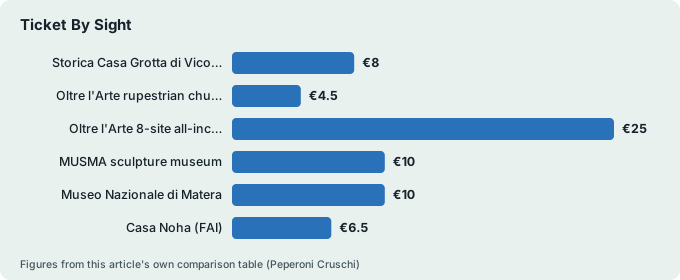
The verified ticket prices for Matera's main sights in 2026 are 8.00 EUR for the Storica Casa Grotta di Vico Solitario, from 4.50 EUR for a single rupestrian church run by Oltre l'Arte, 10 EUR for MUSMA and 10.00 EUR per site for the Museo Nazionale di Matera, with a 15.00 EUR cumulative ticket valid two days and free entry under 18.
A food trip needs only a few of these between meals, and the multi-site options save money when two or three sights share a day.
The table below lists the verified prices, all read on the operators' own pages. Note that the Casa Grotta tariff dates from 4 April 2026 and that older guides still print lower figures.
| Sight | Ticket | Source status |
|---|---|---|
| Storica Casa Grotta di Vico Solitario | 8.00 EUR full, 5.00 EUR reduced, 3.00 EUR ages 11 to 18, free to age 10 | verified on casagrotta.it |
| Oltre l'Arte rupestrian churches | 4.50 EUR one church, 8.00 EUR two, 10.00 EUR three | verified on oltrelartematera.it |
| Oltre l'Arte 8-site all-inclusive | 25.00 EUR full, 16.00 EUR reduced | verified on oltrelartematera.it |
| MUSMA sculpture museum | 10 EUR full, 5 or 7 EUR reduced, free to age 6 | verified on musma.it |
| Museo Nazionale di Matera | 10.00 EUR per site, 15.00 EUR cumulative two days, under 18 free | verified on museonazionaledimatera.it |
| Casa Noha (FAI) | 6.50 EUR adults, 3 EUR children | verified on fondoambiente.it |
Two caveats matter for autumn and winter planning. Casa Noha is closed 5 to 22 October 2026 for renovation ahead of a relaunch, and the Museo Ridola has been closed since 7 April 2025 with no reopening date published. Neither affects a food itinerary directly, but both appear on older listicles as open sights.
Oltre l'Arte's other sites carry their own small tariffs, useful if a food walk through the Sassi passes their doors:
| Oltre l'Arte site | Price | Hours |
|---|---|---|
| Casa Grotta di Via Fiorentini | 2.00 EUR | daily 09:00 to 19:00 |
| Vicinato a Pozzo | 8.00 EUR | daily 09:30 to 19:00, last entry 18:00 |
| Cathedral and MATA route | 4.00 EUR | daily 09:00 to 19:00, last entry 18:45 |
| Museo del Pane | price on the door | daily 09:00 to 19:00 |
| Chiesa del Purgatorio exhibition | price on the door | daily 09:30 to 19:00 |
The Museo del Bread is the one sight that belongs on this page's theme: it sits inside the Oltre l'Arte circuit and covers the grain-and-oven culture that peperoni cruschi grew out of. All Oltre l'Arte sites close on 25 December and 2 July, the day of the Festa della Bruna.
The food theme also travels well with the standard sightseeing circuits, and a box like this one covers the Bari-based day excursion that pairs the Sassi with a guided visit:
Can You Buy Peperoni Cruschi To Take Home From Matera?
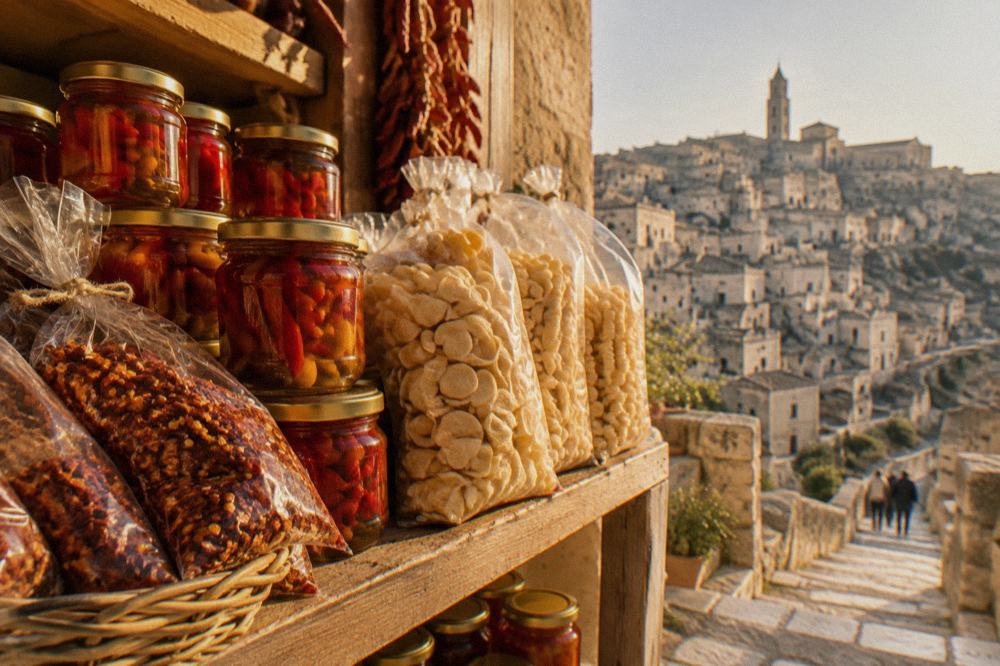
Yes, and they are one of the best souvenirs Matera offers, because dried peppers and fried flakes keep for months without refrigeration. Buy them whole and dried if the plan is to fry at home, or buy them already fried and sealed if the plan is snacking, and look for strands, glass jars and sealed bags rather than open trays. Shops across the Piano and the Sassi, delicatessens and the city's food shops all stock them, and prices vary by shop, so compare before buying.
Whole dried peppers are the raw material. They look papery and leathery, red to deep maroon, and they fry into cruschi in a pan of hot oil at home. Already-fried flakes are sold in sealed bags and jars; they are ready to scatter but lose snap once opened, so small bags beat one large one. Some shops also sell them crushed with salt, or in oil with garlic. The wider set of guides lives on Matera Travel Guide.
A note on carrying them: the fried peppers are fragile, and a rigid container or a padded corner of the suitcase preserves the texture. They are a dry agricultural product, and travellers flying within the Schengen area, which Italy belongs to, will not face customs formalities carrying them home within the zone, though rules differ for destinations outside it, so check the destination country's rules before packing.
How Does The Season Shape A Peperoni Cruschi Trip To Matera?
The pepper year runs from late summer drying, when the harvest hangs in strands across the inland hills, to a steady dried supply through autumn and winter, and the busiest visitor months do not line up with the heat. APT Basilicata's counts show 61,630 arrivals in September 2025 against 15,239 in February, so the crunchier end of the visitor calendar, September and October, is also when the new dried crop reaches shops and kitchens.
The climate data explains the cycle. The ERA5 reanalysis, 1991-2020, gives Matera a July mean high of 31.2 °C against a January mean high of 10.3 °C, with November the wettest month at 67.1 mm and July the driest at 21.2 mm. That hot dry peak is what dries the peppers, and the rain that follows it is what the dried storecupboard was for.
| Month | Mean high °C | Rain mm | Arrivals 2025 |
|---|---|---|---|
| Mar | 14.1 | 59.2 | 23,629 |
| Jun | 28.2 | 35.1 | 50,186 |
| Sep | 25.7 | 44.8 | 61,630 |
| Oct | 20.8 | 51.7 | 52,538 |
| Nov | 15.5 | 67.1 | 23,555 |
| Dec | 11.2 | 57.2 | 30,385 |
Source: ERA5 reanalysis, 1991-2020, and APT Basilicata accommodation counts for the city of Matera. Arrivals are guests in registered accommodation, not all visitors.
Two seasonal anchors sit in the colder half. The Presepe Vivente nei Sassi, the living nativity that winds through the Sasso Caveoso, runs its sixteenth edition on 5-6, 12-13, 19-20 and 26-27 December 2026 and 2-3 January 2027, with tickets at 12.00 EUR full and 9.00 EUR for ages 10 to 18, verified on the event's own site. December also brings the Matera Film Festival, 7 to 15 November 2026 sits just before it, and both give a winter food trip a fixed evening programme. For timing a whole visit, the best time to visit Matera guide works through the trade-offs month by month.
Which Day Trips From Matera Pair With A Peperoni Cruschi Theme?
The pepper country lies in the inland hills and valleys around Matera, and the natural day trips are the small towns of the Materano and the Ionian coast at Metaponto, with drive times verified by routing: Altamura 20 minutes, Montescaglioso 26 minutes, Metaponto about 52 minutes and Craco about 58 minutes from Matera Centrale, all free-flow estimates without traffic. A car makes the loop easy, and the same roads pass olive groves, wheat fields and the vineyards that supply Matera's reds.
| Destination | Road distance | Free-flow drive |
|---|---|---|
| Altamura | 20 km | 20 min |
| Montescaglioso | 19 km | 26 min |
| Metaponto | 47 km | 52 min |
| Craco | 57 km | 58 min |
| Taranto | 52 km | 1 h 08 |
| Polignano a Mare | 100 km | 1 h 29 |
Altamura, in Puglia just over the regional line, pairs its famous bread with the same inland pantry. Montescaglioso is a Materano abbey town on the Murgia edge. Metaponto adds the sea that Matera itself lacks, on the Ionian coast, with Greek ruins beside the beach. Craco is the abandoned hill town that rises empty above its valley, and it makes a dramatic half day combined with inland driving. Visitors arriving from Puglia can also build the reverse trip, pairing Matera with Alberobello or Bari, and the excursions below handle that direction:
Where Do Peperoni Cruschi Fit In A Short Matera Itinerary?
A two-night stay gives a comfortable food circuit: the first evening for a trattoria in the Sassi with a cruschi pasta, the first morning for the Sassi walks and one or two ticketed sights, the second day for a day trip into pepper country or a cooking class, and the last morning for buying dried peppers, bread and pasta to carry home. The APT Basilicata count shows an average stay of 1.56 nights per guest in 2025, so even one full day covers the essentials.
Anchor the walk first. The Sassi repay a full circuit, from Piazza Vittorio Veneto down into Sasso Barisano, across the Civita ridge where the Cathedral stands, and down through Sasso Caveoso to the viewpoints over the Gravina and the Murgia plateau opposite. Panoramic rides by tuk-tuk and Ape Calessino cover the same frames for anyone who wants to save their legs for dinner, and the ones listed above are bookable with current prices on their live listings.
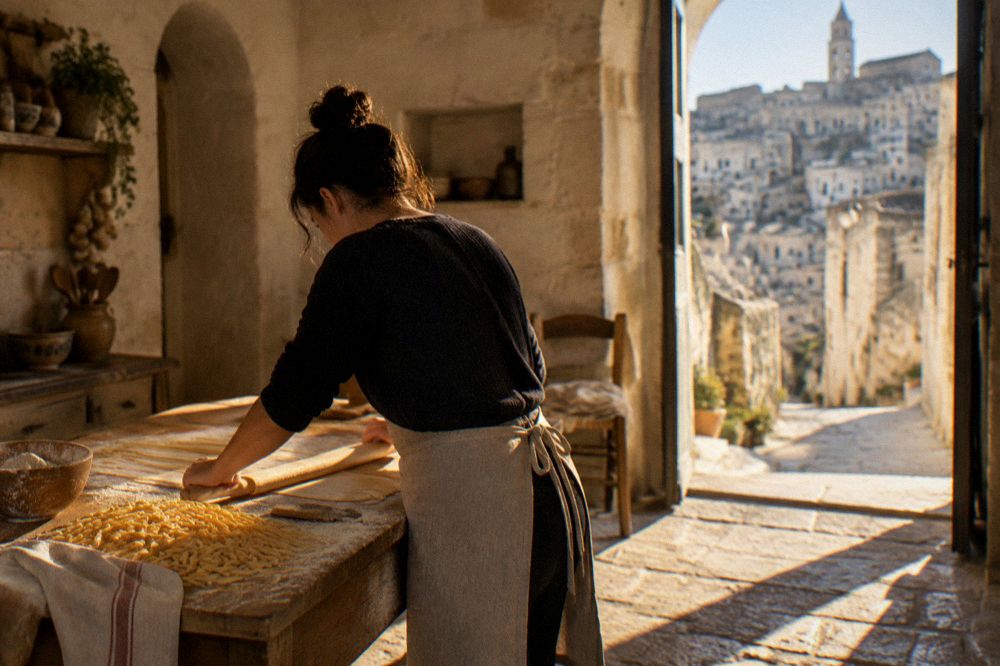
A cooking class turns the tasting into a skill. Matera's pasta classes run in farmhouses and wine cellars around the city, and they teach the hand-rolled shapes that carry cruschi, strascinate above all. Class details and prices render from their listings, and a class plus a restaurant evening gives two angles on the same dish.
To learn the hand-rolled shapes that carry the cruschi, book a Matera cooking class here.
Sleep in a cave hotel to keep the theme whole. The Sassi hold cave rooms carved from the same tufa as the churches, and the guides to where to stay in Matera and the cave hotels of Matera sort the quarters by budget and setting. The main planning page for the city is the things to do in Matera round-up.
Common Questions About Peperoni Cruschi In Matera
Are peperoni cruschi spicy?
No. They are made from sweet red peppers, and the drying and frying concentrate sweetness and savour rather than heat. The pepper flakes taste of fried pepper, oil and salt, with a bitter edge if they are over-fried, which is why kitchens fry them for only seconds.
What dishes come with peperoni cruschi in Matera?
The standard Materan pairings are pasta with cicerchie, strascinate with breadcrumbs and salted ricotta, potatoes with onions, sheep cheese boards and simple aperitivo snacks. The flakes are scattered on at the end of cooking so they stay crisp.
Can I fry dried peppers at home?
Yes. Whole dried peppers fry in a small pan of hot oil for a few seconds a side until they darken slightly and stiffen, then they are drained on paper and salted. The window between crisp and bitter is short, so fry a single test pepper first.
Where do I buy peperoni cruschi in Matera?
Delicatessens and food shops across the Piano and the Sassi sell them whole and dried, fried and sealed in bags, in oil in jars, and crushed with salt. Prices vary by shop and are confirmed in store.
Do peperoni cruschi keep for the journey home?
Dried whole peppers keep for months in a dry place. Fried flakes keep weeks sealed, but soften once the bag is open, so buy small sealed bags if they are a gift or a souvenir.
Is there a festival for peperoni cruschi?
Pepper festivals are held in the inland towns of Basilicata in late summer, but no festival in the city of Matera itself is dedicated to them. This site's events page tracks what is confirmed in the city; check locally before travelling for any single festival date.
What Should You Know Before Planning A Peperoni Cruschi Trip To Matera?
The practicalities are simple: Matera charges a tourist tax collected by your accommodation and confirmed at booking, the city is reached by regional train from Bari in about 1 h 45 to 2 h with a change at Altamura, with replacement buses on Sundays and public holidays, and the emergency number is 112. The Sassi are steep and stepped everywhere, so shoes and pacing matter more than any single booking.
Getting there is covered in depth on the getting to Matera, Bari to Matera and Bari Airport to Matera pages. Driving visitors should read the ZTL rules before setting out: camera-controlled limited traffic zones cover the Sassi gates and the centre around the clock or by season, and the parking in Matera and Matera ZTL guides give the verified hours.
Once there, the plan writes itself. Eat the cruschi pasta on the first night, taste the reds beside a bowl of flakes, walk the Sassi between meals, drive or ride out into the pepper country, and leave with a sealed bag and a loaf of pane di Matera. A dish built to survive a Basilicata winter travels just as well in a suitcase.