Matera Food Tour
Matera, an inland city in Basilicata, southern Italy, eats the way its landscape looks: bread baked in wood ovens, vegetables dried on terraces, pasta shaped by hand and wine from the hills of the Murgia. This guide explains what a Matera food tour covers and how to build one.
Short answer
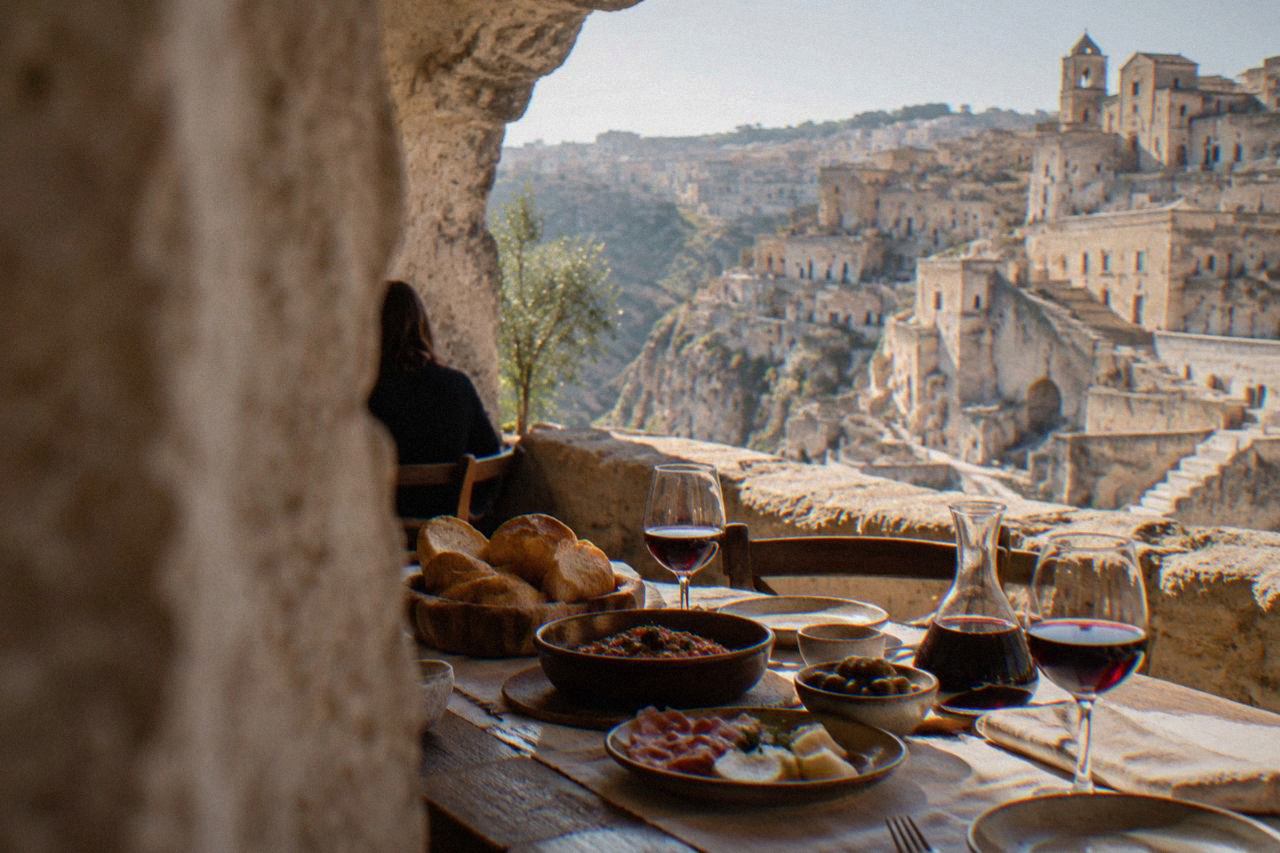
A Matera food tour pairs the cave districts with the city's peasant cooking tradition: Pane di Matera bread, handmade pasta, cruschi peppers and local Aglianico and Primitivo wines, usually on foot through the Sassi or at a farmhouse cooking class outside the centre.
Matera is an inland city in Basilicata, southern Italy, perched at about 400 m above sea level on the edge of the Gravina canyon, and its cooking grew directly out of that terrain. There is no sea at Matera: the coast at Metaponto, Polignano a Mare and Bari is a day trip away. What the city has instead is a peasant kitchen built on bread, legumes, wild vegetables, sheep's cheese and the wine of the surrounding hills, cooked for centuries in cave homes that today hold restaurants, wine cellars and tasting rooms. A food tour here is therefore never just a meal: it is a walk through the Sassi districts with a fork in hand.
This page from the Matera Travel Guide editorial desk sets out what a Matera food tour actually covers, which dishes define the local table, how a guided walk differs from a cooking class or a wine tasting, and how food fits into a wider itinerary that includes the Sassi cave districts and the surrounding towns. Product prices, ratings and durations for every tour named here render from the site's verified listings, so nothing is quoted by hand.
What Is A Matera Food Tour, And What Do You Taste?
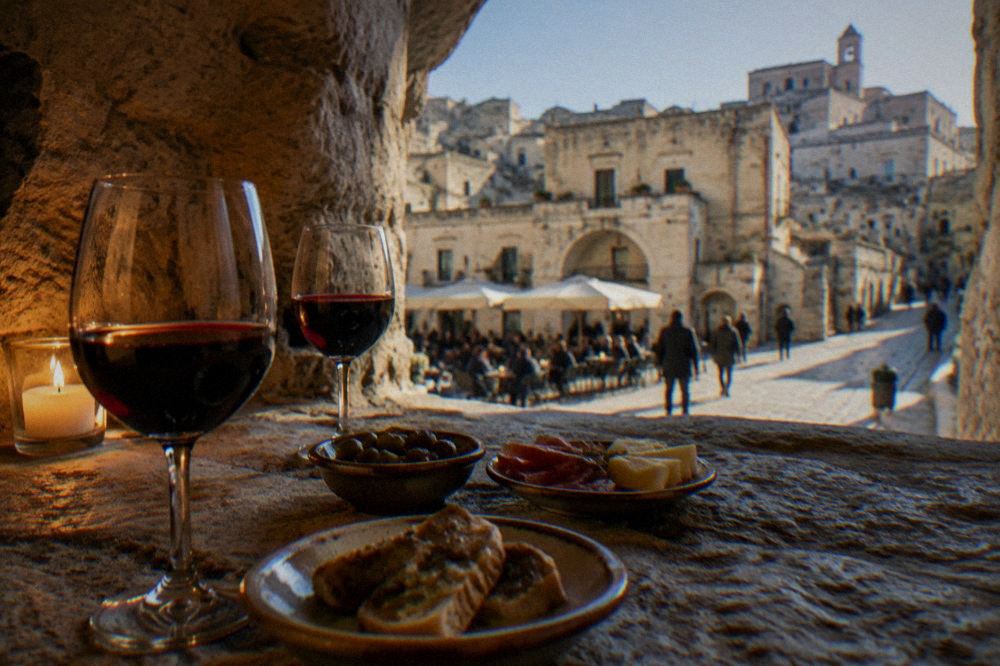
A Matera food tour is a guided walk or seated tasting that moves through the Sassi and the historic centre, stopping at cave cellars, bakeries and small producers to sample the city's peasant cooking: Pane di Matera bread, handmade pasta such as orecchiette and cavatelli, cruschi sweet peppers, caciocavallo cheese, salumi, and Aglianico and Primitivo wines from Basilicata and neighbouring Puglia. The formats sold on this site combine food with the cave districts, so a tasting doubles as an orientation to the Sassi.
The logic is historical rather than commercial. The Sassi were lived in as cave dwellings until residents were moved out between 1952 and the 1970s, and the same spaces now house wine bars and restaurants carved from the tufa. A tasting in a cave cellar is held in a room whose shape exists because families stored wine and grain there. Guided food walks use that overlap: the route explains the districts while the stops explain the diet that sustained them.
What you taste reflects the Matera pantry, which the site's guide to what to eat in Matera covers in depth. In general terms: dense, wood-oven bread with a dark crust; pasta pressed and rolled by hand; vegetables preserved by drying, especially the sweet crusco pepper; lamb and mutton from the Murgia; and cheeses from the plateau's pastures. Because Matera sits inland, seafood is not the story here, and a food tour that promises fish is selling you the wrong region.
Which Dishes And Products Define The Matera Table?
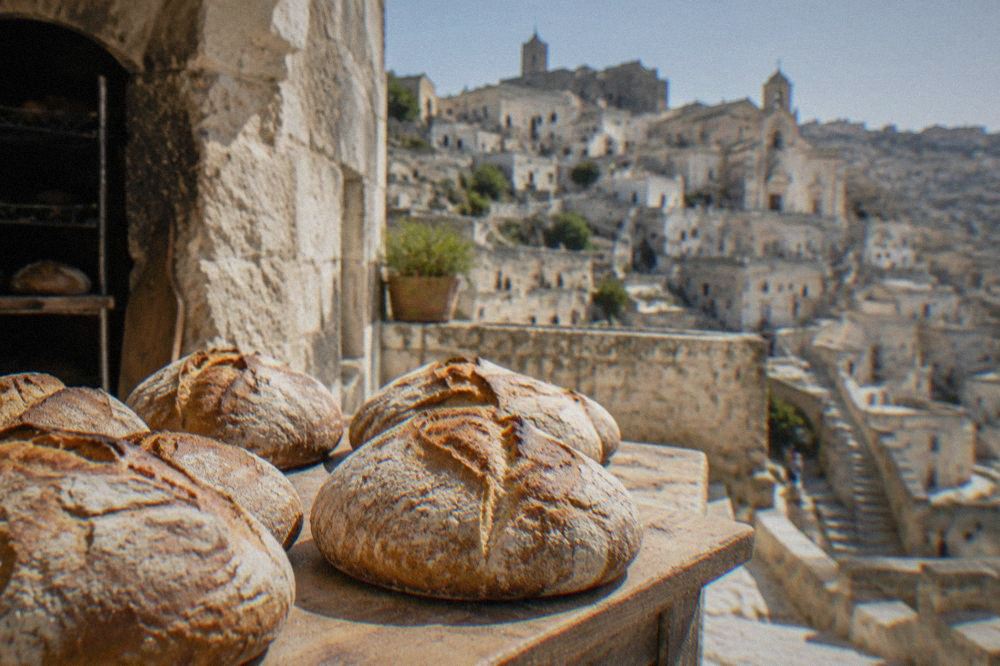
The core of the Matera table is Pane di Matera, a registered PGI bread (registered in 2008 under Reg. CE 160/2008, on a source this site rates as soft-confirmed), plus handmade pastas, the crusco sweet pepper, caciocavallo and ricotta cheeses, lamb dishes from the Murgia, and the red wines Aglianico and Primitivo that surround the city. Every one of these grew from cave-house subsistence cooking, and each appears on the tasting menus of the city's food tours.
The bread deserves the first paragraph because it is the one product with a protected name attached to the city. Pane di Matera is a leavened wheat bread with a thick, dark crust, traditionally baked in wood-fired ovens and shaped in large round or high loaves that keep for days. The registration dates to 2008, a detail this site carries with a soft attribution because it rests on a Wikipedia-based answer rather than a consortium page the desk opened directly.
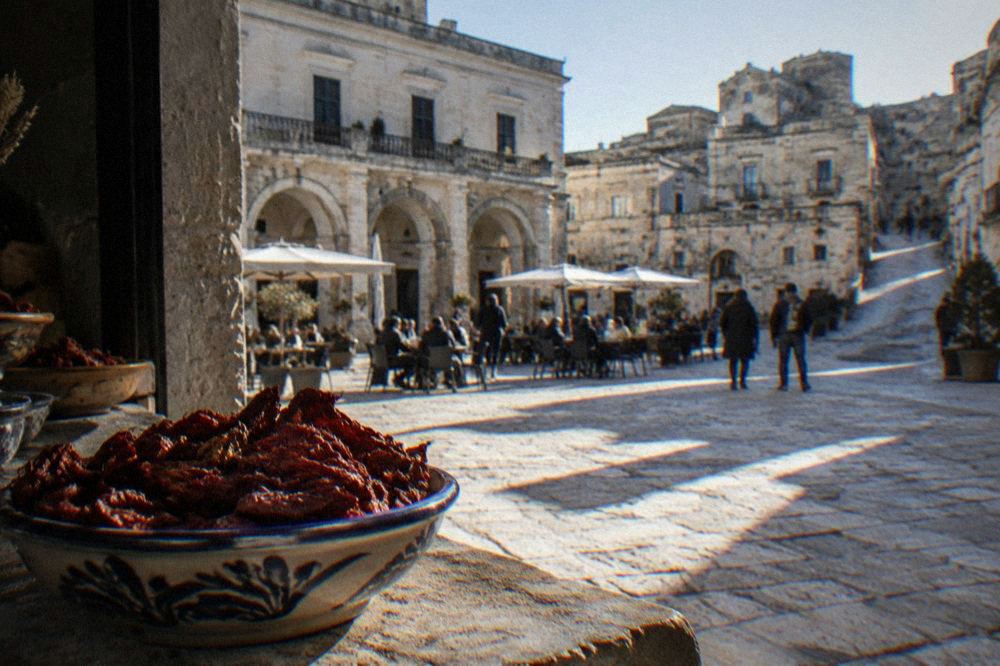
Around the bread sits a wider repertoire. Cavatelli and orecchiette are the pasta shapes of the region, served with turnip tops, beans or breadcrumb sauces. Peperoni cruschi, sweet peppers dried and fried until they shatter, are Basilicata's signature garnish, and the site's page on cruschi peppers traces them in detail. Cheese means caciocavallo and fresh ricotta from the Murgia flocks. Meat leans to lamb, kid and pork salumi. Desserts are simple: pasticciotto-style pastries arrive from Puglia, but the local habit is a biscuit with sweet wine.
| Product | What It Is | Why It Belongs To Matera |
|---|---|---|
| Pane di Matera | Dense wheat bread, thick dark crust, wood-oven baked, registered PGI 2008 | Named for the city; grown from cave-house ovens |
| Peperoni cruschi | Sweet peppers dried whole, then fried crisp | Murgia smallholding preservation, used across Basilicata |
| Cavatelli and orecchiette | Hand-pressed pasta shapes | Rolled by hand in home kitchens, served with local vegetables |
| Caciocavallo and ricotta | Aged and fresh sheep's cheeses | Murgia pasture flocks opposite the Sassi |
| Aglianico and Primitivo | Structured southern red wines | Grown on the hills around Matera and into Puglia |
Wine deserves its own note. Matera is not a single famous appellation the way some Tuscan towns are, but it sits between the Aglianico del Vulture hills of northern Basilicata and the Primitivo territory of Puglia, and many cave cellars in the Sassi pour both alongside Basilicata whites such as Greco and Malvasia. The site's page on Matera wine sets out the region in more detail.
How Do You Choose Between A Guided Walk, A Cooking Class And A Wine Tasting In Matera?
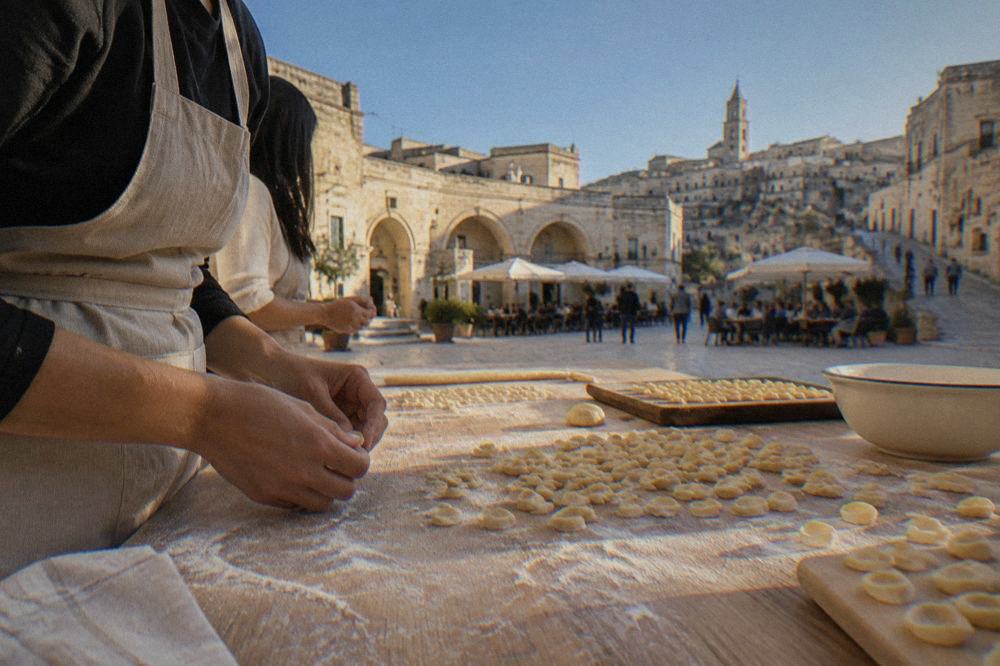
Choose a guided food walk if you want the Sassi explained while you taste, a cooking class if you want to make the pasta yourself, usually at a farmhouse outside the centre, and a wine tasting if you want a seated hour with pairings in a cave cellar. Walks cover ground and dishes; classes cover technique; tastings cover the glass. They answer different questions, and the listing for each states exactly what is included.
The walk-plus-tasting format is the most popular hybrid. One product sold on this site combines a full guided route through the Sassi with a stop inside the rock church of Madonna de Idris and a tasting at the end, so the food comes attached to an orientation of the cave districts.
Cooking classes flip the arrangement. The farmhouse class sold here moves you out of the city to cook pasta in a rural setting and eat what you made, which suits travellers who want the kitchen rather than the street.
There is also a pasta class held in an ancient wine cellar inside the Sassi, which keeps the setting cave-hewn and the session central.
Wine-only options exist as short seated experiences; one small-group tasting with food pairing runs in the centre, and a longer food-and-wine route links olive-oil producers outside the city.
The desk's honest summary of the differences: a walk teaches you the city, a class teaches you the dish, a tasting teaches you the glass. If the trip is short and the one day in Matera itinerary is the plan, a combined walk-and-tasting product does two jobs at once. With two days, the two days in Matera itinerary leaves room for a class.
When Is The Best Season For Eating Your Way Around Matera?
September and October are the strongest food months: the ERA5 reanalysis, 1991-2020, gives a September mean high of 25.7 C and 44.8 mm of rain, harvest time is arriving, and the APT Basilicata data shows September as the year's busiest month for arrivals at 61,630. Spring, April to May, is the second window, with mean highs of 17.4 C and 22.7 C and the first warm-weather produce.
The seasonal logic matters for a food trip more than for a sightseeing one. Autumn brings wine, olives and the dried-pepper harvest; spring brings wild greens, lamb and the first outdoor tables. Midsummer is hot and dry, with a July mean high of 31.2 C, and the Sassi are steep, stepped and uneven, so a walking food tour in July and August is more work than in September. Winter is quiet and cold, with a January mean low of 2.2 C, but it is the season of the Presepe Vivente and of hearty dishes.
| Month | Mean High C | Mean Low C | Rain mm | Arrivals 2025 |
|---|---|---|---|---|
| March | 14.1 | 4.4 | 59.2 | 23,629 |
| April | 17.4 | 7.1 | 56.5 | 45,195 |
| May | 22.7 | 11.5 | 41.7 | 54,101 |
| June | 28.2 | 16.0 | 35.1 | 50,186 |
| September | 25.7 | 15.2 | 44.8 | 61,630 |
| October | 20.8 | 11.6 | 51.7 | 52,538 |
(ERA5 reanalysis, 1991-2020, grid cell for Matera; arrivals are APT Basilicata accommodation counts, not visitor totals.)
February is the quiet month on the same APT data, 15,239 arrivals in 2025, and November is the wettest on the ERA5 normals at 67.1 mm. Neither fact argues against a visit; both argue for a cooking class or a seated cellar tasting over a long walk. The site's page on the best time to visit Matera extends this comparison.
How Does A Food Tour Fit Together With The Sassi, The Churches And The Museums?
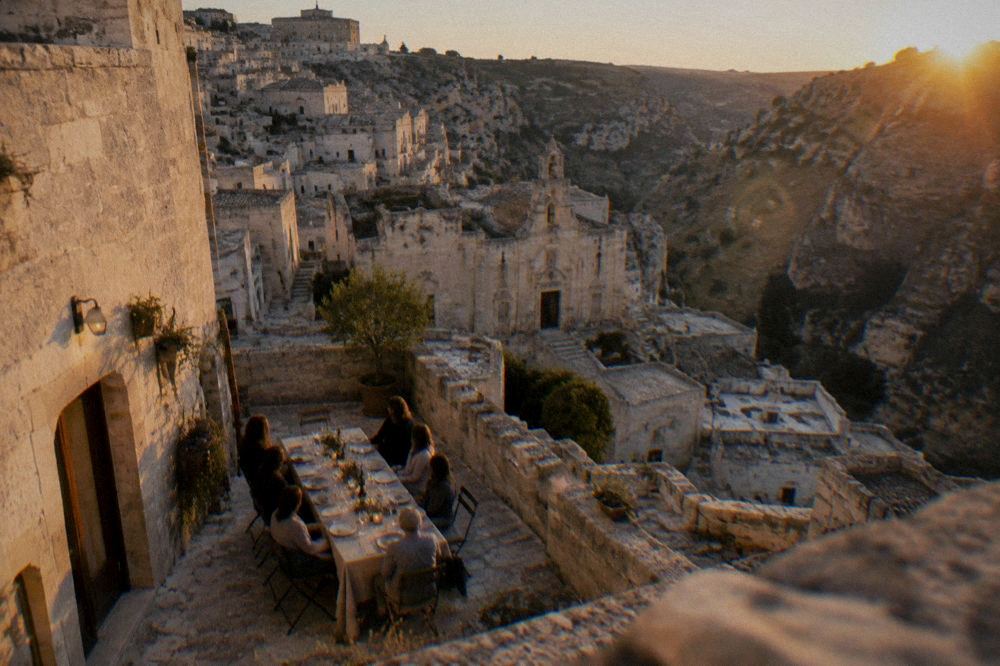
A food tour slots naturally into a day built around the Sassi because the tasting stops sit inside the same districts as the cave house of Vico Solitario (8.00 EUR full, tariff from 4 April 2026) and the Oltre l'Arte rupestrian churches (1 church 4.50 EUR, 3 churches 10.00 EUR). Food venues and sights share staircases, so a single morning can hold a cave house, a rock church and a cellar without backtracking.
The practical pairing works like this. Start high on the Piano, the modern plateau that rings the old quarters, see the Cathedral of Matera, then descend into the Sasso Caveoso or Sasso Barisano. The Casa Grotta di Vico Solitario shows how a cave family actually lived, including where food was stored, which is the best possible preamble to tasting the cuisine those households ate. From there, a guided walk that ends in a tasting is the efficient shape for the afternoon.
| Verified Ticket (2026) | Price | Notes |
|---|---|---|
| Casa Grotta di Vico Solitario | 8.00 EUR full, 5.00 EUR reduced | Tariff in force from 4 April 2026; covers four sites |
| Oltre l'Arte rupestrian churches, 1 site | 4.50 EUR | Santa Lucia alle Malve, Madonna de Idris or San Pietro Barisano |
| Oltre l'Arte rupestrian churches, 3 sites | 10.00 EUR | All three churches, from 28 March 2026 hours |
| Oltre l'Arte 8-site all-inclusive | 25.00 EUR | Reduced 16.00 EUR; includes MATA and Museo del Pane |
| Casa Noha (FAI) | 6.50 EUR adults | Closed 5 to 22 October 2026 for renovation |
Note the Museo del Pane, the bread museum, inside the Oltre l'Arte all-inclusive ticket: for a food-focused visit it is the single most on-theme sight in the city, and it comes bundled with the church tickets rather than sold separately. If a walk with a licensed guide is what you want first, the site's Matera walking tour page compares the formats, and tip-based walks also run locally, to be confirmed directly with the guide.
What Does A Food-Focused Day Trip From Matera Look Like?
The strongest food day trips from Matera are Alberobello for trulli-town dining, about 68 km and 1 h 23 of free-flow driving, Altamura for its famous bread town, 20 km and 20 minutes, and Gravina in Puglia, 30 km and 31 minutes, with Metaponto on the Ionian coast at 47 km for a seafood contrast. Drive times are free-flow OSRM calculations over OpenStreetMap, so add margin for traffic and parking.
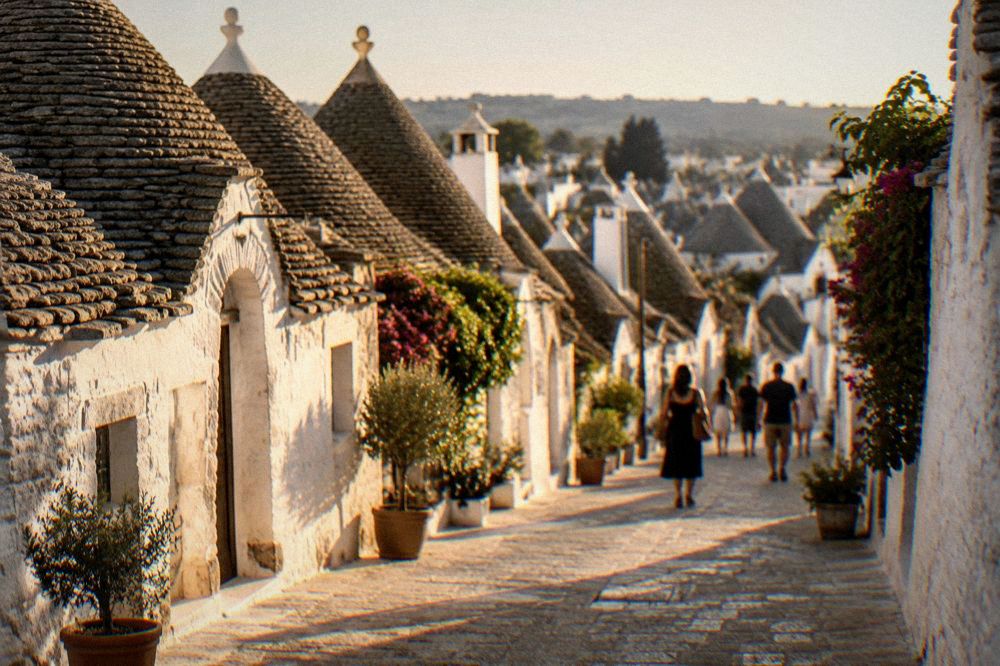
Altamura is the closest thing the region has to a bread capital and it is barely half an hour away on the same plateau; its name is attached to its own famous bread the way Matera's is to Pane di Matera. Gravina, in Puglia, adds a canyon town with its own wine and salumi tradition. Alberobello, also in Puglia, is the UNESCO-listed trulli town, and the site's Alberobello day trip guide and Altamura guide cover both in detail.
| Destination | Road km From Matera | Free-Flow Drive Time |
|---|---|---|
| Altamura | 20 | 20 min |
| Gravina in Puglia | 30 | 31 min |
| Metaponto | 47 | 52 min |
| Bari | 68 | 1 h 02 |
| Alberobello | 68 | 1 h 23 |
| Polignano a Mare | 100 | 1 h 29 |
If you would rather not drive, the tour sold on this site covers Matera and Alberobello in one booked day with transport, pairing the Sassi with the trulli town and its food stalls, and the listing states the current price, rating and inclusions.
Readers based in Bari can also run the itinerary in reverse with the site's Matera day trip from Bari plan, which folds a food stop into the Sassi leg.
What Should You Know About Booking, Budgets And Timing?
Book the walk-and-tasting products and the cooking classes ahead, because group sizes are small and September, the busiest month on the APT data, fills first; allow a full morning or afternoon for a combined Sassi walk with tasting, and a longer block for a farmhouse class with travel. Meal prices are not published on this site, so treat restaurant budgets as planning ranges to check locally, and remember Matera charges a tourist tax collected by your accommodation, with the amount confirmed at booking.
Timing inside the day matters more than travellers expect. The Italian lunch hour is real: kitchens open around 12:30 and the serious sitting runs to about 14:30, while aperitivo begins in the early evening, and the site's bars and aperitivo guide maps the habit. A food tour that ends with a tasting at 13:00 lands you exactly in the lunch window, which is why the walk-plus-tasting products are structured the way they are.
A few desk cautions. The Sassi are steep, stepped and uneven: wear real shoes for any walking tour, and no named route in the districts should be assumed step-free. Book restaurant tables for the Festa della Bruna on 2 July and the December Presepe Vivente weekends, when the city is at its fullest. The emergency number in Matera is 112. And if a dietary restriction matters, tell the operator at booking, since cave-cellars and farmhouses cook from a fixed regional repertoire.
For travellers combining food with everything else the city offers, the root things to do in Matera page lists the full range, from Palombaro Lungo, the giant water cistern under the city, to the rupestrian churches whose painted caves give the food stops their backdrop.
What Food Events Fill The Matera Calendar?
The fixed food-adjacent anchors are the Festa della Bruna on 2 July every year, the city's patronal feast dating to 1389 by the organisers' own history, and the Presepe Vivente nei Sassi, whose sixteenth edition opens 4 December 2026 with public days on four December weekends plus 2-3 January 2027, when street food and regional dishes line the route. The Matera Film Festival, 7 to 15 November 2026, fills restaurants but adds no food programme.
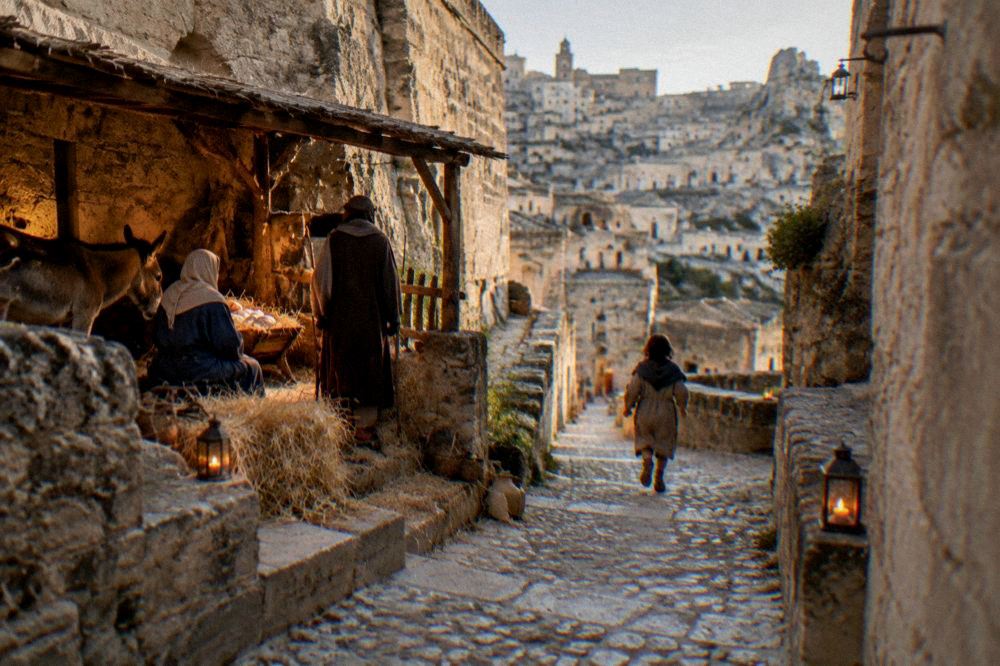
The Presepe Vivente is the one event where food and the Sassi merge completely: a living nativity with 20 scenes runs from Piazza San Pietro Caveoso through Vico Solitario, Rione Malve and Casalnuovo to Via Bruno Buozzi, exactly the streets a food walk uses, and tickets are 12.00 EUR full, 9.00 EUR for ages 10 to 18, free under 10. Bruna, by contrast, is a procession and fireworks feast, and Oltre l'Arte closes its sites on that day, so plan sightseeing around it rather than through it.
| Event | Dates | Food Angle | Ticket |
|---|---|---|---|
| Festa della Bruna | 2 July annually, 638th edition in 2027 | Street stalls, patronal feast | Free public event |
| Matera Film Festival | 7 to 15 November 2026 | Restaurants full, no food programme | Festival pricing |
| Presepe Vivente nei Sassi | 4 Dec 2026 opening; public days 5-6, 12-13, 19-20, 26-27 Dec 2026 and 2-3 Jan 2027 | 20 scenes through the Sassi streets | 12.00 EUR, 9.00 EUR ages 10-18, under 10 free |
Common Questions About Matera Food Tours
Is a food tour in Matera worth it without a car?
Yes. The Sassi formats, cellar tastings and most cooking-class pickups work from the centre without driving, and the railway and bus links from Bari reach Matera Centrale on foot from the old town. A car only matters for the farmhouse classes and the rural day trips, and even those are sold with transfers on some listings.
What food is Matera famous for?
Pane di Matera bread, a registered PGI since 2008, handmade cavatelli and orecchiette, cruschi sweet dried peppers, caciocavallo and ricotta from the Murgia, lamb dishes and the red wines Aglianico and Primitivo. Matera is inland, so seafood is a coastal day-trip subject, not a local one.
How long does a food tour in Matera last?
Durations render on each listing on this site and are never typed in prose, but as planning guidance the walking formats occupy a half-day block, farmhouse classes a longer block including travel, and seated tastings a shorter one. Check the listing for the exact schedule before booking.
Can you do a food tour in Matera with dietary restrictions?
Vegetarian diners manage well, since the peasant repertoire leans on beans, greens, bread and cheese. Vegan, gluten-free and allergy cases should tell the operator at booking, because cave cellars and farmhouses cook from a fixed regional menu and cannot always adapt on arrival.
When is the best month for a Matera food trip?
September, on the numbers: it is the busiest month for arrivals at 61,630 in the APT Basilicata 2025 data, the ERA5 1991-2020 mean high has eased to 25.7 C, and the harvest is arriving. April and May are the spring alternative, and December adds the Presepe Vivente weekends.
Do you need to book a Matera food tour in advance?
Book ahead for September, holiday weekends and the Presepe Vivente period, when accommodation arrivals peak and groups are small. Midweek winter dates are calmer, but a class or tasting still needs a confirmed slot, and every product on this site carries a live availability link.
A food tour in Matera is the most efficient way to understand why the city tastes the way it does: the bread, the caves, the peppers and the wine all come from the same limestone plateau, and a good guide connects them in a single walk.