Civita Matera
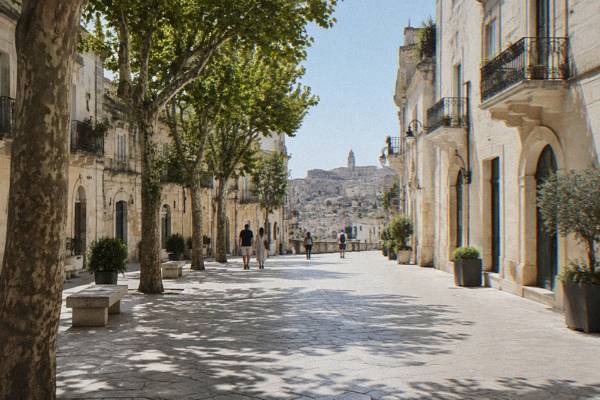
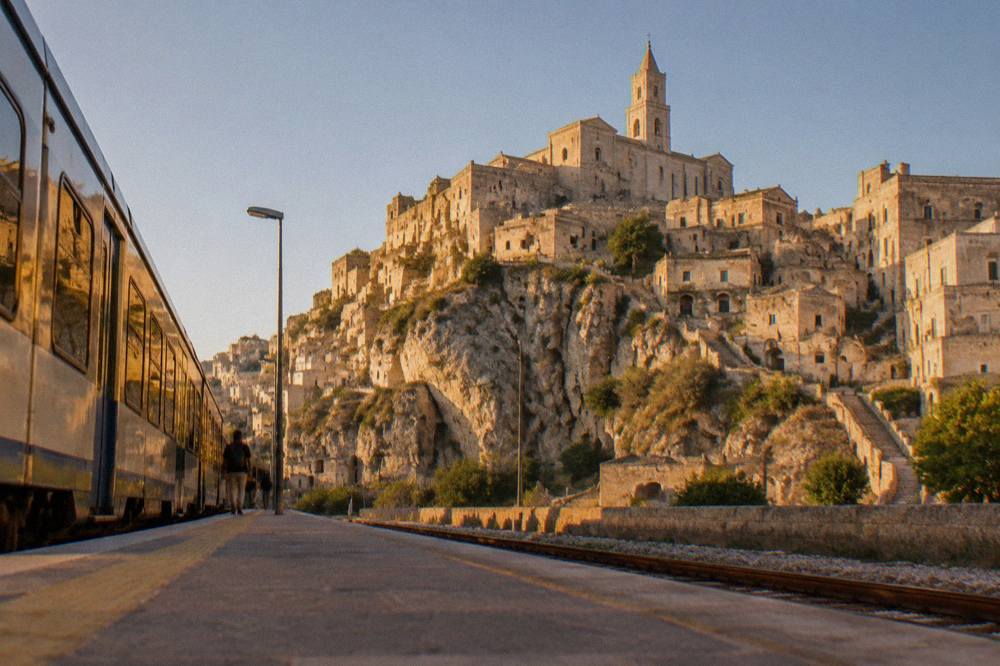
Civita is the high ridge that separates the two Sassi districts of Matera, the inland cave city of Basilicata in southern Italy, and it carries the Cathedral, the palazzi and the oldest street plan in town.
Short answer
Civita is the original nucleus of Matera, perched on the limestone ridge between Sasso Caveoso and Sasso Barisano. It holds the Cathedral, the diocesan museum and the main square, and it is the natural first stop on any walk of the city.
Matera, in the region of Basilicata in southern Italy, is an inland city of about 400 m above sea level on the edge of the Gravina canyon, and its historic heart is a narrow limestone ridge called Civita. The two famous cave districts, Sasso Caveoso and Sasso Barisano, spill down the flanks of that ridge on either side, and Civita sits on top between them, holding the Cathedral, the palazzi and the street plan from which the whole city grew. This guide from the Matera Travel Guide editorial desk sets out what Civita is, what it costs to see, how to walk it, and how it fits into a first day in the city.
What Is Civita In Matera?
Civita is the original, fortified nucleus of Matera, occupying the ridge between the Sasso Caveoso and the Sasso Barisano, where the Cathedral of Santa Maria della Bruna, the bishop's buildings and the oldest network of lanes in the city stand today. The name means the city or the town proper, marking the distinction that materani drew for centuries: the Civita was the walled town, while the Sassi below were the cave quarters cut into the tufa. The name simply means the city or the town proper, and it marks the distinction that materani have drawn for centuries: the Civita was the walled town, while the Sassi below were the cave quarters where people lived in dwellings cut into the tufa. UNESCO inscribed the whole ensemble, the Sassi and the Park of the Rupestrian Churches of Matera, on the World Heritage List in 1993, describing a rock-cut settlement adapted to its setting with continuity over more than two millennia.
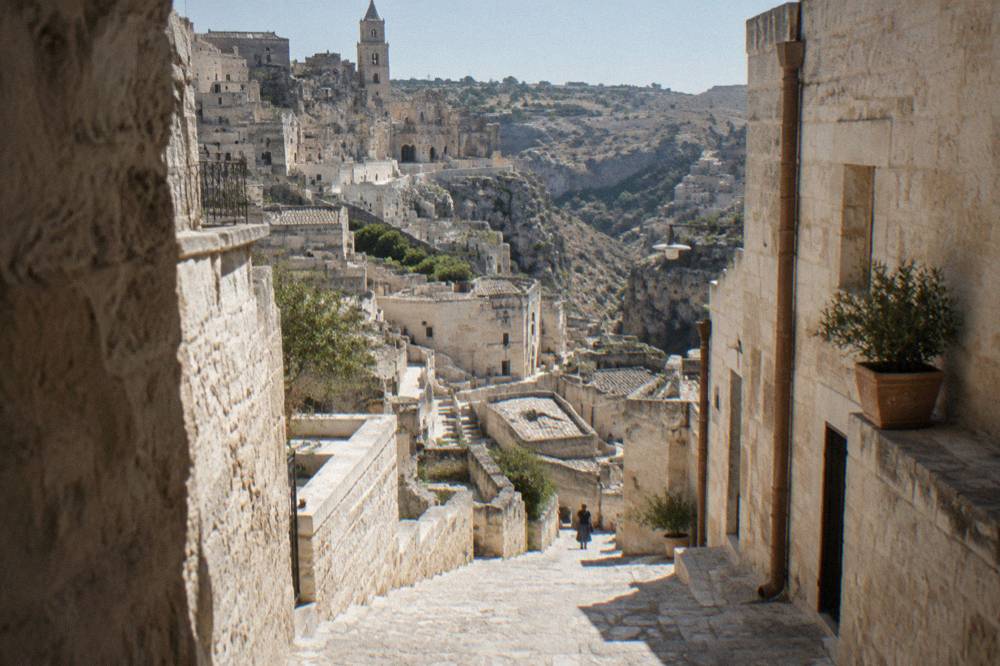
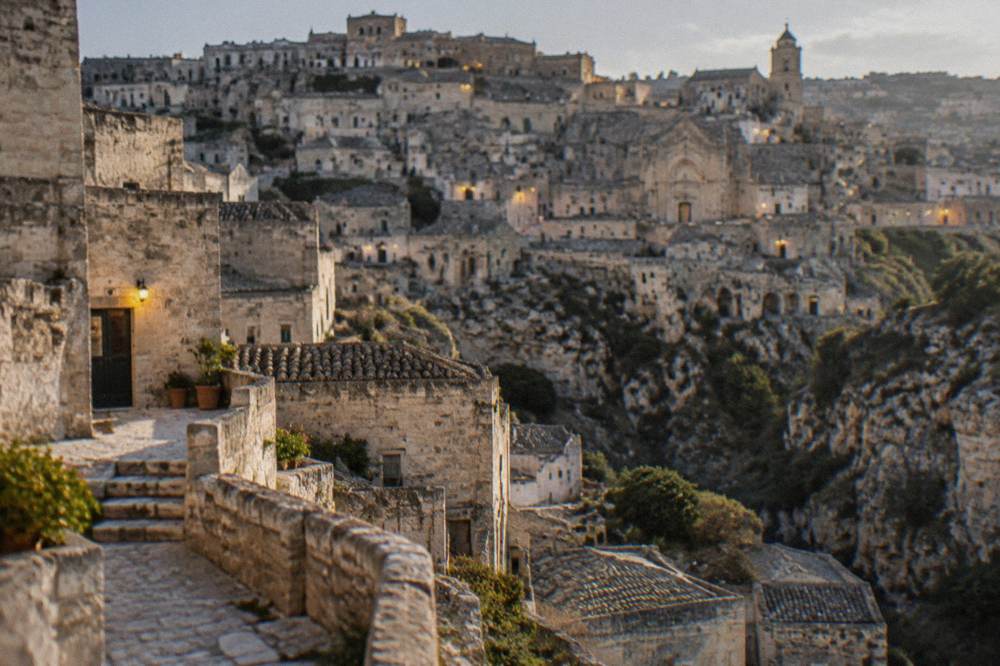
The ridge is the high ground, and everything in Matera is organized around it. To the south and east the land drops into the Sasso Caveoso, the more ruined and atmospheric of the two cave districts, described in full in the Sasso Caveoso area guide. To the north and west lies the Sasso Barisano, where many cave houses were restored first and where hotels and workshops now sit inside the old facades, covered in the Sasso Barisano area guide. Civita itself is the spine: a compact web of lanes around the Cathedral of Santa Maria della Bruna, running from Piazza Vittorio Veneto at one end toward the cliff edge at the other.
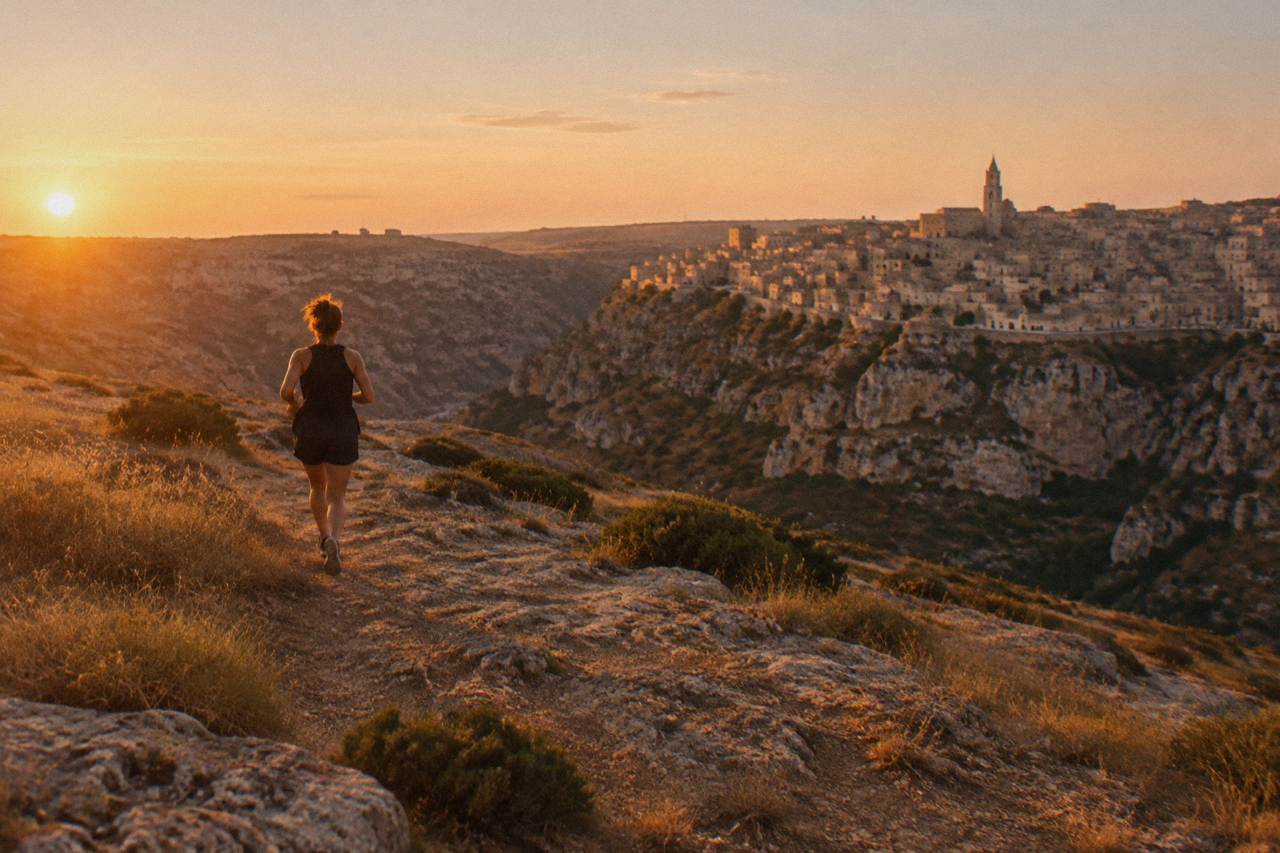
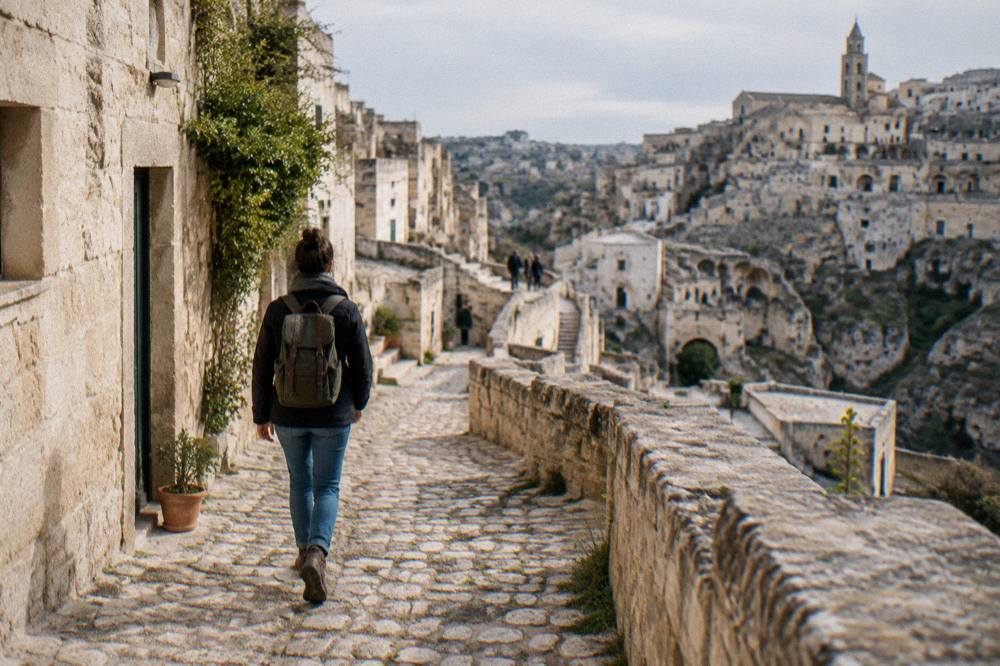
Walking it takes little time in distance but a good deal in attention. The lanes are narrow, stepped in places and uneven underfoot, and the views open suddenly: one turn looks into a canyon, the next into a baroque doorway. The district rewards the slow pace that a guided walk sets, and the Sassi walking tour is the site's featured way to cover the ridge and one cave house in the same visit.
What Are The Top Sights On The Civita Ridge In Matera?
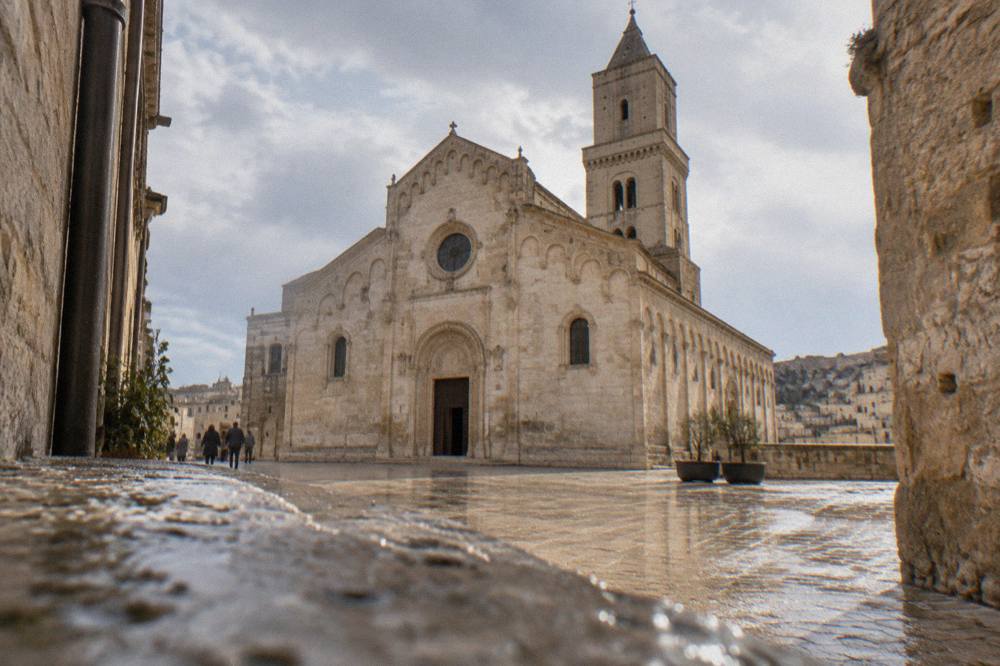
The essential sights of Civita are the Cathedral of Santa Maria della Bruna, the MATA diocesan museum inside the episcopal palace, the Palazzo Lanfranchi art museum at the head of the ridge, and the viewpoints where the ridge meets the Gravina canyon, all within a few minutes' walk of one another. The Cathedral, dedicated to the city's patron, the Madonna della Bruna, is the landmark of the whole city, and the Cathedral guide covers its history and how to visit. Oltre l'Arte, the body that runs the Cathedral route, lists a combined ticket for the Cathedral and MATA at 4.00 EUR, daily 09:00 to 19:00 with last entry at 18:45, pausing tourist visits on Sundays and solemnities from 10:00 to 12:30.
Palazzo Lanfranchi, at the top of the ridge looking straight down into the Sasso Caveoso, houses the Museo Nazionale di Matera, which lists its ticket at 10.00 EUR per site or 15.00 EUR cumulative for all its sites over two days, with under 18s free. The museum's own site notes a works page for the palace while it stays open, Monday to Sunday 09:00 to 20:00. The Museo Ridola, the archaeological collection, has been closed since 7 April 2025 for energy works and a new display, with no reopening date published, so it should not be planned into a visit.
Below the ridge, the cave churches are the other half of the story. The three main rupestrian churches run by Oltre l'Arte, Santa Lucia alle Malve, Madonna de Idris with San Giovanni in Monterrone, and San Pietro Barisano, sit at the edges of the Sassi and are covered in the rupestrian churches guide. A guided walk that connects the ridge with a cave house and a rock church is the most efficient way to see both halves in one loop.
The admission picture across the district is easier to read in one table. Oltre l'Arte's ticket page lists all of the figures below, and its sites close on 25 December and on 2 July for the Festa della Bruna.
| Sight | Ticket | Hours listed by the operator |
|---|---|---|
| Cathedral and MATA (Percorso Culturale) | 4.00 EUR | Daily 09:00 to 19:00, last entry 18:45 |
| Oltre l'Arte rupestrian church, one site | 4.50 EUR | Daily from 09:30 or 10:00 to 19:00 or 19:30 |
| Oltre l'Arte rupestrian churches, two sites | 8.00 EUR | Same seasonal hours |
| Oltre l'Arte rupestrian churches, three sites | 10.00 EUR | Same seasonal hours |
| Oltre l'Arte 8-site all-inclusive ticket | 25.00 EUR, reduced 16.00 EUR | Covers churches, cave houses, MATA, bread museum |
| Palazzo Lanfranchi, Museo Nazionale | 10.00 EUR | Monday to Sunday 09:00 to 20:00 |
| Museo Nazionale cumulative, all sites | 15.00 EUR, 2 days | Under 18 free |
| MUSMA sculpture museum | 10.00 EUR | April to September 10:00 to 20:00 |
How Do You Walk Civita And The Sassi In One Route In Matera?
The classic route starts at Piazza Vittorio Veneto, crosses the ridge through Civita to the Cathedral, then descends into one Sasso and climbs back up through the other, a loop that the site's one day itinerary covers stop by stop. Piazza Vittorio Veneto and Via Ridola are pedestrian areas closed to vehicles all day, with retractable bollards opening only 04:00 to 08:00 on weekdays for deliveries, so the square is the natural assembly point. From there the ridge lanes lead past the palazzi to the Cathedral, and the descent into the Sasso Caveoso begins almost at the church door. The full version of that route sits in the one day in Matera itinerary.
The route is steep, stepped and uneven, and no named stretch of it should be treated as step-free. The Sassi are built into a canyon wall, so any loop that goes down must come back up, and the return through the Sasso Barisano is the gentler climb of the two. Visitors with a full weekend can split the walk across two days, as the two days in Matera itinerary does, giving one day to each flank of the canyon with the ridge as the constant middle.
Two museums anchor the walk at either end of the ridge. Casa Noha, the FAI property that explains the city's history in a restored cave house, lists adults at 6.50 EUR and children at 3 EUR, open every day except Wednesday, but it is closed 5 to 22 October 2026 for renovation ahead of a relaunch with new spaces. MUSMA, the sculpture museum in the Sasso Caveoso, is the other bookend, and its full guide page carries the detail. The Casa Grotta di Vico Solitario, the reconstructed cave house in the Sasso Caveoso, is the single best stop for understanding how the Sassi actually worked, and its 2026 tariff is 8.00 EUR full, 5.00 EUR reduced and 3.00 EUR for ages 11 to 18.
Can You Drive Or Park In Civita In Matera?
You cannot drive into Civita: the ZTL Centro, covering Via Scotellaro, Via del Corso, Via delle Beccherie, Via Duomo, Piazza Sedile and San Francesco, is active 24 hours a day, every day, with camera enforcement under the comune's ordinances 147 and 148 of 2025. The ZTL Sassi gates on Via Buozzi, Via Madonna delle Virtù and Via D'Addozio run on seasonal hours, 10:00 to 20:30 from 16 September to 30 June and 10:00 to 24:00 from 1 July to 15 September, weekdays and holidays alike, with a loading window from 07:00 to 10:30 and 15:00 to 17:00. Transit declarations go through the comune's ZTL portal, and the contact address is ztl@comune.mt.it.
That makes the arrival question the practical one. Public car park names and tariffs in Matera are not published on any official page this site could verify, so the honest advice is to book accommodation with parking or use a garage outside the restricted zones and confirm the rate at the desk. The parking and ZTL situation is covered in depth elsewhere on the site, along with the wider getting around Matera picture. What is certain is the enforcement: the camera hours are published by the comune, and a wrong turn into a gate zone produces a fine sent to the rental company.
| Restricted zone in central Matera | Enforcement hours | Days |
|---|---|---|
| ZTL Centro (Via Duomo, Via del Corso, Piazza Sedile) | 24 hours | Every day |
| ZTL Sassi (Via Buozzi, Via Madonna delle Virtù, Via D'Addozio) | 10:00 to 20:30, 16 Sept to 30 June | Every day |
| ZTL Sassi, summer | 10:00 to 24:00, 1 July to 15 Sept | Every day |
| ZTL Piave | Same seasonal hours as ZTL Sassi | Every day |
| ZTL Prefettura, Ridola, Casalnuovo, Stigliani | 20:30 to 24:00 | Weekdays and holidays |
| Piazza Vittorio Veneto and Via Ridola pedestrian areas | Closed to vehicles all day | Bollards open 04:00 to 08:00 weekdays |
When Is The Best Time Of Year For Civita And Matera?
September is the busiest month in Matera, with 61,630 guest arrivals in registered accommodation in September 2025 against 60,257 in August, so late spring and early autumn combine the mildest weather with thinner crowds if you avoid the September peak. The APT Basilicata accommodation data shows the quietest month was February, with 15,239 arrivals, and the average stay in 2025 was 1.56 nights. The same data shows 57.4 percent of 2025 arrivals came from abroad, rising to 74.5 percent in September, which is why the ridge and the Sassi feel international in early autumn and local in deep winter.
The climate, from the ERA5 reanalysis for Matera, 1991-2020, is continental-leaning Mediterranean at elevation. July and August both show a mean high of about 31 C, while January shows a mean low of 2.2 C with frost common from December to March. November is the wettest month at 67.1 mm of rain, and July the driest at 21.2 mm. The pairing worth knowing: July is as hot as August but drew fewer arrivals in 2025 than April, May, June, August, September or October, so it is the warm month with the most room on the lanes.
| Month | Mean high C | Mean low C | Rain mm | Arrivals 2025 |
|---|---|---|---|---|
| January | 10.3 | 2.2 | 51.4 | 18,402 |
| April | 17.4 | 7.1 | 56.5 | 45,195 |
| July | 31.2 | 18.6 | 21.2 | 43,966 |
| September | 25.7 | 15.2 | 44.8 | 61,630 |
| November | 15.5 | 7.5 | 67.1 | 23,555 |
What Events Happen On The Civita Ridge And In Matera?
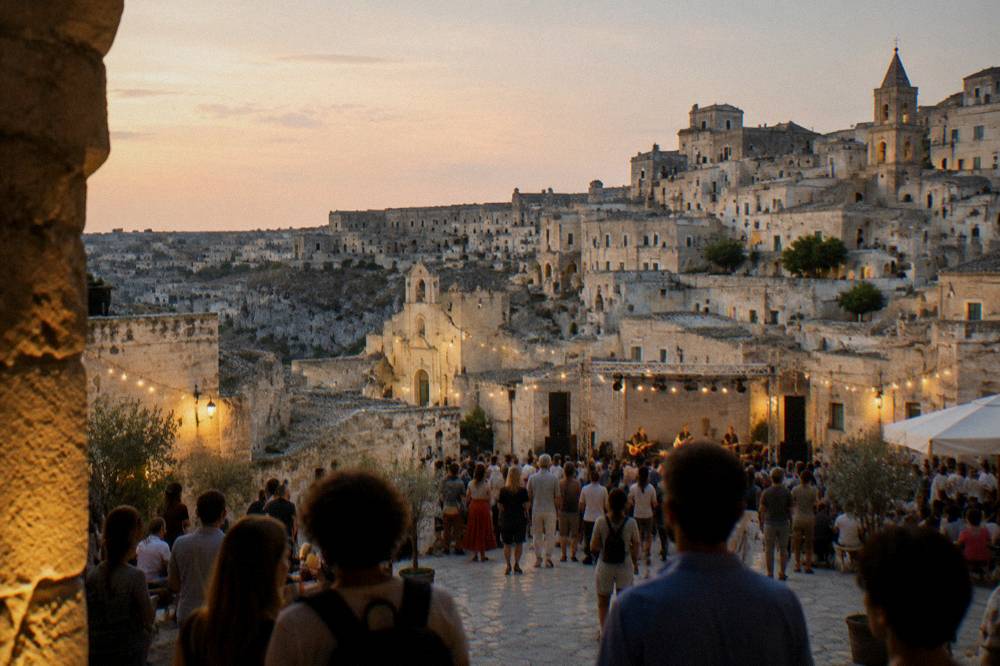
The fixed date in Matera's calendar is 2 July, the Festa della Bruna, the city's patronal feast that the organisers date to 1389, and on that day all Oltre l'Arte sites close, while the winter highlight is the Presepe Vivente, the living nativity that winds through the Sassi on set days in December and early January. The 2027 Bruna falls on 2 July, and the programme beyond the date is not published yet, so anything beyond the day itself should be confirmed with the organisers. The Presepe Vivente's sixteenth edition, titled "Vera Fratellanza", lists tickets at 12.00 EUR full, 9.00 EUR for ages 10 to 18 and free under 10, with public days on 5-6, 12-13, 19-20 and 26-27 December 2026 and 2-3 January 2027, on a route from Piazza San Pietro Caveoso through Vico Solitario, Rione Malve and Casalnuovo.
Autumn and winter 2026 bring more to the ridge and the city. The Matera Film Festival runs its seventh edition from 7 to 15 November 2026, twinned with Tétouan. The exhibition "The Sea Is Closer Than You See" runs to 8 December 2026 across Palazzo Lanfranchi, TAM, MUSMA and the Basilicata Open Space. Matera holds the title of Mediterranean Capital of Culture and Dialogue in 2026, a programme coordinated by the Fondazione Matera-Basilicata 2019, the same body that ran the 2019 European Capital of Culture year.
| Event in Matera | Dates | Ticket where published |
|---|---|---|
| Festa della Bruna | 2 July every year, 2 July 2027 | Free public feast, details from organisers |
| Matera Film Festival, 7th edition | 7 to 15 November 2026 | On the festival's own site |
| The Sea Is Closer Than You See | To 8 December 2026 | Museum admission applies |
| Presepe Vivente nei Sassi, 16th edition | 5-6, 12-13, 19-20, 26-27 Dec 2026, 2-3 Jan 2027 | 12.00 EUR, 9.00 EUR ages 10 to 18 |
| Orchestra ICO della Magna Grecia season | 26 October 2026 to 16 April 2027 | On the auditorium listing |
Where Does Civita Sit Among The Sights Of Matera?
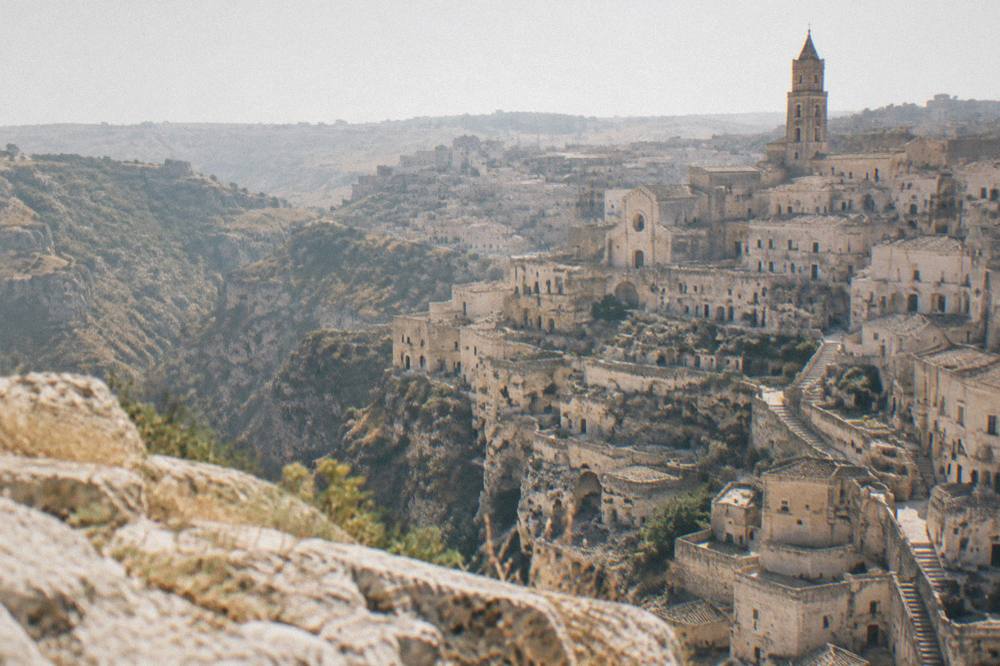
Civita is the connective tissue of Matera: every major sight either stands on the ridge or is reached by descending from it, from the Sassi districts below the ridge to the Parco della Murgia across the canyon. The underground layer of the city, such as the Palombaro Lungo, the vast cistern beneath Piazza Vittorio Veneto, is reached from the ridge too. The park opposite, the Archaeological Historic Natural Park of the Rupestrian Churches created by regional law in 1990, covers about 8,000 hectares by the park's own count and holds the Belvedere Murgia Timone, the classic viewpoint where the whole city is photographed from across the Gravina. Since March 2026 the Sentiero 406 path to the suspension bridge over the Gravina has had a staffed access point and an online access ticket, sold through the park's ticketing site, with the price to be confirmed there before visiting. The Sassi di Matera page covers the cave districts themselves in detail.
The underground layer of the city is reached from the ridge too. The Palombaro Lungo, the vast cistern beneath Piazza Vittorio Veneto, takes its own guided visits, though its price and hours are not published on an official page, so they should be confirmed on site. The Crypt of the Original Sin, the painted cave church outside the city, requires a booked e-ticket at least 90 minutes before the slot, with the ticket office at Azienda Agricola F.lli Dragone on the SS7 Appia, and its price sits inside the booking engine.
What Day Trips Work From Civita And Matera?
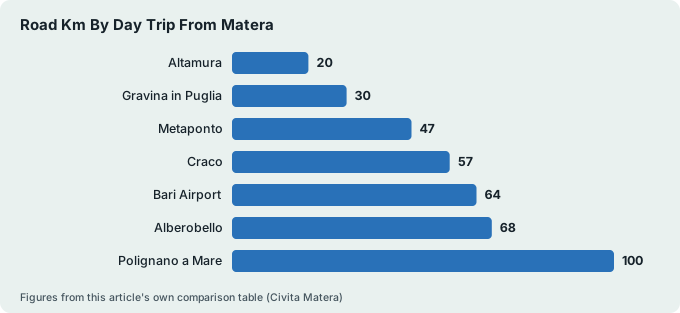
The closest day trips from Matera are Altamura at about 20 km and 20 minutes' drive, Gravina in Puglia at about 30 km and 31 minutes, and Alberobello at about 68 km and 1 h 23, with Bari airport about 64 km and an hour away by road in free-flowing traffic. These are computed free-flow driving times from Matera Centrale station, so real journeys run longer with traffic and stops. Alberobello, the trulli town in Puglia, pairs naturally with Matera on a single day, and the site's Matera and Alberobello in one day itinerary covers the combination. The Alberobello guide and the Altamura guide carry each town in detail.
For travellers based in Bari, the Matera day trip from Bari is the standard plan, and the Bari guide covers the city at the other end. Farther afield, Craco, the abandoned hill town, is about 57 km away, and the Castelmezzano and Pietrapertosa pair in the Dolomiti Lucane is about 82 km and 1 h 23. The coast is a day trip, not a feature of Matera itself: Metaponto on the Ionian is about 47 km away, and Polignano a Mare on the Adriatic about 100 km and 1 h 29.
| Day trip from Matera | Road km | Free-flow drive |
|---|---|---|
| Altamura | 20 | 20 min |
| Gravina in Puglia | 30 | 31 min |
| Metaponto | 47 | 52 min |
| Craco | 57 | 58 min |
| Bari Airport | 64 | 1 h 01 |
| Alberobello | 68 | 1 h 23 |
| Polignano a Mare | 100 | 1 h 29 |
How Do You Get To Civita In Matera Without A Car?
Matera has no Trenitalia station: the rail operator is FAL, whose posted weekday timetable runs from Bari Centrale to Matera with a change at Altamura in about 1 h 45 to 2 h, and on Sundays and public holidays no trains run at all, only replacement buses. FAL's own sheets show 21 weekday departures from Bari Centrale and 18 arrivals at Matera Centrale, but the live timetable should be read on FAL's site before any journey, because the programme changes: FAL's notice of 9 October 2026 alters the rail programme between Matera Sud and Altamura from 12 October 2026, replacing two trains with buses. The single fare from Bari to Matera is not published in a readable form, only the fare band, so confirm it at the ticket office.
From Bari airport the road distance to Matera Centrale is about 64 km and an hour's drive in free-flow conditions, but no official airport shuttle timetable or fare could be verified on an operator's own page, so the options should be checked at the airport on arrival or before travel. A new national rail link, Ferrandina to Matera La Martella, is under construction with activation planned for 2028, which will change the map for southern arrivals, but it does not exist yet.
What Should You Know Before Visiting Civita In Matera?
Four practical points shape any visit to Civita: the district is pedestrian and steep, the tourist tax exists and is confirmed at booking, the emergency number in Matera is 112, and the city is in Basilicata, not Puglia, which matters when planning onward travel. The Sassi and the ridge are stepped and uneven, so shoes with grip matter more than anything else in the bag, and the accessibility picture on this site covers the terrain in detail. Matera charges a tourist tax collected by the accommodation, and because no official tariff page is published, the amount is confirmed at booking rather than quoted here.
The emergency number is the single European number 112, free, with automatic location and multilingual support, live in the Matera 0835 district since 2 December 2025. Italy is a Schengen member and uses the euro. The films connection, for travellers who know Matera from the screen, is real and documented on official tourism pages: The Passion of the Christ, The Nativity Story, Wonder Woman and No Time to Die all shot in the city, and the James Bond locations guide maps them. For the practical wrap-up, the Matera travel tips page collects the rest.
Common Questions About Civita Matera
What Is Civita In Matera?
Civita is the original fortified nucleus of Matera, the ridge between the Sasso Caveoso and the Sasso Barisano where the Cathedral, the palazzi and the oldest lanes of the city stand.
Is Civita The Same As The Sassi In Matera?
No. Civita is the ridge town on top, while the Sassi are the two cave districts on the canyon flanks below it. Together they form the UNESCO-inscribed historic core of Matera.
How Long Does It Take To Walk Civita In Matera?
The ridge itself is compact and walkable in under an hour, but a loop that descends into one Sasso and climbs back through the other is a half-day walk on steep, stepped ground.
Can You Drive Into Civita In Matera?
No. The ZTL Centro covering Via Duomo, Via del Corso and Piazza Sedile is active 24 hours a day, every day, with camera enforcement. Arrive on foot or park outside the restricted zones.
What Does The Cathedral Ticket In Matera Cover?
Oltre l'Arte's ticket page lists the Cathedral and MATA diocesan museum at 4.00 EUR, daily 09:00 to 19:00, with tourist visits pausing on Sundays and solemnities from 10:00 to 12:30.
When Is The Quietest Time To Visit Civita And Matera?
The APT Basilicata data shows February was the quietest month of 2025 with 15,239 arrivals, against 61,630 in September, so winter weekdays are the emptiest time on the ridge.