Matera Wheelchair Accessible
Matera is a stepped ravine city, and honest planning beats optimistic brochures. This guide sets out what the sources actually say about terrain, sights, transport and accommodation for visitors with limited mobility.
Short answer
Matera is only partly wheelchair accessible. The modern centre and the plateau above the Sassi are manageable, but the Sassi districts themselves are steep stairways of uneven stone, and no named route through them can be called step-free.
Matera, in Basilicata, southern Italy, is an inland city of about 59,368 residents built on the edge of the Gravina canyon, and its famous old quarters, the Sassi, are cave dwellings and rock-hewn churches cut into a steep tufa slope. That geography is the whole accessibility question in one sentence. The city is UNESCO-listed, remarkable and increasingly visited, with 479,083 accommodation arrivals recorded by APT Basilicata in 2025, but it was never built with wheels in mind. This guide reports what primary sources say about terrain, sights, transport and accommodation, and it will not tell you a named route is step-free when none can be verified as such.
Is Matera Wheelchair Accessible?
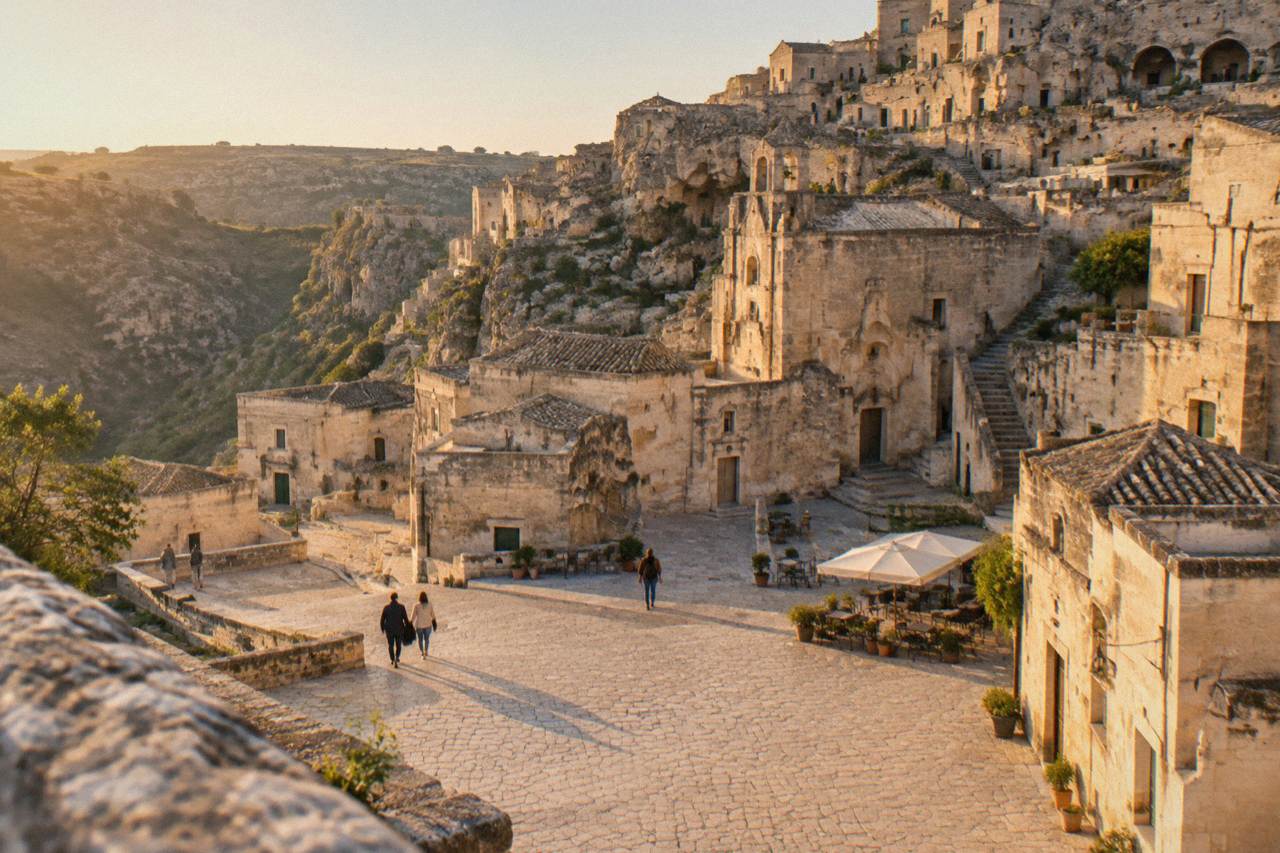
Matera is only partly wheelchair accessible, and any guide claiming otherwise is selling you something. The modern centre, the Piano, and the plateau rim viewpoints are broadly manageable on wheels, with paving and roads rather than stairways. The two Sassi districts, Sasso Caveoso and Sasso Barisano, are stepped ravine neighbourhoods of uneven stone, stairs and cobbles, and no route through them can honestly be described as step-free. Plan for a city of two halves, and plan the second half differently.
The honest framing is this: visitors with limited mobility can see Matera well, but they experience it differently from able-bodied travellers. The views across the Sassi from the rim, particularly around Piazza Vittorio Veneto, are among the finest in southern Italy and involve no descent at all. The viewpoints guide on this site covers them in detail. What a wheelchair user will generally not do is tour the cave churches and cave houses independently, because those interiors sit below or above street level inside the rock.
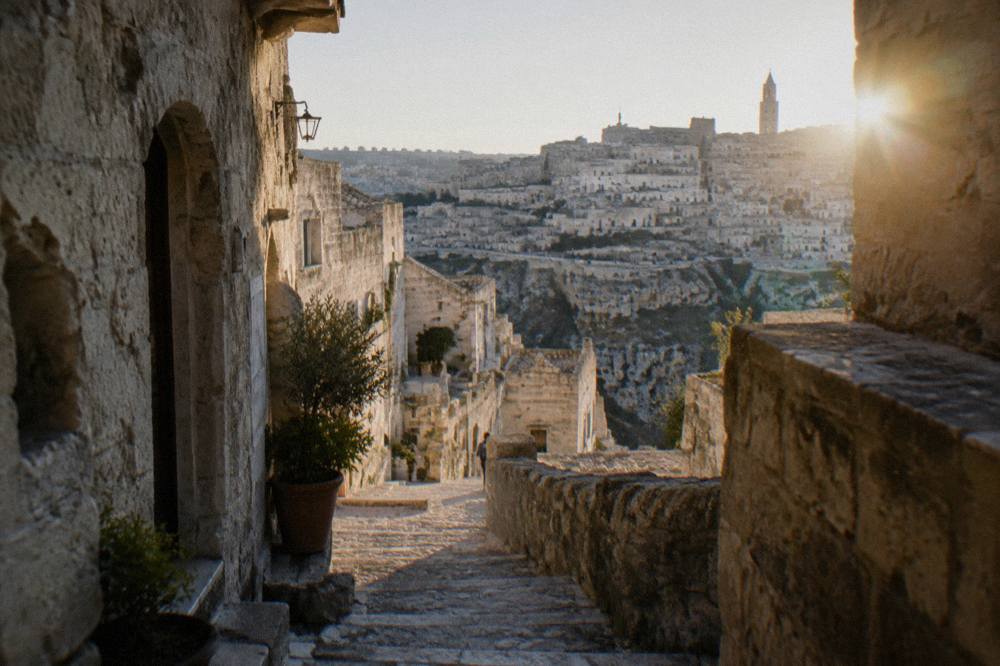
The Sassi were evacuated between 1952 and the 1970s as national housing shame, then restored after a 1986 law, a story the history of Matera tells at length. Restoration made them beautiful; it did not make them flat. Stone stairways connect vicinati, the old courtyard clusters, and the paving is worn tufa that is rough under wheels and slippery in rain.
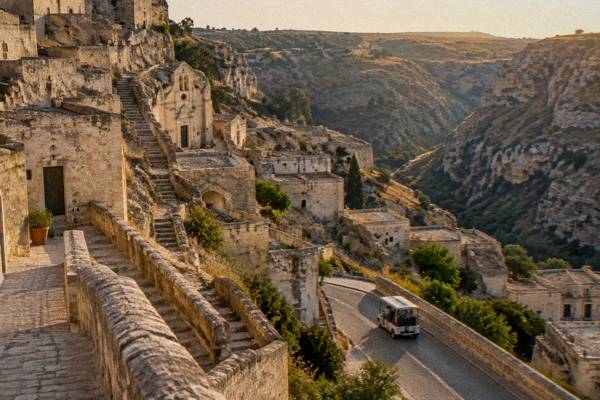
Practical consequence: base yourself on the Piano, the modern plateau centre, and treat the Sassi as a viewing experience plus selected managed visits, rather than a free-roaming one. Several panoramic tours by vehicle exist precisely because of this terrain. The open-top eco-bus and the tuk-tuk and Ape Calessino panoramic rides sold through this site's listings follow road routes above and around the Sassi and suit travellers who cannot manage stairs; the Matera viewpoints and getting around Matera guides list them.
Which Parts Of Matera Are Easiest To Reach With Limited Mobility?
The easiest parts of Matera for limited mobility are the Piano, the modern centre around Piazza Vittorio Veneto and Via Ridola, and the plateau roads along the Sassi rim, all of which sit on the level of the upper town. The hardest are the Sassi themselves and anything reached by stairway, plus the opposite Murgia side, which is unpaved parkland reached on foot. Piazza Vittorio Veneto and Via Ridola are pedestrianised outright, closed to vehicles all day.
Piazza Vittorio Veneto is the practical hub for an accessible visit. It is flat, pedestrianised (the bollards open only 04:00 to 08:00 on weekdays for deliveries, per the comune's own ZTL hours sheet), lined with cafes, and sits directly above the Sasso Barisano side, with open views down into the canyon. From its terrace you see the cave city without descending into it. The piazza also sits above the Palombaro Lungo, the vast water cistern beneath the square; note that this site's Palombaro Lungo guide confirms the visit involves going underground, and no step-free status is verified for it.
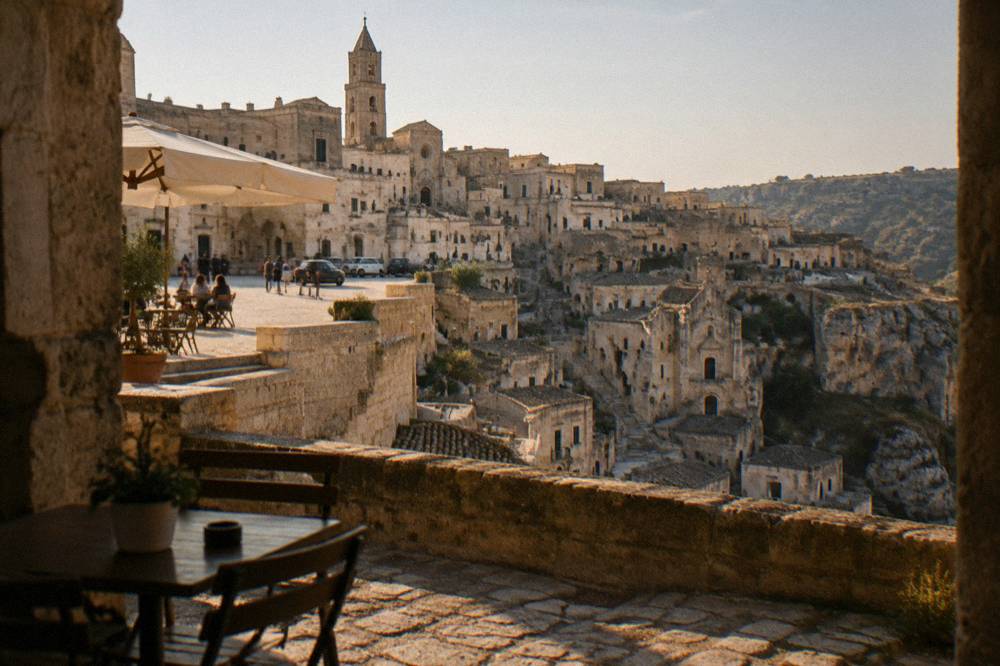
Below the Piano the terrain drops fast. Via Madonna delle Virtù, the terrace street on the Sasso Barisano rim, follows the contour and gives the classic postcard row of cave facades, and parts of it are reachable by road, but confirm on arrival which stretches involve steps. In Sasso Caveoso, Piazza San Pietro Caveoso is reachable by a road that descends into the district, though the gradient is steep and the final surfaces are stone; nothing there is verifiably step-free.
Across the canyon, the Parco della Murgia and the Belvedere Murgia Timone viewpoint, which gives the definitive panorama of the Sassi, are reached on footpaths from the Jazzo Gattini visitor centre, which reopened under a new concession on 6 February 2026 with an info point and ticket office, per the park's own site. Those paths are unpaved. The Belvedere Murgia Timone guide covers the access arrangements.
| Area of Matera | Terrain character | Realistic for wheels |
|---|---|---|
| Piano and Piazza Vittorio Veneto | Flat, pedestrianised, paved | Yes, broadly |
| Via Ridola and modern centre | Flat shop and cafe streets | Yes, broadly |
| Sassi rim roads (Via Madonna delle Virtù area) | Road level but sloping, some stepped sections | Partly, confirm on arrival |
| Sasso Caveoso interior | Stairways, worn tufa, steep lanes | No, not verifiably |
| Sasso Barisano interior | Stepped vicinati, uneven stone | No, not verifiably |
| Murgia park and Belvedere Timone | Unpaved footpaths from Jazzo Gattini | No, footpaths only |
One planning point from the weather data: the ERA5 reanalysis for Matera, 1991-2020, puts November as the wettest month at 67.1 mm of rain, and worn tufa becomes slippery when wet, which matters more on wheels than on foot. The Matera weather guide has the month-by-month figures.
Which Matera Sights Can You Actually Visit With Limited Mobility?
The sights a limited-mobility visitor can most reliably plan around are the ones on or near the plateau: the Cathedral on the Civita spur, MUSMA's entrance area on Via San Giacomo, the museums of Palazzo Lanfranchi on the Piano side, and the viewpoints along the rim. The rock-cut churches and cave houses, including Santa Lucia alle Malve, Madonna de Idris and the Casa Grotta di Vico Solitario, sit inside the stepped Sassi and none has a verified step-free route. Confirm access directly with each operator before booking.
Start with what the operators publish. Oltre l'Arte, which runs the three main rupestrian churches plus the Cathedral route and the MATA museum, sells its tickets from 4.50 EUR for one church up to 25.00 EUR for an eight-site all-inclusive pass, and its sites are open daily into the evening; but its ticket page says nothing about step-free access, and the churches are entered from within the Sassi slope. The rupestrian churches of Matera guide gives the full tariff and hours, and the church tickets and passes guide compares the bundles.
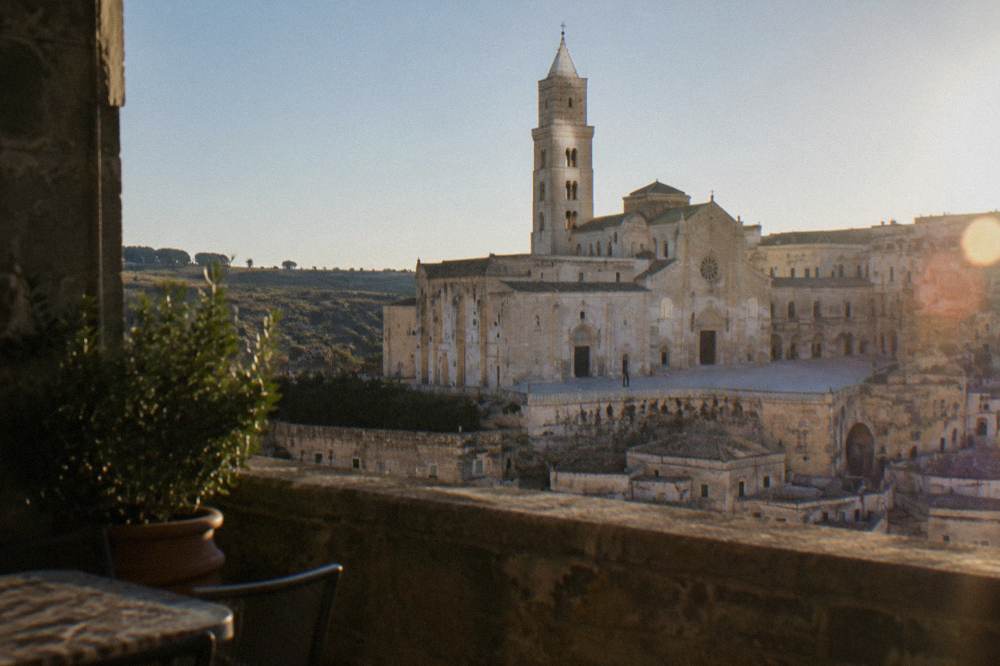
The Cathedral, on the Civita between the two Sassi, is reached across the historic spur; the diocesan "Percorso Culturale" covering Cathedral and MATA costs 4.00 EUR, daily 09:00 to 19:00 with a Sunday pause from 10:00 to 12:30. Access status on the final approach should be confirmed with the operator. MUSMA, the sculpture museum in Sasso Caveoso at Via San Giacomo, charges 10 EUR full, is open Monday to Sunday, and occupies rock-cut and palazzo spaces, so expect level changes inside.
Two closures matter right now. The Museo Archeologico Nazionale Domenico Ridola has been closed since 7 April 2025 for energy works and a new display, with no reopening date published; never plan around it. Casa Noha, the FAI interpretation centre that was one of the more manageable indoor introductions to the city, is closed 5 to 22 October 2026 for renovation ahead of a relaunch, per the FAI's own page. The Museo Ridola and Casa Noha guides carry the details.
| Sight | Verified price or entry fact | Access reality |
|---|---|---|
| Cathedral and MATA | 4.00 EUR, daily 09:00 to 19:00 | On the Civita spur, confirm final approach |
| MUSMA | 10 EUR full, open Monday to Sunday | Rock-cut interior, level changes expected |
| Palazzo Lanfranchi (Museo Nazionale) | 10.00 EUR, 09:00 to 20:00, cumulative 15.00 EUR | Piano side, confirm with museum |
| Oltre l'Arte rupestrian churches | From 4.50 EUR one church | Inside the stepped Sassi |
| Casa Grotta di Vico Solitario | 8.00 EUR full, from 4 April 2026 | Stepped Sasso Caveoso lane |
| Museo Ridola | Closed since 7 April 2025 | Do not plan around it |
The Palazzo Lanfranchi museum is the most promising indoor option: it sits at the top of the Sasso Caveoso slope on the Piano side, keeps hours of 09:00 to 20:00 Monday to Sunday, and while the museum site carries a works page ("Cantiere Lanfranchi") the palace itself stays open. Call ahead about lifts and internal stairs rather than assuming.
For the Sassi themselves, the realistic option for a wheelchair user or a traveller who cannot manage long stairways is a vehicle-based panoramic tour followed by one carefully chosen managed visit, with a companion scouting the approach first. The panoramic eco-bus, tuk-tuk and Ape Calessino rides sold through this site follow road circuits: describe what you need to the operator at booking and confirm what the booking page says about access before paying.
Where To Stay In Matera For Easier Access?
The easiest place to stay with limited mobility is the Piano, the modern centre on the plateau, where hotels sit on flat streets within reach of Piazza Vittorio Veneto by road and pavement. The atmospheric choice, a cave hotel in the Sassi, is usually the hardest: cave rooms are reached through stepped lanes, and many have internal stairs or thresholds cut into rock. Ask each property directly about lifts, thresholds, room size and the final approach on foot or by wheels.
The trade-off is real and worth stating plainly. The Sassi cave hotels are the reason many travellers come, and the Matera cave hotels and Sassi di Matera hotels guides describe them, but their settings mean stairs almost by definition. A handful of Sassi properties have vehicle access to the door on the rim roads; that is a question for the hotel, not for a guidebook. Luggage transfer is a genuine issue in the stepped districts even for fully able guests, and this site sells luggage-storage products through its links for exactly that kind of logistics gap.
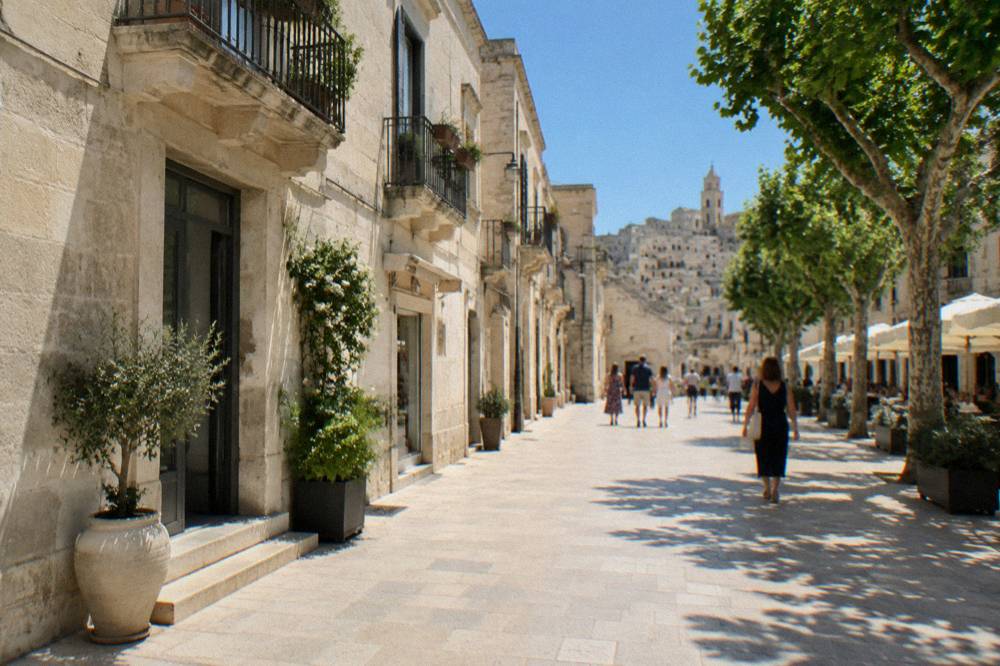
On the Piano, mainstream hotels and rentals sit on ordinary streets with pavements, some with lifts, and the walk or roll to the Piazza Vittorio Veneto terrace is flat. The where to stay in Matera guide maps the neighbourhoods. If you are driving, read the parking and ZTL constraints in the next section before booking, because an accessible room is worth little if the car cannot get near it.
One number to keep in mind when booking: APT Basilicata's data shows an average stay of 1.56 nights in 2025, which tells you the city runs on short visits. For a limited-mobility itinerary, resist that pace. Two or three nights on the Piano, with one managed Sassi experience per day and rest between, beats attempting everything in a single arrival day. More of these guides are collected on Matera Travel Guide.
How Do You Get To Matera And Move Around With A Wheelchair?
Matera is reached by regional rail from Bari in about 1 h 45 to 2 h with a change at Altamura, on FAL trains, with replacement buses on Sundays and public holidays, or by road, about 64 km and around an hour's drive from Bari Airport. Matera Centrale station is the practical rail arrival point. Within the city, urban bus details are not verified on any official page, so confirm locally, and the ZTL camera zones restrict where a car can go in the historic centre.
The rail facts that matter, all from FAL's own posted documents: there is no Trenitalia station in Matera, the operator is FAL, the posted weekday timetable shows 21 departures from Bari Centrale and 18 arrivals at Matera Centrale, and on Sundays and public holidays no trains run at all, with 8 replacement bus arrivals and 8 departures at Matera Centrale. FAL's notice of 9 October 2026 changes the Matera Sud to Altamura programme from 12 October 2026, replacing two trains with buses, so read the live timetable before travel. The Bari to Matera, Bari Airport to Matera and how to get to Matera guides carry the detail, including the fare band and what is and is not verified about airport shuttles.
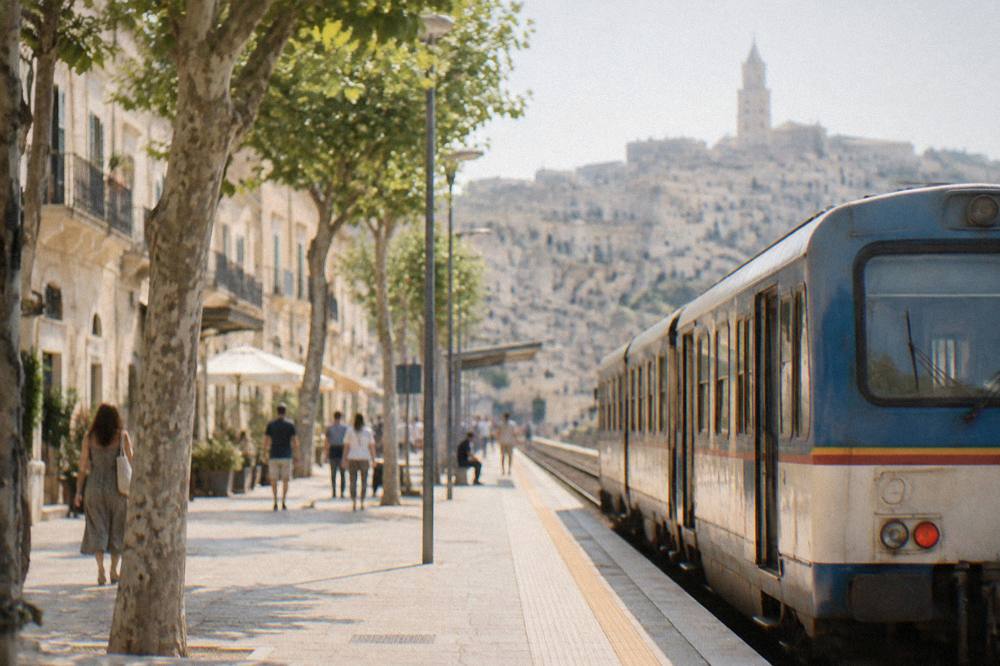
For wheelchair users, FAL is a narrow-gauge regional railway and its accessibility provision is not documented on the pages this site verified, so contact the operator directly, toll-free 800 050 500, before travel. By road, the position is simpler: Bari Airport is 64 km and about an hour's free-flow drive from Matera Centrale, computed over OpenStreetMap routing. Private transfers are sold through this site's links, and for a limited-mobility trip a door-to-door transfer removes the shuttle and station questions entirely. A taxi fare cannot be quoted here as an official tariff; the only figures found come from one private operator's list, so confirm at booking.
| Route or service | Verified figure | Access note |
|---|---|---|
| Bari Centrale to Matera Centrale, weekdays | About 1 h 45 to 2 h, change at Altamura | Confirm with FAL about boarding assistance |
| Sundays and public holidays | No trains, 8 bus arrivals and 8 departures | Replacement buses, confirm locally |
| Bari Airport to Matera by road | 64 km, about 1 h free-flow | Transfers sold via this site's links |
| Urban buses | Operator and fares not verified on any official page | Confirm locally on arrival |
| Emergency number | 112, single European number since 2 December 2025 | Free, with automatic location |
Driving in brings the ZTL. The Sassi zone cameras run 10:00 to 20:30 from 16 September to 30 June and 10:00 to 24:00 from 1 July to 15 September; the Centro zone is active 24 hours a day. Piazza Vittorio Veneto and Via Ridola are pedestrian areas with bollards. The Matera ZTL and Matera parking guides explain the zones and the transit declaration process; note that public car park tariffs are not verified on any official page, so budget by confirming on arrival. Disabled travellers should ask the accommodation about ZTL exemptions and permits when booking, since the ordinances provide loading windows rather than an automatic exemption this site can verify.
Are There Accessible Day Trips From Matera?
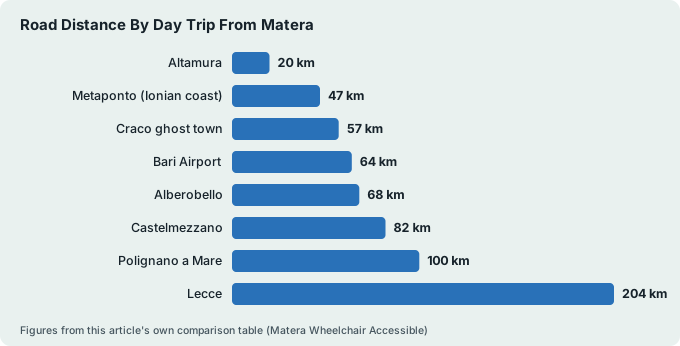
The most realistic day trips from a limited-mobility base in Matera are by road to gentler towns than the Sassi: Alberobello, about 68 km and 1 h 23 of free-flow driving, on ground far less steep than Matera's ravine, or Altamura at 20 km and 20 minutes. The dramatic options, the hiking villages of Castelmezzano and Pietrapertosa or the Craco ghost town, are stairway and footpath places and do not suit wheels. Book any guided day trip only after asking the operator directly about access.
Alberobello is the standout. Its trulli quarter sits on sloping but rideable streets rather than a ravine stairway, and this site features a guided trulli walk with a local among its day trips; the booking page says what the tour covers, and the operator's live listing is the place to confirm pace and terrain. This site also sells combined Matera and Alberobello day tours with a tour leader, which handle the transport question for you.
Distances below are road figures computed with the OSRM routing engine over OpenStreetMap, free-flow, from Matera Centrale, and they are planning numbers, not promises about traffic or parking.
| Day trip from Matera | Road distance | Free-flow drive time |
|---|---|---|
| Altamura | 20 km | 20 min |
| Metaponto (Ionian coast) | 47 km | 52 min |
| Craco ghost town | 57 km | 58 min |
| Bari Airport | 64 km | 1 h 01 |
| Alberobello | 68 km | 1 h 23 |
| Castelmezzano | 82 km | 1 h 23 |
| Polignano a Mare | 100 km | 1 h 29 |
| Lecce | 204 km | 3 h 08 |
Match the trip to the terrain. Metaponto and the Ionian coast are flat by definition, a genuine contrast with Matera itself; the beaches near Matera guide explains that the sea is always a day trip from this inland city. Bari and Polignano a Mare mix flat seafronts with old-town steps, so park close and pick the level parts. Craco is an abandoned hill town visited on foot with a guide; the Craco guide is candid about the path. Castelmezzano and Pietrapertosa are mountain villages whose famous attractions are a zip line and a hike; neither suits a wheelchair itinerary.
For food lovers who want an outing without stairs, the olive-oil and wine experiences sold through this site run in the countryside around Matera, and the Matera wine guide sets the scene.
How Should You Plan An Accessible Trip To Matera?
Plan an accessible Matera trip around three principles: sleep on the Piano, view the Sassi from the rim and by vehicle, and book every cave interior visit only after confirming access with the operator directly. Give yourself at least two nights against the city's average stay of 1.56 nights, visit between April and June or in September and October for milder temperatures, and carry the number 112 for emergencies, the single European number live in Matera since 2 December 2025.
Timing matters more here than elsewhere. The ERA5 reanalysis for Matera, 1991-2020, puts July and August mean highs at 31.2 and 31.3 °C, and heat on pale stone with no shade amplifies fatigue for anyone with limited mobility. April, May, June, September and October all sit in a gentler band, 17.4 to 25.7 °C mean high. Crowds follow a different curve from the heat: APT Basilicata's data shows September 2025 was the busiest month at 61,630 arrivals, ahead of August at 60,257, while February was quietest at 15,239. The best time to visit Matera guide reconciles the two.
| Month | Mean high °C (ERA5 1991-2020) | Rain mm | Arrivals 2025 (APT) |
|---|---|---|---|
| April | 17.4 | 56.5 | 45,195 |
| May | 22.7 | 41.7 | 54,101 |
| June | 28.2 | 35.1 | 50,186 |
| September | 25.7 | 44.8 | 61,630 |
| October | 20.8 | 51.7 | 52,538 |
| November | 15.5 | 67.1 | 23,555 |
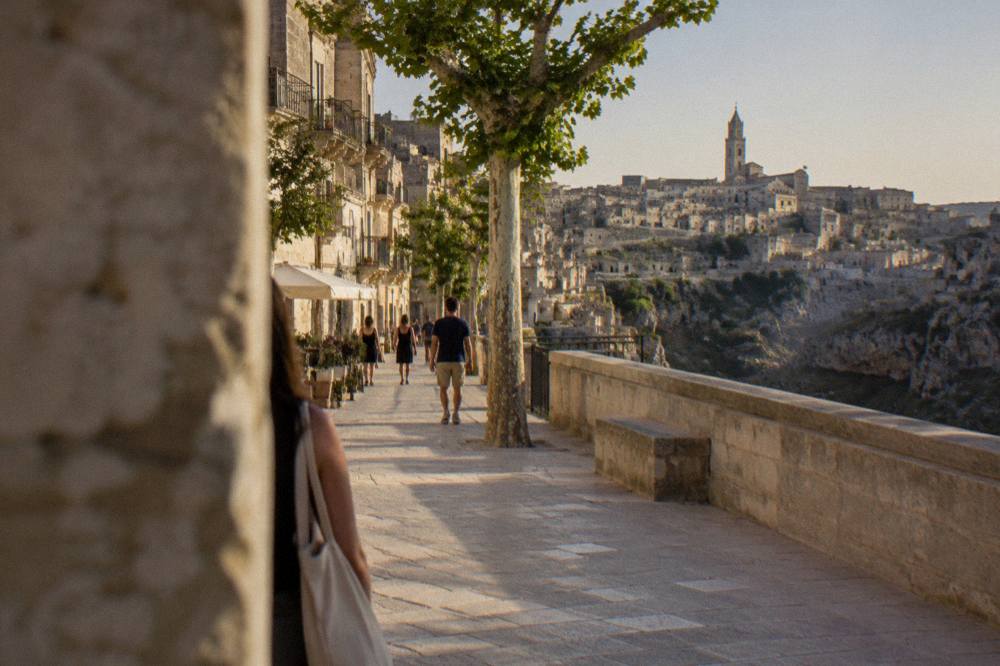
A workable shape for a first accessible visit: arrive by transfer or hire car rather than counting on rail boarding assistance; check in on the Piano; spend the first afternoon on Piazza Vittorio Veneto and the rim viewpoints; take a vehicle panoramic tour on day two; add one confirmed-access museum, Palazzo Lanfranchi being the candidate worth a phone call; and close with an Alberobello day trip if the legs and wheels want more. Evening light on the Sassi from the terrace is the payoff that costs no stairs at all, and the Matera at night guide lists where to sit and watch it.
Pack for stone. Smooth-rolling wheels handle worn tufa better than narrow ones; rain grips matter from October onwards; and in December and January, ERA5 shows around 20 frost days a year concentrated in those months, so ice on stone is a real morning hazard. The what clothes to pack for Matera article adds detail.
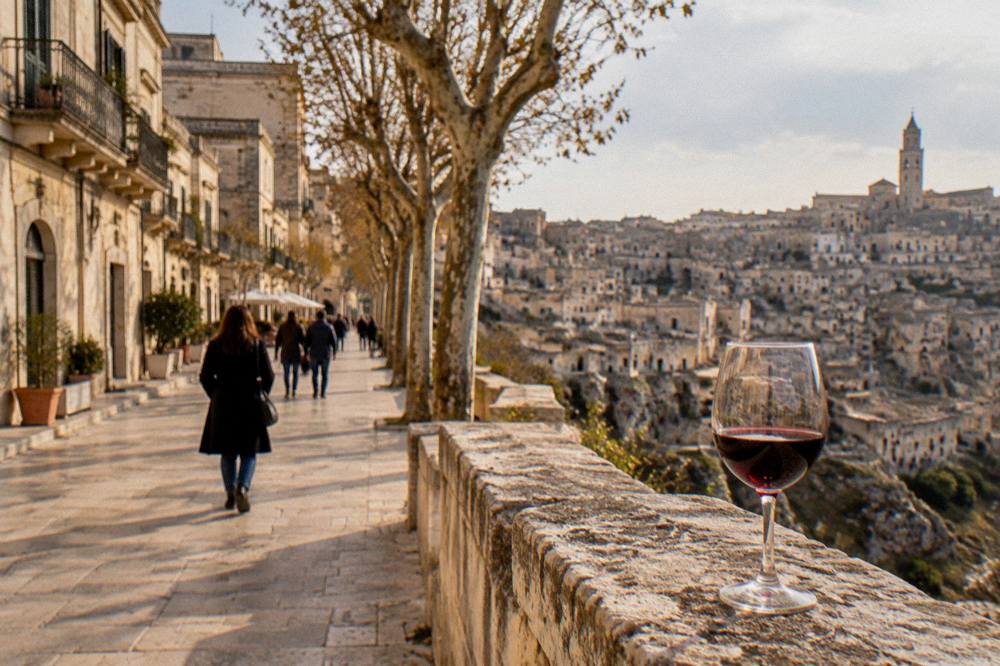
Finally, the money questions this site can and cannot answer. The tourist tax exists and is collected by your accommodation, and its amount is confirmed at booking, not printed here. Museum and church prices above come from the operators' own tariff pages. Tour prices, ratings and durations render from the listings themselves, never from this page's prose, and a wine tasting in town is an evening plan that asks nothing of your legs beyond a chair: the small-group tasting below is the kind of low-effort evening that rounds off a day of viewpoints.
Common Questions About Wheelchair Access In Matera
Is Matera wheelchair accessible?
Partly. The Piano, the modern centre and the plateau rim viewpoints are manageable on wheels, while the Sassi districts are stepped, steep and uneven, and no route through them can honestly be called step-free. Plan the Sassi as a viewing and vehicle experience with selected confirmed visits.
Can You Visit The Sassi Di Matera With Limited Mobility?
You can see them superbly from the rim around Piazza Vittorio Veneto and from panoramic vehicle tours on the road circuits, but touring the lanes and cave interiors independently needs stairs and rough stone. Confirm any specific visit with the operator first.
Are Matera's Cave Churches Accessible?
The rock-cut churches run by Oltre l'Arte, including Santa Lucia alle Malve and Madonna de Idris, sit inside the stepped Sassi slope, and no step-free route is verified. Their ticket page lists prices and hours but no access statement, so contact the operator before booking.
Where Is The Best Place To Stay In Matera With A Wheelchair?
The Piano, the modern centre, where hotels sit on flat streets near Piazza Vittorio Veneto. Cave hotels in the Sassi are atmospheric but typically reached by stepped lanes. Ask each property directly about lifts, thresholds and the final approach.
Can You Take A Train To Matera With A Wheelchair?
Matera is served by FAL regional trains from Bari, about 1 h 45 to 2 h with a change at Altamura, and replacement buses on Sundays and public holidays. FAL's accessibility provision is not documented on the pages this site verified, so contact the operator, toll-free 800 050 500, before travel.
What Is The Emergency Number In Matera?
112, the single European emergency number, free, with automatic location and multilingual support, live in the Matera 0835 district since 2 December 2025.
Matera rewards a plan built around what the terrain allows: the flat Piano for sleeping and eating, the rim for the views, a vehicle for the circuit, one or two confirmed visits for the interiors, and Alberobello for a gentler day out. Book the things that need booking, ask the questions that need asking, and the city gives back as much to a careful planner as to anyone arriving on foot.