Matera Pictures
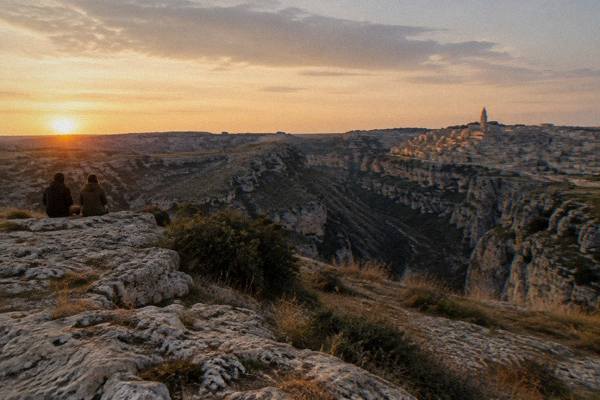
Matera, in Basilicata, southern Italy, is a city built for photographs: two canyon-side districts of cave dwellings, rock churches cut into pale tufa, and a plateau opposite that frames the whole scene. This guide sets out where to stand, what the light does, and which rules now apply.
Short answer
The strongest Matera pictures come from three places: Belvedere Murgia Timone across the Gravina, the terraces above Sasso Caveoso, and the stepped lanes inside the Sassi themselves at first or last light.
Matera, an inland city in Basilicata, southern Italy, sits at about 400 m above sea level on the edge of the Gravina canyon, with the Murgia plateau rising opposite. The two old districts, Sasso Caveoso and Sasso Barisano, are dense stacks of cave dwellings, stone houses and rock-hewn churches cut into pale tufa limestone, and they photograph differently at every hour of the day. UNESCO inscribed "The Sassi and the Park of the Rupestrian Churches of Matera" in 1993, describing a rock-cut settlement exhibiting continuity over more than two millennia. This page from the Matera Travel Guide editorial desk sets out where the pictures are, what the light does through the year, and which access rules now shape a shooting day.
Where Are The Best Photography Spots In Matera?
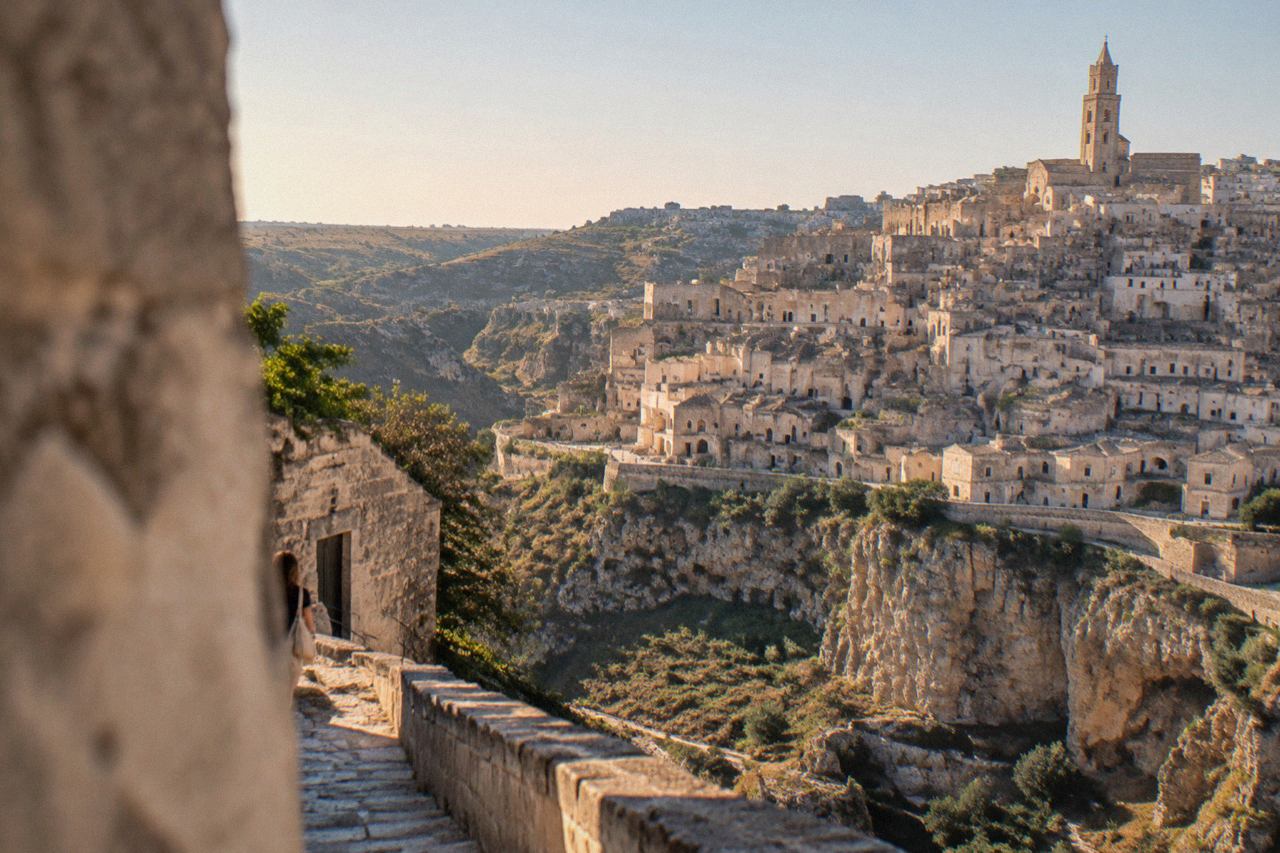
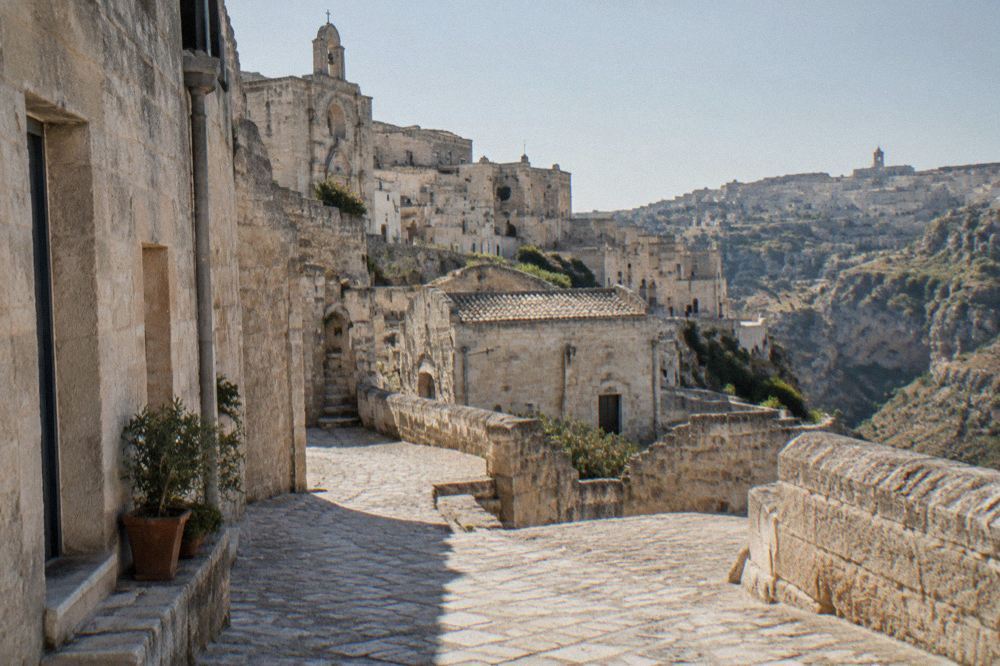
The five locations that define Matera pictures are Belvedere Murgia Timone on the plateau opposite, the terrace by Santa Maria de Idris above Sasso Caveoso, Piazza San Pietro Caveoso at the mouth of the canyon district, the rooftop terraces on the Civita ridge near the Cathedral, and the stepped lanes of Vico Solitario inside the Sassi themselves. Each one answers a different lens and a different hour. The belvedere gives the wide canyon panorama with rock churches in the foreground; the terraces give the layered skyline; the lanes give texture, doorways and the pale stone close up.
To see these angles without the stairs, book an Ape Calessino panoramic tour here.
Not every viewpoint behaves the same way. The Murgia side faces west-northwest across the Gravina, so the Sassi catch low sun from mid to late afternoon. The terraces above Sasso Caveoso face the canyon and work in the opposite half of the day. A shooting plan that uses both sides of the Gravina gets two completely different renderings of the same city, which is why the wide shots and the street work belong on separate outings.
| Spot | What it frames | Best use |
|---|---|---|
| Belvedere Murgia Timone | Full Sassi skyline across the Gravina, rupestrian church facades in the canyon wall | Wide panorama, late afternoon to sunset |
| Santa Maria de Idris terrace | Sasso Caveoso rooftops below, canyon beyond | Mid-range layers, morning |
| Piazza San Pietro Caveoso | Canyon head, cave house cluster, church facade | Street and architecture mix |
| Civita ridge by the Cathedral | Sassi Barisano roofline, bell towers | Skyline at dawn and dusk |
| Vico Solitario and the Malve lanes | Cave doorways, stone stairways, wash basins | Detail and documentary work |
The deeper background on the canyon district itself is in the Sassi di Matera guide, and the plateau park is covered in the Parco della Murgia guide.
What Do You Photograph From Belvedere Murgia Timone?
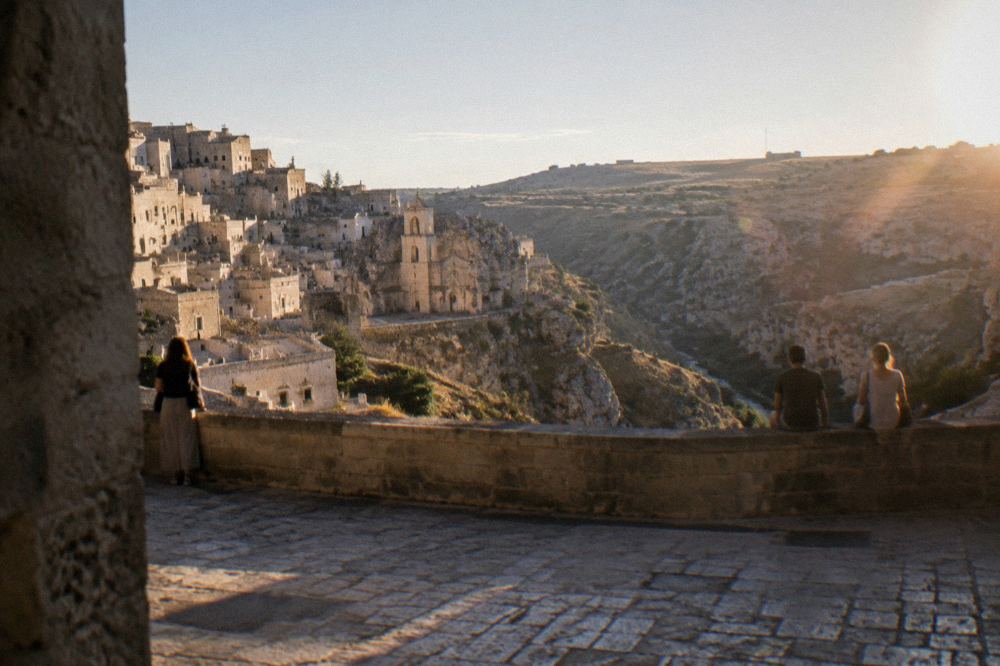
From Belvedere Murgia Timone you photograph the whole of the Sassi from across the Gravina canyon: the stacked cave facades of Sasso Caveoso, the Cathedral silhouette on the Civita ridge, and the rupestrian churches dotted along the near canyon wall, all in one frame. The park's own site describes the Archaeological Historic Natural Park of the Rupestrian Churches as covering about 8,000 hectares by the park's own count, with 923 recorded plant species. The belvedere is inside that park, on the plateau side, reached from Matera by crossing the canyon.
Two access changes matter to photographers. First, Jazzo Gattini has been the park's staffed visitor centre, info point and ticket office since 6 February 2026 under a new concession, and it controls access towards Murgia Timone. Second, Sentiero 406, the path with the suspension bridge over the Gravina, has had a staffed access point and an online access ticket since March 2026; the ticket page lists concessions including half price under 25 and free entry for residents of Matera and Montescaglioso, under 6s and disabled visitors with a companion. The access price is not settled in official text, so confirm it on the park's ticketing page before planning a bridge shot.
The belvedere shot is the one that sells the city, but the canyon itself rewards a longer lens. From the plateau, a telephoto picks out individual rock church facades on the far wall, including San Pietro Caveoso's profile above the rooftops. The Belvedere Murgia Timone guide and the Tibetan bridge guide cover the walking detail. For a guided option that times the plateau for the end of the day, the Murgia Park and Sassi at Sunset tour walks the park side as the light drops; Check availability.
Which Sassi Viewpoints Work At Sunrise And Sunset?
For sunrise, the working viewpoints are the Civita ridge around the Cathedral and the upper terraces of Sasso Barisano, where low eastern light strikes the stone as the canyon floor is still in shadow; for sunset, the Murgia side and the Santa Maria de Idris area above Sasso Caveoso, which photograph the Sassi fronts as the sun drops behind the plateau. The two windows are not symmetrical. Morning gives cold shadow and warm stone; evening gives the classic postcard, the whole hillside glowing above a dark gorge.
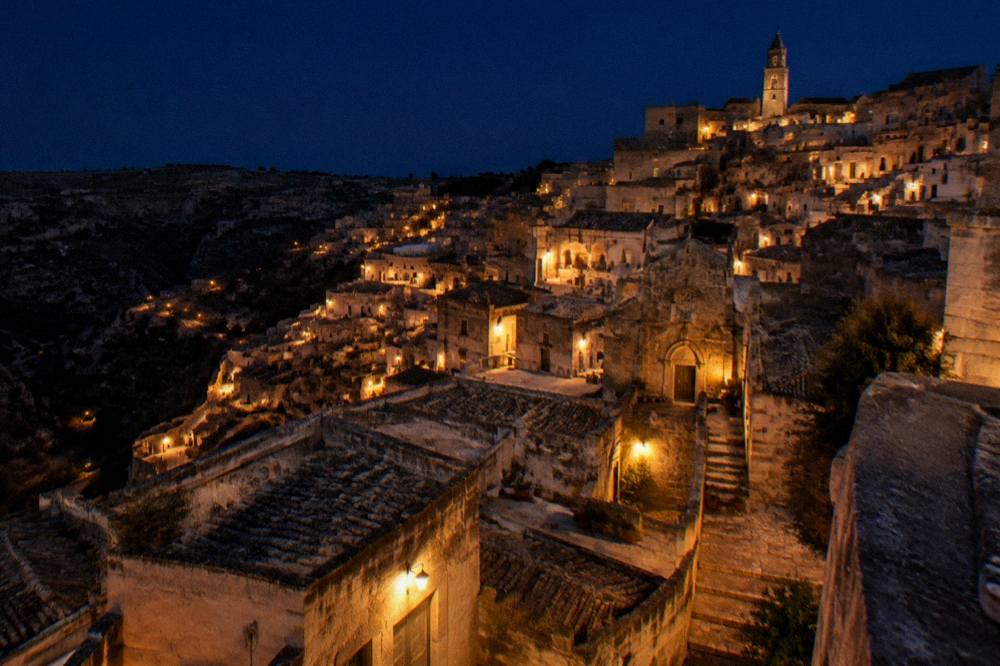
The Matera at night guide covers the blue-hour work once the sun is gone, when the Sassi lamps pick out the terraces. Photographers planning a full day around the light should also read the Matera weather guide, since the city's elevation changes what each season delivers: the ERA5 reanalysis, 1991-2020, puts the January mean low at 2.2 C and the August mean high at 31.3 C, so winter dawns are frost-cold and summer middays flatten the stone.
| Window | Side of the canyon | What the light does |
|---|---|---|
| Dawn | Civita ridge, Sasso Barisano terraces | Warm side light on stone, canyon floor in shadow |
| Mid-morning | Sassi lanes and cave interiors | Reflected light reaches into doorways and stairways |
| Mid-afternoon | Piazza San Pietro Caveoso, canyon rim | Cross light on facades, texture at its strongest |
| Golden hour | Murgia plateau, Santa Maria de Idris | Sassi fronts glow, long shadows down the terraces |
| Blue hour | Any terrace facing the Sassi | Warm lamps against cool sky |
What Should You Photograph Inside The Sassi Streets?
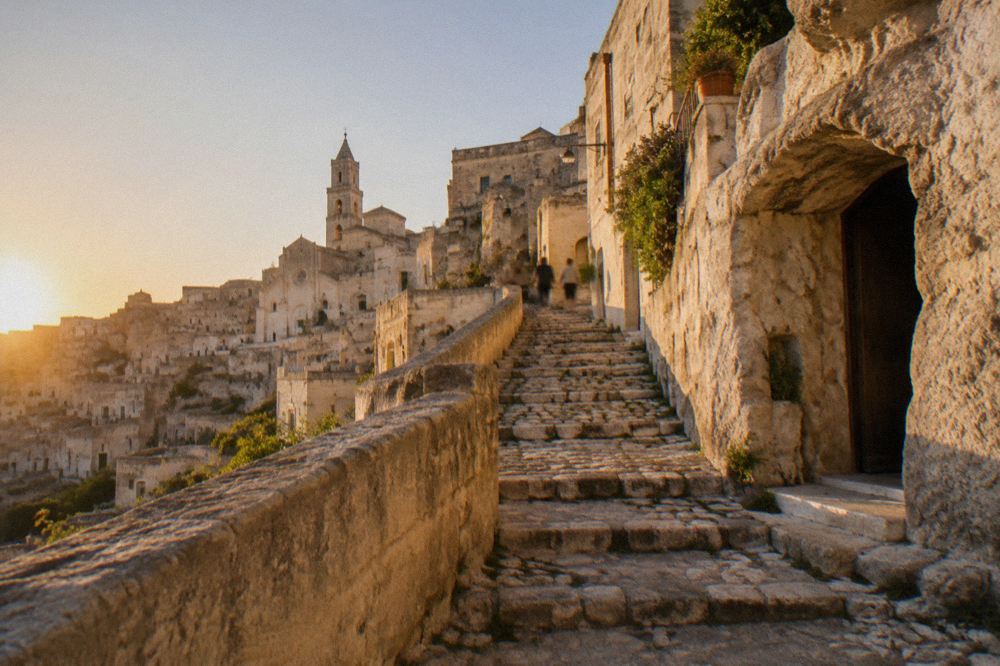
Inside the Sassi the strongest subjects are the cave doorways and stairways of Vico Solitario, the rock-cut facades along the Malve, the rooftop terraces stacked above Sasso Barisano, and the working details of cisterns, wash basins and neviere that the cave-house museums preserve. This is texture country: pale tufa, dark cave mouths, white lime wash and the repeated rhythm of arched openings. A short lens and patience do more here than any panorama.
The streets are steep, stepped and uneven, and no named route in the Sassi is step-free. The self-guided walking route guide lays out a practical sequence. Two cautions: the Museo Archeologico Nazionale Domenico Ridola has been closed since 7 April 2025 for energy works and a new display, with no reopening date published, and Casa Noha, the FAI interpretation centre, is closed 5 to 22 October 2026 for renovation ahead of a relaunch. Build neither into a shooting plan before checking current status.
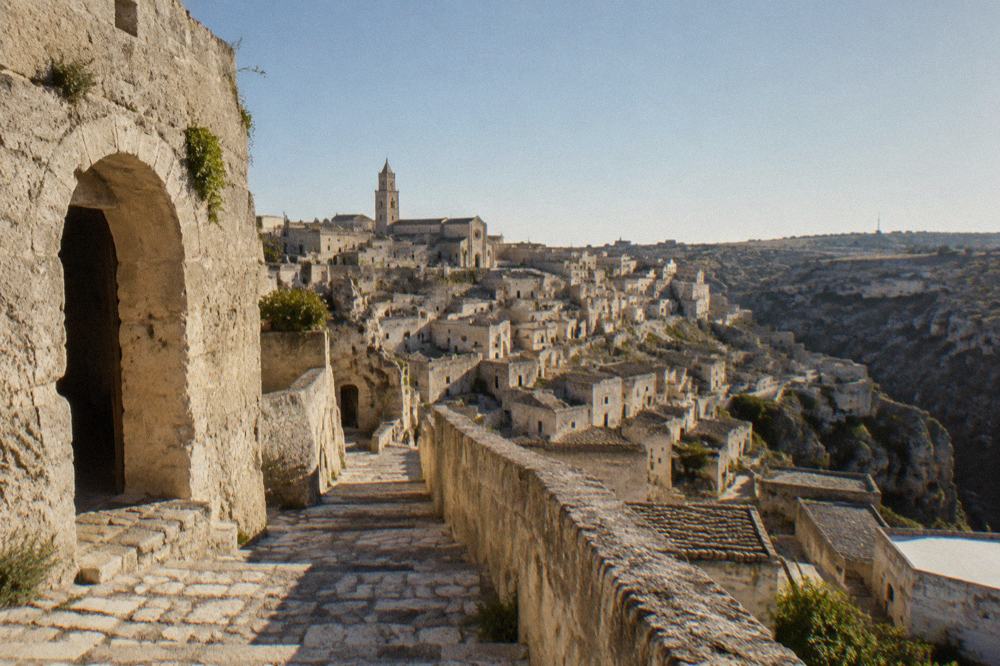
A guided walk with a local licence-holder opens doors that stay shut to passers-by. The Sassi Walk with Cave House tour includes entry to a furnished cave house and a rupestrian church, which matters because several church interiors cannot be photographed without a ticket:
Where Are The Rock Church Shots In Matera?
The rock church shots concentrate in three places: the facades of Santa Lucia alle Malve, Madonna de Idris with San Giovanni in Monterrone and San Pietro Barisano, all run by the operator Oltre l'Arte inside the canyon district; the rupestrian churches scattered through the park across the Gravina; and the Crypt of the Original Sin, a painted rock church about 15 minutes by car from the city, where booking is mandatory. The three city churches sit on one ticket ladder, and their interiors are the reason to buy it.
Oltre l'Arte's posted tariff prices one church at 4.50 EUR, two at 8.00 EUR and three at 10.00 EUR, with reduced rates for disabled visitors, groups of 20 or more and FAI members, and free entry for children up to 10 with a parent. The same operator sells a 25.00 EUR all-inclusive ticket covering eight sites, including the MATA diocesan museum and the Museo del Pane. All its sites close on 25 December and 2 July, the day of the Festa della Bruna.
| Site | Posted price | Notes for photographers |
|---|---|---|
| Oltre l'Arte rupestrian churches | 4.50 EUR one, 8.00 EUR two, 10.00 EUR three | Hours from 28 March 2026: daily, roughly 09:30 to 19:30 |
| Storica Casa Grotta di Vico Solitario | 8.00 EUR full, 5.00 EUR reduced, 3.00 EUR ages 11 to 18 | Tariff in force from 4 April 2026; covers cave house, neviera, natural cave and rock church |
| MUSMA sculpture museum | 10 EUR full, 5 or 7 EUR reduced | Cave cisterns as exhibition space, Sasso Caveoso |
| Casa Noha (FAI) | 6.50 EUR adults, 3 EUR children | Closed 5 to 22 October 2026 |
| Museo Nazionale di Matera, Palazzo Lanfranchi | 10.00 EUR per site, 15.00 EUR cumulative over 2 days | Under 18 free; palace open while works page runs |
| Crypt of the Original Sin | Price in the booking engine, not posted | Booking mandatory by e-ticket, slots capped at 20 people |
Interior photography rules vary by site and are confirmed at the ticket desk. The dedicated guides to Santa Lucia alle Malve, Santa Maria de Idris and the rupestrian churches carry the per-church detail.
What Camera Gear And Settings Suit Matera Pictures?
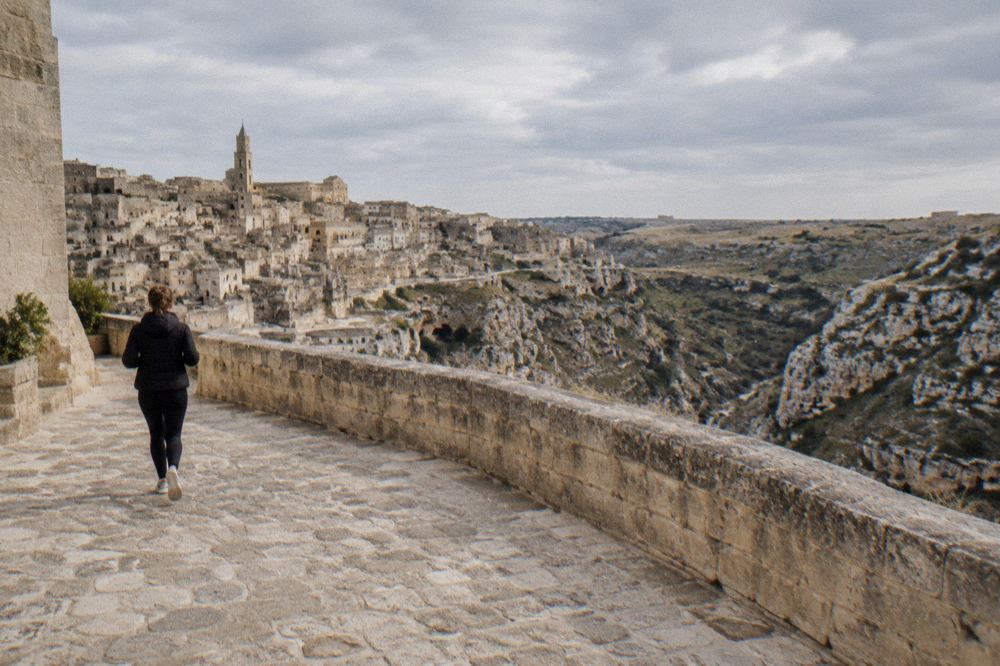
Matera suits a two-lens plan: a wide-angle zoom for the canyon panoramas and tight lanes, and a short telephoto for picking rock church facades out of the far canyon wall; interiors of cave houses and churches are dim, so a fast lens or a stabilised body matters more than a tripod, and a tripod is a question to ask at each ticket desk rather than an assumed right. The contrast range between sunlit tufa and cave shadow is extreme, so bracketing or shooting raw is the practical default.
There is no drone guidance in any official Matera text this desk could verify, so confirm locally before flying. What is verified is the traffic regime: the ZTL Sassi camera gates, on Via Buozzi, Via Madonna delle Virtù and Via D'Addozio, run 10:00 to 20:30 from 16 September to 30 June and 10:00 to 24:00 from 1 July to 15 September, weekdays and holidays alike, and the ZTL Centro around Via Duomo and Piazza Sedile is active 24 hours a day. Anyone planning to move gear by car should read the Matera ZTL guide and the Matera parking guide first.
What Does The Light Do Through The Year In Matera?
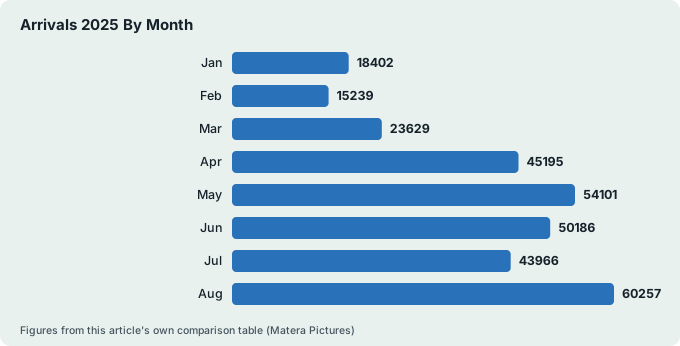
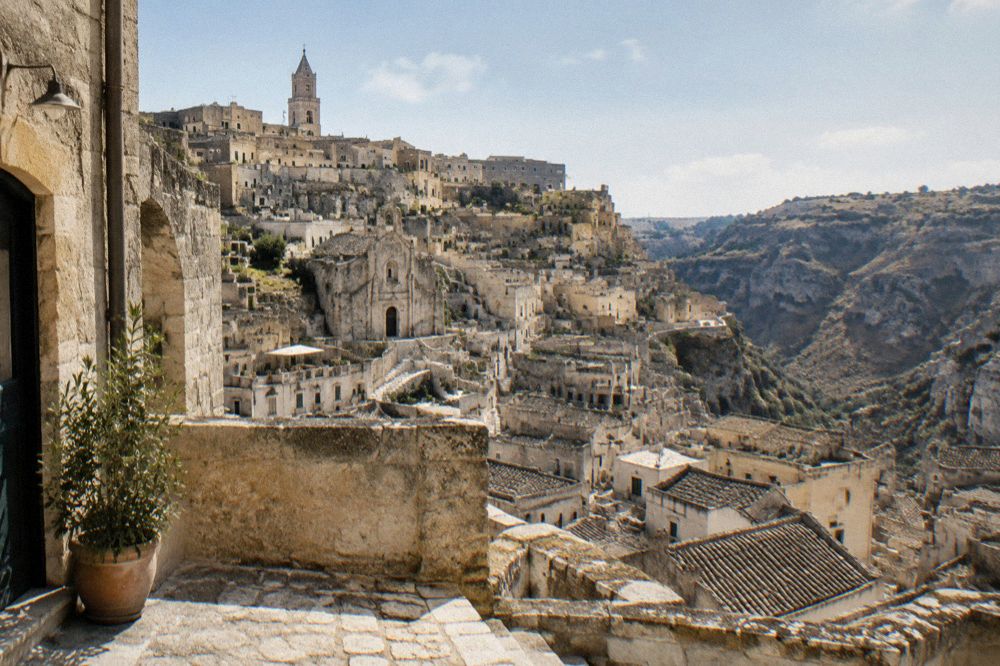
The light changes hard across the year: the ERA5 reanalysis, 1991-2020, puts the July mean high at 31.2 C against 10.3 C in January, with July the driest month at 21.2 mm of rain and November the wettest at 67.1 mm, so the stone photographs warm and flat in midsummer, cold and long-shadowed from December to March, and at its most workable in the shoulder months. Crowds follow a different curve. APT Basilicata's accommodation counts logged 61,630 arrivals in September 2025, the year's peak, against 15,239 in February, and 74.5 percent of those September arrivals came from abroad.
The practical reading: the months with the best light for photography are not the quietest. April, May and October combine mean highs between 17.4 and 22.7 C with arrivals below the September peak. Midsummer means about 20.9 days at or above 30 C in August and harsh noon light, pushing shooting to the edges of the day. Winter brings roughly 20 frost days a year, almost all December to March, and damp stone that reads beautifully in overcast conditions.
| Month | Mean high C | Rain mm | Arrivals 2025 |
|---|---|---|---|
| Jan | 10.3 | 51.4 | 18,402 |
| Feb | 11.1 | 54.9 | 15,239 |
| Mar | 14.1 | 59.2 | 23,629 |
| Apr | 17.4 | 56.5 | 45,195 |
| May | 22.7 | 41.7 | 54,101 |
| Jun | 28.2 | 35.1 | 50,186 |
| Jul | 31.2 | 21.2 | 43,966 |
| Aug | 31.3 | 21.7 | 60,257 |
| Sep | 25.7 | 44.8 | 61,630 |
| Oct | 20.8 | 51.7 | 52,538 |
| Nov | 15.5 | 67.1 | 23,555 |
| Dec | 11.2 | 57.2 | 30,385 |
Figures: ERA5 reanalysis, 1991-2020, a modelled grid cell rather than a weather-station record; arrivals are APT Basilicata accommodation counts, not visitor totals. The best time to visit Matera guide expands the seasonal argument.
What Film Location Shots Can You Find In Matera?
The verified film locations in Matera include sites from Pasolini's The Gospel According to St. Matthew (1964), The Passion of the Christ (2004), The Nativity Story (2006), The Omen (2006), Wonder Woman (2017) and the James Bond film No Time to Die (2021), each named on official tourism or film-commission pages. The Bond connection draws photographers to specific corners, and the James Bond locations guide maps them. A dedicated 007 walking tour also runs, with a licence-holder leading the route:
Can You Shoot Matera On A Day Trip From Bari?
Yes, a day trip from Bari can cover the main photographic angles: the drive is about 1 hour to Bari and 64 km to Bari Airport by road, and a focused plan of one canyon-side viewpoint, one terrace and one lane session fits a full day, though the sunrise and sunset windows are what a day trip sacrifices. For anyone without a car, FAL trains run from Bari Centrale with a change at Altamura, about 1 h 45 to 2 h in total, and there are no trains on Sundays and public holidays, when replacement buses run instead. FAL's timetable page carries the current sheets.
A guided bus excursion solves the transfer and the timing in one booking. The Excursion to Matera by Bus from Bari, the related tour for this page, is built exactly for photographers and first-timers arriving through Puglia who want the viewpoints without route-planning; Check availability, or read the tour page and the wider Matera day trip from Bari guide.
Photographers staying overnight get the hours day trippers lose. The question of how many nights to stay is answered in depth on the blog, and the cave hotels guide covers sleeping inside the stone itself, which often comes with a private terrace over the canyon.
What Rules And Closures Should Photographers Know Before Going?
The rules that shape a shooting day are the ticketed access on Sentiero 406 since March 2026, the staffed Jazzo Gattini visitor centre controlling movement towards Murgia Timone since 6 February 2026, the year-round ZTL camera gates that keep cars out of the Sassi and centre, and two standing closures, the Museo Ridola since 7 April 2025 and Casa Noha from 5 to 22 October 2026. None of this blocks the classic pictures; all of it rewards a plan made before arrival.
A walking tour that includes cave-house and church entry handles the interior permissions in one go. The Sassi tour with the iconic churches carved into the rock is the most direct option for church interiors on a ticket:
| Constraint | What it means for a shoot |
|---|---|
| ZTL Sassi cameras, 10:00 to 20:30 (16 Sept to 30 June) | No driving into the canyon district through the day; park outside and walk in |
| ZTL Centro, 24 hours | The Cathedral and Piazza Sedile streets are never a driving option |
| Sentiero 406 access ticket, staffed since March 2026 | The suspension bridge shot now needs an online ticket bought in advance |
| Oltre l'Arte closing days, 25 Dec and 2 Jul | The three main rock churches are shut on both dates |
| Emergency number 112 | The single European number, live across the Matera district since 2 December 2025 |
Common Questions About Matera Photography
Where is the classic Matera panorama taken from?
The classic wide shot is taken from Belvedere Murgia Timone, on the Murgia plateau across the Gravina canyon, facing the stacked facades of the Sassi. Access runs past the staffed Jazzo Gattini visitor centre, active since 6 February 2026.
Can you photograph inside the rock churches of Matera?
Interior access to Santa Lucia alle Malve, Madonna de Idris and San Pietro Barisano is by Oltre l'Arte ticket, from 4.50 EUR for one church to 10.00 EUR for all three on the posted tariff. Photography rules per site are confirmed at the ticket desk.
Do you need a ticket for the Tibetan bridge photo?
Yes, since March 2026 Sentiero 406 and its suspension bridge have had a staffed access point and an online access ticket. The exact price is not settled in official text, so check the park's ticketing page; under 25s pay half price and Matera and Montescaglioso residents enter free.
What is the best month for photography in Matera?
By the light and the crowd data together, April, May and October are the strongest months: ERA5 reanalysis, 1991-2020, puts mean highs between 17.4 and 22.7 C, and APT Basilicata logged fewer arrivals in each than the September 2025 peak of 61,630.
Is the sunrise or sunset shot better in Matera?
They are different pictures. Sunset from the Murgia side is the postcard, the Sassi fronts lit as the sun drops. Sunrise from the Civita ridge and the Sasso Barisano terraces gives cold canyon shadow against warm stone and far fewer people on the viewpoints.
Can you do Matera photography on a day trip from Bari?
Yes, with about 1 h 45 to 2 h of travel each way by FAL train with a change at Altamura, or about an hour by road. A day trip covers the main angles but loses the sunrise and sunset windows; an overnight stay in the Sassi is the way to keep them.