Matera Shopping
Matera, the cave city of Basilicata in southern Italy, is small enough to shop on foot and specific enough that a wrong purchase, a wet week or a ZTL camera can shape the whole day. This guide sets out what is actually sold here, what the verified prices are, and which rules apply to shoppers arriving by car.
Short answer
Matera shopping runs along the plane, the historic centre and the Sassi: food souvenirs (Pane di Matera IGP bread, peperoni cruschi, Aglianico wine, olive oil), tufa and ceramic crafts, and prints of the Sassi. The city is walkable, inland, at about 400 m above sea level, and drivers must respect the ZTL camera hours before parking.
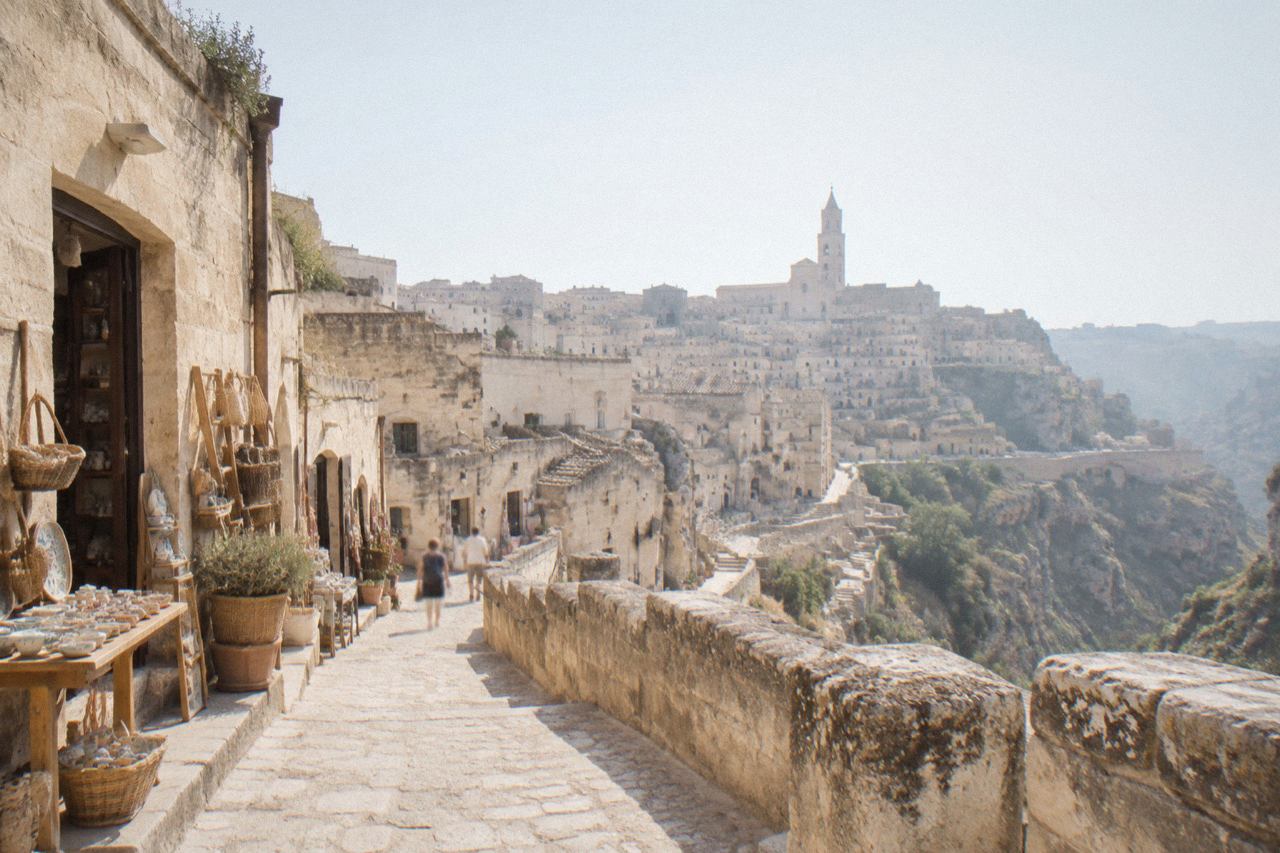
Matera sits inland in Basilicata, southern Italy, at about 400 m above sea level on the edge of the Gravina canyon, and its shopping is compressed into a walkable strip between the modern plane and the two cave quarters, Sasso Caveoso and Sasso Barisano. What the city sells is unusually coherent for a place of 59,368 residents: food with a protected name, crafts cut from the same pale tufa limestone the city is carved from, and souvenirs that trade on a UNESCO inscription dating from 1993. The site 670 listing, "The Sassi and the Park of the Rupestrian Churches of Matera", covers 1,016 hectares and, in UNESCO's own wording, "more than a thousand dwellings and a large number of shops and workshops", so retail and heritage here are physically the same thing. This guide from the Matera Travel Guide editorial desk reports what the verified sources say: what to buy, where the streets run, what entry prices are confirmed on operators' own pages, and which camera-enforced rules catch shoppers who arrive by car.
What Should You Actually Buy In Matera?
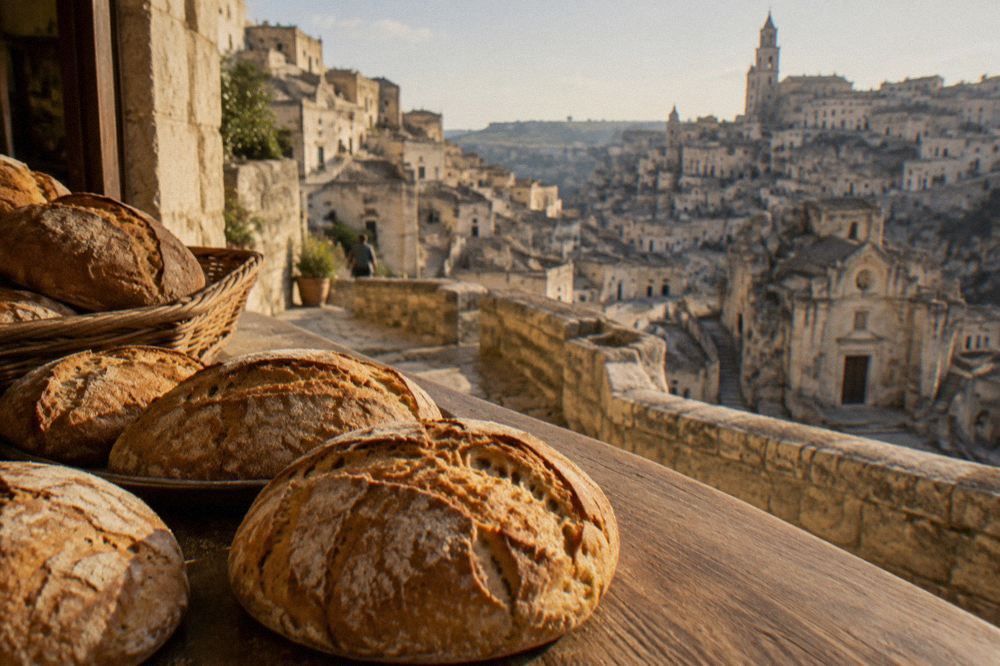
The purchases that are genuinely specific to Matera are its protected and traditional foods, above all Pane di Matera IGP bread, plus peperoni cruschi dried peppers, Aglianico del Vulture wine, local olive oil and tufa or ceramic crafts made in the city's own workshops. Anything else on sale, generic leather bags, mass-market souvenirs, designer labels, is not local and is bought more cheaply elsewhere. Pane di Matera carries PGI status, registered in 2008 under Regulation CE 160/2008, a designation Grok reports from Wikipedia-based sources that should be rechecked on the consortium's page before being relied on as a legal detail. The bread itself is the safest edible souvenir for the first days of a trip and the least safe for the flight home.
The reasoning is simple. Matera is a food city with one protected product name and a hinterland, the Murgia plateau, that grows durum wheat, peppers and olives. The bread of Matera has its own guide on this site because it is the single most documented edible thing in the city. Peperoni cruschi, the crisp fried peppers of Basilicata, travel well in sealed bags and are covered in the site's peperoni cruschi guide. Wine from the Vulture zone on the volcanic slopes north-west of the city is the standard bottle purchase, and the Matera wine guide sets out what the labels mean.
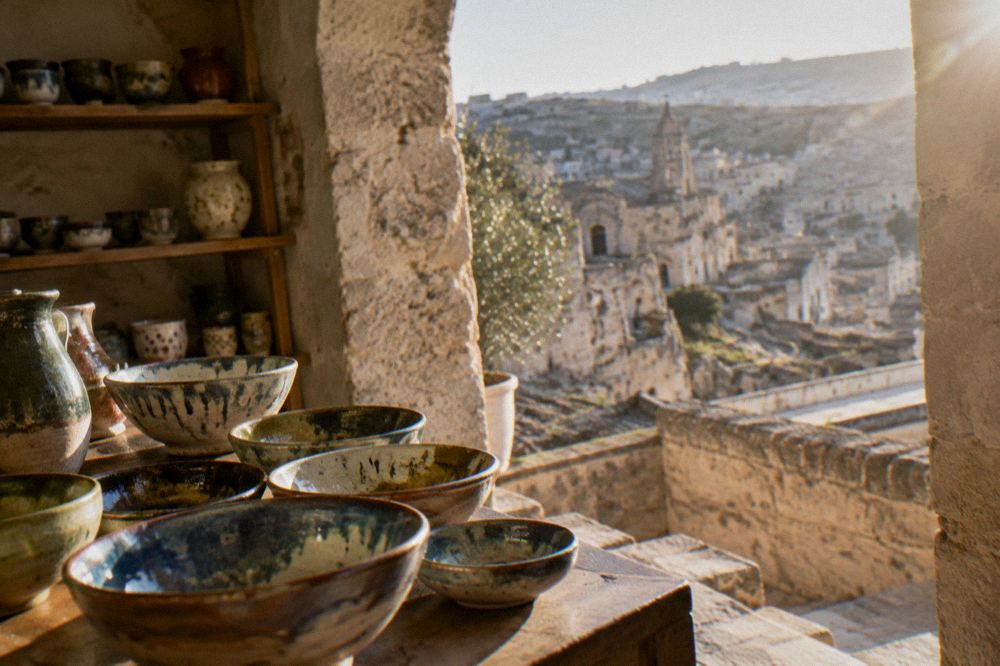
For objects, the honest category is worked stone and ceramics. Shops in the Sassi sell tufa carvings, ceramic bowls and tiles, prints and photographs of the Sassi, and small items made from local wool and paper. Quality varies sharply between a workshop making its own goods and a shop reselling imported stock, and no price for any individual shop is verified on an official page, so treat every shop price as something to confirm in the room rather than something this site can quote.
| Souvenir category | What it is | How it travels | Status in the facts pack |
|---|---|---|---|
| Pane di Matera IGP | Durum wheat sourdough bread, coarse crust | Days at best, not a flight souvenir | PGI registered 2008, Reg. CE 160/2008 (Grok, recheck on the consortium site) |
| Peperoni cruschi | Dried then fried sweet peppers, crisp | Well, in sealed bags | Traditional Basilicata product, no protected-name figure verified |
| Aglianico del Vulture wine | Red wine from the Vulture zone | Well, check airline liquid rules | Regional wine zone, no price verified on this site |
| Olive oil | Basilicata hill oil | Well, sealed tin preferred | No price or producer verified |
| Tufa and stone crafts | Carvings from the city's own limestone | Well, weight is the limit | No workshop price verified |
| Ceramics and prints | Glazed bowls, tiles, Sassi photography | Well | No shop price verified |
Where Are The Main Shopping Streets In Matera?
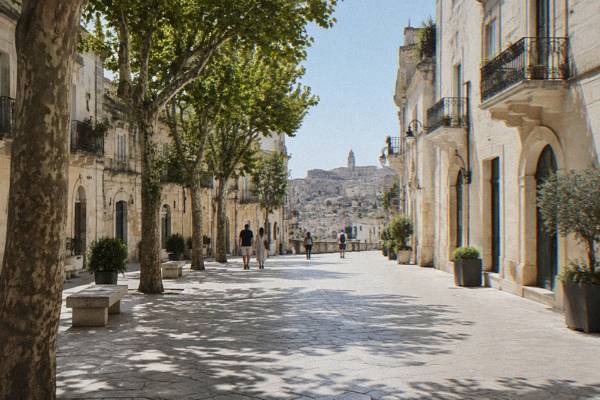
Matera's shopping strip runs from Piazza Vittorio Veneto and Via Ridola down through the ZTL Centro streets, Via Scotellaro, Via del Corso, Via delle Beccherie and Piazza Sedile, and then spills into the Sassi lanes of Sasso Barisano and Sasso Caveoso, where workshops and souvenir shops sit inside restored cave rooms. The two pedestrian areas, Piazza Vittorio Veneto and Via Ridola, are closed to vehicles all day, with retractable bollards opening only 04:00 to 08:00 on weekdays for deliveries, according to the comune's own camera-hours PDF. That single line of streets is the whole of Matera shopping, and it is walkable end to end.
The character changes as you descend. On the plane around Piazza Vittorio Veneto, where the pavement cafes sit above hidden cisterns, the retail is everyday Italian: a bakery, a chemist, clothing chains, a bookshop. The ZTL Centro streets that follow, named in Ordinance 147 and 148/2025, carry the mid-range mix, shoes, accessories, delis selling local products. Below them the Sassi take over, and this is where the souvenir shopping actually happens: cave shops selling crafts, food shops with bread and peppers in the window, galleries with photography of the very street you are standing in. The Sassi di Matera guide on this site maps the two quarters, Sasso Barisano to the north-west and Sasso Caveoso to the south-east, and explains what each is like street by street.
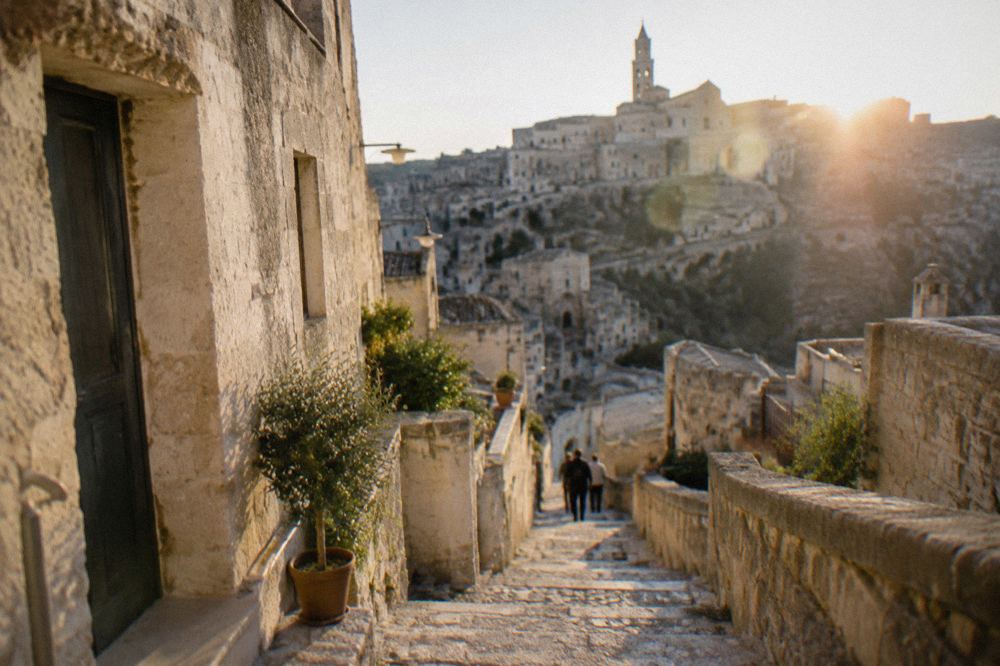
Two practical warnings come straight from the verified rules. First, the whole area inside those streets is camera-controlled, and the rules for drivers are strict enough that the shopping trip should end with a walk, not a drive, to the door: the details are in the ZTL section below. Second, the Sassi are steep, stepped and uneven, and this site never describes any named route as step-free or wheelchair accessible, so shopping below the plane means stairs.
A note on guided shopping: tip-based walks run locally, and the site's free walking tour guide explains how they work, but confirm arrangements directly with the guide, since no platform or operator details are verified here.
What Food Souvenirs Travel Best From Matera?
Sealed, dry and light is what travels: peperoni cruschi in sealed bags, small tins or bottles of olive oil, dried pasta shapes, vacuum-packed cheese and salami bought with the flight in mind, and a bottle of Aglianico within airline liquid limits, while Pane di Matera IGP is a souvenir for the first days, not the flight home. The bread's coarse crust and moist crumb are why it has a protected name, and both fade within days. Everything liquid, oil and wine, needs checked baggage or a sealed tin, and every country has its own customs limits on meat and dairy, which no Matera shop can advise you on.
The city's food identity is documented well enough to plan around. The what to eat in Matera guide covers the dishes, and the best restaurants in Matera guide covers where the regional cooking is served, including the cave restaurants described in the site's cave restaurants guide. For buying rather than eating, delis and alimentari on the plane and in the ZTL Centro streets stock the same regional products the restaurants cook with, and a food shop with a queue of materani is a more reliable signal than any sticker aimed at visitors.
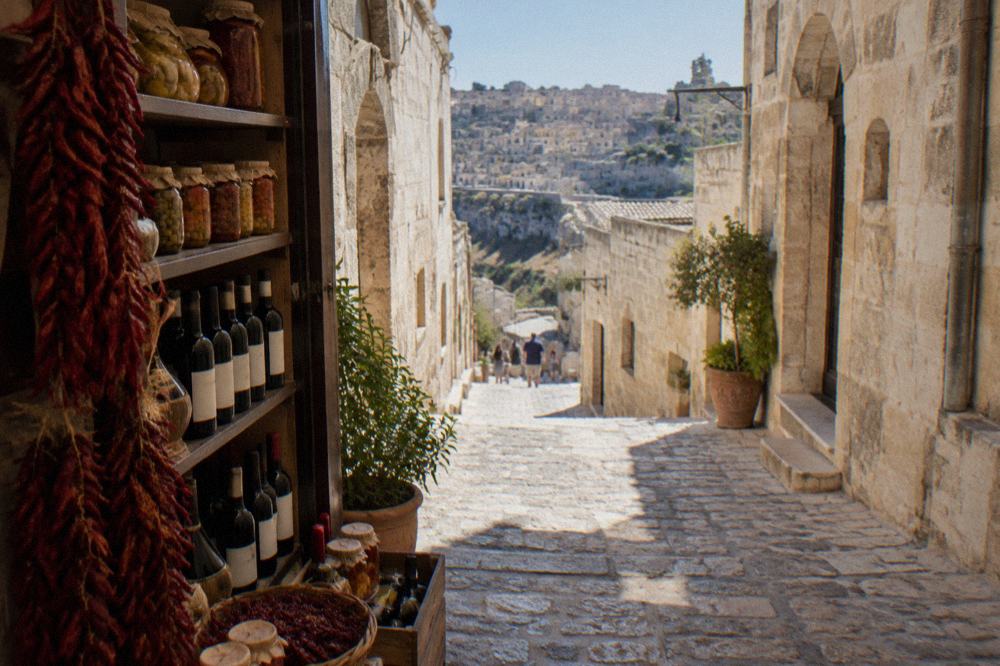
If food shopping is the point of the trip rather than a side effect, pairing it with a food-and-drink experience changes what you buy, because a tasting tells you which bottle to carry home. The compiler blocks below show current verified listings for food-led experiences.
Is Shopping In Matera Expensive, And What Entry Prices Are Confirmed?
Souvenir prices in Matera's shops are not verified on any official page, so this site prints no shop price, no price band and no average; what is verified is the admission prices of the sights shoppers walk past, from 4.50 EUR for one rupestrian church to 25.00 EUR for an 8-site all-inclusive ticket, and a tourist tax collected by your accommodation, whose amount is confirmed only at booking. Any page quoting a typical souvenir price or a nightly rate is filling a gap that no official source fills.
The admissions below were read on the operators' own pages and are the reliable spending skeleton of a shopping-and-sightseeing day. The Storica Casa Grotta di Vico Solitario, the furnished cave house that is itself the best explanation of what the Sassi shops are selling images of, charges 8.00 EUR full on the tariff in force from 4 April 2026; older guides still print 3 to 5 EUR. The three rupestrian churches run by Oltre l'Arte have a simple escalator: one church 4.50 EUR, two 8.00 EUR, three 10.00 EUR. All Oltre l'Arte sites close on 25 December and 2 July, the Festa della Bruna.
| Sight or product | Verified price | Notes from the operator's page |
|---|---|---|
| Rupestrian churches, Oltre l'Arte (1 / 2 / 3 churches) | 4.50 / 8.00 / 10.00 EUR | Santa Lucia alle Malve, Madonna de Idris, San Pietro Barisano; hours from 28 March 2026 |
| Oltre l'Arte 8-site all-inclusive | 25.00 EUR (reduced 16.00) | 3 churches, Vicinato a Pozzo, Antica Casa Grotta, MATA, Purgatorio exhibition, Museo del Pane |
| Cathedral and MATA | 4.00 EUR | Daily 09:00 to 19:00, pauses 10:00 to 12:30 on Sundays and solemnities |
| Storica Casa Grotta di Vico Solitario | 8.00 EUR full, 5.00 reduced, 3.00 ages 11 to 18 | From 4 April 2026; covers cave house, Neviera, natural cave, Sant'Agostino rock church |
| MUSMA sculpture museum | 10.00 EUR, reduced 5.00 or 7.00 | Via San Giacomo, Sasso Caveoso; open Monday to Sunday |
| Museo Nazionale di Matera, Palazzo Lanfranchi | 10.00 EUR per site, 15.00 EUR cumulative | Cumulative valid 2 days, all sites; under 18 free |
| Casa Noha (FAI) | 6.50 EUR adults, 3.00 children | Closed 5 to 22 October 2026 for renovation |
Note what is missing from that table, deliberately. Palombaro Lungo, the Crypt of the Original Sin, Casa Cava, MOOM and several other sights have no price this site could read on an official page, so no figure appears for them. The Crypt of the Original Sin does require booking, by e-ticket at least 90 minutes before the slot, with capacity of 20 people, but its price sits inside the booking engine.
The tourist tax is the other number visitors ask about. Matera charges one, it is collected by the accommodation, and the amount is confirmed at booking, because no tariff page or resolution from the comune could be verified. In April 2026 the mayor spoke of a "tourism package" including a higher tourist tax, but no approved rate has been found, so that remains a statement of intent, not a rule.
How Does Matera Shopping Compare With Alberobello, Bari And The Coast?
Matera is a focused, food-and-craft shopping city, while the bigger retail runs are Bari at about 68 km and one hour by road, Alberobello at about 68 km and about 1 h 23, and Polignano a Mare at about 100 km and about 1 h 29, all figures computed free-flow by routing engine, so combining Matera with one of them is a full day, not an afternoon. Matera has no sea and no coastal shopping; the nearest beaches and their towns are day trips, on the Ionian at Metaponto, 47 km, or the Adriatic at Polignano a Mare and Monopoli.
The comparison matters because Matera and Alberobello are sold together on every itinerary, and the shopping overlaps less than visitors expect. Alberobello, in Puglia, is the trulli town, and its shopping is trulli-shaped souvenirs and Puglian food; Matera, in Basilicata, sells its own protected bread, its own peppers and its own stone. The distance table below is the honest planner for a two-stop shopping day.
| Destination from Matera | Road km | Free-flow drive time | Region | Shopping reason |
|---|---|---|---|---|
| Altamura | 20 | 20 min | Puglia | Bread town, its own famous loaf |
| Metaponto | 47 | 52 min | Basilicata | Ionian coast, archaeology |
| Bari | 68 | 1 h 02 | Puglia | Regional capital, full retail range |
| Alberobello | 68 | 1 h 23 | Puglia | Trulli souvenirs, food shops |
| Polignano a Mare | 100 | 1 h 29 | Puglia | Adriatic coast town |
| Monopoli | 110 | 1 h 36 | Puglia | Adriatic port, old-town shops |
| Lecce | 204 | 3 h 08 | Puglia | Baroque city, papier-mache crafts |
One way to buy in two towns without driving is a combined tour with transport included, which turns a shopping question into a logistics answer. The e-bike tour below pairs Alberobello's lanes with focaccia and wine, food shopping of the edible kind, and the other two listings are Matera's own guided walks and rides.
When Is The Best Season For Shopping In Matera?
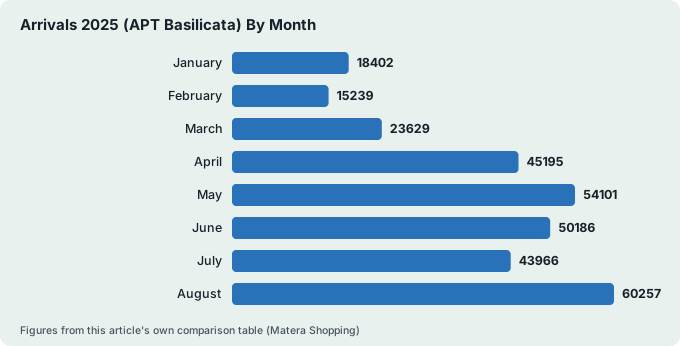
September is the busiest month in Matera's accommodation, with 61,630 arrivals in 2025 against 60,257 in August, and May, at 54,101 arrivals, plus October, at 52,538, both run above April's 45,195, while February, at 15,239 arrivals, is the quietest, so shop hours are fullest from April to October and the streets are emptiest from November to March, when the ERA5 reanalysis, 1991-2020, shows mean highs of 11.1 to 15.5 C and November is the wettest month at 67.1 mm. The pairing that surprises planners: July is as warm as August, 31.2 against 31.3 C mean high, yet July drew 43,966 arrivals, fewer than six other months, because August is the month Italians dominate, at 53.2 per cent, while 74.5 per cent of September's arrivals came from abroad.
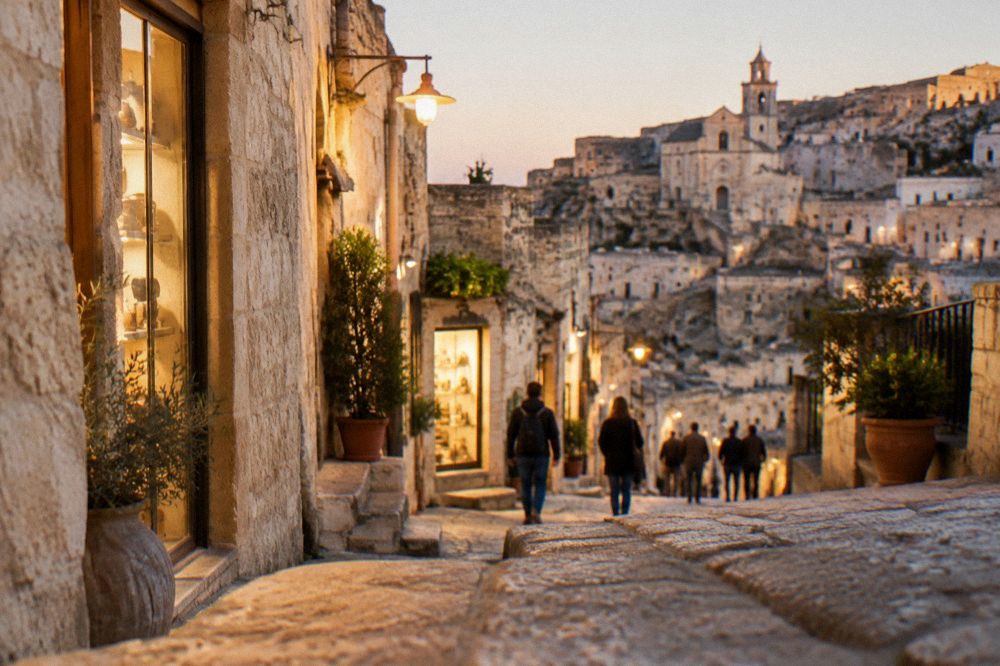
What this means for shopping is concrete. In the shoulder months, April, May, early June, late September and October, the weather is walkable, the mean highs run from 17.4 to 25.7 C, and the shops are open for the season. In deep winter, January and February, with mean highs around 10 to 11 C and eight to nine rain days a month by the reanalysis count, some Sassi shops shorten hours or close, and the crowds that justify long opening hours are simply not there: 15,239 arrivals in February 2025. The Matera weather guide and the best time to visit Matera guide carry the full monthly picture.
| Month | Mean high C (ERA5 1991-2020) | Rain mm | Arrivals 2025 (APT Basilicata) |
|---|---|---|---|
| January | 10.3 | 51.4 | 18,402 |
| February | 11.1 | 54.9 | 15,239 |
| March | 14.1 | 59.2 | 23,629 |
| April | 17.4 | 56.5 | 45,195 |
| May | 22.7 | 41.7 | 54,101 |
| June | 28.2 | 35.1 | 50,186 |
| July | 31.2 | 21.2 | 43,966 |
| August | 31.3 | 21.7 | 60,257 |
| September | 25.7 | 44.8 | 61,630 |
| October | 20.8 | 51.7 | 52,538 |
| November | 15.5 | 67.1 | 23,555 |
| December | 11.2 | 57.2 | 30,385 |
Two calendar notes for winter shoppers. The Presepe Vivente nei Sassi, the living nativity whose 16th edition, "Vera Fratellanza", charges 12.00 EUR full and 9.00 EUR for ages 10 to 18, runs on public days across late December and early January, and it fills the Caveoso route, which is the main shopping lane of the lower city. And the Matera Film Festival, 7 to 15 November 2026 in its 7th edition, brings its own footfall and late-evening trade.
What Crafts And Artisan Goods Is Matera Known For?
Matera's own craft tradition is working the soft tufa limestone the city is carved from, alongside ceramics, worked wool and leather, printmaking and photography of the Sassi, but no workshop price, no artisan name and no verified craft catalogue exists in the official record, so this section can describe the categories and their history, not quote a single shop or price. The honest frame is UNESCO's: the 1993 inscription describes a settlement adapted to its geomorphological setting with continuity over more than two millennia, and the goods sold in the Sassi are, at their best, by-products of that setting.
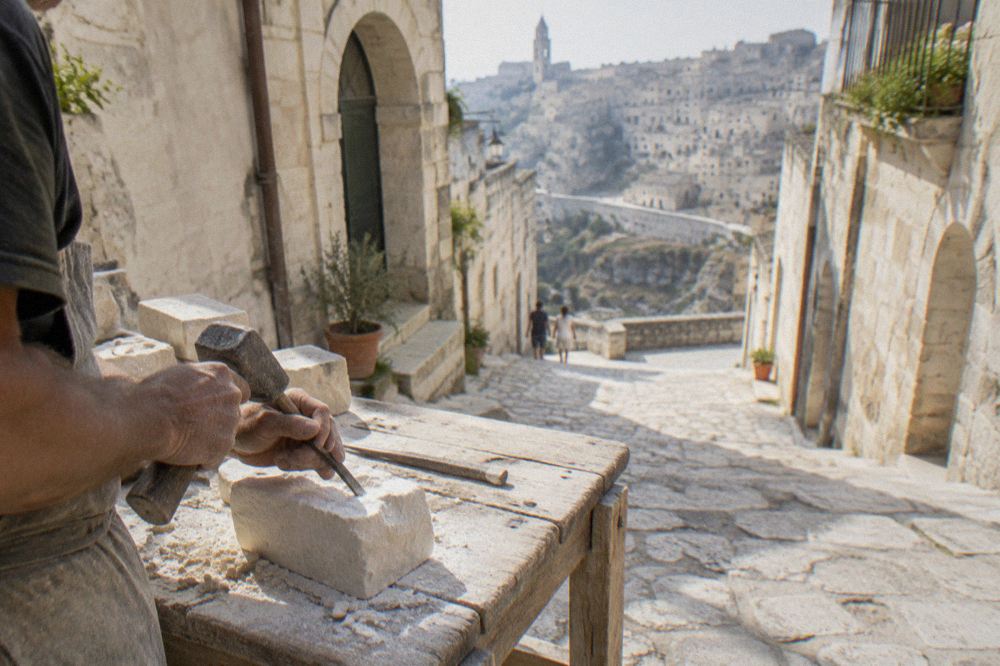
The history shapes the stock. Residents were moved out of the Sassi between 1952 and the 1970s, and a 1986 law opened the way to restoration, after which artisans were among the first to move back into the caves. A shop in a cave room is therefore not a gimmick but the current chapter of a craft-and-dwelling tradition. The history of Matera guide tells that story in full, and the Matera UNESCO guide explains what the 1993 listing actually covers.
The practical advice is a sourcing question. Ask whether the object was made on site, look for the workshop behind the shop, and treat any "handmade" claim without evidence as marketing. The site's Matera souvenirs and shopping tips page and the general travel costs guide cover budgeting; the rule here is only that no unverified figure gets printed.
Driving To Shop: Parking, The ZTL And What The Cameras Enforce
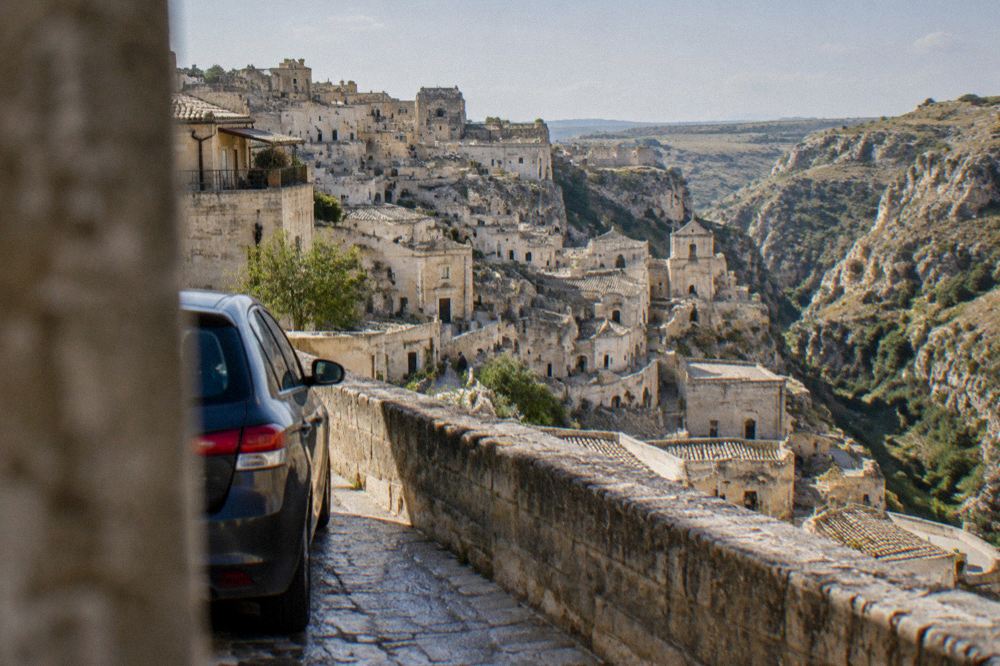
Matera's historic shopping streets sit inside camera-enforced limited traffic zones: ZTL Centro runs 24 hours a day, ZTL Sassi cameras operate 10:00 to 20:30 from 16 September to 30 June and 10:00 to 24:00 from 1 July to 15 September, and the contact for transit declarations is ztl@comune.mt.it, so a shopping trip by car must end in a car park outside the zones, whose names and tariffs are not verified on any official page. The comune's own PDF, issued under Ordinances 147 and 148/2025, is the source for every hour quoted here.
| Zone | Camera hours | Source detail |
|---|---|---|
| ZTL Centro (Via Scotellaro, Via del Corso, Via delle Beccherie, Via Duomo, Piazza Sedile, San Francesco) | 24 hours, every day | Loading window 07:00 to 10:30 and 15:00 to 17:00 |
| ZTL Sassi (Via Buozzi, Via Madonna delle Virtu, Via D'Addozio) | 10:00 to 20:30, 16 Sep to 30 Jun; 10:00 to 24:00, 1 Jul to 15 Sep | Weekdays and holidays alike |
| ZTL Piave | Same seasonal hours as ZTL Sassi | Electronic gates definitive under Ordinance 257/2025 |
| ZTL Prefettura, Ridola, Casalnuovo, Stigliani | 20:30 to 24:00 | Evenings only |
| Piazza Vittorio Veneto and Via Ridola pedestrian areas | Closed to vehicles all day | Bollards open 04:00 to 08:00 weekdays for deliveries |
What cannot be printed, because no official page could be verified: public car park names, capacities and tariffs, blue-line street prices, and the urban bus network's operator and fares. News reports a handover of urban buses from Miccolis to Dover from 1 July 2026, but no official page confirms it, so the site's getting around Matera guide stays deliberately silent on fares. The Matera parking guide and the Matera ZTL guide carry the full rules; the essential fact for a shopper is that driving into a camera zone outside a loading window generates a fine, and hotel guests must arrange access with the hotel, not assume it.
Common Questions About Shopping In Matera
What souvenirs is Matera known for?
Pane di Matera IGP bread, peperoni cruschi dried peppers, Aglianico del Vulture wine, local olive oil, tufa and stone crafts, ceramics and Sassi photography. Shop prices are not verified on any official page, so confirm each price in the shop.
Is Matera good for shopping?
For local food and craft, yes: the shopping strip from Piazza Vittorio Veneto through the ZTL Centro streets into the Sassi is compact, walkable and specific to Basilicata. For fashion and chain retail, Bari, 68 km and about one hour by road, is the regional shopping capital.
Can I drive to the shops in the Sassi?
Not into them. The ZTL Centro is camera-enforced 24 hours a day and the ZTL Sassi cameras run 10:00 to 20:30 from 16 September to 30 June, later in summer. Park outside the zones and walk down; car park tariffs are not verified on any official page.
What food can I take home from Matera?
Sealed, dry goods travel best: peperoni cruschi, dried pasta, oil and wine within airline limits. Pane di Matera IGP is best eaten within days of buying, and customs rules on meat and dairy depend on your destination country.
When do Matera shops open?
No shop-hours schedule is verified on an official page, but the APT Basilicata data shows the season clearly: 61,630 arrivals in September 2025 against 15,239 in February, so expect the fullest hours from April to October and shorter winter hours.
Does Matera have a market or a mall?
No market schedule or shopping centre is verified in the official record, and this site prints no operational detail it cannot source. The realistic shopping geography is the plane streets, the ZTL Centro lanes and the Sassi workshops.
A last orientation note for the evening after the shopping is done: the lanes you bought your souvenirs in change character after dark, and the Matera at night guide covers what stays open once the day trippers have gone.